
What Paint to Use for Wall Stencils? Best Options
Use low‑viscosity, pigmented acrylic or latex paints for the cleanest stencil edges; they dry fast, resist bleeding, and bond well to most walls. Apply thin layers with a stipple brush, foam roller, or dab sponge and tap off excess to avoid smudging. For high‑traffic areas pick enamel or a durable latex, and thin water‑based acrylics slightly for textured surfaces. Seal once fully cured for longevity—keep going to learn the best tools, finishes, and troubleshooting tips.
Which Paint Types Give the Cleanest Stencil Edges?
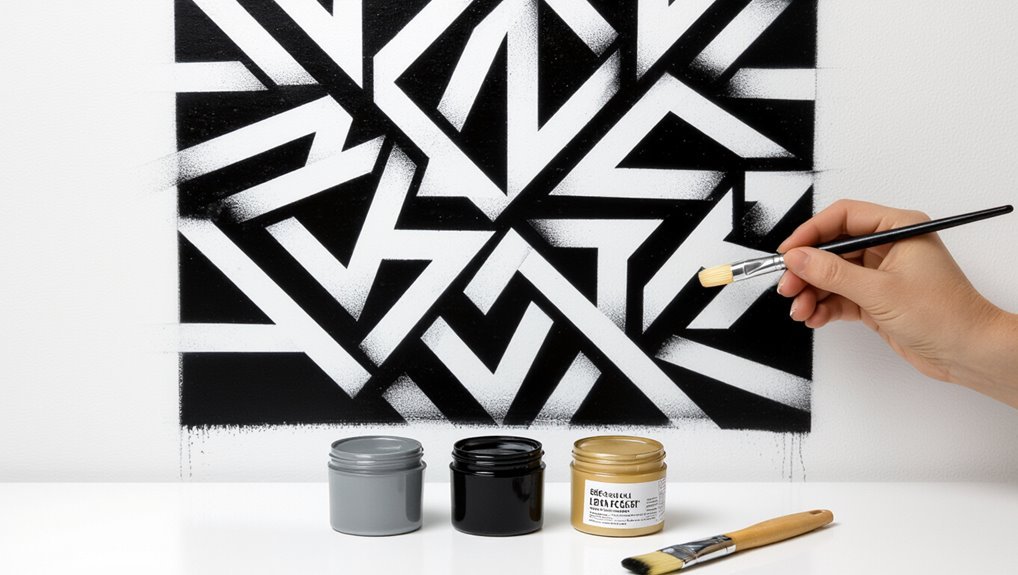
When you want the sharpest stencil edges, choose low-viscosity, pigmented paints that dry quickly and sit on the surface rather than soaking in—acrylic craft paints and latex wall paints are the best bets.
You’ll favor paints that resist bleeding and allow crisp transfer of stencil lines. For textured walls, heavier body paints can cause fuzzing, so stick with thinner formulations or thin slightly.
Use a light-touch application—dab or stipple instead of brushing across. Test your paint selection on a scrap to confirm clean edges, adjust technique, and guarantee consistent coverage without seepage or smudging.
Quick Answer and Buying Checklist for Stencil Paint
You’ve seen which paints give the cleanest edges; now here’s a quick answer and a short buying checklist to get you stocked.
Choose a paint with good opacity and low-splatter formula for crisp results. Favor colors and sheens that match your design and surface. Check that the product lists fast-drying properties and easy cleanup to speed multiple layers.
Buying checklist:
- Verify Paint compatibility with your wall finish and primer.
- Opt for a paint labeled for interior walls or trim as needed.
- Select the right applicator (stipple brush, foam roller) for your stencil techniques.
- Buy enough for touch-ups and sealing.
Why Acrylic and Latex Are Top Choices for Stencil Paint
Because they bond well to most wall surfaces and dry without bleeding, acrylic and latex paints give you the crisp edges stenciling demands. You’ll appreciate acrylic versatility for color mixing and quick drying, and latex durability for washable, long-lasting finishes. Use light, stippling strokes and low-tack tape to keep templates flat. Test opacity on scrap to avoid extra coats. Clean brushes promptly to preserve firmness. Here’s a simple comparison to visualize traits:
| Property | Acrylic | Latex |
|---|---|---|
| Dry time | Fast | Moderate |
| Finish options | Wide | Durable |
| Cleanup | Water | Water |
When to Use Specialty Stencil Paints or Enamels?
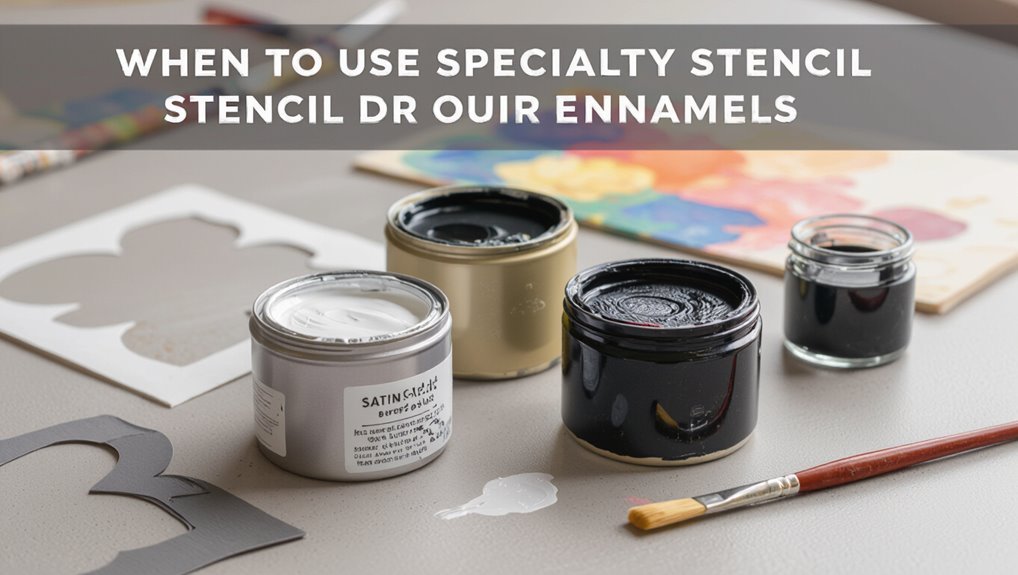
Why choose specialty stencil paints or enamels for a wall project? You’ll pick them when you need durability, unique surfaces, or effects standard acrylics can’t deliver.
Use enamels for high-traffic areas, trim, or surfaces that need washability and long-term resistance. Choose specialty finishes when you want texture, raised details, or weather-resistant coatings for exterior stenciling.
Be mindful of surface prep and ventilation—many enamels need longer cure times. Adjust application techniques: thin coats, sharper edges, and slower brush strokes reduce bleed.
Test on a sample patch first to confirm adhesion, appearance, and compatibility with your chosen wall and stencil material.
Choosing Paint Finish for Stencils: Matte, Satin, Gloss, Metallic
When you pick a finish for your stencil, think about how bold you want the pattern to read.
Matte keeps details soft and low-key. Satin adds a subtle sheen that catches light without shouting, and metallics make accents pop for drama.
Choose based on whether you want the stencil to blend in, gently stand out, or act as a focal shimmer.
Matte For Subtle Detail
If you want your stenciled details to blend into the wall instead of shouting for attention, choose a matte paint—its low sheen hides brush strokes and surface imperfections while keeping edges soft and subtle.
You’ll pick matte when you want pattern without glare; color selection matters more than finish for understated contrast.
Matte tolerates slight application mistakes, so use light dabbing or stippling to avoid pooling. It layers well for muted depth and accepts wash glazing for aged looks.
Matte won’t reflect light, so plan lighting and placement.
For subtle, sophisticated stencils, matte delivers controlled, low-profile detail.
Satin For Slight Sheen
Satin offers a soft, velvety sheen that lifts stencil work without calling attention to every brushstroke, so you’ll get a bit of glow and depth while keeping edges relatively smooth.
You’ll find satin finishes balance durability and subtlety, forgiving minor application marks and resisting scuffs better than matte. Use them where you want gentle contrast against flat backgrounds.
Consider these practical points:
- Easy touch-ups without obvious sheen shifts
- Works well in moderate-light rooms to reveal texture
- Available in multiple sheen variations for consistency with trim
- Ideal for high-traffic accent walls where durability matters
Metallic For Accents
1. You’ll reach for metallic finishes when you want stencil details to pop. They reflect light, adding depth and luxe contrast against matte or satin backgrounds.
Use small foam rollers or stippling brushes to apply thin, even layers so the shimmer stays smooth and avoids pooling. Test on scrap to check opacity—some metallics need multiple coats.
Combine warm golds or coppers with cool silvers for dynamic accent techniques, or keep a single hue for subtle elegance.
Seal with a clear, non-yellowing topcoat if the area gets touch or humidity to preserve sheen and prevent rubbing.
How to Match Paint to Your Wall Surface (Smooth, Textured, Plaster)
Before you stencil, assess and prep the surface—clean, patch, and sand smooth walls or remove loose material from textured and plaster surfaces.
Choose paints suited to the substrate (acrylic latex for smooth drywall, thicker masonry or elastomeric for textured/plaster) and thin slightly only if needed for your application method.
Adjust your technique by using stiffer brushes or stippling for texture and a lighter touch or foam roller on smooth walls to keep edges crisp.
Surface Preparation Steps
When your wall’s surface varies—smooth, textured, or plaster—you’ll need different prep and paint choices to get crisp stencil edges and long-lasting results.
First, do thorough surface cleaning to remove dust, grease, and loose paint. Sand smooth walls lightly; degloss glossy finishes. For textured or crumbly plaster, patch and skim where needed.
Apply primer application tailored to the surface—bonding primer for slick surfaces, stain-blocking for repaired areas.
- Clean with mild detergent and rinse thoroughly.
- Sand and dust off residues.
- Patch holes and smooth plaster.
- Use appropriate primer and let it cure fully before stenciling.
Paint Type Recommendations
Choose your paint based on the wall texture so your stencil edges stay sharp and the finish lasts: for smooth walls use a high-quality acrylic latex (eggshell or satin) that levels well and resists bleeding.
For textured surfaces, pick a thicker, high-build acrylic or a stain-blocking latex that fills low spots without running.
For plastered or repaired areas, opt for a flexible, breathable acrylic or mineral-based paint compatible with your primer to prevent cracking and adhesion issues.
For stencils, avoid very glossy paints that puddle.
Consider spray paint for crisp small details, but test adhesion.
Look for eco-friendly options with low VOCs when possible.
Application Techniques Adjustments
If your wall is smooth, textured, or plastered, adjust your application technique to match the surface so stencils stay crisp and paint doesn’t pool or crack.
You’ll change tools, pressure, and paint consistency based on substrate. Use light, controlled taps on smooth walls with a foam pouncer; increase load and dab rhythm on textured surfaces; thin acrylic slightly for plaster to prevent ridging.
Test first on scrap.
Key stencil techniques and paint consistency tips:
- Smooth: thin coats, light pouncing, minimal bleed.
- Textured: thicker load, stippling to reach crevices.
- Plaster: slightly thinned paint, gentle layering.
- Always test and adjust.
Which Stencil Materials Work Best With Each Paint Type?
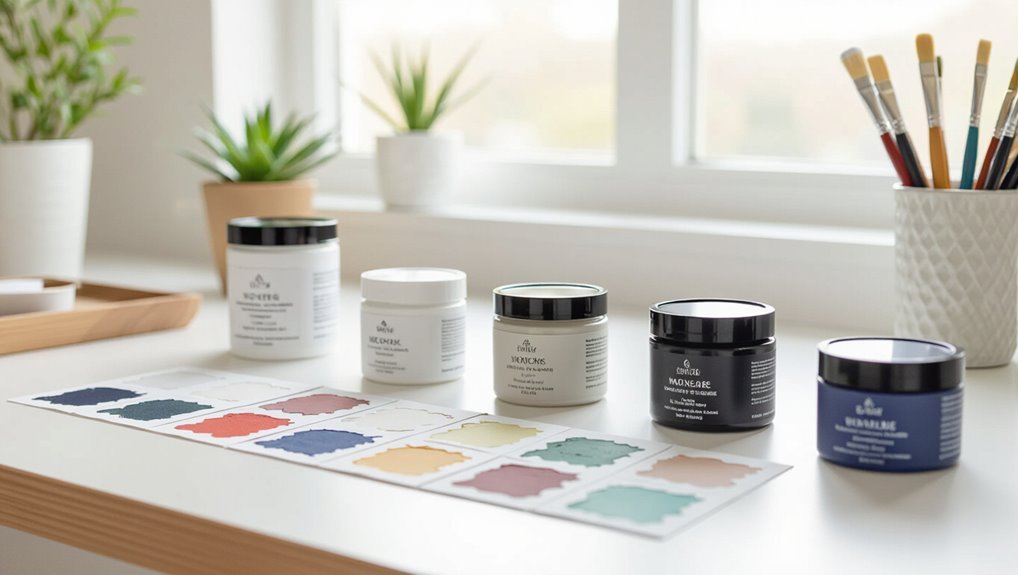
1 simple rule helps: match the stencil material to the paint’s viscosity and adhesion. You’ll choose stencil materials based on paint compatibility: thin acrylics work with paper or vinyl; heavy latex prefers mylar or plastic; textured paints need rigid templates to avoid bleed.
| Paint Type | Best Stencil Material | Why |
|---|---|---|
| Acrylic (thin) | Paper or vinyl | Conforms, low adhesion needed |
| Latex (thicker) | Mylar/plastic | Stiff, resists swelling |
| Textured/gel | Rigid plastic | Maintains edge, prevents smudging |
Match materials to paint and test small areas for reliable results.
Best Brushes, Sponges, and Rollers for Stencil Paint
Good tools make crisp edges and speed the job, so pick brushes, sponges, and rollers that match your paint’s thickness and the stencil’s detail. You’ll choose brush types for edges, sponges for fills, and small rollers for flat coverage.
Good tools deliver crisp edges and faster results—match brushes, sponges, and rollers to paint thickness and stencil detail.
Match tool size to stencil gaps and surface texture. Clean, firm tools reduce bleed and extend life.
- Stencil brushes: short, dense bristles for dabbing and controlled edges.
- Foam sponges: ergonomic shapes for even pressure; consider sponge selection carefully.
- Mini foam rollers: smooth coverage on flat walls.
- Small angled brushes: reach tight corners and curves.
How to Thin, Mix, or Condition Paint for Stencil Work
Now that you’ve picked brushes, sponges, and rollers that suit your stencil and surface, prepare the paint so it behaves predictably under those tools.
Test small batches: thin water-based acrylics with up to 10–15% water or a dedicated flow improver for smoother coverage without losing opacity.
For thicker enamel or milk paints, use manufacturer-recommended reducers to maintain edge clarity.
Mix thoroughly with a flat stirrer to avoid streaks and incorporate any additives evenly.
Label mixes and note ratios for repeatability.
Compare paint viscosity adjustments across stencil paint brands to match tool choice, surface texture, and desired finish.
Application Techniques to Prevent Bleeding and Smudging
Start by anchoring the stencil flat against the surface and work from the stencil’s edges inward so paint can’t creep under the cutouts. You’ll control bleeding by using proper brush techniques and checking paint consistency—too thin causes seepage.
Use short, tapping motions or a light roller to apply thin layers. After each pass, lift lightly to inspect edges.
- Use low-absorbency brushes for crisp lines
- Dab excess paint off before touching the stencil
- Secure edges with low-tack tape or stencil adhesive
- Practice on scrap material to perfect pressure and timing
These steps keep edges sharp and prevent smudging.
Drying, Layering, and When to Seal Stencil Paint
Let paint dry fully between layers—thin coats dry faster and give cleaner edges.
You’ll usually wait 15–30 minutes for acrylics and longer for thicker or oil-based paints before adding another layer.
Once the design is completely dry, seal with a clear matte or satin varnish to protect against scuffs and fading.
Drying Time Tips
While paint dries faster on warm, low-humidity days, the exact drying time for stencil work depends on paint type, application thickness, and surface porosity, so plan layering and sealing accordingly.
You’ll speed projects by using proper drying techniques and creating ideal conditions: control temperature, lower humidity, and ventilate.
Wait between thin layers to avoid bleeding; tack time feels dry, but cure can take longer. Test a corner before final layers.
Use slow-drying paints for smoother blends, fast-drying for crisp edges.
Helpful reminders:
- Blot excess, don’t rub
- Thin coats dry quicker
- Use a fan, not heat gun
- Respect manufacturer times
When To Seal
1 clear rule will save you time and frustration: only seal stencil paint after it’s fully dry to the touch and has had additional cure time according to the paint type and layer count.
You should wait longer for thicker or multiple layers—acrylics often need 24–72 hours; enamels and oil-based paints can require days.
Use sealing techniques suited to the paint: spray clear coats for delicate stencils, brush-on polyurethanes for durability.
Test a small area to confirm adhesion and appearance.
Timing considerations include humidity, temperature, and ventilation; if in doubt, extend cure time to avoid trapping moisture or causing tacky finishes.
Budget-Friendly Stencil Paint Options That Still Give Crisp Results
Finding budget-friendly stencil paints that still give sharp, crisp edges is easier than you might think; by choosing the right inexpensive acrylics, craft paints, or wall paint samples and applying them with the proper tools and technique, you’ll get professional-looking results without overspending.
Pick flat or eggshell finish samples for coverage, or affordable craft acrylics thinned slightly for smooth application. Use light coats and stencil techniques like pouncing and a dry brush.
Helpful options:
- Economy acrylics with high pigment load
- Multi-surface craft paints for durability
- Small wall paint samples for color match
- DIY mixing to boost opacity
Troubleshooting: Bleeding, Texture, and Adhesion
Once you’ve chosen an affordable paint and mastered light coats, you’ll still run into common issues like bleeding under the stencil, uneven texture, or poor adhesion; knowing how to identify and fix each problem saves time and keeps results crisp.
For bleeding prevention, press the stencil edges down, use repositionable spray adhesive, and apply paint with a dry brush or foam pouncer in thin layers.
For texture effects, decide if you want smooth or raised finishes; thin acrylics and spray paints smooth, while texture gels or heavier acrylics add relief.
Improve adhesion by cleaning the wall, sanding glossy areas, and using a primer before stenciling.
Frequently Asked Questions
Can I Use Spray Paint Through Stencils Safely Indoors?
Yes — you can, but you shouldn’t casually; spray paint safety matters. You’ll need proper indoor ventilation, a respirator, drop cloths, and masking. Keep windows open, use fans, and avoid spraying near flames or occupants.
How Do I Remove Accidental Stencil Paint From Trim or Furniture?
Don’t panic — you can remove it. Gently scrape dried spots, use a damp cloth with mild detergent for latex, or mineral spirits for oil; test first. Sand and touch up if needed, and improve trim protection next time.
Are There Non-Toxic or Low-Voc Stencil Paint Alternatives for Nurseries?
Yes — you can use water-based, low-VOC acrylics and natural milk or clay paints; they’re eco friendly options, easy to stencil, quick-drying, and support nursery safety. Test first, ventilate, and seal with non-toxic finishes.
Can I Stencil Over Wallpaper Without Damaging It?
Yes — you can stencil over wallpaper sometimes, but you’ll need to test first. Use light stencil techniques, low-tack adhesive, and consider wallpaper types; avoid loose, heavily textured, or peelable papers to prevent damage.
How Long Should I Wait Before Repainting or Removing a Stencil?
You should wait 24–48 hours for paint to dry and cure enough before repainting or removing a stencil; this guarantees good paint adhesion and maximizes stencil longevity, though heavy coats may need up to 72 hours to fully set.
Conclusion
When you pick paint for stencils, go for acrylic or latex for the cleanest edges—they’re forgiving, fast-drying, and easy to control. Use specialty stencil paints or enamels for durability or glossy effects, and choose finish based on look: matte hides flaws, satin balances shine, gloss or metallic adds pop. Apply thin layers, use stiffer brushes or pads, tape edges, and seal if needed. With care, crisp results are within reach—stenciling is like threading a needle: precision pays.
