
How Long Can Latex Paint Be Stored? Shelf Life Guide
You can keep unopened latex paint usable for about 2–10 years and opened cans about 2–5 years if you seal them well and store them cool and dry. Avoid freezing or high heat, wipe rims, and use airtight containers to prevent skinning and contamination. Check old paint by sight, smell, and a small test patch before you use it. Keep cans labeled with dates so you’ll know what to keep and what to toss as you learn more.
Why Knowing Latex Paint Shelf Life Matters
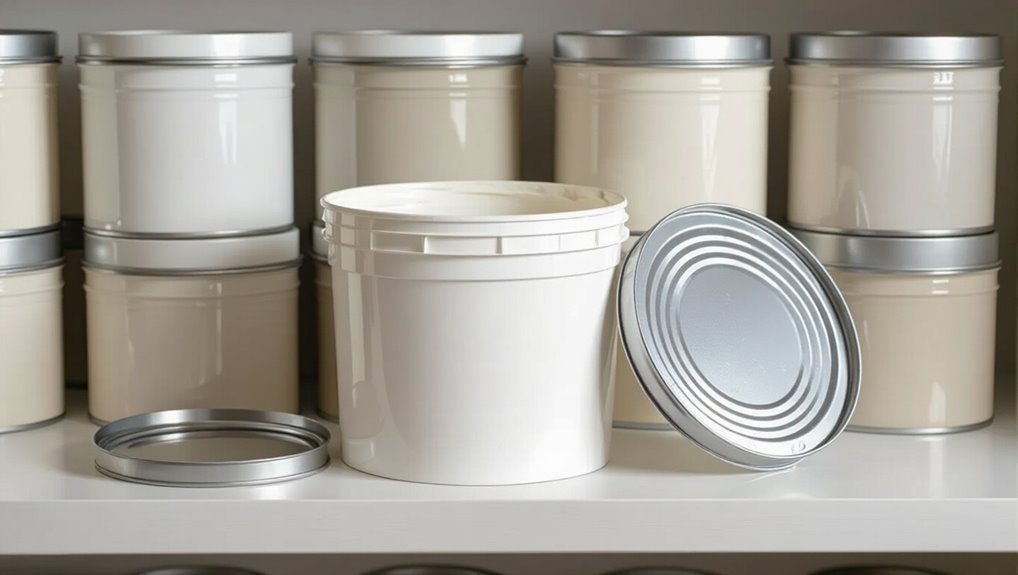
Anyone working with paint should know how long latex paint lasts because using expired paint can ruin a project and waste money.
You’ll protect your investment by tracking shelf life importance: proper storage preserves paint quality, color consistency, and coverage.
You’ll avoid rework, wasted materials, and time by discarding compromised cans and choosing fresh paint for reliable results every time.
What “Shelf Life” Means for Latex Paint
Clarity about shelf life tells you when latex paint will still perform as expected. You use “shelf life” to judge usability, not just age.
It reflects chemical stability, pigment and binder integrity, and shelf life factors like exposure to temperature swings or contamination.
Proper storage conditions—cool, dry, sealed—help preserve consistency and coverage so paint applies and cures correctly when you need it.
Quick Answer: How Long Unopened Latex Paint Lasts
Now that you know what shelf life measures, here’s the short answer: an unopened can of latex paint will usually stay good for about 2 to 10 years.
You can extend longevity by choosing proper paint storage solutions — cool, dry, stable temperature spots — and following basic paint preservation techniques like keeping seals airtight and original lids intact to prevent premature breakdown.
Quick Answer: How Long Opened Latex Paint Lasts
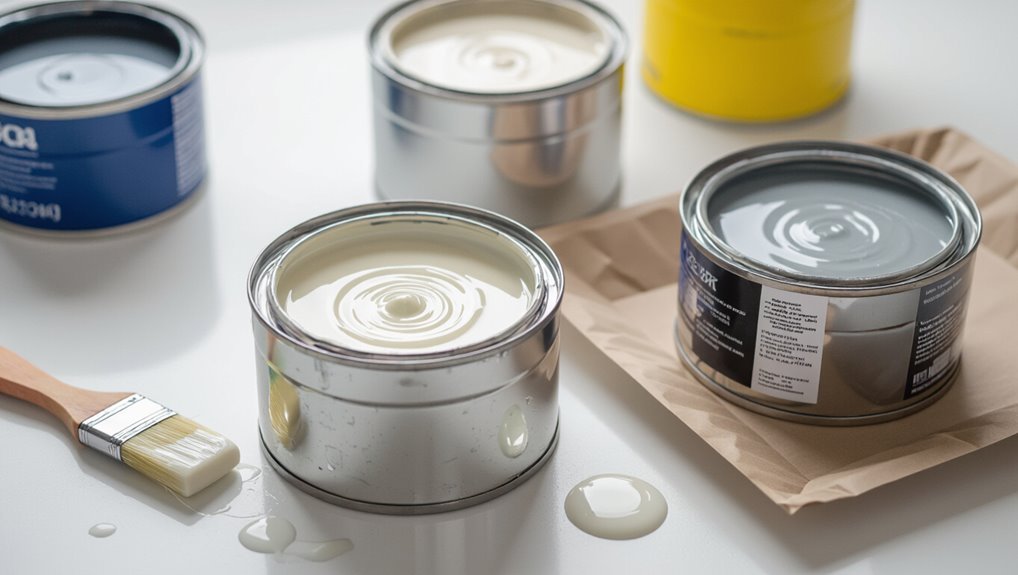
Opened latex paint typically stays usable for about 2 to 5 years if you’ve resealed the can tightly and stored it in a cool, dry place.
You should keep cans upright, avoid temperature swings, and limit air exposure to maximize paint longevity.
Good paint storage helps prevent skinning, separation, and odors, letting you reuse leftover paint for touch-ups with minimal waste.
How to Test Old Latex Paint for Usability
Start by giving the paint a quick visual and smell check — if it’s lumpy, has separated permanently, or smells foul, don’t use it.
Next, stir a small amount and test its performance by brushing or rolling on a sample board to see coverage, drying time, and finish.
If it goes on smoothly and dries normally, it’s likely still usable.
Visual And Smell Check
Wondering whether that can of latex paint is still good? Check visual indicators: look for separation, lumps, mold, or discoloration after stirring.
Inspect the lid and rim for rust or crusts.
Perform an odor assessment by sniffing briefly; a sour, rotten, or strong chemical smell means discard. Mild latex scent is normal.
If visuals and smell are clean, further testing can follow.
Performance And Application Test
If the paint looked and smelled fine, you’ll next verify how it actually performs.
Stir thoroughly, strain, and apply a small patch using your usual application methods—brush, roller, or sprayer.
Check leveling, coverage, drying time, and adhesion after recommended cure.
Note color shift and sheen.
If performance testing shows poor flow, cracking, or weak adhesion, discard the can.
Visual Signs Latex Paint Has Gone Bad
When you inspect a can of latex paint, look for clear visual cues that it’s gone bad: separation that won’t remix, dark or discolored streaks, visible mold or fuzz, and a curdled, chunky texture instead of a smooth, creamy consistency.
These visual indicators include color changes, consistency issues, separation signs, mold growth, container damage, humidity effects, odor variations, environmental factors, and degraded paint components.
Smell and Texture Clues Your Latex Paint Is Unusable
If your paint gives off a sour or rotten smell, it’s a strong sign it’s gone bad.
You should also watch for a curdled, lumpy texture or any sticky film forming on the surface.
Those odors and textures mean the paint won’t perform properly and should be discarded.
Sour Or Rotten Odor
Because a sour or rotten smell signals breakdown, you shouldn’t ignore that odor in a can of latex paint: it usually means bacteria or mold have contaminated the product, and the paint won’t perform or may cause health issues.
Use odor detection as a freshness indicator during paint storage. If a sour smell or rotten paint scent appears in scent analysis, discard the can—don’t risk application.
Curdled Or Lumpy Texture
A sour, rotten smell often comes with visual cues too, and one of the most telling is a curdled or lumpy texture in the can.
If you see a curdled consistency or a lumpy appearance, the binder and pigments have separated or coagulated.
Don’t try to salvage it with stirring; coverage and adhesion will be compromised, so discard and replace the paint.
Sticky Or Film Formation
When your latex paint feels tacky to the touch or has a thin, skin-like film on top, it’s a clear sign the product’s having chemical trouble and won’t perform properly.
You shouldn’t use paint showing sticky residue or visible film formation; it won’t level, may repel finish, and can clog rollers.
Discard compromised cans and clean tools; replace with fresh paint for reliable coverage and adhesion.
When You Can and Can’t Salvage Separated Paint
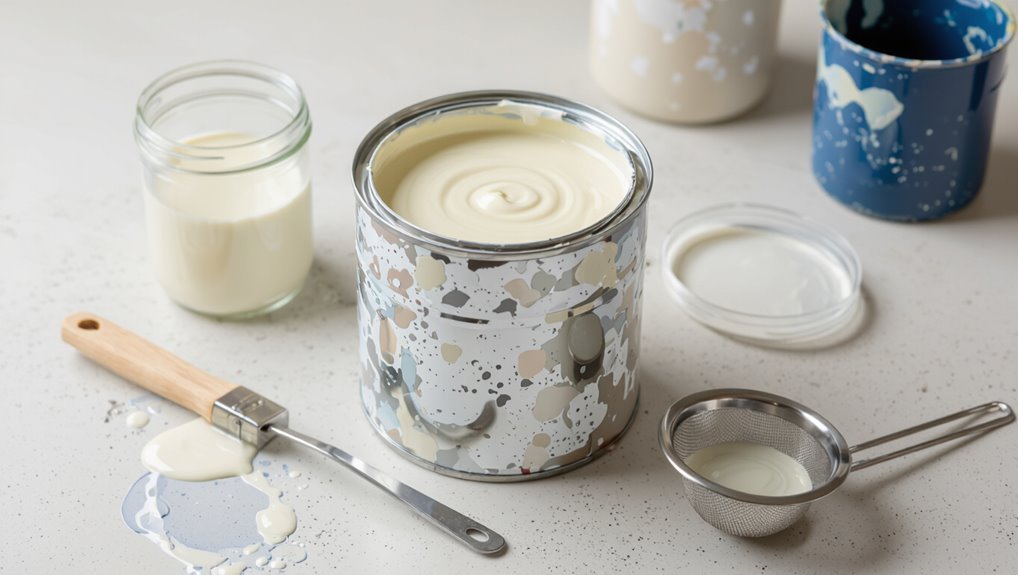
If you open a can and find the pigment sitting on top of a watery layer, don’t toss it immediately—separation is often reversible but not always safe to fix.
Check smell, mold, and complete curdling before attempting salvage techniques. If odor, flocculation, or a brittle skin appear, you can’t safely restore it.
Mild settling from paint separation causes can often be rebatched and reused.
How to Strain and Re‑Emulsify Latex Paint Safely
Since some separated paints are worth rescuing, you’ll want to strain and re‑emulsify them carefully to restore texture and performance.
Since some separated paints can be saved, strain and gently re‑emulsify them to restore texture and performance.
Use clean tools, work in a ventilated area, and avoid contamination.
Follow these quick steps using paint straining techniques and re emulsification methods:
- Pour through a fine mesh or paint strainer.
- Stir slowly with a paddle or drill mixer.
- Adjust with minimal water or latex additive.
When to Discard Latex Paint Instead of Repairing It
How do you know it’s beyond saving? Check for foul odor, mold, hard clumps, or separation that won’t remix—those are clear discard criteria.
If paint smells sour or has chunky solids after vigorous stirring and straining, don’t gamble. Assess repair options like thinning or filtering first, but once texture or smell signals spoilage, safely discard the can and replace the paint.
How Storage Temperature Affects Latex Paint Life
Store latex paint in a cool, dry place between about 50°F and 77°F (10°C–25°C) to maximize its shelf life.
If temperatures swing below freezing, the water in the paint can separate and ruin the finish, while prolonged heat can thicken the binder and shorten usability.
You’ll get the best longevity by avoiding garages or sheds that experience extreme cold or heat.
Ideal Storage Temperatures
When you keep latex paint within a steady, moderate range—generally between 40°F and 80°F—it retains its consistency, color, and performance far longer than if it’s exposed to extreme heat or freezing.
You’ll follow ideal conditions and temperature ranges, control humidity levels, limit air exposure, and choose proper container types to maximize paint quality and storage duration.
Storage tips and climate considerations:
- Cool, dry spaces
- Off the floor, sealed lids
- Avoid direct sunlight
Extreme Temperature Effects
If you expose latex paint to extremes of heat or cold, its chemistry and texture change quickly, and you’ll notice problems like separation, clumping, or loss of adhesion.
You should avoid wide temperature fluctuations and keep consistent storage humidity; sudden freezes rupture binders, excessive heat accelerates skinning and VOC loss, and both reduce recoat performance and shelf life.
Why Freeze–Thaw Cycles Ruin Latex Paint
Cold and thaw cycles wreck latex paint by repeatedly stressing the water-based emulsion that keeps pigment and binder evenly suspended. You’ll see how freeze damage and paint separation follow when temperature extremes and moisture exposure occur.
Environmental factors and poor storage conditions accelerate quality degradation and reduce paint longevity. Consider risks like:
- Curdling and grainy texture
- Broken film formation
- Loss of adhesion and color stability
How Airtight Sealing Extends Latex Paint Longevity
After freeze–thaw cycles break down the emulsion, sealing your latex paint airtight slows the chemical and physical changes that cause separation, skinning, and odor.
You’ll prevent oxygen and moisture contact, reducing microbial growth and solvent evaporation.
Use paint preservation techniques focused on airtight closures and label dates; follow ideal sealing methods to minimize headspace and avoid contamination for longer usable life.
Best Containers to Keep Latex Paint Fresh
To keep latex paint usable longer, pick the right container: airtight metal cans resist corrosion, food-grade plastic buckets are lightweight and stackable, and UV-protective containers block light damage.
You’ll want lids that seal snugly and labels that show date and color.
Store them in a cool, dry spot to maximize freshness.
Airtight Metal Cans
When you reseal the original can properly or transfer paint into a purpose-made metal container with a gasketed lid, you cut off oxygen and moisture that cause skinning and microbial growth.
- paint can materials and airtight seals
- storage techniques and moisture barriers
- temperature fluctuations, container types, sealing methods for paint preservation
Food-Grade Plastic Buckets
One of the best ways you can keep leftover latex paint usable is to store it in clean, food-grade plastic buckets with tight, gasketed lids; they resist corrosion, won’t react with paint, and are easier to handle than full metal cans.
You’ll appreciate food grade benefits like safety and odor neutrality, plus plastic bucket durability for stacking, transporting, and long-term sealing to slow drying and contamination.
UV-Protective Containers
- Metal cans with UV coating
- HDPE black plastic buckets
- UV-resistant lined pails
Using Airtight Tubs vs Original Cans for Latex Paint
If you want to keep leftover latex paint usable for months or even years, you’ll need to decide whether to transfer it into an airtight plastic tub or keep it in its original metal can.
You’ll weigh airtight containers versus original cans, compare storage methods, sealing techniques, contamination risks, moisture control, temperature effects, and best practices to maximize paint longevity and preservation.
How to Reseal a Can for Longer Storage
Before you seal the can, wipe the rim and lid clean of drips and dried paint so the closure seats evenly.
Press the lid down firmly and tap around the edge with a rubber mallet or block of wood to get a snug fit.
For extra protection, apply an airtight sealant like painter’s putty or plastic wrap and a tight band to keep air out.
Properly Clean The Rim
Wipe the can’s rim and threads free of paint and dried drips so the lid can seat tightly when you reseal it.
You’ll improve rim cleaning and paint preservation with quick, consistent steps:
- Scrape excess paint with a putty knife.
- Wipe with a damp cloth, then dry.
- Clean crevices with a cotton swab.
Seal promptly to keep contaminants and skinning out.
Choose Airtight Sealant
After you’ve cleaned the rim, pick an airtight sealant to keep the paint fresh and prevent skinning.
Use silicone or specialized can caps, tap lids gently with a rubber mallet, and apply a thin bead of food-safe silicone around the lid for extra protection.
Consider container materials—metal vs. plastic—when choosing sealing techniques to guarantee an even, long-lasting seal for storage.
How to Store Partial Cans for Quick Touch‑Ups
When you finish a job but want to keep paint for quick touch‑ups, seal the partial can tightly and store it upside down to minimize air contact and skin formation.
When a job’s done, tightly seal the partial can and store it upside down to keep paint fresh.
You’ll preserve color and consistency for touch up techniques with proper can storage.
Also:
- Wipe rim and replace lid firmly
- Label date and color
- Store in a cool, dry place away from sunlight
How Water Contamination Shortens Latex Paint Shelf Life
If you introduce water into a latex paint can—through a dirty brush, damp tools, or condensation—you’ll speed up breakdown and spoilage by encouraging bacterial and fungal growth.
You should prevent water damage and moisture exposure to limit contamination effects and paint deterioration.
Good storage practices and preservation techniques uphold paint longevity; follow basic quality assurance steps to spot spoilage and discard compromised cans promptly.
How Paint Thinner and Additives Change Storage Needs
If you mix solvents or thinners into latex paint, you’ll change how it needs to be stored because different thinner types alter evaporation and separation rates.
Likewise, additives like stabilizers or anti-foaming agents can extend shelf life or, if incompatible, trigger destabilization.
Check manufacturer guidance and label compatibility so you can adjust sealing, temperature, and shelf placement accordingly.
Thinner Type Effects
Because different thinners and additives interact with latex binders and coalescing agents, they’ll change how long your paint stays usable and what storage conditions it needs.
You should note thinner types and solvent impact; dilution methods cause viscosity changes and influence storage effects.
Consider:
- Water vs. chemical thinners: compatibility and risk
- Amount added: altered drying and separation
- Packaging: headspace and contamination
Additives And Stability
When you add thinners, anti-skinning agents, biocides, or coalescents, they change not just how the paint flows and dries but how it should be stored and how long it stays usable.
You’ll monitor additive stability because formulation effects alter paint consistency and pigment preservation.
Store treated cans tightly sealed, label additives and dates, keep cool, and use sooner—treated paints age faster or unpredictably.
How Long Diluted or Tinted Latex Paint Lasts
Diluted or tinted latex paint generally won’t last as long as unopened, original paint because added water or colorants change its chemistry and stability.
You can extend usable life by monitoring diluted longevity and tinted stability, plus maintaining storage conditions and proper sealing.
- Check scent, consistency, and separation.
- Keep lids tight and upright.
- Label date and dilution ratio.
How Different Finishes (Flat, Satin, Gloss) Age
Although the base ingredients are similar, flat, satin, and gloss latex paints age differently, and you’ll notice distinct changes in appearance and durability over time.
Flat hides flaws but loses pigment and scuffs easily, reducing finish durability.
Satin balances resilience and sheen, showing moderate wear.
Gloss resists washing and lasts longer, boosting paint longevity, though scratches become more visible.
How Pigment Type Affects Latex Paint Stability
Finish choice affects how wear shows, but the pigments you pick shape how the paint actually holds up over time.
You’ll notice pigment stability and color retention vary with pigment quality and formulation differences. Watch for lightfastness issues, binder compatibility, and chemical interactions that cause color fading, aging effects, or altered paint consistency.
Consider:
- Organic vs inorganic pigments
- UV resistance and dyes
- Dispersion quality
Which Label Info Predicts Latex Paint Shelf Life
Wondering which bits of the label actually tell you how long latex paint will last? You’ll scan for manufacture date, batch code, and storage tips—these label longevity clues matter. Look for explicit expiration indicators like “use by” or recommended storage temperature. Check VOC and preservative mentions; they hint at durability. Use the table below to spot key label elements quickly.
| Manufacture Date | Batch Code | Storage Tips |
|---|---|---|
| Use-by | Codes | Temp range |
| VOC | Preservatives | Seal advice |
How to Inspect a Paint Can Before Use
Now that you know what to look for on the label, check the can itself before you open it: inspect the lid seal for rust or dents, look for swollen or bulging sides that indicate freeze/thaw damage, and scan the can body and bottom for leaks, dried paint crusts, or mildew.
Perform a quick paint can inspection and follow proper handling:
- Verify lid integrity.
- Note odor or separation.
- Document damage and storage conditions.
How to Test and Record Paint Color and Batch for Touch‑Ups
Before you close the can, make a small sample swatch on a white card to see the true color when it dries.
Label the card with the paint name, sheen, date opened, and the batch or tint code from the can.
Take a clear photo of the swatch in natural light and store it with the labeled card for easy touch‑up matching later.
Sample Swatch Creation
Make at least one test swatch for each color you plan to keep for touch-ups so you can verify appearance and match future batches.
Create controlled sample size strips, note swatch application technique, and test color blending, paint layering, finish options, and swatch durability to check color consistency.
- Use consistent strokes and substrate
- Cure fully before evaluating
- Photograph under natural light
Labeling Batch Information
How will you guarantee a perfect match months or years from now?
You’ll test swatches, note formula codes, and attach durable paint labeling to lids and cans.
Use simple batch tracking—date, tint lot, tester location—and log entries in a spreadsheet or app.
Combine storage organization with basic inventory management so touch‑ups use the correct stored batch without guesswork.
Photographing Color Matches
When you photograph color matches, aim for consistent lighting, camera settings, and framing so future touch‑ups reproduce the true hue; include a clear shot of the swatch next to the labeled can lid and a color card or neutral gray reference to correct white balance later.
Use color matching and simple photography techniques, then:
- Shoot perpendicular to swatch
- Note batch number and date
- Save RAW and labeled JPG
Best Storage Locations in Your Home or Garage
If you want your latex paint to last, store it where temperature and humidity stay steady—avoid attics and uninsulated garages that swing between freezing and blistering heat.
Choose cool, dry spots with ideal conditions: basements or interior closets offering humidity control, minimal light exposure, and reduced temperature fluctuations.
Use organized shelving for container accessibility, practice pest prevention, and guarantee airflow management to prevent stale, damp storage.
How Climate‑Controlled Storage Changes Timelines
If you store paint in a climate-controlled space, you’ll keep temperature and humidity steady, which slows separation and microbial growth.
That stability can extend usable life for long-term storage compared with a basement or unheated garage.
For short-term projects, climate control still helps maintain consistency so your paint applies the same way next week or next month.
Temperature And Humidity
One key factor that will change how long latex paint stays usable is the environment you store it in—specifically temperature and humidity.
You’ll want to monitor temperature effects and humidity impact because they alter consistency and mold risk. Store paint where conditions are stable; avoid freezing or extreme heat.
- Keep temps 50–77°F
- Prevent high humidity
- Seal cans tightly
Long‑Term Vs Short‑Term
When you store latex paint short‑term in a climate‑controlled space—think a garage that stays between 50–77°F and low humidity—you’ll usually get a year or more of reliable life; for long‑term storage, maintaining those steady conditions becomes essential to push that timeline to several years, since fluctuations in temperature or moisture accelerate breakdown and mold.
| Use case | Temp range | Expected life |
|---|---|---|
| Short term use | 50–77°F | ~1–2 years |
| Long term storage | Stable 50–77°F | 3+ years |
| Poor conditions | Fluctuating | Months–ruined |
Pro Tips: How Painters Store Latex Paint Long‑Term
Because proper storage starts with preparation, you should clean cans, seal lids tightly, and keep paint at a steady, moderate temperature to preserve latex paint for years.
Clean cans, seal lids tightly, and store latex paint at a steady, moderate temperature to preserve it for years.
For effective paint storage and paint preservation, you should label cans, elevate them off cold floors, and rotate by date.
- Use airtight lids
- Store upright and insulated
- Note mixing ratios and color codes
How Retailers Manage and Rotate Paint Inventory
Those same storage habits you’d use at home scale up for retailers, but with added systems to track lots, shelf life, and returns. You’ll apply retailer strategies to label, segregate, and monitor paint inventory, handle returns, and prioritize stock for sale.
| Area | Task | Benefit |
|---|---|---|
| Backroom | Label lots | Traceability |
| Floor | Rotate stock | Freshness |
| Returns | Quarantine | Quality control |
How to Rotate and Inventory Your Stored Paint
If you want your paint to stay usable and avoid waste, set up a simple rotation and inventory routine that you actually follow:
Use basic paint organizing techniques and solid inventory management to track dates and quantities. Store older cans up front and note condition during checks.
- Check cans monthly
- Move oldest forward
- Record usage and disposal dates
How to Label Stored Latex Paint for Easy Reuse
Label each can clearly so you can grab the right color, finish, and mixing info without opening lids or guessing. Use simple labeling techniques: color coding, date marking, and noting container types. Integrate labels into storage solutions and inventory systems so you can track batches and shelf life. Keep labels waterproof and consistent for quick reuse.
| Field | Example |
|---|---|
| Color | SW 7005 |
| Date | 2024-03-10 |
| Type | Quart |
| Notes | Satin, mixed 1:1 |
How to Dispose of Old Latex Paint Responsibly
When paint has outlived its usefulness, you should dispose of it responsibly to protect people and the environment.
When paint’s usefulness ends, dispose of it responsibly to protect people and the environment.
Latex paint is water-based but still needs proper handling.
Follow these steps for eco-friendly disposal and paint recycling:
- Solidify small amounts with kitty litter or a commercial hardener.
- Take hardened cans to hazardous-waste or community drop-off events.
- Never pour paint down drains or into soil; seal lids tightly.
Where to Recycle or Donate Usable Leftover Paint
One good option is to donate usable leftover latex paint to local organizations like community centers, schools, theater groups, or Habitat for Humanity ReStores, which often accept opened cans in good condition and put them to practical use.
You can also check municipal recycling options, community paint swaps, or nonprofit paint donation programs so you’ll redirect usable paint and avoid landfill waste.
Quick Checklist to Extend Latex Paint Life
To keep your latex paint usable longer, store cans upright in a cool, dry place and out of direct sunlight.
Always seal lids tightly after use and wipe rims to prevent air leaks.
Before repainting, check for separation, lumps, or foul odors that signal contamination.
Store Paint Properly
Follow a few simple habits and you’ll keep latex paint usable far longer than the can’s stamped date.
Store paint in cool, dry spots to minimize humidity effects and maintain temperature control.
Choose suitable container types for paint storage and consider long term solutions for paint preservation.
Storage tips and proper sealing matter.
- Keep cans off concrete
- Avoid direct sunlight
- Label date and color
Seal Containers Tightly
When you seal latex paint cans tightly, you keep air, moisture, and contaminants out so the paint stays usable longer; a good seal is the simplest way to prevent skinning and spoilage.
Tap lids evenly, wipe rims, and use a rubber mallet or a block for snug container sealing.
Label and store upright in a cool, dry area to optimize paint storage.
Check For Contamination
Anyone can spot contamination quickly if you know what to look for: check for lumps, foul odors, mold, or unusual separation before you open a can.
You should inspect lids and rims, label dates, and smell briefly. Identify contamination sources and act on contamination prevention immediately:
- Look for visible mold or clumps
- Smell for sour or chemical odors
- Note watery separation or skinning
Common Myths About Storing Latex Paint
Curious which storage tips you can trust about latex paint? You’ll hear myth misconceptions like “freeze-proof if sealed” or “never reuse opened cans.” Don’t buy those.
You should store cans tightly sealed, elevated off cold floors, upright, and away from direct sun. Good storage techniques slow degradation, but they don’t restore spoiled paint.
When in doubt, test before reuse.
Frequently Asked Questions
Can Expired Latex Paint Be Used for Outdoor Projects?
You can sometimes use expired paint for outdoor projects, but you’ll sacrifice paint durability; test and strain it first, and avoid harsh weather conditions—expired paint may perform poorly, so expect uneven coverage and reduced long-term protection.
Does Paint Stored in Metal Vs Plastic Containers Rust or Contaminate the Paint?
Yes — metal cans can rust and contaminate paint over time, while plastic resists corrosion but can leach chemicals; you’ll choose container materials carefully to optimize paint preservation and prevent contamination or degradation.
Can Latex Paint Be Safely Shipped or Mailed Long-Term?
Yes — you can ship latex paint long term if you take shipping precautions: seal lids, use leak-proof containers, cushion cans, label hazardous material if required, avoid freezing or extreme heat, and choose reliable carriers experienced with long term storage.
Are There Special Considerations for Storing Paint Used on Food-Contact Surfaces?
Yes—you’ll need caution: like a chef choosing ingredients, you’ll only use food safe formulations and follow paint labeling for cure times, VOCs, and NSF approvals; test, ventilate, and avoid contact until fully cured.
Does UV Light Exposure Through Windows Affect Stored Paint Color or Stability?
Yes — UV degradation through windows can cause color fading and stability concerns, so you should avoid direct sunlight on stored paint; limiting exposure preserves paint longevity, prevents binders breaking down, and maintains consistent finish.
Conclusion
Now that you know the basics, you can keep or toss paint with confidence. Want your unfinished projects to still look great next season? Store cans tightly sealed, in cool dry spots, and label them with dates and color—those small steps really pay off. Test questionable paint before using, and dispose of unusable cans responsibly or donate leftovers. With these habits you’ll save money, reduce waste, and avoid painting headaches down the road.
