
How Long Does Latex Paint Last Once Opened? Shelf Life
Opened latex paint typically lasts about 2 to 10 years if you seal the lid tightly, store cans upright in a cool, dry place, and avoid contamination. You’ll want to wipe rims, use plastic wrap under the lid, and label cans with dates to help keep paint usable. Watch for sour smells, mold, chunky separation, or tacky texture—those mean toss it. If you want tips on testing, reviving, and proper disposal, keep going.
How Long Opened Latex Paint Typically Lasts

Opened latex paint will usually last about 2 to 10 years, depending on how well you’ve stored it and whether it’s been contaminated.
You can improve paint longevity by sealing lids tightly, storing cans upright in a cool, dry place, and avoiding temperature extremes.
Follow storage tips like wiping rims and using plastic wrap under lids to reduce air exposure and contamination for better results.
Quick Answer and Triage for Opened Paint
If you need a quick verdict, opened latex paint is usually still usable for touch-ups if it looks, smells, and stirs back to a smooth consistency—otherwise toss it.
Check small amounts on a test surface, note color and finish, and follow paint longevity tips like sealing lids and storing cans upright.
For better results, adopt proper storage solutions and label cans with date and room.
Signs Opened Latex Paint Has Gone Bad
Several clear signs tell you when latex paint has gone bad: a sour or musty smell, visible mold or chunky separation that won’t re-emulsify when stirred, and a curdled or stringy texture instead of smooth viscosity.
Check the lid and rim for rust or swollen cans from poor paint storage.
These spoilage indicators mean you shouldn’t use the paint—dispose of it safely.
How to Test Paint: Smell, Texture, and Color
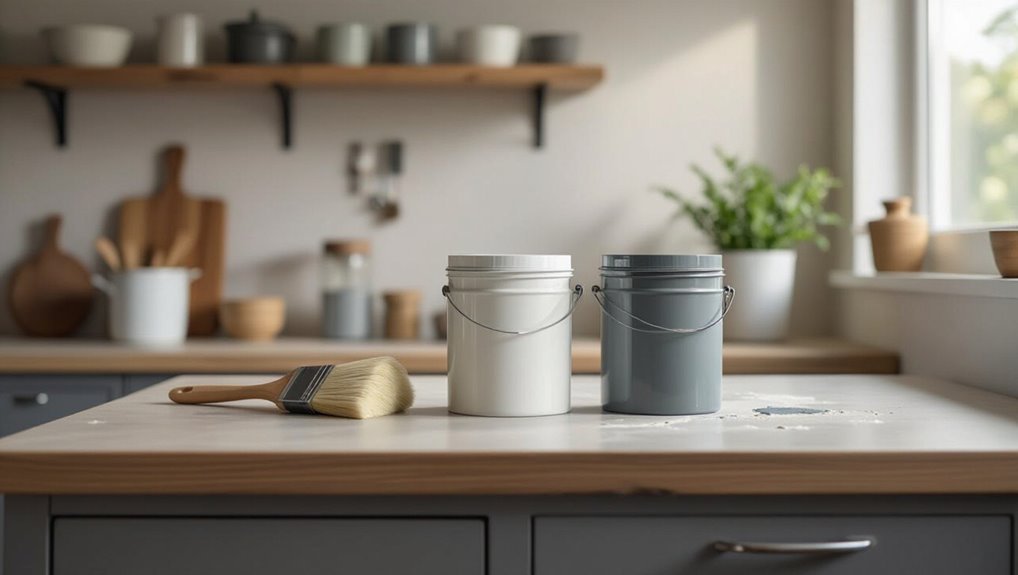
To check whether your latex paint is still usable, start by smelling it, feeling its texture, and inspecting the color—these quick tests tell you most of what you need to know.
If the odor’s sour, clumpy texture appears, or color separates oddly, the paint quality is compromised.
Use simple testing methods: stir, scoop a bit, and apply a small patch to confirm consistency and coverage.
When to Revive vs. When to Throw Opened Paint Away
If you spot solid chunks in the can, try stirring them back in and check whether the texture and smell normalize—you’ll often save usable paint that way.
But if the paint smells foul, has visible mold, or shows permanent separation, it’s safer to toss it.
Use those clear signs to decide quickly whether to revive the paint or throw it away.
When To Stir In Solids
When you open a can of latex paint and see solids settled on the bottom, don’t assume it’s ruined—many paints can be revived by thoroughly stirring the solids back into suspension, but there are limits to what’ll work.
You should use proper stirring techniques, scrape and mix bottom solids, then test for uniform color and consistency.
If chunks persist or separation won’t blend, discard.
Smell And Texture Check
Smell the paint and run your fingers along the surface—odors and texture tell you a lot about whether opened latex paint can be saved. Use smell indicators and texture evaluation: faint, painty odor and smooth feel means revive; sour smell or tacky grit means toss.
| Reaction | Action |
|---|---|
| Painty | Stir & thin |
| Faint | Test |
| Sour | Discard |
| Tacky | Toss |
Mold Or Separation Signs
Beyond odor and texture, check for visible mold and stubborn separation—these are clearer signals you can’t just stir and use.
If you see fuzzy colonies or dark spots, toss the can; mold prevention can’t salvage contamination.
Thick, oily layers that won’t reincorporate indicate irreversible paint separation.
Small, clear-water separation you can often revive by filtering and remixing, but don’t risk compromised finish or health.
How to Thin and Strain Thickened Latex Paint
If your latex paint’s gone thick from age or cold, you can restore its consistency without ruining the finish—start by thinning it carefully and straining out lumps and skin. Use water sparingly, stir slowly, and pour through a nylon filter. Practice paint thinning techniques and paint straining methods to avoid over‑diluting. Test on a scrap before painting.
| Step | Action |
|---|---|
| 1 | Stir |
| 2 | Add water |
| 3 | Mix |
| 4 | Strain |
| 5 | Test |
How Exposure to Air Causes Skinning and Separation
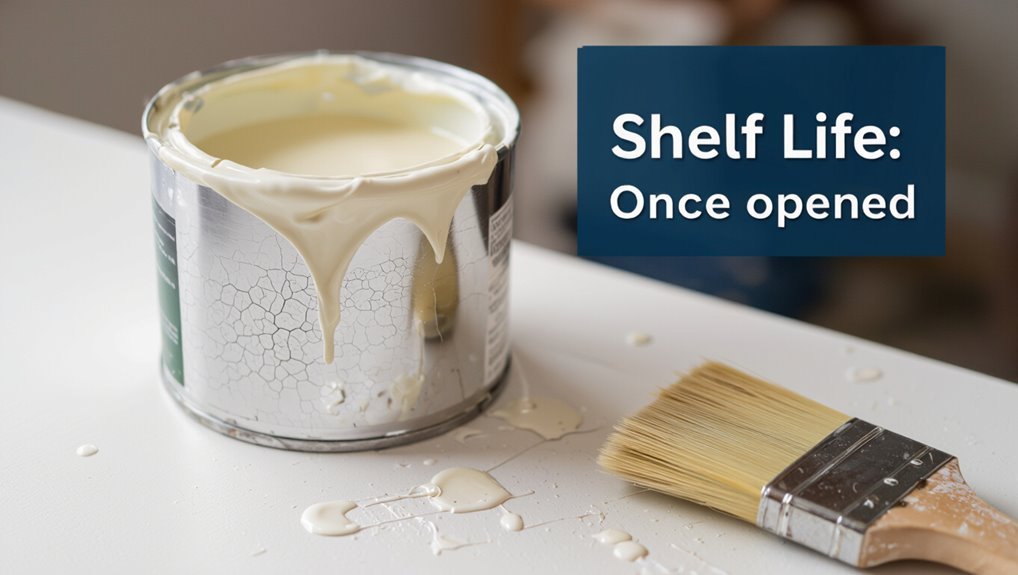
When you leave a can open or partially exposed, air contact causes a thin skin to form on the surface.
As solvents evaporate from the paint, the remaining components can separate and thicken, making the batch uneven.
Any dust, dirt, or debris that gets in the can speeds up film formation and worsens separation.
Air Contact Causes Skinning
Air contact causes latex paint to form a dry film on the surface, so if you leave a can open even briefly the top layer can skin over while the paint beneath stays usable.
You’ll notice skins when airborne particles and poor air quality speed surface drying.
To aid paint preservation, cover cans tightly, minimize open time, and strain skins out before using the remaining paint.
Solvent Evaporation Leads Separation
Although tiny amounts of solvent escape the can as soon as it’s opened, those vapors quickly alter the paint’s balance and can force heavier pigments and binders to settle or separate from the thinner liquid.
You’ll notice solvent effects change paint consistency, causing watery top layers and dense sediment below. Stirring helps temporarily, but repeated exposure worsens separation and reduces usable life unless you reseal promptly.
Contaminants Accelerate Film Formation
Tiny specks of dust, skin oils, and microbial spores speed up film formation on opened latex paint by providing nuclei that let the surface skin over before the rest of the can evens out.
You’ll notice thicker skin, trapped clumps, and faster separation when contamination risks rise. To prevent this, seal cans promptly, avoid dipping dirty brushes, and keep lids and rims clean.
How Contamination From Dirt and Tools Ruins Paint
When dirt, dust, or grime gets into your paint—usually from dirty brushes, rollers, or work surfaces—it creates weak spots in the film that lead to rough texture, poor adhesion, and premature failure.
You’ll see visible defects from paint contamination as dirt particles cause blistering and flaking.
Keep tool hygiene and surface cleanliness strict to prevent ruined coats and shortened durability.
How Temperature Extremes and Freezing Affect Latex Paint
Contamination and dirty tools don’t just create cosmetic flaws—they can interact with temperature to make problems worse.
You’ll notice temperature impact in separation, thickening, or premature skinning when cans sit in heat or cold. Freezing effects damage latex binders, causing flocculation and grainy texture.
Store paint at stable, moderate temperatures and clean tools to minimize these risks and extend usability.
Did Your Paint Freeze? How to Handle Thawed Paint
If your paint has frozen and then thawed, don’t assume it’s still usable—inspect it carefully before you stir or apply.
Check for separation, graininess, or foul odor; freezing effects can ruin binder integrity.
For paint preservation, follow these steps:
- Smell and stir—look for lumps.
- Strain into a clean container.
- Test a small patch; discard if finish is off.
How Additives and Preservatives Change Shelf Life
You’ll notice manufacturers use different preservative types to prevent mold and bacterial growth, and each one affects shelf life differently.
Additives like antifreeze, thickeners, and coalescents also change how long paint stays usable by altering viscosity and freeze-thaw stability.
Knowing which preservatives and additives are in your can helps you predict storage life and decide whether to keep or discard it.
Preservative Types
Because paint is mostly water and organic binders, manufacturers add different preservatives and biocides to stop mold and bacteria from shortening its usable life.
You’ll notice preservative benefits and preservative drawbacks when choosing paints; stronger biocides extend life but can smell or irritate.
Consider common types:
- Isothiazolinones
- Formaldehyde releasers
- Organic fungicides
Choose based on storage and sensitivity.
Additive Effects
When manufacturers tweak a latex formula with additives and preservatives, they directly change how long the paint stays usable by altering its resistance to drying, microbial growth, and chemical breakdown.
You’ll notice different additive types—film formers, coalescents, thickeners, and biocides—each shifts longevity factors.
Store opened cans tightly, limit air exposure, and know that stronger preservative blends usually extend usable life.
Opened Premium vs. Budget Latex Paint: Lifespan Differences
Opened cans of premium and budget latex paint can age very differently even under the same conditions.
You’ll notice premium longevity due to better binders and preservatives; budget limitations often mean quicker breakdown.
Consider:
- Sealing and storage — preserves quality.
- Pigment and binder stability — premium lasts longer.
- Contamination risk — budget cans spoil faster if exposed.
How Much Leftover Paint to Keep After a Project
Knowing how long different paints hold up helps you decide how much to save after a job.
Keep a quart for touch-ups on small areas and a gallon only if you’ll repaint the room soon. Label lids with date, color, and room.
Track paint usage so you don’t overstock; proper leftover storage in a cool, dry spot minimizes waste and future guesswork.
How to Reseal Opened Latex Paint for Longer Storage
If you want that leftover latex to last, reseal the can tightly and exclude air and moisture from the start.
You’ll improve paint storage with simple steps:
- Wipe rim, press lid firmly, tap edges to seat it for airtight can sealing.
- Add a layer of plastic wrap over the opening before closing.
- Store upright in a cool, dry spot away from temperature swings and direct sunlight.
Safely Transfer Paint to Extend Shelf Life
Move leftover paint into a clean, airtight container to keep it usable longer.
When you transfer, strain out skin and debris, work quickly, and label the container with color and date.
Follow paint preservation techniques like minimizing air exposure and filling gaps to reduce sloshing.
Choose proper container selection: rigid, nonreactive jars with tight lids to prevent contamination and odor transfer.
How to Store Opened Latex Paint in a Garage or Shed
After you’ve sealed leftover paint properly, storing opened latex in a garage or shed requires extra care because those spaces see wide temperature swings and humidity shifts.
Use these garage tips for reliable paint storage:
- Elevate cans off concrete and keep lids tight to prevent moisture intrusion.
- Store in insulated, shaded spots away from direct heat.
- Label with date and color for quick rotation.
How Indoor Climate Control Preserves Paint Quality
Keep indoor temperature and humidity steady to stop paint from thickening, separating, or growing mold, since extreme swings speed up breakdown.
Make sure you have good ventilation and airflow so fumes don’t linger and moisture doesn’t build up around stored cans.
With the right climate control you’ll extend usable life and keep paint ready for touch-ups.
Temperature And Humidity
If you control indoor temperature and humidity, you’ll slow the breakdown of latex paint and keep finishes looking fresher longer.
You should maintain steady temperature and humidity control to prevent clumping, skinning, or mildew.
Tips:
- Keep storage at consistent moderate temperatures to avoid temperature fluctuations.
- Use a dehumidifier in damp areas.
- Store cans off concrete and sealed tightly.
Ventilation And Airflow
Because air movement helps control moisture and temperature, good ventilation directly preserves latex paint quality by reducing conditions that cause blistering, mildew, and slow curing.
You should guarantee air circulation when storing or using opened paint: open windows, run fans, or use HVAC to maintain steady, moderate airflow.
Effective ventilation speeds drying, prevents musty odors, and limits contaminants that degrade paint.
How to Label and Organize Partially Used Paint Cans
A simple labeling system will save you time and frustration when you’re dealing with partially used paint cans.
Use clear labeling techniques and storage solutions to keep colors organized. Stick to practical organization tips and note date, room, and color on lids.
- Date and room
- Color and finish
- Seal method and notes
How Often You Should Stir Stored Latex Paint
When you store latex paint, plan to stir it every few months to keep pigments and binders evenly suspended; this prevents settling and guarantees a smooth, consistent finish when you reopen the can.
You should also stir before use and after temperature swings.
These paint preservation techniques maintain mixing consistency, reduce clumps, and help you assess the paint’s condition quickly without overworking the product.
How to Prevent Mold and Bacterial Growth in Paint
If you want your stored latex paint to stay usable, keep moisture and contaminants out by sealing cans tightly, storing them in a cool, dry spot, and wiping rims and lids before closing so mold and bacteria have no foothold.
Use these steps for mold prevention and bacteria control:
Use these simple steps to prevent mold and bacterial growth in stored paint—keep it sealed, dry, and inspected.
- Keep cans elevated and avoid damp areas.
- Add a tight plastic wrap seal.
- Label and inspect regularly.
How to Use Old Paint as Primer, Undercoat, or Test Patch
After wiping rims and sealing cans to keep contaminants out, you can put older latex paint to practical use instead of tossing it.
Use old paint for primer application on noncritical areas after thinning via paint mixing. Follow surface preparation, and try undercoat tips like thin, even coats.
Test patching reveals adhesion and color matching. Adjust with primer or fresh topcoat using proper application techniques.
How to Dispose of Unusable Latex Paint Responsibly
Although you hoped to reuse every can, some latex paint becomes unusable and needs responsible disposal; knowing local rules and safe methods prevents pollution and fines.
Follow options below and act promptly:
- Check municipal hazardous waste programs for drop-off and paint recycling.
- Offer usable portions for paint donation to community groups or shelters.
- Solidify small amounts (kitty litter) then discard per local trash rules.
How Much Money Proper Paint Storage Can Save You
When you store paint properly, you cut down on wasted product, fewer repurchases, and lower disposal costs—saving you both time and money over years of touch-ups and projects.
You’ll see clear cost savings from paint preservation: sealed lids, stable temperatures, and off-ground storage keep paint usable longer.
That means fewer emergency trips, reduced waste fees, and more budget for actual improvements.
How to Choose Smaller Containers to Avoid Waste
Choosing smaller paint containers helps you buy only what you’ll use, cutting waste and saving money on touch-ups and disposal.
You’ll pick paint container options that match project size, label cans clearly, and prefer eco friendly storage to keep leftovers usable.
Consider:
- Sample pots for small areas
- Quart or pint tins for trims
- Airtight jars with desiccant packs
Common Myths About Latex Paint Shelf Life Debunked
You might assume old paint is fine as long as it looks okay, but that’s not always true—separation and clumps can mean it’s unusable.
Don’t rely only on smell to tell if paint has spoiled, since odors can be misleading.
And while freezing can harm latex paint, brief cold exposure isn’t always catastrophic; storage conditions matter.
Old Paint Still Usable
1 common myth says you can always use old latex paint as long as it looks okay, but that’s misleading.
You should check consistency and proper paint storage; even sealed cans can degrade.
Consider these options:
- Stir and test a small patch.
- Strain and revitalize slightly separated paint.
- Choose paint recycling or responsible disposal if texture or performance fails.
Smell Indicates Spoilage
While a sour or musty odor can signal that latex paint’s gone bad, smell alone isn’t a reliable test — some spoiled cans hardly smell, and others just pick up odors from storage.
You should check texture, separation, and smoothness rather than relying solely on odor indicators. If you spot lumps, a foul color change, or persistent clumps when stirring, treat it as spoiled paint.
Freezing Damages Latex
Though freezing can harm latex paint, it doesn’t always ruin a can outright — what’s critical is how many freeze-thaw cycles it endured and whether the pigment and binder separated irreversibly.
You should check for clumping, watery separation, or texture change. Consider these points:
- Inspect for curdling and lumps.
- Smell for sour odor.
- Note container bulging—temperature sensitivity and freezing effects matter.
Frequently Asked Questions
Can Opened Latex Paint Be Safely Used on Surfaces That Contact Food?
No — you shouldn’t use opened latex paint on food-contact surfaces unless the product explicitly states it’s food-safe; paint ingredients and possible toxins can contaminate food, so choose certified food-safety coatings or durable clear sealants instead.
Can Paint Fumes From Stored Cans Cause Long-Term Health Effects?
Yes — prolonged fume exposure from stored paint cans can cause health risks; you’ll experience headaches, dizziness, respiratory irritation, or worse with chronic exposure, so ventilate, seal cans tightly, and store them away from living areas.
Will Re-Canned Paint Maintain Color Consistency Over Years?
About 70% of paints show noticeable color fading after a decade, so you won’t always keep perfect matches; if you’re careful with storage conditions and reseal cans, re-canned paint usually maintains color consistency pretty well.
Can Latex Paint Be Donated if a Little Past Its Prime?
Yes — you can often donate slightly past-prime latex paint if it meets donation guidelines. You’ll check paint quality (no foul smell, smooth consistency, no mold), label it honestly, and contact local centers before dropping off.
Do VOC Levels Change as Opened Paint Ages?
Yes — VOC levels can change as opened paint ages; you’ll see VOC degradation as volatile compounds evaporate or break down. Proper paint storage slows this, but older opened cans may still emit different VOC profiles over time.
Conclusion
In short, opened latex paint usually keeps for about 2–5 years if stored well, but you’ll want to toss it once smell, separation, or lumps show up. Surprisingly, the EPA estimates that household paint disposal contributes to a significant portion of municipal hazardous-waste streams—so saving usable paint matters. By storing cans properly and buying smaller amounts, you’ll cut waste, save cash, and help reduce environmental impact—small habits add up to big benefits.
