
How Long Does Fence Paint Take to Dry? Drying Guide
You’ll usually get a touch-dry fence in 1–8 hours depending on paint type, weather, and coat thickness, and full curing generally takes 1–4 weeks. Latex dries fastest and is easy to recoat; oil and stains take longer but can be more durable. Cold, humidity, thick coats, or poor prep will slow drying. Apply moderate, even coats in 50–85°F with low humidity, and test a small section; keep going for tips on speeding drying and avoiding tacky finishes.
Quick Answer: Fence Paint Drying & Curing Times
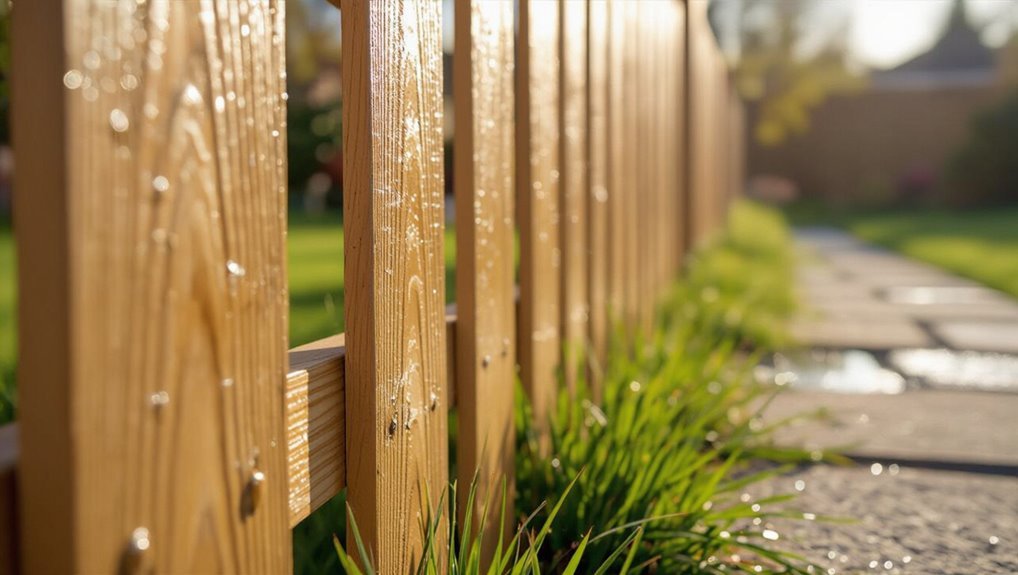
If you’re repainting a fence, expect paint to be dry to the touch in 1–4 hours for water-based paints and 4–8 hours for oil-based, but full curing usually takes 1–4 weeks depending on product, temperature, humidity, and coat thickness.
You’ll face drying challenges from cold, high humidity, or thick coats. Plan jobs around environmental factors and allow extra curing time.
How Does Paint Type Affect Drying? (Latex, Oil, Stains)
Choose your paint based on how quickly you need the fence usable: latex usually dries to the touch faster than oil, but oil cures more slowly and can stay tacky longer.
Stains behave differently because they soak into the wood, so “dry” to the touch may come sooner even though deeper penetration and weatherproofing take time.
Knowing these differences helps you plan recoats and when the fence can handle contact.
Latex Versus Oil
Different paint bases dry at very different rates, so knowing whether you’re using latex, oil-based paint, or a stain will shape your timeline and technique.
- Latex: fast drying, easy cleanup, highlights latex benefits for quick recoats.
- Oil: slower, longer cure, offers oil durability and smoother finish.
- You’ll wait longer before sanding with oil.
- Choose based on schedule and durability needs.
Stain Penetration Time
You’ve seen how latex and oil behave on the surface; now consider how deeply each product soaks into wood, because penetration affects drying time, adhesion, and longevity.
You’ll notice oil and penetrating stains increase stain absorption, reaching grain and curing slowly, while latex sits more on fibers and dries quicker.
Monitor moisture levels—wet wood slows penetration and prolongs full cure.
When to Paint: Ideal Temperature, Humidity, and Wind Conditions
While painting, pick days when temperatures stay between about 50°F and 85°F (10°C–29°C), since paint cures fastest and most evenly in that range; too cold slows drying and can prevent proper adhesion, while too hot can cause the surface to dry faster than the paint film, leading to cracking or poor leveling.
- Consider temperature effects on drying time.
- Watch humidity impact—aim for 40–60%.
- Avoid windy days that speed surface cure.
- Paint mid-morning to evening for stable conditions.
Wood Species & Surface Prep That Change Drying Time
Because wood species and how you prep the surface change how paint soaks in and cures, you’ll see big differences in drying time from one fence to the next. You should match wood types and surface treatments to your paint choice, sand or clean as needed, and test a small area to gauge cure time.
| Wood type | Prep | Expected effect |
|---|---|---|
| Cedar | Sand | Faster soak-in |
| Pine | Clean | Variable cure |
| Oak | Prime | Slower soak-in |
Fence Drying: Coat Thickness, Application Method, and Coverage
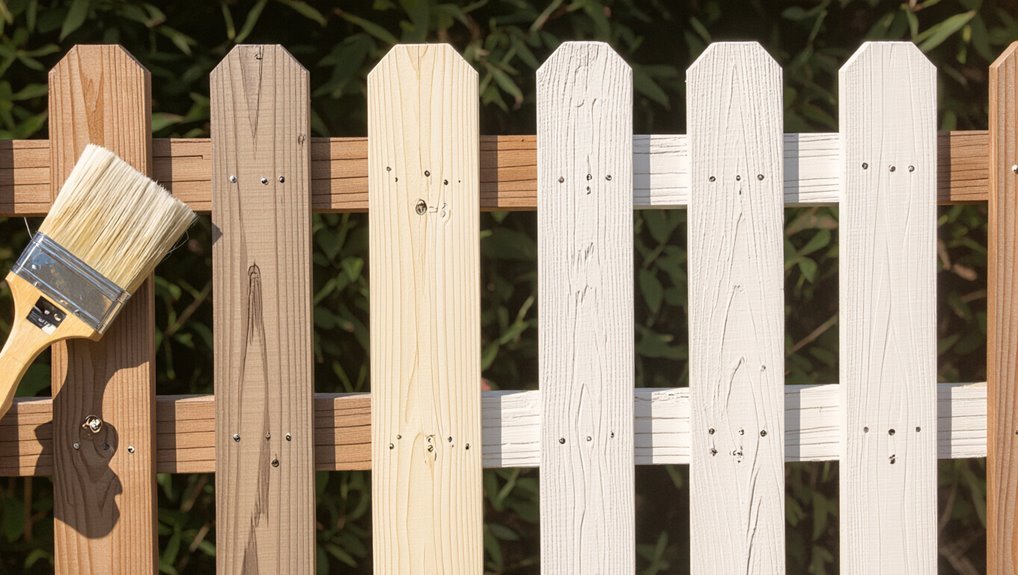
If you apply a heavy coat or overload a brush, the paint will stay tacky much longer and can sag or form a cloudy finish.
So aim for even, moderate films and follow the manufacturer’s recommended mil thickness; spray, brush, and roller each lay paint differently—sprays give thin, fast-drying films, rollers deposit thicker coats, and brushes can push paint into grain—so match your method to the product and expected coverage to speed drying and avoid rework.
- Match coat thickness to drying conditions and paint absorption.
- Choose application method for uniform coverage area.
- Test small sections for absorption and film build.
- Thin coats dry faster and reduce runs; adjust technique accordingly.
How Long to Wait Between Coats and Before Reinstalling Hardware
When you’re planning coats and reassembly, wait for the paint to reach its specified recoat time and a firm, dry-to-the-touch finish before adding another layer or putting hardware back on; doing otherwise risks lifting, smudging, or trapping wet paint under hinges and screws.
Follow product recoat timing, test by touch, and allow extra drying in cool or humid conditions.
For hardware installation, tighten gently to avoid chipping.
When Is the Fence Safe? (Touch, Walk-By, Kids & Pets)
Once the paint feels firm and dry to the touch and the manufacturer’s full cure time has passed, you can start letting people and pets near the fence. Casual walk-bys are usually OK after the paint is dry-to-the-touch, but you should wait the full cure period—often 24–72 hours or longer—for regular contact, leaning, or fastening hardware.
- Keep barriers and clear fence access.
- Use kid supervision near fresh paint.
- Maintain pet awareness; restrict roaming.
- Follow safety precautions and manufacturer cure times.
Quick Tests to Tell If Paint Is Dry or Still Tacky
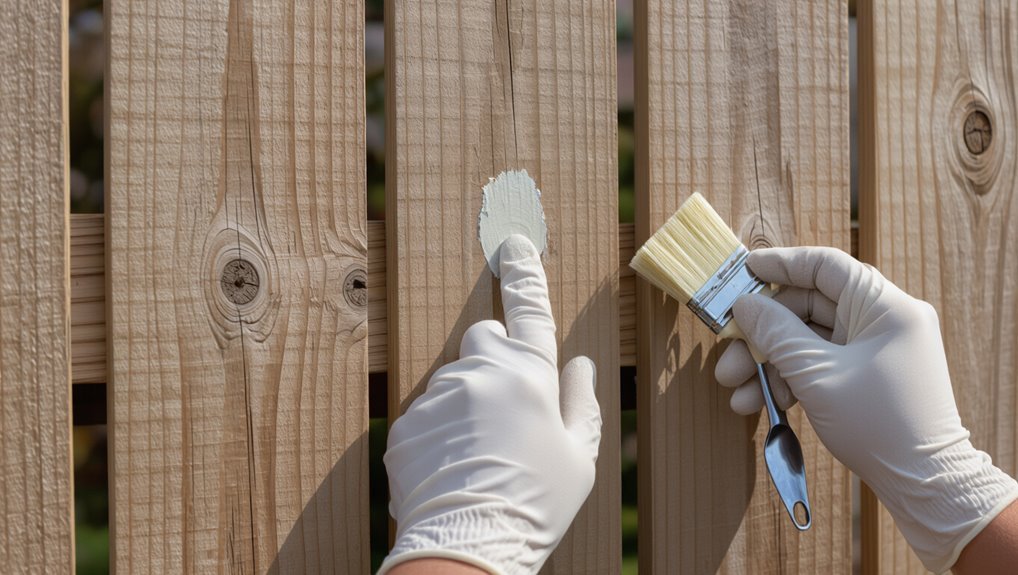
You can do two quick checks to see if the paint’s ready.
First, touch lightly with a fingertip to see if it feels dry or tacky.
Then press a small piece of painter’s tape on an inconspicuous edge and peel it off to check for lifting or stickiness.
Touch Test Lightly
Curious whether the fence paint’s dry enough to handle? Lightly touch an inconspicuous spot to check tackiness, considering paint application and drying environment.
Follow these quick checks:
- Use a fingertip—no pressure.
- Feel for stickiness or paint transfer.
- Check multiple spots (sun/shade).
- Wait longer if edges feel soft or slightly tacky.
Tape Edge Check
A simple tape edge check lets you quickly tell if fence paint is truly dry or still tacky without risking visible blemishes—press a small strip of painter’s or masking tape along a hidden edge, smooth it down, then pull it off sharply; if paint lifts, wrinkles, or leaves a sticky residue, it needs more drying time.
Use careful tape application so edge sealing won’t pull fresh paint.
Troubleshooting Tacky, Peeling, or Uneven Dries
When paint stays tacky, peels, or dries unevenly, it’s usually signaling a problem with surface prep, application conditions, or the paint itself—and you can fix most causes without starting over.
- Remove loose paint, sand glossy spots—prevent common mistakes.
- Clean and dry surfaces to avoid tacky paint.
- Check humidity and temperature for uneven finishes.
- Use compatible primers to resolve peeling issues.
Speed-Dry Tricks and Tips for a Long-Lasting Finish
If you want paint to dry faster without sacrificing durability, focus on enhancing prep, product choice, and drying conditions.
Use speed dry techniques like thin coats, fast-curing primers, and low-humidity days.
Speed up drying by applying thin coats, using fast-curing primers, and painting on low-humidity days.
Sand and clean surfaces for ideal application, and maintain airflow with fans or gentle heaters.
Allow recommended recoat times and avoid heavy brushing to preserve adhesion and longevity.
Frequently Asked Questions
Can I Paint a Fence in Rain if It’s Forecasted Later?
No—you shouldn’t paint in rain if it’s forecasted later. You’ll ruin finish quality; rainy weather shortens workable drying time. Focus on fence preparation, wait for a dry window, or use covered, well-ventilated shelter instead.
Do Primer Types Change Total Curing Time for Fence Paint?
Yes — primer composition affects total curing time. If you use oil- or alkyd-based primers they’ll usually extend cure versus latex; curing conditions like temperature, humidity, and ventilation also change how long the full system takes to finish.
Will Paint Color Affect Drying or Apparent Dry Time?
Yes — darker hues can feel slower because they increase color absorption and retain heat; you’ll notice temperature effects too, since warmth speeds evaporation while cool, humid conditions slow drying, so color and climate both influence apparent dry time.
Can I Use a Blowtorch or Heat Gun to Speed Fence Paint Drying?
Like juggling fire, don’t use a blowtorch but you can use a heat gun cautiously to speed drying; you’ll balance drying techniques and temperature effects to avoid blistering, peeling, or toxic fumes, keeping distance and low settings.
How Long Before Staining Over Painted Fence Panels?
You should wait about 24–48 hours after the paint’s dry-to-touch stage before staining; that lets staining techniques penetrate and avoids lifting. Confirm fence preparation includes sanding, cleaning, and testing a small area first.
Conclusion
In short, you’ll want to give your fence a little breathing room — not forever, just long enough for paint to “settle in” properly. Follow the paint type, weather, and prep tips we covered, and you’ll avoid tacky spots, peeling, or premature wear. If you’re in a hurry, use fast-dry products and thin coats, but don’t rush curing. Treat your fence kindly during its recovery period, and it’ll reward you with a sturdy, handsome finish.
