
How to Paint Stairway Walls With Carpet Without Mess
You can paint stairway walls without getting paint on the carpet by prepping, protecting, and working methodically. Clear the area, vacuum, and remove loose fixtures. Tape carpet edges tightly, then cover with overlapping drop cloths, rosin paper or adhesive runners and secure seams up the risers. Cut in with an angled sash brush and have a partner roll from top to bottom using a low‑splatter roller. Clean spills immediately and remove tape promptly; follow the full guide to learn pro tips and timing.
Quick Pre-Paint Checklist for Carpeted Stairs
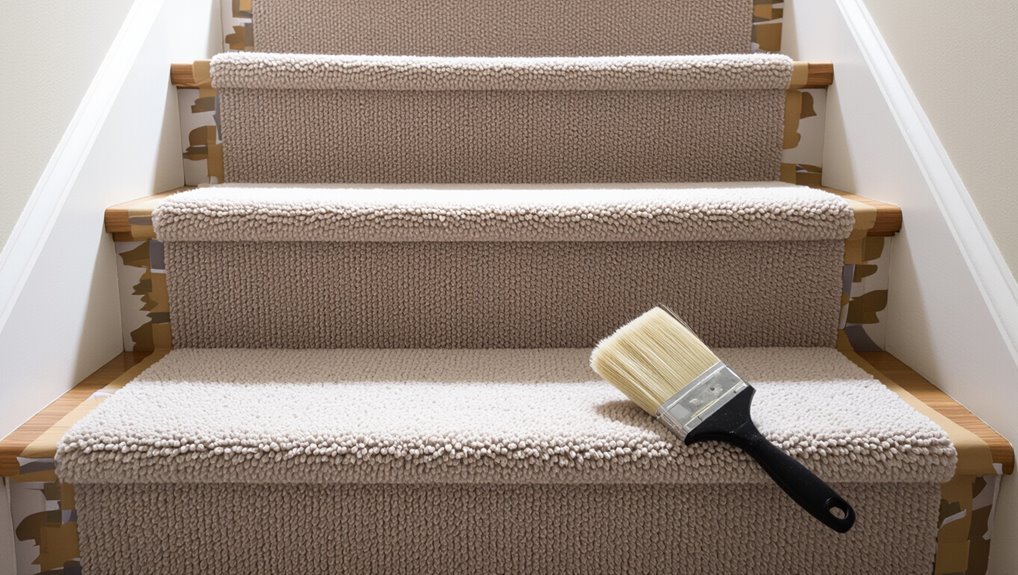
Before you grab a brush, run a quick checklist to protect the carpet and prep the walls: tape edges, cover carpet with drop cloths, and secure stair treads.
Inspect walls for holes, sand rough spots, and wipe dust.
Choose stairway colors and suitable painting techniques, gather brushes and rollers, and plan ventilation and drying time so you won’t rush or drip.
Prep Carpeted Stairs Before You Paint
Before you start painting, clear the stairway of clutter and give the carpet a thorough vacuum to remove dust and grit.
Use painter’s tape and protective runners to shield carpet edges from drips, and press tape firmly so paint can’t seep underneath.
Finally, remove loose fixtures like handrail brackets or wall hooks so you can paint cleanly around their mounting points.
Clear And Vacuum
Start by clearing every step and landing of shoes, toys, and loose items so you’ve got an unobstructed workspace.
Then use targeted vacuuming techniques to remove dust and paint-attracting debris, improving adhesion and carpet protection.
Follow these steps:
- Vacuum edges and seams with crevice tool.
- Use a brush attachment for pile.
- Empty canister before taping.
Protect Carpet Edges
| Step | Tool | Tip |
|---|---|---|
| 1 | carpet tape | press firmly |
| 2 | paint shields | overlap edges |
| 3 | cutter | cut straight |
| 4 | brush | check edges |
| 5 | timer | remove soon |
Remove Loose Fixtures
Once the carpet edges are secured, move on to any loose fixtures that could snag paint or get damaged.
You’ll check and remove small items, label them, and protect remaining hardware. Handle fixture types differently and tighten or store loose hardware safely.
Follow this quick checklist:
- Remove light switch plates.
- Unhook handrail brackets.
- Collect screws and anchors.
Protective Materials to Keep Paint Off Carpeted Stairs
Protecting carpeted stairs is essential before you open a paint can; use materials that shield fibers, grip surfaces, and tidy up easily.
Lay down rosin paper, adhesive-backed paper runners, or breathable drop cloths for reliable paint spill prevention and carpet protection methods.
Secure edges with low-tack painter’s tape, overlap seams, and run sheets up risers to channel drips away from carpet.
Tread Protection That Actually Stays Put
When you’re painting stairway walls, you need tread protection that actually stays put so you don’t track paint onto the stairs.
Use a secured non-slip runner to cover the treads and keep traction, and pair it with edge masking solutions to seal gaps at the nosing.
That combo keeps paint off the carpet and prevents slips while you work.
Secure Non-Slip Runner
Grab a good-quality non-slip runner and anchor it properly so it actually stays put on your stairs; loose tread protection is a hazard, not a help.
You’ll protect paint edges and preserve runner safety while doing basic carpet maintenance.
- Use double-sided carpet tape at top and bottom.
- Add stair rods or discreet anchors mid-runner.
- Check and retension weekly.
Edge Masking Solutions
Now that your runner’s secured, you’ll want reliable edge masking to keep paint off the treads without leaving residue or slipping.
Use edge sealing techniques like painter’s putty or low-tack foam strips to seal gaps. Choose masking tape options rated for delicate surfaces and press firmly along the runner edge.
Weigh tape adhesion versus removal risk, and test a small area first.
Tape Angled Stair Edges Without Gaps
Tackle the angled stair edges by cutting painter’s tape to fit each riser and tread junction so the tape lies flat against the slope; this prevents paint bleed and creates a crisp line.
Use tape application techniques and gap prevention methods to seal edges tightly.
- Press tape down with a plastic card.
- Overlap short pieces at angles.
- Trim excess before painting.
Fast Ways to Protect Carpet Seams and Nosing
Before you paint, protect carpet seams and nosing quickly with a few simple barriers that stop paint and tape adhesive from damaging fibers.
Lay low-tack painter’s tape along nosing, add thin cardboard or plastic strips over seams, and secure with lightweight tape.
Use drop cloth edges tucked under risers for extra carpet protection.
Check seam coverage before painting to prevent bleed or residue.
Choose Brushes and Rollers for Stairway Walls
Pick a sash or angled brush for crisp trim work and a 2–3 inch angled brush for cutting in along stair edges.
Use a 9–12 inch roller with a 3/8–1/2 inch nap for smooth walls and switch to a thicker nap on textured surfaces.
Keep an angled brush handy for tight spots and stair nosing where the roller can’t reach.
Brush Types For Trim
Choosing the right brushes for stairway trim makes the difference between crisp lines and a messy finish, so pick a few quality options:
- Angled sash brush: great for corners, offers precise trim coverage and control.
- Nylon/poly blend: balances brush durability with smooth laydown on painted trim.
- Hog or chinoiserie bristle: ideal for oil-based paints, holds paint well for consistent strokes.
Roller Size And Nap
After you’ve got the right brushes for crisp trim, it’s time to match rollers to your stairway walls so paint goes on evenly and with minimal splatter. Choose roller type by surface: smooth walls need short nap, textured needs thicker nap. Match nap thickness to wall texture and paint viscosity for fewer passes and less spatter.
| Surface | Recommended nap |
|---|---|
| Smooth | 1/4″ |
| Textured | 3/8″-1/2″ |
Angled Brush For Edges
When you need clean lines where walls meet trim, an angled sash brush gives you control and precision without fuss.
You’ll use angled brush techniques to cut in along carpet edges, keeping paint off fibers. Follow these edge painting tips and steady your wrist. Practice short strokes and load the brush sparingly.
- Feather edge
- Trim-first approach
- Light bristle loading
Pick Paint Types and Finishes That Hide Scuffs
Durability matters more than trendy hues here, so pick paint and finishes that stand up to bumps and shoe scuffs.
You’ll want scuff resistant paints with high finish durability—eggshell or satin often balance cleanability and subtle sheen. Go for washable formulas labeled for trim or high-traffic areas, test a swatch near the stair, and prioritize cleanup ease over glossy appearance.
Cutting In on a Sloped Stairway (Step-by-Step)
Start by setting up a clear edge between the wall and trim—cutting in on a sloped stairway is all about control and steady positioning.
You’ll work stepwise, match brush angle to stairway angles, and use steady cutting techniques to avoid drips.
- Anchor ladder or step.
- Paint short, angled strokes.
- Inspect and touch up edges.
Rolling Long Runs Without Splatter
When you roll long runs on stairway walls, pick a low-splatter roller to cut down on drips and mist.
Work from top to bottom and keep a slightly loaded, even nap to avoid flick-off.
Always tape and tuck carpet edges or lay a thin plastic strip to protect them from accidental splatter.
Choose Low-Splatter Roller
Because long stair runs leave you rolling for extended stretches, pick a low-splatter roller to cut down on mess and touch-ups.
You’ll appreciate thoughtful roller selection for splatter prevention and smoother coverage. Choose nap length and material for your paint, load minimally, and roll with steady pressure.
- Short nap for smooth walls
- Microfiber for low splatter
- Even, controlled strokes
Protect Carpet Edges
1 simple strip of painter’s tape can save you hours of cleanup and keep paint off carpet edges as you roll long stair runs. You’ll press tape firmly, use a shield for seams, and roll steadily for carpet edge protection and paint drip prevention.
| Step | Tip |
|---|---|
| 1 | Tape edge |
| 2 | Use shield |
| 3 | Roll slow |
Two-Person Workflow for Speed and Cleaner Results
A two-person workflow cuts total time and keeps edges and fixtures cleaner: one person focuses on cutting in along railings, ceilings, and trim while the other rolls the main wall surfaces.
You’ll use two person coordination and efficient communication to avoid overlaps and drips.
- Assign roles: cutter and roller.
- Work in sections top-to-bottom.
- Signal when ready to move.
Safety: Ladders, Balance, and Slip-Proofing on Carpeted Stairs
When you set up a ladder on carpeted stairs, position it so both feet rest on solid, level surfaces and the weight’s centered to prevent tipping.
Use non-slip ladder pads or a plywood shim under the feet to boost grip and stability.
Also wear rubber-soled shoes and keep three points of contact while you work.
Safe Ladder Placement
Placing a ladder on carpeted stairs takes more care than on flat floors, so you’ll want to stabilize both feet and top before climbing; use a ladder with adjustable legs or a platform attachment, position it perpendicular to the stairs if possible, and lock any spreaders or braces.
- Check ladder stability and proper ladder positioning before ascent.
- Rest top against a solid surface, not just drywall.
- Have an assistant hold the base and watch balance.
Carpet Grip Enhancements
Since you’ve secured the ladder feet and top on the stairs, focus next on improving carpet grip to keep your footing steady; simple additions can stop slips before they start.
Add non-slip stair treads, rubber pads under ladder feet, and anti-slip tape on step edges.
Test stability before painting.
These measures protect you and your work, reducing movement that could harm paint adhesion and cause mistakes.
Shortcuts for Narrow or Winding Stairwells
Narrow and winding stairwells call for smart shortcuts that save time and reduce hassle without sacrificing a clean finish.
Use compact paint tools and plan for narrow spaces and winding turns. Follow safety measures when working on steps.
- Use a mini roller and angled brush.
- Mask with low-tack tape and paper.
- Work top-down, steady footing.
Touch-Up Techniques for Paint on Carpet Fibers
When paint splatters onto stair carpet, act quickly to keep stains from setting; you can use many of the same careful, steady techniques you applied on tight steps to avoid further damage.
For touch up techniques, blot excess carefully, lift dried specks with a soft brush, and use minimal solvent on a white cloth.
Prioritize carpet fiber care to preserve pile and color.
Cleaning Wet Paint From Carpet: What Works
Act fast — the sooner you act, the easier it’s to remove wet paint from carpet without damaging fibers.
Act fast — quick action makes wet paint easier to lift and protects carpet fibers from damage.
Blot excess, work from edge inward, and test cleaners on a hidden area. Consider paint solvents cautiously based on paint type and carpet absorbency.
- Blot with cloth, then mild soap.
- Use appropriate solvent sparingly.
- Rinse and blot dry immediately.
When to Remove : and When to Keep : the Carpet
If the paint spill is small and the carpet’s padding and fibers didn’t soak through, you can usually keep the carpet and spot-treat the area.
However, if paint has penetrated deeply, covered a large area, or the carpet is old and fragile, removal is the safer choice to prevent trapped moisture or permanent damage.
Decide based on extent, age, and access: choose carpet removal for large or soaked stains; opt for carpet preservation when containment and cleaning are feasible.
Common Mistakes That Put Paint on Carpet (and How to Avoid Them)
Because accidents happen fast on stair projects, most carpet paint stains come from a handful of avoidable mistakes: overfilled brushes and rollers, shaky ladders, poor taping, and rushing through cutting-in.
Because accidents happen fast on stairs, most carpet paint stains trace back to simple, avoidable mistakes—slow down and protect.
You’ll prevent spills by focusing on clean paint application and solid carpet protection.
- Use drip guards and moderate roller load.
- Secure ladder and work lower steps first.
- Tape edges tightly and slow your cutting-in.
Estimate Time and Materials for a Stairway Paint Job
Estimate the job by breaking the stairway into tasks—prepping, priming, cutting-in, rolling, touch-ups, and cleanup—and assigning realistic time and materials to each so you won’t get halfway up the stairs and realize you’re short on paint or patience.
Calculate time estimates per task, factor drying times, and tally material costs: paint, primer, tape, drop cloths, brushes, rollers.
Add 10–15% contingency for waste and delays.
Frequently Asked Questions
Can You Paint Carpeted Stairs Walls While People Still Use the Stairs?
Yes — you can paint while people use the stairs if you prioritize stair safety and use careful paint techniques: cordon off one side, use low-odor, quick-dry paint, drop cloths, and communicate timing to avoid trips and wet paint.
Will Humidity Affect Drying Time on Stairway Walls Above Carpet?
Yes — humidity affects paint drying time on stairway walls above carpet; you’ll notice slower paint drying when moisture’s high, so you’ll want dehumidifiers or fans, and you’ll avoid prolonged tackiness that can attract dust or transfer to carpet.
Are Low-Voc Paints Safe for Homes With Pets on Carpeted Stairs?
Yes — low-VOC paints are generally safe for homes with pets on carpeted stairs. You’ll reduce fumes and chemical exposure; low VOC benefits include quicker odor dissipation and lower airborne toxins, helping protect pets and indoor air quality.
How Do I Match New Wall Paint to Existing Stairway Trim Color?
Think of the trim as your home’s anchor: you’ll sample paints beside it, use a daylight-lit swatch, test primer if needed, and tweak hue until harmonious. Color matching and trim selection guarantee seamless change and confident results.
Can I Use a Paint Sprayer Near Carpeted Stairs Without Extra Protection?
No, you shouldn’t—paint sprayer safety demands you protect surfaces. You’ll cover carpet with drop cloths and plastic, tape edges, and use masking film; otherwise overspray will stain fibers and create a big, avoidable mess.
Conclusion
You’ve got this — prepping, protecting, and taping keeps paint off carpet like a superhero keeps villains at bay. Work systematically: clean, shield each tread with secure protection, tape angled edges tightly, and tackle spills immediately with appropriate cleaners. Know when to remove carpet or keep it in place, avoid common slip-ups, and plan time and materials realistically. Follow the steps and your staircase will look professional without a single carpet catastrophe.
