
How Can You Get Acrylic Paint Out of Clothes: Best Methods That Actually Work
Act fast: blot fresh acrylic with a clean cloth, peel off thick globs, then rinse stain-facing-down under cool water and work in mild dish soap or laundry detergent. For partly dried paint, try rubbing alcohol or hand sanitizer, and for fully set paint soften with white vinegar before gently scraping. Test any solvent on a hidden seam and avoid heat. If stain resists, pretreat with enzyme remover or conceal with patching; keep going for detailed steps and tips.
Quick Fix: Wet vs. Dried Acrylic Paint
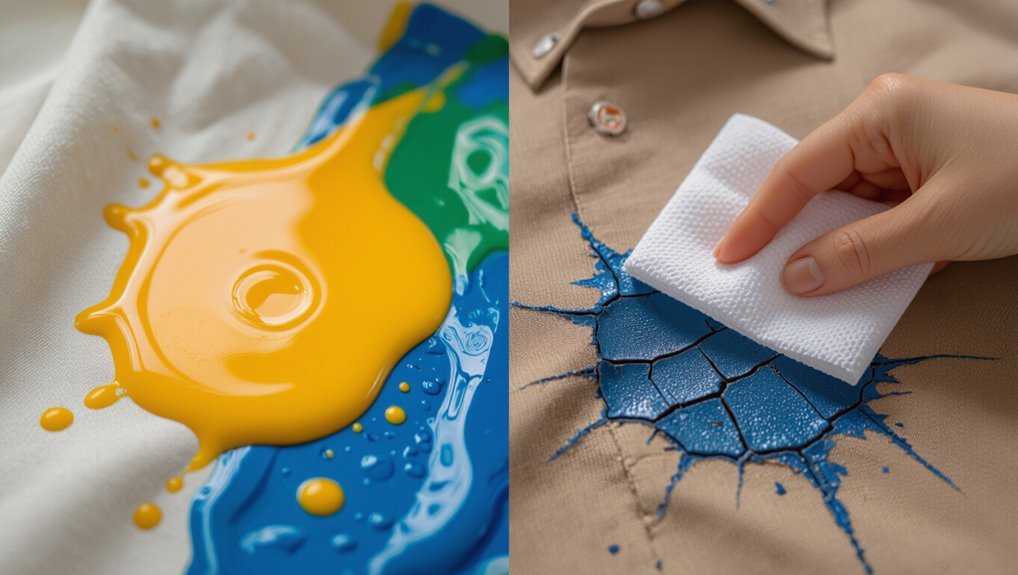
If the paint’s still wet, act fast—you’ll have a much better chance of removing it.
If the paint’s still wet, act quickly—you’ll greatly improve your chances of removing it.
You’ll blot fresh paint with a clean cloth, avoiding rubbing that spreads pigment.
For dried paint, you’ll gently scrape excess, then pretreat with a solvent or stain remover suited to the fabric.
Test treatments on an inconspicuous area first to prevent damage or discoloration.
Immediate Steps After a Fresh Acrylic Spill
1. Act fast: blot excess paint gently with a clean cloth or paper towel to limit spread.
Peel off thick globs without rubbing. Turn the garment inside out to push paint outward, protecting fabric.
For immediate actions, sprinkle cornstarch or talc to soak moisture if you can’t treat right away.
These steps focus on stain prevention until proper cleaning.
Remove Wet Acrylic Paint With Water and Soap
Start by rinsing the stained area under cool running water to flush out as much paint as you can, holding the fabric with the stain facing down so the paint runs away from the fibers.
Next, choose a mild liquid dish soap or laundry detergent—the right soap type helps.
Gently rub with a soft brush, keep consistent water temperature (cool to lukewarm), then launder normally.
Use Rubbing Alcohol or Hand Sanitizer Safely
Once you’ve flushed out and soaped away as much wet paint as possible, alcohol-based products can help lift the remaining acrylic. Dab rubbing alcohol or hand sanitizer on a cloth, test a hidden seam, blot gently, then rinse. Repeat until the stain fades. Use gloves and ventilate the area to protect skin and lungs.
| Step | Action | Tip |
|---|---|---|
| 1 | Test | Hidden seam |
| 2 | Dab | Blot, don’t rub |
| 3 | Rinse | Air dry |
How to Lift Partially Dried Acrylic Paint
Partially dried acrylic can still be removed if you act quickly and use the right tools: blot excess, scrape gently with a dull edge, then apply rubbing alcohol or stain remover and work from fabric underside.
Test first for colorfastness. Repeat blotting and gentle agitation until paint lifts.
Adjust pressure and product choice for different fabric types, and launder promptly to set the repair.
Soften Dried Acrylic: Vinegar and Safe Solvents
If paint’s already hardened, you can soften it by applying white vinegar to the stained area and letting it sit for a few minutes to break down the film.
Don’t mix solvents or use harsh chemicals without testing a hidden seam first, and work in a well-ventilated space while wearing gloves.
Start with vinegar, then move to milder commercial solvents if needed, following product instructions and fabric care labels.
Vinegar To Soften
When dried acrylic paint hardens on fabric, you can loosen it by applying white vinegar to soften the film before scraping or treating with solvents. The vinegar’s acetic acid breaks down the paint’s surface, making gentle removal easier without harsh chemicals.
You’ll warm vinegar slightly, dab with a cloth, let it sit, then gently lift softened paint. Vinegar solutions work well on small spots.
Solvent Safety Tips
1 key rule: always prioritize safety before trying solvents on dried acrylic.
You should test solvents or solvent alternatives on a hidden seam, work in a ventilated area, wear gloves and eye protection, and keep products in safe storage away from kids and pets.
- ventilated room
- rubber gloves
- eye protection
- sealed container
- locked shelf
Scrape Safely Without Damaging Fabric
Start by gently scraping off loose paint with a dull edge, like a credit card or butter knife, holding the fabric taut to prevent stretching.
Work from the outside of the stain toward the center to avoid spreading paint, and use short, controlled strokes.
Stop if the fabric shows stress or thinning and switch to a soft brush or solvent-based method instead.
Gentle Scraping Technique
Before you touch the stain, let the paint dry enough to form a crust so you can lift it without smearing; then use a dull edge—like a credit card, butter knife, or plastic scraper—held at a low angle to gently nudge flakes away, working from the fabric’s outer edge toward the center to avoid spreading the spot.
You’ll use gentle scraping appropriate to fabric types.
- flaky crust
- low-angle tool
- softened edges
- controlled strokes
- lifted specks
Avoid Fabric Damage
When you scrape dried acrylic, work slowly and test your tool on an inconspicuous seam or hem first to make sure the fabric won’t snag or tear; use a dull plastic card or butter knife and keep the blade at a very low angle so you lift flakes without catching threads. Choose tools by fabric types to aid stain prevention.
| Tool | Best for |
|---|---|
| Plastic card | Delicates |
| Butter knife | Denim |
| Spoon | Knits |
| Nail file (blunt) | Heavy canvas |
Use Acetone (Nail Polish Remover) Safely
Reach for acetone-based nail polish remover only if the paint has dried into a stubborn film and you’re prepared to work carefully; acetone dissolves acrylic quickly but can damage some fabrics, remove finishes, and irritate skin.
Use gloves, ventilate, test a hidden seam, blot—don’t rub, work small areas, and rinse promptly.
Consider acetone alternatives and follow nail polish safety.
Is Acetone Safe for Your Fabric?
Acetone can work well on acrylic paint, but you need to check fabric safety first since it can weaken synthetics and dissolve some finishes.
Test a hidden spot to make sure colors won’t fade or run before treating the stain.
Use it sparingly, ventilate the area, and avoid prolonged contact to protect the garment.
Fabric Safety Concerns
Although strong solvents can lift stubborn acrylic, you should check your garment before you dab anything on it — acetone can safely remove paint from some fabrics but it can also damage or discolor others.
You should test a hidden spot for fabric types and follow stain prevention steps.
Visualize risks:
- Shiny satin melting
- Synthetic pilling
- Delicate lace thinning
- Dyed cotton bleeding
- Elastic weakening
Colorfastness And Fading
Before you try solvents on a visible area, confirm the garment’s colorfastness—testing will tell you whether acetone or any remover will cause dyes to bleed or fade.
You should perform simple colorfastness tests on an inconspicuous seam, blotting remover and checking for transfer. If dyes run, stop and seek alternatives.
Proper testing is key for fading prevention and protecting fabric appearance.
Proper Usage Precautions
If you’re unsure whether a fabric can handle acetone, test a hidden seam first and proceed only if the dye and fibers show no damage; some synthetics—like acetate, triacetate, and certain nylon blends—can melt or discolor when exposed.
Wear safety gear, work in a ventilated area, and avoid soaking delicate fabric types.
- Gloved hands over a sink
- Small test spot on seam
- Open window breeze
- Paper towel blotting
- Quick rinse afterward
Remove Acrylic Paint From Denim, Canvas, Cotton
When you’re dealing with acrylic on denim, canvas, or cotton, act quickly to prevent the paint from setting into the fibres: fresh spills will lift far easier than dried patches, and treating the stain promptly gives you the best chance of full removal.
Blot excess, rinse with cold water, apply dish soap or rubbing alcohol, launder per denim care/canvas maintenance/cotton preservation labels, and consider acrylic alternatives for future projects.
Remove Acrylic Paint From Silk, Rayon, Wool
Moving from sturdier fabrics to delicate ones means changing your approach: silk, rayon, and wool won’t tolerate aggressive scrubbing or harsh solvents the way denim or cotton will.
You’ll blot gently, test solvents on seams, and use mild soap, respecting silk treatment, wool care, and rayon preservation for each fabric type.
- whisper-soft blotting
- dab with diluted soap
- test hidden seam
- cool water rinse
- air-flat drying
Pretreat: Best Stain Removers and Enzymes
Although delicate fabrics need gentle handling, you can still boost stain removal by pretreating with the right products: choose a mild enzyme-based stain remover or a gentle solvent formulated for silk and wool.
Apply sparingly to a hidden seam to test for colorfastness, then softly work it into the paint edge with a cotton swab before rinsing.
Use enzyme activation instructions, blot gently, and prevent set-in stains for stain prevention.
Machine-Wash Tips After Paint Treatment
If you’ve pretreated the spot, run the garment through a normal wash cycle using the hottest water safe for the fabric and a heavy-duty detergent to lift any remaining acrylic residue; check the care label first so you don’t damage delicate fibers.
Adjust machine settings based on fabric types and stain severity, then inspect before drying.
- spinning drum tumbling
- steamy hot rinse
- sudsy detergent action
- delicate-cycle pause
- air-dry inspection
When to Use Oxygen or Color-Safe Bleach
After you’ve washed and inspected the garment for remaining acrylic, consider oxygen or color-safe bleach when the stain persists but the fabric’s care label allows non-chlorine bleach.
These products lift pigment without the harshness of chlorine, so they’re a good next step for colorfast cottons, blends, and many synthetics.
Use oxygen bleach benefits for bright fabrics, and try color safe bleach alternatives for delicate or patterned items.
Avoid: Harmful Solvents, Heat, and Mistakes
Don’t grab strong solvents like paint thinner or acetone—they can ruin fibers and harm you.
Don’t put stained clothes in the dryer or iron them, since heat sets acrylic paint permanently.
Instead, work with mild cleaners and treat stains while they’re still wet to avoid common mistakes.
Avoid Harsh Solvents
While you might be tempted to reach for paint thinner or acetone when acrylic sets into fabric, those harsh solvents can damage fibers, fade dyes, and create hazardous fumes.
Use natural alternatives and eco friendly solutions like soap, rubbing alcohol, or diluted vinegar instead; test first.
Visualize actions:
- Warm soapy water soaking
- Blotting with rubbing alcohol
- Vinegar rinse
- Gentle scrubbing with brush
- Pat dry
Never Use Heat
If you heat acrylic paint—whether by tumble drying, ironing, or using a hot dryer drum—you’ll set the stain permanently, so stop and air-dry the item instead.
Don’t assume all fabric types respond the same; delicate blends and synthetics suffer more heat damage.
Work cold: scrape, pretreat with gentle detergent or alcohol alternatives, rinse, and repeat if needed before washing on a cool cycle.
Repair or Conceal Stains That Won’t Come Out
When a stained area resists all cleaning attempts, you can still make the garment wearable by repairing or cleverly concealing the spot; assess the size, location, and fabric before choosing a fix such as patching, embroidery, fabric paint, appliqués, or strategic alterations like adding a pocket or trim.
Use stain camouflage and simple fabric repair to blend or decorate the mark.
- colorful patch over sleeve
- floral embroidery hiding blotch
- painted design covering stain
- sewn applique on chest
- added pocket or trim detailing
How to Test a Method on a Hidden Area
Pick a hidden spot like an inside seam or hem to test the cleaner.
Apply the product sparingly with a cotton swab so you don’t soak the fabric.
Let it dry fully, then inspect for color loss or texture changes before treating the visible stain.
Choose An Inconspicuous Spot
Because fabrics react differently, always test your chosen removal method on a hidden area like an inside seam, hem, or under a collar before treating the stain itself.
You’ll check fabric types and confirm stain prevention effects without ruining visible fabric.
Try small dabs, wait, inspect, and proceed only if no discoloration or weakening appears.
- inside seam
- shirt hem
- under collar
- pant cuff
- sleeve placket
Apply Cleaner Sparingly
Start with a cotton swab or corner of a clean cloth and apply the cleaner sparingly to the hidden spot you chose; this lets you judge how the fabric reacts without spreading the solution. Test eco friendly alternatives and pre treatment strategies this way. Note results, wait, then proceed.
| Cleaner | Fabric | Reaction |
|---|---|---|
| Vinegar | Cotton | ? |
| Soap | Silk | ? |
Inspect After Drying
After you’ve applied a small amount of cleaner and let the spot dry, check the hidden area carefully for any change in color, texture, or stiffness.
You’ll test how the solution reacts with different fabric types and assess stain longevity risks before treating visible areas.
- faded seam
- crisp cuff edge
- softened hem
- mottled pocket lining
- stiff collar trim
When to Consult a Professional Cleaner
If a stain is large, set, or has already been heat-treated, call a professional cleaner—these situations often need specialized solvents or techniques you don’t have at home. You should seek professional cleaning for delicate fibers, costly garments, or persistent stains to guarantee fabric preservation and avoid damage.
| Issue | Risk | Recommended action |
|---|---|---|
| Large stain | High | Professional cleaning |
| Delicate fabric | Loss | Specialist care |
| Heat-set paint | Permanent | Advanced solvents |
| Expensive item | Damage | Preservation care |
Frequently Asked Questions
Can Acrylic Paint Be Removed After Repeated Home Washes Without Professional Help?
Yes — you can often remove acrylic paint after repeated home washes if you act fast, use effective paint removal techniques, pretreat stains, and employ stain prevention habits like rinsing, soaking, and using appropriate detergents and solvents at home.
Will Paint Transfer Occur if Stored While Stained Garments Are Damp?
Yes — if you store stained garments damp, you’ll risk paint transfer; moisture can reactivate unset acrylic, spreading stains onto other items. You should dry or treat stains before damp storage to avoid transfer and worsening damage.
Can Vinegar Damage Delicate Trims or Embellishments on Clothing?
Yes — if you accidentally soak trims, vinegar can weaken glued beads or dull metallic threads, so you should test a hidden area first; you’ll protect fabric care and color preservation by diluting and spot-treating gently.
Are There Eco-Friendly Alternatives to Acetone and Alcohol for Paint Removal?
Yes—you can use natural solvents and biodegradable options like citrus-based cleaners, soy solvent, or bioethanol; they’re gentler than acetone or rubbing alcohol, won’t harshly strip fabrics, and you’ll still test first on hidden seams.
How Should You Treat Paint-Stained Clothing That Also Has Colorfastness Issues?
You should test a hidden seam, treat stains promptly with mild detergent or eco-friendly solvent, rinse cold, avoid heat, use colorfastness checks before soaking, and follow fabric care labels to prevent dye transfer and further damage.
Conclusion
Dealing with acrylic paint on clothes can feel stressful, but you’ve got options depending on whether it’s wet or dried. Act fast with water and soap for fresh spills, try rubbing alcohol or hand sanitizer for partially set paint, and gently lift stubborn bits—never use heat or harsh solvents. Can’t fully remove a stain? Test fixes on a hidden seam and consider professional cleaning or creative concealment if needed. Keep calm and tackle it step by step.
