
Will Exterior Paint Dry in Cold Weather?
Yes — you can get exterior paint to dry in cold weather, but only if you respect product temperature limits, watch humidity and surface temps, and use proper prep and techniques. Thin coats, cold‑rated primers and paints, and longer dry/curing times help, while heaters, tents, and fans can control conditions safely. Avoid painting below the manufacturer’s minimums to prevent poor adhesion or blistering. Keep records of conditions and methods, and keep going to learn practical tips and fixes.
Will Exterior Paint Dry in Cold Weather?
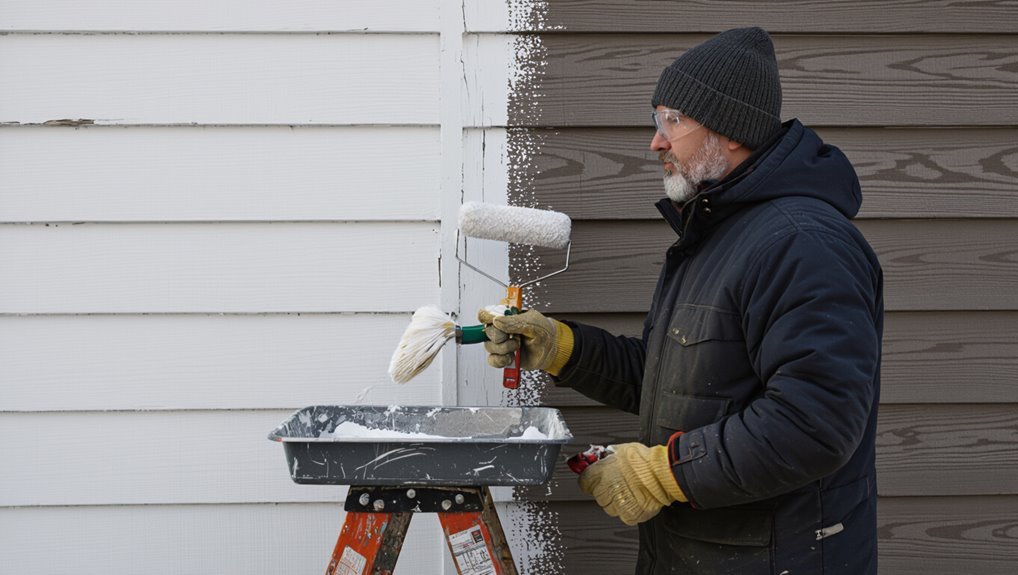
Will exterior paint dry in cold weather? You’ll face cold weather challenges affecting paint durability and temperature fluctuations, so plan winter preparation and assess outdoor conditions.
Use adapted painting techniques, focus on moisture management and guarantee surface readiness.
Consider seasonal timing and smart application strategies to help coatings cure properly despite chill, avoiding rushed work that undermines finish and longevity.
The Short Answer: When to Paint and When to Stop
You should only paint when temperatures and paint type match the manufacturer’s cold-weather recommendations, since some formulations cure at lower temps than others.
Also watch humidity because high moisture slows drying and can ruin the finish.
If nights drop below the safe range or humidity spikes, pause the job until conditions improve.
Temperature And Paint Type
Although cold weather can slow drying, the right paint type and temperature range let you know whether to proceed or wait.
You should pick paints formulated for low temperatures—alkyd or specially rated acrylics—to mitigate temperature effects on film formation.
Check manufacturer minimums; painting below them risks poor paint performance, extended cure, and adhesion failures.
If temps dip, postpone until conditions meet specs.
Humidity And Dry Time
Because moisture in the air directly slows solvent evaporation and latex coalescence, check humidity before you start: high relative humidity (above about 70%) will lengthen dry and cure times and can trap moisture in the film, risking blushing, poor adhesion, or peeling.
You should manage humidity effects with drying techniques, surface preparation, paint selection, temperature monitoring, cold weather precautions, application methods, and moisture control.
- Use heaters and fans
- Choose fast-flash paints
- Prep and dry surfaces thoroughly
Best Time To Pause
Moisture and temperature readings tell you when conditions are workable, but knowing when to stop mid-job keeps paint from going bad.
You should pause when forecasts predict near-freezing temps, rising humidity, or dew within 24 hours.
Follow best practices: cover edges, seal cans, label areas.
Avoid common mistakes like leaving partial coats exposed or stretching work when conditions worsen—resume only when stable.
How Temperature Affects Drying Speed
When temperatures drop, paint chemistry slows and solvents evaporate more slowly, so you’ll see drying times lengthen noticeably. Water-based paints can become tacky and take hours or days longer, while oil-based formulas thicken and cure more sluggishly.
As temperatures fall, paint dries much slower — water-based paints get tacky and oils thicken, extending cure times.
You’ll face clear temperature impact and drying challenges; plan accordingly.
- Cooler film formation
- Extended tack time
- Longer recoating windows
How Humidity Affects Drying and Curing
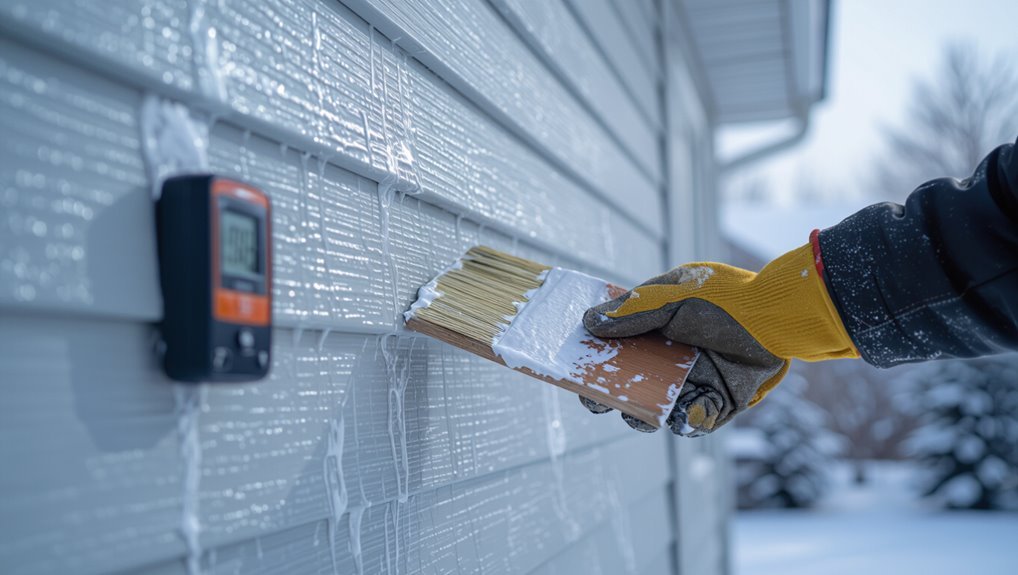
If humidity rises, the air holds more water vapor and slows solvent evaporation, so your paint will dry and cure much more slowly than in dry conditions.
Monitor humidity levels and dew point to plan work, control moisture with ventilation and timing, and adjust surface preparation to secure paint adhesion.
Environmental factors and temperature fluctuations affect paint flexibility and the curing process; manage drying conditions carefully.
Drying vs. Curing: What Each Means
Although both terms get used interchangeably, drying and curing are different processes you should understand: You’ll see the drying process first — surface feels dry quickly — while full curing time means the film gains strength.
Know the difference so you don’t expose paint too soon.
Know the difference — exposing paint too soon can damage the finish before it fully hardens.
- Drying: solvent evaporation
- Curing: chemical hardening
- Timing: varies with temperature and humidity
Why Surface Temperature Matters for Cold-Weather Painting
Knowing how drying differs from curing helps you see why surface temperature matters: the paint’s solvents may evaporate but the film won’t gain strength if the substrate is too cold.
You’ll notice temperature effects on adhesion, flow, and recoat windows.
Adjust painting strategies: warm the surface, use slower-curing formulations, and avoid low-temperature application to guarantee the film bonds and reaches full hardness.
How Wind and Sun Change Drying Times
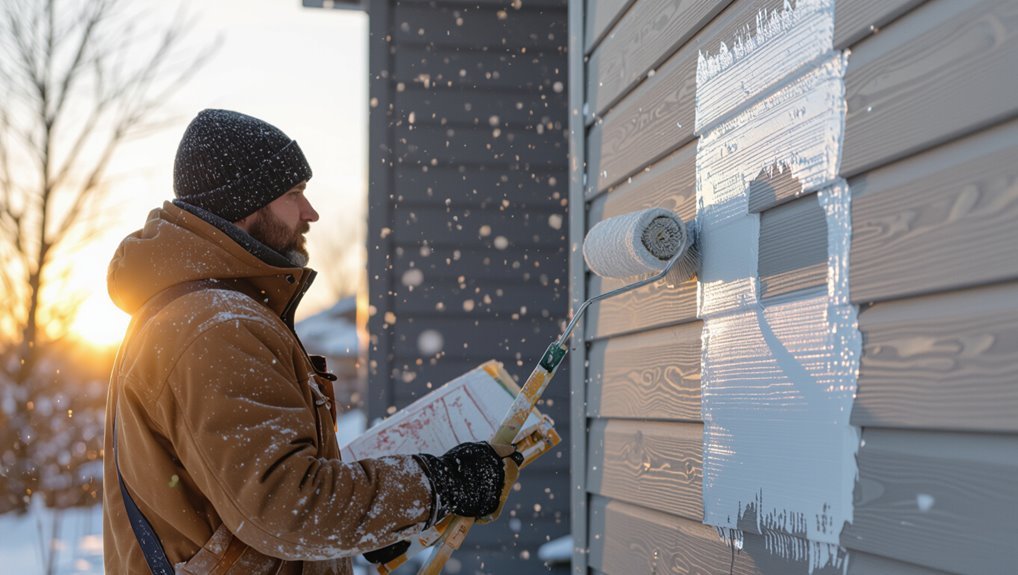
You’ll notice wind speed can strip moisture from a fresh coat, speeding surface tack-up but risking uneven cure.
Direct sunlight raises surface temperature and accelerates drying, though it can cause skinning while the underlying paint stays wet.
Together, strong sun and wind can shorten open time and increase defects, so you’ll need to adjust timing and technique.
Wind Speed Effects
When wind picks up, it strips away the warm, moist air layered over a drying paint film and speeds evaporation.
So you’ll notice faster surface tack-up and shorter recoat windows on breezy days. You must watch wind chill because strong gusts can cool substrates and harm paint adhesion.
Consider wind effects on:
- Drying rate variability
- Dust and debris pickup
- Uneven film formation
Sunlight Intensity
How much sunlight hits the surface makes a big difference: bright sun warms the substrate and paint film, accelerating solvent evaporation and shortening tack-up and recoat times, while low light keeps temps down and slows drying.
You should monitor sunlight exposure and expect faster curing on sunlit façades; remember UV effects can also break down binders over long periods, so balance speed with protection.
Combined Drying Impact
Although wind and sun each affect drying on their own, together they create compound effects that can speed or stall exterior paint curing in ways you mightn’t expect.
You’ll need to judge conditions because cold weather plus strong sun can skin over while wind thins the film, risking poor paint adhesion.
Consider scenarios:
- Sunny, calm: faster surface cure, slow full cure
- Sunny, windy: rapid skinning, trapped solvents
- Overcast, windy: slow cure, adhesion risk
Paint Types Made for Low-Temperature Application
If you need to paint in cold conditions, choose products formulated to cure at lower temperatures—these low-temp acrylics, alkyds, and specialty latexes contain co-solvents and modified binders that let film formation proceed when ordinary paints would stall.
You’ll apply cold weather techniques, follow manufacturer temperature ranges, and expect improved paint performance, faster tack-free times, and better adhesion versus standard formulations when temps dip.
Acrylic-Latex Paint: Cold-Weather Performance
When you use acrylic-latex paint in cold weather, check the manufacturer’s minimum drying temperature because many formulas won’t cure properly below their specified limits.
If temperatures drop too low, the paint can fail to form a continuous film, leaving a weak, powdery or patchy surface.
I’ll explain how to recognize film-formation issues and what steps you can take to improve drying and adhesion.
Drying Temperature Limits
You’ll want to know the temperature window for acrylic-latex paint because its drying and film formation stop below certain limits; you’ll face drying challenges and see temperature impact on times.
Know limits, plan coats, avoid failures:
- Most formulas dry above 50°F (10°C) but slow near that threshold.
- Below ~35°F (2–4°C) drying halts.
- Humidity worsens cold effects.
Film Formation Issues
Because acrylic-latex paints form films by coalescing polymer particles, cold temperatures can prevent proper fusion and leave you with a weak, chalky coating instead of a continuous, durable film.
You’ll notice reduced film thickness and early crazing; adhesion challenges increase as the binder stays brittle.
To avoid failures, apply only in recommended temperatures, thin coats, and allow extended curing time under stable, above-freezing conditions.
Oil-Based and Alkyd Paints in the Cold
Although oil-based and alkyd paints are more forgiving than water-based formulas, they still behave differently in cold weather and need careful handling.
You’ll manage oil based durability and alkyd performance by addressing cold weather challenges: slower drying mechanisms and reduced paint adhesion.
Use precise application techniques and surface preparation, consider environmental impact, avoid prolonged cold storage, and prioritize paint longevity.
- Thin coats
- Warm materials
- Controlled curing environment
Elastomeric Coatings and Low Temps
When temperatures drop, elastomeric coatings still offer excellent flexibility and waterproofing, but they need warmer substrates and slower, controlled curing to bond and stretch properly. You’ll value elastomeric benefits for moisture resistance and thermal expansion control, but manage substrate compatibility, surface preparation, adhesion factors, and curing challenges with adjusted application techniques to secure cold weather performance and long term durability.
| Texture | Seal | Stretch |
|---|---|---|
| Smooth | High | Strong |
| Rough | Med | Flex |
| Porous | Low | Tear |
| Primed | Best | Optimum |
Minimum Temperature Recommendations by Paint Type
Different paint formulations need different minimum temperatures to cure properly, so check the label and plan your project around those limits.
You’ll assess paint performance in cold weather by choosing a product rated for the expected low.
Consider:
- Acrylic latex: typically usable down to 35–50°F for decent adhesion.
- Oil-based: needs warmer temps, often above 45–50°F.
- Specialty low-temp paints: formulated for 35°F or lower.
When to Use Low-Temperature Primers
Need help getting paint to stick in chilly weather? You should use low-temperature primers when substrates are cold, damp, or overnight lows approach the paint’s lower limit.
The low temperature benefits include faster film formation and adhesion on chilled surfaces.
Follow manufacturer primer application instructions, warm the product slightly, and avoid freezing conditions to guarantee proper bonding before topcoat.
Choosing the Right Primer for Cold Substrates
If your exterior surface is cold or damp, pick a primer formulated for low temperatures so it bonds quickly and resists flaking. These primers use modified resins and faster-curing additives to assure adhesion where standard primers would struggle.
You’ll evaluate cold primer options and focus on substrate preparation before painting.
- Use breathable primers for damp wood
- Choose fast-bonding acrylics for masonry
- Select alkyds for metal surfaces
How Additives and Conditioners Help in Cold Weather
You can speed up curing with accelerated drying agents that reduce tack time and let you recoat sooner.
Cold-weather paint conditioners keep viscosity steady and pigments suspended so the finish goes on smoothly even when temperatures drop.
Together they help you get a durable coat without waiting days for paint to harden.
Accelerated Drying Agents
When temperatures drop, additives and conditioners speed up film formation and solvent evaporation so paint dries reliably in cold weather.
You can use accelerated drying techniques and select cold weather additives to shorten tack time, improve flow, and prevent freezing.
Consider these options:
- Fast-evaporating solvents for quicker evaporation
- Polymer modifiers to boost film coalescence
- Anti-freeze agents to maintain workability
Cold-Weather Paint Conditioners
Although colder temperatures slow chemical reactions, cold-weather paint conditioners let your coatings set and film properly by modifying evaporation, coalescence, and freeze points.
They thin the wet film for better flow, introduce coalescing solvents or polymer plasticizers to help particles fuse at lower temps, and add antifreeze humectants that keep the job workable.
You’ll use these cold weather techniques as paint application tips to maintain adhesion and cure.
Why Thin Coats Work Better in Low Temperatures
Because cold slows solvent evaporation and film formation, thinner coats dry and cure more reliably than thick ones in low temperatures.
You’ll get thin coat benefits and better adhesion if you use cold weather techniques and apply light, even layers.
Consider these practical points:
- Better heat retention per layer, reducing surface chill
- Faster tack-free time, lowering dust pickup
- Reduced sagging and cracking risk
How Long to Wait Between Coats in Cold Weather
Since thin coats dry faster, you’ll often be able to recoat sooner even in cold weather, but you still need to confirm the surface is dry to the touch and tack-free before applying the next layer. In cold conditions, check every 2–6 hours depending on thickness; follow label guidance for paint layering and adjust for humidity.
| Condition | Suggested Wait |
|---|---|
| Thin coat | 2–4 hrs |
| Medium coat | 4–6 hrs |
| Thick coat | 8+ hrs |
| Very cold | 12+ hrs |
When to Delay Topcoats Until Full Cure
If your paint hasn’t fully cured, don’t rush the topcoat—you’ll trap solvents and moisture that can cause blushing, lifting, or prolonged tackiness.
You should wait when curing challenges appear; proper topcoat timing prevents failures.
Consider delaying if you notice:
- soft spots or tackiness after touch
- uneven sheen or blushing
- weather dips below recommended curing conditions
How to Measure True Surface Temperature Before Painting
Before you paint in cold weather, check the actual surface temperature with a contact thermometer to get an accurate reading.
If you use an infrared thermometer, follow the manufacturer’s instructions for emissivity and hold it steady at the right distance for the material.
Also remember that wind and shaded spots can make surfaces much colder than air temperature, so test multiple areas before you start.
Check Surface With Thermometer
Want to know the real temperature you’ll be painting on? You should measure surface temperature directly and confirm thermometer accuracy before starting.
Check spots across the job to avoid cold pockets:
- Probe metal, wood, and masonry at painting height.
- Record readings at different times of day.
- Compare readings against a reliable reference to verify thermometer accuracy.
Trust the numbers to decide if conditions are safe.
Use Infrared Thermometer Properly
Now that you’ve checked surface spots with a probe thermometer, grab an infrared (IR) gun to quickly map true surface temperatures across the job.
Aim perpendicular to surfaces, hold steady, and measure multiple spots to confirm consistency.
Note infrared usage limits—emissivity settings affect accuracy—so set emissivity for the material, record temperature readings, and avoid reflective glare for reliable results.
Account For Wind And Shade
When you’re checking surface temps, remember that wind and shade can make readings misleading—wind cools surfaces rapidly while shaded areas lag behind sunlit spots.
You should measure multiple points and times to capture wind impact and shade effects. Use an IR gun at 3–5 feet, note wind speed, and compare sunlit vs shaded readings.
- windward corner
- shaded eaves
- midday sunlit siding
How to Measure Humidity and Dew Point On-Site
How do you quickly check whether humidity and dew point could jeopardize an exterior paint job?
Use simple humidity measurement techniques: a handheld hygrometer or a thermo-hygrometer app. Measure surface and air temps, then consult dew point indicators or an online calculator to see if surface temp is within 2–3°C of dew point.
Delay painting if condensation risk exists; recheck periodically.
Preparing Cold Surfaces for Paint Adhesion
Before you paint in cold weather, check surface temperature with an infrared thermometer to verify it’s within the paint and primer manufacturer’s recommended range.
Clean the surface thoroughly—remove frost, dirt, and chalking so coatings can bond.
Then apply a cold-weather primer formulated for adhesion to guarantee the topcoat sticks and cures properly.
Surface Temperature Checks
If the surface is colder than the paint’s recommended temperature range, adhesion and curing will suffer, so you need to check temperatures before you begin.
Use a non-contact thermometer to confirm surface prep limits, account for temperature fluctuations, and schedule work during warmest hours.
- Metal feels icy despite air temp
- Sun-warmed siding vs shaded trim
- Dew point proximity risks
Proper Surface Cleaning
When you’re prepping cold surfaces for paint adhesion, cleaning has to be more thorough than usual because dirt, oil, and frost disrupt the bond and trap moisture.
Focus on removing contaminants, lifting salts, and eliminating loose or flaking material so primers and paints can wet out the substrate evenly.
Use targeted surface preparation: pressure washing, solvent degreasing, mechanical scraping, and bristle brushing as cleaning techniques.
Priming For Adhesion
Although cold surfaces demand extra care, priming is the single most important step to confirm paint will adhere and cure properly. You’ll want a primer formulated for low temperatures, applied to a clean, dry substrate that’s above the primer’s minimum temperature.
Use adhesion techniques and solid surface preparation to guarantee success:
- Remove frost and contaminants
- Use low-temp bonding primers
- Apply within manufacturer temperature window
Priming Rules for Wood, Metal, and Stucco in Cold
Since primers seal porous surfaces and promote adhesion, you’ll need to pick the right type and apply it under proper conditions for wood, metal, and stucco in cold weather.
For wood, focus on wood surface preparation and warmer substrate temperature impact; for metal, follow metal priming techniques and rust control; for stucco, address stucco adhesion challenges.
Observe cold weather precautions and adjust paint application timing.
How Previous Coatings and Contaminants Act in Low Temps
After you’ve prepared and primed wood, metal, or stucco for cold conditions, check how old coatings and surface contaminants will behave at low temperatures.
You’ll assess contaminant effects and coating compatibility before painting. Consider:
- Old film brittleness reducing adhesion
- Oil, wax, or dirt preventing proper bond
- Incompatible primers causing peeling
Address issues now so new paint cures and adheres in cold weather.
Brushing vs. Rolling vs. Spraying in Cold Conditions
When you choose between a brush, roller, or sprayer in cold weather, each method affects film thickness and drying time differently.
Brushes give control but can leave thin spots that cure slowly. Rollers lay down thicker, more even coats, and sprayers can overspray or create very thin films if the paint is cold.
Also watch equipment temperature—cold hoses and tips change atomization and flow, so pre-warming materials and keeping a steady application pace matter.
Brush Vs. Roller Performance
Although cold weather slows paint chemistry, your choice of applicator still has the biggest impact on coverage and drying behavior: brushes give you control and thin, well-worked coats that tack quicker in chilly air.
Rollers deposit thicker, more uniform films that take longer to cure and can trap solvents.
Sprayers lay down the thinnest film but need ideal technique and ventilation to avoid poor adhesion and extended tack times.
- Brush effectiveness: thin coats, faster tack
- Roller efficiency: thicker films, longer cure
- Choose based on substrate, temperature, and desired drying speed
Sprayer Temperature Effects
Having compared brush and roller behavior in cold air, let’s look at how spray systems respond to low temperatures and how that affects your choice of applicator. You’ll adjust sprayer settings and monitor paint viscosity; colder temps thicken paint, clog nozzles, and widen atomization. Heat fluid lines or thin paint slightly, spray shorter passes, and test coverage.
| Component | Issue | Fix |
|---|---|---|
| Nozzle | Clogging | Warm lines |
| Atomization | Poor | Increase pressure |
| Viscosity | Thick | Add reducer |
| Coverage | Thin | Multiple coats |
| Drying | Slow | Heat surface |
Equipment Care and Maintenance in Cold Weather
If you’ll be painting in cold weather, protect your tools and equipment from freezing and condensation so they stay reliable and safe to use.
You’ll manage paint viscosity, monitor temperature fluctuation, and wear protective gear. Maintain tool maintenance and equipment cleaning after paint application and paint mixing.
Use equipment insulation and follow surface preparation.
Insulate equipment and thoroughly prepare surfaces to prevent freezing and ensure proper paint adhesion in cold conditions.
- Warm storage for gear
- Heated sprayer lines
- Drying racks
How to Store and Keep Paint Usable in Winter
When winter hits, you’ll want to store paint where temperatures stay stable to avoid freezing and premature thickening.
Keep lids sealed and cans off cold concrete to prevent separation and contamination.
Before using stored paint again, stir thoroughly, strain if needed, and check consistency and odor to confirm it’s still good.
Store Paint At Stable Temperatures
Store your paint where temperatures stay steady—ideally between 45°F and 75°F—to prevent freezing, thickening, and separation that can ruin the product.
Keep cans off concrete floors, away from drafty windows, and in a climate-controlled space like a heated garage or utility closet so the paint stays usable through winter.
You’ll maintain paint storage and temperature stability by:
- Using insulated shelving
- Grouping cans for thermal mass
- Sealing lids tightly
Prevent Freezing And Separation
Although winter temperatures can be harsh, you can keep paint from freezing or separating by controlling where and how you store it and by taking a few simple prep steps.
Store cans above freezing, avoid temperature effects like rapid chills, seal lids tight for moisture control, and agitate before use to restore paint flexibility.
These painting strategies support paint adhesion, surface preparation, drying techniques, and overall winter readiness.
Prepare Paint For Reuse
Keeping paint usable through winter starts with simple handling and storage habits you can do today. You’ll want reliable paint storage to prevent freezing and minimize paint separation so reuse is easy.
Follow these steps:
- Store cans off concrete in a heated, dry spot.
- Seal lids tightly and flip cans upside down briefly.
- Stir or strain before reuse to correct any separation.
Best Schedule for Painting When Temperatures Fluctuate
When temperatures swing between chilly nights and warmer days, plan your painting around the warmest, driest stretch to guarantee coatings cure properly.
Apply in the late morning or early afternoon so paint warms and dries before the cold sets in.
Check forecasts, pick days with sustained ideal temperatures, and follow best practices: work small sections, avoid overnight dew, and allow manufacturer-recommended recoat times.
Testing a Small Area Before Painting the Whole Exterior
Before you commit to painting the whole exterior, test a small, inconspicuous area to confirm adhesion, color, and drying performance in current conditions.
Apply a test patch, note drying time, and check paint adhesion after 24–48 hours.
Try variations to find the best approach:
- shaded corner for slower drying
- sun-exposed area for faster cure
- edge near trim to judge color match
Signs of Poor Adhesion From Cold Application
If you paint in temperatures that are too low, you’ll start seeing blisters or bubbling where moisture or poor film formation trapped air.
You may also notice the paint feels stiff and cracks instead of flexing with the substrate.
Left unchecked, those issues lead to flaking and peeling that show the coating didn’t properly adhere.
Blistering Or Bubbling
Although paint can look dry on the surface, cold temperatures can keep solvents from evaporating properly, causing blistering or bubbling that shows the coating didn’t bond to the substrate.
You’ll notice raised spots and paint lifting. Understand blistering causes and follow bubbling prevention steps:
- Check for moisture trapped under paint.
- Avoid painting below manufacturer temperature.
- Remove blisters, sand, prime, and repaint.
Poor Paint Flexibility
When temperatures drop, paint applied in cold conditions can become stiff and brittle instead of forming the flexible film it needs to cling and move with the substrate.
You’ll see hairline cracks, flaking, or paint that snaps when the surface flexes.
You’ll notice paint flexibility issues showing as brittle finish and reduced stretch; cold weather challenges prevent proper curing, so the coating won’t accommodate normal expansion and contraction.
Flaking And Peeling
Because cold weather prevents proper adhesion, you’ll often spot flaking and peeling as the most obvious sign that paint didn’t bond to the surface.
You’ll notice flaking issues and peeling paint where moisture froze during application. Signs to watch for:
- Large chips lifting from siding or trim
- Cracked, curling edges exposing substrate
- Paint sheets coming away in sheets and flakes
Address promptly to avoid substrate damage.
Fixing Cracking, Wrinkling, or Loss of Gloss
Cracking, wrinkling, or a loss of gloss in exterior paint usually means the coating didn’t cure properly in the cold, and you can often repair it without stripping the entire surface. You should sand loose areas, spot-prime, and refinish with compatible paint. Use cracking solutions and gloss restoration products as directed to blend repairs and restore sheen.
| Step | Action | Result |
|---|---|---|
| 1 | Sand | Smooth |
| 2 | Prime | Seal |
| 3 | Paint | Blend |
| 4 | Sheen | Restore |
Using Portable Heaters Safely to Improve Drying
If you’ve repaired cracks or restored sheen but still face slow curing in cold weather, using portable heaters can speed drying and help the paint cure properly—if you use them safely.
You should follow portable heater safety and proper heating techniques:
- Keep heater 3–6 feet from painted surfaces and combustibles.
- Use thermostatic control to avoid overheating.
- Ventilate to prevent fumes and moisture buildup.
Temporary Enclosures and Tents: How They Speed Curing
When temperatures drop and wind strips heat away, erecting a temporary enclosure or tent creates a controlled microclimate that speeds paint curing by trapping warmth and reducing moisture loss.
You can combine the shelter with heat and dehumidification to maintain consistent drying conditions and prevent dust or snow from contacting wet surfaces.
Use temporary shelters with proper paint insulation layers and ventilation to stabilize temperatures and avoid condensation.
Pros and Cons of Heating a Painted Exterior Area
Using a tent or enclosure usually goes hand-in-hand with adding heat, so it helps to weigh the pros and cons of heating a painted exterior area before you fire up heaters.
You’ll consider heating techniques and safety precautions to speed curing versus risks.
- Faster drying, reduced dew
- Overheat or blister risk
- Fuel cost and monitoring
Ventilation Needs When Heating a Paint Area
Because heaters trap fumes and raise moisture, you’ll need a clear ventilation plan before you heat a painted exterior space. You’ll assess ventilation methods and heating options, position vents to exhaust fumes, and use fans or ducting to maintain airflow. Monitor CO and humidity, and avoid sealed combustion units.
| Ventilation | Purpose |
|---|---|
| Fans | Exhaust fumes |
| Ducting | Direct airflow |
Managing Condensation on Cold Surfaces
You’ll want to monitor surface temperatures closely because paint won’t adhere or dry properly on cold, wet surfaces.
Identify where moisture’s coming from—roof runoff, trapped humidity, or temperature differences—so you can address the source.
Use prevention and targeted drying techniques like warming the substrate, increasing airflow, and wiping or using desiccants to keep surfaces dry before and after painting.
Surface Temperature Awareness
When painting in cold weather, remember that surface temperature—not just air temperature—determines whether paint will dry or condensation will form on your walls.
You’ll monitor surface temperature effects and focus on cold weather preparation to avoid failures.
Check and act on risks like:
- Shaded siding staying colder than air
- Nighttime surface cooling after daytime warmth
- Metal trim radiating chill into paint
Moisture Source Identification
Surface temperature influences condensation risk, so you also need to identify where moisture is coming from before you paint.
Check for dew, leaking gutters, ground evaporation, and interior humidity driving moisture to cold walls. You’ll inspect surfaces at different times to spot recurring dampness.
Eliminating or accounting for moisture sources preserves paint adhesion and prevents blisters, peeling, or trapped damp beneath coatings.
Prevention And Drying Techniques
If condensation’s your biggest worry, start by reducing the moisture sources and speeding drying before you paint—seal leaks and gutters, run dehumidifiers or fans, and allow surfaces to warm slowly so water vapor won’t condense as paint cures.
Use Cold weather preparation, Surface cleaning methods, Temperature monitoring tools, and Paint adhesion techniques with Effective application strategies to beat Low temperature challenges and respect Seasonal timing considerations.
- Warm surfaces gradually
- Use heaters and dehumidifiers
- Monitor temps and humidity
How Long Manufacturers Say Paint Takes vs. Real Life
Although manufacturers list drying times on cans, those numbers assume ideal lab conditions you rarely encounter outdoors. They usually refer to “dry to touch” and “recoat” times at specific temperatures and humidity levels, not the slower curing that happens in cold, damp weather.
You’ll notice paint performance drops in cold conditions; real-life drying often takes much longer, so plan longer waits and monitor surface hardness.
How Manufacturers Determine Cold-Weather Limits
When paint makers set cold-weather limits, they test formulations under controlled temperatures, humidity, and wind conditions to see how solvents evaporate, binders coalesce, and pigments settle.
You’ll find those limits reflect the lowest temperature at which coatings reliably dry and cure within acceptable times and performance criteria.
You’ll review manufacturer guidelines and paint formulation tests showing:
- evaporation rates
- film formation
- adhesion and flexibility
How to Read Paint Labels and Technical Data Sheets
Want to know whether that can of paint will actually dry in your garage this winter?
Read paint label basics first: look for minimum temperature, surface prep, and recommended humidity.
Then consult technical sheet insights for solvent type, film-forming mechanism, and cure vs. dry times.
Match those specs to your conditions, note any required additives or extended cure, and plan accordingly.
Interpreting Drying-Time Charts for Your Conditions
Now that you know how to pull temperature, humidity, and solvent details from labels and tech sheets, use drying-time charts to translate those specs into real-world expectations.
Compare chart times with your environmental factors and seasonal impacts to predict paint performance and adhesion on exterior surfaces.
Account for cold temperatures and drying challenges; adjust project timing and preparation techniques.
- check forecast and humidity
- note solvent type
- plan buffer hours
Cost Tradeoffs: Heating Now vs. Waiting for Spring
If you heat the work area to meet a paint’s minimum temperature, you’ll speed curing and keep schedules but accept higher fuel and equipment costs; waiting for spring avoids those immediate expenses but risks delayed revenue, potential weather damage to prepped surfaces, and lost opportunity costs. Do a cost analysis and weigh budget considerations to decide whether heating now or waiting is smarter.
| Option | Tradeoff |
|---|---|
| Heat now | Faster finish, higher fuel costs |
| Wait | Lower immediate spend, delayed revenue |
| Hybrid | Partial heating, moderate risk |
When Hiring Pros Makes Sense for Cold-Weather Jobs
If you’re tackling a cold-weather paint job, hiring experienced pros can save you time and prevent costly mistakes.
They’ll know how to adjust mixes and application techniques for low temps. They’ll also bring the right equipment—heaters, tents, and ventilators—to guarantee proper drying and a durable finish.
Hire Experienced Pros
When winter temperatures threaten your paint job, hiring experienced pros can save time, money, and headaches—because they know how to work around cold-weather limits, use the right products, and protect substrates from freeze-related damage.
You’ll get professional insights into cold weather challenges and practical planning. They’ll assess conditions, minimize risk, and guarantee quality.
- schedule around freezes
- choose compatible materials
- monitor curing conditions
Ensure Proper Equipment
Because cold-weather painting brings unique challenges, you should make sure the crew uses the right equipment to keep work moving and coatings curing properly.
You’ll want pros who bring proper gear like heated tents, infrared lamps, and ground-safe generators.
Ask about essential tools for surface prep, temperature monitoring, and rapid ventilation control so the job finishes on schedule and the finish bonds correctly.
Common DIY Mistakes Painting in the Cold
Although cold-weather painting might seem straightforward, several common DIY mistakes can ruin your finish and waste materials. You should avoid rushed coats, ignoring surface temperature, and using wrong solvents—these errors undermine cold weather painting techniques and adhesion.
Don’t skip testing or thin paints too much. Visualize problems:
- Painting over damp surfaces
- Applying thick coats to speed work
- Using low-quality brushes and rollers
Seasonal Planning: When to Prep and When to Paint
Those common cold-weather painting mistakes often come from poor timing as much as poor technique, so planning your season carefully will save you time and money.
You’ll map seasonal strategies: prep siding, caulk, and prime during milder weeks, then schedule paint application when temperatures and drying windows align.
Prioritize paint preparation tasks ahead so actual painting happens in ideal conditions for adhesion and cure.
Local Climate and Microclimate Considerations
When you’re planning exterior painting, look beyond the regional forecast and study your property’s microclimates—sun-facing walls, shaded corners, wind funnels, and low spots where cold air pools—all of which change drying times and adhesion.
Consider microclimate effects and temperature fluctuations within your local weather; regional variations and seasonal impacts alter paint performance and insulation considerations.
Environmental factors to note:
- South wall sun exposure
- Shaded north corners
- Wind corridors
Documenting Conditions and Warranty Steps for Cold Jobs
Because cold-weather jobs carry higher risks for adhesion and finish issues, document site conditions meticulously and keep clients informed from start to finish.
You should record temperature, humidity, surface temps, materials used, and any delays caused by cold weather challenges.
Outline clear warranty considerations, specify cure expectations, exclusions for cold-related failures, and get client sign-off before and after work.
Eco & Safety Considerations for Heating and Tenting
If you plan to heat and tent a job site to meet paint manufacturer temperature requirements, weigh the environmental and safety trade-offs up front.
You’ll want eco friendly heating where possible and follow strict safety precautions.
Consider these factors:
Consider fuel, emissions, ventilation, insulation, heat distribution, carbon monoxide monitoring, and emergency exit safety.
- fuel type and emissions impact
- ventilation, carbon monoxide monitoring, and fire risks
- insulation, heat distribution, and emergency exits
Troubleshooting Problems That Appear After Winter Painting
After you’ve managed heating, ventilation, and safety on a winter paint job, you’ll still want to watch for problems that can surface once temperatures stay low or fluctuate.
You’ll inspect paint adhesion and watch for drying issues on cold surfaces.
Address surface preparation lapses, equipment challenges, and weather impacts on exterior coatings.
Use practical painting tips to counter temperature fluctuations and harsh winter conditions.
Quick Cold-Weather Exterior Painting Checklist
When temperatures drop, you’ll want a compact checklist to make certain your exterior paint job succeeds:
- Prep surfaces: Surface preparation, moisture management, and addressing adhesion challenges before painting in cold weather.
- Technique and timing: Application techniques, monitor drying conditions and temperature fluctuations to optimize paint performance.
- Tools and plan: Equipment maintenance and seasonal strategies to guarantee consistent results despite cold weather.
Frequently Asked Questions
Can Cold-Weather Painting Void My Paint Warranty?
Yes — you can void your warranty if you paint in cold conditions that harm paint performance; manufacturers often list temperature limits and application rules, so follow their guidelines to avoid warranty implications and keep coverage intact.
Will Freezing Rain After Painting Ruin the Finish?
Like a soaked sponge, freezing rain can ruin the finish: you’ll disrupt paint curing and wash or freeze wet paint. You should avoid painting in poor weather conditions, or expect blemishes, peeling, and warranty issues.
Can I Paint Exterior Trim if Overnight Temperatures Dip Below Freezing?
You shouldn’t paint exterior trim if overnight temps dip below freezing; you’ll risk poor paint adhesion and temperature effects that slow curing, cause cracking or adhesion loss. Wait for consistently warmer, above-freezing conditions before painting.
Do Pigments or Colors Shift When Paint Cures in Cold Conditions?
Yes — pigments rarely shift permanently; you’ll mostly see temporary temperature effects like slowed curing or slight sheen changes, but proper formulation and curing guarantee long-term color stability, so colors generally remain true over time.
How Long Before I Can Safely Pressure-Wash Painted Surfaces After Cold Curing?
You should wait at least 7–14 days before pressure-washing after cold curing; check paint adhesion and moisture levels first, and if adhesion’s firm and moisture’s low, you can safely pressure-wash without risking film damage.
Conclusion
Think of painting in cold weather like tending a late-season garden: you can sow seeds, but frost can steal the bloom. If temperatures, humidity and curing time align, your paint will grow strong; if not, it’ll struggle. Don’t rush—wait for recommended temps, document conditions, and use proper warming only when safe. Treat each job like a careful gardener: plan, protect, and give the finish the time it needs to flourish.
