
How Do You Paint a Textured Wall: Step-By-Step Guide for Best Results
You can get professional, even coverage on a textured wall by prepping, priming, and using the right tools. Clean and repair the surface, decide whether to paint over or remove texture, then pick a primer for stains and adhesion. Choose a paint sheen that hides or highlights texture, and use a roller nap suited to the profile or a sprayer for large areas. Cut in carefully, roll with controlled passes, apply 2–3 coats, and follow cleanup tips—keep going for full technique and troubleshooting.
Quick Overview: Paint Textured Walls in 5 Steps
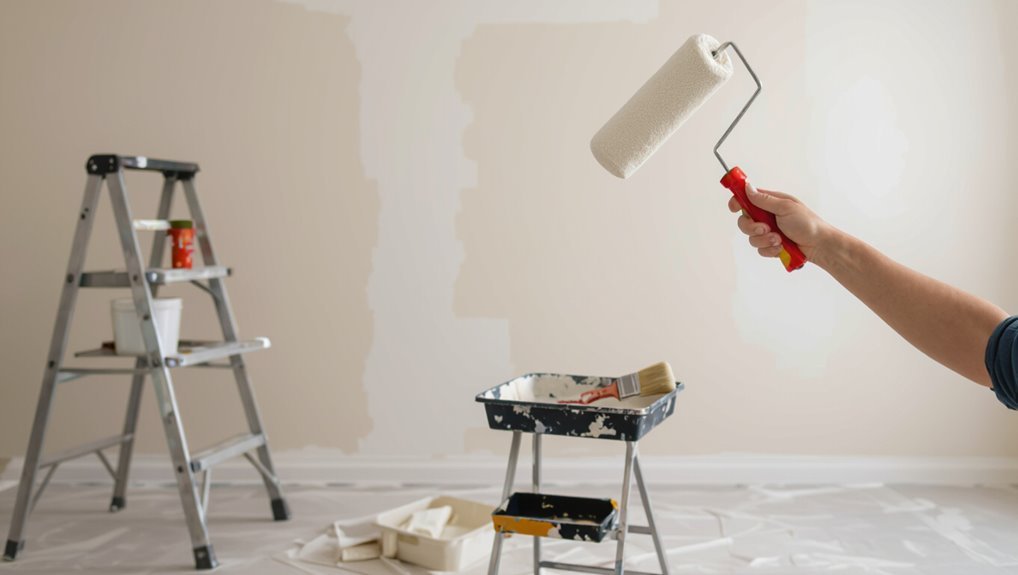
Start by gathering your tools and planning the work so you can move through the five essential steps without interruptions.
You’ll inspect and clean the surface, prep edges, choose textured wall techniques, pick appropriate materials, and execute careful paint application methods.
Move steadily: sand or patch where needed, tape and prime, roll or brush with consistent pressure, then touch up for a uniform finish.
Decide: Paint Over or Remove the Texture
You’ve prepped the area and chosen your materials, so now decide whether to paint over the texture or remove it first.
Consider condition, room use, and desired finish: keep texture to hide imperfections and save time, or choose texture removal for a smooth modern look.
Verify paint compatibility with existing surface and prime appropriately to guarantee adhesion and even coverage.
Identify Your Texture: Knockdown, Orange‑Peel, Popcorn, Sand
Before you choose paint or removal, you’ll want to identify whether your wall is knockdown, orange‑peel, popcorn, or a sand finish.
Check the texture up close and run your hand over it to spot raised areas, loose bits, or damage.
That quick assessment tells you what prep and tools you’ll need for a good result.
Recognize Texture Types
Texture matters: identifying whether your wall is knockdown, orange‑peel, popcorn, or sand will determine the prep and painting method you’ll use. Use texture identification techniques to note wall texture differences by touch and sight; knockdown is flattened peaks, orange‑peel is fine bumpy, popcorn is chunky, sand is gritty.
| Texture | Look | Feel |
|---|---|---|
| Knockdown | Flattened peaks | Smooth edges |
| Orange‑peel | Fine bumps | Slightly rough |
| Popcorn | Chunky clusters | Coarse |
| Sand | Grity finish | Abrasive |
Assess Surface Condition
Now that you can tell the basic texture types, take a close look at the wall’s condition to decide what prep and tools you’ll need.
Perform a surface inspection: note cracks, loose material, stains, or heavy buildup.
Combine that with texture classification—knockdown, orange‑peel, popcorn, sand—to determine repairs, sanding, primer type, and whether you’ll need specialty rollers, sprayers, or hand tools before painting.
Choose Paint Finish for Textured Walls
Pick a finish that hides or highlights your texture—flat and matte hide imperfections best, while satin or eggshell will catch more light and show the peaks.
You’ll usually want low-sheen for heavy textures and slightly higher sheen for smoother knockdown or orange‑peel walls.
Think about how much contrast you want between highs and lows before you buy the paint.
Best Finish Options
Because textured walls catch light and hide imperfections, choosing the right paint finish matters more than you might think.
You’ll balance finish durability and finish sheen to match traffic, cleaning needs, and style. Pick a finish that endures without exaggerating texture.
- Matte — hides flaws, low sheen, moderate durability.
- Eggshell — subtle sheen, good durability.
- Satin — higher durability, gentle sheen.
- Semi-gloss — best durability, pronounced sheen.
Finish Impact On Texture
When you choose a finish for a textured wall, remember that sheen changes how pronounced the texture looks: lower sheens soften bumps and shadows, while higher sheens make ridges and edges pop. You’ll balance texture influence with paint durability—flat tones hide flaws, satin/eggshell boost cleanability, and gloss highlights texture while resisting wear.
| Finish | Effect |
|---|---|
| Flat | Hides texture |
| Eggshell | Subtle sheen |
| Satin | Durable, cleanable |
| Semi-gloss | Accentuates texture |
| Gloss | Maximum pop, high durability |
Pick Roller Nap by Wall Texture
If your wall has heavy texture like popcorn or deep knockdown, you’ll need a thicker roller nap to get paint into the crevices. Smoother walls, by contrast, do better with a short nap for an even finish.
Choose nap by texture, considering roller sizes and paint absorption to balance coverage and waste.
- Heavy texture: 3/4″–1″
- Medium: 1/2″
- Light: 3/8″
- Smooth: 1/4″
Tools & Materials Checklist for Textured Walls
Now that you’ve matched roller nap to your wall’s texture, gather the right tools and materials so you’re ready to work efficiently.
You’ll need quality rollers and extension poles, angled brushes, trim tools, drop cloths, painter’s tape, primer and finish paint suited for textured wall techniques, a sturdy tray, sanding block, patching compound, and respirator.
Choose paint application methods that suit texture depth.
Prep the Room: Move Furniture and Protect Floors
Start by moving furniture out of the room or to the center and covering it with drop cloths so paint and dust won’t settle on your belongings.
Roll or tape heavy-duty protective coverings across the entire floor, overlapping seams to prevent splashes from seeping through.
If pieces are too large to move, group them and shield nearby floors and baseboards before you start painting.
Move And Store Furniture
Clear a path and relocate furniture to the center of the room or into an adjacent space so you can work freely; cover each piece with a drop cloth or plastic sheeting to keep dust and paint off upholstery.
You’ll plan furniture arrangement and choose storage solutions before painting. Consider these steps:
- Label small items.
- Stack lightweight pieces.
- Use temporary storage.
- Protect delicate legs.
Cover Floors Thoroughly
Protecting your floors prevents costly damage and makes cleanup way easier, so lay down robust coverings before you open a can of paint.
Cover all flooring materials with heavy-duty drop cloths or plastic sheeting, taping seams and edges.
Protect baseboards and thresholds with painter’s tape.
Keep a walk path with spare cloths for traffic, and remove dust and debris before painting starts.
Clean Textured Walls: Dust, Grease, and Stains
Before you prime or paint, remove dust, grease, and stains so your textured finish will adhere and look even.
Before priming or painting, thoroughly remove dust, grease, and stains so textured finishes adhere evenly.
You’ll use proper cleaning techniques and simple wall maintenance to prep surfaces: mix mild detergent, rinse, and dry thoroughly.
Remove greasy spots with trisodium phosphate alternatives. Avoid over-wetting texture.
- Dust removal
- Degreasing
- Stain treatment
- Final wipe-down
Repair Dents, Cracks, and Loose Texture
Start by inspecting the wall and marking dents, cracks, and any loose texture so you can prioritize repairs.
Use a suitable filler for holes and cracks, then sand smooth once it’s dry.
Match and refinish the texture before priming and painting to guarantee a seamless finish.
Inspect And Mark Damage
Scan the wall carefully for dents, cracks, and areas where the texture’s coming loose, and mark each spot with a pencil or painter’s tape so you won’t miss anything later.
Perform a quick damage assessment, note severity, and plan repair techniques before starting work.
- Small hairline cracks
- Dented areas
- Loose texture patches
- Edge separations
Fill And Refinish Texture
Now that you’ve marked the trouble spots, repair them so the texture reads uniform once painted.
Scrape loose material, perform targeted texture removal where needed, and clean the area.
Fill dents and cracks with a matching compound, feather edges, and sand lightly after drying.
For effective surface preparation, reapply texture to blend, let cure fully, then prime before painting for seamless results.
When and Which Primer to Use on Textured Walls
Because textured surfaces absorb and show paint differently, choosing the right primer is essential before you begin painting.
You’ll want a product that seals porous substrates, evens out suction, and improves adhesion so your topcoat goes on smoothly and lasts.
Pick primer types suited to surface and moisture, and use proper application techniques.
- Oil-based for stains
- Shellac for sealing
- Latex for general use
- Bonding primer for slick textures
Mix Paint and Thin So It Settles Into Crevices
Get your paint to the right consistency so it flows into crevices without running.
Choose a thinning medium recommended for your paint type—water for latex, manufacturer-specific reducers for others—and add it sparingly.
Test the mix on a scrap piece of textured board and adjust until it levels into the texture cleanly.
Proper Paint Consistency
1 quick tweak to your paint’s viscosity makes all the difference when you’re covering textured surfaces. You’ll thin slightly so paint flows into crevices without running.
Test small areas, adjust until it levels but grabs texture. Use proper application techniques for even coverage and fewer coats.
- Measure thinness
- Stir thoroughly
- Test and adjust
- Roll then brush
Choosing A Thinning Medium
When you’re choosing a thinning medium, pick one that matches your paint base—water for latex, mineral spirits for oil—so the finish stays consistent and the thinning actually helps the paint sink into crevices. Use recommended thinning ratios, add paint additives sparingly, and keep viscosity low enough to settle without runs.
| Medium | Use | Tip |
|---|---|---|
| Water | Latex | Start 10% |
| Mineral spirits | Oil | Ventilate |
Test And Adjust Mix
Before you start rolling, mix a small batch of paint with the chosen thinner and test it on a hidden patch of the textured wall so you can see how well it settles into crevices without running.
Adjust mix ratios and paint viscosity until it fills recesses without dripping.
Then:
- Note coverage
- Check drying time
- Tweak thinner amount
- Re-test nearby area
Cut In Edges and Corners on Textured Surfaces
Cutting in edges and corners on textured walls takes patience and the right tools, but you can get crisp lines without filling every groove. Use angled brush cutting techniques for edge precision, feathering paint into valleys and tapping bristles for control. Move slowly, check from multiple angles, and keep a damp rag handy to correct small mistakes.
| Tool | Action | Tip |
|---|---|---|
| Angled brush | Cut in | Light pressure |
| Small brush | Detail | Tap, don’t drag |
| Damp rag | Clean | Wipe immediately |
Roll Without Pooling on Peaks
Because textured peaks catch more paint than valleys, you’ll need to control how much paint the roller delivers so it doesn’t pool on the high points.
Work thinly, reload sparingly, and use light pressure to balance paint application across texture.
Follow these focused texturing techniques to keep peaks even:
- Load roller minimally
- Roll off excess
- Use light passes
- Inspect and smooth pooled spots
Brush and Stippling Techniques for Stubborn Crevices
When a roller can’t reach deep recesses, grab a firm-bristled brush and work paint into the crevices with short, controlled strokes; then use a stippling brush or sponge to gently press paint into the texture until coverage is even.
You’ll apply targeted crevice filling with firm pressure, blend edges with light stipple brush techniques, and remove excess to avoid drips or buildup.
How Many Coats You’ll Need and Dry Times
Most textured walls need two to three coats for solid, even coverage; start with a thin first coat to fill crevices, let it dry fully, then add a heavier second coat and spot‑touch any missed areas with a third if necessary.
- Follow coat recommendations on paint cans.
- Use proper drying techniques: ventilation and moderate temperature.
- Wait recommended dry times between coats.
- Test firmness before recoating to avoid trapping moisture.
Fix Drips, Lap Marks, and Uneven Sheen
If you spot drips, lap marks, or patches of uneven sheen, address them before the paint fully cures so they blend with the surrounding finish.
Gently sand drips, feather edges, and recoat with thin, even passes.
Use recommended drip prevention techniques—proper roller load and slow strokes—and consider targeted lap mark solutions like backrolling or blending wet edges to match sheen.
When to Use a Sprayer and How to Set It Up
Wondering whether a sprayer is right for your textured wall? You’ll choose one when speed and even coverage matter.
Learn sprayer advantages and tweak sprayer settings for paint viscosity, pressure, nozzle size, and overlap.
Discover sprayer benefits and fine-tune viscosity, pressure, nozzle, and overlap for smooth, even textured-wall coverage.
Follow this checklist to set up efficiently:
- Thin paint to recommended viscosity
- Select correct nozzle
- Adjust pressure gradually
- Test spray and refine settings
Painting Trim, Ceilings, and Alcoves Around Texture
Don’t rush the edges—careful trim, ceiling, and alcove work makes textured walls look finished and professional.
Tape and protect trim, cut in ceilings with an angled brush, and use a steady hand for cornices.
For tight spots, employ alcove techniques: small brushes, feathered strokes, and painter’s tape shaped to texture.
Finish by smoothing drips and inspecting seams.
Cleanup, Disposal, and Storing Leftover Paint
Shake out drop cloths and gather tools before you wipe down rollers, brushes, and trays—clean tools last so dried paint doesn’t ruin them.
Use proper cleanup techniques and paint safety: rinse latex in water, mineral-spirit tools outside, and ventilate.
Choose approved disposal methods for cans and waste. Preserve leftovers with airtight lids and label cans.
- Rinse
- Ventilate
- Recycle
- Label
Maintain Painted Textured Walls for Lasting Results
After you’ve cleaned up and stored leftover paint properly, spend a little time setting up a maintenance routine so your textured walls keep looking fresh.
Inspect monthly for chips or stains, dust with a soft brush, and spot-clean using gentle wall cleaning techniques.
Touch up paint from sealed containers to match texture.
These texture maintenance tips prevent bigger repairs and prolong finish life.
Frequently Asked Questions
Can Textured Walls Hide Mold or Mildew Problems Long-Term?
Not really — textured walls can hide mold or mildew initially, but you’ll still need mold prevention and texture maintenance; if moisture persists, hidden growth can worsen, so inspect, fix leaks, clean, and use proper treatments regularly.
Can I Paint Textured Exterior Walls the Same as Interior Ones?
Think of it like weatherproofing a coat: you can’t paint exterior walls exactly like interior ones. You’ll need exterior techniques, consider texture types, use exterior-grade primer and paint, and address sealing, drying, and UV resistance.
Will Paint Color Look Different on Textured vs. Smooth Walls?
Yes — you’ll notice differences: texture alters color perception because uneven surfaces scatter light, changing light reflection and apparent hue. Test samples on both textured and smooth areas to confirm the final look before painting.
How Do I Match Paint to Existing Textured Wall Color Precisely?
Think of a puzzle, then match pieces: you’ll use color matching tools, take paint samples from the textured wall, test them under varied light, tweak blends in small batches, and repeat until the hue aligns precisely.
Can Textured Wall Paint Be Washed or Pressure-Washed Safely?
Yes—you can wash textured wall paint gently; avoid high-pressure washing. Use soft brushes, mild detergent, and low-pressure rinses. These cleaning techniques and maintenance tips will protect texture and paint adhesion without causing damage.
Conclusion
You’ve got this—painting textured walls is straightforward when you follow the steps: decide whether to keep or remove texture, identify the type, pick the right finish and roller nap, and use a sprayer only when it truly helps. Tackle trim and ceilings carefully, clean up responsibly, and store leftover paint for touch-ups. With a little patience, your room will look brand-new—like you waved a magic wand and the whole place refreshed itself overnight.
