
How to Smooth a Textured Wall: Complete Wall Preparation Guide
You can turn a textured wall into a smooth, paint-ready surface by inspecting for damage, removing loose texture, filling holes, then skim-coating with joint compound in thin layers. Sand between coats with fine grit, vacuum dust with HEPA tools, prime porous areas, and finish with your chosen paint. Use proper PPE and test for asbestos on older textures. DIY is fine for small jobs, but pros help with large or damaged walls—keep going to see full steps and tips.
Why Textured Walls Cause Paint Problems
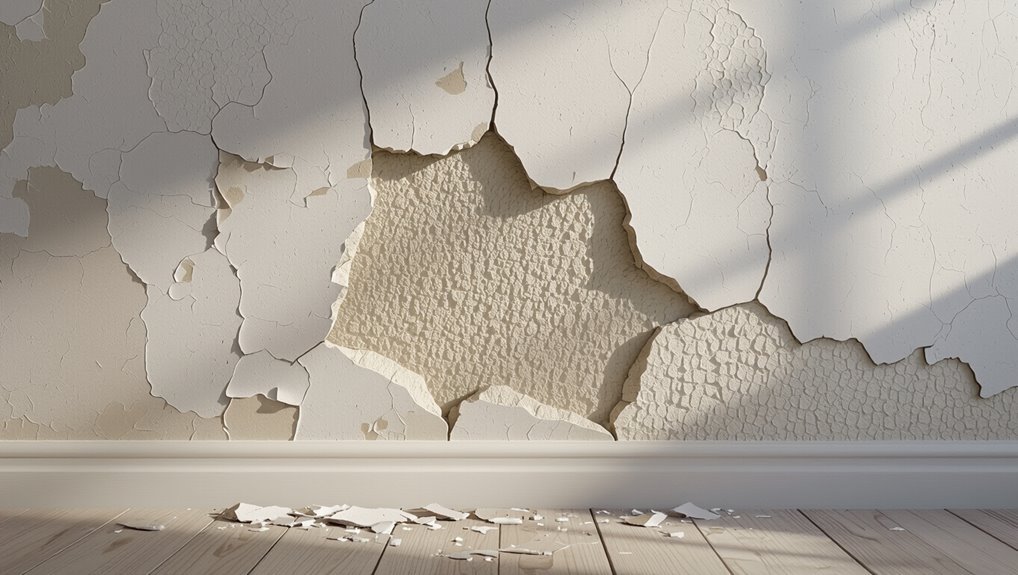
Textured walls cause paint problems because their uneven surfaces trap dust and create recessed areas that paint can miss or pool in, leading you to need extra coats and touch-ups.
You’ll face textured wall issues like inconsistent sheen and hidden dirt. These surfaces create paint adhesion challenges, so you’ll prep more carefully—cleaning, sanding, and priming—to guarantee even coverage and long-lasting results.
Can You Smooth a Textured Wall Yourself or Hire a Pro?
You can tackle smoothing yourself if the texture and room size are manageable, but it depends on your skills and the tools you’ll need.
Consider cost and time—DIY saves labor but can take weekends, while pros charge more but finish faster and cleaner.
Hire a pro when the wall has extensive damage, you need a flawless finish, or you’re short on time.
DIY Feasibility Factors
Anyone with steady hands and basic tools can smooth some textured walls, but whether you should tackle it yourself depends on the texture type, your skill level, budget, time, and tolerance for mess.
You’ll use DIY tools, perform wall assessment, and do surface preparation.
Project planning should include material selection, finish options, realistic skill level check, time commitment estimate, and cost analysis.
Cost And Time
Once you’ve weighed the DIY feasibility factors, the next question is whether to tackle the job yourself or hire a pro — and that decision usually comes down to time and money.
Consider budget considerations like materials and tool rental versus labor rates.
For DIY, plan realistic time management: prep, drying, sanding.
Pros save time but cost more; you choose based on priorities and schedule.
When To Hire
When is it worth hiring a pro instead of tackling the job yourself? You should consider a professional assessment when project complexity, patching extent, or safety concerns exceed your skills.
Get help if timelines, finish quality, or equipment needs are tight.
- Extensive damage
- High ceilings or scaffolding
- Texture matching challenges
- Tight deadline or warranty requirements
Quick 6‑Step Workflow to Smooth a Textured Wall
Follow these six focused steps and you’ll transform a textured wall into a smooth, paint-ready surface without wasting time or materials.
1) Clear the area.
2) Remove loose texture.
3) Sand rough spots.
4) Apply skim coat using recommended smoothing techniques.
5) Sand and inspect.
6) Prime.
These textured wall treatments streamline work so you’ll get consistent, ready-to-paint results.
Tools and Materials You’ll Need
Before you start, gather the essential hand tools—trowels, scrapers, sanders, and a bucket or two—so you won’t stop mid-job.
Put on safety gear like goggles, a dust mask or respirator, and gloves to protect yourself from dust and joint compound.
Finally, stock up on materials and supplies such as joint compound, primer, sandpaper, patching tape, and drop cloths.
Essential Hand Tools
You’ll need a handful of reliable hand tools to strip texture and prep the wall properly:
Use tools that suit common texturing techniques and efficient wall preparation.
- Putty knife and joint knife
- Sanding block or pole sander
- Drywall rasp
- Tap or hammer and pry bar
Safety Gear Needed
Because stripping texture and sanding raise a lot of dust and debris, you’ll want proper safety gear to protect your eyes, lungs, hands, and hearing while you work.
Follow safety precautions: use fitted N95 or P100 respirators, sealed goggles, hearing protection, and durable gloves.
Your gear selection should prioritize fit, certification, and comfort so you can work efficiently and safely.
Materials And Supplies
To smooth a textured wall you’ll need a compact set of tools and materials: a scraper or putty knife, sanding block or pole sander with 120–220 grit sandpaper, joint compound, a taping knife (6–12 inch), drywall primer, quality spackle for small repairs, clean rags, drop cloths, painter’s tape, and a shop vacuum or dust-collection sanding attachment.
- Sanding techniques guide and grits.
- Texture removal tools.
- Joint compound mixing supplies.
- Dust-control and cleanup gear.
How to Tell Popcorn, Orange Peel, Knockdown, or Heavy‑Mud Textures
Wondering which textured finish you’re looking at? Use simple identifying textures checks:
- popcorn feels bumpy and granular,
- orange peel is fine and dimpled,
- knockdown shows flattened peaks with smooth islands,
- and heavy‑mud has pronounced ridges or swirls.
Note texture characteristics like scale, sharpness, and pattern repeat to decide sanding or skim options, and mark areas before smoothing.
How to Check for Cracks, Delamination, and Moisture
Before you start smoothing, inspect the wall for cracks, delamination, and moisture so you know what repairs you’ll need.
Use bright light and a screwdriver for crack detection and tap to find delaminated areas.
For moisture assessment, use a moisture meter or check for stains and musty smells.
- Visual scan
- Tap test
- Moisture assessment tool
- Mark repairs
Fixing Moisture and Delamination Before Smoothing
If you find damp spots or hollow-sounding areas, stop and deal with the moisture and delamination first so your smoothing work won’t fail later.
Perform a moisture assessment with a meter and visual checks, dry the area, and remove loose texture.
For delamination repair, inject adhesive or reattach loose sections, sand edges, and spot-prime before applying skim coats to guarantee a stable surface.
Safety Gear and Dust‑Control Essentials
Before you start sanding or skim-coating, gear up with protective clothing and gloves to keep skin and clothes free of dust and joint compound.
Seal off the room, run a fan for ventilation, and use a vacuum with a HEPA filter or a dust-capture sander to cut airborne particles.
Those simple steps will protect your health and make cleanup much easier.
Protective Clothing And Gloves
A thick pair of coveralls and snug gloves will keep dust, grit, and joint compound from irritating your skin and clothing while you sand and skim coat a textured wall.
Use protective gear and follow safety precautions: don’t wear loose clothing; choose nitrile or leather gloves; change damp or torn gear; launder coveralls separately.
- Inspect fit
- Check material
- Replace when worn
- Seal seams
Dust Control And Ventilation
You’ve got your coveralls and gloves on, now control the dust you’ll stir up while sanding and skim-coating.
Seal doors and vents with plastic dust barriers, run a HEPA shop-vac at the sander, and position exhaust fans to push air outside.
Wear an N95 or P100 respirator, monitor air quality, and take breaks to clear filters and prevent buildup.
Why You Should Test a Small Patch First
Because wall textures and repair materials vary, you should test a small patch first so you can see how the skim coat, primer, and paint will bond and look once dry.
You’ll confirm adhesion, color match, and final texture. Use a test patch to avoid surprises from texture variations and material incompatibility.
- Adhesion
- Finish match
- Dry time
- Repair technique
How to Remove Loose Texture and Flaking Paint Safely
Before you start scraping, make sure you’re wearing a dust mask, goggles, and gloves to protect your eyes, lungs, and skin.
Carefully use a scraper or putty knife to lift and remove any loose texture or flaking paint without gouging the wall.
Collect debris as you go and dispose of it safely to keep the work area clean.
Wear Protective Gear
A respirator, goggles, and disposable coveralls will keep you safe while you scrape loose texture and flaking paint.
You’ll also want protective masks and safety goggles to block dust and particles. Gloves and shoe covers protect skin and floors; change gear if it’s contaminated.
Follow proper fit and disposal procedures to limit exposure.
- Respirator fit check
- Safety goggles seal
- Disposable coveralls
- Nitrile gloves
Remove Loose Texture
Start by gently scraping any loose texture and peeling paint with a putty knife or drywall scraper, working in small sections so you don’t gouge the wall. Wear a mask, vacuum debris, and sand edges smooth. This step’s essential for effective texturing techniques and solid wall preparation; it prevents adhesion failures and uneven finishes.
| Tool | Action | Tip |
|---|---|---|
| Putty knife | Scrape | Small strokes |
| Scraper | Remove | Angle shallow |
| Vacuum | Clean | HEPA if possible |
| Sandpaper | Smooth | Fine grit |
| Mask | Protect | Tight fit |
How to Remove Popcorn Texture (Best Methods)
Removing popcorn texture can transform a room, but you’ll want the right method for your ceiling’s condition and your tolerance for dust.
Removing popcorn ceilings can refresh a room—pick the right removal method based on ceiling condition and dust tolerance.
You’ll test a small area, choose wet-scraping for painted or loose popcorn, or use chemical softeners for stubborn spots.
Consider hiring pros for asbestos concerns and explore texture alternatives if you want a different finish.
- Wet-scrape
- Chemical softener
- Professional abatement
- Replace with new texture
How to Thin or Scrape Orange‑Peel Texture Without Damaging Drywall
If you want to thin or scrape orange‑peel texture without gouging the drywall, work deliberately with the right tools and technique so you remove the bulks of texture while leaving the paper and joint compound intact.
Begin with a careful texture assessment, test small areas, use a wide blade and light pressure for texture removal, prioritize drywall protection, then finish with a skim coat to blend.
How to Flatten Knockdown Texture With Scraping and Re‑Skim
First, you’ll assess the knockdown texture to see how deep the peaks are and whether any repairs are needed before you start.
Next, you’ll scrape off the highest ridges with a wide blade or sand the surface smooth, taking care not to gouge the drywall.
Finally, you’ll apply a thin skim coat of joint compound, feathering it out for a flat, uniform finish.
Assess Existing Texture
Want to know whether your knockdown texture can be flattened by scraping and re‑skimming?
Do a quick texture assessment and wall evaluation: check adhesion, depth, existing repairs, and substrate condition. This helps you decide if scraping plus skim is viable or if full recoat is needed.
- Adhesion
- Texture depth
- Repair history
- Substrate stability
Scrape And Re‑Skim
Start by scoring and loosening the high points, then scrape away loose material so you can re‑skim with fresh joint compound. This approach lets you flatten knockdown texture without full drywall replacement when the texture is well‑bonded and the substrate is sound.
You’ll use careful texture removal, feather compound thinly, sand between coats, and apply proven smoothing techniques to achieve a uniform, paintable surface.
Step‑by‑Step: Prep the Wall Before Skim‑Coating
Before you mix mud, prepare the surface so the skim coat will adhere and lay smooth.
You’ll remove loose wall texture, clean dust, and repair gouges so skim coating bonds uniformly.
Follow these steps:
- Scrape and sand loose texture.
- Vacuum and wipe down.
- Fill deep holes; feather edges.
- Prime porous areas for even adhesion.
Choosing Joint Compound or Plaster for Smoothing
You’ll want to compare joint compound types—ready-mix, setting-type, and lightweight—so you pick one that matches your skill level and drying time needs.
Consider whether traditional plaster might be better for thick fills or high-durability areas, since it bonds differently than compound.
I’ll outline pros and cons of each so you can choose the right material for your wall.
Joint Compound Types
When you’re planning to smooth a textured wall, choosing the right joint compound or plaster makes the job easier and determines the final finish.
For compound selection, consider drying time, sanding, and your preferred application techniques to match skill and texture. Pick based on setting time and finish hardness.
- Ready-mix all-purpose
- Topping/ finishing
- Setting-type (powder)
- Lightweight compound
Plaster Vs. Compound
You’ve picked a compound type, now decide whether joint compound or traditional plaster will give the smoothest, most durable result for your wall.
You’ll prefer plaster for hardness, longevity, and plaster advantages on high-traffic walls.
Choose joint compound for easy sanding, repairability, and diverse compound applications like skim coats and texture hiding.
Match choice to skill, timeline, and future wear.
How to Mix Joint Compound for a Lump‑Free Skim Coat
Mixing joint compound for a lump-free skim coat starts with the right ratio of powder to water and a good mixing sequence so you don’t spend extra time picking out clumps later.
You’ll use proper mixing techniques to control compound consistency and avoid air bubbles. Follow these steps:
- Add water first.
- Sprinkle powder gradually.
- Whisk slowly, then faster.
- Let rest, then skim off foam.
How to Apply the First Skim Coat : Technique and Common Errors
Now that you’ve mixed the joint compound to a lump-free consistency, you’ll load your taping knife and spread a thin, even coat across the wall.
Keep the knife at a slight angle and use long, smooth strokes to push material outward, feathering the edges so the skim coat blends with the surrounding surface.
Watch for ridges, air pockets, or overly thick spots and smooth them immediately to avoid extra sanding later.
Mixing Joint Compound
Before you apply the first skim coat, get the joint compound to a smooth, lump-free consistency that’ll spread easily and level the texture without sagging.
You’ll control mixing ratios and compound consistency to avoid drips or stiffness.
Follow these steps:
- Add water gradually.
- Whisk for lumps.
- Aim for heavy cream texture.
- Test on scrap drywall.
Feathering Edge Technique
With your compound thinned and lump-free, you’re ready to spread the first skim coat using a feathering edge technique that smooths changes and hides ridges.
Hold a wide knife at a shallow angle, apply thin passes, and fade pressure toward edges. Practice feathering techniques for consistent thickness.
Focus on edge blending to avoid visible seams, then sand lightly once dry for a uniform surface.
Feathering Edges and Blending Seams for an Invisible Finish
When you sand and skim a textured wall, feathering the edges and carefully blending the seams makes the repair disappear instead of standing out.
Use a wide putty knife or trowel to thin the joint compound at the margins so it tapers smoothly into the surrounding surface. Use precise feathering techniques and aim for seamless blending.
- Thin edges uniformly
- Overlap strokes lightly
- Sand progressively finer
- Check connections visually
Drying Times and How to Speed Curing Safely
Let your skim coat and joint compound dry the recommended time on the product label—typically 24 hours for light coats and up to 48–72 hours for thicker applications.
Remember that temperature, humidity, and ventilation all affect cure, so you’ll want to control those variables to avoid rework.
If you need to speed curing, use gentle heat and increased airflow (fans, dehumidifiers, or a warm room) rather than high-temperature sources that can crack the finish.
Recommended Drying Times
Drying times for textured walls vary by product and conditions, but you’ll typically wait 24–48 hours for paint to be touch-dry and up to 7 days for full cure.
Monitor drying conditions and humidity levels; adjust ventilation and temperature to speed safe curing.
- Wait 24–48 hours before light contact.
- Allow 72 hours for light fixtures.
- Avoid heavy load for 7 days.
- Use fans and dehumidifiers.
Factors Affecting Cure
Because several variables influence how fast a textured wall cures, you should consider the paint type, temperature, humidity, ventilation, and surface porosity before speeding the process. Monitor cure duration and environmental factors; adjust expectations for oil vs. latex and porous surfaces.
| Variable | Effect | Action |
|---|---|---|
| Paint type | Fast/slow | Check label |
| Temperature | Faster warm | Maintain temp |
| Humidity | Slows cure | Dehumidify |
| Ventilation | Aids drying | Increase airflow |
Safe Speed-Up Methods
While you can’t rush chemical reactions, you can take safe steps to speed curing without compromising the finish: Use controlled warmth and ventilation, avoid high humidity, and follow manufacturer dry times for joint compounds and primers during texturing techniques and wall preparation.
- Increase airflow with fans.
- Use low heat (not direct).
- Monitor humidity.
- Respect product cure times.
Sanding Between Coats: Grits, Tools, and Low‑Dust Methods
When you sand between coats, you’re smoothing imperfections, improving adhesion, and ensuring a flawless final finish; choosing the right grit, tool, and dust-control method makes that quick and clean. Use fine grits (220–320), flexible sanding blocks or orbital sanders, and HEPA vacuums or wet sanding for dust reduction. Focus on light passes and targeted sanding.
| Grit | Tool | Dust method |
|---|---|---|
| 220 | Block | HEPA vac |
| 320 | Orbital | Wet sanding |
When and How to Apply a Second Skim Coat
After you’ve sanded the first skim and removed dust, decide whether a second coat is needed by inspecting for remaining low spots, visible texture, or knife lines. If any show under good lighting, apply another thin skim.
After sanding and dusting, inspect under good light—apply another thin skim if low spots or knife lines remain.
Use smooth, consistent application techniques and keep edges feathered. Let dry, sand lightly, then reassess.
- Use thin layers
- Maintain wet edge
- Smooth with broad knives
- Control drying time
Spot Repairs: Dents, Nail Pops, and Localized Blemishes
If you find small dents, nail pops, or other localized blemishes, tackle them now with targeted repairs before you skim the entire wall.
Clean area, remove loose texture, and choose repair techniques suited to the texture types present.
Fill dents with lightweight compound, reset or sink popped nails, sand smooth, and spot-prime.
Match texture subtly before final skim to guarantee an even finish.
Dealing With Corners, Trim, and Tight Spots
Corners, trim, and tight spots demand patience and the right tools to get a seamless result.
You’ll use corner techniques and trim strategies to feather joint compound, protect moulding, and keep edges crisp. Work slowly in layers, sanding lightly between passes, and use small tooling for tight spots.
- Use a corner trowel.
- Protect trim with tape.
- Small flexible knife.
- Light sanding.
Priming a Smoothed Wall: Primers and Application Tips
Preparation matters: priming a smoothed wall seals the surface, promotes adhesion, and guarantees your topcoat looks even.
You’ll choose primer types based on porosity and stains—latex for general use, oil or stain-blocking for problem areas, or bonding primers for glossy patches.
Use proper priming techniques: roll in W patterns, cut edges with a brush, maintain wet edges, and allow full dry time before painting.
Choosing Paint Finish After Smoothing a Wall
Once you’ve smoothed and primed the wall, pick a finish that balances appearance, durability, and touch-up needs.
Once walls are smoothed and primed, choose a finish that balances look, durability, and ease of touch-ups.
You’ll consider paint durability and finish sheen to match room use and lighting. Choose based on cleanability and imperfection hiding.
- Flat/matte — hides flaws, low sheen.
- Eggshell — subtle sheen, moderate durability.
- Satin — good durability, easy cleaning.
- Semi-gloss — highest sheen, best cleanability.
Cost and Time Estimate for a Typical Room
After you pick the paint finish, estimate how much time and money you’ll need for a typical 12×12 room: expect 1–2 full days of work (sanding, skim-coating, priming, and two coats of paint) and roughly $150–$400 in materials for joint compound, primer, paint, sandpaper, and basic tools.
Labor will add $200–$600 if you hire a pro for a one- to two-day job.
Plan budget considerations and time management: prioritize quality tools, factor drying times, and decide whether you’ll DIY to save labor costs or hire help to speed completion.
When Demolition or Re‑Drywalling Is the Better Choice
If the texture damage is widespread, the studs are rotted, or the walls have severe unevenness, you’d be better off demolishing and re‑drywalling than trying to skim and sand forever.
You should weigh demolition benefits against costs and downtime, and consider re drywalling considerations like insulation, electrical access, and finish level.
- Structural rot
- Extensive cracks
- Hidden mold
- Wiring/plumbing access
Hiring a Pro: Questions to Ask and How to Compare Quotes
Wondering how to pick the right contractor for smoothing your textured walls?
Ask about experience with similar finishes, licensing, insurance, references, and warranty.
Request detailed bids for materials, labor, cleanup, and a clear project timeline.
Use quote comparison to spot omissions or unusually low prices.
Clarify change-order policies and payment schedule before signing so expectations are aligned.
Green Products and How to Dispose of Waste Responsibly
Choose low-VOC paints, reusable sanding tools, and biodegradable cleaners to cut indoor pollution and landfill waste when smoothing textured walls.
You’ll prefer eco friendly materials and plan waste recycling so debris and leftover compounds don’t harm the environment.
Follow local disposal rules and donate usable materials.
- Segregate waste
- Recycle metal/plastic
- Compost biodegradable scraps
- Drop off hazardous waste
Quick Checklist to Prepare, Smooth, and Paint a Textured Wall
After sorting waste and selecting greener materials, you’re ready to prepare, smooth, and paint the wall with a focused checklist.
Inspect surface and perform a texture assessment. Protect floors and trim. Clean, repair cracks, and sand high spots.
Apply primer to improve paint adhesion. Skim or sand textured areas, wipe dust, then apply finish coats.
Allow proper cure time.
Frequently Asked Questions
Can Smoothing Affect Wall Soundproofing or Acoustics?
Yes — smoothing can alter acoustics. You’ll reduce sound absorption by removing textured surfaces, so consider wall materials, added insulation, or acoustic panels to restore absorption and maintain desired soundproofing and room acoustics.
Will Smoothing Hide Previous Wallpaper Adhesive Stains?
Yes — if you remove adhesive thoroughly and prime properly, smoothing can hide previous wallpaper adhesive stains. You’ll need adhesive removal, sanding, and a bonding primer to guarantee paint adhesion and a uniform finished surface.
Can I Install Wall-Mounted TVS or Heavy Shelves After Skim-Coating?
A contractor once rehung a 60-pound TV after skim-coating by reinforcing studs; yes, you can install wall-mounted TVs or heavy shelves, but use proper mounting options and respect weight limits, adding blocking or anchors as needed.
How Does Smoothing Impact Home Resale Disclosures or Permits?
Smoothing generally won’t change permit needs, but it can boost resale value and improve buyer perception; you’ll disclose major structural or electrical changes, not cosmetic skim-coating, so document any alterations just in case.
Are There Long-Term Maintenance Differences for Smoothed Versus Textured Walls?
Yes — you’ll find smoothed walls offer better long term durability and lower maintenance costs for cleaning and repainting, but textured walls hide imperfections and resist minor wear, so you’ll balance upkeep versus appearance preferences.
Conclusion
You’re ready to tame that bumpy wall and turn it into a smooth, calm backdrop for your home. Whether you sand, skim, or call in help, you’ll be nudging the room from “textured country” toward “sleek metropolis.” Take care with prep, pick the right tools and products, and treat waste thoughtfully—then enjoy the quiet surface you’ve created, like a freshly ironed sheet waiting for the first breath of life.
