
Can I Thin Latex Paint: When and How to Do It Correctly
You can thin most latex paint with water to improve flow and spraying, but do it sparingly and test first. Aim for about 10% for brushing or rolling and up to 20% for spraying; don’t exceed roughly 30% or you risk poor adhesion, thin coverage, and peeling. Use viscosity cups or a dip test, mix thoroughly, and try a small patch before committing. Follow manufacturer warnings and keep leftover thinned paint sealed, and keep reading for detailed tips.
Can I Thin Latex Paint? The Short Answer
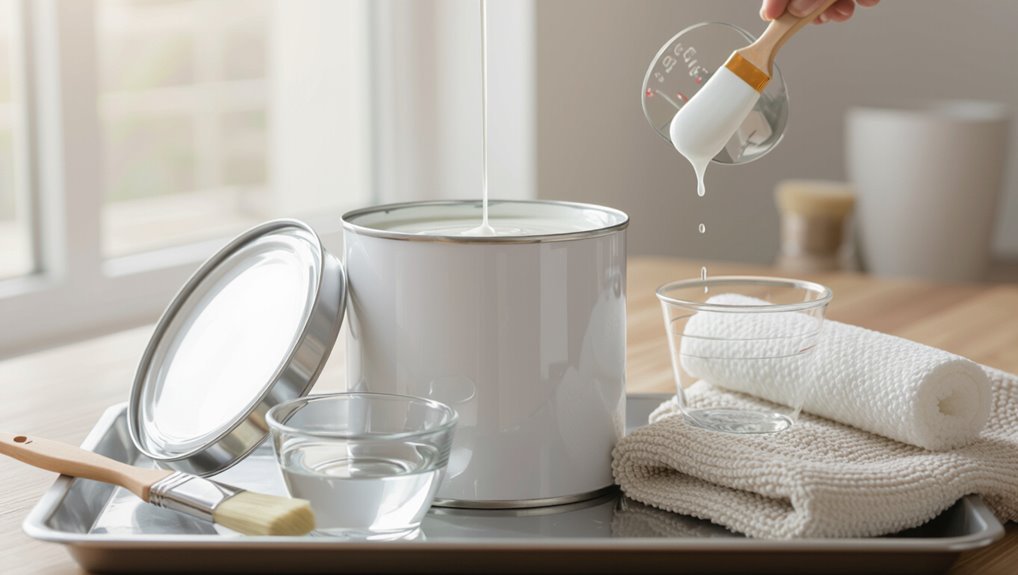
Can you thin latex paint? You can, but only sparingly and for specific goals.
Can you thin latex paint? Yes—sparingly and only for specific purposes to adjust consistency without compromising results.
Use proper thinning techniques—water for most interior latex—adding small amounts and stirring thoroughly.
You’re aiming to adjust paint consistency for easier brushing or spraying without over‑diluting.
Test on a sample surface, let it dry, and verify coverage and adhesion remain acceptable before proceeding with a full application.
When Thinning Latex Paint Improves Flow and Leveling
When you need smoother brush or spray application, thinning latex paint can improve flow and leveling by reducing surface tension and helping brush marks disappear as the film settles.
You’ll get flow improvement for detailed trim and faster spray jobs.
Use measured water or manufacturer reducer, mix thoroughly, test on scrap, and adjust application techniques—brush angle, strokes, or spray pressure—until finish lays out evenly.
When You Should Not Thin Latex Paint
Although thinning can help in many cases, you shouldn’t dilute latex paint if it will compromise coverage, adhesion, or the manufacturer’s warranty; stick with the original formula for porous surfaces, heavy-hide jobs, or when the label explicitly warns against reducers.
Don’t risk paint quality or ruin application techniques.
Consider:
- Frustration at poor coverage
- Worry about peeling
- Regret over wasted effort
- Anger at voided warranty
- Sadness from ruined finish
How Paint Formulation Affects Thinning Needs
If you’ve ruled out thinning for porous or warranty-sensitive jobs, the next step is to look at what’s in the can—paint formulations vary and that affects whether and how much you should thin. You’ll check paint composition and viscosity factors because pigment stability and recommended application methods determine thinning limits.
| Type | Binder | Notes |
|---|---|---|
| Primer | High | Low thinning |
| Enamel | Medium | Moderate thinning |
| Latex | Variable | Follow label |
| Tint | Sensitive | Avoid over-thin |
Water-Based vs. Acrylic Latex: Which Thins With Water?
Curious which latex paints you can safely thin with water? You can thin most water-based latex for flow and cleanup, enjoying water based benefits; acrylic latex also accepts water but keeps acrylic advantages like durability.
Choose based on surface and performance.
- Relief: easier cleanup
- Confidence: predictable results
- Pride: durable finish
- Joy: smoother application
- Calm: less odor
How Much Water Can You Safely Add (Percent Guidelines)
You can usually add about 10% water by volume to latex paint for brushing or rolling without hurting performance, and many manufacturers recommend keeping it under that for best results.
For spraying, you might go up to 20% with proper thinning guidelines from the paint label.
Don’t exceed the maximum limit printed on the can—going beyond around 30% will noticeably weaken adhesion, hide, and durability.
Recommended Water Percentage
When thinning latex paint for most interior and exterior jobs, stick to a conservative range: add no more than 10% water by volume for light brushing or rolling tweaks and keep it under 5% for spraying unless the manufacturer’s instructions allow more.
Use recommended ratios and aim for ideal thinning so finish, adhesion, and coverage stay strong.
- Calm
- Confident
- Practical
- Cautious
- Satisfied
Maximum Thinning Limits
Although a little water can make latex paint easier to work with, stick to firm limits so you don’t compromise adhesion or color, and never exceed about 10% by volume for brushing or rolling and about 5% for spraying unless the label specifically permits more.
For safe thinning, measure additions precisely, test a small batch, and follow maximum thinning limits on the technical data sheet to maintain coverage and durability.
Which Tools Need Thinned Latex Paint (Brushes, Rollers, Sprayers)
When you choose a tool, consider how paint viscosity affects performance: brushes need a slightly thinner mix for smooth bristle flow, while rollers rely on nap compatibility to hold and release paint properly.
Sprayers usually require specific thinning ratios or manufacturers’ guidelines to prevent clogging and guarantee even atomization.
We’ll cover practical tips for each tool so you can match consistency to application.
Brushes And Viscosity
If you want smooth, even coverage, match the paint’s viscosity to your tool: brushes and rollers usually use straight-from-the-can latex, while sprayers need thinner, more fluid paint to atomize properly.
Choose brush types by hair and purpose; follow viscosity ranges on labels. You’ll feel confident using the right tool.
- Pride
- Relief
- Control
- Satisfaction
- Ease
Rollers And Nap Compatibility
Some tools need thinner latex than others, and rollers—especially those with longer naps—often demand a slightly more fluid mix than a brush.
Consider roller types and nap thickness for roller selection: thicker naps increase paint absorption and affect roller application on textured surfaces.
Match thinning to surface texture to control paint finish and choose finish options that suit coverage without overworking the roller.
Sprayers And Thinning Ratios
Rollers and nap choices affect how fluid your latex needs to be, but sprayers impose different demands: they usually require a thinner, more consistent viscosity to pass through tips without clogging or spitting.
You’ll choose thinning techniques by tool and sprayer types: brushes/rollers rarely need thinning; airless/HVLP sprayers often do.
Consider spray pattern, tip size, and finish.
- Frustration
- Relief
- Precision
- Confidence
- Satisfaction
Why Thinning Helps With Paint Sprayers
When you use a paint sprayer, thinning latex paint improves flow and atomization so the sprayer delivers a smooth, even mist instead of sputtering blobs. That reduces tip clogs, minimizes orange peel texture, and helps achieve consistent coverage with less overspray.
You’ll also protect sprayer maintenance by reducing strain on pumps and filters, and you’ll control paint consistency for predictable spray patterns and fewer blockages.
How Thinning Affects Coverage and Hiding
Although thinning can make latex paint easier to spray, it also changes how much surface the paint will cover and how well it hides the substrate.
You’ll trade viscosity for coverage improvement, and hiding effectiveness can drop.
Consider these emotional stakes:
- Frustration when thin coats show flaws
- Relief with smoother spray finish
- Anxiety over extra coats
- Satisfaction after proper adjustment
- Pride in a flawless result
How Thinning Changes Drying Time and Tackiness
When you thin latex paint, it often dries faster on the surface but can stay tacky longer underneath.
You’ll notice increased surface tackiness especially if you over-thin or apply in high humidity.
Temperature and humidity will change both how quickly it skins over and how long that tacky feel persists.
Shorter Drying Time
If you thin latex paint, it usually dries faster because the added solvent (water) lowers viscosity and lets moisture evaporate more quickly from the surface; however, that speed-up can leave the film tacky longer or weaken the paint’s ability to form a proper skin, especially if you over-thin.
You’ll need to watch drying conditions and environmental factors.
- Anxiety about timing
- Relief at quicker coats
- Frustration with tackiness
- Confidence in surface preparation
- Concern for paint adhesion
Balance humidity control, temperature effects, air circulation, paint application, project timing, and paint storage to succeed.
Increased Surface Tackiness
Because adding water thins latex paint and speeds surface evaporation, you’ll often notice the film feels tacky longer even as it seems to dry faster.
You’ll want to avoid heavy thinning; tackiness can cause dust pickup and muddy strokes.
Moderate thinning can promote increased adhesion and an improved finish when applied correctly, but test small areas and wait fully before recoating to prevent blemishes.
Humidity And Temperature Effects
Although thinning latex paint lowers its viscosity and speeds solvent evaporation, ambient humidity and temperature still govern how fast the film actually dries and how tacky it feels; high humidity slows water evaporation and extends tackiness, while warm, dry conditions speed drying but can cause skinning or uneven flow.
You’ll watch humidity impact and temperature variations closely:
- Frustration when tacky days linger
- Relief with quick dry
- Anxiety over skinning
- Satisfaction from smooth flow
- Urgency to adjust thinning
How Thinning Affects Durability and Washability
When you thin latex paint, you change the balance of binders, pigments, and solids that give the finish its strength and scrub resistance.
As a result, the coated surface will often be less durable and easier to scuff or wash away. You’ll face durability concerns and washability considerations: thin coats resist abrasion and cleaning less, may need extra coats, and can show streaks or uneven wear faster.
Best Diluent for Latex Paint: Use Clean Water
For thinning latex paint, stick with clean water because it’s compatible with the acrylic binder and won’t break down the finish.
Start by adding small amounts—about 10% water by volume—and mix thoroughly, then test the flow and coverage.
If you need more fluidity for spraying, increase gradually up to roughly 20% while checking film build and adhesion.
Why Water Works
Because latex paint is water-based, water mixes with it readily and thins it without breaking the binder, making it the safest and simplest diluent you can use.
You’ll notice better control of paint viscosity and enjoy water benefits like easy cleanup, predictable flow, and preserved finish.
- Relief: fixes thick paint
- Confidence: predictable results
- Ease: simple cleanup
- Trust: gentle on binder
- Satisfaction: smoother application
How Much To Add
Start with small increments—add 1/4 cup of clean water per quart of latex paint, stir thoroughly, then test the consistency; repeat in 1/4-cup steps until the paint flows smoothly from your brush or roller without running. Use thinning techniques to adjust paint viscosity carefully.
| Increment | Effect |
|---|---|
| 1/4 cup | Slightly looser |
| 1/2 cup | Brush-friendly |
| 3/4 cup | Roll-ready |
When to Use a Latex-Compatible Extender or Conditioner
When your latex paint is drying too fast, showing brush marks, or resisting smooth leveling, reach for a latex-compatible extender or conditioner; it slows drying, improves flow, and helps eliminate brush and roller texture so your finish lays down more evenly.
You’ll appreciate extender benefits and understand conditioner types when tackling tricky surfaces.
- Relief
- Confidence
- Pride
- Calm
- Satisfaction
Why Solvent Thinners Are a Bad Idea for Latex
Don’t use solvent thinners on latex — they can break down the paint film and weaken the binder that holds pigments together.
That damage reduces flexibility, making the finish prone to cracking and loss of adhesion.
I’ll explain how this happens and what to use instead.
Paint Film Breakdown
Although adding solvent thinners might seem like a quick fix for thick latex paint, they can seriously weaken the paint film you’re trying to preserve.
You risk losing paint adhesion and compromising film integrity, causing premature failure.
You’ll feel frustration watching bubbles, cracking, flaking, peeling, and blotchy sheen.
- bubbles
- cracking
- flaking
- peeling
- blotchy sheen
Blocked Paint Flexibility
If you add solvent thinners to latex paint, you’ll strip out the water and coalescing agents that let the polymer particles fuse into a flexible film.
That blocks paint flexibility, causing brittle, cracked coats.
Don’t chase faster drying with solvents; instead adjust application techniques—thin minimally with water or use manufacturer-approved additives, maintain proper film thickness, and allow adequate drying to preserve elasticity and durability.
How to Test Viscosity With the Dip-and-Drip Method
To check whether your latex paint needs thinning, use the simple dip-and-drip method: dip a clean stick or stirrer into the paint, lift it out, and watch how the paint flows back into the can.
Dip a stirrer into the latex paint, lift it out, and watch how smoothly it flows back into the can.
Compare flow to viscosity standards and basic testing techniques.
Then note sensations and reactions:
- relief
- frustration
- confidence
- doubt
- satisfaction
How to Use a Viscosity Cup for Accurate Tests
When you use a viscosity cup, pick the cup size that matches your paint’s expected viscosity and the manufacturer’s recommendations.
Hold the cup steady, fill it to the mark, and time how long the paint takes to empty to interpret the flow time against the standard chart.
If the flow time is too short or long, you’ll know whether to add small amounts of water or a thickening agent to reach the target.
Choosing The Right Cup
Picking the right viscosity cup is the key step to getting accurate flow measurements for thinning latex paint; you’ll want a cup sized for your paint’s expected viscosity and compatible with your testing standard (Ford, Zahn, or ISO).
Choose based on paint cup materials and guarantee proper measurement. You’ll feel confident when results match expectations:
- Precise
- Reliable
- Reassuring
- Professional
- Empowering
Interpreting Flow Times
How long should the paint flow before you call it right? You’ll time the stream from a viscosity cup to get a reliable flow measurement.
Compare your seconds to the paint maker’s viscosity standards. If it’s too fast, add small increments of conditioner; too slow, thin cautiously.
Repeat tests until times match specs, ensuring consistent application and finish without over-thinning.
How to Do a Spray Test to Dial in Thinning
Want to know if your thinned latex will spray evenly? You’ll test spray technique and paint viscosity on scrap.
Adjust thinner in small increments, note atomization, coverage, and run tendency. Stop when mist is smooth and film uniform.
- Nervous? Breathe.
- Frustrated? Adjust slowly.
- Excited? Record results.
- Careful: avoid over-thinning.
- Confident: you’ve dialed it in.
Thinning for Brushing: Step-by-Step
When you’re thinning latex for brushing, aim for just enough water to improve flow and leveling without making the paint runny; start small—about 10% by volume—and mix thoroughly, then test on scrap to see how it lays out and if the brush leaves visible marks. You’ll adjust for brush application and paint consistency.
| Step | Action | Result |
|---|---|---|
| 1 | Add 10% water | Smoother flow |
| 2 | Mix well | Uniform consistency |
| 3 | Test on scrap | Check brush marks |
| 4 | Adjust +5% | Fine-tune consistency |
Thinning for Rolling: Step-by-Step
When thinning latex for rolling, you’ll want to start by picking the right roller nap for your surface and paint type.
Thin the paint to a smooth, slightly flowing consistency so it loads evenly without dripping.
Use a consistent rolling technique—load enough paint, roll in a W pattern, and finish with light, even passes to avoid lap marks.
Choose The Right Roller
Although thinning changes paint flow, choosing the right roller determines how that thinner behaves on the wall: pick a nap length matched to your surface (short for smooth, medium for light texture, long for rough), and use a high-quality woven or microfiber cover that resists shedding so the diluted latex still lays down evenly.
You’ll consider roller types, roller materials, roller sizes, roller textures, roller applications, roller maintenance.
- Excitement at smooth coverage
- Relief from fewer drips
- Pride in professional finish
- Confidence in even texture
- Satisfaction with easy cleanup
Proper Paint Consistency
If you want smooth, even coverage with a roller, get your latex to the right consistency before you start: too thick and it’ll skip and leave texture, too thin and it’ll sag or drip.
Test paint viscosity by stirring, then add small water increments, mix, and retest.
Use measured application techniques: load the roller evenly, work a small area, and adjust thinning until coverage is uniform.
Rolling Technique Tips
Now that your paint reaches the right viscosity, set up your roller for smooth, even application by working in small sections and using controlled thinning as you go.
You’ll want precise roller selection and steady paint application. Follow these tips to feel confident:
- Breathe, start slowly
- Test on scrap surface
- Maintain a wet edge
- Don’t overload the roller
- Clean drips immediately
Thinning for Airless Spraying: Step-by-Step
When you’re prepping latex paint for airless spraying, the key is a measured, step-by-step approach that preserves color and coverage while preventing clogs and overspray. Start with viscosity testing, follow proper dilution, and check equipment compatibility; adjust spray patterns and flow consistency as needed. Use these steps and thinning techniques for reliable application methods and precise spray adjustments.
| Step | Action |
|---|---|
| 1 | Test viscosity |
| 2 | Dilute properly |
| 3 | Adjust spray |
Thinning for HVLP Guns: Step-by-Step
When using an HVLP gun, you’ll need to thin the latex so the viscosity matches the gun’s requirements—check your gun manual for the recommended cup time or viscosity measurement.
Strain the thinned paint through a fine mesh to remove lumps and debris that could clog the nozzle.
Do a test spray on cardboard or scrap wood and adjust thinning in small increments until you get an even atomization and proper coverage.
Adjust Viscosity For HVLP
Wondering how much you should thin latex paint for an HVLP gun?
For HVLP optimization, focus on viscosity adjustments: thin gradually until flow improves without sagging. You’ll feel confident when spray pattern smooths.
Follow these emotional cues:
- Relief when mist clears
- Pride in even coverage
- Calm with predictable flow
- Joy at reduced clogs
- Confidence in professional finish
Strain And Test Spray
You’ve got the viscosity dialed in, so now strain and test spray to confirm the mix and catch any debris.
Use fine mesh strain methods—paint sock or 100–200 micron filter—directly into the gun cup.
Adjust cup pressure, spray distance, and fan width while performing test techniques on scrap.
Inspect for clogging, sagging, or orange peel; tweak thinner or settings and retest.
How to Strain Paint After Thinning
If you’ve thinned latex paint, don’t skip straining it before you start painting; small clumps, dried skin, or bits of brush hairs can clog sprayers and ruin a smooth finish.
You’ll use a fine mesh or disposable filter, matching tools to paint types and thinning methods. Strain into a clean container, pour steadily, then test briefly.
- Frustration avoided
- Confidence restored
- Smooth results
- Time saved
- Pride retained
How to Mix Water Into Paint Evenly
Start by adding water in small increments—about 1/4 cup per gallon—to avoid over-thinning.
Then stir thoroughly after each addition so the water disperses evenly through the binder and pigment.
You’ll monitor paint consistency using proper ratios and viscosity testing.
Use clean water and suitable thinning tools, employ blending methods and mixing techniques, and note application effects to adjust until paint flows smoothly.
How to Measure Thinning Ratios by Volume
Once you’ve added small amounts of water and stirred until the paint looks uniform, measure thinning ratios by volume to reproduce the same consistency later.
Use clear measurement tools and record ratios. Accurate thinning techniques rely on repeatable steps.
- You’ll feel confident
- You’ll avoid surprises
- You’ll save time
- You’ll achieve uniform finish
- You’ll trust your measurement tools
How to Adjust Thinning for Temperature and Humidity
When the air’s warm, your latex thins and flows easier because viscosity drops, so you’ll need less reducer.
High humidity slows drying, so you should avoid adding extra thinner that prolongs tackiness; in damp conditions consider thinner sparingly or use faster-drying additives.
Adjust thinner volume gradually—add small amounts, test flow and drying time, and iterate until you get the balance for current temperature and humidity.
Temperature Impact On Viscosity
Although latex paint behaves consistently at room temperature, changes in heat and humidity noticeably alter its viscosity, so you’ll need to adjust thinning and application accordingly.
You’ll feel the difference as temperature effects cause viscosity changes: warmer paint thins, colder paint thickens.
Adjust water incrementally, test a small area, and watch flow.
- Frustration
- Relief
- Confidence
- Patience
- Satisfaction
Humidity Effects On Drying
If humidity’s high, latex paint takes longer to dry and can sag or attract dust, so you should thin more cautiously and slow your pace; in dry conditions, paint dries faster, so a slightly thinner mix helps maintain flow without causing runs.
Monitor humidity levels and drying speed, limit paint absorption into substrates, manage environmental conditions and moisture impact to shorten curing time, and use humidity control to avoid drying challenges.
Adjusting Thinner Volume
Since humidity and temperature directly change drying speed and flow, you’ll want to adjust how much thinner you add based on the day’s conditions.
Use measured thinning techniques to control paint viscosity and avoid overthinning.
Consider:
- Warm, dry: add less — protect sheen
- Hot, humid: slightly more — prevent sagging
- Cold: minimal thinner — promote cure
- Windy: moderate thinner — control spray
- Test first on scrap
How Old Paint Responds Differently to Thinning
When paint has aged, it doesn’t react to thinning the same way fresh paint does, so you can’t assume the same ratios will work.
You’ll face Old Paint issues: altered binder, thicker body, and skinning.
Adjust Thinning Techniques for Paint Age to manage Flow Differences and Consistency Variation.
Expect Application Challenges like uneven coverage and longer leveling; test small batches before full thinning.
How Pigment Concentration Changes With Thinning
When you thin latex paint you lower the pigment load, which directly affects color intensity.
That weaker pigment can make hues look washed out and reduce opacity.
As a result you’ll need more coats to regain full coverage.
Pigment Load Changes
How does thinning affect the pigment you see on the wall? You’ll notice pigment dispersion shifts as binder dilutes, risking uneven color consistency.
Manage load carefully to keep finish uniform.
- Frustration when streaks appear
- Relief with balanced mixing
- Worry over thin spots
- Satisfaction from smooth coverage
- Regret if overthinned
Color Intensity Loss
If you thin latex paint, you dilute the pigment concentration and you’ll notice colors look less saturated on the wall.
You’ll need careful color adjustment to restore hue and vibrancy without overworking the mix. Consider small, measured additions of pigment or less solvent to offset dilution impact.
Test samples under real light before committing to large areas to guarantee true color.
Opacity And Coverage
Because thinning reduces the amount of pigment per brushstroke, you’ll see opacity and coverage drop as you add solvent to latex paint.
You’ll trade opacity enhancement for flow, so monitor coverage consistency and layer count.
Consider emotional reactions:
- Frustration at extra coats
- Relief when flow improves
- Pride in smooth finish
- Anxiety over patchiness
- Satisfaction with balanced results
How to Maintain Color Match When Thinning
When you need to thin latex paint without altering its hue, work in small test batches and keep precise records of any additions; that way you can reproduce or reverse the mix later.
Test sprayed or brushed samples after drying to confirm color consistency and pigment stability.
Match lighting and substrate, note temperature and dilution ratio, and only scale up when satisfied with the sample.
How to Avoid Sagging and Runs After Thinning
Keeping color match is only part of the job—you also need to prevent sagging and runs after thinning. You control consistency, apply thin coats, and monitor drying conditions for sagging prevention and run avoidance.
- Stay patient
- Use proper viscosity
- Brush or roll evenly
- Keep light coats
- Fix drips immediately
How to Prevent Poor Adhesion After Thinning
When you thin latex paint, stick to the manufacturer’s recommended limits so you don’t weaken the binder and risk poor adhesion.
Prepare the surface thoroughly—clean, sand, and remove loose paint—so the thinned coat can bond properly.
If you’re working on a problematic substrate, apply an appropriate primer before topcoating to restore adhesion.
Follow Manufacturer’s Thinning Limits
Although thinning can make latex paint easier to apply, you should always stick to the manufacturer’s stated limits. Exceeding them can break the binder-to-pigment ratio and cause poor adhesion, reduced durability, or skinning in the can.
Follow Manufacturer guidelines and tested Thinning techniques to avoid failures. You’ll feel confident when you:
- Avoid guesswork
- Protect your finish
- Save time
- Prevent waste
- Maintain warranty
Use Proper Surface Preparation
Even if you’ve stayed within the manufacturer’s thinning limits, poor surface prep will still let paint lift or peel—so spend time cleaning, sanding, and repairing the substrate before you roll or spray.
You’ll want thorough surface cleaning to remove grease, dust, and loose paint. Use appropriate preparation techniques: degreaser, sanding to feather edges, patching imperfections, and wiping with a tack cloth before applying thinned latex.
Apply Appropriate Primer Coat
If you’ve thinned latex paint, start with a compatible primer to restore adhesion and uniformity; a good primer bonds to the substrate and creates a stable surface for the thinner topcoat, preventing peeling or blotchy coverage.
Choose primer types based on surface compatibility and finish.
You’ll feel relief when adhesion’s secure:
- Confidence
- Relief
- Pride
- Calm
- Satisfaction
How to Fix Over-Thinned Paint Mid-Project
When you realize your latex paint is too thin mid-project, act quickly to restore proper consistency so the finish won’t sag or run; stop painting, check paint consistency and use a simple viscosity measurement like flow from a stir stick.
Add small increments of paint thickener or undiluted paint, mix thoroughly, retest, and continue only when brush and roll behavior match the original.
How to Recover Thickened Latex Paint
Though it’s frustrating to open a can and find latex paint that’s thickened, you can usually restore it with a few straightforward steps:
Though it’s frustrating to find thickened latex paint, a few simple steps can usually restore it to use.
- Stir thoroughly to breakup skin and test consistency.
- Add small amounts of water or latex extender while mixing.
- Use a paint shaker or drill mixer for even recovering paint.
- Strain to remove lumps.
- Check paint viscosity and test-swatch before full use.
Common Mistakes When Thinning Latex Paint
Because you want the paint to perform well, avoid guessing with amounts or adding solvents that aren’t recommended.
Don’t believe common thinning myths like using household cleaners or too much water. You’ll ruin sheen, adhesion, and drying time if you ignore label instructions.
Counter latex paint misconceptions by testing small batches, stirring thoroughly, and adding only the manufacturer’s suggested thinner in measured increments.
Tools and Supplies to Have Before You Thin Paint
Gather a few key tools before you thin latex paint so you can measure accurately, mix cleanly, and avoid contamination.
You’ll want supplies that support proper paint thinning and improved application techniques.
- Measuring cups and graduated stir sticks
- Clean mixing container with lid
- Latex-friendly thinner (water) and dropper
- Fine strainer or mesh filter
- Gloves and tack cloth
Thinning Specialty Finishes: Eggshell, Satin, Semi-Gloss
When you’re working with specialty finishes like eggshell, satin, or semi-gloss, thinning changes how they level and adhere, so you should adjust sparingly and test first.
For eggshell finish, thin slightly to retain subtle texture; satin sheen tolerates minor thinning for smoother visual effects.
Respect semi-gloss characteristics, consider specialty applications, durability considerations, maintenance tips, and how color choices may alter sheen and coverage.
Thinning Exterior vs. Interior Latex Paint
Although both are water-based, exterior and interior latex paints respond differently to thinning, so you should treat them as distinct products: you’ll preserve exterior durability by thinning cautiously and protect interior application quality by using minimal water.
- Frustration when film fails
- Relief with smooth flow
- Pride in lasting finish
- Anxiety over reduced protection
- Satisfaction from correct technique
Handling Reduced-VOC and Low-VOC Paints When Thinning
Exterior and interior paints might behave differently, but reduced-VOC and low-VOC formulations add another variable: they often have altered binders and less solvent, so thinning can change coverage, adhesion, and drying more noticeably.
You should follow VOC regulations and safety guidelines, adjust thinning techniques to maintain paint viscosity and consistency, consider application methods, use limited paint additives, and balance environmental impact, consumer preferences, and product performance.
How Thinning Affects Paint Warranty and Manufacturer Guidance
If you thin paint, expect the manufacturer’s warranty to be affected unless the product instructions explicitly allow it; most companies specify acceptable thinning limits and methods. Deviating from those can void coverage for defects like failure to adhere or premature wear.
You should follow manufacturer recommendations to avoid warranty implications and document any approved deviations.
How Many Coats You May Need After Thinning
Thinning latex paint usually reduces its hiding power and film build, so you’ll often need an extra coat or two to achieve full coverage and durability; how many depends on how much you thinned it, the color contrast, and the surface texture.
Plan for additional coats needed when thinning considerably.
Also account for drying factors—temperature, humidity, and ventilation—since they affect recoat times and final film performance.
How to Test Adhesion and Coverage After Thinning
When you’ve thinned latex paint, test a small patch to confirm it still adheres and hides properly before you commit to the whole job.
You’ll perform simple adhesion testing and a quick coverage assessment:
- Apply a small swatch
- Let it dry fully
- Press and scrape gently
- Compare hide against unthinned paint
- Note drying time and uniformity
How to Clean Equipment After Using Thinned Paint
Rinse brushes, rollers, and trays promptly after using thinned latex paint to prevent buildup and guarantee they last longer.
Use warm water and mild detergent, agitate bristles, and spin rollers to remove residue.
For stubborn spots, soak briefly and repeat.
Dry and reshape tools before storing.
These cleaning techniques support proper equipment maintenance, extend tool life, and keep future finishes consistent.
How to Store Leftover Thinned Paint Safely
If you’ve got leftover thinned latex paint, seal it tightly and label the container so you can reuse it later without guessing what’s inside.
Follow paint storage and safety precautions: container sealing prevents spills, temperature control and humidity levels preserve paint lifespan, and label information notes paint separation and reuse guidelines.
Store in a cool, dry storage location.
- Relief
- Confidence
- Responsibility
- Calm
- Pride
When to Call a Pro for Large or Critical Thinning Jobs
Storing leftover thinned paint properly helps you avoid waste, but some thinning jobs are better left to professionals—especially large-scale projects or work on safety-critical surfaces like exterior trim, fire-rated assemblies, or commercial spaces with strict VOC and finish requirements. You should call a pro for project assessment, complex thinning techniques, and to guarantee paint consistency; seek professional advice when liability or regulations matter.
| When | Why | Who |
|---|---|---|
| Large scale | Consistency risk | Contractor |
| Safety-critical | Compliance | Inspector |
| Commercial | VOC rules | Specialist |
Quick Checklist: Thin Latex Paint the Right Way
1 simple checklist will keep your thinning job quick and reliable: verify the paint type and current viscosity, measure and add water in small increments (stirring thoroughly between additions), test the flow with your planned application method, and note exact ratios for future touch-ups.
- You’ll confirm paint consistency and avoid surprises
- You’ll control drying and finish
- You’ll trust your application techniques
- You’ll save time and material
- You’ll feel confident and prepared
Troubleshooting: Problems After Thinning and How to Fix Them
When you’ve thinned latex paint and something looks off—drips, poor coverage, sagging, or a tacky finish—you can usually fix it without tossing the can.
Check paint consistency with viscosity tests, correct thinning mistakes by adding small amounts or straining, address adhesion issues via surface preparation, adjust application techniques, and combat drying challenges with ventilation or retarders.
Follow steps for paint recovery carefully.
Frequently Asked Questions
Can Thinning Affect VOC Levels or Odor Intensity?
Yes — thinning can influence VOC reduction and odor persistence; you’ll lower VOC concentration per volume but may increase evaporation rate, so odors might persist or feel stronger initially until solvents dissipate and VOCs dilute over time.
Will Thinning Change the Paint’s Sheen Once Fully Cured?
Absolutely not—think of sheen consistency as a promise: if you thin properly, you won’t alter final sheen, though you’ll affect drying time and application feel; over-thinning can reduce uniformity and risk a duller cured finish.
Can I Thin Paint in Cold Storage or Unheated Spaces?
You shouldn’t thin paint in cold storage; low temperature effects can thicken and separate components. You’ll risk poor mixing and altered performance. Store and thin at recommended temperatures to avoid paint storage issues and temperature effects on finish.
Does Thinning Alter Fire or Flammability Classifications?
No — thinning latex paint slightly won’t usually change its fire safety classification; only adding significant solvent can. You’ll still affect paint performance, drying time, and VOC levels, so follow manufacturer guidelines and safety data sheets.
Can Thinned Paint Promote Mold or Mildew Growth on Damp Walls?
Yes — thinned paint can worsen mold growth on damp conditions if it reduces film thickness or coverage; you should prioritize mold prevention, fix moisture, use mildew-resistant latex, and avoid over-thinning to maintain proper protection and coverage.
Conclusion
You can thin latex paint, but don’t treat it like a cure-all — think of it as tuning an instrument: a little adjustment makes everything sing, too much ruins the tone. Thin only when flow, spraying, or roller laydown needs it, use clean water (or manufacturer-recommended thinner), and add little at a time. Test, stir well, and store properly. When in doubt on large or important jobs, call a pro to avoid costly mistakes.
