
How to Paint Brick Exterior: Step-By-Step Outdoor Guide
You can transform exterior brick in a weekend if you prep properly: inspect and repair mortar, clean with a brush or low-pressure washer, then prime with a masonry primer. Use high-quality acrylic latex paint, apply two thin coats with a roller and brush for joints, and avoid painting in damp or very cold conditions. Protect landscaping and follow HOA rules. If you keep going you’ll get step-by-step timing, tool choices, and troubleshooting tips.
What This Guide Teaches About Painting Exterior Brick
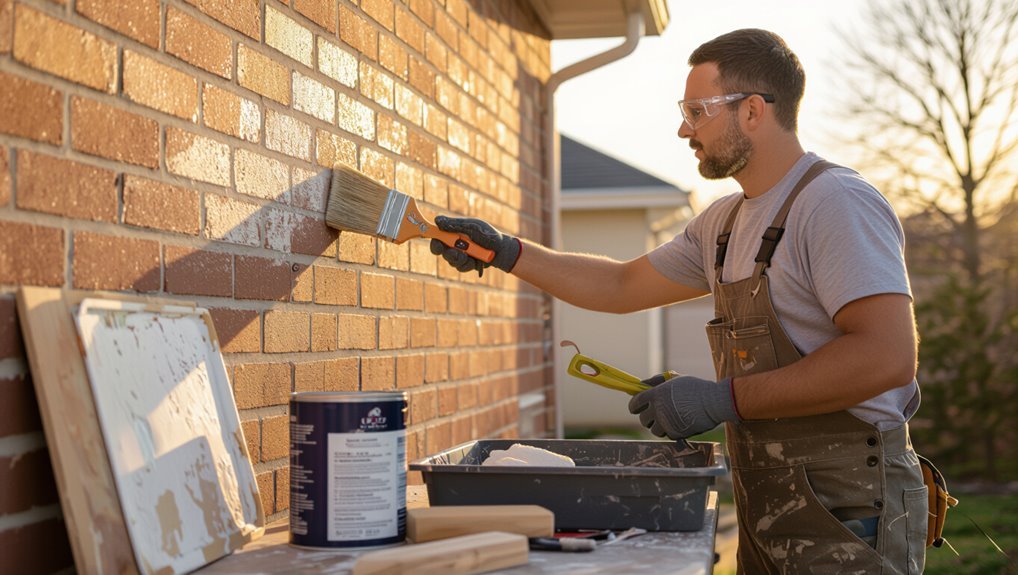
Before you pick up a brush, this guide shows you exactly what’s involved in painting exterior brick, from evaluating the surface and choosing the right products to prepping, priming, and applying paint that lasts.
You’ll learn how to assess brick condition, select coatings that maximize paint durability and color longevity, and follow efficient prep and application steps so your finish resists weather and wear.
Can You Paint Your Brick? How to Tell
Before you grab paint, inspect the brick for crumbling mortar, efflorescence, or surface damage that could stop paint from adhering properly.
Check whether the brick already has a coating—paint, sealer, or silicone—because some finishes need stripping or special primers.
If the masonry looks sound and is uncoated (or can be prepped), you can move forward with painting.
Brick Condition Check
If your brick is crumbling, damp, or coated with efflorescence, you shouldn’t paint it—painting covers problems rather than fixes and can trap moisture, making issues worse.
Check mortar, loose units, and rising damp before painting.
Follow brick maintenance tips: repair cracks, repoint where needed, and allow drying.
Consider brick sealing options only after repairs and full moisture remediation are confirmed.
Previous Coating Presence
Anyone can tell whether brick has been painted before by looking for telltale signs like a uniform film, peeling or flaking paint, or paint buildup in mortar joints—these indicate an existing coating that you’ll need to address.
You’ll assess previous paint to plan surface preparation, decide if stripping, sanding, or a primer is required, and guarantee paint adhesion and longevity.
- Check adhesion with a knife
- Inspect mortar lines
- Test a small strip
When to Hire a Pro vs. DIY
Start by evaluating the scope of work—large walls, multiple stories, or extensive repairs usually mean a pro.
Consider your skill and time: if you’re comfortable with prep, painting, and ladders and have the hours, DIY can save money.
If the job requires specialized tools, risky access, or you’re short on time, hire someone.
Scope Of Work
Deciding whether to tackle painting your brick exterior yourself or hire a pro comes down to three main factors: scale, condition, and safety.
Assess scope: large facades, extensive repairs, or high elevations usually need pros. Also weigh color psychology and seasonal trends for timing and finish.
- Size and access
- Repair and moisture issues
- Weather window and color choice
Skill And Time Required
Once you’ve sized up the job and addressed repairs, think about the skills and hours the project will demand.
Do a clear skill assessment: if you’re confident with prep, masking, and preparation techniques like pressure washing and priming, DIY can save money.
Hire a pro if scaffolding, extensive tuckpointing, or tight timelines exceed your ability or available time.
Quick Answer: The Step-by-Step Overview
Follow these condensed steps to paint your brick exterior: clean and repair the surface, mask and protect surrounding areas, prime with a masonry primer, apply two coats of exterior acrylic latex paint using a brush and roller (or sprayer with back-brushing), let proper drying time between coats, and remove masking and clean up.
You’ll consider color psychology and maintenance tips to finish strong.
- Choose hues for curb appeal and mood
- Use proper weather windows
- Keep tools and touch-up supplies ready
Check Mortar and Structural Soundness
Before you paint, walk the walls and inspect the mortar joints for crumbling, gaps, or soft spots.
If you spot loose mortar or shifting bricks, don’t paint over them — you’ll need repairs first.
Ensuring the structure is sound will help your paint last and prevent trapped moisture from causing damage.
Inspect Mortar Joints
When you inspect mortar joints, look for crumbling, gaps, or soft spots that signal deterioration or water damage.
You’ll perform a mortar joint inspection to note locations, depth, and moisture. Use appropriate joint repair techniques for small areas or schedule repointing for widespread loss.
- Tap joints with a screwdriver tip to find hollow sound
- Probe soft mortar with a nail
- Photograph areas for records
Evaluate Structural Integrity
After noting mortar issues, broaden your check to the wall’s overall structural integrity: look for bowed walls, large cracks that run diagonally or through multiple courses, and mortar that’s failing along with loosened or spalling bricks. Perform a brick stability assessment, document damage, and consider structural reinforcement options. Consult a mason or engineer for major defects before painting.
| Issue | Action |
|---|---|
| Bowed wall | Measure, brace |
| Diagonal cracks | Inspect foundation |
| Spalling bricks | Replace units |
| Loose mortar | Repoint |
Inspect for Moisture, Efflorescence, and Salt
Since moisture and salts quietly damage brick, start by checking for damp spots, white powdery efflorescence, and flaky or soft mortar that indicate water intrusion.
You’ll identify moisture sources like leaks, poor grading, or clogged gutters, then plan efflorescence removal and repairs before painting.
- Note visible white deposits and track recurrence
- Probe mortar for softness
- Inspect flashing and drainage paths
Test a Small Patch Before You Commit
Although a whole-house paint job looks tempting, you should always try a small test patch first to confirm adhesion, color, and overall appearance on your specific brick. Apply a color sample and note paint texture, drying, and coverage. Check after 48–72 hours for adhesion and look in different light. Use the table below for quick notes.
| Item | Result |
|---|---|
| Color sample | |
| Paint texture | |
| Adhesion | |
| Dry time |
Best Paints for Exterior Brick
Choosing the right paint makes the difference between a durable, attractive finish and one that peels or fades quickly, so you’ll want products formulated for masonry and exterior use.
Pick high-quality acrylic latex or elastomeric paints for long lasting durability and consider eco friendly options.
Compare breathability, flexibility, and UV resistance.
- Acrylic latex: breathable, easy cleanup
- Elastomeric: fills minor cracks
- Low-VOC: eco friendly options
Choosing a Primer for Masonry
When you’re prepping brick for paint, a proper masonry primer ties the whole system together by improving adhesion, sealing porous surfaces, and blocking stains so the topcoat performs and lasts. You’ll choose primer types based on brick condition; prioritize surface preparation—cleaning, etching, and repairing—then apply an acrylic or oil-based masonry primer for durability.
| Type | Best For | Notes |
|---|---|---|
| Acrylic | Clean, sound brick | Breathable |
| Oil-based | Stain blocking | Strong adhesion |
| Masonry-specific | Damaged or porous | Tolerates moisture |
| Shellac | Heavy stains | Use spot treatment |
Paint Finishes and Color Choices for Brick
Decide whether you want a matte, eggshell, or satin finish since each hides or highlights texture differently.
Pick brick colors that work with your home’s style and neighborhood — test swatches on the wall in different light before committing.
Then coordinate trim and accent hues so they complement the brick without competing.
Finish Options For Brick
Finish choices for painted brick go beyond color—they shape texture, mood, and how the surface responds to light and weather.
You’ll pick finish types after proper surface preparation, balancing sheen, durability, and maintenance. Consider how each finish hides or highlights texture and how it wears over time.
- Matte for texture and low glare
- Satin for subtle sheen and washability
- Gloss for easy cleaning and highlight
Choosing Brick Colors
Anyone can transform a brick exterior with color and finish choices that balance curb appeal, maintenance, and architectural style.
Choose hues that reflect your home’s era and neighborhood while using color psychology to influence mood—warm tones feel welcoming, cool tones feel modern.
Sample trending shades on a small area, view them at different times, and pick finishes that hide imperfections yet resist weathering.
Matching Trim And Accents
When you pick trim and accent colors for painted brick, aim for contrast that complements rather than competes with the masonry—lighter trims brighten darker brick, while deep trims can ground pale brickwork.
You’ll use color coordination to balance walls, trim, and doors, and add accent highlights sparingly. Choose finishes for durability and curb appeal.
- Test swatches outdoors
- Pick a dominant trim tone
- Use accents for focal points
Will Paint Trap Moisture in My Brick?
Although exterior paint can change how your brick handles moisture, it doesn’t automatically trap water if you prepare and choose products correctly.
You’ll reduce moisture retention by repairing mortar, cleaning, and using a breathable masonry primer and paint.
Proper surface prep and vapor-permeable coatings guarantee paint longevity while letting dampness escape, preventing peeling, efflorescence, and hidden freeze-thaw damage.
Tools and Equipment Checklist
Before you lift a brush or sprayer, gather the right tools and safety gear so the job goes smoothly and stays safe.
Before you lift a brush or sprayer, gather the right tools and safety gear for a smooth, safe job.
You’ll pick tools based on paint types and thorough surface preparation. Have these ready:
- Quality masonry primer, brushes, roller, or sprayer
- Power washer, wire brush, scraper for prep
- Drop cloths, ladders, masking tape
Safety Gear and Outdoor Precautions
Before you start painting, make sure you’ve got the right personal protective equipment—gloves, goggles, a respirator, and sturdy footwear—to protect your skin, eyes, and lungs.
Check the weather forecast and avoid windy, rainy, or extreme temperature days so paint can cure properly and fumes won’t concentrate.
Keep the area well-ventilated and set up barriers or signage to keep pets and passersby at a safe distance.
Personal Protective Equipment
You’ll need the right protective gear to keep yourself safe while painting brick outdoors: a respirator or N95 mask for dust and fumes, safety goggles to shield your eyes, gloves that resist solvents, and sturdy work boots with good traction.
Maintain safety awareness, inspect gear, and replace damaged items promptly.
- Check respirator fit
- Use chemical-resistant gloves
- Wear slip-resistant boots
Weather And Ventilation
If the forecast calls for wind, rain, or extreme heat, adjust your schedule so you’re painting on calm, dry days with temperatures and humidity levels within the paint manufacturer’s recommended range. Monitor weather conditions, protect surfaces, and remember ventilation importance for solvent fumes. Use this quick checklist:
| Task | Action | Note |
|---|---|---|
| Check forecast | Postpone if poor | Avoid wet brick |
| Airflow | Open windows | Reduce fumes |
| Shade | Use tarps | Prevent overheating |
Power Wash vs. Chemical Wash: Which to Use
Wondering whether to power wash or use chemicals to prep your brick? You’ll weigh surface preparation needs, siding condition, and chemical safety.
Power washing removes loose dirt without harsh agents; chemicals tackle stains and efflorescence when used correctly. Choose based on mortar integrity and stain type, and always follow safety and disposal guidelines.
Power wash for loose dirt; use chemicals for stubborn stains and efflorescence—pick methods by mortar strength and safety.
- Assess mortar strength
- Match method to stain
- Prioritize safety gear
How to Clean Brick Properly
Start by removing loose debris and dust with a stiff-bristle brush or a high-quality outdoor broom.
Then rinse the surface with low-pressure water to reveal stains and grime; this lets you target cleaning methods without damaging mortar or brick.
Use appropriate brick cleaning techniques: mild detergent or oxygen bleach for organic stains, muriatic dilute for mortar smears, and test effective cleaning solutions on a small area first.
How to Dry and Spot‑Dry Brick After Cleaning
After cleaning, you’ll want the surface to dry quickly to prevent water stains and mold growth.
Use a combination of air movement and sunlight to speed surface drying, and tackle lingering damp spots with a towel or a wet/dry vacuum for targeted spot drying.
Check for moisture in mortar joints and behind fixtures before painting to guarantee everything’s fully dry.
Rapid Surface Drying
Because paint won’t adhere properly to damp masonry, you’ll want the brick surface bone-dry before priming or painting; use absorbent rags, a wet/dry vacuum, or portable fans to speed evaporation and blot remaining moisture with microfiber towels.
Use rapid drying techniques and solid moisture management to prevent rewetting.
- Run fans along walls for 30–60 minutes
- Extract pooled water with the vacuum
- Replace towels as they saturate
Targeted Spot Drying
When you need to dry specific patches of brick after cleaning, focus on removing residual moisture quickly and selectively so surrounding areas don’t get rewet.
Use absorbent towels, microfiber cloths, or a wet-dry vacuum to lift water, and employ a hairdryer or heat gun on low while keeping it moving.
These spot drying techniques and targeted drying methods prevent streaks and guarantee paint adhesion.
Remove Flaking or Loose Old Paint
Start by scraping away all loose, flaking paint so new coatings can adhere properly. You’ll use safe paint removal techniques and focus on thorough surface preparation before priming.
Start by scraping away loose, flaking paint so new coatings will adhere—focus on safe removal and thorough surface prep before priming.
Remove all blistered areas, dust, and chalk. Check for sound edges and feather remaining paint.
- Use a stiff brush and scraper.
- Try a wire brush for crevices.
- Vacuum debris before priming.
Repair Cracked or Crumbling Mortar (Repointing)
Before you paint, check the mortar for cracks, gaps, or crumbling joints so you know how extensive the repair will be.
If mortar is loose or missing, you’ll need to rake it out and repoint with matching mortar to keep the brick stable and weatherproof.
I’ll walk you through the repointing steps so you can do a neat, lasting repair.
Assess Mortar Damage
Inspecting your mortar is the first practical step in deciding whether you need repointing: look for cracks, missing sections, soft or powdery joints, and mortar that easily flakes away when poked with a screwdriver.
You’ll note mortar types and evaluate appropriate repair methods before choosing tools or calling a pro.
- Match mortar color and composition
- Check joint depth and firmness
- Prioritize areas with moisture intrusion
Repointing Step-By-Step
Repointing cracked or crumbling mortar means removing the damaged joints and replacing them with new mortar that matches the original in color and composition.
You’ll chisel or grind out old mortar to a consistent depth, clean joints, mix the correct mortar types, and pack new mortar tightly.
Use repointing tools—pointing trowel, joint raker, brush—and finish joints to match profile for durability.
Fix Spalled or Damaged Bricks
If some bricks are cracked, crumbling, or have flaked mortar — known as spalling — you’ll need to repair or replace them before painting so the finish lasts and looks even.
For spalling repair, chip out loose material, patch or replace units, then allow full cure. Finish with brick sealing to protect moisture-sensitive areas.
- Remove loose fragments
- Use matching patch or replacement
- Apply breathable sealer
Masking and Protecting Windows, Trim, and Landscaping
Before you start painting, cover windows with plastic sheeting and tape it tightly to keep paint out of the frames.
Protect trim edges with low-tack painter’s tape and use foam or cardboard to guard corners from stray brush strokes.
Lay down drop cloths or plywood over plants and soil to prevent drips and trampling.
Protecting Windows Carefully
Because paint splatters and primer overspray are hard to remove once they dry, take the time to mask and cover windows, trim, and nearby plants thoroughly before you load the sprayer or brush.
Use window protection strategies and proven masking techniques to avoid damage and extra cleanup.
- Cover glass with plastic sheeting and secure with low-tack tape
- Protect sills and frames with paper and painter’s tape
- Shield landscaping with drop cloths and stakes
Safeguarding Trim Edges
When you’re ready to paint, protect trim edges, windows, and nearby landscaping with tight, reliable masking so paint lines stay crisp and plants stay clean.
Use painter’s tape, plastic sheeting, and drop cloths as trim protection strategies.
Apply edge sealing techniques at tape edges to prevent bleed.
Remove tape while paint is tacky for clean lines, checking seals and re-taping as needed.
Shielding Plants And Soil
If you’re painting brick near plants or bare soil, take steps to keep paint off foliage and out of the ground by tightly covering shrubs, flower beds, and exposed earth with breathable tarps, landscape fabric, or heavy-duty plastic secured with stakes or weights.
You’ll prep soil preparation, move potted plants, and use plant protection barriers to prevent contamination.
- Create pathways for paint runoff
- Tape and cover windows/trim
- Remove or shield delicate plants
Prep Wood & Metal Trim Before Painting
Inspect your wood and metal trim closely before you paint: look for peeling paint, rot, rust, loose fasteners, and gaps where water can get in.
Sand, scrape, and spot-prime exposed wood; treat rusted metal with a wire brush and rust inhibitor.
Sand and scrape exposed wood, spot-prime it, and treat rusted metal with a wire brush and rust inhibitor.
Replace rotten boards and tighten fasteners.
Match coatings to trim types to maximize paint durability and guarantee proper adhesion and weather resistance.
Choose Brushes, Rollers, and Sprayers
You’ll want the right tools to get paint deep into the pores and crevices of brick, so pick natural-bristle or nylon-nylon blend brushes for cutting in and stiff, long-nap rollers for broad coverage.
Decide whether a high-pressure sprayer will save time on large surfaces versus rollers for better control and less overspray.
I’ll outline when each brush, roller, or sprayer is the smarter choice.
Best Brushes For Brick
When painting brick, choosing the right tools makes the job faster and gives a much better finish; you’ll want brushes, rollers, and sprayers designed to handle rough mortar joints and textured surfaces.
For brushes, pick durable natural or synthetic filaments—consider best brush types and the proper brush size for detail and cutting in.
- Angle sash brush for edges
- Stiff nylon for texture
- Small trim brush for mortar joints
Rollers Vs. Sprayers
Whether you pick a roller or a sprayer will come down to the size of the job, the texture of the brick, and how much prep you want to do.
So weigh coverage speed against control and overspray.
You’ll choose rollers for textured brick and precise paint application with less masking; pick sprayers for fast, even coats on large areas but expect extensive surface preparation and more cleanup.
Thin Paint and Primer for Spray Application
Before you load the sprayer, thin both paint and primer to the manufacturer’s recommended viscosity so the material atomizes evenly and won’t clog the nozzle.
You’ll test flow, adjust with specified reducer, and strain for debris before spray application. Keep consistent ratios, note drying times, and maintain equipment.
- Test spray pattern
- Use manufacturer-approved thinners
- Strain through a fine mesh
Apply Masonry Primer: Step‑By‑Step
Start by prepping a small, clean section of brick so you can apply primer smoothly and spot any adhesion issues early; taping edges, brushing away loose mortar, and masking nearby surfaces will save time and give you a crisp finish.
Choose a breathable masonry primer, test adhesion, then work top-to-bottom with even strokes.
Follow manufacturer drying times and note masonry primer benefits and proper application techniques.
Paint Brick With a Roller for Even Coverage
Roll a high-quality nap roller loaded with masonry paint in overlapping strokes to grab both the face and the recessed mortar while keeping a wet edge; work from top to bottom, maintaining even pressure so you don’t leave roller lines or thin spots.
Use proper roller techniques for consistent paint application, backrolling thin areas, and checking texture as you go.
- Maintain a wet edge
- Backroll for penetration
- Inspect for thin spots
Paint Brick With an Airless Sprayer Efficiently
Spray the brick with an airless sprayer to cover large areas quickly and get paint into mortar joints and textured surfaces that rollers can miss; hold the gun about 10–12 inches from the wall, keep a consistent sweeping motion, and overlap each pass by roughly 50% to avoid streaks or heavy buildup.
Use proper sprayer techniques, pace yourself, control pressure for airless efficiency, and shield nearby surfaces.
How Many Coats Do You Need?
How many coats you’ll need depends on the brick’s porosity, the paint type, and the look you want—most projects require two coats: a durable primer or masonry sealer followed by one or two topcoats for full, even coverage.
You’ll choose layers to boost paint durability and color longevity while avoiding buildup.
- Test porosity first
- Use compatible primer + topcoat
- Allow proper drying between coats
Painting Mortar Joints vs. Brick Faces
Before you start painting, you’ll need to prep the brick faces by cleaning and repairing any chips so paint will adhere evenly.
Treat mortar joints differently by priming them first to prevent excessive absorption and color mismatch.
Use targeted application techniques—brush the joints and roll or spray the faces—to get a uniform finish.
Brick Face Preparation
When you’re prepping brick for paint, you need to decide whether to paint the mortar joints, the brick faces, or both, because each choice affects appearance, durability, and prep work.
You should perform a brick surface assessment and use appropriate brick cleaning methods to remove dirt, efflorescence, and loose particles before painting.
- Inspect for damage and stains
- Test cleaning on a small area
- Remove loose mortar and debris
Mortar Joint Priming
Although painting mortar joints can unify a wall’s look, you’ll want to decide first whether to prime just the joints, the brick faces, or both, since each choice alters adhesion and appearance.
If you prime joints only, use a product compatible with mortar joint sealing and follow mortar joint maintenance schedules.
Priming both surfaces improves uniformity and long-term protection but adds prep time and material.
Paint Application Techniques
Decide whether you’ll paint mortar joints, brick faces, or both based on the look and durability you want: painting joints alone highlights the brick profile and uses less paint, while painting faces creates a uniform color and better weather protection.
You’ll use brush techniques for joints and roller application for faces; combine both for clean edges and efficient coverage.
- Use angled brushes for joints
- Blend roller passes with brush cut-ins
- Keep paint thin for texture fidelity
Handling Textured or Irregular Brick Surfaces
If your brick has deep crevices, uneven mortar, or a heavily textured face, you’ll need different prep and application techniques than for smooth masonry.
You should wire-brush and pressure-wash textured surfaces, fill gaps with mortar repair, and use a masonry primer.
Apply paint with a thick-nap roller and brush into irregular patterns; consider an airless sprayer for consistent coverage and durability.
Weather, Temperature, and Timing for Painting
Once your textured brick is cleaned, repaired, and primed, plan around the weather to get durable results.
You’ll choose days with steady weather conditions and the ideal temperature range on the paint can, avoiding rain, high humidity, or strong sun that can affect adhesion and drying.
Check forecasts and start early for consistent curing.
- Avoid rain and high humidity
- Aim for ideal temperature range
- Paint during stable forecasts
Wait Times Between Coats and Reattaching Fixtures
While the paint needs time to cure between coats, you’ll typically wait the manufacturer’s recommended interval—usually 2–4 hours for latex and up to 24 hours for oil-based—before applying the next layer to guarantee proper adhesion and even coverage.
Check drying times on the label, inspect tackiness, then delay fixture reinstallation (lights, house numbers) until paint is fully set—often 24–48 hours.
Avoid Peeling, Blistering, and Flaking
Because moisture, heat, and poor prep are the usual culprits, you’ll want to eliminate those conditions before you paint to prevent peeling, blistering, and flaking.
You’ll improve paint adhesion by cleaning, priming, and choosing breathable coatings. For peeling prevention, blistering solutions, and flaking remedies, focus on proper surface prep and compatible materials.
- Clean and degrease
- Use masonry primer
- Pick breathable paint
Prevent Trapped Moisture and Efflorescence
If you want your paint to last, don’t trap moisture in the brick — it can cause efflorescence, bubbling, and eventual coating failure.
Inspect for leaks, repair mortar joints, and guarantee proper drainage and flashing so water can’t penetrate.
Use breathable masonry primer and paint designed for moisture prevention.
Test for salts and clean efflorescence issues before coating to assure adhesion and longevity.
Touch Ups and Blending After Repairs
Once repairs are finished and the masonry is dry, you’ll want to focus on touch-ups and blending to make the fixes disappear.
Use careful color blending and tested repair techniques to match texture and hue. Feather edges, thin glazes, and step back often to inspect.
- Feather paint into old areas
- Match mortar texture before painting
- Use small glazes for subtle shifts
Limewash and Whitewash (Faux Looks)
When you want a soft, aged look instead of full coverage, limewash and whitewash give brick depth while letting texture show through.
For a soft, aged finish, limewash or whitewash adds depth while letting brick texture shine through
You’ll use limewash techniques to create translucent, mineral-rich layers that age naturally and resist peeling.
For quicker, reversible options, whitewash benefits include easy application and breathability.
Test small areas, work in thin washes, and seal only if recommended.
Changing Painted Brick Color Later
Because painted brick will show wear and your style may change, you’ll want a clear plan before repainting or stripping it back to masonry.
Decide whether you’ll follow color trends or keep classic hues, test samples, and schedule regular maintenance tips like cleaning.
Consider surface prep, adhesion testing, and sealing to simplify future changes.
- Test multiple samples
- Plan prep and seal
- Track maintenance tips and timing
Estimate Paint, Primer, and Material Quantities
If you want accurate estimates, measure the wall area, note the brick type (smooth or textured), and account for primer, topcoat, and extras like masonry sealant or caulk.
For paint quantity estimation, calculate coverage per gallon, factor texture absorption, and add 10–20% waste.
Use primer selection tips: masonry primer for porous brick, bonding primer for glossy surfaces, and include brushes, rollers, tape, and patching materials.
Budget Time and Labor for a Weekend Project
Plan for a realistic weekend by breaking the job into clear tasks—prep, priming, painting, touch-ups, and cleanup—and assigning time blocks for each so you can see what truly fits into two days.
You’ll factor budget considerations and time management: labor hours, contractor vs. DIY, and contingencies.
Prioritize tasks, pack tools, and schedule breaks.
- Estimate hours per task
- Track material costs
- Build buffer time
Clean Tools and Dispose of Leftovers Safely
Now that the painting and touch-ups are done, you’ll want to clean tools and handle leftovers so your work stays safe and reusable.
Rinse brushes and rollers per paint type, store reusable items dry, and label containers.
Follow local waste disposal rules for solvents, empty cans, and hazardous leftovers.
Proper tool maintenance and responsible waste disposal protect you and the environment.
HOA Rules, Permits, and Hiring Contractors
Curious what approvals you need before repainting? Check HOA regulations, local permits, and contractor selection early to avoid delays.
Verify color approvals, required permits, and insurance certificates. Hire licensed pros who follow codes and provide written contracts.
- Confirm HOA color and finish rules
- Obtain municipal permits and inspections
- Vet contractors for licenses, insurance, and references
Troubleshooting Checklist for Painted Brick Problems
Troubleshooting painted brick starts with a quick inspection so you can spot issues early and choose the right fix.
Check for peeling, blistering, and chalking to assess paint adhesion.
Probe mortar and look for efflorescence or damp spots indicating moisture issues.
Test drainage, gutters, and flashing.
Clean, repair cracks, improve ventilation, and prime before repainting to prevent recurrence.
Frequently Asked Questions
Will Painting Brick Affect My Home’s Resale Value?
Yes — painting brick can raise curb appeal but might lower buyer perception among purists; you’ll attract buyers who like a modern look yet risk alienating those preferring original masonry, so weigh local market preferences carefully.
Can Painted Brick Be Returned to Its Natural Look Without Replacement?
Yes — you can revert painted brick to its natural look. Like a knight’s torch illuminating stone, you’ll use removal techniques and thorough surface preparation, pressure washing, chemical strippers, and careful mortar protection to restore original texture.
How Does Painting Brick Impact Exterior Insulation or Energy Efficiency?
Painting brick can slightly change thermal performance by adding a thin insulating layer, but it won’t dramatically improve R-value. It can trap moisture if you use non-breathable coatings, increasing moisture retention and potential freeze-thaw damage.
Are There Eco-Friendly or Low-Voc Options Specifically for Masonry?
Yes — you can choose eco friendly paints formulated for masonry; they use low-VOC binders and pigments. Pair them with low-VOC masonry primers to boost adhesion, breathability, and durability while minimizing odors and environmental impact.
Does Painting Brick Change Insurance Coverage or Basement Moisture Risk?
A neighbor’s painted foundation once triggered a claims review: yes, painting brick can affect insurance implications and moisture concerns. You’ll need breathable masonry paints and to document work so you don’t void coverage or trap water.
Conclusion
You’ve learned when brick’s ready, when to call a pro, and how to prep, paint, and maintain it. You’ll inspect mortar and structure, you’ll clean and prime, you’ll apply paint and seal, and you’ll tidy tools and follow HOA rules. You’ll budget time, watch for problems, and know when to troubleshoot. Now pick your paint, plan your weekend, and transform your exterior with confidence—step by step, one wall at a time.
