
How to Paint Over a Water Stained Ceiling: Stain Blocking Methods
Stop the leak, let the ceiling dry completely, and repair any soft or sagging drywall before you paint. Clean the stain, sand loose texture, then apply a stain-blocking primer—use shellac or oil-based for heavy stains and odors, water-based for light marks. Roll primer on flat areas and brush edges; add a second primer coat if the stain shows through. Finish with a ceiling paint in flat or matte. Keep going to learn full prep and repair steps.
Quick Fix: Stop Water Stains Before Painting
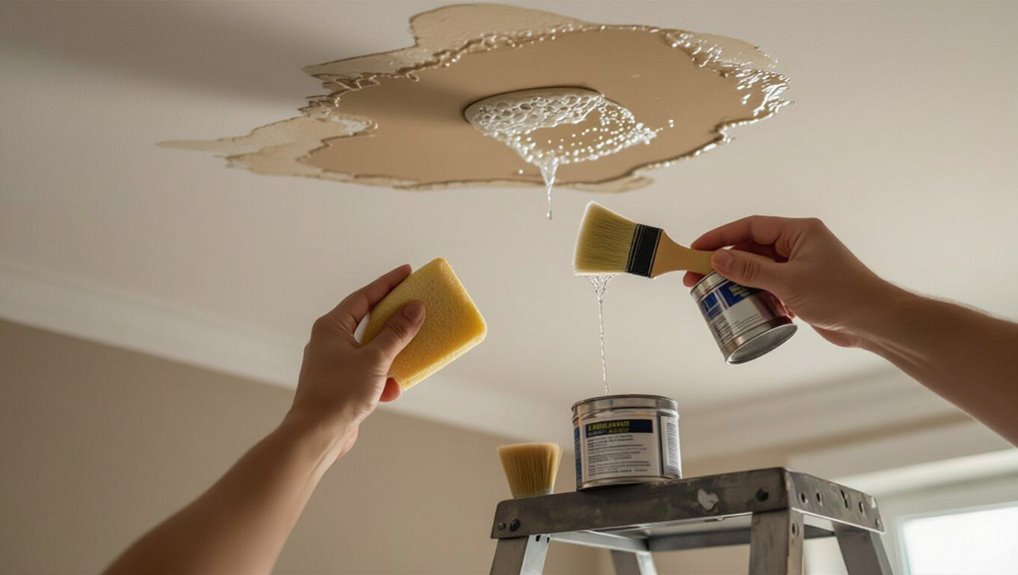
Before you reach for paint, stop the leak and dry the area so stains don’t return.
You’ll locate the source, turn off water if needed, and patch small roof or plumbing faults temporarily.
Dry with fans and dehumidifiers to prevent mold.
Dry thoroughly with fans and dehumidifiers to stop mold before you repair or repaint.
For effective water damage control and stain prevention, confirm the area stays dry before applying primer so paint adheres and stains won’t bleed through.
Common Causes of Ceiling Water Stains
If you spot brown or yellow rings on your ceiling, they usually come from a few predictable sources: roof leaks that let rain soak insulation, plumbing failures from pipes or fixtures above the ceiling, condensation from poor ventilation, or overflowing appliances like HVAC units and water heaters.
Identify common leak sources quickly, document damage, and implement preventive measures like sealing, insulation, and regular appliance checks.
Confirm the Leak Is Fixed
After identifying likely causes and making repairs, make sure the leak is truly fixed before repainting.
You should perform simple leak detection: check for new drips, use a moisture meter, or run water where plumbing was repaired.
Verify over several days and after rainfall. If signs persist, revisit repair options or call a pro.
Only paint when dry and leak-free.
How to Assess Drywall Damage and Moisture
First, walk the room and look for any active leaks or fresh damp spots so you don’t paint over ongoing water.
Gently press along the stained area to check for soft or sagging drywall that needs repair.
Finally, use a hygrometer to measure room humidity—values above 60% mean you should address moisture control before painting.
Inspect For Active Leaks
Start by checking for active leaks before you touch any paint or drywall repairs—you want to know whether moisture is still entering the ceiling.
Inspect plumbing, roof penetrations, and HVAC lines for obvious signs.
Use leak detection tools or a moisture meter to pinpoint damp areas.
Trace moisture sources to stop further damage before you proceed with stain blocking and repairs.
Check For Soft Spots
Because wet drywall weakens quickly, you’ll want to probe the ceiling gently to find any soft spots before you paint.
Use soft spot detection and a basic moisture assessment to decide if repair or replacement is needed. Press with a gloved finger or screwdriver tip, watch for sagging, and note discoloration.
- depressions or crumbling
- spongy texture under pressure
- peeling paper layers
- dark, damp patches
Measure Room Humidity
A simple hygrometer will tell you whether the room is dry enough to paint and help you assess drywall damage risk; aim for relative humidity below 50% before you begin.
Check readings in several spots and at different times to confirm stable moisture levels. If humidity spikes, pause work, improve ventilation or use dehumidifiers.
Maintain humidity control until paint fully cures.
When to Paint Over a Stain vs. Replace Drywall
If the water stain is superficial and the drywall feels solid and dry, you can usually paint over it after proper cleaning and priming; however, if the drywall is soft, crumbling, or shows mold, you’ll need to replace that section to prevent ongoing damage and health risks.
If the stain’s only surface-deep and the drywall is solid, clean and prime before repainting; replace if soft or moldy.
Consider stain permanence and drywall considerations before deciding.
- Localized, dry discoloration
- Soft, sagging panel
- Visible mold growth
- Recurrent leaks indicate replacement
Tools & Materials for Sealing Water Stains
Start with a small kit of essential tools and materials so you won’t interrupt the job hunting down supplies mid-repair.
Gather stain sealing primers, a quality stain-blocking primer, brushes, a roller with a smooth nap, painter’s tape, drop cloths, disposable gloves, and a putty knife for minor repairs.
Consider primer selection carefully for oil- or shellac-based options depending on stain severity.
Prep and Clean the Stained Area
Before you apply primer, clear loose debris and dust from the stain with a soft-bristled brush or vacuum, then wipe the area with a damp sponge and mild detergent to remove grime and mildew so the surface’s adhesion won’t be compromised.
Use appropriate cleaning products for stain removal, let dry fully, and inspect for residual marks.
- Fresh water blotting
- Gentle detergent scrub
- Mildew-specific cleaner
- Dry and recheck
Repairing Damaged Drywall and Smoothing the Surface
Next, you’ll assess the damaged drywall and cut away any soft or crumbling sections until you reach solid material.
Patch the hole with a properly sized drywall piece or backing, then apply joint compound over seams.
Feather the compound smoothly with a wide knife, sanding lightly once dry so the surface blends with the surrounding ceiling.
Assess And Cut Damaged Drywall
Inspect the stained area carefully to determine how much drywall is compromised and whether the paper is bubbling, soft, or crumbling—these signs mean you’ll need to cut back to solid material.
Perform a drywall assessment and moisture detection with a probe or meter, then remove damaged sections cleanly. Use a straightedge and utility knife to square the cut.
- Bubbling paper
- Soft spots
- Crumbling edges
- Wet odor
Feather Joint Compound Smoothly
When the damaged drywall’s been cut and the seams are clean, apply a thin layer of joint compound and feather each edge so the repair blends into the surrounding ceiling.
You’ll want to use a 6–10 inch knife for the first coat and gradually widen your knives with each subsequent coat to feather out smooth changes.
Sand lightly between coats, maintain consistent pressure, and use proper feathering techniques to avoid ridges.
When to Use Oil-Based Stain-Blocking Primer
If a water stain has bled through previous paint or shows tannin-rich discoloration from wood or smoke, reach for an oil-based stain-blocking primer—it’s designed to seal stubborn stains that latex primers can’t contain.
You’ll appreciate oil based benefits for deep sealing and reliable primer application before topcoat.
- Blocks tannin bleed
- Seals smoke stains
- Smooths porous patches
- Preps for paint
When to Use Water-Based Stain-Blocking Primer
Because water-based primers dry faster and clean up with soap and water, you’ll reach for them when stains are lighter, the ceiling’s surface is sound, and you want low odor and quick recoat times.
Use water based benefits for less mess and faster turnaround.
Follow careful application techniques: clean, prime thinly, feather edges, and allow full cure before topcoating to guarantee stain control.
When to Choose Shellac Primer
Although shellac primers have a stronger odor and require solvent cleanup, you’ll choose them when stains are heavy, tannins or smoke have bled through, or water damage has left a stubborn discoloration that water-based primers won’t lock up.
You’ll favor shellac benefits for fast sealing and versatile primer applications.
- Severe water stains
- Smoke or nicotine residue
- Tannin bleed-through
- Quick recoat schedules
Choosing Primer by Stain Type: Tannin, Mold, Rust, Smoke
Now that you know when shellac primers are the go-to for tough stains, you’ll pick primers differently depending on what caused the discoloration.
For tannin stains choose a shellac or alkyd primer.
For mold stains use a mildew-resistant, stain-blocking primer after cleaning.
For rust stains use a rust-inhibiting primer.
For smoke stains use an oil- or shellac-based primer to seal odors and discoloration.
How to Apply Primer on Water-Stained Ceilings
Start by prepping the area: lay drop cloths, remove or tape off fixtures, and wear safety goggles and a dust mask.
You’ll clean stains, sand loose texture, and choose the right stain-blocking primer. Use proper primer application techniques with a roller for flat areas and a brush for edges.
Follow ceiling preparation tips to guarantee adhesion and even coverage.
- clean and dry surface
- light sanding
- cut-in edges
- roll evenly
How Many Primer and Paint Coats You Need
Once your primer has dried and the surface looks uniform, decide how many primer and paint coats you’ll need based on stain severity and ceiling texture.
For light stains, one stain-blocking primer coat plus one finish coat often suffices.
For heavy stains or textured ceilings, apply a second primer coat or a high‑adhesion primer type, then two paint finishes for reliable coverage and uniform appearance.
Best Topcoat Paints for Ceilings After Stain Blocking
After you’ve sealed the stain with a quality stain‑blocking primer, pick a ceiling paint that balances hide, durability, and low splatter for the best finish.
Choose between flat and matte for touch-up invisibility, eggshell for slight washability, or stain resistant options where needed.
Consider sheen and coverage based on ceiling paint types.
- Flat/Matte for concealment
- Eggshell for durability
- Low‑splatter formulations
- Stain resistant options
Quick Fixes for Small Spots vs. Large Stained Areas
Choosing the right topcoat matters, but the repair approach changes with the stain size—you’ll handle a small spot very differently than a large, soaked area.
For small spot techniques, clean, prime with a stain-blocker, then paint.
For large area strategies, dry thoroughly, cut out damaged drywall if needed, use an appropriate primer over the whole zone, and repaint in sections for uniform finish.
How to Handle Mold, Odors, or Mineral Deposits Under Stains
Wondering whether that brown spot hides mold, lingering odors, or mineral buildup? You should inspect, test, and treat before painting: prioritize mold removal, odor neutralization, and mineral cleaning.
Use appropriate cleaners, PPE, and gentle scraping; then rinse and dry fully. Consider a stain-blocking primer afterwards.
Wear PPE, clean and gently scrape, rinse and dry thoroughly — then apply a stain-blocking primer.
- Black or green mold patches
- Musty smell areas
- White mineral crusts
- Discolored paint film
Timeline and Drying Times to Avoid Failures
Before you paint, make sure the ceiling is completely dry — surface dryness isn’t enough.
You should wait the manufacturer’s recommended cure time for any patching compound, primer, or sealant you used so trapped moisture doesn’t cause peeling or staining later.
If humidity or temperature slows drying, extend the wait time rather than rushing the job.
Wait For Full Drying
If the stain isn’t completely dry, don’t paint yet—you’ll trap moisture and cause peeling, blistering, or mildew later.
You should monitor humidity levels and use active drying techniques so the substrate fully cures before priming. Wait until the surface feels dry and shows no dark spots.
- open windows and run fans
- use a dehumidifier
- gentle heat (not direct)
- test with touch and light
Recommended Cure Times
Cure times vary by material and conditions, so plan on at least 24–72 hours for drywall and primer to dry under normal indoor humidity, longer for heavy stains or thicker coatings.
Oil-based primers can take 24–48 hours to tack-free and up to 7 days to fully cure, while latex primers usually accept paint after 2–4 hours but reach full hardness in 7–14 days.
Follow cure time recommendations and drying time considerations: wait before sanding, staining, or painting to prevent adhesion failures and bleed-through.
Cost Estimate and When to Call a Pro
Estimating what it’ll cost to fix a water-stained ceiling depends on the stain’s size, the source of the leak, and whether you need repairs beyond painting.
Consider cost factors like materials, labor, and stain-blocker quality; call professional services if structural damage or mold appears.
- Small stain, DIY paint + primer
- Large stain, patching + primer
- Active leak, plumbing repair
- Mold or sagging ceiling
Frequently Asked Questions
Can I Paint Over Popcorn Ceilings With Water Stains?
Yes — you can, but you should address water damage first. You’ll clean, repair loose texture, apply a stain-blocking primer, then repaint. Regular ceiling maintenance prevents recurrence and guarantees finishes adhere and look uniform.
Will Stain-Blocking Primer Affect Ceiling Texture Appearance?
Yes — stain-blocking primer can alter texture appearance, but you can preserve texture by choosing appropriate primer types and applying thin, even coats; use spray or thin roller application to maintain popcorn or stipple patterns without flattening them.
Can New Stains Reappear Through Primer Years Later?
Yes — stains can dramatically reappear years later if you skimp on prep or primer fails; to avoid stain re emergence you’ll need true long term solutions: fix leaks, seal with quality stain-blocking primer, then repaint properly.
Are Low-Voc Primers Effective for Stain Blocking?
Yes — low-VOC primers can be effective for stain blocking, but their stain longevity varies by primer types and formula. You’ll want a high-quality shellac- or oil-based low-VOC option for the best long-term results.
How Do Stains Affect Ceiling Insulation or Attic Air Quality?
Stains can signal hidden damage that will worsen insulation performance and indoor air quality. You’ll need moisture control, check insulation types, improve air circulation, and act fast for mold prevention before contamination spreads or odors worsen.
Conclusion
You’ve got this—after you confirm the leak’s fixed and the ceiling’s dry, prime with a stain-blocking product and paint. Think of it like mending a ripped umbrella: my neighbor ignored a tiny drip and later faced a soggy, stained ceiling; repairing early saved them hundreds. Studies show proper priming cuts stain bleed-through failures by over 80%. Take your time, follow drying times, and call a pro if damage or mold seems beyond DIY.
