
How to Paint a Metal Door Exterior – Durable Finish Step-By-Step Guide
You can give a metal exterior door a durable, weatherproof finish by prepping, priming and topcoating correctly. Clean, sand and remove rust, degrease, then use a rust‑inhibiting or zinc‑rich primer for adhesion. Choose oil/alkyd enamel or exterior acrylic for the topcoat and apply two thin coats, sanding lightly between them. Work in mild, low‑humidity weather, use PPE, and let the paint cure before rehanging hardware; continue for step‑by‑step tips and troubleshooting.
Who Should Paint a Metal Exterior Door
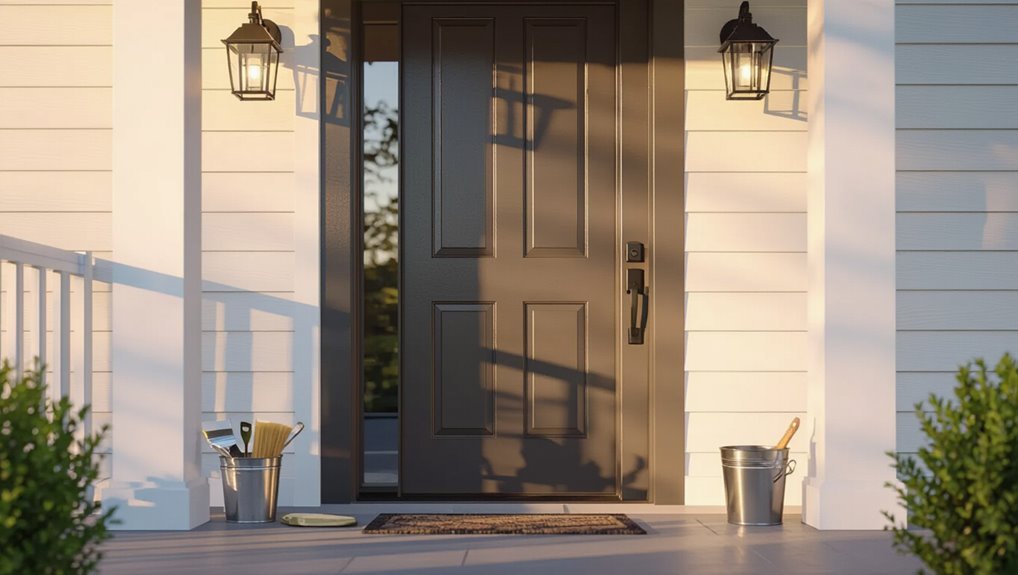
Thinking about tackling a metal exterior door? You should if you care about door aesthetics and feel confident with prep, stripping rust, and following safety steps.
DIY enthusiasts with steady hands and basic tools can save money and personalize color.
Hire a pro if the door’s severely corroded, warped, or part of a rental agreement requiring licensed work.
Quick Answer: Best Paint System for Metal Doors
For a metal door you’ll want a rust-inhibiting primer followed by either an oil-based enamel or an exterior acrylic latex specifically formulated for metal.
Start by cleaning, sanding, and priming the surface to guarantee adhesion and prevent corrosion.
Choose a durable topcoat—semi-gloss or satin finishes with UV and weather resistance—for long-lasting protection.
Best Paint Types
Anyone tackling a metal door wants a paint system that sticks, resists rust, and stays looking good — the best choice is a zinc-rich primer followed by an oil-based or alkyd topcoat (or a high-quality exterior acrylic enamel), which together provide adhesion, corrosion protection, and durable finish.
You’ll prefer oil/alkyd for toughness, acrylic enamel for easier cleanup, and consider eco friendly options and best paint finishes for appearance.
Surface Preparation Steps
Now that you know the best paint system for a metal door, get the surface right before you open a can: proper prep guarantees adhesion and long-term rust protection. You’ll do surface cleaning, sand to feather edges, degrease, and perform adhesive testing for primers. Visualize steps:
| Step | Tool | Result |
|---|---|---|
| Clean | Brush | Dirt-free |
| Sand | Paper | Smooth |
| Degrease | Solvent | Bond-ready |
| Test | Tape | Confirm adhesion |
Topcoat Durability Options
Because your metal door faces weather, wear, and frequent handling, choose a topcoat that balances hardness, flexibility, and corrosion resistance—acrylic enamel for easy maintenance, alkyd for toughness, and polyurethane or two-part systems where maximum abrasion and chemical resistance matter.
Select topcoat finishes based on expected abuse, UV exposure, and maintenance habits.
Check durability testing data and warranty to match performance to your door’s use.
Tools and Materials You’ll Need
You’ll need a few essential painting tools—brushes, rollers, drop cloths, and a good-quality sandpaper or sanding block—to get a smooth finish.
Prepare the surface with cleaners, rust remover, tack cloths, and masking tape so the paint will adhere properly.
Choose a metal-specific primer and a durable exterior or semi-gloss paint formulated for metal.
Essential Painting Tools
Gathering the right tools makes the job faster and gives you a cleaner, longer-lasting finish; for a metal door you’ll need rust remover or a degreaser, sandpaper or a sanding block (120–220 grit), a wire brush, high-quality primer and metal paint, brushes and a foam roller, painter’s tape, drop cloths, and safety gear like gloves and eye protection.
Choose painting brushes, paint rollers or sprayer options, plus paint thinners, surface primers, protective gear, drop cloths, and masking tape to streamline work and guarantee durability.
Surface Prep Supplies
Prepping the metal door surface starts with the right supplies: rust remover or degreaser, assorted sandpaper (120–220 grit) and a sanding block, a wire brush, tack cloths, clean rags, and a quality metal primer—plus painter’s tape and drop cloths to protect surrounding areas.
You’ll also want gloves, safety glasses, a scraper, and solvent for surface cleaning to guarantee proper paint adhesion.
Paints And Primers
Now that the door’s surface is clean, sanded, and masked, pick paints and primers formulated for metal to guarantee lasting adhesion and rust resistance.
Choose primer types like zinc-rich or epoxy for bare metal and etch primers for galvanized surfaces.
Select exterior-grade acrylic or oil-based topcoats with appropriate paint finishes (satin, semi-gloss, or gloss) for durability and easy cleaning.
Evaluate the Door: New, Painted, or Rusted?
Wondering whether your door is new, already painted, or showing rust? You’ll check door condition and perform a quick rust assessment, then choose prep and primer accordingly.
- New: clean, de-grease, lightly scuff.
- Painted: test adhesion, sand glossy spots.
- Light rust: sand to sound metal, prime.
- Heavy rust: remove, treat, use rust-inhibiting primer.
Safety First: Ventilation, PPE, Lead Checks
Before you touch a brush, make sure you’ve set up good ventilation, put on the right PPE, and checked for lead paint so you’re protecting yourself and anyone nearby. Use ventilation methods like cross-ventilation or fans, follow PPE requirements (respirator, gloves, eye protection), and test for lead before sanding.
| Hazard | Control |
|---|---|
| Fumes | Ventilation methods |
| Dust | PPE requirements |
| Lead | Test first |
| Chemicals | Gloves/respirator |
| Eyes | Goggles |
Remove Hardware and Protect Fittings
Start by removing all movable hardware—knobs, deadbolts, kickplates, and hinges—so you can paint cleanly around fittings and get an even finish.
Start by removing movable hardware—knobs, deadbolts, kickplates, and hinges—for a clean, even paint finish.
You’ll focus on hardware removal and fitting protection to avoid paint buildup or damage.
- Label and bag screws.
- Store parts safely.
- Mask fixed fittings.
- Cover glass and weatherstripping.
Remove Rust and Flaky Paint
Scrape away loose paint and surface rust with a stiff wire brush or paint scraper, then sand the area smooth so new coatings will adhere properly.
Use targeted rust removal techniques—wire wheel, sanding, or abrasive pads—and controlled paint stripping methods for flaky sections.
Clean dust and residue, wipe with solvent, and inspect for deep corrosion before priming.
Confirm edges are feathered for an even finish.
When to Use Rust Converters or Inhibitors
If rust is shallow and you’ve removed most loose scale, use a rust converter or inhibitor to neutralize remaining corrosion and stop it from spreading before priming; choose a product when pitting is minimal, the metal surface is dry and clean, and you want a quicker, less aggressive option than full metal replacement or welding.
- Assess rust treatment options.
- Clean surface thoroughly.
- Follow manufacturer application techniques.
- Prime after cure.
Sanding Strategy: Grit and Technique
Choose the right grit and work with consistent pressure:
begin with a coarser sandpaper (around 80–120 grit) to remove remaining rust, old paint flanges, or deep imperfections.
Then progress through 150–220 grit for smoothing and finish with 320–400 grit where you want a near-polished surface for paint adhesion.
You’ll use sanding techniques that emphasize even strokes, light pressure, and proper grit selection to avoid gouging.
Clean for Adhesion: Degreasers and Rinses
After sanding, you’ll need to remove dust, oils, and any leftover contaminants so primer and paint will stick properly.
Use proper cleaning techniques and simple adhesion tips to prep the surface. Follow these steps:
- Apply a mild degreaser to cut oils.
- Agitate with a soft brush.
- Rinse thoroughly with clean water.
- Dry completely before priming.
Repair Dents, Seams, and Imperfections
You’ll want to tackle dents, seams, and other imperfections before priming so the finish lays flat and looks professional.
Assess and sand damaged areas, then use body filler for dent repair, feathering edges smooth.
File or caulk gaps, applying seam sealing where panels meet.
Sand sealed spots flush, wipe clean, and confirm surfaces are crisp and even before moving on to primer.
Choose the Right Paint Type
Now you’ll pick the paint that matches your door’s needs, comparing oil and latex options for durability, drying time, and finish.
You’ll also consider rust-inhibiting primers to protect bare or exposed metal before topcoating. Choosing the right combo will make the job last and look professional.
Paint Type Comparison
When choosing paint for a metal door, pick a product that balances adhesion, durability, and the look you want; oil-based enamels stick well and resist wear, water-based acrylics dry faster and clean up easily, and specialty metal primers or rust-converting paints are essential if corrosion is present.
- Gloss: easy to clean
- Satin: hides imperfections
- Primer: prevents rust
- Tips: paint finishes comparison, color selection tips
Oil Vs. Latex
Although both oil and latex paints can cover metal well, picking the right type comes down to how you value durability, drying time, and ease of cleanup. You’ll weigh oil benefits like toughness and smooth finish against latex advantages such as faster drying and easy cleanup. Choose oil for heavy wear, latex for convenience.
| Feature | Oil | Latex |
|---|---|---|
| Durability | High | Medium |
| Drying | Slow | Fast |
| Cleanup | Solvent | Water |
Rust-Inhibiting Primers
Choosing oil or latex sets the stage, but to protect metal from corrosion you’ll need a rust-inhibiting primer before the topcoat.
You’ll focus on rust prevention and proper primer application to guarantee adhesion and longevity.
Follow these steps:
- Clean and sand surface.
- Remove rust with wire brush.
- Apply primer thinly, even coats.
- Let cure fully before painting.
Why Primer Matters for Metal Doors
Because metal’s smooth, nonporous surface resists paint adhesion, primer gives your door a dependable base that helps paint stick, prevents rust, and evens out the finish.
You’ll see metal door benefits in durability and improved coverage.
Choosing among primer types affects adhesion, corrosion resistance, and topcoat appearance, so pick one suited to your metal, environment, and the paint you’ll apply.
Best Primers for Exterior Metal
1 good primer can make all the difference when prepping an exterior metal door: you want a product that bonds to smooth surfaces, blocks rust, tolerates temperature swings, and pairs well with your selected topcoat.
Choose primers that emphasize metal door benefits and simplify primer application:
- Zinc-rich rust inhibitor
- Etching primer
- Oil-based bonding primer
- Acrylic exterior primer
Masking and Drop‑Cloth Setup
Before you start painting, cover nearby walls, hardware, and flooring to protect surrounding surfaces from drips and overspray.
Use quality drop cloths and tape their edges so they won’t shift while you work. Secure seams and corners with painter’s tape or weights to keep paint from sneaking underneath.
Protect Surrounding Surfaces
Start by clearing a workspace at least a few feet around the door so you can move freely; lay down drop cloths that overlap and tape their seams to prevent paint seepage, and use painter’s tape to mask trim, hinges, glass panes, and any hardware you’re not removing.
Use drop cloths benefits and surface protection techniques:
- Cover nearby walls.
- Protect porch flooring.
- Shield plants and furniture.
- Mask fixtures and mail slots.
Secure Drop Cloths
Lay out your drop cloths so they overlap by at least 6–12 inches, then tape seams and edges with painter’s tape so wind or foot traffic won’t shift them.
Secure cloths to the door frame and threshold where they meet the surface to prevent paint drips from sneaking underneath and to keep tripping hazards to a minimum.
Emphasize drop cloths importance: anchor corners, weight edges, and use clips for securing drop cloths.
Brush, Roll, or Spray: Pros and Cons
Whether you’re tackling a single metal door or a whole set, choosing between brushing, rolling, or spraying affects finish quality, speed, and prep needs—each method has clear trade-offs in control, texture, and cleanup.
- Brush vs. roller: brush gives control, roller speeds coverage.
- Spray advantages: fastest, smoothest.
- Detail areas favor brush.
- Large flats suit roller or spray; plan masking and ventilation.
How to Thin and Mix Paint
If you’re using spray equipment or need a smoother, more even coat, thinning and properly mixing your paint makes a big difference—get it wrong and you’ll see runs, poor adhesion, or clogging.
Check manufacturer mixing ratios and use recommended thinners. Stir thoroughly to uniform paint consistency, strain before filling sprayer, and test on scrap.
Adjust slightly for weather; avoid over-thinning.
Applying Primer: Coverage and Dry Time
Before you prime the door, check the primer’s coverage rate so you know how much you’ll need for a full coat.
Apply evenly and follow the manufacturer’s recommended dry time between coats to guarantee proper adhesion.
If you plan a second coat, wait the specified hours and touch the surface lightly to confirm it’s dry.
Primer Coverage Rate
A single quart of metal primer typically covers about 80–100 square feet per coat, but actual coverage depends on the primer’s formulation, the door’s texture, and how thinly you apply it.
Use primer application techniques and primer types comparison to plan quantity.
- Rough door needs more
- Smooth door needs less
- Thick primer lowers coverage
- Thin coats stretch primer
Recommended Dry Times
Knowing how much primer you’ll need also helps you plan how long it’ll take to dry between coats.
Follow dry time recommendations on the label—typically 30 minutes to 2 hours for recoat and 24–48 hours for handling. Cooler, humid conditions extend curing periods, so wait longer.
Light sanding before topcoat improves adhesion once the primer feels dry but hasn’t fully cured.
How Many Topcoats and Recoat Intervals
When you’re painting a metal door, plan for two thin topcoats so you get even coverage and durable protection without runs or excess build-up.
Keep topcoat application light and consistent; follow manufacturer recoat timing.
- Wait recommended tack-free time.
- Sand light between coats if needed.
- Apply second thin coat evenly.
- Cure fully before heavy use.
Smooth Strokes: Avoid Drips and Marks
Start each stroke with intent and move steadily to prevent drips and brush marks; keep your brush or roller loaded but not overloaded, and overlap each pass slightly so the paint levels out as it dries. You’ll aim for smooth application and drip prevention by working top to bottom, maintaining a wet edge, and checking for runs before they set.
| Tip | Tool | Result |
|---|---|---|
| Steady stroke | Roller | Even finish |
| Moderate load | Brush | No drips |
| Overlap | Technique | Smooth look |
Painting Edges, Jambs, and Hardware Areas
Work the edges, jambs, and hardware areas with a steady hand and the right tools to avoid messy overlap and missed spots; use a quality angled sash brush for tight seams, a small foam brush or artist’s brush for hinge recesses, and painter’s tape or magnetic door guards to protect hardware and glass.
Work edges, jambs, and hardware with steady hands, angled sash brushes, and protective tape to avoid overlap and missed spots
- Prep and clean edges for edge sealing.
- Mask for jamb protection.
- Thin coats at corners.
- Inspect for missed spots.
Curing Times and Rehanging Hardware
After you’ve wiped down edges and removed tape, give the paint proper time to cure before rehanging hardware; handling the door too soon can smudge finish or cause chips.
Check your paint’s curing times on the label—touch dry isn’t full cure. Wait recommended hours or days, gently test in an inconspicuous spot, then reinstall hinges, locks, and handles to avoid scratches or adhesion failure.
Best Weather and Timing to Paint
When you pick the right day, paint adheres better and dries more evenly, so aim for mild temperatures (typically 50–85°F / 10–29°C), low humidity, and little wind; avoid painting in direct midday sun, during rain, or when temperatures will drop below the paint’s recommended range overnight.
- Check ideal temperature and forecast.
- Confirm low humidity levels.
- Paint in morning or late afternoon.
- Avoid windy or wet days.
Routine Maintenance to Extend Finish Life
Once the paint’s cured and you’ve picked the right conditions for application, you can keep that finish looking fresh far longer with simple routine care.
Inspect seals, hardware, and touch up nicks during routine checks.
During routine checks, inspect seals and hardware, and promptly touch up any nicks to prevent further damage.
Clean gently with mild detergent quarterly.
Reapply protective wax or topcoat as part of seasonal upkeep to shield against moisture and UV, preventing premature wear and preserving color.
Troubleshooting: Peeling, Orange‑Peel, and Runs
If your paint’s lifting, orange‑peel texture appears, or runs form, don’t panic—you can usually diagnose the cause by examining preparation, application, and conditions.
- Check paint adhesion: sand, clean, and prime to avoid peeling issues.
- Smooth orange peel texture: proper thinning and spray technique.
- Run prevention: control wet coats and dry time.
- Finish restoration: sand, feather, and recoat using troubleshooting techniques.
Cost, Time Estimates, and When to Hire a Pro
Expect to spend anywhere from a few dozen to a few hundred dollars depending on paint quality, tools, and prep materials.
Plan for a few hours to a full day for prep, painting, and drying, or longer if you’re removing rust or old coatings.
If you’re short on time, dealing with heavy corrosion, or want a flawless finish, hire a pro.
Cost Breakdown
Painting a metal door can cost anywhere from $50 to $400 if you do it yourself and $200 to $800+ for a pro, depending on materials, prep work, and door complexity.
Do a cost analysis and factor budget considerations. Estimate time: prep 1–3 hrs, paint 1–2 hrs, drying 24 hrs.
Consider:
- Materials
- Tools
- Labor
- Contingencies
When To Hire
Now that you’ve broken down costs and time for a DIY job, decide whether to hire a pro by comparing your budget, schedule, and skill level.
If you lack time, tools, or confidence, hiring considerations should favor a pro.
Professional benefits include faster prep, correct rust treatment, and a longer-lasting finish.
Get quotes, check reviews, and weigh warranty versus DIY savings.
Frequently Asked Questions
Can I Paint a Metal Door to Match an Existing Storm Door Color?
Yes — you can paint your metal door to achieve a color matching storm door look; sand, prime with metal primer, and use exterior paint, testing swatches outdoors so you’ll match tones under real light before committing.
Will Paint Affect the Door’s Fire‑Rating or Warranty?
You might worry it’ll void coverage, but you can usually paint without changing the fire rating if you follow manufacturer specs; check warranty implications and approved coatings first, and keep records of products and procedures used.
Can I Use Spray Paint Touch‑Ups After Full-Door Spray Application?
Yes—you can use spray paint for touch ups after a full-door spray application, but you’ll want to feather edges, match primer and topcoat, clean and scuff first, and apply light, even coats using recommended touch up techniques.
How Do I Prevent Paint Transfer to Clothing or Cars From the Door?
About 70% of transfers happen within a week, so act fast: you’ll use thorough paint preparation, allow full cure times, add clear topcoat, and use surface protection like mats or tape to keep paint off clothing and cars.
Are There Paint Options That Resist Graffiti or Markers?
Yes — you can choose graffiti resistant coatings and marker resistant finishes that repel spray paint and ink. You’ll apply them per instructions; they’ll allow easier cleaning, reduce staining, and often withstand repeated removal without damage.
Conclusion
Painting a metal exterior door gives big payoff: a properly prepped, primed, and top-coated door can last 5–10 years with routine care. About 60% of exterior paint failures trace back to poor surface prep, so take time to remove rust, sand, and clean before you paint. Follow the steps, pick the right products, and do periodic touch-ups—save yourself time and money, or hire a pro if the job feels beyond your comfort zone.
