
Why Does Paint Peel Off the Wall: Causes and Fixes
You’re seeing paint peel because something’s broken the bond between the coating and wall—usually moisture, poor surface prep, incompatible paint layers, or building movement. Leaks, high humidity, condensation, or freeze–thaw cycles push water into paint and cause bubbling or flaking. Skipping cleaning, sanding, or priming makes adhesion worse, and low‑quality or mismatched paints can separate. Fix the source of moisture, prep and prime properly, and use compatible paints, and you’ll stop most peeling; keep going to learn specific fixes.
Why Paint Peels : Quick Answer
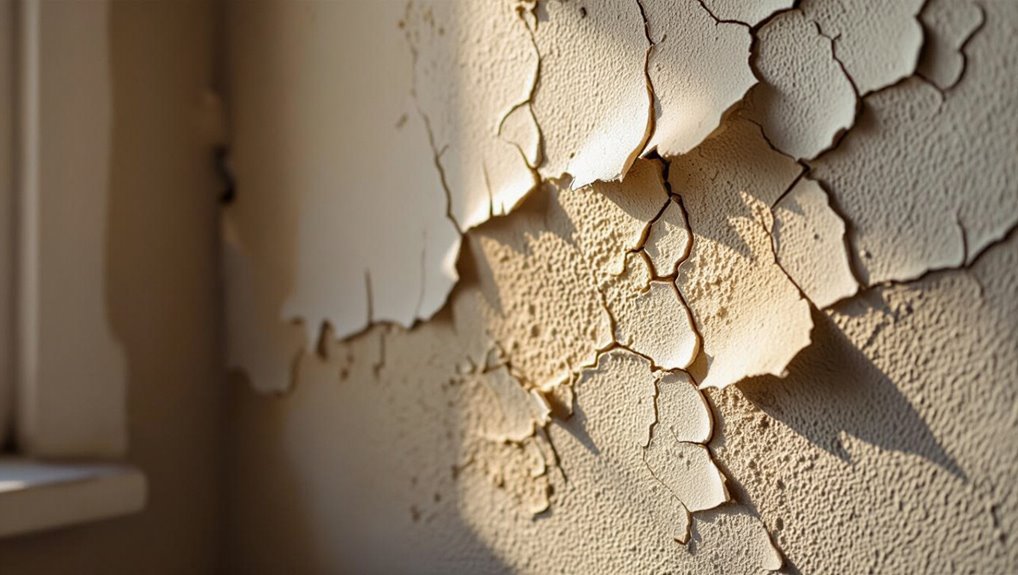
When paint peels, it’s usually because the bond between the coating and the surface failed — often from moisture, poor surface prep, incompatible paint, or prolonged sun and heat.
You should check substrate cleanliness, repair damage, and choose compatible coatings to restore paint adhesion.
For peeling prevention, prep thoroughly, use primers, and apply paint under suitable conditions so your finish lasts.
How Humidity Causes Paint Failure
If your home has high indoor moisture, paint can lose adhesion and start to peel.
You’ll often see condensation on cold surfaces like windows, pipes, or exterior walls, which soaks into paint and weakens the bond.
Addressing sources of humidity will help prevent further paint failure.
High Indoor Moisture
Because humid air holds more water vapor, excess indoor moisture pushes through paint and weakens its bond to the substrate, causing bubbling, blistering, and eventual peeling.
You should prioritize humidity control with ventilation solutions, dehumidifier installation, and improved air circulation.
Combine moisture barriers, insulation upgrades, and weatherproofing techniques with proper paint selection, surface treatments, and careful placement of indoor plants to manage humidity.
Condensation On Surfaces
Although it’s invisible most of the time, moisture condenses on cool surfaces and breaks the paint’s adhesion.
So you’ll see bubbling, flaking, or white powdery residue where humidity meets cold walls or windows.
You should identify condensation effects and moisture sources—like cooking, showers, and poor ventilation—and reduce humidity, insulate cold surfaces, and use breathable primers to restore adhesion and prevent recurrence.
How Water Leaks Lead to Peeling Paint
When water finds its way behind your paint—through a leaky roof, faulty flashing, or a cracked pipe—it weakens the bond between the coating and the surface, causing paint to blister, flake, and fall away.
You need prompt leak detection, interior inspections, and moisture management.
Consider repair solutions, waterproofing techniques, and proper wall treatments.
- Find source
- Dry thoroughly
- Seal and repair
- Monitor humidity
Why Condensation Ruins Interior Paint
When warm, humid air hits cooler walls, you’ll get moisture condensing on the surface and soaking the paint.
That trapped water breaks the paint’s bond with the wall, so it starts to peel and flake.
If you ignore it, mold can grow and stain the finish, making repairs harder.
Moisture Condensing On Walls
Condensation forms when warm, humid air meets a cooler wall surface. You’ll see beads and streaks that lead to mold, blistering, and paint failure; recognize condensation effects early and act.
Improve ventilation, install exhaust fans, use dehumidifiers, and insulate cold spots to reduce risk.
- Check bathroom and kitchen vents
- Run dehumidifiers
- Add insulation
- Wipe surfaces regularly
Practice routine moisture control.
Paint Losing Adhesion
Those beads and streaks you wiped away can undermine paint bond over time: moisture seeps into microscopic pores, softens the binder, and breaks the mechanical grip between paint and substrate.
You’ll see adhesion fail faster on incompatible paint types or poorly prepared surfaces.
Condensation repeatedly cycles wetting and drying, expands flaws in surface textures, and causes flaking, lifting, and eventual peeling unless you control humidity and prep properly.
Mold Staining Finish
If moisture keeps building on interior surfaces, mold will take hold and leave dark, discolored stains that eat into your paint’s finish.
You should tackle condensation fast to protect coatings and use proper staining solutions for cleanup.
For mold prevention and repair, try:
- Improve ventilation
- Use dehumidifiers
- Clean with mold-safe products
- Prime with mildew-resistant sealer
How Poor Surface Preparation Weakens Adhesion
When you skip or rush surface prep, the paint has nothing solid to grip and will start to lift or flake long before its expected life.
You’ll face adhesion issues if you don’t remove dust, grease, or loose flakes. Proper sanding, cleaning, and priming restore surface cleanliness and create a consistent profile so paint bonds firmly, lasting longer and resisting early failure.
Why Old, Flaky Paint Keeps Recurring
If your old paint keeps flaking, it’s often because the surface wasn’t prepped properly and new layers never bonded.
You’ll also see recurring failure where moisture or high humidity keeps getting behind the paint and weakening adhesion.
Fixing both prep and moisture sources is what stops the cycle.
Poor Surface Preparation
Because paint needs a clean, stable base to stick to, skipping proper prep almost guarantees peeling will come back.
You should do wall inspection and substrate evaluation, use surface cleaning, and confirm primer selection and paint compatibility.
Consider texture assessment and environmental factors; perform adhesion testing.
Follow preparation techniques and choose product quality to stop recurrence.
- Inspect surface
- Clean thoroughly
- Test adhesion
- Pick proper primer
Moisture And Humidity
You’ve covered prep, but even well-prepared surfaces will see paint fail if moisture problems persist.
You must identify moisture sources—leaks, plumbing, rising damp, or condensation—and fix them before repainting.
Improve ventilation, install exhaust fans, and use dehumidifiers for effective humidity control.
Choose breathable primers and paints after repairs, and monitor humidity to prevent recurrence of old, flaky paint.
How Incompatible Paint Layers Cause Peeling
When paint layers don’t bond chemically or flex the same way, they’ll separate and peel away from one another.
You’ll notice flaking when incompatible layers clash or when paint chemistry prevents adhesion.
To prevent this, you should:
- Test adhesion before repainting
- Sand glossy or loose layers lightly
- Use compatible primers
- Match solvent types between coats
Why Paint Won’t Stick to Glossy Finishes
Glossy finishes are so smooth that new paint has nothing to grip, which makes peeling more likely.
If you don’t properly scuff and clean the surface first, contaminants and shine will prevent good adhesion.
You should sand, degrease, and use a bonding primer before repainting.
Surface Smoothness Issues
Because very smooth, shiny surfaces repel paint, you’ll often find new coats beading up or flaking off unless you prep properly.
You must alter surface texture to improve paint adhesion. Sand, etch, or use a bonding primer so coatings grip.
Consider:
- Fine sanding to dull gloss
- Degreasing before work
- Abrasive pads for curves
- High-bond primer for slick substrates
Poor Surface Preparation
You’ve already seen how overly smooth, shiny surfaces cause paint to bead and flake, but poor preparation goes beyond gloss—it’s the failing step that lets contamination, loose old paint, and uneven profiles prevent new coatings from bonding. You must strip loose layers, degrease for surface cleanliness, scuff glossy areas, and confirm substrate compatibility before priming so paint adheres reliably.
Oil Vs. Latex: Mistakes That Cause Peeling Paint
When oil and latex paints meet the wrong way, adhesion fails and you get peeling; mixing them without proper prep or using the wrong primer are the most common culprits.
You should spot oil paint under latex paint causes, address adhesion issues, and correct surface imperfections.
Avoid these mistakes:
- Skipping solvent cleaning before recoating
- Using incompatible paint compatibility choices
- Ignoring proper primer
- Rushed application techniques
Why Exterior Paint Peels Sooner Than Expected
If your exterior paint’s peeling far sooner than you expected, it usually means moisture, surface preparation, or sunlight exposure got the upper hand.
You’ll notice poor adhesion when you skip proper cleaning, priming, or curing in changing seasons.
Address exterior temperature fluctuations by timing projects, use compatible primers, and follow correct paint application techniques so coatings bond and resist early failure.
How Sunlight and Heat Degrade Paint
You’ll notice sunlight slowly breaks down paint binders as UV light causes the film to become chalky and brittle.
Heat makes the substrate expand and contract, stressing that weakened film until it cracks or peels.
Together, UV degradation and thermal movement accelerate finish failure on exposed surfaces.
UV Light Breakdown
Although sunlight feels harmless, its ultraviolet rays and heat break down paint at the molecular level, causing color fading, chalking, and loss of adhesion.
You’ll see UV degradation reduce paint longevity through resin breakdown from prolonged sunlight exposure. Use protective coatings and surface protection to slow damage while maintaining thermal stability.
- Inspect regularly
- Choose UV-resistant paints
- Apply clear protective coatings
- Recoat before failure
Thermal Expansion Effects
When heat from sunlight warms building materials, they expand at different rates than the paint that covers them, and those repeated movements make the coating crack, flake, or separate from the substrate. You’ll notice thermal cycles cause expansion stress and contraction effects; seasonal changes worsen fatigue, so choose flexible primers and proper coatings.
| Cause | Effect | Fix |
|---|---|---|
| Thermal cycles | Expansion stress | Flexible primer |
| Contraction effects | Cracking | Elastic topcoat |
| Seasonal changes | Fatigue | Regular inspection |
Why Freeze–Thaw Cycles Lift Paint Outdoors
If water soaks into tiny cracks or under the paint film and then freezes, it expands and pushes the coating away from the substrate.
You’ll notice freeze thaw effects on outdoor paint as repeated cycles pry thin layers loose.
Preventive steps you can take:
- Inspect seals and caulk
- Improve drainage and flashing
- Repaint only when surfaces are dry
- Use flexible primers and elastomeric coatings
How Poor-Quality Paint Contributes to Peeling
When you pick low-quality paint, you’re more likely to get peeling because there isn’t enough pigment to form a stable film.
Poor binder formulation means the paint won’t adhere or flex with the substrate, so it cracks and flakes.
And without proper durability additives, the finish can’t resist weathering and mechanical wear, hastening failure.
Low Pigment Concentration
Because pigment gives paint its body and opacity, low pigment concentration leaves coatings thin, weak, and far more likely to fail; you’ll see this as poor coverage, rapid fading, and an increased tendency to peel as the binder can’t form a durable film around insufficient pigment particles.
You’ll notice low pigment reduces paint quality. Consider these signs:
- Thin, translucent coats
- Uneven color and streaks
- Faster chalking outdoors
- Frequent recoats needed
Poor Binder Formulation
Although it may look fine on the surface, poor binder formulation undermines a coating’s ability to stick, flex, and protect, and you’ll start seeing peeling as the polymer network breaks down.
You’ll notice chalking, loss of adhesion, and cracking when binder quality is low; the formulation impact shows in reduced cohesion and weather resistance.
Replace with a better-formulated paint and follow manufacturer specs.
Inadequate Durability Additives
If the paint lacks proper durability additives, it won’t stand up to moisture, UV, or temperature swings and you’ll start seeing peeling and surface breakdown sooner than expected.
You should check product specs against durability standards and compare additive types.
Consider these risks and fixes:
- Inferior UV stabilizers
- Weak moisture repellents
- Low-quality film-formers
- Missing anti-fade agents
Why Incorrect Drying Times Matter
When paint doesn’t get the drying time it needs, the bond between coats weakens and you’re much more likely to see bubbling, cracking, or peeling as the film cures. You should respect recommended drying duration and understand paint chemistry to avoid adhesion failure; rush coats trap solvents and disturb curing.
| Issue | Cause | Fix |
|---|---|---|
| Bubbling | Short drying | Wait full cure |
| Cracking | Incomplete cure | Follow times |
| Peeling | Layer failure | Proper intervals |
How Moisture in New Plaster or Drywall Causes Problems
Because new plaster and drywall can hold significant moisture, painting them too soon often causes adhesion problems and visible defects.
You should check moisture measurement before coating and wait for proper plaster drying. Use these checks to prevent peeling:
- measure with a meter
- wait recommended drying days
- allow ventilation
- recheck before priming
Why Biological Growth (Mold and Mildew) Lifts Paint
When mold or mildew grows beneath your paint, it traps moisture against the substrate and softens the film.
The organisms also release enzymes that break the chemical bonds holding the paint to the surface.
Plus, their spores and residues contaminate the surface so new paint won’t adhere properly until you remove them.
Moisture Trapped Behind Paint
If paint starts lifting in patches, you’re often looking at moisture trapped behind the coating feeding mold or mildew that physically breaks the paint’s bond.
You’ll spot it where moisture sources persist and incompatible paint types were used.
Check for:
- leaky pipes or roof
- condensation-prone rooms
- poor ventilation
- damp substrates under old coatings
Dry, clean, and choose compatible paints.
Enzymes Break Paint Bonds
Though paint looks inert, mold and mildew release enzymes that actively break down the binders holding your finish to the substrate, so you’ll see patches lift where biological growth has taken hold. You’ll notice enzyme activity alters paint chemistry, weakening adhesion. Clean affected areas, treat with biocide, and repaint using mildew-resistant coatings to restore durability.
| Issue | Effect |
|---|---|
| Mold | Binder breakdown |
| Mildew | Finish lifting |
| Enzymes | Chemical attack |
Surface Contamination Prevents Adhesion
Because mold and mildew sit on the surface and feed, they leave a film of spores, biofilms, and metabolic residues that stops paint from bonding to the substrate.
You need thorough surface cleaning and adhesion testing before repainting. Clean, treat, and verify adhesion to prevent lift.
- Remove visible growth
- Use biocide wash
- Sand and prime
- Perform pull-off adhesion testing
How Efflorescence Under Masonry Peels Paint
When salts within masonry draw moisture through the wall and then evaporate at the surface, they leave a powdery white residue called efflorescence that pushes paint away from the substrate.
You’ll see efflorescence effects as flaking, loss of adhesion, and undercut paint.
Remove salts, fix moisture sources, and apply proper masonry treatment and breathable coatings so paint can bond and stay put.
Why Structural Movement and Cracking Affect Coatings
When the building shifts, you put differential movement stress on paint, and those tiny motions add up.
Hairline and structural cracks let coatings flex and break, so paint can’t bridge gaps it wasn’t designed for.
You’ll also see adhesion loss at joints where materials move independently, creating peeling starting points.
Differential Movement Stress
If a building shifts or a wall cracks, the paint has to stretch or compress with it, and that mismatch puts stress on the coating.
You’ll notice failure where differential movement exceeds paint flexibility.
Consider these stress factors you can inspect or mitigate:
- Substrate movement
- Thermal expansion
- Moisture-driven swelling
- Inadequate primer or flexible system
Hairline And Structural Cracks
Because structural cracks keep moving and widening over time, paint on or across those fissures can’t stay bonded and will soon peel or flake away.
You should perform a thorough wall inspection and surface evaluation to spot hairline cracks that threaten structural integrity.
Use appropriate repair techniques: crack sealing, stabilizing substrates, and moisture management to restore paint adhesion and prevent recurrent peeling.
Adhesion Loss At Joints
Although joints are meant to accommodate building movement, they put paint under constant stress, and you’ll see adhesion fail first where materials meet and shift.
You should address joints with proper joint sealing and adhesion testing to prevent peeling.
Consider actions:
- Inspect movement and gaps regularly
- Use flexible sealants
- Re-prime affected zones
- Schedule adhesion testing after repairs
How Flashing and Roof Issues Cause Wall Damage
When flashing fails or a roof lets water bypass its designated channels, moisture follows the path of least resistance into your walls, seeping behind paint and causing blistering, flaking, and eventual rot.
You should spot flashing issues and roof leaks early, assess wall integrity, check moisture barriers, perform a damage assessment, and apply targeted repair techniques to stop further paint failure and structural decay.
Why Improper Priming Leads to Failure
If you skip surface prep, paint won’t bond and it’ll peel sooner rather than later.
Choosing the wrong primer for the material or conditions can leave you with poor adhesion or staining.
And if you don’t apply enough primer to fully seal the substrate, the topcoat won’t protect or stick properly.
Skipping Surface Preparation
Skipping surface preparation is one of the quickest ways to guarantee peeling paint because unprimed or poorly primed surfaces don’t let paint adhere properly. You’ll see bubbles, flaking, and rapid wear as moisture and temperature shifts break the bond.
You must handle surface cleanliness and confirm paint compatibility.
- Clean dirt and grease
- Sand glossy spots
- Repair cracks and loose material
- Remove mildew and salts
Wrong Primer Selection
Because primers create the bond between your substrate and the topcoat, choosing the wrong type or leaving out key properties will let paint fail quickly.
You must match primer compatibility to surface material and topcoat chemistry; otherwise adhesion weakens. Check manufacturer specs, cure times, and tolerances before primer application.
Use the correct primer type for moisture, stain-blocking, or bonding to prevent premature peeling.
Insufficient Primer Coverage
After matching primer type to substrate, you still need to apply it thoroughly—thin, patchy coats leave areas where the topcoat can’t bond and moisture can seep in.
You’ll cause insufficient bonding if coverage is uneven; proper primer selection and technique prevent peeling.
- Check coverage per manufacturer
- Use correct nap or sprayer
- Apply recommended coats
- Sand between layers for adhesion
Diagnosing the Root Cause of Peeling Paint
When paint starts to peel, you’ll need to inspect both the surface and the environment to find the real cause—poor adhesion, trapped moisture, incompatible paint layers, or excessive movement can all look similar at first glance.
Check paint adhesion by scraping small areas, probe for soft spots, and assess surface integrity for cracks, contamination, or dampness.
Note patterns to pinpoint moisture, substrate, or prep failures.
Tools and Materials You Need to Repair Peeling Paint
To repair peeling paint effectively, you’ll need a compact kit of quality tools and compatible materials that let you remove loose paint, prep the surface, and recoat for a lasting finish.
You’ll want items that support safe paint removal and thorough surface cleaning:
- Scraper and sanding block
- Primer and matching paint
- Mild detergent and sponges
- Drop cloths and protective gear
Step-by-Step: Repairing a Small Interior Peel
Start by clearing the area and protecting the floor—lay down a drop cloth and put on gloves and a dust mask—then loosen and remove any flaking paint with a scraper or a sanding block until the edges feel smooth.
Wipe dust, apply primer to seal, fill gaps with lightweight spackle, sand, prime spot, and repaint to restore interior aesthetics and aid peeling prevention.
Step-by-Step: Repairing Large Patches and Full Rooms
Tackle large peeling areas by working methodically: clear furniture, protect floors and adjacent surfaces with drop cloths and painter’s tape, and set up proper ventilation and lighting so you can see damaged sections clearly.
You’ll then focus on surface cleaning, removing loose paint, and using professional patch techniques.
Work room-by-room and follow this checklist:
Work room-by-room, following this simple checklist to strip, clean, patch, prime, and repaint efficiently.
- Strip and sand edges
- Clean residues
- Apply patch compound
- Prime and repaint
How to Prep Glossy or Previously Painted Surfaces
Prep glossy or previously painted surfaces by removing gloss and cleaning thoroughly so new paint can adhere.
Sand or degloss with a liquid abrasive, then use solvent and surface cleaning to remove oils and dust.
Rinse and dry fully.
Perform adhesion testing with a crosshatch and tape pull to confirm prep before priming and repainting, addressing any failures immediately.
Which Primers to Use for Difficult Substrates
Wondering which primer will actually stick to a challenging surface? You’ll focus on primer selection, substrate preparation, and adhesion properties.
Choose specialty primers and bonding agents for poor surface compatibility; look for stain blocking and primer durability.
Match primer types to material, and use proper application techniques.
Consider primer types, specialty primers, bonding agents, and stain blocking to prevent peel.
How to Choose the Right Paint Type and Finish
How do you pick the right paint and finish so it actually resists peeling and suits the room? You’ll match paint types to substrate and moisture levels, and choose finish options for durability and cleanability. Use eggshell or satin for living spaces, semi-gloss for trim. Consider mildew-resistant formulas where needed.
| Surface | Paint types | Finish options |
|---|---|---|
| Dry walls | Latex | Eggshell |
| Bathrooms | Acrylic | Satin |
| Trim | Oil or Acrylic | Semi-gloss |
| High-moisture | Mold-resistant | Semi-gloss |
Best Practices for Exterior Repainting to Prevent Peeling
Start by addressing the causes of peeling you can control: remove loose paint, clean away dirt and mildew, and repair rotten or damp wood so new coatings can adhere properly.
Start by fixing what causes peeling: remove loose paint, clean dirt and mildew, and repair damp or rotten wood.
You should:
- Choose coatings suited to local exterior conditions.
- Sand and prime bare wood or metal.
- Follow manufacturer drying times.
- Use proper paint selection and application tools.
These steps help prevent peeling and extend finish life.
Fix Moisture Problems Before You Repaint
Because moisture is the most common cause of exterior paint failure, you should track down and fix any water entry or retention before you repaint.
Inspect flashing, gutters, and siding for leaks, use moisture testing to verify dryness, improve wall ventilation to speed drying, seal gaps, and repair damaged materials.
Repaint only when substrates stay consistently dry to guarantee adhesion.
How to Stop Mold and Mildew From Returning
If you want mold and mildew to stay away after repainting, eliminate the conditions that let spores thrive: reduce humidity, improve airflow, and remove organic residues that feed growth.
You should focus on mold prevention and proper mildew treatment to keep paint intact.
Focus on preventing mold and treating mildew correctly to protect your paint and surfaces.
- Use dehumidifiers in damp rooms
- Run exhaust fans during showers
- Clean with mildew treatment cleaners
- Fix leaks promptly
When to Call a Professional Versus DIY?
Keeping humidity low and fixing leaks will prevent many paint problems, but you’ll still face choices about handling repairs yourself or hiring a pro. If damage’s extensive, seek a professional assessment. Use DIY techniques for small, isolated peeling. Consider safety, time, and finish quality before deciding.
| Situation | Recommendation |
|---|---|
| Small peel | DIY techniques |
| Moisture damage | Professional assessment |
| Lead paint risk | Call pro |
| Texture match | Call pro |
| Quick fix | DIY techniques |
How Much Will Repainting and Repairs Cost?
Costs for repainting and repairs can range widely—from under $100 for a small DIY touch-up to several thousand dollars for full-room or moisture-related restorations—so start by evaluating the size of the job, surface prep needed, and whether you’ll hire labor or do it yourself.
Consider repainting costs versus repair expenses and plan accordingly:
- DIY paint and primer
- Patch and sanding materials
- Professional labor rates
- Moisture remediation fees
Common Mistakes That Cause Repeat Peeling
When paint peels again after a repair, it’s usually because something in the preparation or application was skipped or done poorly.
You’ll want to spot these recurring mistakes so you can fix the root cause rather than just repainting. You often rush surface cleaning, skip proper priming, or use wrong coatings.
Address common misconceptions about adhesion and follow basic preventative measures to avoid repeating failures.
Preventive Maintenance to Keep Paint Lasting Longer
If you want paint to last, schedule simple, regular checks and tackle small problems before they grow—inspect for moisture, loose edges, and dirt every six months. Clean and touch up chips promptly, and keep gutters and trim sealed to prevent water intrusion.
Follow these Preventive measures for Surface maintenance and Routine inspections:
- Regular cleaning to remove grime
- Use Quality products and timely repairs
- Maintain Environmental control and Proper ventilation
- Address bubbling or cracks immediately
Quick Checklist to Follow Before You Paint
1 clear checklist will save you time and headaches before you paint: inspect surfaces for loose or flaking paint, test for moisture and mildew, patch and sand defects, clean thoroughly, and confirm the substrate is primed or compatible with your chosen paint.
Use a prep checklist to note repairs, choose appropriate paint types for the surface, mask edges, and guarantee proper ventilation before you start.
How to Tell If Paint Failure Indicates a Bigger Problem
Although peeling paint often looks like just a cosmetic issue, it can signal underlying problems you should address before repainting.
Do a thorough paint inspection to check moisture sources, paint compatibility, and environmental factors that shorten paint lifespan.
Look for signs affecting structural integrity or requiring frequent maintenance:
- Damp stains or mold
- Cracked or soft substrate
- Rusted fasteners
- Repeated flaking patterns
Frequently Asked Questions
Can Peeling Paint Release Harmful Chemicals or Toxins Indoors?
Yes — peeling paint can release harmful dust or vapors, especially from old lead- or solvent-based paints; you’ll risk toxic exposure and degraded indoor air quality, so clean safely, ventilate, and test or hire a pro.
How Long Should I Wait After Repairs Before Hanging Pictures?
Right off the bat, don’t rush it — wait at least 48–72 hours after repairs before picture hanging; repair timing matters so paint and fillers fully cure, ensuring you won’t be redoing work down the road.
Will Repainting Change My Home Insurance or Warranty Coverage?
Repainting usually won’t change your insurance policy or warranty implications, but you should check terms. If repairs expose issues or use unapproved materials, insurers or warranty providers might require disclosure or deny related claims.
Are There Eco-Friendly Paints That Resist Peeling as Well as Conventional Ones?
Like a sturdy tree, yes — you can choose eco friendly options that match conventional paint in paint durability. You’ll find low-VOC, advanced acrylics and bio-based formulas that resist peeling while reducing toxins and odors.
Can Wallpaper Removal Cause Similar Peeling Problems to Repainting?
Yes — wallpaper removal can cause peeling if underlying wall condition’s poor; you’ll loosen paint, damage drywall, or leave adhesive. Use proper preparation techniques: score, soften adhesive, repair surface, sand, prime before repainting to prevent peeling.
Conclusion
Like a bandage peeling off after a bad shower, flaking paint tells you something’s wrong beneath the surface. You can stop it by controlling humidity, fixing leaks, and prepping surfaces properly before you paint. Avoid common mistakes like painting over damp or dirty walls, and use the right primer and breathable finishes. Do routine checks for leaks, condensation, and adhesion so your paint job lasts longer and you won’t keep repainting the same spot.
