
How Long Do Acrylic Paints Take to Dry: Drying Times You Should Know
You’ll find acrylics often surface-dry in 10–30 minutes and reach light handling strength in about 1–2 hours for thin layers, while thicker or impasto applications can take 24 hours to several days to fully cure. Drying speed depends on layer thickness, humidity, temperature, airflow and paint formula, and additives like retarders will slow drying. Control conditions and layer thickness to avoid smudges and cracking, and keep going to learn practical tips and timing strategies.
Quick Answer: Typical Acrylic Paint Drying Times
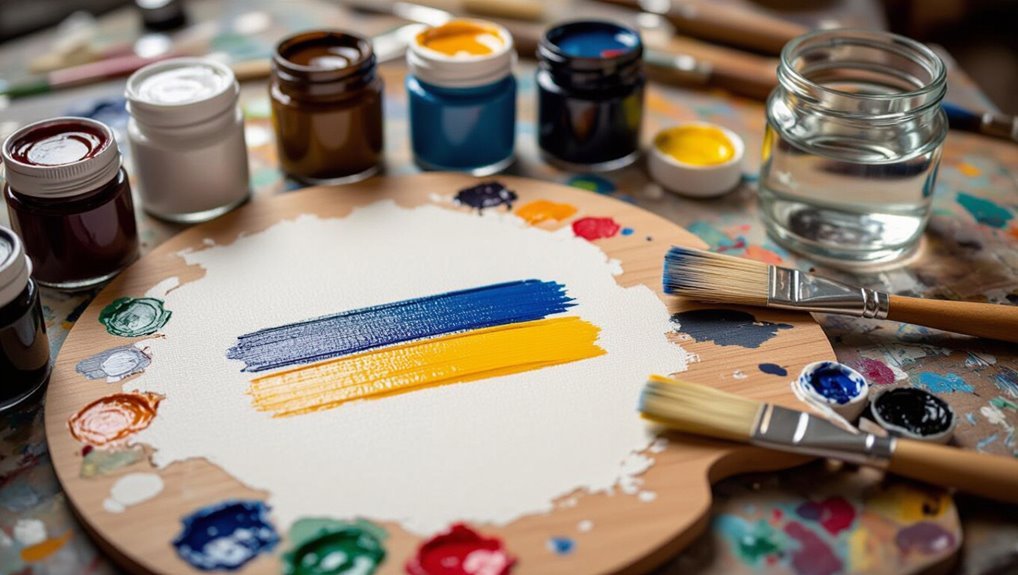
Although exact times vary with thickness and environment, acrylics typically surface-dry in 10–30 minutes and cure to handling strength within 1–2 hours for thin layers; heavier applications can take 24 hours or more to fully dry.
You’ll find acrylic paint characteristics shift with humidity, temperature, and airflow, so adjust layers and tools accordingly.
Monitor drying conditions to plan sessions and avoid smudging.
Surface Dry vs Fully Cured: What Each Means
When a coat of acrylic feels dry to the touch, that’s “surface dry”—you can handle it lightly but it’s still curing beneath.
“Fully cured” means the paint has completed its chemical drying and reached maximum hardness and durability.
Knowing the difference helps you decide when to varnish, layer, or ship your piece.
Surface Dry Explained
Surface dryness tells you when you can touch or lightly handle a freshly painted piece without sticking, but it doesn’t mean the paint has finished hardening.
You’ll notice surface dry depends on acrylic paint absorption and drying time factors like humidity, temperature, and film thickness.
Treat it as a temporary stage: handle gently, avoid pressure, and wait longer for structural strength before heavy use or varnishing.
Fully Cured Defined
Think of “fully cured” as the finish’s final, stable state — it’s when the paint has dried through its entire film and reached maximum hardness and durability, not just a touch-dry surface.
You’ll know acrylic curing is complete when layers resist denting, solvents, and wear.
Drying factors like temperature, humidity, layer thickness, and ventilation affect timing, so allow ample cure time before heavy use.
How Paint Thickness Changes Drying Speed
When you apply thin washes, the water and acrylic binder evaporate quickly so the paint skins over fast.
Thick strokes and impasto trap moisture and slow down drying, often taking days to fully cure.
Knowing how layer thickness affects drying helps you plan glazing, layering, and when to varnish.
Thin Versus Thick Layers
Although acrylics can feel uniformly dry to the touch, the thickness of your application has a big effect on how long the paint actually takes to cure; thin washes and glazes dry in minutes to an hour, while thick impasto layers can take days or even weeks to fully set.
You’ll choose layer techniques and drying strategies to control appearance, avoid cracking, and time recoating.
Impacts Of Impasto
Because impasto piles paint into thick, sculptural ridges, it changes drying from a surface event into a deeper, slower chemical process.
You’ll find Impasto techniques slow cure, so adjust layering strategies and medium choices to avoid cracking.
Your brushwork styles and texture effects boost color vibrancy and visual depth, but expect longer wait times.
Consider thinner passes or drying aids for rapid style variations.
How Airflow and Ventilation Affect Drying
If you boost airflow around a painted piece, you’ll speed up surface drying by carrying solvent-laden air away and replacing it with drier air.
You can use fans, open windows, or directional vents as practical ventilation strategies to maintain consistent exchange.
Monitor temperature and avoid strong blasts that cause dust or uneven curing; balanced airflow effects speed drying without harming film formation.
How Humidity Changes Drying Times
When humidity rises, water-based acrylics take longer to lose moisture because the surrounding air holds more vapor and slows evaporation; conversely, low humidity speeds surface drying but can cause paint to skin or crack if it dries unevenly.
You’ll notice humidity effects on tack time, moisture levels within layers, and drying challenges; use climate considerations and humidity strategies to manage environmental factors for even curing.
How Temperature Speeds Up or Slows Drying
You’ll notice acrylics dry faster in warm temperatures because heat speeds water and solvent evaporation.
In cold conditions the paint’s film forms slowly and can stay tacky longer.
Remember that humidity interacts with temperature—high moisture can negate warmth’s speeding effect and keep paint drying slowly.
Warm Temperatures Accelerate Drying
Although higher temperatures speed up solvent evaporation and chemical reactions, they can also change how paint films form. So, you’ll want to balance warmth for faster drying with potential effects on texture and adhesion.
In a warm climate or heated studio setup, you’ll adjust drying techniques and temperature regulation to manage paint consistency and humidity control. This helps minimize seasonal variations and drying challenges during paint application.
Cold Slows Film Formation
Because cooler air slows solvent evaporation and retards the polymer cross-linking that binds acrylics into a coherent film, paint in cold conditions takes noticeably longer to set and harden.
You’ll face cold weather slow drying and film formation issues.
Consider:
- Adjust paint consistency and painting techniques to combat drying challenges.
- Monitor temperature effects and humidity impact as environmental factors.
- Respect acrylic properties to avoid tacky films.
Humidity Interaction With Temperature
When humidity rises, it slows solvent evaporation and counteracts the speeding effect of warm air.
So you’ll notice layers staying tacky longer even at higher temperatures.
You should monitor humidity effects and temperature balance because environmental influences create drying variability.
Use moisture control and improve air circulation to reduce weather impact.
Consider climate considerations before painting to predict drying times accurately.
Which Surfaces Absorb Water and Dry Faster
How quickly a surface soaks up water matters more than you might think for acrylic paint drying times. You’ll notice water absorption varies with surface types and substrate characteristics, affecting drying efficiency and paint interaction.
Consider:
- Porous woods and unprimed canvas: high absorption rates, low moisture retention — faster drying, thinner paint layering.
- Paper: moderate absorption, some drying variability.
- Primed/sealed surfaces: low absorption, slower drying.
How Non‑Porous Surfaces Prolong Tackiness
If you paint on non‑porous surfaces like glass, metal, or heavily primed boards, the acrylic film can stay tacky much longer because the surface won’t pull moisture away from the binder; the water and acrylic emulsion have to evaporate through the paint itself, slowing skin formation and extending tackiness.
You’ll face non porous challenges: surface interactions reduce evaporation, alter acrylic adhesion, and increase tackiness factors.
How Priming Alters Drying Behavior
Because primers control surface porosity and chemistry, they change how acrylic paint loses moisture and forms a film: a porous, absorbent primer wicks water away quickly and speeds skin formation, while a non‑absorbent or glossy primer forces evaporation through the paint, prolonging tackiness and altering adhesion.
Primers dictate porosity and chemistry, so they speed or slow acrylic drying—altering tackiness, film formation, and adhesion.
You’ll plan priming benefits using primer types and priming materials for surface preparation.
- Choose priming techniques and application methods.
- Compare drying differences between base layers.
- Balance paint adhesion with priming effects.
How Acrylic Color Affects Dry Time
Although pigment choice might seem purely aesthetic, it directly changes drying behavior: you’ll notice color transparency and pigment saturation cause drying variations.
Adjust paint consistency and medium interactions for predictable results. Your layering techniques and color blending depend on drying environments and surface texture.
Consider artist preferences when choosing hues, since thinner, transparent washes dry faster while richer, saturated mixes can slow cure times.
How Pigment Load and Opacity Affect Curing
When you load a mix with heavy pigment concentrations, the paint’s water-binding capacity changes and curing slows.
So thick, highly opaque applications take longer to set than thin, low-pigment washes. You’ll notice pigment concentration and opacity levels affect curing effects and color strength, altering drying balance and paint properties:
- Use blending techniques to manage pigment interaction.
- Adjust layering strategies for drying influences.
- Thin for faster set.
Why Brand and Formula Change Drying and Handling
Shifting from pigment load and opacity, you’ll also find that the brand and specific acrylic formula change how paint handles and how fast it dries.
You’ll notice different acrylic paint brands vary binder concentration, additives, and sheen, so you adjust drying handling techniques accordingly.
Test unfamiliar tubes on scrap to learn open time, tack, and leveling before committing to a final piece.
Heavy‑Body vs Fluid Acrylics: Drying Differences
Because heavy-body acrylics hold thick peaks and fluids flow like ink, you’ll notice clear differences in how fast and where they dry. You can control drying by choosing paint formulations and mindful application methods.
- Heavy body differences: texture effects, slower surface skinning.
- Fluid acrylics: faster absorption, color variations.
- Blending strategies, drying challenges, drying techniques, medium interactions.
How Acrylic Mediums Change Drying and Finish
The paints you pick are only part of the equation—media you mix into them will change both how fast they dry and the look they leave behind. You’ll choose medium types, drying additives, or curing agents to alter paint consistency, finish effects, and blending methods. Consider layering techniques, drying environments, and surface preparation to respect acrylic properties.
| Medium | Effect | Use |
|---|---|---|
| Gel | Body | Impasto |
| Retarder | Slower | Blending |
| Varnish | Sheen | Protection |
How Glazing and Transparent Layers Cure
When you build glazing or other transparent layers, they cure differently than opaque passages because their thinness and binder-to-pigment ratio let solvents evaporate faster and film formation proceed without the bulk of heavy pigments.
You’ll notice faster skinning, subtle depth, and predictable leveling when using glazing techniques and transparent layers.
- Thinner films dry quicker
- Less pigment slows matte buildup
- Multiple layers bond cumulatively
How Additives Like Retarders Extend Open Time
When you add a retarder, it slows water evaporation in the film so your brushwork stays workable longer.
Pay attention to mixing ratios, because too much retarder can prevent proper film formation and tackiness can persist.
Testing small batches helps you find the balance between extended open time and reliable curing.
Slower Evaporation Rates
Although acrylics dry fast by design, you can slow evaporation with additives called retarders that extend open time without changing the paint’s finish.
You’ll manage acrylic evaporation and pigment interaction by adjusting paint consistency and using drying inhibitors.
Consider drying challenges and environmental factors; apply these drying strategies and application techniques:
- Add small amounts of retarder
- Test pigment sensitivity
- Adjust humidity and airflow
Mixing Ratios Impact
One clear rule to remember is that small changes in ratios produce big effects: adding a little retarder lengthens open time noticeably, while too much can soften or weaken the paint film.
You’ll adjust mixing ratios to control paint consistency and drying time; paint additives alter paint behavior, medium interaction, texture effects, color blending, layering techniques, and influence application methods.
How and When to Use Flow Improvers vs Retarders
If your brush keeps skipping or your edges dry before you can blend, choose a flow improver to reduce surface tension and improve leveling without noticeably slowing cure time; use a retarder when you need to extend open time for blending, glazing, or working in hot, dry conditions.
- Flow improvers benefits: smoother strokes, better leveling.
- Retarder applications: extending working time for blending techniques.
- Mixing flow mediums aids achieving desired consistency without overthinning.
When to Use Other Additives (Extenders, Gloss Agents)
3 simple additives—extenders, gloss agents, and matting agents—can change drying behavior, appearance, and handling, so pick them based on the effect you want rather than habit.
Use extender usage to thin paint without weakening binder, stretch coverage, or slow film formation.
Choose gloss agents to increase sheen and slightly speed surface set.
Test small areas to confirm drying and final look.
How Mixed Media (Ink, Pastel) Impacts Drying
When you layer inks or pastels over wet or tacky acrylics, those materials can either sink in, repel, or react with the forming film, changing both drying speed and final texture.
You’ll notice Mixed media techniques shift Layer interactions, affecting Texture variations and Color blending.
Consider Ink application and Pastel integration for Surface effects, and be mindful of Adhesion challenges.
- ink bleeding
- chalky lift
- patchy sheen
How to Slow Drying for Blending and Wet‑On‑Wet
Mixed media interactions can make you rethink drying times, so you’ll often want to slow acrylics deliberately for smooth blending and true wet‑on‑wet work. Use acrylic mediums and drying retarders to extend working time; adjust paint additives, moisture control, and drying conditions to suit blending techniques and layering strategies.
| Tool | Effect |
|---|---|
| Retarder | Slows cure |
| Medium | Increases slip |
| Spray | Maintains moisture |
| Palette | Controls exposure |
How to Speed Drying for Faster Layering
Speed up drying by raising temperature, increasing airflow, and thinning your layers so you can add the next pass sooner.
Balance color selection and layering techniques to avoid drying challenges.
Consider environmental factors and surface preparation when choosing drying strategies and timing adjustments.
Apply concise painting practices to layer quickly without damaging texture.
- Thin layers
- Airflow control
- Fast-dry mediums
How to Use a Hairdryer or Heat Gun Safely
If you’re using a hairdryer or heat gun to speed acrylic drying, keep the tool moving, hold it several inches away, and use low heat to avoid softening or blistering the paint.
For hairdryer safety and heat gun precautions, set temperature control, guarantee proper airflow, organize workspace setup, follow drying techniques and methods, perform equipment maintenance, and prioritize paint preservation and acrylic care.
When to Avoid Direct Heat on Paintings
Using a hairdryer or heat gun can help in a pinch, but there are times you should avoid applying any direct heat to a painting. You’ll want to prevent heat damage and protect paint integrity.
Watch for caution signs and other drying hazards. Consider these preservation tips and surface protection measures:
- fresh varnish or thick impasto
- cracked or fragile layers
- enclosed spaces risking artwork safety
Proper Room Setup to Control Drying Conditions
You’ll want to set your workspace so temperature and ventilation are consistent, since warmth speeds drying but too much heat or stagnant air can cause problems.
Keep humidity low to moderate and guarantee gentle airflow to prevent skinning or uneven drying.
Small changes—like a fan on low or a dehumidifier—can make a big difference in final results.
Temperature And Ventilation
One clear step to control acrylic drying is to set a stable room temperature and steady airflow so paint cures evenly.
You’ll balance ventilation tips and temperature control for a consistent drying environment.
Consider airflow management and seasonal considerations in your workspace setup to support drying techniques while monitoring humidity levels.
- Position fans safely
- Keep thermostat steady
- Adjust for seasons
Humidity And Airflow
When humidity climbs, acrylics take longer to set, so keep your workspace around 40–55% relative humidity to speed curing without causing cracks; pair this with steady, indirect airflow to promote even evaporation without forming skin or disturbing wet surfaces.
You should monitor humidity levels, apply humidity control and ventilation strategies, and use airflow management to maintain moisture balance and reliable air circulation for consistent drying.
How to Dry Acrylics on Canvas vs Wood Panel
Although both canvas and wood panels accept acrylics well, they dry differently and need distinct handling to avoid issues like cracking or uneven sheen.
You should adjust drying methods and layering strategies to account for paint absorption and surface differences. Consider material considerations and finish comparison to control texture effects and environmental impact.
- canvas techniques for breathability
- sealed wood panel for low absorption
- monitor airflow and humidity
How to Dry Acrylics on Glass, Metal, and Plastic
Because nonporous surfaces won’t absorb moisture, acrylics on glass, metal, and plastic need different drying tactics than canvas or wood; you’ll rely on surface prep, airflow, and coating choices to get a durable finish. Use proper surface preparation, adhesion primer, thin layers, and ventilation. Try these drying techniques:
| Surface | Prep | Best Coat |
|---|---|---|
| Glass | Alcohol wipe | Gloss varnish |
| Metal | Sand, prime | Rust‑inhibitor |
| Plastic | Scuff, primer | Flexible sealer |
How to Speed‑Dry Acrylics in Winter Months
In winter you’ll get the fastest results by applying thin layers so each coat can lose moisture quickly.
Work in a warm, dry room and position a fan or low-heat heater to keep air moving without blowing the paint around. That combination speeds curing and helps you add subsequent coats sooner.
Thin Layers Only
When winter’s cold slows your studio, stick to thin layers so each coat dries faster and stays workable; you’ll avoid tacky skins and long wait times by applying paint in barely-there passes, thinning as needed for flow and transparency.
Use layer techniques and quick drying methods:
- Wipe excess with a rag between thin passes.
- Thin with medium, not water, for adhesion.
- Speed-dry with gentle airflow.
Warm, Dry Environment
Although cold, damp air slows acrylics, you can speed drying by keeping your studio warm and dry; aim for consistent temperatures around 65–75°F (18–24°C) and low humidity so water evaporates steadily and films form faster. Use warm air, temperature control, and good air circulation as drying techniques and drying aids to maintain ideal conditions for paint layering and paint consistency amid environmental factors.
| Comfort | Focus |
|---|---|
| Warmth | Calm |
| Dryness | Speed |
| Steady | Confident |
Use Fans Or Heaters
If your studio gets cold and damp in winter, use fans and space heaters to keep acrylics drying briskly; aim for gentle, consistent warmth and steady airflow rather than blasting heat that can crack paint.
Use fan positioning and airflow techniques for drying acceleration, pick heater types with temperature control, and prioritize heater safety and effective ventilation.
- fan benefits and ideal settings
- workspace arrangement
- heater safety
How to Work With Acrylics Outdoors
Working outdoors with acrylics calls for planning and flexibility, since sunlight, wind, and temperature change how paint behaves and how quickly it dries.
You’ll adapt outdoor techniques and weather considerations: check lighting effects, choose surface types, set up portable setups, follow maintenance tips, pick color choices that withstand sun, and vary application methods for wind or heat so your work stays controlled and durable.
Best Practices for Thin vs Thick Layering
When you apply thin layers, they dry quickly so you can glaze and build color fast.
If you lay on thick paint, expect a much longer cure time and plan for possible cracking or tackiness.
Balance speed and texture by alternating thin passes with controlled thicker passages where you want body.
Thin Layers: Fast Drying
Although thin acrylic layers dry quickly and let you build color rapidly, you’ll want to control drying to avoid visible seams and lifting between passes.
Use acrylic techniques and layering strategies to keep edges soft and consistent.
- Work in small, controlled strokes.
- Mist between passes to retard drying.
- Sand lightly before glazing to promote adhesion.
Thick Layers: Extended Cure
Because thick acrylic layers take longer to chemically cure, you’ll need to plan for extended drying and adjust your techniques to prevent cracking, tackiness, or poor adhesion. Use layering tips and painting strategies: thin coats, slow curing methods, controlled drying techniques, and proper application tools to manage paint consistency and texture effects on varied surface texture while anticipating drying challenges.
| Tip | Benefit |
|---|---|
| Thin coats | Faster cure |
| Palette knife | Texture control |
| Retarder medium | Slower drying |
| Ventilation | Even curing |
| Sand between layers | Better adhesion |
How Long to Wait Between Acrylic Layers
If you want clean, durable layers, give each acrylic coat enough time to dry so the paint beneath won’t lift or tack up.
Wait 15–60 minutes for thin washes, several hours for thicker passages, and 24 hours for heavy texture.
Use drying techniques and acrylic mediums to control drying consistency, layer adhesion, and moisture retention.
- color layering, blending strategies
- underpainting methods, texture management
- drying alternatives
How to Test If a Layer Is Ready for Varnishing
Before varnishing, you’ll want to check the paint feels dry to the touch across the whole surface without any tackiness.
Do a gentle solvent swab on a hidden edge or scrap to make sure the paint film won’t soften or lift.
If both tests pass, the layer is ready for varnish.
Surface Touch Test
Anyone can quickly check whether an acrylic layer is ready for varnishing with a simple surface touch test: gently press a clean fingertip to an inconspicuous spot to feel for tackiness, firmness, or any indentation, and only proceed if the paint feels dry, non-sticky, and fully set.
Use touch sensitivity to judge surface texture and follow these quick checks:
- Light press for tack
- Edge swipe for firmness
- Fingerprint absence
Solvent Swab Check
When you’re unsure whether a paint layer is truly cured beneath the surface, perform a solvent swab check to confirm it’s safe to varnish: Gently rub a small area with an appropriate solvent using careful swab techniques. Test spots with mild solvents first; stronger solvent types follow only if needed.
| Test step | Action |
|---|---|
| Spot size | Fingernail |
| Result | No tack = safe |
How Curing Time Affects Varnish Adhesion
Although the paint may feel dry to the touch, you should still let acrylics fully cure before applying varnish, since incomplete curing can trap solvents and hinder adhesion.
You’ll avoid adhesion issues by accounting for drying variables and environmental factors that affect moisture retention and surface interaction.
Consider curing effects on paint layers, varnish compatibility, finish quality, and application techniques:
- Check curing time per layer
- Match varnish to paint
- Adjust for humidity and temperature
How to Protect Partially Cured Work From Dust
Because partially cured acrylic still attracts dust and tiny particles, you’ll want to shield your work as soon as you step away from it.
Use dust covers or makeshift protective barriers, control the drying environment, and apply light protective coatings only when safe.
Prioritize workspace organization, follow painting techniques that minimize debris, plan touch up strategies, and observe transport precautions to avoid contamination.
How to Store Unfinished Acrylic Work Overnight
When you need to stop for the night, keep palette paints moist by sealing them with plastic wrap or a stay-wet palette.
You’ll also want to secure the painting surface—flat, covered, and out of traffic—to prevent smudges or warping.
These simple steps protect unfinished work without altering drying times.
Keep Paints Moist
If you need to pause a painting overnight without sealing in a skin of dry acrylic, take steps to keep your paints and palette moist so you can pick up where you left off easily.
You’ll improve moisture retention and paint longevity by limiting airflow and wrapping properly.
Try these options:
- Mist palette lightly and cover
- Use airtight containers for leftovers
- Wrap brushes in damp cloth
Secure Painting Surface
1 simple step to protect your unfinished acrylic is to stabilize and cover the surface so paint won’t shift, tack up, or collect dust overnight.
Place the canvas flat or upright with supports, avoid touching wet areas, and tent a clean sheet or plastic with spacers.
These secure painting practices preserve layers and let you resume painting techniques confidently the next day.
How to Prevent Smudging During Transport
Because paint can feel dry on the surface while still tacky underneath, you’ll want to take a few simple steps before moving a piece to avoid smudges and fingerprints.
- Use transport tips: lay flat in secure storage with protective covers.
- Wear gloves and avoid touching painted areas; use handling techniques like edge grips.
- Cushion between works to prevent shifting and abrasion during transit.
How to Plan a Multi‑Day Painting Workflow
When you’re planning a multi‑day painting workflow, map out each session by prioritizing tasks that need drying time, like blocking in colors, glazing, and varnishing, so you can alternate between active painting and hands‑off waiting without stalling progress. Use multi day techniques, workflow organization, painting schedule, time management, preparation steps, and project planning.
| Day | Task | Drying |
|---|---|---|
| 1 | Block in | 1–2 hrs |
| 2 | Layers | Overnight |
| 3 | Glaze/varnish | 24+ hrs |
How to Dry Acrylics in Large‑Scale Murals
Drying acrylics on a large mural needs a different approach than a studio canvas, so you’ll prioritize airflow, temperature control, and staged layering to avoid sagging, runs, or uneven curing.
Use Acrylic mural techniques and Surface preparation; consider Mural ventilation and Outdoor drying for Large scale drying.
Follow these Layering strategies and Environmental considerations:
- Prep substrate, primer, and Mural color selection
- Stage thin cross‑layers
- Use fans, shade, and timed curing
How to Balance Sheen, Drying Time, and Flexibility
If you want a finish that looks right and lasts, balance sheen, drying time, and flexibility by choosing the right acrylic formulation and additives for your substrate and environment.
You’ll prioritize sheen balance by selecting satin, matte, or gloss based on wear and appearance.
Adjust drying flexibility with retarders or flexible mediums, match curing conditions to substrate, and test small areas before committing.
How to Audition Additives With Simple Tests
Set up small-scale test panels so you can try additives without risking a full piece.
Measure drying intervals on each panel to note how the additive speeds or slows tack and cure.
After curing, compare the finish and flexibility to decide which additive meets your needs.
Small-Scale Test Panels
When you’re trying out an additive, start small: make a few thumbnail panels so you can compare drying behavior, finish, and handling without wasting paint.
Prepare test panel preparation steps: choose panel material selection, note paint application techniques and color mixing ratios, and record drying time monitoring.
Keep surface texture effects, finishing touches, panel storage solutions, moisture control strategies, and concise test panel evaluations.
- Prepare materials
- Apply varied mixes
- Store and note results
Measure Drying Intervals
Now that you’ve run small-scale panels, it’s time to measure drying intervals so you can judge how an additive actually affects working time and surface cure.
You’ll record drying techniques, measuring intervals, and drying conditions while noting paint consistency, environmental factors, surface types, layering strategies, application methods, drying challenges, and paint interactions.
Compare timed swatches to identify predictable changes.
Compare Finish And Flexibility
Before you commit to a new additive, test how it alters both surface sheen and film flexibility with a few quick, side-by-side samples: apply identical swatches of paint with and without the additive on the same substrate, let them cure under consistent conditions, then inspect sheen at multiple angles and flex each sample gently (bend, crease, or tape-test) to reveal brittleness, delamination, or increased elasticity.
- Note acrylic flexibility differences.
- Use finish comparison techniques.
- Record observations and choose by performance.
How to Fix Tacky or Never‑Drying Areas
If a patch of acrylic paint stays tacky or never fully cures, you can usually revive it with a few targeted steps: check paint consistency, adjust surface preparation, thin heavy layers, improve ventilation to counter humidity effects, and avoid incompatible paint additives that cause curing problems.
| Problem | Fix | Tip |
|---|---|---|
| Tacky textures | Thin layers | Light heat |
| Thick build | Sand & recoat | Use retarder sparingly |
| Poor adhesion | Clean surface | Prime first |
How to Tell If Acrylics Have Fully Cured
Once you’ve addressed tacky spots and corrected application issues, you’ll want to confirm the paint has fully cured before varnishing, framing, or heavy handling.
Check acrylic paint properties and these curing indicators:
- Surface feel: dry, smooth, no tack when lightly touched.
- Adhesion test: gentle tape pull shows no lift.
- Visual: consistent sheen, no wrinkle or soft spots remaining.
Conservation Basics: Long‑Term Curing and Stability
Because acrylics continue to change long after they feel dry, you’ll want to plan for their long‑term curing and stability to preserve your work: control storage temperature and humidity, avoid extreme light exposure, and use archival supports and primers to minimize mechanical stress and chemical degradation.
Use conservation methods and archival practices that address stability factors, environmental influences, protective measures, and long term effects to guarantee painting longevity and artwork preservation.
How Environmental Extremes Ruin Drying (Cold, Damp)
When you expose acrylics to cold, damp conditions during drying, the paint’s film formation slows or stalls and moisture gets trapped, causing tacky surfaces, poor adhesion, and increased risk of bloom or mildew.
Cold, damp drying stalls acrylic film formation, trapping moisture and causing tackiness, poor adhesion, and mildew risk
You’ll face drying challenges from environmental factors like cold temperatures and humidity effects that hurt paint performance and cause curing issues in a poor drying environment.
Consider:
- Monitor moisture levels and temperature impact
- Avoid prolonged damp conditions
- Improve airflow to counter humidity effects
Common Drying Mistakes Beginners Make
You’ll slow drying and invite cracking if you pile on thick layers instead of building in thin, even coats.
Don’t ignore ventilation—you’ll trap moisture and prolong tackiness.
Be careful with additives and mediums, because the wrong ones can change drying times or ruin the finish.
Applying Thick Layers
If you pile on thick coats hoping to rush through a piece, the paint will dry unevenly, trapping solvents underneath and causing surface skinning while the interior stays tacky.
You should control viscosity impact and use acrylic mediums to manage drying variations.
Consider these tips:
- Thin layers, alternate impasto techniques for texture effects.
- Monitor paint absorption and drying challenges.
- Plan layering techniques and drying strategies.
Ignoring Ventilation Needs
Because air circulation directly affects how acrylics release moisture and solvents, ignoring ventilation leads to slow, uneven drying and can trap odors in your workspace.
You should optimize workspace setup and drying environment to improve air circulation, reduce acrylic fumes, and practice paint safety.
Consider odor management and health considerations—open windows, use fans, and avoid confined spaces to protect yourself and speed drying.
Using Wrong Mediums
When you grab the wrong medium for the job, your acrylics can stay tacky, crack, or change sheen as they dry. You should check medium effects, mixing ratios, and paint characteristics to avoid drying inhibitors and altered surface tension.
Choose compatible application methods and layering techniques.
- Read labels for wrong mediums.
- Test mixing ratios.
- Adjust application methods.
How to Choose a Brand for Faster or Slower Drying
Looking for paint that dries faster or slower? You’ll weigh brand reputation, user reviews, drying properties and paint formulations. Check product testing and brand comparisons, and match artist preferences for performance consistency. Use trials to confirm claims.
| Brand | Drying Speed | Notes |
|---|---|---|
| A | Fast | Tested quick tack |
| B | Moderate | Balanced |
| C | Slow | Open time focus |
How to Read Product Labels for Dry Time Clues
If you want reliable clues about dry time, start by scanning the product label for specific terms like “touch dry,” “recoat,” “dry to handle,” or “fully cured”—they tell you different stages of drying and the time you can expect for each.
Use label reading to find clear drying clues and follow care instructions.
- Note touch-dry times
- Check recoat windows
- Locate full cure estimates
Adjusting Recipes for Acrylic Pour Techniques
Because acrylic pours respond to small tweaks in ratio and additives, you’ll want to adjust your recipes deliberately—start by testing one variable at a time (paint-to-medium, silicone, or water) so you can see its exact effect on flow, cells, and drying.
| Variable | Effect | Tip |
|---|---|---|
| pour mediums | alters viscosity effects | start low |
| silicone | creates cells | add sparingly |
| water | thins paint | avoid overmixing |
| drying additives | speed/slow dry | test first |
Balance pigment selection, color mixing, flow control, layer techniques, blending strategies, recipe adjustments, consistency variations.
Checklist: Timing Plan for a Successful Acrylic Painting
Before you start, set up a clean, well-ventilated workspace with all tools and materials within reach.
Plan a layer-drying schedule so you know when to add glazes or next coats without smudging earlier work.
Finally, pick a varnish and storage timeline that matches your paint’s cure time to protect the finished piece.
Prep Your Workspace
Start by clearing a 3-foot zone around your easel and organizing the tools you’ll use first—brushes, paints, palette, water jars, rags, and a spray bottle—so you can work without interruption and stick to your timing plan.
Keep workspace organization tight and guarantee paint accessibility.
- Arrange brushes by size and use
- Label palettes and mixes
- Position drying racks within reach
Layer Drying Schedule
When you plan each layer with a clear drying schedule, you’ll avoid muddy colors and unintended texture shifts while keeping the painting process efficient.
Use layering strategies to set drying order, balance layer applications, and control drying effects.
Monitor layer interactions and layer effects, adjust timing for layer techniques, and practice layer management so layer adjustments refine layer composition without overworking or contaminating underlying passages.
Varnish And Storage
1 final step ties your painting together: varnish and proper storage protect the finish and preserve color integrity.
You’ll wait for full cure, then choose varnish types and medium selection for sealing techniques.
Follow drying tips and control drying environment.
Maintain workspace organization and storage conditions to guarantee paint preservation.
Use protective measures for transport and long-term care.
- varnish application timing
- sealing techniques checklist
- storage conditions guide
Frequently Asked Questions
Can Acrylics Be Baked in an Oven to Force Full Curing?
You shouldn’t oven cure acrylics; you can, but doing so risks warping, fumes, or cracking and won’t reliably improve paint durability. Instead, let layers air-cure fully and use proper varnish for better protection.
Do Varnishes Alter Dried Acrylic Flexibility Long-Term?
Yes — varnish properties can alter acrylic flexibility long-term: some hard varnishes stiffen paint, some flexible varnishes preserve give, and your choice, application thickness, and environment determine whether the film stays resilient or becomes brittle over time.
Will Stored Finished Acrylic Paintings Off-Gas Harmful Fumes?
Yes — you might get slight off-gassing from varnish or additives, but cured acrylics mostly stop emitting harmful fumes; you should guarantee fume safety by ventilating and using proper painting storage to minimize any lingering odors or VOCs.
How Does UV Exposure Change Cured Acrylic Longevity?
You’ll be shocked—UV effects speed paint degradation dramatically: prolonged light exposure breaks binders and pigments, reducing acrylic longevity. You’ll see fading, chalking, and brittleness sooner unless you limit light exposure or apply UV-resistant varnish.
Can Acrylic Paint Be Safely Applied Over Oil Paintings?
No, you shouldn’t apply acrylics directly over oil paintings; you’ll risk adhesion and cracking. You can, however, use varnish removal, proper priming, and employ color blending and layering techniques on a stable, primed oil surface after thorough curing.
Conclusion
You’ll find acrylics usually feel dry to the touch in 10–30 minutes, yet they can keep curing for up to 30 days — that’s one surprise: 30 minutes vs 30 days creates a neat rhythm to plan around. Use thin layers, good airflow, and lower humidity to speed surface drying; expect thicker impasto or pours to take much longer. Keep labels and brand traits in mind, and schedule varnishing only after full cure for best results.
