
How to Get Paint Off Wood Molding Without Damaging It
You can remove paint from wood molding without damage by choosing scraping for loose paint, a heat gun for stubborn spots, or a wood-safe chemical stripper for detailed profiles, always working with the grain and using small tools for grooves. Protect edges with tape, wear gloves and a respirator, and test for lead before sanding or heating. Neutralize and clean residue, repair nicks with putty, then refinish; keep going for tips on safety, tools, and finishing.
Quick Method Summary: Choose Scraping, Heat, or Chemical
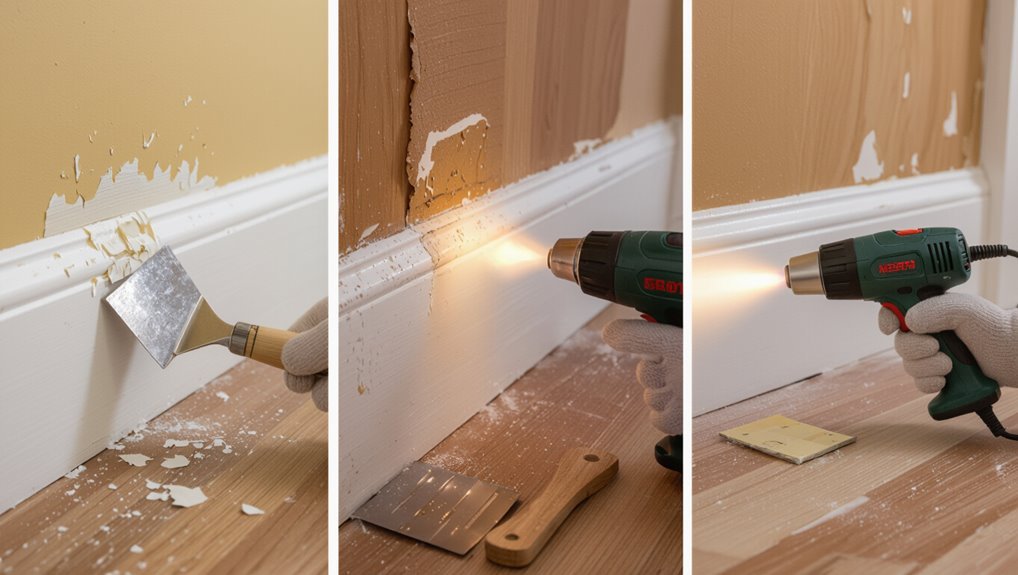
Decide which approach fits your situation: scraping works best for flaking or raised paint. A heat gun softens stubborn layers for easier removal, and chemical strippers tackle multiple coats or detailed profiles.
You’ll weigh scraping alternatives like plastic scrapers or oscillating tools. Control heat application to avoid scorching, and pick a method that preserves molding detail while minimizing sanding or chemical exposure.
Why Molding Needs Different Removal Methods Than Flat Surfaces
Because molding has profiles, grooves, and tight corners, you can’t treat it like a flat wall when removing paint.
You’ll need tools and techniques that match molding characteristics so you don’t damage edges or details.
Paint adhesion varies across raised and recessed areas, so you’ll work slower in grooves, use gentler methods near delicate profiles, and focus on precision instead of brute force.
Should You Strip the Molding or Just Repaint?
Should you strip the molding down to bare wood or just paint over it? You’ll weigh condition, detail, and budget: deep gouges or multiple paint layers call for stripping methods that restore profiles.
If molding’s solid and only cosmetically faded, repainting options—sanding, priming, and a durable topcoat—save time.
Choose based on adhesion, desired finish, and how much original wood you want visible.
Safety First: PPE and Ventilation for Paint Removal
If you opt to strip paint rather than just repaint, protect yourself and your space before you start.
Follow PPE guidelines: wear gloves, eye protection, and a respirator rated for solvents.
Recognize Ventilation importance: open windows, use fans, exhaust outdoors.
Manage Chemical hazards and plan Safe disposal of waste and used rags to prevent fires or contamination.
- Gloves, goggles, respirator
- Fans/exhaust
- Dispose per local rules
Test for Lead Paint Quickly and Safely
Wondering whether the old molding contains lead? Use EPA-approved lead paint testing kits for quick results—follow instructions, wear gloves, and keep dust contained.
If a test is positive, stop sanding or scraping and plan for professional abatement or containment to guarantee safe removal.
Label the area, avoid heat or dry sanding, and contact local health agencies for guidance and disposal rules.
Essential Tools for Mechanical Stripping
Before you start, make sure you’ve got the right hand tools—scrapers, putty knives, sanding blocks, and a utility knife—for mechanical stripping.
You’ll also need protective gear like gloves, a respirator, and eye protection to keep dust and chips off your skin and lungs.
Use the tools correctly and keep your PPE on the whole time.
Basic Hand Tools
You’ll rely on a few sturdy hand tools to remove paint from wood molding cleanly and safely.
Focus on tool selection and maintenance tips so your tools perform well. Choose scrapers, putty knives, and fine steel wool for detail work.
Keep edges sharp, handles secure, and clean residue after use.
- Scrapers and chisels
- Putty knives (various sizes)
- Fine steel wool
Protective Gear Needed
One set of proper protective gear will keep you safe while mechanically stripping paint from wood molding.
You should wear safety goggles and a respirator mask to protect eyes and lungs from dust and particles.
Put on disposable gloves to keep solvents and dust off your skin, and wear protective coveralls to protect clothing and reduce contamination.
Stay safe and work deliberately.
Chemical Strippers: Types and When to Use Each
When paint’s stubborn or layered thick, chemical strippers offer the fastest way to dissolve coatings without sanding down the wood; choosing the right type depends on the paint layer, the molding’s profile, and your safety tolerance.
You’ll match solvent types and application methods to finish age, lead content, and detail level.
Consider:
- Caustic gels for thick layers
- Solvent paste for detailed profiles
- Bio-based for indoor use
Heat Gun vs Infrared: Which Is Gentler on Molding?
When you choose between a heat gun and infrared, think about how each affects the wood’s surface versus how deeply heat penetrates the paint layers.
A heat gun can blister or scorch thin profiles if you linger, while infrared heats more evenly and reaches deeper without concentrated hot spots.
Also weigh safety and finish integrity—infrared usually reduces burn risk, but both require care to avoid damage.
Heat Gun Surface Effects
Decide whether a hot air heat gun or an infrared heater suits your molding by comparing how each transfers heat and how the wood responds:
You’ll favor a heat gun when heat control over surface layers matters, especially with high wood sensitivity.
Match heat application to molding types to avoid scorching or blistering.
- Monitor temperature closely
- Test on hidden sections
- Move continuously to prevent burns
Infrared Penetration Depth
After you’ve compared surface effects, the next step is to look beneath the finish: infrared heaters heat deeper into the wood than hot air heat guns, so they can soften multiple paint layers and underlying adhesives without aggressively scorching the surface.
You’ll appreciate infrared technology’s controlled heat effects: it loosens old coatings more uniformly, letting you remove layers with less scraping and reduced risk of gouging delicate molding profiles.
Safety And Finish Integrity
Although both tools can strip paint, infrared heaters are generally gentler on delicate molding because they warm through the coating and soften layers without blasting the surface.
This means you’re less likely to scorch, blister, or raise the grain. You’ll protect finish preservation and follow safety measures by choosing the right tool and technique.
- Use low settings and patience.
- Test on an inconspicuous area.
- Wear PPE and ventilate.
Protect Floors, Walls, and Fixtures Before You Start
Before you touch the molding, cover nearby floors, walls, and fixtures to prevent dust, paint chips, and solvent splatter from ruining them.
Use heavy-duty drop cloths or rosin paper for floor protection and tape seams.
Drape plastic or cloth over furniture and use fixture covering for outlets, light switches, and hardware.
Secure edges to stop dust and liquids from seeping underneath.
Removing Paint From Simple Flat Molding
Start by identifying whether the paint is latex or oil-based so you pick the right remover and tools.
Prepare the area with drop cloths, tape, and proper ventilation to protect surrounding surfaces.
Use gentle methods first—scraping with a plastic putty knife, sanding lightly, or a mild chemical stripper—so you preserve the wood.
Assess Paint Type
Any effective paint-removal plan begins with identifying the paint type on your flat molding, because the method you choose—chemical stripper, heat, or sanding—depends on whether the finish is latex, oil-based, or lead-containing.
You’ll test adhesion, inspect layers, and note paint characteristics to judge wood compatibility before choosing a safe approach.
- Scrape and test
- Solvent spot check
- Lead test kit
Prepare Work Area
1 clear work zone keeps the job tidy and safe: move furniture away, lay down drop cloths or heavy-duty plastic, and tape edges to protect floors and adjacent trim.
Next, use a prep checklist to gather gloves, goggles, drop cloths, scraper, and cleaning supplies.
Prioritize workspace organization—label containers, keep tools reachable, and guarantee good ventilation so you can work efficiently and safely.
Gentle Removal Techniques
Once you’ve cleared the area and gathered your tools, tackle paint on simple flat molding with gentle methods that preserve the wood’s surface.
Use mild, tested gentle solvents and soft brushes to loosen paint without gouging. Work along the grain and wipe residue immediately.
- Test solvent on scrap
- Scrape gently with a plastic blade
- Finish with fine-grit sanding and a clean rag
Removing Paint From Carved or Detailed Molding
When you’re dealing with carved or highly detailed molding, scraping alone won’t get into the nooks and grooves, so you’ll need a gentler, more precise approach that preserves the profile.
Use soft brushes, cotton swabs, and chemical strippers rated for wood to lift paint without rounding edges. Work slowly along carving techniques and pay attention to detailed finishes, testing small areas before proceeding.
Scraping Step-by-Step With Scrapers and Chisels
Start by choosing the right scraper for the job—a flat or hooked blade depending on paint thickness and molding profile.
Use chisels with controlled, shallow strokes and keep the bevel angled away from the wood to avoid gouging.
Protect the wood surface with a card or backing pad and work slowly to preserve the molding’s detail.
Choose The Right Scraper
Pick a scraper that matches the paint’s condition and the molding’s profile to avoid gouging the wood.
You’ll select among scraper types and consider scraper materials to balance rigidity and blade sharpness. Use the right size for curves, a flexible blade for delicate profiles, and a heavy-duty scraper for thick layers.
- Match blade hardness
- Size to molding profile
- Test on an edge first
Proper Chisel Techniques
Get a comfortable grip and angle your chisel so the bevel faces the paint. Then work in short, controlled strokes to lift layers without digging into the wood.
Use a firm chisel grip, keep the blade angle shallow, and progress with the grain.
Pause to remove loosened paint, resharpen or change blades as needed, and reassess pressure to avoid gouging.
Protect The Wood Surface
Before you scrape, protect the wood surface by laying down thin felt pads or painter’s tape along edges and masking off adjacent areas so the chisel or scraper only contacts painted sections.
You’ll preserve finish detail and guarantee wood preservation through careful surface protection. Work with light, controlled strokes, maintaining blade angle and inspecting progress frequently.
- Use soft pads at corners
- Keep tape tight
- Clean blades often
Using a Heat Gun or Infrared Heater: Step-by-Step
Heat the painted molding systematically with a heat gun or infrared heater, keeping the nozzle moving to soften the paint without scorching the wood.
Adjust heat settings to the paint type and test a small area.
Use gentle application techniques, hold the tool 2–3 inches away, scrape softened paint with a plastic scraper, and work in short passes to avoid burns or warping.
Applying and Removing Chemical Stripper: Step-by-Step
If the heat method didn’t fully lift the paint or you’re dealing with multiple stubborn layers, a chemical stripper can remove residue more thoroughly.
You’ll wear gloves, test a small area, apply with a brush using proper chemical application techniques, wait per directions, then scrape gently and neutralize.
- Work in ventilated space
- Scrape with a plastic tool
- Inspect stripper effectiveness
Using Stripping Gels and Poultices on Vertical Trim
When you’re tackling vertical trim, choose a thick stripping gel or poultice that clings so the solvent stays in contact with the paint long enough to soften multiple layers.
Apply it with a brush, cover it with plastic if recommended to slow evaporation, and work from top to bottom so softened paint drips onto protected surfaces instead of onto already-cleaned areas.
Use careful gel application, monitor poultice effectiveness, manage paint adhesion, and prioritize wood care with gentle scraping and neutralizing.
Wet-Sanding and Dry-Sanding Without Rounding Edges
When you’re sanding moldings, pick grits that remove paint without gouging the wood—start coarser then finish with fine.
Always sand with the grain to keep the surface smooth and avoid cross-grain scratches.
Mask or sandpaper-wrap sharp corners to protect profiles and preserve crisp edges.
Choose Grit Carefully
Because the wrong grit will either leave deep scratches or sand away delicate profiles, pick your abrasive with care.
You’ll use precise sanding techniques and smart grit selection to remove paint while preserving edges. Start coarse for finish removal, move finer for smoothing, and switch to hand-sanding near profiles to avoid rounding.
- Begin with 80–120 grit for heavy paint
- Use 150–220 grit for cleanup
- Hand-sand with 320+ grit
Sand With The Grain
Start by sanding with the grain to keep scratches aligned with the wood’s lines and prevent rounded edges; whether you wet-sand or dry-sand, follow the fibers so your abrasives remove paint without softening profiles.
Use controlled sanding techniques, light pressure, and progressively finer grits.
Check frequently, keep surfaces clean, and prioritize wood preservation to maintain crisp molding detail and avoid overworking edges.
Protect Sharp Corners
If you want to keep molding profiles crisp, protect sharp corners by sanding carefully along the edge lines and avoiding cross-grain scrubbing that rounds them off.
You’ll use light pressure, fine-grit paper, and masking where needed so sharp edges stay intact. Protective measures prevent bevel loss and gouges.
- Sand parallel to the edge
- Use a sanding block
- Mask vulnerable peaks
Using a Rotary Tool or Detail Sander Without Gouging
Grab your rotary tool or detail sander with a fine-grit attachment and work deliberately along the molding’s profile to remove paint without digging into the wood.
Use rotary tool techniques like light passes and low speed, and follow detail sander tips such as keeping the tool flat and moving constantly.
Check progress frequently, stop at raw wood, and switch to hand sanding for final smoothing.
Getting Paint Out of Crevices and Corners
When paint hides in tight crevices and corners, you’ll want the gentlest tool that still reaches—like a soft-bristled toothbrush, micro-scraper, or wooden pick.
For stubborn spots, apply a small amount of a safe solvent with a cotton swab and let it sit briefly before gently scraping.
Always test the solvent on an inconspicuous area first and work slowly to avoid damaging the wood.
Gentle Tool Selection
Choose tools that pry paint from tight crevices without gouging the wood: think soft-bristled toothbrushes, dental picks, rubber-tipped sculpting tools, and plastic putty knives rather than metal scrapers.
Prioritize tool durability and user comfort so you work longer with less fatigue and fewer replacements.
- Start with a toothbrush for loose flakes
- Use dental picks for stubborn edges
- Finish with rubber tips for smoothing
Safe Solvent Techniques
Although solvents can make paint removal in tight crevices much easier, you’ll want to pick milder options and apply them carefully to avoid damaging the wood or finish.
Test solvent selection on an inconspicuous spot, use cotton swabs or small brushes, and work in short bursts.
Blot—not rub—loosened paint, neutralize residue, and follow with gentle sanding if needed to preserve profile and sheen.
Avoiding and Fixing Tear-Out, Burn Marks, and Smears
Because molding is thin and often profiled, it’s easy to gouge, scorch, or smear it while removing paint—but you can prevent and correct those problems with the right tools and techniques.
Because thin, profiled molding scuffs easily during paint removal, use gentle tools and careful technique to avoid damage.
Use gentle scrapers, low-heat tools, and clean cloths to protect the wood. Focus on tear out prevention, burn mark solutions, smear removal, and finish protection.
- Work with the grain
- Test pressure and heat
- Blend and sand carefully
Cleaning Residue and Neutralizing Chemical Stripper
After the paint comes off, don’t leave stripper residue on the molding — it can interfere with stain, finish, or new paint and may keep the wood from sealing properly.
Wipe with mineral spirits or designated neutralizer per label, rinse with clean water, and blot dry.
Use gentle scrubbing pads and follow cleaning techniques for thorough residue removal so finishes adhere and wood isn’t contaminated.
Fix Small Dings and Gouges Before Refinishing
Before you refinish, inspect the molding closely and repair any small dings or gouges so your final finish goes on smooth and looks professional.
You’ll do ding repair and gouge filling as part of surface preparation. Use appropriate putty, sand flush, and clean before finishing.
Refinishing tips:
- Match putty to wood tone
- Sand progressively fine
- Remove dust completely
Choosing a Finish: Stain, Paint, or Clear Coat
Now you’ll decide whether to stain, repaint, or just add a clear coat to your molding based on look and durability.
Stain shows the wood grain and blends with existing finishes, while paint gives solid color and easier color matching.
A clear coat preserves the surface and boosts wear resistance if the original finish already matches.
Stain Vs. Paint
Whether you’re restoring antique trim or finishing new casing, choosing between stain, paint, or a clear coat shapes both the look and maintenance of your molding.
You’ll weigh stain differences — which highlight grain — against paint longevity and color options. Choose based on exposure, style, and upkeep.
- Stain: natural grain emphasis
- Paint: color and protection
- Hybrid: stained plus painted accents
Clear Coat Benefits
A clear coat gives your wood molding a durable, low-maintenance finish that preserves the natural grain while protecting against moisture, stains, and everyday wear.
You’ll appreciate clear coat advantages like fast application, minimal color change, and easy cleaning.
Choose based on finish durability needs—polyurethane for heavy traffic, water-based for low odor—so your molding stays protected without hiding wood character.
Matching Existing Finish
If you’re trying to blend new work into existing molding, start by closely inspecting the current finish—its sheen, color depth, and whether it’s stain, paint, or a clear coat—so you can match materials and application methods rather than guessing.
Choose stain, paint, or clear coat based on finish compatibility and color matching.
Consider:
- Testing small, hidden areas
- Matching sheen and undertone
- Using same application method
Prep Stripped Molding for Staining to Get Even Color
Start by inspecting the stripped molding for raised grain, residue, or uneven sanding—these issues will make stain soak and look blotchy.
Sand smoothly with fine grit, remove dust, and test a sample area.
Use a conditioner for softwoods, follow proper stain application, and compare swatches for color matching.
Wipe excess, let dry, then seal to lock uniform tone.
When to Call a Professional Restorer or Painter
When the job goes beyond your tools, call a professional restorer or painter—especially if the molding has lead paint, extensive water damage, or intricate profiles that need precise matching.
They’ll assess hazards, recommend safe removal or conservation methods, and save you time and costly mistakes.
You should seek molding restoration and a professional evaluation when structural rot, historic value, or hidden mold appear.
- Lead paint concerns
- Complex profiles
- Structural rot or mold
Time-Saving Tips for Long Runs of Molding
Because long runs of molding multiply small inefficiencies, you’ll save hours by planning and working smarter: use time saving techniques like batching, consistent tools, and measured starts so you keep an efficient workflow and avoid rework.
| Step | Tool | Benefit |
|---|---|---|
| Batch | Multi-stripper | Speed |
| Prep | Sand/score | Consistency |
| Route | Workstation | Flow |
| Inspect | Light | Quality |
Eco-Friendly and Low‑VOC Stripping Options
Long runs demand efficiency, but they don’t have to come at the cost of indoor air or the environment. You can choose eco friendly alternatives and low VOC options that strip paint gently, keeping wood safe and air cleaner.
Long runs can be efficient and eco-friendly—choose low-VOC, gentle strippers to protect wood and indoor air
Consider gentle methods that still remove finish without harsh fumes:
- Citrus-based gel stripper
- Water-based solvent remover
- Mechanical scraping with heat gun controls
Cost and Time: DIY vs Hiring a Pro for Molding
If you’re weighing whether to tackle paint removal on molding yourself or hire a pro, focus on the realistic trade-offs in time, tools, and skill.
For a cost comparison, DIY saves labor but adds tool and material expense and learning time.
Hiring shortens the project timeline and guarantees quality, but you’ll pay higher hourly rates and possible cleanup fees.
Maintenance Tips to Keep Restored Molding Looking Good
When you finish restoring molding, a simple routine will keep it looking fresh and prevent future repairs. You should follow molding care basics and revisit restoration techniques occasionally to maintain finish, sealant, and integrity.
- Dust weekly with a soft cloth.
- Touch up chips promptly with matching stain or paint.
- Reapply protective finish every few years as needed.
Troubleshooting: Tear-Out, Burns, Blotchy Stain, and Residue
Even with regular care and timely touch-ups, you’ll sometimes run into repair problems like tear-out from sanding, scorch marks from heat tools, blotchy stain absorption, or leftover residue from old finishes. Use tear out prevention (sharp blades, light passes), burn mark remedies (cooling, light sanding), blotchy stain solutions (preconditioner), and residue removal techniques (solvent, gentle scrubbing).
| Problem | Fix |
|---|---|
| Tear-out | Sharp blade |
| Burns | Light sand |
| Blotch | Precondition |
| Residue | Solvent scrub |
Frequently Asked Questions
Can I Strip Painted Molding While It’s Still Installed?
Yes—you can strip installed molding, but proceed like peeling wallpaper gently. Use paint stripping techniques suited for fixed trim, such as heat, chemical strippers, or wet sanding, and protect surroundings to avoid damage and mess.
Will Paint Removal Methods Damage Nearby Wallpaper or Plaster?
Yes — some paint removal techniques can harm nearby wallpaper or plaster, so you’ll protect surfaces with plastic sheeting, paper, painters’ tape, and gentle methods; test first, work slowly, and avoid excessive moisture or heat near wallpaper protection.
How Long After Stripping Before I Can Finish or Paint Molding?
You can finish or repaint molding once stripping techniques are complete and the surface is fully dry; allow at least 24–48 hours drying time, longer for thick stripper residues or high humidity, then sand and prime as needed.
Can I Reuse Old Molding After Removing Multiple Paint Layers?
Yes — you can reuse old molding after stripping multiple paint layers; like a phoenix reborn, you’ll assess structural integrity, sand for smoothness, stabilize repairs, and guarantee proper molding restoration to promote reliable paint adhesion.
Are There Insurance or Permit Issues for Lead Paint Work in Rentals?
Yes — you’ll face lead paint regulations and insurance requirements for rentals. You’ll need permits, follow rental property compliance rules, notify tenants, use certified contractors, and document disposal to avoid fines, liability, and insurance denial.
Conclusion
You can revive molding without wrecking it — and 85% of homeowners report better results when they remove paint before refinishing. Remember: test for lead, wear PPE, and pick scraping, heat, or a low‑VOC stripper based on the profile and finish. If something goes wrong, stop and reassess; a pro can save time and money. With patience and the right method, your molding will look cleaner, truer, and last far longer.
