
Can You Tile Over a Painted Wall? Preparation Tips Explained
You can tile over a painted wall if you prepare it properly: make sure the paint is well adhered, non‑glossy, and clean, then scuff or sand to create tooth, remove any flaky or chalky areas, and prime with a bonding primer or use a polymer‑modified thinset made for painted surfaces. Test adhesion on a small patch first, fix substrate damage, and use the right tools and grout; keep going and you’ll find step‑by‑step prep, troubleshooting, and cost tips ahead.
Quick Answer: Can You Tile Over Painted Walls?
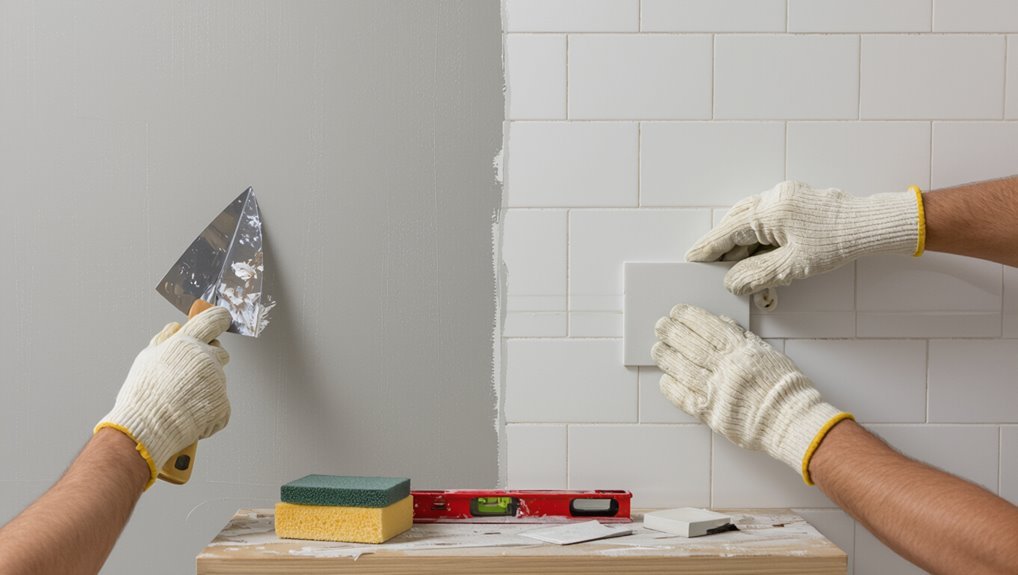
Wondering if you can tile over a painted wall? Yes, but it depends on paint characteristics and proper wall preparation.
You’ll need to guarantee the paint is well-adhered, not glossy, and free of contaminants. Sanding, cleaning, and priming improve bonding.
Use a suitable adhesive and test a small area first to confirm adhesion before tiling the entire surface.
Fast Decision Checklist: When to Tile Over Paint vs. Remove It
How do you decide whether to tile over paint or strip it off first?
Check adhesion, gloss level, and existing damage. If paint is flaking, glossy, or poorly bonded, prioritize paint removal.
Inspect adhesion, gloss, and damage—remove flaking or glossy, poorly bonded paint before tiling.
If it’s matte, well-adhered, and clean, you can often tile after proper surface preparation like sanding, cleaning, and priming.
When unsure, remove questionable layers to guarantee long-term tile adhesion.
How to Check Paint Type and Adhesion
Curious what kind of paint you’re dealing with and whether it’ll hold tile? You should identify paint types—latex, oil, or enamel—by appearance and a solvent rub.
Then perform adhesion tests: tape a 2×2″ crosscut and pull, or press strong tape and yank.
Poor adhesion, flaking, or gummy residue means strip or scuff before tiling to guarantee a durable bond.
How to Inspect the Substrate: Drywall, Plaster, or Cement
Before you start tiling, you’ll want to inspect the substrate—drywall, plaster, or cement—to make sure it’s flat and sound.
Run your hand and a straightedge over the surface to spot dips, bumps, or loose material.
Also confirm the paint is well bonded; anything that flakes or peels needs to be removed or re-prepared before tiling.
Assess Surface Flatness
When evaluating whether you can tile over painted drywall, plaster, or cement, start by checking flatness and integrity—perfectly level surfaces aren’t required, but large bumps, dips, or loose paint will cause problems. You’ll perform a quick surface assessment, note areas needing paint removal, sand high spots, and fill depressions. Use a straightedge to pinpoint unevenness.
| Area | Action |
|---|---|
| Small dip | Fill |
| Large dip | Rebuild |
| High spot | Sand |
| Loose paint | Remove |
| Hairline crack | Fill |
Check Paint Bonding
How well does the paint stick to the wall? You’ll probe drywall, plaster, or cement by scraping, tapping, and using a solvent patch.
Loose or peeling paint means you need paint removal before tiling. For good surface preparation, guarantee sound substrate, repair damaged areas, and sand glossy finishes.
Only bond-rated tile adhesive should be used on properly prepared, firmly adhered surfaces.
Tools and Materials You Need Before You Start
You’ll want a compact kit of reliable tools and quality materials to guarantee your tile job bonds well to a painted wall: choose tile types suitable for vertical use, a notched trowel, quality thinset mortar, spacers, tile cutter, level, and grout.
Include primer or bonding agent rated for varied wall textures, plus safety gear—gloves, goggles, and a dust mask.
Cleaning the Painted Wall for a Better Bond
Before you set tiles, you’ll need to remove any grease or residue with a degreaser or trisodium phosphate solution so adhesives can grip.
If the paint is chalky, scrub and neutralize it with a cleaner designed to remove chalking or sand it lightly and wipe away dust.
Doing these steps guarantees a firmer bond and helps prevent tile failure.
Remove Grease And Residue
Cleaning the painted wall thoroughly is essential because grease, dust, and soap residue can stop tile adhesives from bonding properly.
You’ll do grease removal and residue cleaning with simple steps to guarantee adhesion.
Follow this checklist:
- Wipe with a degreaser
- Rinse with clean water
- Use a mild detergent for spots
- Dry completely with a cloth
- Inspect for remaining film
Neutralize Chalky Paint
If the paint feels powdery under your hand, it’s chalky and will prevent adhesives from sticking, so you need to neutralize it before tiling. You’ll scrub with trisodium phosphate or a mild detergent, rinse, sand lightly, and prime with a bonding primer. Good surface preparation guarantees tiles adhere.
| Tool | Action | Result |
|---|---|---|
| TSP | Scrub | Removes chalky paint |
| Sandpaper | Scuff | Better keying |
| Primer | Seal | Strong bond |
How to Scuff or Sand Paint for Proper Keying
Start by scuffing the painted surface to create a slightly rough texture that helps tile adhesive bond; you’ll want to remove glossy sheen without digging into the substrate. You’ll improve paint texture and follow basic adhesion methods.
Then:
- Use 120–150 grit sandpaper evenly
- Hand-sand glossy spots first
- Vacuum dust thoroughly
- Wipe with a damp cloth
- Inspect for missed shine
When to Use a Primer or Bonding Agent : and Which One
When the painted surface still shows sheen, has stains, or is an oil-based paint, you’ll need a primer or bonding agent to guarantee the tile adhesive grabs and the job lasts.
You should assess adhesion, porosity, and moisture. For slick or glossy finishes, choose a bonding agent; for porous or stained walls, focus on primer selection—stain-blocking or adhesion-promoting primers—to create a stable, uniform substrate.
Choosing the Right Thinset or Adhesive for Painted Walls
Before you pick a thinset, assess the painted surface to make sure the coating is sound and offers enough bonding strength for tile.
If the paint is well-adhered, choose a polymer-modified thinset designed for challenging substrates to improve grip and flexibility.
Test a small area first so you can confirm the bond before tiling the whole wall.
Assess Bonding Strength
Pick a thinset or adhesive that’s formulated for non-porous or painted substrates and verify its bond strength rating—standard mortar for bare drywall won’t cut it on paint.
You’ll check paint compatibility and surface texture before applying.
Consider these factors:
- Manufacturer bond strength specs
- Recommended substrate types
- Open time and cure rate
- Required surface preparation
- Adhesive flexibility ratings
Select Polymer-Modified Thinset
Now that you’ve evaluated bond strength and paint compatibility, focus on a polymer-modified thinset formulated for painted or non-porous surfaces.
You’ll choose thinset types labeled for non-porous substrates or enhanced adhesion. Look for added polymer benefits like improved flexibility and shear strength.
Follow manufacturer instructions for mixing, open time, and coverage, and always use a notch trowel sized to your tile for proper contact.
Tile Layout, Trowel Technique, and Grout Spacing
When you lay out tile over a painted wall, plan your grid and sightlines first so cuts fall in less visible spots and patterns stay balanced; this prevents awkward slivers at edges and guarantees consistent grout joints.
Choose tile patterns and adhesive types suited to substrate, notch size, and tile. Use consistent trowel angle and spacers.
- measure and snap lines
- test layout dry
- pick notch size
- maintain 45° trowel
- keep grout uniform
Tips for Wet Areas and Bathrooms When Tiling Over Paint
Because wet areas demand extra protection, you’ll need to address waterproofing, adhesion, and drainage before you start tiling over paint.
Remove loose paint, apply a bonded waterproof membrane, and use moisture resistance primers or cement boards where needed.
Choose grout and sealants rated for showers, plan tile patterns to shed water, slope surfaces to drains, and test adhesion before finishing.
How to Spot and Fix Delamination, Lippage, and Grout Failure
Watch for paint that flakes or bubbles under tiles—that’s a sign of surface delamination and it’ll weaken the bond.
Check for uneven tile edges (lippage) and loose or crumbling grout, which can trap moisture and cause further failure.
You’ll need to remove loose material, repair or re-bed tiles, and re-grout with a suitable product to restore a stable, watertight surface.
Identifying Surface Delamination
If tiles are popping up, buckling, or showing gaps at the edges, you’ve probably got delamination, lippage, or failing grout—issues that start small but can ruin a job if you ignore them.
Check substrate adhesion, moisture, and previous paint types; proper surface preparation matters.
Look for:
- hollow sound when tapped
- visible cracks under tiles
- loose grout
- uneven tile heights
- peeling paint layers
Addressing Grout And Lippage
When tiles show uneven edges, cracked grout, or a hollow sound, you’re likely dealing with lippage, grout failure, or underlying delamination—and you’ll want to diagnose and fix the root cause before retiling. Inspect, remove loose grout or tiles, clean surfaces, and use proper backerboard and adhesive for lippage prevention and grout maintenance.
| Issue | Fix |
|---|---|
| Hollow tile | Rebond or replace |
| Cracked grout | Remove, reseal |
| Lippage | Shim or reset |
Time and Cost: Remove Paint vs. Prep and Tile Over It
How long will this really take, and how much will it cost you? You’ll weigh cost analysis and time efficiency: removing paint adds labor and disposal, while prepping and tiling over saves time but may need primers or bonding agents.
Decide based on paint condition and budget.
Choose the route that fits your paint’s condition and your budget—trade time for cost wisely.
- Paint removal: more labor
- Prep & prime: faster
- Materials cost
- Tool rental
- Project timeline
Common Mistakes DIYers Make : and How to Avoid Them
Tackle the tiling project knowing the usual pitfalls so you won’t waste time or money: skimping on surface prep, using the wrong adhesive or grout, and ignoring paint condition are the top DIY errors that lead to tiles lifting or grout failing.
You should address DIY pitfalls by fixing surface imperfections, choosing proper materials, matching tool selection to tasks, avoiding adhesion issues, and planning realistic project timelines and budget considerations.
Final Pre‑Tiling Checklist (Measurements, Tools, and Tests)
Before you lay a single tile, run a final checklist that verifies measurements, tools, and test results so you don’t discover costly problems mid-job.
Confirm dimensions, level, and layout to guarantee tiled surface durability and paint compatibility. Check adhesive, spacers, and grout readiness.
- Measure twice, cut once
- Verify wall is plumb
- Test paint adhesion
- Inspect tools
- Mix small adhesive batch
Frequently Asked Questions
Can You Tile Over Painted Exterior Walls Exposed to Weather?
You can, but you’ll need thorough surface preparation and often paint removal where adhesion’s compromised; strip loose paint, clean, prime with a weatherproof bonding primer, and use exterior-rated thinset and sealants to prevent moisture damage.
Will Tiling Over Lead-Painted Walls Require Special Precautions?
Yes — you’ll need special precautions. For example, a renovation crew tested and encapsulated lead paint before tiling. You’ll follow lead paint safety, proper wall preparation, containment, PPE, and certified abatement or encapsulation procedures.
Can Radiant Floor Heating Be Installed Over Tile Laid on Painted Subfloor?
Yes — you can install radiant heating over tile on a painted subfloor, but you’ll face installation challenges: you’ll need proper adhesive, thermal transfer considerations, and to confirm the paint and tile bond and substrate stability beforehand.
How Does Tiling Over Painted Walls Affect Home Resale Value?
Like a weathered charm that divides buyers, tiling over painted walls can boost appeal if done well. You’ll align with resale trends and buyer preferences when tile looks professional, neutral, and complements the home’s overall style and condition.
Are There Tile Warranties That Exclude Installations Over Painted Surfaces?
Yes — many manufacturers void coverage for installations over painted surfaces if paint adhesion isn’t proven. You should check warranty limitations closely, test paint adhesion, and follow manufacturer prep requirements to keep warranty protection intact.
Conclusion
You can tile over painted walls in some cases, but you’ve got to be picky and thorough — like a surgeon, not a slapdash handyman. If the paint’s well-bonded, clean, and not glossy, you can roughen and prime it; otherwise strip to the substrate. Check adhesion, substrate type, and fix damage before you grout. Follow the prep checklist, use the right tools, and don’t rush — good prep is where your tile job lives or dies.
