
How to Prevent Mold in Bedroom: Simple Prevention Tips
Keep your bedroom dry, ventilated, and clean to prevent mold. Inspect for leaks regularly and fix roof, window, or plumbing issues right away. Keep humidity between 30–50% with a hygrometer and use a dehumidifier or exhaust fan after showers or drying clothes. Launder bedding weekly, dry spills promptly, and vacuum upholstery often. Use breathable bedding and washable covers, and call a pro for large or recurring infestations—continue for practical daily and seasonal tips to help.
Quick Plan: 5 Steps to Keep Mold Out of Your Bedroom
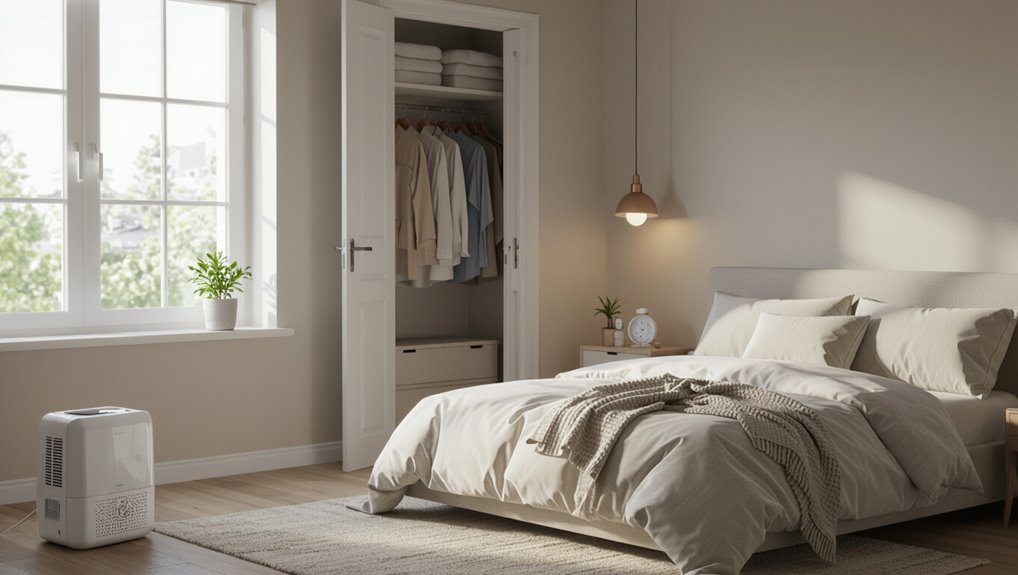
1 quick, practical plan can keep mold from taking hold in your bedroom. You’ll inspect for leaks, boost ventilation, and control humidity with a dehumidifier.
Schedule regular mold detection checks and remove damp fabrics.
Use targeted cleaning tips: scrub visible spots with detergent, dry surfaces promptly, and launder bedding weekly.
Scrub visible mold with detergent, dry surfaces immediately, and launder bedding weekly to keep spores at bay.
Keep airflow steady and address water issues immediately to prevent recurrence.
Quick Answer: How to Prevent Mold in the Bedroom
If you want to stop mold before it starts, act on three things: keep humidity below about 50%, fix water leaks fast, and keep air moving through the room.
Use simple mold prevention techniques: run a dehumidifier or exhaust fan, inspect and repair plumbing, clean spills promptly, and avoid blocking vents.
Check bedroom humidity regularly and ventilate after showering or drying clothes.
Why Bedroom Mold Forms: Causes and Common Signs
Now that you know the basic prevention steps—controlling humidity, fixing leaks, and improving airflow—it’s helpful to understand why mold takes hold in bedrooms and what to watch for.
Mold often appears where moisture, poor ventilation, and organic dust meet. You should check hidden corners, window seals, and bedding.
Use mold prevention strategies and follow bedroom cleanliness tips to spot musty odors, stains, or discoloration early.
How Humidity Levels Affect Mold Growth
Keep indoor humidity between about 30–50% to make your bedroom much less inviting to mold.
You should use ventilation—like exhaust fans or open windows—and a dehumidifier when moisture builds up.
Controlling both humidity and air flow prevents the damp conditions mold needs to grow.
Optimal Indoor Humidity
Because mold thrives in damp air, controlling indoor humidity is one of the simplest and most effective ways you can prevent growth; aim to keep relative humidity between about 30% and 50% to make your bedroom inhospitable to spores while still staying comfortable.
Monitor with a hygrometer, use dehumidifiers, and adopt humidity control methods like moisture-absorbing products to maintain ideal humidity levels consistently.
Ventilation And Moisture
When indoor air can’t circulate, moisture builds up on walls, ceilings, and fabrics, and that trapped dampness creates the perfect environment for mold to take hold. You should use ventilation techniques and install moisture barriers to control humidity, run exhaust fans, and open windows briefly.
| Action | Benefit |
|---|---|
| Vent fans | Dry air |
| Open windows | Exchange air |
| Dehumidifier | Lower RH |
| Moisture barriers | Prevent seepage |
Ideal Bedroom Humidity Range to Prevent Mold
If you want to prevent mold in your bedroom, aim to keep indoor relative humidity between about 30% and 50%; this range limits mold growth while staying comfortable for most people.
You should monitor levels and adjust ventilation or dehumidification for ideal humidity and mold prevention.
- Reduce damp sources
- Use dehumidifiers when needed
- Ventilate after showers
- Dry wet laundry promptly
How to Measure Humidity: Hygrometers and Apps
1 simple tool can make a big difference in spotting moisture problems: a hygrometer or a reliable humidity app.
You’ll compare hygrometer types (analog, digital, smart), use humidity apps for remote checks, apply simple measuring techniques, and watch ideal levels.
Use data tracking and seasonal monitoring to spot trends, adjust ventilation, and prevent conditions that encourage bedroom mold.
Use a Dehumidifier Correctly
Because excess moisture feeds mold, using a dehumidifier correctly can be one of the most effective steps you take to protect your bedroom.
You should set ideal settings, monitor humidity, and perform regular dehumidifier maintenance.
Follow these quick actions:
- Aim for 40–50% RH.
- Empty or set drain line.
- Clean filters monthly.
- Inspect for leaks and proper airflow.
Whole-Room or Portable Dehumidifier: Which to Choose?
Now that you know how to set and maintain a dehumidifier, you’ll want to choose the right type for your space.
For whole-room vs portable dehumidifier types, pick whole-room units for consistent coverage in larger bedrooms and portable for small spaces or spot problems.
Compare capacity, noise, maintenance, and energy efficiency to match room size and budget.
Why Fresh Air Helps Stop Mold
When you bring in fresh air, you dilute indoor moisture and airborne mold spores, making your bedroom a less hospitable place for mold to take hold.
You’ll notice fresh air benefits quickly as improved air circulation lowers humidity and spores.
Fresh air works fast — better circulation quickly cuts humidity and reduces airborne mold spores.
Try simple actions:
- Open doors briefly
- Use a fan to move air
- Remove damp fabrics promptly
- Air out bedding regularly
How to Use Windows and Vents to Improve Airflow
Although windows and vents might seem basic, they’re your most effective tools for keeping air moving and moisture down in the bedroom.
Use window treatments that allow natural ventilation and fresh air while keeping thermal insulation.
Optimize vent placement and airflow techniques to improve air quality.
Make seasonal adjustments, balance climate control with open windows, and maintain moisture barriers to prevent damp spots.
When to Run an Exhaust Fan in the Bedroom?
You should run an exhaust fan any time humidity spikes—after showering, drying clothes, or if you notice condensation.
Aim for 20–30 minutes after the moisture source ends, or use a humidity-sensing timer to shut off automatically.
Prefer running fans during and shortly after activities that raise humidity, especially in cooler months when mold risk is higher.
When To Use
How often should you run an exhaust fan in the bedroom? Use it whenever moisture or mold growth indicators appear to support mold prevention strategies.
Run the fan during and after activities that raise humidity.
- After showering nearby
- When drying clothes indoors
- If condensation forms on windows
- When you detect musty odors or visible dampness
Duration And Timing
Now that you know when to run a fan, focus on how long and at what times to operate it: run the exhaust fan during any high-humidity event and for 20–30 minutes afterward to clear lingering moisture, and consider running it on a low setting for an hour in the morning if windows show overnight condensation or whenever you notice musty smells.
| Event | Duration |
|---|---|
| Shower/steam | 20–30 min |
| Morning condensation | 60 min |
| Musty odor | Until cleared |
Use these mold prevention techniques and timing strategies consistently.
Fan Placement to Prevent Mold and Damp Spots
When condensation or stagnant air settles in corners and behind furniture, placing fans strategically keeps surfaces drier and cuts mold risk; aim airflow across moisture-prone areas, not directly at people, so damp spots evaporate faster and stay dry.
Use correct fan orientation and airflow direction to move air efficiently.
- Point toward corners
- Angle beneath windows
- Clear blocked vents
- Combine with open doorways
Heating Strategies That Reduce Condensation
Keep your bedroom at a steady, moderate temperature to prevent warm moist air from condensing on cold surfaces.
Use gentle air circulation—like a low fan or a radiator-convector—to spread heat evenly and stop cold spots.
Those two steps together cut down on condensation and make mold less likely.
Maintain Consistent Indoor Temperature
Although outdoor temperatures swing, maintaining a steady indoor temperature helps prevent the surface cooling that leads to condensation and mold growth.
You should use temperature control and make seasonal adjustments to avoid big swings.
Try these tips:
- Set a consistent baseline thermostat
- Use programmable schedules
- Insulate windows and doors
- Avoid letting rooms cool overnight too much
Improve Bedroom Air Circulation
Circulate air regularly to reduce cold spots and surface condensation that feed mold; you can do this by combining modest, consistent heating with targeted airflow—use low settings on radiators or baseboard heaters, run ceiling or box fans on a slow speed, and open doors briefly to balance temperatures between rooms.
Use simple airflow techniques and guarantee ventilation systems are maintained so you keep humidity low.
How to Prevent Cold-Wall Condensation in Winter
When outdoor temperatures drop and indoor humidity stays high, you’ll often see condensation form on the coldest walls; preventing that means managing both surface temperature and moisture levels.
You can reduce cold-wall condensation by improving cold wall insulation and addressing thermal bridging.
Try these steps:
- Add insulation or thermal breaks
- Use a dehumidifier
- Improve air circulation near walls
- Keep bedroom temperature steady
Check for Leaks: What to Inspect Regularly
Check your ceiling and walls for stains, peeling paint, or soft spots that could mean hidden leaks.
Inspect windows and frames for gaps, warped seals, or condensation that lets moisture in.
If you spot any issues, fix them promptly to keep mold from getting a foothold.
Inspect Ceiling And Walls
Anyone can spot trouble early by inspecting ceilings and walls for leaks at least monthly; focus on discoloration, peeling paint, bubbling plaster, or dark spots that feel damp.
Use mold inspection techniques to trace ceiling moisture sources and act fast.
Check for:
- soft spots when pressed
- streaks or water lines
- musty odors near stains
- warped drywall edges
Check Windows And Frames
While you sleep, windows and their frames can quietly let in moisture that feeds mold, so inspect them regularly for signs of leaks.
Check seals, caulking, and drainage paths; feel for dampness and look for discoloration.
Perform routine window maintenance and prompt frame inspection after storms or temperature shifts.
Replace worn weatherstripping and repair gaps to stop water intrusion and discourage mold growth.
Spot Hidden Water Damage Behind Walls
If you suspect mold or musty smells but can’t see any leaks, you’ll need to look for signs of hidden water damage behind walls before it spreads—listen for dripping, feel for soft or cool drywall, and sniff for persistent damp odors.
- Check for water stains and bulging paint during wall inspections.
- Track moisture sources and perform leak detection.
- Note mold indicators like discoloration or musty smell.
- Consider drywall assessment and plumbing issues promptly.
Fixing Common Leak Sources: Roofs, Plumbing, and Windows
Start by checking your roof for missing shingles and flashing gaps so you can stop water before it reaches your ceiling.
Next, inspect window frames and reseal or replace deteriorated caulking to keep rain and condensation out.
Fixing these leak sources quickly prevents the damp conditions that let mold take hold.
Roof Leak Repairs
Because water finds the smallest gaps, fixing roof leaks should be a priority to keep mold out of your bedroom and home.
Inspect attic, shingles, flashing, and vents for signs; use roof material options suited to your climate and prioritize leak detection. Act quickly to patch or replace damaged areas.
- Check shingles
- Seal flashing
- Clear gutters
- Hire pros for complex repairs
Window And Frame Sealing
Windows and their frames are common entry points for moisture, so check seals and weatherstripping regularly and repair gaps you find. Do window maintenance and frame inspection monthly, use proper sealing techniques, caulking methods, and weather stripping. Choose paint options and moisture barriers suited to frame materials to prevent mold.
| Task | Material | Frequency |
|---|---|---|
| Inspect | Frames | Monthly |
| Seal | Caulk | As needed |
| Paint | Barrier | Every few years |
Door and Window Sealing Tips to Keep Moisture Out
If you seal gaps around doors and windows and maintain the weatherproofing, you’ll block a major pathway for outdoor moisture and reduce the chance of mold growth indoors.
Use window insulation and weather stripping; fix air leaks with caulking techniques. Add door sweeps and draft stoppers. Consider moisture barriers.
- Inspect frames regularly
- Recaulk worn seals
- Replace damaged sweeps
- Test for drafts
How to Dry Wet Items Quickly to Stop Mold
If clothes get wet, hang them up and start drying them right away to prevent mildew from taking hold.
Speed up airflow with a fan, dehumidifier, or by opening windows when outdoor humidity is lower.
Quick drying is the simplest way to stop mold before it starts.
Dry Clothes Immediately
Act quickly when clothes get wet—drying them within 24 hours keeps mildew spores from taking hold and stops musty odors before they start.
Use effective drying techniques and avoid piling damp laundry in laundry storage. Do these steps:
- Wring and reshape items before drying
- Use a high-spin cycle or towel press
- Hang garments on hangers
- Dry delicates flat on a rack
Speed Up Airflow
Once you’ve removed excess water from clothing, speeding up airflow helps finish the job and prevents mold from settling in.
Hang items near a fan or open window, rotate garments for even drying, and use a dehumidifier if humidity’s high.
These airflow techniques and ventilation tips cut drying time and stop spores from taking hold, keeping your bedroom fresher and mold-free.
Best Laundry Habits for Bedroom Textiles
Everyone can benefit from a simple laundry routine that keeps bedroom textiles fresh and mold-free:
- Use effective laundry detergents to remove oils and spores.
- Skip heavy fabric softeners that can trap moisture; use vinegar as an alternative.
- Set a regular washing frequency for sheets, pillowcases, and curtains.
- Prioritize quick, thorough drying methods like high-heat dryer or sun to prevent dampness.
Mattress Care: Cleaning, Drying, and Protective Covers
You should clean your mattress regularly by vacuuming and spot-treating stains to remove dust, skin cells, and moisture that invite mold.
After any cleaning, let the mattress dry completely—use fans or sunlight when possible—to prevent trapped dampness.
Also use a breathable, waterproof mattress protector to block spills while allowing airflow to keep the core dry.
Regular Mattress Cleaning
Keep your mattress fresh by cleaning and drying it regularly and using a protective cover to block moisture and spores.
You should adapt care to mattress types and set a cleaning frequency based on use.
Follow these steps:
- Vacuum surfaces monthly
- Spot-treat stains promptly
- Air out in sunlight when possible
- Thoroughly dry before remaking the bed
Use Breathable Mattress Protectors
A breathable mattress protector lets air pass while blocking moisture and mold spores, so you’ll cut damp buildup without trapping heat.
Choose protective covers made for your mattress materials—cotton, wool, or specialized mesh—to maintain airflow and repel spills.
Wash and dry protectors regularly, inspect for wear, and replace them if they compress or develop impermeable coatings that can trap moisture and foster mold.
Bedding Choices That Resist Mold and Mildew
When humidity’s high, choosing the right sheets and mattress covers makes it much harder for mold and mildew to take hold.
Pick bedding that dries fast and uses mold resistant materials, and follow regular bedding maintenance to prevent spores.
Consider:
- Cotton or linen sheets
- Moisture-wicking mattress protectors
- Quick-dry synthetic blends
- Washable pillow encasements
Upholstery and Curtains: Cleaning Frequency and Methods
Beyond bedding, soft furnishings like sofas, armchairs, and curtains can trap moisture and harbor mold if you don’t clean them regularly.
For upholstery maintenance, vacuum weekly, spot-clean spills immediately with appropriate cleaners, and deep-clean every 6–12 months.
For curtain care, launder or steam monthly if near windows, wipe blinds, and air fabrics regularly to reduce humidity and prevent mold growth.
Closet Organization to Prevent Mold on Clothes
If you keep your closet dry and well-organized, you’ll greatly reduce the chance of mold developing on clothes.
Use smart closet organization to protect garments:
Use smart closet organization to protect garments: ventilate, seal delicates, rotate seasonally, and follow fabric care to prevent mold.
- Guarantee good closet ventilation and airflow
- Use moisture barriers like sealed bins for delicate clothing storage
- Practice seasonal rotation to avoid long-term dampness
- Follow proper fabric care to keep items mold-free
How to Store Seasonal Clothing to Avoid Mildew
Storing seasonal clothes properly prevents mildew and keeps garments ready to wear; start by cleaning everything—wash or dry-clean items and make certain they’re fully dry before packing.
Use breathable garment bags, acid-free tissue, and cedar or silica packets for clothing storage.
Store in a cool, dry, ventilated spot off the floor.
Check periodically for dampness to guarantee ongoing mildew prevention.
Flooring Considerations: Carpets vs Hard Floors and Mold Risk
Think about how your flooring handles moisture: carpet can trap damp and heat in the fibers, giving mold a place to grow.
Hard floors like wood, tile, or laminate let spills and humidity dry faster, reducing mold risk.
You’ll want to weigh comfort and aesthetics against how easily each surface can be kept dry.
Carpet Moisture Trapping
While carpets can make a bedroom feel cozy, they also trap moisture and organic debris that feed mold, so you should weigh comfort against risk when choosing flooring.
Choose carpet materials wisely and use moisture barriers under padding.
Consider maintenance and ventilation:
- Vacuum and deep-clean regularly
- Address spills immediately
- Replace damp padding
- Monitor humidity levels
Hard Floor Drying
Choose hard flooring and you’ll cut mold risk by eliminating the moisture-holding layer carpets create; solid surfaces like tile, vinyl, and sealed hardwood let spills and condensation dry faster and don’t trap organic debris that feeds mold.
You should establish routine hard floor maintenance, use absorbent mats sparingly, and install proper moisture barriers under floors.
Wipe spills immediately and ventilate to keep substrates dry.
How to Clean and Treat Carpet Dampness Safely
If your carpet feels damp, act quickly to stop mold from taking hold: You’ll remove surface water, speed drying, and limit moisture absorption during carpet cleaning.
Follow these steps:
- Blot excess water with towels and a wet/dry vacuum.
- Lift padding if soaked; replace if necessary.
- Use fans and dehumidifiers to dry thoroughly.
- Apply an EPA-approved antimicrobial per directions.
Wall Finishes and Paint Options That Resist Mold
Once you’ve stopped carpet dampness and dried the room, protect walls by selecting finishes and paints formulated to resist mold growth. Use mold resistant paint and breathable, washable finishes; add moisture barriers where needed to block seepage. Choose semi-gloss or satin for easy cleaning. Compare options:
| Finish | Benefit | Use |
|---|---|---|
| Semi-gloss | Washable | High humidity |
| Primer-sealer | Blocks moisture | Before painting |
| Mold-grade paint | Antimicrobial | Bathrooms/bedrooms |
When to Use Mold-Resistant Drywall and Insulation
If your bedroom is prone to dampness, water leaks, or poor ventilation, choose mold-resistant drywall to reduce fungal growth on walls.
Pairing it with mold-resistant insulation helps prevent spores from colonizing inside wall cavities and improves long-term indoor air quality.
These materials cost a bit more up front but cut remediation needs and protect your health and home value over time.
When To Choose Mold-Resistant Drywall
When you’re building or renovating a bedroom that’s prone to dampness—like one over a garage, a basement room, or a space with limited ventilation—choose mold-resistant drywall and insulation to reduce the risk of mold growth and save on future repairs.
Use mold resistant materials and correct drywall installation; consider:
- High-moisture zones
- Poor ventilation
- Frequent condensation
- Past mold issues
Benefits Of Mold-Resistant Insulation
Because bedrooms trap moisture in tight framing and behind finishes, choosing mold-resistant insulation gives you a proactive way to keep spores from taking hold.
You’ll reduce allergen growth, improve indoor air quality, and protect structural elements.
Compare insulation types—fiberglass with coated facings, foam board, or mineral wool—and select mold resistant materials suited to your climate and ventilation to minimize future remediation.
Houseplants and Mold: Which Plants Help and Which Attract Moisture
Curious which houseplants really help reduce mold and which ones make humidity worse?
You’ll learn plant selection for indoor gardening: air purifying plants and mold resistant species lower spores, while some decorative plants increase moisture retention.
Choose for humidity control and houseplants benefits.
Choose houseplants strategically to control humidity and enjoy their air-purifying, mold-reducing benefits indoors.
Quick picks:
- Snake plant (mold resistant species)
- Peace lily (can raise moisture)
- Spider plant (air purifying plants)
- Succulents (low moisture retention)
Electronics and Moisture: Protecting Gear From Damp
If your bedroom gets damp, electronics can suffer corrosion, short circuits, and degraded performance. So it’s important to keep gear dry and ventilated.
Store devices off the floor, use sealed containers or moisture barriers for spare cables, and run a small dehumidifier or desiccant packs nearby.
Unplug unused equipment, improve airflow around gear, and follow electronics safety guidelines to reduce damage risk.
Maintain Bedroom HVAC Components to Lower Mold Risk
When you keep bedroom HVAC components clean and functioning, you cut mold-friendly moisture and spores at their source.
You should prioritize HVAC maintenance and regular system inspections to guarantee moisture control and energy efficiency.
Key actions:
- Schedule filter replacement and component cleaning
- Improve air circulation and airflow optimization
- Consider ventilation upgrades and insulation checks
- Monitor humidity and ventilation for mold prevention
Air Purifiers: Do They Prevent Mold Spores Indoors?
You can use an air purifier to capture airborne mold spores—HEPA filters and UV-C units can reduce spore counts in the room.
But purifiers don’t stop mold growth on damp surfaces or fix humidity issues, so they’re only one part of control.
You’ll still need to control moisture and clean affected areas to prevent mold from returning.
How Air Purifiers Work
An air purifier traps and sometimes destroys airborne particles, including some mold spores, by pulling room air through filters or active-cleaning technologies so fewer contaminants circulate where you sleep.
You choose different air purifier types and follow filter maintenance for best results.
Consider features that match room size and allergen needs:
- HEPA filtration
- Activated carbon
- UV-C or ionizers
- CADR rating
Limitations For Mold Control
Although air purifiers can cut airborne mold spores, they don’t solve the root causes of indoor mold and have clear limits for control.
You should use them as one tool among mold prevention strategies, not a standalone fix.
They won’t remove spores from surfaces, fix leaks, or change environmental factors like humidity and ventilation, so address those sources directly.
Natural vs Chemical Cleaners for Mold-Prone Areas
When deciding how to clean mold-prone spots in your bedroom, weigh natural options like vinegar and baking soda against chemical fungicides based on effectiveness, safety, and the surface you’re treating.
You’ll balance natural cleaning and chemical cleaners for mold removal, considering cleaning effectiveness, surface protection, eco friendly options, safety concerns, application methods, long term solutions, and cost comparison.
- Safety concerns
- Application methods
- Cleaning effectiveness
- Cost comparison
Safe DIY Mold Removal Steps for Small Patches
If you spot a small mold patch, act quickly and safely: wear gloves, an N95 mask, and goggles, ventilate the room, and isolate the area with plastic sheeting or closed doors to prevent spores spreading while you clean. Gently scrub with detergent, dry thoroughly, and discard contaminated materials. For patch treatment and mold removal consider:
| Step | Tool | Result |
|---|---|---|
| Clean | Cloth/sponge | Remove surface |
| Disinfect | Cleaner | Kill spores |
| Dry | Fan | Prevent return |
| Dispose | Bag | Safe removal |
When to Call a Professional for Mold Remediation
Because small patches can be handled safely, call a professional when the mold covers more than about 10 square feet, returns after cleaning, or appears in your HVAC system, structural components, or behind walls — or anytime you have health symptoms that worsen around the mold.
A pro will do mold assessment, mold testing, professional inspection, and explain remediation options, containment strategies, safety precautions, insurance coverage, and the restoration process.
- Get a professional inspection
- Confirm with mold testing
- Review remediation options and containment strategies
- Check insurance coverage and restoration process
Health Symptoms Linked to Bedroom Mold Exposure
Having a professional assess and remediate mold can stop large infestations, but you’ll still want to know how mold exposure might affect your health.
You may notice allergy triggers causing sinus problems, respiratory issues, asthma attacks, skin irritations, or fungal infections.
Mold can alter immune responses, cause chronic fatigue, provoke sleep disturbances, and even produce subtle cognitive effects, so monitor symptoms and act quickly.
Special Considerations for Allergy Sufferers and Asthmatics
If you have allergies or asthma, controlling indoor humidity and using hypoallergenic bedding can cut down on mold and irritants that trigger symptoms.
Keep relative humidity below 50% with dehumidifiers or proper ventilation, and dry damp areas promptly.
Choose tightly woven, washable mattress and pillow covers to reduce allergen buildup.
Reduce Indoor Humidity
Lowering indoor humidity is one of the most effective steps you can take to keep mold spores from settling and to reduce triggers for allergy and asthma symptoms.
Use practical humidity control methods and moisture absorption materials to protect sensitive lungs.
- Run dehumidifiers in damp rooms
- Ventilate during showers and cooking
- Use silica or desiccant packs where needed
- Fix leaks promptly
Choose Hypoallergenic Bedding
Because allergens and dust mites hide in pillows, mattresses, and linens, choosing hypoallergenic bedding is one of the simplest, most effective steps you can take to reduce symptoms.
Pick pillows and mattress covers made from mold resistant fabrics, and avoid down or heavy wool.
Wash sheets weekly, follow bedding maintenance guidelines, and dry completely to limit moisture that feeds mold and dust mites.
Cheap Upgrades Under $200 That Cut Mold Risk
When you invest a little smartly—think dehumidifiers, blackout curtains, or a humidity monitor—you’ll cut mold risk without blowing your budget.
You can choose affordable solutions and simple DIY upgrades to control moisture and airflow.
Try these low-cost options:
- Small plug-in dehumidifier
- Hygrometer/humidity monitor
- Thick blackout curtains
- Weatherstripping for windows and doors
Seasonal Checklist to Keep Your Bedroom Mold-Free
Those small upgrades are a great start, but keeping mold out of your bedroom takes regular seasonal attention too. Schedule seasonal inspections, rotate bedroom plants to prevent overwatering, check moisture barriers, and refresh cleaning routines. Follow this quick checklist:
| Task | Season | Frequency |
|---|---|---|
| Inspect vents | Spring | Quarterly |
| Check barriers | Fall | Annually |
| Clean fabrics | Winter | Quarterly |
| Plant care | Summer | Weekly |
Quick Daily Habits That Prevent Mold Buildup
If you make a few small habits part of your daily routine, you’ll dramatically cut the chance of mold taking hold in your bedroom.
Use simple mold prevention strategies and stick to daily cleaning routines to keep surfaces dry and air moving.
- Open a window for 10–15 minutes
- Wipe damp spots immediately
- Shake and air bedding daily
- Keep clutter off floors and vents
Track Bedroom Humidity and Mold Spots: Simple Logs & Apps
Keeping up daily habits is great, but you also want a simple way to spot problems early — tracking humidity and mold locations does that.
Use a small hygrometer or smart sensor for humidity tracking and log readings daily. Photograph suspect areas and note dates for mold detection.
Free apps or a spreadsheet make trends obvious, so you can act before growth spreads.
Common Myths About Bedroom Mold, Debunked
Wondering what’s true about bedroom mold? You’ll spot common mold misconceptions and bedroom myths that hide risks.
Don’t assume visible patches are the only issue or that bleach fixes every problem. Check facts, act early, and prevent spread.
Don’t assume surface spots are all there is—bleach isn’t a cure. Learn facts, act early, stop spread.
- Only visible mold is dangerous
- Bleach kills all mold
- Drying once prevents return
- Cold prevents growth
Frequently Asked Questions
Can Pets Increase Mold Risk in the Bedroom?
Yes — pets can increase mold risk in the bedroom. You’ll need strict pet hygiene, wash bedding often, and keep air circulation steady. Vacuum dander, dry damp areas quickly, and limit pets on soft furniture.
Do Humidifier Types (Warm Vs Cool Mist) Affect Mold Growth?
You’ll find warm versus cool mist doesn’t dramatically change mold risk; it’s humidifier maintenance and controlling moisture levels that matter most. Keep filters clean, use a hygrometer, and don’t let humidity get out of hand.
How Long Can Mold Spores Survive on Soft Fabrics?
Mold spores can survive on soft fabrics weeks to years depending on moisture and nutrients; you’ll see growth within 24–48 hours if damp. Fabric susceptibility and the mold lifecycle dictate persistence, so dry and clean promptly.
Are Scent Diffusers or Essential Oils Linked to Mold Problems?
Scent diffusion and essential oil use aren’t inherently linked to mold, but if diffusers add excess moisture or residue you could encourage growth; clean devices regularly, use appropriate oils, and avoid over-humidifying enclosed spaces to prevent mold.
Do Smart Home Sensors Accurately Detect Mold-Prone Conditions?
Yes — smart sensors can accurately detect mold-prone conditions: they monitor humidity, temperature, and VOCs, so you’ll get reliable mold detection alerts and humidity monitoring insights, but they can’t confirm visible mold without inspection.
Conclusion
You can prevent bedroom mold without major expense or hassle—daily habits and simple fixes make a big difference. Even if you think your room’s too small or the problem’s already started, act now: reduce humidity, improve airflow, clean visible spots, and use a hygrometer or dehumidifier as needed. These steps stop mold from spreading and protect your health, so don’t delay—small, consistent efforts keep your space fresh and safe.
