
How to Fix a Dried Paint Brush and Reuse It Again
You can usually save a dried paint brush by soaking it in the right solvent, then combing and reshaping the bristles. For latex or water-based paints, soak in warm, soapy water or simmer vinegar for stubborn gunk, massage the bristles, rinse well, and finish with a cold rinse. For oil-based paints, use mineral spirits or paint thinner and soak longer. Trim any splayed tips, condition the bristles, and store properly — keep going for detailed tips and alternatives.
Can This Dried Paint Brush Be Saved?

Wondering if that crusty brush in your shed is worth rescuing? You can often revive stiff bristles with proper paint care—soak in appropriate solvent, gently comb, and reshape while damp.
Inspect for shredded ferrules or loose bristles; those mean replacement. If bristles recover and the handle’s sound, you’ll restore performance and extend brush longevity, saving money and reducing waste.
Quick Step-By-Step for Overnight-Dried Brushes
If your brush dried overnight, you can usually bring it back with a few targeted steps:
- Soak bristles briefly in solvent appropriate for the paint, working loose debris gently to preserve shape.
- Comb bristles with a brush comb or fine-tooth tool, removing clumps and restoring alignment.
- Rinse, reshape, and let dry flat.
These steps aid brush maintenance and improve brush longevity.
Warm-Water Method to Soften Dried Brush Paint
Start by running warm (not hot) water into a bowl so it’s comfortable to the touch, then stir to even the temperature.
Gently submerge only the bristles and let them soak for a few minutes to soften the paint without wetting the ferrule.
After rinsing, carefully reshape the hairs with your fingers and lay the brush flat or hang it to dry.
Warm Water Preparation
One simple way to loosen dried paint is to soak the brush in warm water: the heat softens the paint’s binder and lets the bristles relax so you can comb out residue more easily.
Use warm water benefits and proper brush soaking techniques by prepping temperature, container, and time:
- Use 100–120°F water.
- Choose a heat-safe jar.
- Soak 15–30 minutes.
Gentle Bristle Soaking
After soaking, gently work the bristles while they’re still warm to encourage softened paint to loosen without damaging the tuft. You’ll use gentle soaking to protect bristle health, massaging tips with a soft comb or fingers until paint releases. Rinse and repeat short cycles; avoid harsh scrubbing to preserve shape and longevity.
| Step | Action |
|---|---|
| 1 | Warm soak |
| 2 | Massage |
| 3 | Rinse |
| 4 | Repeat |
Reshape And Dry
While the bristles are still pliable from the warm soak, reshape the tuft with your fingers or a soft comb so it dries in the correct profile; work quickly but gently to align stray hairs and press the ferrule to remove excess water.
You’ll use reshape techniques and bristle care to preserve shape and longevity.
- Smooth and align fibers.
- Spin and blot gently.
- Air-dry flat or hanging.
Break Down Water-Based Paint With Dish Soap

Mix a warm, soapy solution in a jar and soak the brush to loosen water-based paint.
Then you’ll gently massage the bristles with your fingers or a brush comb to break up the softened paint.
Rinse, repeat as needed until the water runs clear.
Warm Soapy Solution
1 simple solution is to soak the brush in warm, soapy water: the heat and dish soap break down water-based paint so you can work it out from the bristles.
You’ll protect bristles and improve brush maintenance while restoring flexibility. After soaking, rinse thoroughly and reshape.
- Use moderately warm water.
- Agitate gently to loosen paint.
- Rinse until clear.
Gentle Bristle Massage
Gently massage the bristles with a few drops of dish soap and warm water to work softened paint out from the ferrule toward the tips; use your fingers or a soft brush comb and small, repeated motions so you don’t splay or damage the hairs. Focus on bristle care and brush maintenance to restore flexibility.
| Action | Effect |
|---|---|
| Soap drops | Breaks paint |
| Warm water | Softens |
| Finger strokes | Removes buildup |
| Comb | Aligns hairs |
| Pat dry | Preserve shape |
Rinse And Repeat
After you’ve loosened and aligned the bristles, rinse the brush under warm running water while working a few drops of dish soap through the hairs; repeat the rinse-and-soap cycle until the water runs clear and no paint residue remains.
You’ll improve brush maintenance with consistent cleaning techniques and gentle agitation.
- Use warm water to soften paint.
- Work soap into the ferrule.
- Finish with a cold rinse to set bristles.
Loosen Stubborn Water-Based Paint With Vinegar
Soak the brush in plain white vinegar to break down stubborn water-based paint buildup. You’ll see softened bristles and loosened clumps; vinegar benefits include mild acid action aiding paint removal without harsh solvents. Agitate gently, comb bristles, and rinse. Imagine textures:
| Vinegar | Bristles |
|---|---|
| Warm | Frayed |
| Bubbling | Softened |
| Clear | Separated |
| Mild | Ready |
Soaking Times for Brushes and Paint Types
When you’re rescuing a dried brush, soak times vary by paint type: water-based paints usually loosen in a few hours to overnight with warm soapy water.
Oil-based paints can take several hours to days in mineral spirits or paint thinner, depending on how baked-on they are.
For specialty finishes like epoxy, lacquer, or enamel, use the recommended solvent and expect longer or multiple soaks to fully restore the bristles.
Water-Based Paint Soak Times
For most water-based paints, you’ll need only a short soak to loosen dried bristles: 15–30 minutes usually softens light film and rehydrates synthetic brushes, while tougher clumps may require an hour or two.
Adjust water temperature and soaking duration for best results. Try these steps:
- Warm water, 15–30 minutes for light buildup.
- Hotter water, up to 60–120 minutes for heavy clumps.
- Rinse and reshape bristles, repeat if needed.
Oil-Based Paint Duration
Water-based cleanups are quick, but oil-based paints need more patience and different solvents.
You’ll soak brushes in mineral spirits or paint thinner; fresh oil paint may release in a few hours, but hardened layers can require overnight or several days with periodic agitation.
Proper cleaning improves brush longevity, so don’t rush—repeat solvent changes until bristles are clean and flexible.
Specialty Finishes And Solvents
Specialty finishes—like lacquer, shellac, varnish, and polyurethane—each demand different solvents and soaking times, so you’ll match the solvent to the finish and monitor the brush rather than rely on fixed hours.
You’ll consider solvent compatibility with specialty paints, test small sections, and avoid overheating.
- Lacquer: short soak, clean quickly.
- Shellac: alcohol-based, moderate soak.
- Varnish/poly: mineral spirits, longer soak.
Remove Dried Oil Paint With Mineral Spirits
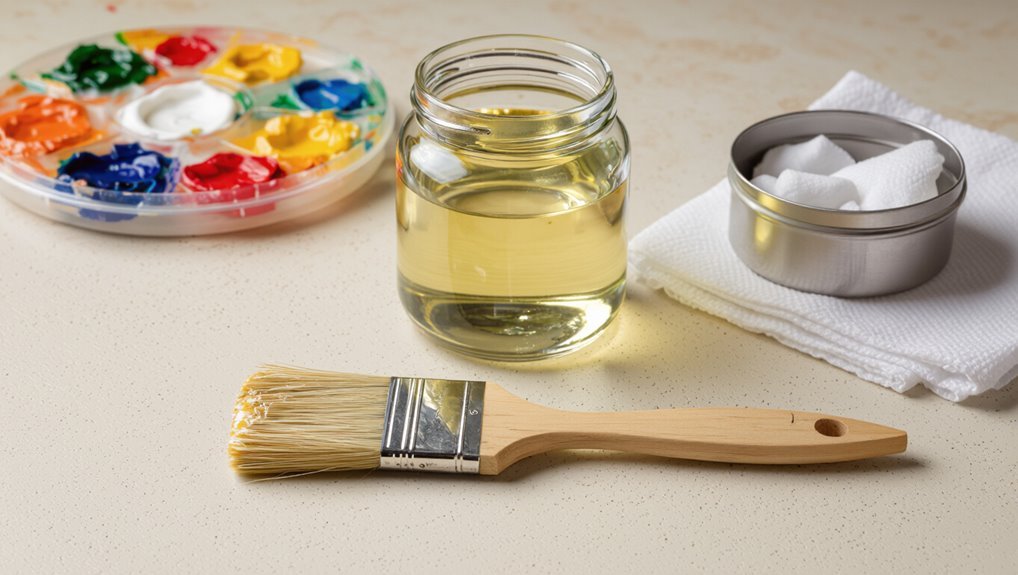
If your oil paint brush has hardened, mineral spirits can dissolve and loosen the dried paint without shredding the bristles. You’ll soak the tip, agitate gently, and repeat until softened. This practical paint removal techniques approach supports quick brush restoration methods and preserves shape. Rinse, reshape, and let dry.
| Step | Image |
|---|---|
| Soak | Bristles immersed |
| Agitate | Paint loosens |
| Rinse | Cleaned brush |
Paint Thinner or Mineral Spirits: Which to Use?
Wondering whether to reach for paint thinner or mineral spirits? You’ll weigh solvent strength, odor, and safety.
Use a paint thinner comparison to pick the gentler option; test on a stray bristle. Mineral spirits effectiveness shines on oil-based paints with lower fumes and better brush care.
Consider:
- Solvent strength versus gentleness
- Drying time and smell
- Safety and disposal
Remove Enamel and Lacquer From Brushes
First, identify the brush type so you know if the bristles are natural or synthetic.
Then choose a solvent that’s safe and effective for enamel or lacquer—typically lacquer thinner for lacquer and stronger solvents for cured enamel.
Finally, use the solvent to soften the finish, work out the residue, and reshape the bristles to restore the brush.
Identify Brush Type
Before you try to clean a stiff brush, identify its type—natural-hair, synthetic, or a blend—because enamel and lacquer behave differently on each and require different solvents and techniques.
You’ll inspect brush features and bristle types to decide the right approach.
Consider these factors:
- Feel and flexibility of bristles.
- Ferrule and handle construction.
- Residue hardness and sheen.
Choose Suitable Solvent
When you’re tackling enamel or lacquer on a dried brush, pick a solvent that matches the paint chemistry and the bristle material—acetone and lacquer thinner break down lacquer quickly, while mineral spirits and paint thinner work better for oil-based enamels and are gentler on natural-hair brushes.
Test small sections, follow safety guidance, note solvent types and drying times, and don’t soak longer than needed.
Clean And Restore Bristles
Soak the bristles briefly in the solvent you chose, agitating gently so the lacquer or enamel softens and releases instead of being forced deeper into the ferrule.
Then follow focused bristle care and restoration techniques to reshape and preserve hairs.
- Rinse in clean solvent until runoff clears.
- Comb with an old fork or brush comb.
- Reshape, blot, and air-dry lying flat.
Revival Tips for Synthetic-Bristle Brushes
Although synthetic bristles handle tougher solvents than natural hairs, you’ll still need a gentler revival approach to avoid fraying or deforming the tips.
Soak synthetic brushes briefly in a mild solvent, then work a soft brush comb or your fingers through bristles to restore bristle flexibility.
Rinse with warm soapy water, reshape the tip, and let the brush dry flat to maintain form and performance.
Reviving Natural-Hair Brushes Safely
If you’ve let paint dry on a natural-hair brush, revive it gently to avoid damaging the delicate tips. You’ll soak in warm water with mild soap, work soft strokes from ferrule to tip, and avoid harsh scrubbing.
Focus on natural bristle care to preserve shape and promote brush longevity.
Care for natural bristles gently to maintain their shape and extend your brush’s lifespan.
- Soak briefly
- Gently comb
- Reshape and dry
Applying Fabric Softener for Gentle Brush Recovery
When a natural-hair brush has hardened slightly but the bristles are still intact, try a mild fabric softener treatment to gently relax and realign them.
Mix one part fabric softener with three parts warm water, soak bristles briefly, then rinse and reshape.
This low-cost method highlights fabric softener benefits and adds a practical option to your brush recovery techniques without harsh chemicals.
Using Commercial Brush Restorers and Cleaners
You can speed up recovery for stubborn, dried brushes by using commercial brush restorers and cleaners designed specifically for paint bristles.
Speed recovery of stubborn, dried brushes with commercial restorers made for paint bristles.
They’ll soften, dissolve dried paint, and help restore shape when you follow label instructions.
For effective brush care and cleaning techniques, try these steps:
- Soak briefly per directions.
- Agitate gently with a comb.
- Rinse, reshape, and dry upright.
Choosing the Right Cleaner for Specialty Paints
Commercial restorers work well on common latex and oil paints, but specialty finishes—like epoxy, shellac, or polyurethane—need cleaners formulated for their chemistry.
You should match cleaner effectiveness to specialty paint types, checking labels for targeted solvents and compatibility.
Test on a small brush section, follow safety instructions, and avoid universal claims.
Proper selection preserves bristles and restores performance without damaging the finish.
Eco-Friendly Solvent Alternatives for Brushes
Although traditional solvents break down stubborn paint, eco-friendly alternatives give you effective cleaning with lower toxicity and less environmental harm.
You can restore brushes with simple, safer choices that protect bristles and the planet.
Consider these eco friendly options and natural alternatives:
- Citrus-based degreasers for oil paints.
- Soy or vegetable solvent for tough residue.
- Soap-and-warm-water soak for water-based paints.
Safety Precautions for Solvent Use
Those eco-friendly cleaners help a lot, but they still need to be handled carefully to keep you and your workspace safe.
Eco-friendly cleaners help — but handle them with care to protect yourself and your workspace.
Wear gloves and eye protection, work in ventilation, and keep solvents in labeled, sealed containers for proper solvent storage.
Rinse brushes over a catch basin, never down drains, and follow local rules for brush disposal.
Keep flames and kids away.
How Long to Wait Before Heavy Cleaning?
Before you plunge into heavy cleaning, let the brush sit long enough for solvents to soften the paint—typically 15–30 minutes for water-based paints and up to several hours (or overnight) for stubborn oil-based or enamel films—so you don’t force bristles and damage the ferrule.
Follow these timing guidelines and adjust cleaning frequency based on paint type and condition.
- Start with gentle agitation.
- Increase soak time if needed.
- Rinse and repeat until clear.
Testing a Restored Brush Before Reuse
1 simple test lets you confirm a restored brush is ready: load it with paint and apply a few strokes on scrap material to check for even paint release, proper edge definition, and any loose bristles. You’ll evaluate brush performance after restoration techniques, noting drag, coverage, and feel.
| Test | Result | Action |
|---|---|---|
| Stroke | Even | Use |
| Edge | Sharp | Proceed |
| Bristles | Secure | Safe |
| Coverage | Full | Good |
| Drag | Smooth | Ready |
How to Prevent Loose Bristles During Restoration
When you restore a dried brush, you want to keep bristles firmly in place. Start by working gently: soak the ferrule end in a mild solvent or warm, soapy water rather than scrubbing.
Loosen dried paint with a soft comb or your fingers, and avoid pulling or twisting bristles. Preserve bristle integrity with careful restoration techniques.
- Secure ferrule before cleaning.
- Use gentle solvents.
- Rinse and reshape bristles.
Combing and Rolling to Separate Matted Bristles
Grab a fine-toothed brush comb or an old wide-tooth comb and work it gently from ferrule to tip to tease apart matted bristles; then roll the brush between your palms or on a clean cloth to realign the hairs and restore the original shape. You’ll use gentle bristle care and simple maintenance techniques to revive flexibility and remove lumps.
| Step | Action |
|---|---|
| 1 | Inspect |
| 2 | Comb |
| 3 | Roll |
| 4 | Clean |
| 5 | Dry |
How to Use Nylon Brush Combs and Picks
Although nylon combs and picks look simple, they’re precise tools for teasing apart stubborn clumps without damaging bristles. You’ll treat your nylon brush gently, using the proper technique: work from tip to ferrule, loosen dried paint, and remove debris.
Follow these steps:
- Comb tips in short strokes.
- Pick between tight clumps carefully.
- Rinse combed bristles and reshape.
Removing Paint Near the Ferrule Safely
After you’ve teased out clumps with a nylon comb, focus on the area where bristles meet the ferrule—paint trapped there can splay bristles and rust the metal.
Use cotton swabs dampened with appropriate solvent for safe ferrule cleaning, working gently along the seam. Wipe away dissolved paint, rotate the brush to flush residues, and dry thoroughly to prevent corrosion and restore bristle alignment.
Dealing With Hardened Paint Clumps in the Heel
1 common trouble spot is the heel—the thick band of bristles where dried paint loves to cling—and tackling those clumps takes patience and the right tools.
You’ll remove hardened paint carefully to preserve bristles and prolong brush maintenance life.
- Soak heel briefly in proper solvent.
- Gently tease clumps with a brass comb.
- Rinse, reshape, and let dry flat.
Cleaning the Ferrule and Handle Effectively
When paint creeps up into the ferrule or sticky residue coats the handle, you’ll want to tackle those areas before they harden—clean metal and wood or plastic differently so you don’t damage finishes or loosen the ferrule.
For ferrule cleaning, soften paint with solvent and gently scrape with a wooden stick.
For handle maintenance, wipe with mild soap for wood or rubbing alcohol for plastic, then dry thoroughly.
Preventing Bristle Splaying While Drying
After rinsing and reshaping the bristles, hang your brushes vertically with the bristles pointing down to let water drain and prevent misshaping.
Gently reshape the tip with your fingers while the brush is still damp so it dries in the correct form.
Doing both immediately keeps the bristles from splaying and extends the brush’s life.
Hang Brushes Vertically
Hang your brushes upside down by their handles so water can’t run into the ferrule and loosen the glue holding the bristles. This simple brush storage habit supports brush maintenance, prevents splaying, and keeps brushes ready for reuse.
- Use a rack or hanger that holds handles.
- Avoid crowding to keep shape.
- Let brushes dry completely before storing.
Reshape Bristles Immediately
Act quickly: as soon as you rinse the paint out, use your fingers or a brush comb to bring the bristles back to their original profile so they dry in the correct shape and won’t splay. You’ll preserve bristle alignment and improve brush conditioning. Maintain tip shape, remove stray hairs, and let brushes dry hanging vertically.
| Step | Tool | Time |
|---|---|---|
| Reshape | Fingers | 1 min |
| Comb | Brush comb | 2 min |
| Check | Light | 30 s |
| Condition | Oil | 5 min |
| Hang | Hook | Overnight |
Drying Tips to Preserve Brush Shape
1 simple habit will keep your brush bristles aligned and the ferrule tight: dry it properly right after cleaning.
For solid brush care use gentle blotting, reshape bristles, and air-dry horizontally or hanging tip-down to prevent water in the ferrule.
Follow drying techniques consistently to avoid warping and loose ferrules.
- Blot with lint-free cloth.
- Reshape bristles.
- Hang tip-down to dry.
Restoring Brush Shape After Deep Cleaning
After a deep clean, wet the bristles lightly and reshape them with your fingers to return the tip to its original form.
Use a brush comb to remove any remaining debris and align the hairs for a crisp edge.
Finish by drying the brush upright or hanging it and storing it protected so the shape stays intact.
Wetting And Reshaping Bristles
Begin by rinsing the brush under lukewarm water until the bristles are evenly wet—this softens remaining residue and makes reshaping easier.
You’ll restore bristle flexibility with gentle coaxing. Follow these restoration techniques:
- Smooth bristles with your fingers toward the ferrule.
- Tap lightly to remove excess water.
- Reshape tip with thumb, then let dry hanging or flat.
Using A Brush Comb
Once the bristles are softened and roughly reshaped, grab a brush comb to refine the tip and remove any remaining dried paint deep in the hairs. You’ll comb from ferrule to tip, pulling trapped paint free and aligning fibers for proper brush maintenance and bristle care.
| Step | Motion | Tip |
|---|---|---|
| 1 | gentle pull | start at ferrule |
| 2 | repeat | avoid splaying |
| 3 | finish | reshape tip |
Drying And Storage Tips
When you’ve reshaped the bristles, let the brush dry horizontally or with the bristles pointing slightly downward so water won’t collect at the ferrule and warp the handle or loosen the glue.
Use gentle drying techniques and practical storage solutions to preserve shape and glue.
- Air-dry on a rack.
- Wrap tip in paper for shape.
- Hang by handle in a dust-free area.
Troubleshoot Won’t-Soften, Splayed, or Shedding Brushes
If your brush won’t soften, has splayed bristles, or keeps shedding, don’t toss it yet—you can often revive or stabilize it with the right steps. Use gentle solvent soaks, comb bristles, and apply conditioner; these brush maintenance and restoration techniques help. Check ferrule tightness and trim stray hairs if needed.
| Problem | Quick Fix |
|---|---|
| Splayed | Comb/trim |
| Shedding | Solvent soak |
When to Accept a Brush Is Beyond Repair
Although you can revive many brushes, there comes a point where repair wastes time and money.
You should perform a quick brush evaluation: if bristles crumble, the ferrule is loose, or shape won’t hold, stop.
Apply sensible repair strategies only when gains justify effort. Replace irreparables to avoid ruined finishes and wasted labor.
- Crumbling bristles
- Loose ferrule
- Permanent splay
Repurposing Irreparable Brushes Creatively
If a brush’s too far gone to save, you can still give it a new life as a wall-art tool for texture and bold strokes.
You can also trim the handle and label it as a durable garden plant marker for pots and raised beds.
These simple repurposes keep tools out of the trash and add character to your space.
Wall Art Tools
A worn, splayed paintbrush can stop being trash and start being a tool for texture, pattern, and mixed-media detail in your wall art.
You’ll explore wall art techniques and adapt brush types to stamp, scrape, and comb paint for unique finishes.
- Stamping with fan bristles
- Scraping with stiff filaments
- Combing for linear texture
Garden Plant Markers
When your brush bristles are beyond repair, turn the handle into a sturdy, distinctive plant marker you’ll actually enjoy using; sand the end flat, paint or label the wood with the plant name, and stick it into the soil for instant identification with character.
You’ll add charm to garden design, create DIY projects for creative gardening, use eco friendly markers as sustainable gardening plant labels and decorative stakes for outdoor decor.
What to Do If a Brush Handle Swells or Cracks
Because wood swells and cracks from repeated exposure to moisture and solvents, you’ll want to inspect the handle immediately and stop using the brush if it feels soft, split, or loose.
Follow basic handle care and restoration techniques to salvage or replace it.
- Clean, dry, sand lightly.
- Bond splits with wood glue, clamp.
- Replace handle if structural integrity’s gone.
Signs a Restored Brush Is Failing and Next Steps
If your restored brush starts shedding bristles or losing its shape, don’t ignore it — that’s a sign the repair didn’t hold.
If old paint residue keeps reappearing in the ferrule or on the hairs after cleaning, the brush may be breaking down internally.
In both cases, you’ll want to decide whether a deeper cleaning, replacing the ferrule, or getting a new brush is the quickest fix.
Bristle Separation Or Loss
Watch for bristles that splay, shed, or come loose from the ferrule—these are clear signs your restored brush is failing.
You’ll need immediate bristle care and bristle protection to salvage what remains; otherwise replace the brush.
- Trim loose ends and clean gently.
- Apply a small dab of glue at the ferrule.
- Store upright, protected from dust and heat.
Paint Residue Reappearance
After handling bristle issues, check for paint residue reappearing along the ferrule or deeper in the bristles—this often signals that hardened paint is breaking free when you work. If you spot flakes, address paint adhesion issues, repeat brush cleaning techniques, or retire the brush. Use this quick checklist:
| Issue | Cause | Action |
|---|---|---|
| Flaking | Hardened paint | Deep clean |
| Stiffness | Residue | Solvent soak |
| Loss | Damage | Replace |
Routine Cleaning Habits That Prevent Drying
Because you clean your brushes right after use and store them properly, they’ll stay soft and ready for the next job.
Adopt routine maintenance and simple daily practices to prevent paint drying. Follow these steps:
- Rinse thoroughly with appropriate solvent until water/solvent runs clear.
- Comb bristles and reshape while damp.
- Dry flat or hang to avoid misshaping.
Best Storage Practices to Keep Brushes Soft
Now that you’ve got cleaning and drying down, how you store brushes determines whether they stay soft or stiffen over time.
Store bristles upright or flat with bristles supported, never resting on tips. Keep brushes dry, dust-free, and capped in breathable sleeves for paint preservation.
Avoid hot garages; use a cool, stable spot. Proper brush storage extends life and maintains performance.
Wrap and Store Brushes Between Coats
When you’re pausing between coats, wrap the brush tightly in plastic to keep the bristles from drying out. Seal the handle end so air can’t creep in, then stand the brush upright in a container to prevent misshaping.
That simple routine buys you time and keeps the brush ready for the next coat.
Wrap Brushes With Plastic
If you’re pausing between coats, wrap your brush tightly in plastic to keep the bristles moist and ready to use.
This simple brush protection prevents drying and saves cleanup time. Secure the ferrule and handle; label if needed.
- Use cling plastic wrap snugly.
- Remove air, twist and seal.
- Store flat to avoid bending bristles.
Store Upright In Container
After wrapping brushes in plastic, you can stand them upright in a container to keep bristles aligned and prevent flattening between coats.
Place handles down in an upright container so solvent drains away from ferrules.
Label or separate brushes by paint type to avoid cross-contamination.
For effective brush storage, make sure the container is stable, clean, and tall enough to support bristles without bending.
Building a Brush-Care Kit for Future Projects
Since you’ll want to prevent future headaches, assemble a compact brush-care kit with the essentials: a mild brush cleaner or solvent suited to your paint type, a jar for rinsing, a comb or brush pick to remove dried bristles, a soft cloth, and a protective cover or cap to keep bristles shaped between uses.
Assemble a compact brush-care kit—cleaner, rinsing jar, comb, soft cloth, and protective cap to prevent future headaches.
For brush care and future projects, include:
- Replacement caps
- Small container of cleaner
- Quick-dry preservative
Cost-Effective Supplies for Brush Restoration
You’ve got the basic kit, now focus on affordable items that restore brushes without breaking the bank.
Pick gentle soaps, inexpensive brush combs, and a plastic jar for soaking.
Learn simple brush cleaning techniques like warm water swirls and combing bristles.
Cheap restoration supplies—vinegar, mild detergent, and linseed oil—keep fibers flexible and extend brush life without costly solvents.
Comparing Solvent Strength and Brush Safety
You’ll want to compare solvent strength to pick one that actually softens dried paint without destroying the bristles.
Check brush material compatibility—natural hair, synthetic, and nylon react differently to solvents.
Always follow safety precautions like gloves, ventilation, and proper disposal when using stronger chemicals.
Solvent Strength Comparison
When choosing a solvent to revive a dried brush, balance cleaning power against the brush’s materials and the paint type—strong solvents like acetone and lacquer thinner dissolve stubborn finishes fast but can stiffen or damage natural-hair brushes and dissolve some glues.
Meanwhile, milder options such as mineral spirits or brush cleaners are gentler on bristles but may take longer to work.
- Compare solvent effectiveness versus brush compatibility.
- Test a small area first.
- Use proper ventilation and gloves.
Brush Material Compatibility
After weighing solvent strength against paint type, you’ll need to match the solvent to your brush’s materials so you don’t ruin the bristles or ferrule. Choose milder solvents for natural brushes; synthetic brushes tolerate stronger cleaners. Test a small area first.
| Brush Type | Recommended Solvent |
|---|---|
| Natural brushes | Mild soap, water-based |
| Synthetic brushes | Stronger solvent, mineral spirits |
| Mixed | Test gently first |
Safety Precautions Needed
Because stronger solvents can damage bristles or the ferrule, pick a cleaner that balances effectiveness with material safety and always work in a well-ventilated area;
wear gloves and eye protection, keep solvents away from open flames, and test a small section of the brush before full cleaning to avoid irreversible harm.
- Use proper safety gear.
- Respect ventilation importance.
- Start with mild solvents and progress cautiously.
Professional Restoration Services: When to Consider Them
If you’ve tried every home remedy and the brush still won’t soften, it’s time to contemplate professional restoration services.
You should consider pros when bristles are severely matted, ferrules are corroded, or vintage brushes need paint preservation.
Professionals can assess salvageability, use solvents and ultrasonic cleaning safely, and restore shape.
Weigh cost versus replacement value before proceeding.
Long-Term Maintenance for Restored Brushes
When you’ve got a brush back in working order, keep it that way by establishing simple, consistent care habits: rinse thoroughly after each use, reshape the bristles while damp, and store the brush flat or hanging with the bristles down to prevent deformation and moisture buildup.
Keep brushes working: rinse after use, reshape damp bristles, and store flat or hanging bristles-down.
Follow these maintenance tips to boost brush longevity:
- Clean with appropriate solvent after each session.
- Use mild soap and warm water weekly.
- Store dry in a ventilated case.
Frequently Asked Questions
Can Restored Brushes Safely Be Used for Food-Contact Surfaces?
No, you shouldn’t use restored brushes on food-contact surfaces unless you confirm food safety and compatible brush materials; contaminants, old paint, or residual solvents can pose risks, so replace brushes or use new, food-safe labelled tools.
Will Repeated Restorations Change Brush Color Pickup or Finish Quality?
Yes — repeated restorations can slightly alter color pickup and finish quality; you’ll notice reduced color retention and softer edge control over time. Proper cleaning and conditioning will extend brush longevity, but eventual replacement’s inevitable.
Can Dried Paint Brushes Transmit Lead or Other Hazardous Pigments?
Yes — if a dried brush held leaded paint, you can get lead exposure from handling or using it; paint toxicity risk depends on the pigment. Wear gloves, avoid inhaling dust, and clean or discard contaminated brushes safely.
Is It Safe to Use Restored Brushes on Fine-Art Canvas or Archival Work?
Yes — you can, but don’t act like you’ve rescued a miracle wand: verify brush restoration techniques removed all contaminants, test on scrap, and follow safe painting practices to avoid pigment transfer or archival compromise.
How Long Should Restored Brushes Be Quarantined Before Storing With Others?
Quarantine restored brushes for 24–72 hours to guarantee solvents evaporate and bristles fully dry; this restoration duration supports safe storage practices. Afterward, inspect, reshape bristles, then store them upright or flat in a clean, ventilated area.
Conclusion
So you learned how to rescue a dried brush — and by coincidence, the one sitting on your windowsill is the exact brush you needed to practice on. Don’t let hardened bristles scare you: try the overnight soak, warm water trick, or a dash of vinegar and dish soap before buying new tools. If those fail, weigh solvents or pros. Keep cleaning habits up, and that rescued brush will reward you with many more smooth strokes.
