
How to Paint Exterior Door Frame: Step-by-Step Guide for Beginners
You’ll get a clean, durable finish by prepping, repairing, priming, and applying two thin coats of exterior paint in the right weather. Start by inspecting and cleaning the frame, remove loose paint, sand smooth, and fill rot or gouges. Mask hardware, prime bare wood or repaired areas, then paint with angled brushes for edges and a small roller for flats. Work in mild, dry conditions and follow dry times; keep going to learn tips for troubleshooting and pro-level results.
Who This Guide Is For and What You’ll Learn
This guide helps homeowners, renters, and DIYers who want to refresh or protect an exterior door frame without hiring a pro.
You’ll get clear beginner tips on prepping surfaces, choosing durable paints, and avoiding common mistakes.
You’ll learn practical steps for sanding, priming, and weatherproofing, plus simple color selection advice to match trim and curb appeal without overwhelming choices.
Quick Answer: 6 Steps to Paint an Exterior Door Frame
Now that you know who benefits from this guide and what you’ll learn, here’s a straight-to-the-point plan:
Six simple steps will take you from a weathered frame to a long-lasting, attractive finish.
Prep and sand the frame, repair gaps, prime, apply thin coats of exterior paint, consider color selection and finish types, then reassemble and cure before use.
Tools and Materials You’ll Need for an Exterior Door Frame
Good tools and the right materials make the job faster and the finish last longer.
You’ll need primer, exterior paint (choose among paint types like acrylic latex or oil-based), sandpaper, caulk, wood filler, painter’s tape, quality brushes and a small roller, a putty knife, drop cloths, and a screwdriver.
Match supplies to your door’s frame styles and surface material.
Best Weather and Temperatures for Exterior Painting
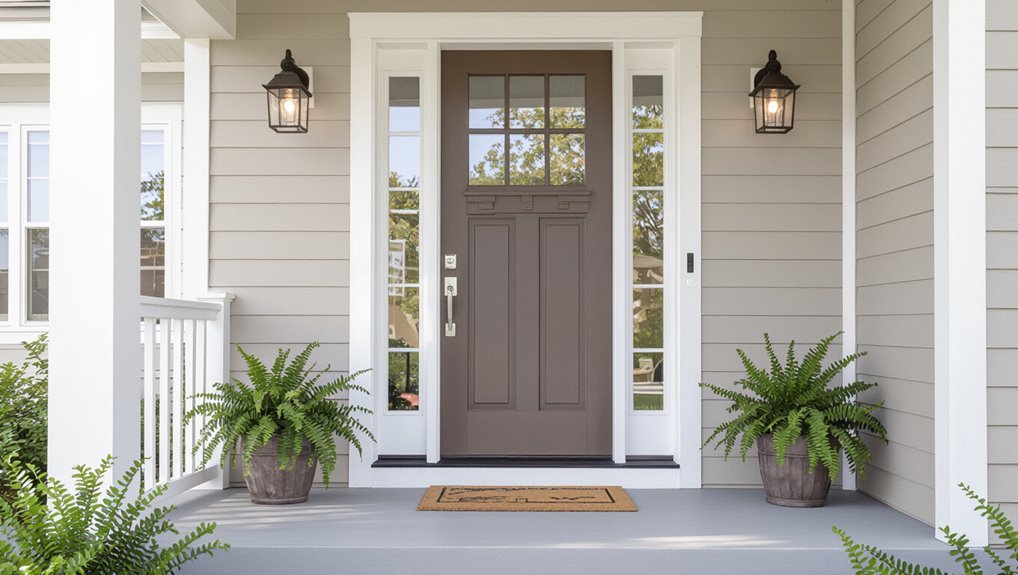
You’ll get the best results when you paint an exterior door frame in mild temperatures—generally between about 50°F and 85°F.
Pick a dry day with several hours of clear weather so paint can cure properly.
Also avoid very humid or damp conditions, which can cause slow drying, blistering, or poor adhesion.
Ideal Temperature Range
Although paint can dry in a wide range of conditions, you’ll get the best, longest-lasting finish when you paint exterior door frames in mild, stable weather—typically between 50°F and 85°F with low humidity and no rain expected for at least 24 hours.
Monitor temperature effects closely: too cold slows curing; too hot causes blistering.
Check humidity impact—high moisture weakens adhesion—so pick a calm, dry day.
Dry Weather Conditions
When conditions are dry and temperatures sit between about 50°F and 85°F, paint will flow and cure predictably so your exterior door frame gets a durable, even finish.
You should:
- Choose a dry weather day for prep.
- Use painting techniques that minimize brush marks.
- Apply thin, even coats to promote adhesion.
- Allow recommended dry times between coats.
Avoid Extreme Humidity
If humidity’s high, paint won’t dry properly and can sag, wrinkle, or trap moisture that causes peeling later—so pick days with relative humidity below about 60% for best results.
Check forecasts and avoid painting after rain or during dew. You’ll reduce humidity effects by working mid-day when temperatures rise.
Ideal painting conditions balance low humidity and moderate warmth for proper curing and adhesion.
Safety Gear and Precautions for Exterior Painting
Before you pick up a brush, put on the right protective gear and take basic precautions to keep yourself safe while painting outdoors.
Use safety equipment and guarantee proper ventilation if you’re using strong-smelling products.
Follow these steps:
- Wear gloves and eye protection.
- Use a respirator or mask.
- Secure ladders and footing.
- Keep kids and pets away.
Inspect the Door Frame: What to Check Before You Start
Before you pick up a brush, check the frame for any rot or soft spots that need repair.
Make sure the existing paint is well-adhered and flaking areas are scraped or sanded.
Finally, inspect hinges, strikes, and weatherstripping so hardware fits properly after painting.
Check For Rot
Start by looking closely for soft spots and crumbling wood around the sill, jambs, and threshold; those tell you whether the frame’s structurally sound or needs repair before paint.
Check for rot with a probe, noting wood deterioration and doing a moisture assessment.
- Probe soft areas
- Look for stains
- Smell for dampness
- Measure moisture
Assess Paint Adhesion
Once you’ve ruled out rot, check how well the existing paint is sticking so your new coat will hold.
Do a simple adhesion test: press tape firmly, pull sharply—loose flakes mean poor bond.
Scratch suspect spots with a coin to reveal underlayers.
Note areas needing sanding or primer.
Proper surface preparation guarantees paint adheres evenly and lasts longer.
Inspect Hardware Fit
- Verify hardware compatibility with frame material and paint.
- Confirm hinge alignment so door opens smoothly; adjust if needed.
- Make sure screws seat flush and holes aren’t stripped.
- Remove or mask locksets and weatherstripping to prevent paint buildup.
Correcting fit now saves time and prevents repaint touch-ups later.
Remove Hardware and Mask Trim Without Damage

Before you paint, remove or protect any hardware so you don’t trap paint under hinges, locks, or strike plates.
For neat hardware removal, label screws and keep parts together.
Use painter’s tape and thin cardboard for trim protection along edges and glass.
If you can’t remove a piece, wrap it tightly and seal tape edges to prevent seepage.
Work methodically and check alignment after reassembly.
How to Clean an Exterior Door Frame for Proper Paint Adhesion
Start by removing loose dirt, dust, and cobwebs with a stiff brush or a vacuum, because any grime left on the frame will stop paint from sticking properly.
Begin by removing loose dirt, dust, and cobwebs with a stiff brush or vacuum so paint will adhere.
Use these cleaning techniques for surface preparation:
- Wash with mild detergent and water.
- Rinse thoroughly and dry.
- Degrease stubborn spots with trisodium phosphate.
- Lightly scuff glossy paint before priming.
How to Repair Wood Damage on an Exterior Door Frame
Start by inspecting the frame to determine how deep and widespread the rot or damage is so you know whether to patch or replace sections.
Remove loose or rotted wood, then shape the area so filler or epoxy will bond properly.
Once cured, sand it smooth and prime before repainting.
Assessing Damage Extent
Wondering whether that soft spot or chipped paint is a cosmetic issue or a structural problem? You’ll do a quick damage assessment to judge frame condition before repairing.
Check these points:
- Tap for hollow sounds.
- Inspect rot, cracks, or insect holes.
- Look for moisture stains or swelling.
- Test stability around hinges and joints.
Decide if professional help’s needed.
Repairing And Filling Wood
Assess the damage, then remove any loose or rotten wood so you have a clean, solid surface to work on; sand, apply wood filler, and shape it flush. Prime repaired areas, then paint. Seal gaps to aid damage prevention.
| Step | Purpose |
|---|---|
| Clean | Better adhesion |
| Fill | Restore structure |
| Seal | Prevent moisture |
How to Repair Metal Frames and Treat Rust
If your exterior door frame is metal and showing rust, you’ll want to remove loose scale, neutralize remaining corrosion, and protect the surface before repainting.
Follow these steps for metal treatment and rust prevention:
- Wire-brush loose rust.
- Apply rust converter to affected spots.
- Prime with a metal-specific primer.
- Finish with corrosion-resistant topcoat and check seals.
How to Sand an Exterior Door Frame for a Smooth Finish
Start by evaluating the surface condition—look for peeling paint, rust, or uneven spots that need attention.
Pick a sanding approach and grit based on that evaluation: coarser grits (80–120) for heavy removal, finer grits (180–220) for smoothing.
Work methodically so you end up with a uniform, paint-ready surface.
Assess Surface Condition
Before you pick up sandpaper, take a close look at the frame to identify loose paint, deep gouges, and areas of rot so you know exactly what needs sanding, filling, or replacing.
Use surface preparation techniques and a paint compatibility assessment to plan repairs.
- Note loose or peeling paint
- Mark gouges and cracks
- Check for rot
- Inspect previous finish
Choose Proper Grit
Pick the right sandpaper grit to match the job: coarser grits (60–80) remove flaking paint and shape damaged wood.
Medium grits (100–120) smooth filler and level changes, and fine grits (150–220) prepare the surface for primer and paint.
For effective grit selection, follow simple sanding techniques: start coarse for repairs, blend with medium, finish with fine, and always sand with the grain for a smooth, paint-ready frame.
When and How to Apply Primer to an Exterior Door Frame
Applying primer to an exterior door frame is a key step you shouldn’t skip, and you’ll want to do it once the wood is clean, dry, and any repairs or sanding are finished.
Choose primer types suitable for exterior wood; follow recommended application techniques.
Then:
- Mask surrounding areas.
- Stir primer thoroughly.
- Apply thin, even coats.
- Sand lightly between coats.
Best Brushes, Rollers, and Applicators for an Exterior Door Frame
You’ll want the right tools to get clean lines and a smooth finish on an exterior door frame.
Choose natural-bristle or high-quality synthetic angled brushes for trim, a small 4–6 inch foam or short-nap roller for flat surfaces, and consider specialty tools like sash brushes, mini-rollers, and trim pads for grooves and tight spots.
I’ll explain the pros and best uses of each so you can pick what’s best for your door.
Best Brush Types
Choosing the right brush, roller, or applicator makes the job faster and gives a cleaner finish on an exterior door frame.
You’ll want brushes that hold paint, cut clean edges, and resist shedding. Use brush selection tips and brush maintenance techniques to extend life.
- Angled sash brush
- Synthetic filaments
- Small trim brush
- Detail round brush
Ideal Roller Options
A small, high-density roller lets you cover flat sections of an exterior door frame quickly while keeping texture consistent with your brushwork; choose foam or short-nap roller materials for smooth coatings and light texture.
Use narrow roller sizes (2–4 inches) for tight jambs and wider ones for panels.
Match nap to paint type, keep rollers clean, and replace worn covers for best results.
Specialty Applicators
When you want a flawless finish on an exterior door frame, reach for quality specialty applicators that match each surface and paint type; the right brush, roller, or pad will cut work time and minimize visible strokes.
- Use angled specialty brushes for trim and tight corners.
- Choose foam pads for smooth panels.
- Pick short-nap rollers for flat sections.
- Try texture rollers for rustic finishes and grip enhancement.
How to Cut In an Exterior Door Frame for Crisp Edges
Start by steadying your hand and planning a thin, consistent paint line along the jamb and trim; cutting in carefully here gives you the crisp edge that makes the whole door look professional.
Use angled brush strokes, light pressure, and steady wrist motion.
Practice cutting techniques on scrap, maintain edge precision by reloading minimally, and clean stray marks immediately with a damp cloth.
How to Paint Flat Frame Surfaces Without Drips
Having cut in the edges, move on to the flat surfaces with a loaded brush or mini roller held lightly so paint flows smoothly without pooling.
Focus on drip control techniques and flat surface preparation. Work methodically:
- Light, even strokes
- Tip brush vertically to catch drips
- Smooth roller passes overlapping slightly
- Inspect and remove runs immediately with the brush
How Many Coats to Apply and Dry Times Between Coats
Most exterior door frames need two coats of paint for durable, even coverage, and you’ll want to respect the manufacturer’s recommended dry time between coats—usually 2–4 hours for fast-drying acrylics and 24 hours for oil-based paints—so the first coat can cure enough to avoid lifting or brush marks when you apply the second.
Use light sanding between coats for adhesion; track coats application and drying times.
Drying and Curing: When the Door Is Safe to Use Again
After you’ve applied the recommended coats and allowed the specified drying time between them, you’ll need to know when the paint has cured enough for regular use.
Use proper drying techniques and respect curing times. Check:
- Surface feels dry to touch.
- No tackiness after light press.
- Edges resist scuffing.
- Full cure per manufacturer before heavy use.
Reinstalling Hardware and Final Touch‑Ups the Right Way
Carefully reinstall your hardware and tackle final touch-ups to guarantee the door looks and functions like new. Check screws, hinges, and strike plates for proper hardware alignment; tighten gradually. Use fine brushes and feathering touch up techniques for paint blends. Test operation, adjust as needed, and clean excess paint. Record any areas needing future attention.
| Item | Action |
|---|---|
| Hinges | Align |
| Screws | Tighten |
| Strike | Adjust |
| Paint | Blend |
| Test | Operate |
Weatherproofing an Exterior Door Frame: Seals and Caulk
Now that your paint’s set, you’ll want to weatherproof the frame to keep drafts and moisture out.
Choose a paintable, exterior-grade sealant, fit a backer rod into wide gaps first, then apply a smooth bead of caulk so it bonds to both sides.
Work around the entire frame—threshold, jambs, and trim—so every gap is sealed.
Choose Proper Weatherproof Sealant
When you’re sealing an exterior door frame, pick a weatherproof sealant that matches the gap size, materials, and local climate so it will flex with movement and resist moisture over time.
You’ll consider sealant types and preferred application techniques; follow this checklist:
- Match silicone or polyurethane to substrate.
- Choose paintable if needed.
- Check movement rating.
- Clean, dry joints before applying.
Apply Backer Rod Correctly
Start by choosing a backer rod that’s slightly larger than the gap so it compresses snugly—this gives you a consistent depth for sealant, prevents three-sided adhesion, and lets the caulk flex with the frame.
Press the rod into joints with a blunt tool, keeping it below the surface.
For backer rod applications, guarantee uniform placement to aid sealing gaps and prolong sealant performance.
Seal Gaps Around Frame
Before you trim or paint, seal every gap between the frame and wall to keep water, drafts, and pests out; use a consistent bead of exterior-grade caulk over the backer rod, tooling it smooth so it bonds to both surfaces without gaps.
You’ll guarantee proper frame insulation and gap filling by:
- Cleaning the joint
- Installing backer rod
- Applying caulk
- Tooling and curing
Common Beginner Mistakes and How to Avoid Them
Although painting a door frame seems simple, you can easily make mistakes that lead to drips, uneven coverage, or damage to surrounding trim — and knowing the common pitfalls up front will save you time and frustration. Use effective techniques: prep, tape, thin coats, proper brush strokes.
| Mistake | Fix |
|---|---|
| Drips | Thin coats |
| Poor prep | Sand/clean |
| Tape errors | Press edges |
| Wrong brush | Use angled brush |
Troubleshooting Fresh Paint Problems: Blistering, Peeling, Runs
When paint blisters, peels, or runs, you’ll want to identify the cause quickly so you can fix it before the damage spreads; common culprits include moisture, poor adhesion from inadequate prep, and applying paint too thickly.
- Inspect for moisture issues and fix leaks.
- Sand and re-do surface preparation to improve paint adhesion.
- Remove blisters, apply appropriate primer for peeling solutions.
- Thin coats and proper brush technique for run prevention.
How to Refresh or Repaint an Existing Exterior Door Frame
Now that you’ve handled common paint failures like blistering and peeling, you can move on to rejuvenating or repainting the door frame itself. Clean, sand, and prime damaged spots, then choose paint and color selection to match your home. Consider frame styles when picking gloss level. Use quality brushwork for crisp lines and let coats dry fully.
| Task | Tip |
|---|---|
| Clean | Remove dirt |
| Sand | Smooth edges |
| Prime | Seal bare wood |
| Paint | Thin, even coats |
| Finish | Inspect lines |
Cost, Time Estimate, and When to Hire a Pro
If you’re weighing whether to tackle repainting an exterior door frame yourself, expect modest material costs—typically $20–$75 for primer, paint, sandpaper, and brushes—and plan on 2–6 hours of hands-on work spread over a couple of days to allow for drying.
- cost analysis: compare DIY vs contractor quotes.
- Time: factor curing between coats.
- Skill: pick pro hiring for rot or complex trim.
- Warranty: pros often guarantee work.
Frequently Asked Questions
Can I Paint a Door Frame While the Door Remains Hinged and Open?
Yes — you can paint a door frame while the door’s hinged and open. You’ll use careful painting techniques, secure drop cloths, mask edges, and paint in sections so you don’t drip or gum up the hinges or jamb.
Will Exterior Paint Ingredients Harm Nearby Plants or Landscaping?
About 60% of gardeners report worries about chemicals; yes, paint toxicity can harm plants, so you’ll protect plant safety by covering nearby soil, using low-tox or water-based paints, and rinsing spills promptly to avoid root damage.
Can I Change Frame Color Without Repainting the Door Itself?
Yes — you can change the frame color without repainting the door itself; you’ll refresh curb appeal and modify door aesthetics, just prep and protect the door, choose a complementary shade, and use proper exterior paint for durability.
How Do I Match New Paint to Aged, Sun‑Faded Existing Trim?
You’ll fret—then smile: take color matching seriously, test paint samples in sunlight and shade on the trim, let them weather a day, tweak tint gradually, and you’ll blend new paint seamlessly with the faded finish.
Are There Paint Options That Prevent Insect Nesting in Frame Gaps?
Yes — you can use insect repellent paints that deter bugs and combine them with gap sealing methods like caulk, foam backer rod, or door sweeps; you’ll prevent nesting by sealing gaps and applying treated coatings.
Conclusion
You’ve got the know-how to tackle your exterior door frame like a pro—step by step, not rush job. Take your time prepping, pick the right day, and use proper tools and safety gear so your paint job lasts. Small mistakes fix easily if you catch them early; think of the frame as a picture’s frame that sets the whole scene—get it right and your entryway will welcome people with fresh, lasting curb appeal.
