
What Is a Dry Brush Painting Technique? Beginner Guide
Dry brushing is a painting method where you load a brush with almost no paint and apply thin, textured strokes to pick out highlights and surface detail without covering base layers. You’ll use stiff, short-bristled brushes, light pressure, and layered passes to build subtle contrast and form. It works on wood, canvas, and miniatures, but needs careful testing and cleaning to avoid overload. Keep practicing these controlled, dry strokes and you’ll find more techniques and refinements ahead.
What Is Dry Brushing?
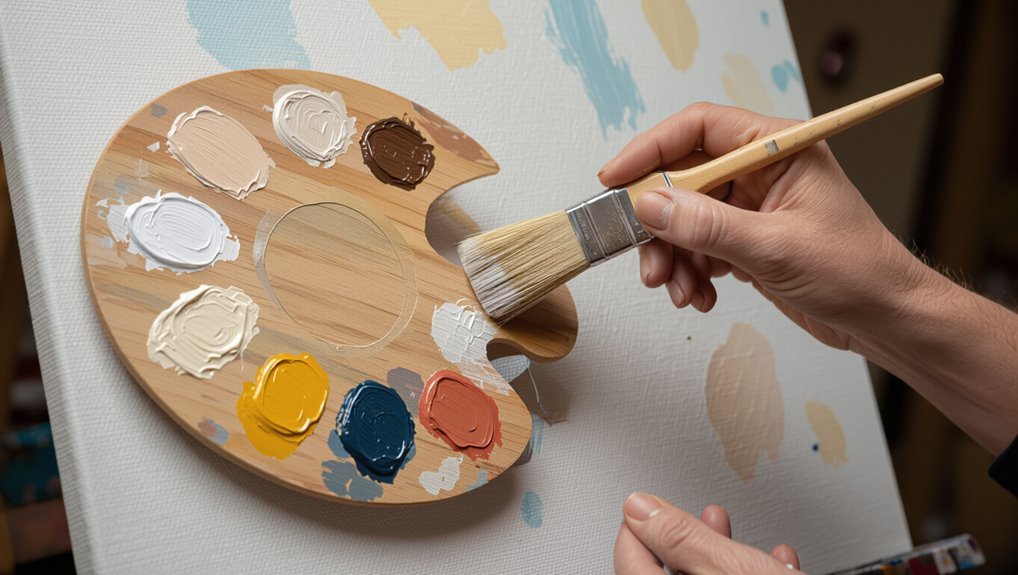
Dry brushing is a painting method where you use a brush with very little paint on it to apply thin, textured strokes that pick out raised details and create subtle highlights.
You’ll use controlled, low-opacity marks to emphasize form, explore color theory for harmonious highlights, and refine texture creation without overpowering base layers.
It’s a delicate, intentional finishing technique that clarifies surfaces.
Quick Step-by-Step Dry Brushing for Beginners
- You’ll learn a quick dry brushing workflow that links color theory with basic brush techniques for effective texture and highlights.
- Load minimal paint, wipe most off on a rag.
- Test strokes on scrap to check opacity and hue.
- Use short, light passes following form.
- Layer subtly, adjusting contrast with complementary colors.
Tools and Brushes for Dry Brushing
Choose the right tools and you’ll make dry brushing faster and more controlled: pick a few brushes with stiff, short bristles (synthetic filaments work well), a flat or bright shape for edges and broad strokes, and a soft fan or round for blending and subtle highlights.
| Item | Purpose |
|---|---|
| Flat | Edges, planes |
| Bright | Controlled strokes |
| Fan | Soft blending |
| Round | Detail, highlights |
Know brush types and test paint brands for consistency and grip.
Choose Paints & Surfaces for Dry Brushing
Once you’ve picked brushes that give you control, the next step is picking paints and surfaces that play well with the technique.
You’ll focus on color selection and proper surface preparation so textures show. Use thinly loaded paint and test on scraps to judge drag.
Choose primed canvas or wood, gessoed papers, and textured surfaces for best effect.
- Acrylics, heavy body
- Thinned oils
- Gessoed panels
- Sanded wood
Dry Brushing vs. Wet Techniques: When to Use Each?
When should you reach for dry brushing instead of a wet technique? You choose dry brushing for texture, highlights, and subtle shifts where color theory calls for restrained contrast.
Use wet methods for smooth blends, glazing, and saturated washes.
Consider paint consistency: dry brushing needs thick, nearly dry paint; wet techniques require fluid, workable mixes.
Match method to effect and surface.
Step-by-Step Dry Brushing Technique (Detailed)
Start by preparing your brush: wipe most of the moisture and shape the bristles for control.
Load paint sparingly on the tips so you get thin, translucent marks instead of blobs.
Use light, layered strokes, building texture gradually until you reach the desired effect.
Prepare Your Brush
Preparation matters: before dry brushing, make sure your brush is clean, mostly dry, and trimmed to the right shape for the effect you want.
Choose among brush types, consider bristle stiffness, and test strokes on scrap.
- Round for detail
- Flat for edges
- Fan for texture
- Trim or fray tips to soften marks and control paint pickup
Load Paint Sparingly
With your brush shaped and mostly dry, it’s time to load paint sparingly so each stroke remains controlled and subtle.
Dip the tip lightly, then wipe excess on a rag or palette until only a thin film stays. You’ll load paint just enough for texture without pooling.
This brush technique keeps marks crisp, predictable, and easy to correct as you work.
Light, Layered Strokes
1. You’ll use light techniques to build texture: drag a nearly dry brush, vary pressure, and let bristles skim peaks.
Work in thin passes for layered effects, waiting briefly between strokes so paint sits subtly.
Focus on direction and rhythm to suggest form without heavy coverage.
- Drag lightly
- Vary pressure
- Thin passes
- Pause between layers
Add Texture & Highlights With Dry Brushing
Grab a stiff, low‑pile brush and a nearly dry load of paint—dry brushing lets you quickly add crisp highlights and subtle texture without obscuring underlying details.
You’ll skim raised areas to build texture variety and emphasize edges. Use short, controlled strokes and minimal paint to layer highlights.
Experiment with pressure and brush angle to refine highlight techniques while preserving underlying color and form.
Simple Exercises to Practice Control & Pressure
Start by loading very little paint onto a stiff brush and practice short, consistent strokes across a scrap surface so you learn how pressure changes mark width and opacity.
Load a tiny amount of paint on a stiff brush and practice short, consistent strokes to learn pressure control.
You’ll focus on brush grip and hand coordination to control pressure variation and stroke consistency while doing texture exploration.
Build simple practice routines and repeat exercises.
- Vary grip tightness
- Light vs firm strokes
- Parallel stroke drills
- Texture swatches
Layering Dry Brush Over Washes & Underpainting
When you layer dry brush over washes and underpainting, pick paints that sit well together so the top layer won’t repel or muddy the base.
Control transparency by loading less paint and testing strokes so the wash still reads through where you want it to.
Preserve key underpainting details by working around them and using light, directional dry strokes to enhance rather than cover.
Choosing Compatible Paint Layers
Although underpaintings and washes sit beneath the surface, they dictate how successful a dry brush layer will read. You’ll choose colors, values, and textures that harmonize rather than fight.
You’ll test paint compatibility and simple layering techniques to preserve depth and edge control.
- Match undertone and mood
- Respect value hierarchy
- Use tooth for grip
- Limit competing textures
Controlling Paint Transparency
To build convincing form and atmosphere, you’ll control how opaque your dry brush sits over washes and underpaintings so underlying color and texture show through in the right places.
Adjust paint consistency — drier for broken strokes, slightly wetter for smoother blends — to vary transparency effects.
Layer lightly, test edges, and let underlying tones guide highlights without obscuring core washes.
Preserving Underpainting Details
Start by evaluating the strength and temperature of your underpainting so you can decide where to let it show through and where to reinforce form.
You’ll preserve details by using thin, almost dry strokes that respect washes and build contrast without muddying colors, enhancing textures with directional marks and light touch.
- Use minimal pigment
- Test edges first
- Vary brush pressure
- Work in layers progressively
Common Dry Brushing Mistakes : And Fixes
Wondering why your dry brushing isn’t popping the way you expected? You’re likely falling for common misconceptions: too much paint, a wet brush, or wrong bristle type.
Troubleshooting techniques include wiping to near-dry, using light, directional strokes, and testing on scrap.
If texture clumps or loses detail, lift gently, thin paint, and restart with a cleaner, drier brush.
Dry Brushing Tips for Wood, Canvas & Miniatures
Fixing technique problems gets you back in control, but materials demand different approaches—what works on a miniature won’t behave the same on wood or canvas.
Adjust brush selection, paint consistency, and stroke technique; respect surface preparation for wood finishing, canvas texture, and miniature detailing.
Focus on color blending appropriate to scale and grain.
- Thin layers for texture
- Test strokes first
- Light pressure only
- Match brush size
Clean & Care for Dry-Brush Brushes
Keep at least one dedicated dry-brush for each paint family and clean them promptly after use to preserve the stiff, splayed bristles that give dry brushing its characteristic effect.
Always reserve a dry brush per paint family and clean it promptly to preserve those stiff, splayed bristles.
Rinse gently, reshape bristles, and remove excess paint during brush cleaning.
Let brushes dry flat or hanging to avoid splay.
For brush storage, keep them separated, dry, and protected from dust to maintain shape and longevity.
Advance Your Dry-Brushing Skills
Now you’ll build on basics by using thin, successive layers to create real depth and texture.
Practice controlled paint removal with a dry brush or cloth to reveal highlights without overworking the surface.
These techniques let you refine contrast and bring subtle detail into your pieces.
Layering for Depth
When you want richer, more realistic textures, layering with dry brushing builds subtle shifts by applying successive thin highlights and midtones. Each pass should be lighter and more focused than the last so you preserve underlying shadows and form.
You’ll refine color blending and brush techniques to suggest depth without overworking the surface.
- Thin, controlled passes
- Vary brush pressure
- Start darker, add lights
- Let layers dry
Controlled Paint Removal
Controlled paint removal lets you rescue overbuilt highlights and sculpt texture by lifting or softening excess pigment rather than adding more layers.
You’ll dab with a dry, clean brush, paper towel, or damp rag to reduce intensity and refine edges. Adjust your pressure and timing based on paint consistency to preserve underlying strokes, creating deliberate texture contrast and cleaner, more controlled finishes.
Frequently Asked Questions
How Does Humidity Affect Dry Brush Paint Drying Times?
Humidity speeds or slows drying times: when humidity’s high, you’ll notice slower evaporation and longer drying times; when it’s low, you’ll get faster drying. You’ll adjust strokes, thinning, and ventilation to compensate humidity effects.
Can Dry Brushing Techniques Be Adapted for Oil Paints?
Yes — you can, contrasting slow oils with quick strokes. You’ll adapt oil paint variations and watch tack; choose stiff bristles or hog brushes for texture, adjust medium and load, and test brush selection for desired drag.
Are There Health Risks From Inhaling Dry Paint Particles?
Yes — inhaling dry paint particles can harm you; you’ll face paint safety and respiratory concerns like irritation, asthma triggers, or long-term lung issues. Wear masks, ventilate, and clean up dust to reduce risks.
Can Digital Painting Mimic Traditional Dry Brush Effects?
Yes — you can; digital brushes mimic dry brush texture effects, letting you scumble, scratch, and layer like weathered canvas. You’ll tweak brush opacity, grain, and pressure sensitivity to recreate authentic, tactile-looking strokes and imperfections.
How Do Cultural Art Traditions Influence Dry Brush Styles?
You’ll see cultural influences shape dry brush styles through local materials, motifs, and rituals; that feeds artistic evolution as artists adapt techniques, blending heritage with innovation to express identity, narrative, and changing aesthetics across generations.
Conclusion
You’re holding a tiny broom for a vast house: dry brushing lets you dust in light strokes, revealing texture like sunlight on old wood. As you practice, each feathered pass becomes a language, translating roughness into detail. Don’t rush—gentle, patient gestures build depth. Mistakes are just misplaced marks that teach touch. Keep your tools cared for, and your surfaces will answer, turning simple strokes into rooms full of quiet, luminous life.
