
How Long Does Touch Up Paint Take to Dry Completely?
You’ll usually feel touch-up paint dry in 15–60 minutes, and you can lightly handle it after about 24–72 hours, but full cure takes much longer — often 7–30 days depending on paint type, coat thickness, temperature and humidity. Solvent-based and lacquers set faster than enamels; urethane/basecoat systems need careful flash and clearcoat timing. Use thin coats, good ventilation and proper prep for best results, and keep going to learn precise times for each paint type.
Quick Timing Summary: Typical Touch‑Up Dry And Cure Times
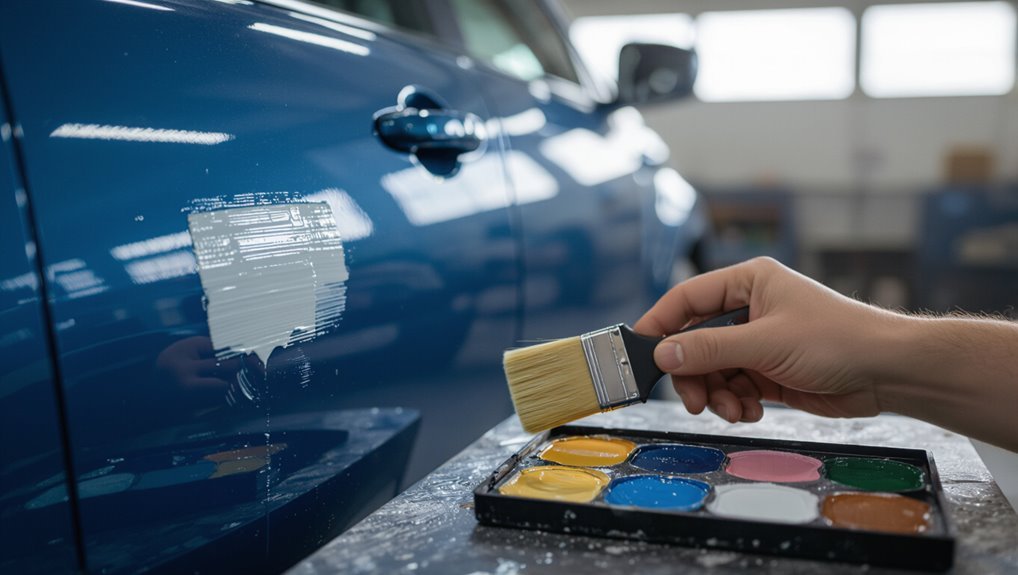
Most touch-up paints feel dry to the touch within 15–60 minutes, but they usually need 24–72 hours to set enough for light handling and up to 7–30 days to fully cure depending on the formula and conditions.
You’ll gauge times by paint types and application techniques: thin coats dry faster, solvent-based and lacquer cure quicker than some enamels, and humidity or cold slows everything.
What “Dry” Vs “Fully Cured” Actually Means
When you touch fresh paint you’ll notice it’s surface-dry or tack-free long before the layer has formed a complete film.
Over the next hours to days the paint continues film formation as solvents evaporate and chemical reactions bond the coating.
Full cure means the chemistry has finished — not just evaporation — so the paint reaches its maximum hardness and durability.
Surface Dry vs Tack-Free
Although paint can feel dry to the touch within minutes, that doesn’t mean it’s fully cured; you need to know surface preparation and environmental factors affect stages.
Consider these distinctions:
- Surface dry: no transfer when touched.
- Tack-free: slightly firmer, resists sticking.
- Handleable: light use allowed.
- Fully cured: maximum hardness and durability; avoid stress until then.
Film Formation Timeline
You’ve seen the touch stages—surface dry, tack-free, handleable, fully cured—but those labels only describe how the film behaves at the surface; film formation is the chemical and physical process behind those changes.
You’ll notice film thickness alters timing: thin coats set faster, thick ones take longer. Different curing methods speed or slow internal crosslinking, so “dry” can precede true full cure.
Chemical Cure Vs Evaporation
Because “dry” refers to what’s happening at the surface while “fully cured” describes chemical changes throughout the film, you’ll see paint feel dry long before it reaches its final strength and resistance.
You should note:
- Evaporation removes solvents.
- Chemical properties drive crosslinking.
- Time and temperature matter.
- Drying techniques speed surface drying but not full cure.
Touch‑Up Enamel Paint: Expected Dry And Cure Times
With touch‑up enamel you’ll notice drying and curing change a lot with temperature — warm, dry conditions speed surface drying while cold or humid air slows it.
You’ll usually be able to recoat or handle the piece within a few hours, but follow the manufacturer’s recoat window to avoid lifting.
Expect full cure and peak durability to take days or even a week, depending on film thickness and conditions.
Drying Time vs Temperature
When temperatures climb, your touch-up enamel dries and cures noticeably faster. When they drop, the process slows and can stall entirely.
You’ll notice temperature effects on solvent evaporation and resin flow; monitor drying conditions closely.
- Warm (ideal)
- Cool (slower)
- Humid (delays)
- Cold/freezing (risk of failure)
Adjust timing to match conditions.
Recoat And Handle Times
Now that you know how temperature and humidity affect drying, you’ll want to plan your recoat and handle times accordingly.
You should wait recommended intervals on the label, adjust for thin or thick application techniques, and test a small area before handling.
Consider paint compatibility when layering; incompatible products can extend tackiness.
If unsure, give extra time to avoid smudges or adhesion issues.
Full Cure And Durability
Although surface dryness can feel quick, full cure for touch‑up enamel paint takes much longer and determines long‑term durability, chemical resistance, and how well the repaired area stands up to wear.
You’ll monitor cure for paint durability and touch up longevity; environmental factors affect surface integrity and paint adhesion, so guarantee finish resilience to maximize repair effectiveness.
- Prep
- Drying
- Curing
- Inspection
Acrylic Lacquer Touch‑Ups: Typical Timing
Because acrylic lacquer dries faster than enamel, your touch‑up window is usually short but predictable: tack‑free in 15–30 minutes, safe to handle in 1–2 hours, and fully cured in about 24–48 hours under ideal conditions. You’ll rely on acrylic lacquer properties and precise touch up techniques to avoid runs.
| Stage | Timeframe |
|---|---|
| Tack‑free | 15–30 min |
| Handle | 1–2 hrs |
| Cure | 24–48 hrs |
Urethane And Basecoat/Clearcoat Systems: Timing Guide
Before you start a urethane or basecoat/clearcoat touch‑up, plan for proper surface preparation time so the repair bonds and looks smooth.
Allow the basecoat enough flash time between coats to prevent runs and guarantee good color build.
Finish with clearcoat and respect its cure time before wet sanding or polishing to avoid ruining the finish.
Surface Preparation Time
Surface prep for urethane and basecoat/clearcoat systems usually takes 30–90 minutes for a single panel, depending on the level of damage and whether you’re blending adjacent panels.
You’ll focus on surface cleanliness and proven preparation techniques before painting.
- Clean degrease
- Sand feather edges
- Mask and tack
- Primer spot where needed
Basecoat Flash Time
Now that the panel’s clean, sanded, masked, and primed where needed, you’ll focus on the basecoat flash time—the brief window between coats when solvents evaporate enough to accept the next layer without causing runs or poor adhesion.
Monitor basecoat consistency and temperature, use proper basecoat tools, follow basecoat techniques for basecoat layering, inspect for basecoat adhesion, and confirm basecoat compatibility across basecoat types and finishes.
Clearcoat Cure Time
While the basecoat dries to touch in minutes, the clearcoat’s full cure takes longer and depends on the system—urethane clears usually harden faster than traditional basecoat/clearcoat setups.
So you’ll need to plan bake time, ambient temperature, and humidity into your schedule to achieve maximum durability and gloss.
- Choose clearcoat types for compatibility.
- Time clearcoat application and bake cycles.
- Test clearcoat durability and finishes.
- Plan clearcoat maintenance, removal, or alternatives.
How Coat Thickness Affects Dry And Cure Times
Because thicker coats trap more solvents and restrict airflow, they’ll take noticeably longer to dry on the surface and to fully cure through to the substrate.
You should monitor coat thickness and adjust your application technique and layering strategy to control drying effects.
Consider paint absorption and substrate interaction, match touch up methods to environmental factors, and apply thinner, even layers for predictable cure times.
Temperature And Touch‑Up Paint Dry Time
When the temperature rises, your touch-up paint will dry faster on the surface but can still trap solvents if it cures too quickly, leading to brittleness or poor adhesion.
You should monitor ambient temperature and surface temperature, adjusting application techniques and choosing paint formulation with appropriate curing agents or drying agents for varied environmental factors and drying conditions.
- Check temperature effects
- Consider humidity levels
- Modify application techniques
- Select proper paint formulation
How Humidity Changes Drying And Curing
Temperature isn’t the only environmental factor that changes how touch-up paint behaves; humidity plays a major role too.
You’ll notice high humidity slows solvent evaporation, extending tack and curing times, while low humidity speeds surface drying but can trap solvents underneath.
Consider humidity impact when planning work; adjust drying conditions, wait longer before handling, and avoid moisture exposure until the paint fully cures.
Airflow, Ventilation, And Dry Time
You’ll speed drying by increasing air movement across the repaired area, since moving air strips away solvent-laden moisture faster.
Set up cross-ventilation or a gentle fan to keep fresh air flowing, but avoid blasting the surface with high-speed airflow that can cause dust or uneven drying.
Also remember that ideal temperature and moderate humidity work with airflow—warm, not hot, conditions plus lower humidity give the best results.
Air Movement Effects
Because air carries away solvents, increasing airflow speeds up touch-up paint drying and helps prevent dust from settling into the finish.
You’ll notice airflow impact immediately; gentle circulation reduces tackiness while strong drafts risk uneven curing.
Consider ventilation methods to balance speed and finish.
- Fan direction
- Air exchange rate
- Draft control
- Particle reduction
Ventilation Best Practices
When you’re prepping a space for touch-up paint, aim for steady, controlled airflow rather than blasting ventilation—too much turbulence can cause uneven drying and dust inclusion while too little keeps solvents trapped and tackiness high.
You’ll balance ventilation methods: use exhaust fans or a spray booth when possible, supplement with natural ventilation, monitor air quality, limit drying agents, and follow chemical safety in your workspace setup to reduce paint fumes.
Temperature And Humidity
If the air’s warm and dry, touch-up paint will skin over and cure faster; if it’s cold or humid, expect extended tack times and slower solvent release. You should monitor temperature effects and humidity levels, and adjust airflow.
Consider:
- Heat speeds curing.
- High humidity slows evaporation.
- Fans boost ventilation.
- Avoid cold drafts during curing.
Surface Condition: Metal, Rust, And Substrate Effects
Although metal surfaces can feel smooth to the touch, the underlying substrate and any rust drastically change how touch-up paint dries and bonds. You need to assess and prepare them carefully.
You’ll focus on metal preparation, rust treatment, substrate compatibility, and surface cleanliness to improve adhesion. Proper prep guarantees adhesion improvement and accurate finish matching, speeding cure and preventing flaking.
Primer Types And Why They Matter For Adhesion And Dry Time
Because primers create the critical interface between substrate and paint, choosing the right type will determine both adhesion and how quickly your touch-up paint cures.
You’ll consider primer adhesion, primer types, paint compatibility, and surface preparation to speed drying and prevent failures.
- Epoxy: seals and bonds.
- Etch: for bare metal.
- Acrylic: fast-drying.
- Self-etch: rust control.
When To Apply Clear Coat Over Touch‑Up Paint
Don’t rush the clear coat—wait until the touch‑up paint has fully cured so it won’t trap solvents or blush.
Before you spray, inspect the repair for runs, dust nibs, or uneven texture and sand or recoat if needed.
Once the surface looks smooth and hard, you can apply clear with confidence.
Wait For Full Cure
When you’ve applied touch‑up paint, give it time to fully cure before adding a clear coat so the solvents evaporate and the paint hardens enough to accept and bond with the clear.
You should monitor the full cure and drying process; rush risks poor adhesion.
Follow steps:
- Wait manufacturer‑recommended hours.
- Keep area dust‑free.
- Maintain moderate temperature.
- Test a small spot before coating.
Check For Imperfections
Before you lay down clear coat, closely inspect the touch-up area for runs, texture differences, and trapped dust so you can address flaws that will show through the gloss.
Use good lighting and magnification during paint inspection to spot uneven edges or slight height differences.
Perform gentle sanding or reapply touch-up where imperfection detection finds defects, then clean thoroughly before clear coating.
How Long To Wait Between Touch‑Up Coats
A good rule of thumb is to wait until the previous touch-up coat is dry to the touch and tack-free before applying the next one; that usually takes 15–30 minutes for fast-drying enamel or acrylics and 24–48 hours for oil-based paints.
Use these waiting strategies and coat intervals:
- Check tackiness.
- Follow manufacturer times.
- Consider temperature/humidity.
- Thin layers build faster.
When To Wet Sand, Polish, Or Buff After Touch‑Up
If you want a smooth, invisible finish, wait until the touch‑up paint is fully cured rather than just dry to the touch; that usually means 24–72 hours for fast acrylics and up to a week for oil‑based or thicker layers.
You can then use gentle wet sanding techniques with fine grit, clean thoroughly, and follow with careful polish application or light buffing to blend and restore gloss without cutting through the repair.
Safe Timing: When It’s Okay To Drive After A Repair
Once the paint has cured enough for sanding and polishing, you’ll want to know when it’s safe to get back on the road.
Consider repair readiness and driving safety before you leave.
- Check tackiness — no stickiness.
- Verify edges — no lifting.
- Confirm cure time elapsed.
- Avoid heavy washing for 48–72 hours.
If unsure, wait longer to protect the finish.
Reading Manufacturer Dry Time Labels Correctly
Check the label for wet film thickness specs so you know how much paint the manufacturer expects you to apply.
Remember the listed dry, recoat, and full cure times assume specific ambient conditions like temperature and humidity, which you should match or adjust for.
If your environment differs, expect longer wait times before recoating or driving.
Wet Film Thickness
When you read a paint can’s dry time, remember it’s based on a specific wet film thickness (WFT)—the actual layer of paint you apply—and not the thin coat you might think is standard.
You should check WFT because wet film thickness impacts drying speed.
- Measure WFT.
- Match manufacturer’s spec.
- Adjust brush/roll technique.
- Note recoat windows.
Ambient Conditions Impact
Although manufacturer dry times give you a useful baseline, you’ll need to adjust them for your actual ambient conditions—temperature, humidity, and airflow change how fast solvents evaporate and films cure.
Consider temperature effects and humidity variations alongside airflow influence; environmental factors plus substrate conditions, surface cleanliness, paint thickness and application techniques all alter real drying.
Monitor conditions and adapt expectations accordingly.
Recoat And Cure Times
Because manufacturers list several different times—touch dry, tack-free, recoat, and full cure, you’ll need to read the label carefully to know when you can safely sand, apply another coat, or return the item to service.
Follow these steps for recoat and cure times, improving touch up techniques and paint application:
- Note touch dry time.
- Wait tack-free interval.
- Observe recoat window.
- Respect full cure period.
Why OEM Factory Coatings Cure Differently Than Touch‑Up Kits
If you’ve ever compared a factory finish to a touch-up, you’ll notice the differences aren’t just cosmetic—OEM coatings are applied and cured under tightly controlled conditions that touch-up kits can’t replicate.
You’ll see OEM advantages in product formulations, paint chemistry, curing processes and adhesion properties.
Touch up limitations stem from simpler application techniques, variable environmental factors and reduced surface compatibility, lowering finish durability.
How To Accelerate Drying Safely (Warm Garage, Heat Lamps)
You can speed drying by keeping the car in a warm, well-ventilated garage—aim for 60–75°F to help solvents evaporate without overheating the finish.
Use heat lamps sparingly and keep them at a safe distance, moving them around to avoid hot spots and softening the paint.
Always follow the lamp manufacturer’s safety guidelines and ventilate the space to avoid fume buildup.
Warm Garage Setup
When you need to speed up touch-up paint drying without risking problems, setting up a warm garage is one of the safest, most controllable options.
You’ll manage garage temperature, paint storage, paint consistency, humidity control, and ventilation tips to improve drying techniques and heat application while keeping workspace organization.
- Preheat evenly
- Isolate items
- Monitor humidity
- Ventilate gently
Safe Heat Lamp Use
Although heat lamps can shave hours off touch-up paint drying time, you’ve got to use them carefully to avoid scorching, cracking, or fire hazards.
Position lamps at least 2–3 feet away, keep constant airflow, and monitor temperature to limit excessive heat exposure.
Use timers, flame-resistant mounts, and smoke detectors.
Never leave lamps unattended; follow heat lamp safety and manufacturer guidelines to protect finish and workspace.
Risks Of Hairdryers And Heat Guns On Touch‑Ups
If you rush drying with a hairdryer or heat gun, you risk damaging the repair: high heat can soften surrounding paint, lift edges, or cause bubbling and cracking in the fresh coat.
You should know hairdryer risks and heat gun hazards before trying forced heat.
Consider these consequences:
- Softened clearcoat
- Edge lifting
- Blistering
- Color mismatch requiring redo
How Accelerators And Fast‑Dry Additives Work
If you want faster touch‑ups, you’ll use accelerators or fast‑dry additives that chemically speed the solvent evaporation or curing reactions.
You’ll find solvent‑based accelerators, catalytic hardeners for two‑part paints, and polymer‑compatible additives for water‑based systems.
Before you add anything, check compatibility with your paint type and follow the manufacturer’s dosing instructions.
How Accelerators Work
When you add an accelerator or fast‑dry additive to touch‑up paint, it speeds the chemical reactions that turn liquid film into a solid coating.
So the paint cures faster without simply evaporating more solvents. You’ll use fast dry techniques based on paint chemistry to control cure rate.
- Catalyze
- Lower activation energy
- Increase crosslinking
- Reduce tack time
Types Of Fast‑Dry Additives
Although accelerators and fast‑dry additives all aim to speed curing, they work through distinct chemistries and you’ll choose one based on your paint system and job constraints.
You’ll pick solvent reducers for quicker evaporation, catalysts for chemical crosslinking, or surfactant‑based modifiers for surface leveling.
Consider compatibility, VOC limits, and application method when comparing fast dry techniques and additive options to avoid defects and guarantee durable finish.
Avoiding Common Drying Mistakes (Runs, Tackiness, Contamination)
Because touch-up paint dries differently than full panels, you’ll need to take a few extra precautions to prevent runs, tackiness, and contamination.
Because touch-up paint dries differently than full panels, take extra precautions to avoid runs, tackiness, and contamination.
Use proper drying techniques and controlled paint application. Follow these steps:
- Clean surface thoroughly.
- Thin light coats; wait between passes.
- Work in dust-free, low-humidity area.
- Resist touching until fully cured.
Fixing Runs, Orange Peel, And Tacky Finishes
If you spot a run, orange peel, or a tacky patch, act quickly but carefully to avoid making the problem worse; small issues can usually be smoothed and re-blended, while severe defects may require sanding and redoing the touch-up. You’ll focus on fixing runs, addressing orange surfaces, tackling tackiness, and preventing imperfections with light sanding, polishing, and thin re-coats.
| Issue | Fix |
|---|---|
| Run | Sand, recoat |
| Orange peel | Wet sand, buff |
| Tacky | Allow cure |
| Prevention | Thin coats |
What To Do If Paint Blushes, Clouds, Or Milky Finishes
If your touch-up looks cloudy or milky, start by identifying possible causes like trapped moisture, contamination, or incompatible products.
You’ll want to correct moisture issues first—dry the area fully and improve ventilation or use gentle heat if safe.
Once dry, restore finish clarity by lightly polishing or re-coating with the proper compatible paint and clear.
Identify Blush Causes
When paint develops a cloudy, milky, or greasy-looking layer—commonly called blush—you’re usually dealing with trapped moisture or solvent that’s condensed on the surface; recognizing this quickly helps you choose the right fix.
You should:
- Check humidity control measures and ventilation.
- Inspect paint for solvent-rich application.
- Note temperature swings during drying.
- Review blush prevention techniques and product compatibility.
Correct Moisture Issues
Now that you can spot blush and its likely causes, you’ll need a clear plan to fix moisture-related defects before repainting.
Dry the surface thoroughly, improving ventilation and using dehumidifiers for moisture control.
Wait for RH to drop to recommended levels, then sand away milky spots and clean residues.
Address leaks and insulate to sustain humidity management so new touch-up cures properly.
Restore Finish Clarity
1 clear step to fixing a cloudy or milky finish is to assess how far the blush or haze has penetrated and whether the underlying paint fully cured.
Then:
- Evaluate environmental factors and surface compatibility.
- Choose material selection and repair techniques.
- Compare products for finish protection and gloss levels.
- Confirm color matching before finish restoration and refine paint application.
How To Check If Touch‑Up Paint Has Fully Cured
Curious whether your touch-up paint is truly ready? You can test by sight, light rubbing, and scent, considering paint types and touch up techniques used. Wait recommended times, then try a fingernail press, dry towel swipe, and slight bend test on trim. Record results for future jobs.
| Test | Result |
|---|---|
| Visual gloss | Smooth/matte |
| Fingernail press | No imprint |
| Towel swipe | No residue |
| Flex test | No cracking |
| Smell | No solvent odor |
Curing Vs Adhesion Vs UV Resistance: Long‑Term Durability
Although a touch‑up spot may feel dry to the touch, true long‑term durability depends on three different properties—curing, adhesion, and UV resistance—which each affect how the repair holds up over time.
You’ll balance curing methods, adhesion science, and UV protection to optimize durability factors and paint lifespan.
Consider:
- Proper application techniques
- Surface prep and adhesion
- Curing time and method
- UV exposure and environmental impact
Seasonal Advice: Painting In Winter Vs Summer
If you’re touching up paint in winter or summer, plan around temperature, humidity, and drying time because those factors directly change how paint behaves and cures.
You’ll face winter challenges like cold curing and temperature fluctuations, plus humidity effects that slow drying.
In summer conditions, heat speeds cure but can cause blistering.
Prioritize surface preparation and follow manufacturer guidance for paint preservation.
Indoor Vs Outdoor Touch‑Ups: Pros And Cons
When you weigh indoor versus outdoor touch-ups, consider that each setting changes how paint dries, what prep you need, and how long the repair will last.
You’ll learn indoor advantages and indoor limitations affecting indoor application and indoor durability versus outdoor benefits and outdoor disadvantages like outdoor weathering and outdoor visibility.
- Faster dry
- Controlled temp
- UV fading
- Dirt exposure
Tools That Affect Drying Consistency (Brushes, Pens, Syringes)
Different applicators change how touch-up paint levels, so pick the right tool for consistent drying.
You’ll use brush techniques for larger areas, pen application for thin lines, and syringe precision for tiny chips. Tool selection affects paint consistency and drying factors; adjust application methods to control layer thickness.
Proper choice improves finish quality and reduces uneven cure, so match tool to task.
Preparing Chips And Scratches For Better, Faster Cure
Although it’s tempting to slap paint on and call it done, prepping chips and scratches properly lets your touch-up cure faster and last longer.
You’ll use chip preparation and scratch repair steps:
- Surface cleaning with solvent.
- Lightly sand edges.
- Apply adhesive primer sparingly.
- Pick proper touch up tools and drying techniques to speed cure and adhesion.
Best Practices For Thin, Even Touch‑Up Coats
Now that chips and scratches are prepped, focus on applying thin, even coats to promote faster curing and a seamless finish.
Use steady, controlled touch up techniques: light dabs or feathered strokes with a fine brush or pen.
Let each thin layer flash per the manufacturer’s times, avoid overloading, and inspect under good light to guarantee uniform paint application before considering additional coats.
When To Reapply Touch‑Up Paint And When To Restart
When a touch‑up coat looks smooth and the manufacturer’s flash time has passed, you can usually add another thin layer to build coverage; however, if the paint beads, drags, or shows visible texture changes after flashing, stop and restart the repair.
Follow these checks:
- Match color and paint compatibility.
- Light sanding for adhesion.
- Clean surface before recoat.
- Use proper touch up techniques.
Clear Coat Thickness And Final Cure Time
After you’ve got good coverage and smooth base layers, think about clear coat thickness and how it affects final cure time. You’ll adjust clear coat application to avoid excessive build; thicker coats cure slower. Monitor your drying environment—temperature and humidity speed or slow curing. Use multiple thin passes for uniform gloss and reliable final hardness.
| Factor | Impact |
|---|---|
| Thickness | Slows cure |
| Temp | Speeds cure |
| Humidity | Slows cure |
| Coats | More coats = longer cure |
Paint Storage And Shelf Life: When Old Paint Won’t Cure
If paint’s been sitting for years, you’ll often find it won’t cure properly because solvents have evaporated, pigments settled, or hardeners have broken down; inspect texture, smell, and mixing behavior before you prime it for use.
If paint’s sat for years it may not cure—check texture, smell, and mix before priming or using.
Follow simple steps to decide reuse or disposal:
- Check viscosity and odor.
- Stir and test a small patch.
- Use proper paint preservation techniques.
- Plan safe old paint disposal.
How Pigment And Color Affect Drying Behavior
You’ve already looked at how age and storage change a paint’s chemistry; pigment type and color add another layer that alters how a coat dries.
You’ll notice pigment impact and color variations affect drying consistency across paint types.
Adjust application techniques to counter environmental effects and surface interactions.
That preserves finish quality and adhesion factors, helping you predict cure times and avoid blemishes.
DIY Vs Professional Repairs: Estimating Dry Time
When you tackle touch-ups yourself, you’ll usually get faster turnaround on simple fixes.
DIY touch-ups often mean quicker results for small fixes, though complexity can change the timeline.
But professional repairs often deliver more predictable dry and cure times because of controlled prep, materials, and equipment.
You’ll weigh DIY techniques against Professional tools and Repair methods by considering Skill levels, Paint types, Finish quality, and Project scope.
- Prep
- Materials
- Technique
- Environment
Cost Vs Time: Quick Fixes Or Proper Curing?
Wondering whether to grab a quick can of touch-up paint or invest time in a full cure? You’ll weigh cost efficiency against time management: quick fixes save money now but can cost more later.
Prioritize repairs by severity and long term value, choose paint selection wisely, factor budget considerations, and favor thorough application when durability matters over temporary convenience.
Step‑By‑Step Timing Checklist For A Complete Touch‑Up Job
Start with a clear schedule: break the touch‑up into prep, paint, and cure stages and assign realistic times to each so you can work confidently and avoid rushed mistakes.
Follow this checklist, adapting for paint types and application techniques:
- Clean & sand — 15–30 min.
- Mask & prime — 20–40 min.
- Paint coats — 10–20 min per coat; dry between coats.
- Cure time — 24–72 hours.
Frequently Asked Questions
Can Touch‑Up Paint Be Applied Over Wax or Polish Residue?
You shouldn’t apply touch‑up paint over wax or polish residue; you’ll compromise adhesion and finish. Use proper residue removal, like isopropyl alcohol or dedicated prep, and follow application techniques to guarantee lasting, smooth results.
Will Touch‑Up Paint Adhere to Plastic Trim Without Primer?
Like tape on glass, sometimes it sticks — you won’t always get reliable adhesion; adhesion factors like surface prep, plastic compatibility, and paint chemistry matter, so sand, clean, and use primer or plastic‑specific paint for best results.
How Does Paint Thickness Affect Color Match After Curing?
Thicker paint increases color depth and can look darker or richer after curing time, so you’ll need thinner coats or longer curing time to match surrounding finish; multiple thin layers give more accurate, consistent matches.
Are Touch‑Up Pens Safe for Alloy Wheel Repairs?
Like a bandage, a touch‑up pen can help, but you’ll choose wisely: pen application’s fine for small nicks, yet it won’t restore structural finish. Use quality pens, prep surfaces, and expect limited color durability on alloys.
Can Sun Exposure Cause Touch‑Up Paint to Yellow?
Yes — prolonged sun exposure can yellow touch‑up paint, and you’ll see sun damage over time; to prevent this, use UV‑resistant clear coat, store the vehicle shaded, and follow yellowing prevention steps like quality products and proper curing.
Conclusion
Think of touch‑up paint as a small seed: surface dry is the first green sprout, while full cure is the rooted tree. You’ll notice the sheen shift and the tack fade, but patience waters the bond. Match the paint type, wait the recommended hours and avoid handling until the “roots” set. Quick fixes patch the bruise; proper curing restores the whole bloom. Let time do the quiet work—finish shows when it’s truly ready.
