
How to Paint a Wall Without Getting Paint on the Ceiling
You can paint a wall without getting paint on the ceiling by prepping the edge, choosing the right tape or an angled brush, and working slowly with a steady hand. Clean and smooth the 6–12 inch junction, apply quality painter’s tape or cut in with a loaded, angled brush, and keep a wet edge while rolling. Remove tape at a 45° angle and fix drips quickly with a damp cloth. Continue for tips on tools, technique, and fixes.
Quick Step-by-Step: Paint a Wall Without Getting Paint on the Ceiling
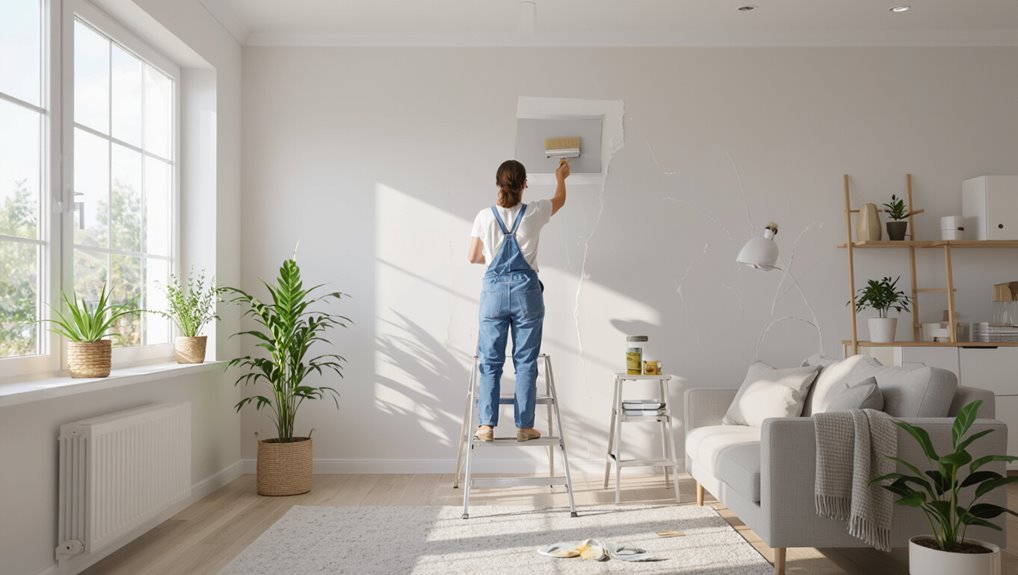
When you want a clean edge between wall and ceiling, start by taping and cutting in before rolling: apply painter’s tape along the ceiling line, press the edge down firmly, then use a steady angled brush to “cut in” a thin strip of paint along the tape so the roller never touches the ceiling.
Then choose wall color and paint finish, back-rolling with light, even strokes to blend.
Pre-Paint Checklist for Clean Ceiling Lines
Before you open a can, check that you’ve got the right tools and materials—painter’s tape, angled brush, drop cloths, and a steady ladder.
Inspect and prep the ceiling edge by cleaning any dust, smoothing rough spots, and sealing cracks so tape sticks properly.
With a tidy edge and the right gear, you’ll set yourself up for crisp, clean ceiling lines.
Tools And Materials
Tape, a steady brush, and a sharp blade are the small investments that keep your ceiling line crisp. Gather painter’s tape, drop cloths, a quality angled brush, rollers, and a tray.
Match paint types to room conditions and test adhesion. Use appropriate brush sizes for corners and trim.
Keep a razor for cleanup and a damp cloth for immediate touch-ups.
Edge Preparation
Start by clearing a 6–12 inch band along the ceiling and wall junction so you can work without smudges or obstructions.
Inspect for dust, cobwebs, or loose paint and clean thoroughly.
Tape straight with quality painter’s tape, pressing edges firmly.
Plan edge techniques—angled brush, cutting-in roller, or shield—and complete ceiling preparation before rolling to guarantee crisp, protected lines.
Choose the Right Tape for Ceiling Edges and Trim
Pick a high-quality painter’s tape so you get sharp lines without residue.
Match the tape’s adhesion level to the surface—delicate ceilings need low-tack tape, while trim can handle stronger adhesive.
Test a small section first to confirm it sticks and peels cleanly before you paint.
Pick High-Quality Painter’s Tape
When you’re working along ceiling edges and trim, choosing high-quality painter’s tape makes the difference between crisp lines and a jagged, paint-bleed mess.
You’ll do a quick tape comparison: check adhesion, edge seal, and residue.
During tape application press firmly, smooth edges, and remove slowly at a 45° angle. Good tape saves touch-ups and keeps ceilings pristine.
Match Tape To Surface
1 clear rule: match the tape to the surface you’re covering—use delicate, low-tack tape for freshly painted or delicate ceilings and stronger, medium-adhesion tape for textured trim or glossy moulding.
You’ll guarantee clean tape application and correct surface compatibility, protecting finishes and reducing tears.
Choose wisely and press edges firmly.
- Relief
- Confidence
- Pride
- Calm
- Satisfaction
Test Adhesion Before Painting
Before you start taping, test a small strip to make sure the adhesive won’t lift paint or fail on textured trim and ceiling edges. Do adhesion testing on cleaned surfaces after surface preparation; wait 24 hours, peel gently, and choose tape that removes cleanly.
| Tape Type | Best For | Removal |
|---|---|---|
| Painter’s | Smooth | Clean |
| Low-tack | Textured | Safe |
| Masking | Rough | Caution |
| Delicate | Fresh paint | Gentle |
When to Tape vs. Cut In Freehand
Although you can always cut in freehand with a steady hand, you’ll save time and get sharper lines by taping when edges are uneven, high-contrast, or when you’re working with multiple colors.
Use taping techniques for crisp protection; rely on freehand advantages for quick touchups. Trust your judgment based on surface, light, and skill.
Use tape for crisp edges and freehand for quick touchups—choose based on surface, light, and skill.
- Relief
- Confidence
- Pride
- Calm
- Satisfaction
Prep the Ceiling Edge: Clean, Sand, and Prime
Start by wiping the ceiling edge with a damp cloth to remove dust, cobwebs, and any loose paint; this gives you a clean surface to inspect and work on.
For ceiling edge preparation, use gentle cleaning techniques, sand flaky spots lightly, and dust again.
Spot-prime bare or patched areas to seal and guarantee consistent adhesion, preventing bleed-through when you paint the wall.
Protect Crown Molding and Trim Fast
Once the ceiling edge is cleaned and spot-primed, you’ll want to protect crown molding and trim quickly to keep paint from splattering or soaking into woodwork.
Use painter’s tape and thin plastic or craft paper for crown molding protection and trim safeguarding. Work steadily, press edges, and check for gaps.
Protect crown molding with painter’s tape and thin plastic or craft paper—press edges and inspect for any gaps.
- Relief
- Confidence
- Pride
- Calm
- Satisfaction
Use a Paint Shield for Straighter Ceiling Lines
Grab a paint shield to make crisp ceiling lines without relying only on tape or a steady hand.
Hold the shield flush against the ceiling, move it as a barrier while you paint, and work in short strokes. This tool offers paint shield benefits like speed and cleaner edges.
Practice simple ceiling line techniques to steady your wrist and improve consistency.
Load Your Brush and Roller Correctly
After you’ve nailed clean ceiling lines with a paint shield, it’s time to focus on loading your brush and roller so paint goes on evenly and without drips.
You’ll master brush loading and roller technique by dipping modestly, tapping off excess, and keeping consistent pressure to avoid splatters and lap marks.
- Pride
- Calm
- Confidence
- Satisfaction
- Relief
Use an Angled Brush for Tight Corners
Pick an angled brush with firm, tapered bristles so you can control paint flow and get into corners without smearing.
Hold the brush at a slight angle and use short, steady strokes to cut in a crisp line where walls meet trim or ceilings.
Practice the cutting-in technique on a scrap board or hidden spot until your lines are clean and consistent.
Brush Selection Tips
One angled brush can make cutting in around window frames, baseboards, and tight corners much easier than wrestling with a flat brush; its tapered bristles let you control paint flow and get a sharp edge without taping.
Choose brush types and bristle materials for your paint (synthetic for latex, natural for oil).
You’ll feel confident, precise, relieved, proud, and calm.
- Confident
- Precise
- Relieved
- Proud
- Calm
Cutting-In Technique
Start by loading the angled brush lightly—dip just a third of the bristle length—and steady your hand against the wall as you draw a smooth line where the ceiling, trim, or adjoining color meets the surface. You’ll use brush angles and edge techniques to hug corners, pause, and swipe confidently for clean lines.
| Calm | Focus | Pride |
|---|---|---|
| Quiet | Steady | Crisp |
| Gentle | Precise | Bright |
| Care | Skill | Joy |
| Calm | Finish | Proud |
How to Cut In With a Brush Like a Pro
Cutting in with a brush is where neat paint jobs are made, and with a few steady techniques you’ll get crisp lines without wasting time.
You’ll use cutting techniques and control brush angles, steady wrist, and light pressure. Work small sections, feather edges, and keep a wet edge to blend smoothly.
- Pride
- Calm
- Confidence
- Satisfaction
- Relief
Best Brushes for a Clean Ceiling Line
A 2–2.5-inch angled sash brush gives you the most control for a crisp ceiling line, letting you hold the brush at a precise angle and paint a thin, even strip without splatter.
Choose natural bristles for oil or high-quality synthetics for latex.
Compare brush types and brush sizes for edge work: small angled sash for detail, wider for longer runs, keeping strokes steady and minimal.
Roller Techniques to Avoid Ceiling Splatter
Keeping your roller steady and loaded just right will dramatically reduce ceiling splatter.
You’ll control speed, angle, and pressure with simple roller techniques for splatter prevention. Roll slowly away from the ceiling, use a short nap cover, and reload sparingly.
Focus on smooth, deliberate strokes so paint stays on the wall, not overhead.
- Relief
- Confidence
- Satisfaction
- Calm
- Pride
Maintain a Wet Edge to Prevent Drips
When you work quickly enough to overlap each new stroke with a still-wet edge, paint blends smoothly and drips are far less likely to form.
Keep a small working section, reload the roller evenly, and use wet edge techniques to feather joins. Move steadily, avoid overloading, and check for sagging tips immediately for effective drip prevention and a clean line beneath the ceiling.
How Paint Type Affects Ceiling Drips and Coverage
Because different paints flow and dry at different rates, your choice directly affects how likely drips are to form and how well a single coat will cover the ceiling.
Consider paint viscosity, paint finish, adhesion factors and texture differences for edge definition and drip prevention.
Balance coverage comparison, paint application and ceiling colors while noting environmental impact.
- Frustration
- Relief
- Pride
- Confidence
- Calm
Managing Humidity and Temperature to Reduce Runny Paint
Although the paint itself matters, controlling humidity and temperature in the room is the quickest way to prevent runs and secure even drying.
You’ll monitor humidity control with a hygrometer, using a dehumidifier or fan if moisture’s high.
For temperature regulation, keep the room within the paint’s recommended range and avoid drafts.
That guarantees proper film formation and fewer drips or sagging.
Prevent Paint Bleed Under Tape
Pick a high-quality painter’s tape so it sticks cleanly without leaving residue.
Press and seal the tape edges firmly to block paint from seeping under.
Pull the tape off at a 45° angle while the paint is still slightly tacky for the cleanest line.
Choose High-Quality Tape
One good roll of painter’s tape can save you hours of touch-ups, so choose a high-quality brand designed to seal against paint bleed.
You’ll want tape durability that holds through priming and painting and easy tape removal that won’t tear or peel fresh paint.
Trust products with clean edges and consistent adhesive for less stress.
- Relief
- Confidence
- Satisfaction
- Calm
- Pride
Seal Tape Edges
Before you start cutting in, press the tape edge down firmly and seal it so paint can’t bleed underneath—run a plastic putty knife or your fingernail along the edge, then go over it with a thin bead of clear caulk or diluted paint to fill any gaps.
Then check for lifts, smooth the tape application, and let the seal cure so you’ll get clean removal later without tearing or smudges.
Remove Tape Correctly
When the paint’s dry to the touch—typically after 24 hours for latex—peel the tape back slowly at a 45-degree angle and toward the painted surface to avoid lifting the fresh paint; pull it in a steady, even motion and stop if you feel resistance.
Use proven tape removal techniques to prevent tears, minimize touch-ups, and focus on avoiding paint mishaps.
- Relief at a clean line
- Pride in your work
- Frustration avoided
- Confidence growing
- Satisfaction complete
Caulking Tricks to Hide Small Ceiling-Line Mistakes
If your ceiling line isn’t perfectly straight, caulking can quickly tidy up tiny gaps and paint bleed without a full repaint; you just need the right technique and a steady hand.
Use caulking techniques like smoothing a thin bead with a wet finger or tool, remove excess immediately, and paintable silicone to blend.
Work in short sections and wipe seams clean for crisp results.
How to Remove Tape Without Peeling Fresh Paint
Since the paint’s still tacky, pull the tape off at a low angle and slowly—don’t yank—to avoid lifting the finish.
Use a sharp utility blade to score edges if needed, warm stubborn tape with a hair dryer, and remove residue with a damp cloth.
These tape removal techniques boost confidence and protect paint adhesion tips.
- Relief
- Pride
- Calm
- Satisfaction
- Confidence
Spot-Checks: Catch and Fix Drips Before They Dry
While you’re painting, scan freshly coated sections every few minutes so you can catch drips before they set; blot or smooth them with a damp brush or roller to blend the repair seamlessly.
You’ll use simple drip detection—look for gravity trails or thick spots. Act fast: dab excess, feather edges, and reload sparsely.
These quick fixes prevent runs and keep your ceiling line clean.
Fast Touch-Ups for Ceiling-Edge Mistakes
If you get paint on the ceiling, don’t panic—wipe most of it away right away with a damp cloth for a quick ceiling cleanup.
Use a small angled brush to correct edges and trim away stray strokes.
Finish by feathering the paint into the wall so the repair blends and won’t show when it dries.
Quick Ceiling Cleanups
When paint strays onto the ceiling during edging, don’t panic — quick cleanups can make the mistake nearly invisible. You’ll use precise cleaning techniques and gentle ceiling maintenance to remove fresh drips, blot spots, and restore a clean line without repainting.
- Relief at swift fixes
- Confidence in small repairs
- Satisfaction from a crisp edge
- Pride in neat work
- Calm after a mess
Small Brush Corrections
Grab a small, angled sash brush and steady your hand—small brush corrections let you fix ceiling-edge mistakes quickly and cleanly.
Use precise brush techniques: load lightly, remove excess, and stroke from wall toward ceiling with steady pressure.
For tiny blemishes, employ correction methods like dab-and-blend or thin glaze application.
Work in short sessions, let paint dry, and reassess before repeating.
Feathering Paint Edges
Because ceiling-edge mistakes can draw the eye, feathering the paint edge lets you blend touch-ups so they disappear into the surrounding finish.
You’ll use soft strokes, a damp brush tip, and light pressure to master feathering techniques and avoid hard lines.
Focus on blending edges until seamless; patience pays.
- Relief
- Confidence
- Calm
- Pride
- Satisfaction
Working Around Light Fixtures and Vents Safely
1 simple rule makes painting around fixtures and vents easier: turn off power and air before you work.
Use painter’s tape and low-tack plastic to cover light fixtures, practicing lighting safety by avoiding exposed wires.
Remove vent covers if possible, mask openings for vent protection, and paint carefully with a small brush.
Restore power and airflow only after everything’s dry and secure.
Protect Floors and Furniture From Ceiling Splatter
Once the fixtures are off and the room’s safe, protect floors and furniture from ceiling splatter by covering everything beneath your work area.
Use heavy-duty floor protection and a proper furniture cover to catch drips, seal edges with tape, and keep paint off valuables.
Be deliberate—small steps prevent big headaches.
Take careful, steady steps now to avoid messy, costly repairs later—small precautions save big headaches.
- Heart-sinking drip
- Relieved sigh
- Protected heirloom
- Confident stride
- Pain-free cleanup
How to Work Safely on Ladders Near the Ceiling
When you’re working near the ceiling, pick a ladder rated for your weight and tall enough that you don’t have to overreach.
Keep three points of contact—two feet and a hand—whenever you move or paint.
Always set the ladder on firm, level ground and brace it against a stable surface before climbing.
Choose The Right Ladder
Picking the right ladder makes working near the ceiling safer and more efficient, so match the ladder type and height to the job before you climb.
Choose a sturdy ladder that gives ladder stability and proper ladder height; inspect feet, locks, and spreaders.
Stay centered, don’t overreach, and have a helper spot you.
- Relief
- Confidence
- Control
- Focus
- Safety
Maintain Three-Point Contact
Keep three points of contact with the ladder at all times—two feet and one hand, or two hands and one foot—so you stay balanced and in control while working near the ceiling.
Rely on three point stability to prevent slips, move the ladder instead of overreaching, and keep tools secured.
Prioritize ladder safety by climbing and descending slowly and keeping your center of gravity aligned.
Position Ladder On Stable Ground
- Position your ladder after a quick ground assessment to guarantee ladder stability; you’ll feel safer and work cleaner near the ceiling. Check footing, angle, and surface.
- Relief: secure footing calms you
- Confidence: steady ladder steadies hands
- Pride: tidy edges show skill
- Focus: stability removes distraction
- Safety: simple checks prevent falls
Quick Hacks for Super-Straight Lines (No Tape)
You don’t need painter’s tape to get razor-straight edges—just a few simple tricks and the right tools.
Use line techniques like pencil guides or a chalk line, then cut in with steady brush angles, keeping bristles flat and moving outward from the ceiling.
Work in short, confident strokes, wipe excess paint on the tray, and backbrush immediately to smooth any tiny ridges.
Speed Tips for Painting One Accent Wall Cleanly
Start by protecting the ceiling edge so you can work fast without worrying about drips.
Use a quality angled brush for crisp cut-ins, then switch to a roller and use a fast feathering technique to blend strokes smoothly.
With the right prep and tools you’ll finish the accent wall quickly and cleanly.
Prep The Ceiling Edge
Although it’s easy to rush the ceiling edge, taking a few quick prep steps now will keep your accent wall line crisp and save time fixing mistakes later.
You’ll focus on ceiling edge preparation and simple ceiling paint techniques to protect trim, remove dust, and plan your approach before painting.
- Relief: you’ll feel confident
- Pride: a clean line shows skill
- Calm: mistakes shrink
- Satisfaction: room transforms
- Relief: cleanup is minimal
Use Quality Angled Brush
Choose a high-quality angled brush to speed up cutting in and get a sharp, consistent line along your accent wall. You’ll notice angled brush benefits immediately: control, reach, and less touch-up. Keep bristles clean after use — brush maintenance prevents splaying and preserves edge. Practice steady strokes and swap brushes for corners.
| Feature | Benefit |
|---|---|
| Angle | Precision |
| Bristle | Durability |
| Handle | Grip |
| Care | Longevity |
| Size | Control |
Fast Feathering Roll Technique
Work the roller with quick, light passes so the paint feathers out evenly from your cut-in edges, letting you cover the accent wall fast without harsh lines.
You’ll control the feathering technique by keeping paint consistency thin but not watery, rolling overlapping strokes, and stepping back to inspect edges, so you avoid ceiling drips and get a seamless finish.
- Excited
- Confident
- Calm
- Proud
- Relieved
Paint Multiple Walls Without Ceiling Mishaps
When you’re painting multiple walls, plan the sequence to keep wet edges aligned and protect the ceiling with reliable tape and drop cloths so you don’t end up with splatters or paint lines.
Choose color selection that flows between rooms, inspect wall preparation for smooth adhesion, work from least to most visible walls, maintain consistent roller pressure, and remove tape before full cure to avoid peeling.
When Edging Tools Beat a Brush : and How to Hold Them
You’ll reach for an edging tool instead of a brush when you need fast, straight lines along trim or when texture and speed matter more than detailed feathering.
Grip the edger like a pencil near the head for control, or farther back for longer, smoother strokes depending on the cut-in area.
Move the tool in steady, overlapping strokes away from the trim to maintain an even edge and avoid paint buildup.
When To Use Edgers
A dedicated edger can save you time and give cleaner lines than a brush on many jobs, especially around trim, windows, and baseboards where straightness matters.
You’ll use edger techniques when you need paint precision, speed, and consistent edges—ideal for cutting in ceilings, tight corners, and door frames.
- Relief
- Confidence
- Pride
- Control
- Satisfaction
Proper Grip Techniques
Grip the edger like a writing instrument—firm but relaxed—so you control the blade without locking your wrist.
Keep hand positioning close to the tool’s head for precision, and adjust grip pressure to avoid squeezing paint out unevenly.
Use your forearm for steady movement, not just fingers, and switch hands if fatigue starts to loosen control.
Practice steady, light holds.
Stroke Direction Tips
When you edge with a tool instead of a brush, move the blade in the same direction as the wall’s finish to blend strokes and hide join lines.
You’ll favor brush techniques for corners but rely on edging tools for consistent stroke patterns.
Hold the tool lightly, tilt slightly, and keep steady pressure to avoid splatter and uneven lines.
- Confident
- Calm
- Proud
- Relieved
- Satisfied
Preventing and Handling Textured or Popcorn Ceilings
1 common mistake homeowners make is skipping the ceiling during prep, but textured or popcorn surfaces need special care to avoid damage and guarantee even paint coverage.
You’ll use textured ceiling techniques: protect with drop cloths, gently mask edges, and avoid scraping.
For popcorn ceiling challenges, tape carefully, use a soft-bristled brush for touch-ups, and work slowly to prevent dislodging texture.
How to Repaint or Touch Up Ceiling Paint Safely
If you followed the precautions for textured or popcorn ceilings, you’ve already minimized damage and protected the room—now it’s time to repaint or touch up the ceiling safely.
Use matching ceiling paint, gentle strokes, and proper ventilation.
Blend edges with soft brushes and small rollers; test in a hidden spot.
- Relief
- Pride
- Calm
- Confidence
- Satisfaction
Cost-Effective Supplies That Improve Ceiling Lines
A few smart, inexpensive tools will make your ceiling lines look sharper without blowing your budget: a good angled sash brush for cutting in, a mini-roller with a thin nap to match ceiling texture, painter’s tape designed for delicate surfaces, and a lightweight drop cloth to keep edges clean.
You’ll want budget friendly options like washable tape, trim brushes, and foam rollers for easy ceiling line tricks.
Common Beginner Mistakes That Ruin the Ceiling Line
When you rush the cut-in or skip proper prep, you’ll end up with uneven, ragged ceiling lines that are hard to fix.
Rushing the cut-in or skipping prep guarantees ragged, uneven ceiling lines that are frustratingly difficult to fix.
You should focus on wall preparation, edge precision, brush technique and ceiling tape. Neglect causes paint drips, poor color matching and ruined ceiling aesthetics.
Keep cleaning tools ready and adopt a steady painter’s mindset and project planning.
- Frustration
- Regret
- Panic
- Relief
- Pride
When to Call a Pro for Ceiling-Edge Problems
Because the ceiling line’s appearance sets the room’s polish, you should call a pro when mistakes go beyond your skill or time—like jagged edges from multiple paint layers, persistent drips that bleed through new tape, or visible unevenness after touch-ups.
If DIY fixes fail, hire professional painters for ceiling repairs and edge solutions; they’ll apply advanced paint techniques, save time, and prevent repeat problems.
Frequently Asked Questions
How Long Should Paint Dry Before Removing Tape From Ceiling Edges?
You should remove tape after paint’s dry-to-touch but before fully cured—typically 30–60 minutes for latex; wait 24 hours for oil. For tape removal timing, use paint adhesion tips: score edge and pull at 45° slowly.
Can Ceiling Paint Color Make Wall Cutting-In Easier?
Yes — choosing a lighter ceiling color can make cutting-in feel like tracing a thin white line, improving ceiling color impact and using wall contrast techniques so your brushwork stands out and you avoid smudges more easily.
How Do I Fix Ceiling Stains Before Painting Walls?
You’ll clean stains with a ceiling stain removal primer, scrub residue, let it dry, then spot-prime and sand; while preparing ceilings, repair damaged drywall, apply a stain-blocking sealer, and guarantee surfaces are clean before painting.
Will Ceiling Texture Show Through Fresh Wall Paint?
Sure: subtle stipple shows — yes, ceiling texture can show through fresh wall paint if paint’s thin or sheen’s shiny. You’ll want thicker coats, proper primer, and careful rolling to prevent texture from peeking through.
Can I Use Painter’s Tape on Freshly Painted Ceilings?
Yes — but wait until the ceiling’s fully dry and cured per paint instructions. When you do tape application, press edges firmly to prevent bleed; otherwise tape can lift paint, compromising paint adhesion and finish.
Conclusion
You’ve got this—paint the wall like a pro by prepping carefully, choosing the right tape or knowing when to cut in freehand, and using the right brushes and rollers to keep paint off the ceiling. Clean, sand, and prime edges first, and touch up ceiling paint gently if needed. Avoid rookie mistakes, and call a pro for stubborn issues. With steady hands and patience, your ceiling line will look as crisp as a freshly ironed shirt.
