
How to Tape a Wall for Painting Like a Professional
You can tape a wall like a pro by picking the right tape for your surface, cleaning and drying the area, and applying long, firmly pressed strips from corners outward to avoid gaps and bleed. Use low-tack tape on delicate plaster and high-adhesion on textured walls, overlap seams where needed, and remove tape at a 45° angle while paint’s still slightly tacky. Follow these steps now and you’ll get cleaner edges—and more tips await if you keep going.
Quick Taping Workflow Overview
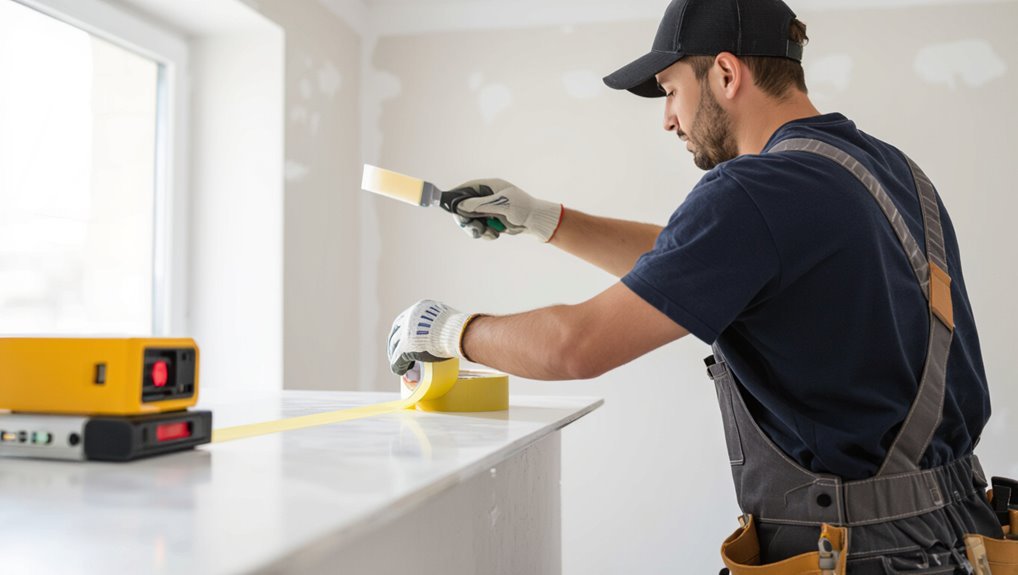
Start by gathering your tape, a utility knife, a straightedge, and a clean rag so you can work without interruptions.
You’ll prep surfaces, measure runs, and apply tape with steady pressure. Use short, overlapping pieces at corners, trim edges with the straightedge, and keep a consistent sequence room-to-room.
These taping techniques boost workflow efficiency and reduce rework, saving time and improving results.
Why Proper Taping Improves Paint Results
When you tape carefully, you’ll get crisp, clean lines that make the whole room look professional.
Proper taping also prevents paint bleed along edges, so you won’t have to scrape or touch up later. Spending a few extra minutes on tape placement saves time and frustration when you remove it.
Crisp, Clean Lines
Although masking tape seems like a small step, getting your edges right makes the whole job look professional; it prevents bleed, keeps paint layers sharp, and saves you time on touch-ups.
You’ll use disciplined tape techniques and attention to line precision, pressing tape firmly, removing at the right angle, and painting in controlled passes so your borders stay crisp and editing stays minimal.
Paint Bleed Prevention
Nailing crisp edges only happens if you stop paint from seeping under the tape, so preventing bleed is where proper taping pays off.
You’ll press tape firmly, seal edges with a putty knife, and remove it at the right time to protect the paint finish and extend tape lifespan.
- Firm adhesion
- Seal with tool
- Timely removal
Tools & Materials Pros Keep for Taping
Pros keep a short list of reliable tools and materials at hand so taping goes quickly and the paint lines stay sharp.
You’ll want quality tape types, a sharp utility knife, a 2-inch angled brush for sealing edges, a plastic edger, and a straightedge.
Learn application techniques: press tape firmly, remove at 45° while paint’s tacky, and replace damaged pieces immediately.
Choose Tape by Wall Surface
Pick a tape that matches your wall’s finish so the edge stays crisp and the paint doesn’t bleed.
For smooth painted surfaces you’ll want a standard painter’s tape, while textured or rough walls need a thicker, more flexible tape that molds into crevices.
Use low-tack or paper-based tape on delicate or fresh plaster to avoid pulling or damaging the surface.
Smooth Painted Surfaces
When you’re working with smooth painted walls, go for a low- to medium-adhesion painter’s tape that sticks well without tearing the finish when removed.
You’ll use smooth surface techniques to seal edges, press down firmly, and remove tape at a 45° angle for professional finishes.
- Clean, dry surface
- Press and burnish edges
- Remove slowly at 45°
Textured Or Rough Walls
Rough or heavily textured walls need a high-adhesion painter’s tape made for uneven surfaces so the tape grabs into crevices and keeps paint from seeping under the edges.
Test small sections, press tape firmly into valleys, and use a putty knife to seat edges.
For textured techniques, focus on thorough wall preparation—cleaning dust and loose particles—so tape bonds and lines stay crisp.
Delicate Or Fresh Plaster
Because fresh or delicate plaster can crumble or lift if you’re too aggressive, choose a low-adhesion, paper-based painter’s tape that won’t pull away the finish.
You’ll protect a fresh surface by testing a small area, applying gently, and waiting before painting.
- Test adhesion
- Apply with light pressure
- Remove slowly after paint dries
Which Tapes to Avoid and Why
Not all masking tapes are safe for walls—some will peel paint, leave goo, or fail to seal properly—so you should avoid heavy-duty duct tape, old brittle painter’s tape, and general-purpose packaging tapes.
Cheap tapes often sacrifice tape durability and tape flexibility, causing tape residue and poor tape performance.
Choose tapes with proven tape compatibility to your surface and avoid aggressive adhesives that damage finishes.
How to Test Tape on a Small Patch
Before you tape the whole wall, test a small, inconspicuous patch first to validate the tape won’t peel paint or leave residue.
Press the tape, wait, then remove slowly to check tape adhesion on different finishes.
Try varied test surfaces (trim, flat wall, semi-gloss) to ascertain compatibility before committing.
- Press and wait
- Remove slowly
- Inspect for residue
Prepping Walls: Clean, Sand, Repair
Before you tape, clean the walls thoroughly to remove dust, grease, and cobwebs so the tape sticks evenly.
Patch holes and cracks, then sand the repairs smooth to flush them with the surrounding surface.
Taking these steps now prevents paint bleed and uneven edges later.
Clean Walls Thoroughly
Start by removing dust, cobwebs, and loose paint with a vacuum or a stiff-bristled brush so the surface is ready for deeper cleaning.
You’ll perform surface inspection, use appropriate cleaning techniques and mild cleaning solutions, focus on dust removal, then guarantee thorough wall drying before taping.
- Vacuum and brush
- TSP or mild detergent wipe
- Rinse and air-dry
Patch And Smooth
Patch and smooth the walls by filling holes, cracks, and gouges with a suitable spackling compound or joint compound. Then feather the edges so repairs blend with the surrounding surface.
You’ll use proven patch techniques: apply compound in thin layers, let each dry, sand lightly, and repeat. Aim for a smooth application, wipe dust, and inspect under angled light before priming and taping.
When to Strip Old Paint vs. Tape Over It
If the old paint is firmly adhered, smooth, and free of peeling or bubbling, you can usually tape over it and save time; but if it’s flaking, chalky, or built up in uneven layers, you’ll need to strip or thoroughly sand that area first.
Choose tape selection based on surface texture and finish; consider old paint removal for safety and adhesion.
Select tape that matches the surface texture and finish, and remove any loose old paint for secure adhesion.
- Inspect and test adhesion.
- Strip or sand where needed.
- Use appropriate tape.
Temperature & Humidity Effects on Tape
You’ll want to check the tape’s recommended adhesion temperature range before you start, since some tapes won’t stick well in cold or extreme heat.
Also remember that high humidity slows paint drying and can weaken tape bonds, while very dry air can make edges brittle.
Finally, consider outdoor versus indoor conditions—exposure to wind, sun, or fluctuating temps outdoors often requires more robust tape than controlled indoor environments.
Tape Adhesion Temperature Range
Because tape adhesive reacts to both heat and cold, choosing the right temperature window matters for a clean edge and easy removal.
You’ll want to monitor tape temperature and understand adhesion factors to prevent lifting or residue.
Consider these guidelines:
- Ideal range: 50–90°F for most painter’s tape.
- Below 50°F: reduced tack, brittle backing.
- Above 90°F: softened adhesive, potential residue.
Humidity’s Effect On Drying
When humidity rises, paint takes longer to dry and tape can lose its clean release, so you should factor moisture into both timing and technique.
You’ll monitor humidity impact and adjust: extend drying times, use slower-release tape, or increase ventilation.
Don’t rush tape removal; peel slowly at a 45° angle once paint’s tack-free. That prevents lifting, smudges, and uneven edges.
Outdoor Vs. Indoor Conditions
Although indoor and outdoor jobs both use the same tape, temperature and humidity differences change how it behaves, so you should pick tape and time your work with those conditions in mind.
You’ll adjust technique based on outdoor conditions versus indoor conditions to avoid adhesive failure or paint bleed.
- Choose tape rated for temperature extremes.
- Avoid taping in high humidity.
- Press edges firmly and remove at recommended temperature.
Masking Baseboards, Trim, and Floors
Masking baseboards, trim, and floors prevents paint bleed and speeds cleanup, so start by removing dirt and dust and running a soft cloth or vacuum along edges. Use proper masking techniques and focus on tape alignment; press edges down firmly and overlap paper where needed. Protect floors with rosin paper and secure edges.
| Item | Purpose |
|---|---|
| Tape | Seal edges |
| Paper | Catch drips |
| Roller | Smooth press |
Taping Windows and Doors Without Gaps
1 simple trick makes taping windows and doors without gaps far easier: work from the corner out, pressing a quality painter’s tape firmly along the frame edge and smoothing it as you go to eliminate bubbles and wrinkles.
- Run tape tight along window frames, overlapping corners.
- Wrap tape around door edges, keeping tension.
- Seal seams with a finger or plastic putty knife to prevent bleed.
Taping Textured Walls and Popcorn Ceilings
When you’re working with textured walls or popcorn ceilings, take extra care so tape follows the surface contours—press it gently into crevices with a soft brush or your fingertips to guarantee a tight seal and prevent paint bleed.
Use low-tack painter’s tape, stretch minimally, and overlap seams slightly.
Follow textured wall techniques and popcorn ceiling tips: test a small area, work slowly, and remove tape while paint’s tacky.
Protecting Glossy Trim and Delicate Finishes
Protect glossy trim and delicate finishes by choosing the gentlest tape and prepping surfaces so paint won’t seep or lift when you remove it.
You’ll test tape on an inconspicuous spot, clean and degrease the trim, and press edges firmly for trim protection and finish preservation.
- Test adhesion
- Clean and dry
- Burnish edges
Get Crisp Ceiling-Edge Lines
Start by prepping the ceiling edge: clean any dust or cobwebs and make sure the surface is dry so tape will stick.
Apply a high-quality cutting-in tape along the joint, pressing firmly to seal the edge.
Then paint right up to the tape for a crisp, straight ceiling line.
Prep The Ceiling Edge
1 simple trick lets you get a razor-sharp line at the ceiling: press a high-quality painter’s tape firmly along the junction, smoothing it to remove gaps and wrinkles.
For ceiling preparation and precise edge alignment, do these steps:
- Clean dust and grease along the ceiling.
- Measure and mark irregular spots.
- Firmly burnish the tape edge before painting.
Use Cutting-In Tape
When you want razor‑sharp lines between wall and ceiling, use cutting‑in tape to create a precise barrier that keeps paint from bleeding; press it down firmly and smooth it along the seam so the edge stays clean while you roll or brush.
You’ll appreciate the cutting in benefits: less touch‑up, faster work.
For best results, plan tape application in short, continuous strips and seal edges.
Straight-Line Techniques for Baseboards
Lay a crisp edge along baseboards by aligning your tape precisely against the trim profile and pressing it down firmly with a flat tool or your thumb; this keeps paint from bleeding under and guarantees a clean, straight line.
Align tape snugly to the trim and press firmly for a sharp, paint‑bleed‑free baseboard edge.
- Use painter’s tape for precise baseboard alignment, smoothing as you go.
- Overlap corners slightly, then trim with a utility knife for accuracy.
- Seal edges with a damp finger to prevent seepage before you paint.
Two-Tone Walls and Color-Blocking Tape Layouts
When you plan a two-tone or color-blocked wall, map your layout first so proportions and sightlines look balanced.
Use level guides and measure carefully before you apply tape to avoid crooked joins.
Press the tape edges firmly and seal with a thin coat of the base color to guarantee crisp, clean lines.
Planning Your Layout
A clear plan makes two-tone and color-blocking jobs look professional and go faster, so start by deciding the exact lines, heights, and proportions you want before you touch any tape.
Use layout strategies and precise wall measurements to map zones, mark level reference lines, and measure proportions.
- Sketch zones
- Record measurements
- Define proportions
Achieving Clean Lines
Now that you’ve mapped your zones and measured exact heights, it’s time to get your tape on the wall to create crisp separations between colors.
Choose tape types for sharp edges—painter’s tape for straight lines, delicate-surface tape for trim.
Apply firmly, press edges with a credit card, and use precise tape techniques: overlap corners, remove at a 45° angle after paint dries slightly to avoid peeling and jagged lines.
Taping Inside vs. Outside Corners
Corners change how you apply tape, so you’ll use different techniques for inside and outside corners.
You’ll treat each corner type differently to prevent paint bleed and maintain crisp edges.
- Use inside corner techniques: press tape into the angle, overlap slightly, burnish tight.
- For outside corner methods: wrap tape around edge, fold neatly, smooth to avoid gaps.
- Remove slowly.
Use Caulk & Sealants to Stop Bleed
Before you tape, run a bead of paintable caulk along gaps and joints so the seal is tight and paint won’t seep through.
Smooth the sealant with a damp finger or tool to create a clean edge that the tape can press against.
Once it’s cured, tape over the sealed joint for a crisp, bleed-free line.
Seal Joints With Caulk
If you want paint lines to look sharp, seal gaps and seams with a quality acrylic latex caulk before you tape; caulk fills cracks where paint could bleed and creates a smooth edge for your tape to adhere to.
- Prep surfaces, then perform precise caulk application for consistent joints.
- Smooth bead lightly with a wet finger for neat joint sealing.
- Let caulk cure fully before taping to prevent gaps or lifting.
Smooth Sealant For Edges
Once your caulked joints have cured, apply a thin, even bead of paintable acrylic latex or silicone-acrylic hybrid along any remaining gaps where tape meets trim or drywall to stop paint bleed and create a razor-sharp edge.
Smooth the bead with a wet finger or tool for smooth application and consistent edge sealing. Let it dry fully, then remove tape and paint confidently.
Paint Methods That Work With Tape
Choose the right application method to get clean lines and prevent paint bleed when you’re taping a wall.
Match paint types with tape types, plan surface preparation and project planning, and use proper application techniques.
Consider masking methods, adhesion tips, and removal strategies to avoid damage.
Mask carefully, boost tape adhesion, and remove slowly to protect surfaces and prevent paint bleed.
- Rollers vs brushes
- Spray application
- Cut-in technique
How to Press and Seal Tape for Adhesion
After you’ve picked the right tape and planned your cut-ins or roll paths, press and seal the tape firmly along every edge so paint can’t creep underneath.
Use a plastic putty knife or fingernail to burnish edges, working outward.
Adopt consistent adhesion techniques: rub firmly, check seams, and reapply where needed.
For clean tape application, press in short sections to maintain straight lines and contact.
How Long to Wait Before Painting After Taping
Timing matters when you paint over taped edges, so let the adhesive set before you roll or cut in; typically wait 15–60 minutes depending on the tape and room conditions.
- Check manufacturer notes for recommended tape duration.
- Use ambient temperature and humidity to judge a safe painting timeline.
- Test a small section: if tape lifts cleanly, start painting confidently within the window.
How Long to Leave Tape On After Painting
While paint is still tacky you’ll risk lifting fresh edges, so wait until the finish feels dry to the touch before removing the tape; for most latex paints this means 30–60 minutes, but for slower-drying enamels or high-humidity conditions you may need to wait several hours or even overnight.
For reliable tape removal timing, check paint drying across surfaces and remove tape once edges resist indentation.
Removing Tape Without Damaging Paint
Peel the tape back slowly at a 45-degree angle, keeping the pull close to the wall so you don’t tug away fresh paint.
Use steady motion, warm tape edges with your hand if needed, and remove before paint fully hardens for best tape removal techniques and avoiding paint damage.
- Slow, angled pull
- Warm and steady hand
- Remove within recommended time
Fixing Paint Bleed and Imperfect Lines
Fix paint bleed and imperfect lines by addressing the issue quickly and precisely: gently scrape any raised ridges with a razor blade or putty knife, sand the area smooth once the paint is dry to the touch, then touch up with a small artist’s brush or angled sash brush for crisp edges. Use paint correction techniques and edge smoothing methods to refine results.
| Step | Tool | Result |
|---|---|---|
| Scrape | Razor | Remove ridge |
| Sand | Fine grit | Smooth surface |
| Touch-up | Artist brush | Crisp edge |
| Seal | Light roll | Blend finish |
| Inspect | Lens | Verify lines |
Fast Taping Techniques for Large Rooms & Houses
When you’re tackling a large room or whole house, start by planning your tape sequence so you work efficiently and don’t backtrack.
Run long strips of tape along continuous walls and trim as you go to minimize joints and speed the job. This approach keeps your lines straight and saves you time overall.
Plan Tape Sequence
Start by mapping the room into logical sections—walls, trim, windows, doors, and ceilings—and decide the order you’ll tape so you work continuously without backtracking.
You’ll sequence high-traffic zones first, group similar surfaces, and plan exits.
Use tape application techniques and tape alignment strategies to stay fast and accurate.
- Perimeter first
- Group by surface
- Exit-aware routing
Use Long-Run Strips
After you’ve mapped the room and planned your tape sequence, use long-run strips to speed up coverage in large spaces.
Run full-length pieces along baseboards and ceilings, then smooth once. You’ll notice long run benefits: fewer seams, faster laying, and cleaner edges.
For efficient application, keep tape taut, peel backing steadily, and overlap ends minimally to maintain straight lines and adhesion.
When to Use Liquid Masking Film Instead of Tape
If you’re protecting irregular edges, textured surfaces, or tight seams that tape can’t seal well, liquid masking film is the smarter choice.
You’ll brush or spray it on, let it dry, then peel after painting.
Consider these tape alternatives for specific needs:
- Complex trim profiles
- Stucco or popcorn ceilings
- Narrow gaps and seams
Trim-First vs. Wall-First Taping Strategies
You can tape the trim first to protect edges and get razor-sharp lines, which is great if your trim is a different color or already finished.
Taping the wall first is faster for large projects and helps you cover broad areas without worrying about paint bleeding onto the surface.
If you’re unsure, start with trim-first for detailed rooms and switch to wall-first on bigger, simpler spaces or when speed matters.
Trim-First Advantages
Choosing to tape the trim first gives you cleaner edges and faster touch-ups later, especially when you’re dealing with complex moldings or multiple colors.
You’ll protect trim details and adapt to trim styles, trim colors, and trim materials during trim installation.
- Prevent paint overlap on fine moldings.
- Simplify multi-color shifts.
- Speed cleanup and spot repairs.
Wall-First Benefits
Trim-first taping has clear perks, but starting with the walls has its own advantages you’ll want to evaluate. You’ll protect large surfaces faster, simplify wall protection, and pick tape selection for cleaner edges. You’ll reduce bleed and speed roll-ready prep while keeping trim accessible for final detailing.
| Benefit | Why it helps | Quick tip |
|---|---|---|
| Speed | Covers big areas fast | Use wide tape |
| Clean edges | Less overlap | Choose low-bleed tape |
| Access | Trim stays reachable | Finish trim last |
When To Switch
If conditions or goals change mid-job, switch strategies so you don’t waste time or compromise finish quality.
Decide based on drying schedule, complexity, and desired edge crispness. Consider tape types and adhesion factors before changing.
- Trim-first: protects trim when trim prep dominates.
- Wall-first: faster for large areas.
- Hybrid: use both for mixed conditions.
Taping Safely Around Outlets, Switches, and Fixtures
Before you tape, cut power to the room and remove faceplates so you can work cleanly and safely around outlets, switches, and light fixtures.
Use low-tack painter’s tape to mask edges, folding small tabs for easy removal. Press tape firmly for outlet safety and apply protective coverings for fixture protection.
Restore plates after paint dries, then turn power back on and test.
Exterior Taping: Walls, Siding, and Weatherproofing
Taping exterior walls and siding starts with a clear plan: identify joints, seams, and shift points where water or paint bleed can occur, then choose weatherproof tape rated for UV exposure and outdoor adhesion.
Taping exterior siding begins with a clear plan: spot joints and seams, then use UV-rated, weatherproof tape.
You prep surfaces, note siding types, and follow weatherproof techniques for durable seals during wall preparation.
- Clean and dry
- Seal overlaps and trim edges
- Inspect adhesion after curing
Tape Brands: Cost vs. Performance Picks
Choosing the right tape comes down to balancing budget and performance: you’ll want durable adhesion, clean removal, and UV/weather resistance where needed without overspending on features you won’t use.
Compare brands by peeling tests, surface compatibility, and claimed tape performance.
For typical interior walls, pick economical rolls with reliable edge hold; for demanding jobs, pay more for proven cost effectiveness and longer-lasting adhesion.
Eco-Friendly & Low-VOC Taping Options
If you’re weighing cost and performance, it also makes sense to look at eco-friendly and low‑VOC tape options.
You’ll prefer sustainable materials and biodegradable tape when practicing green painting; choose products with non toxic adhesives and natural fibers for environmentally safe results.
Consider these practical picks:
Consider these practical picks: sustainable paper tape, low‑VOC painter’s tape, and recycled‑core eco options.
- Paper tape with natural fibers
- Low voc choices in painter’s masking tape
- Recycled-core, eco friendly options
How to Test Tape on Surfaces Before Committing
Before you commit a whole room to one tape, test a small patch on each surface you’ll be painting so you know how the adhesive behaves and how easily the tape comes off.
Try a short strip on primer, bare drywall, trim, and glossy surfaces.
Check tape adhesion, surface compatibility, and removal after recommended dwell time.
Note any residue or paint pull immediately.
Fix Tape Adhesion Failures and Bubbles
A few quick fixes can save your paint job when tape starts to lift or bubble—start by pressing loose edges down firmly with a plastic putty knife or a fingernail to re-seat the adhesive.
Then act fast to restore tape adhesion and bubble prevention.
- Smooth edges toward paint with firm pressure.
- Replace sections that won’t stick.
- Clean surface oil before re-taping.
Pro Finishing Touches After Tape Removal
Once you peel the tape away, inspect the edge closely for tiny paint bridges, feathered edges, or uneven lines so you can correct them while the paint is still workable.
Use precise tape removal techniques—pull slowly at a 45° angle.
Do a quick post paint inspection, scrape raised bits with a razor, sand lightly, and touch up with a fine artist’s brush for crisp, professional lines.
When to Call a Pro Instead of DIY Taping
If your project involves intricate trim, high ceilings, or surfaces that must meet strict color-matching or warranty standards, call a pro—trying to DIY in those scenarios can cost you time and money and still leave imperfect results.
You should seek professional advice when risks, limited skills, or complex taping techniques exceed your comfort.
- Risky repairs
- Complex geometry
- Contract requirements
Taping Checklist: Steps for Pro Results
1 clear checklist will keep your taping work fast and professional: gather the right tools, prep surfaces, apply tape correctly, feather joint compound, sand smoothly, and inspect before priming.
Follow step-by-step taping techniques: remove dust, cut tape to fit, press edges firmly, mud thin layers, dry between coats, sand light.
Use professional tips: check seams, touch up, keep workspace clean.
Frequently Asked Questions
Can I Tape Over Wallpaper Without Damaging It?
Yes — you can, but results vary by tape types and wallpaper types. Use low-tack painter’s tape on intact, non-peeling surfaces, test a hidden spot first, and avoid prolonged adhesion to prevent lifting or adhesive residue.
Will Tape Remove Chalk or Lime From Older Masonry Surfaces?
About 60% of failures stem from poor surface prep—so no, tape can lift chalky or lime-rich surfaces unless you improve masonry preparation first; you’ll test tape adhesion, remove loose powder, and stabilize before applying tape.
How Do I Tape Around Crown Molding Complex Profiles?
You’ll use careful taping techniques: press low‑tack painter’s tape into crown molding crevices, overlap edges, score with a blade, and seal the tape edge. Work in small sections so tape follows complex profiles accurately.
Can Tape Interfere With Primer Adhesion on New Drywall?
Absolutely—tape can wildly ruin primer adhesion if left on porous drywall too long. You’ll guarantee tape adhesion by sealing new drywall with a quality primer during drywall preparation, removing tape shortly after painting for best results.
Is There a Safe Way to Reuse Partially Used Tape Rolls?
Yes — you can safely reuse partially used tape rolls if you store them properly. You’ll extend tape longevity by sealing rolls in airtight bags, keeping them cool, avoiding dust, and rotating stock for best tape storage and performance.
Conclusion
You’ve got this—taping right transforms sloppy edges into museum-worthy lines. Stick to the right tape, prep surfaces, and press edges firmly so paint won’t sneak under; it’s almost like giving your wall a superhero cape. Fix bubbles, remove tape at the right moment, and add final touch-ups for flawless results. If the job’s huge or your walls are wonky, call a pro—but for most rooms, a careful DIY taping job will wow everyone.
