
How Long Does It Take to Paint a Wall? Time Breakdown
You can usually paint a small wall (10–12 ft) in 1–2 hours and a standard wall (12–16 ft) in 2–4 hours, but an accent wall from prep through drying can take 4–8 hours. Prep, repairs, and whether you need primer add time, and drying windows (latex 2–4 hrs, oil ~24 hrs) dictate recoats. Using sprayers, good rollers, and proper masking speeds things up, and if you want a full breakdown you’ll find timing tips next.
How Long to Paint a Wall : Quick Estimates
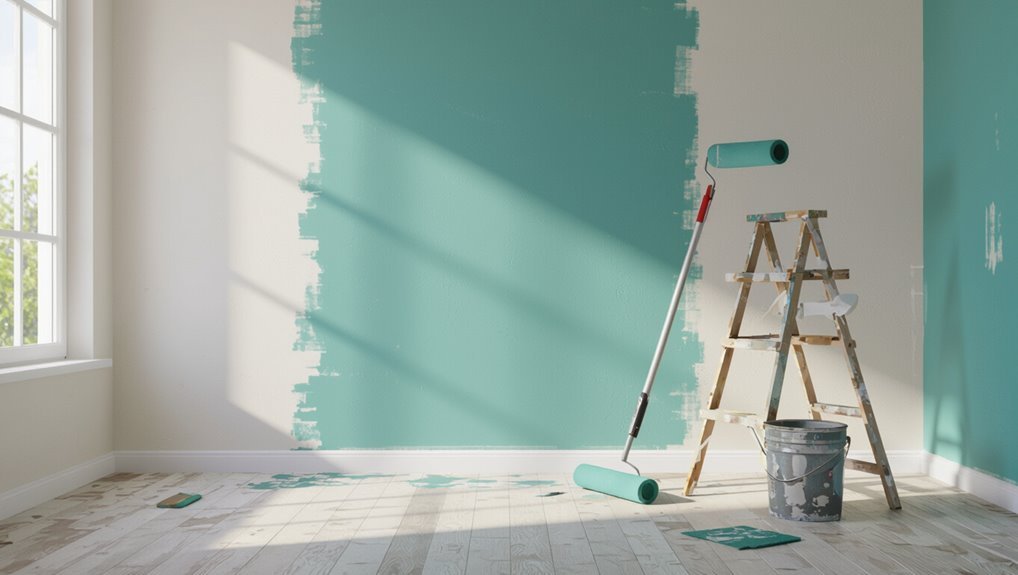
A quick estimate for painting a single wall depends mostly on its size and the prep you do; expect about 1–2 hours for a small wall (10–12 ft wide) and 2–4 hours for a standard 12–16 ft wall when you include light taping and one coat.
You’ll factor color selection, drying time, and wall texture; complex textures or bold colors slow you down.
Time-Saving Tools & Setup for Faster Painting
To speed up your job, choose the right paint sprayer for large surfaces and a quality roller for touch-ups.
Use efficient prep tools—like extendable poles, drop cloths, and edge guards—to cut setup and cleanup time.
With the proper gear, you’ll finish faster and get better results.
Best Paint Sprayers
Paint sprayers can cut your wall-painting time dramatically by delivering even, continuous coats where brushes and rollers slow you down.
You’ll pick between HVLP, airless, and handheld sprayer types based on project scale and skill. They handle varied paint finishes—flat to semi-gloss—quickly, but expect setup, masking, and cleanup time.
Choose one matching wall size to maximize speed and finish quality.
Efficient Prep Tools
When you want to speed up wall prep without sacrificing quality, the right tools make the job noticeably faster and less messy.
Use multi-surface scrapers, corner rollers, extendable sanders, and a quality vacuum to cut debris.
Masking film and fast-release painter’s tape save time.
These efficient tools boost prep efficiency so you can prime and paint sooner with cleaner, more consistent results.
Total Time for One Accent Wall (Prep to Dry)
Expect to spend roughly 4–8 hours from setup to fully dry if you count prep, painting, and initial drying time for a single accent wall.
Your exact time depends on color selection and wall texture—stronger colors or rough surfaces need more coats and drying.
Plan for 1–2 hours prep, 1–3 hours painting, and 2–3 hours initial drying; humidity and paint type adjust totals.
Prep & Clearing: Furniture, Masking, and Drop Cloths
Before you start rolling, clear the room so you can move freely and protect everything that stays. Move furniture toward the center or out, using a practical furniture arrangement to keep pathways open.
Lay drop cloths and secure edges. Apply masking techniques to trim, outlets, and baseboards—use painter’s tape, fold cloth edges, and check for gaps so paint doesn’t seep or splatter.
Surface Repair & Sanding: Minor vs. Major Fixes
Now that the room’s cleared and protected, inspect the walls for dents, holes, and rough patches so you can decide whether repairs are minor or major.
For minor fixes, patch and sand quickly; for major ones, remove damaged drywall, apply joint compound, and sand in stages.
Good surface preparation and proper repair techniques save time later and guarantee a smooth, paint-ready finish.
Do You Need Primer? When and How Much Time It Adds
If your walls have stains, bare drywall, or a big color change, you’ll need primer to guarantee even coverage and adhesion — and it adds real time to the job.
You’ll weigh primer benefits against extra time: sealing, stain blocking, better topcoat adhesion.
Choose primer types for surface and finish, use proper application techniques, and allow full primer drying—usually 1–4 hours—before painting.
Cutting In & Edging: Time Per Wall and Speed Tips
Once your primer’s dry and you’re ready for color, cutting in and edging define the job’s pace—this is where neatness meets speed.
You’ll use Cutting techniques, Brush selection, and Tape application for Line precision and Edge finishing; Corner strategies keep joins crisp.
Tips:
- Load brush properly.
- Use angled brush for corners.
- Remove tape before full dry.
Rolling a Wall: Time Per Coat by Size and Roller Type
When you roll a wall, the roller nap and quality change how fast and evenly the paint goes on, so pick the right type for your texture.
For a standard 12×8′ wall expect roughly 10–20 minutes per coat with a medium nap roller, more for larger walls or rough surfaces and less for small, smooth walls.
Allow the paint’s recommended drying time before recoating—typically 1–4 hours for latex, longer for oils—to avoid tackiness and roller marks.
Roller Type Impact
Although the wall size sets the baseline, the roller you pick can change how fast you cover it—nap length, width, and material all affect paint pickup, release, and the number of passes you’ll need.
You’ll choose roller materials and roller nap based on texture and speed. Consider:
- Short nap — smooth, fast.
- Medium nap — versatile.
- Long nap — textured, slower.
Wall Size Estimates
A few simple size categories will help you estimate how long each coat takes with different rollers: small (up to 60 sq ft), medium (60–200 sq ft), and large (200+ sq ft).
For small walls you’ll move quickly; medium takes moderate time; large walls demand sustained pace.
Adjust for wall dimensions and chosen painting techniques—nap length, overlap, and coverage affect rate per coat.
Drying And Recoat
Because paint needs time to form a skin before you recoat, drying intervals depend on product, temperature, humidity, and roller choice—thin naps and fast-drying latex often allow recoating in 1–2 hours on small to medium walls, while thick naps, oil-based paints, or humid conditions can push that to 6–24 hours.
Use these drying techniques and watch recoat timing:
- Thin-nap roller, quick latex: 1–2 hrs
- Medium nap, standard latex: 2–4 hrs
- Thick nap or oil-based: 6–24 hrs
How Many Coats and Realistic Dry/Recoat Times
Most interior walls need two coats for full, even coverage, though primer counts as the first coat when you’re covering a raw surface or a drastic color change. You’ll plan based on coat thickness, drying conditions, and paint type. Typical recoat windows: latex 2–4 hours, oil 24 hours. Adjust for humidity and temperature.
| Coat type | Recoat time |
|---|---|
| Primer | 2–24 hrs |
| Latex | 2–4 hrs |
| Oil | 24 hrs |
| Thick coats | Longer |
Two Scenarios: Quick Refresh vs. Full Repaint + Common Delays
You’ve seen how coat count and drying windows affect timing, so next consider two common project paths: a quick refresh and a full repaint.
You’ll choose based on color selection, wall texture, and scope.
- Quick refresh: patch, one coat, 2–4 hours.
- Full repaint: prep, priming, 2–3 coats, 1–3 days.
- Delays: humidity, repairs, curing time.
Frequently Asked Questions
Can I Paint a Wall With Humidity Over 70%?
You shouldn’t paint when humidity’s over 70%. High humidity effects slow paint drying, cause tackiness, runs, and poor adhesion; you’ll get longer cure times and potential mildew, so wait for drier conditions or use fast-drying, moisture-tolerant products.
What’s the Best Temperature for Painting Indoors?
Think of a cozy studio: you’ll want an ideal temperature of 65–75°F (18–24°C), since that range speeds paint drying evenly; you’ll avoid tacky finishes or blistering and get smooth, predictable results every time.
Can I Use Leftover Paint From Years Ago?
Yes — you can often use leftover paint, but check smell, texture, and color; its paint durability depends on storage conditions, so if it’s sealed, stored cool and dry, you’ll likely get good results.
How Long Before Hanging Pictures After Painting?
If you need immediate hanging, wait at least 24–48 hours; for full drying time and paint curing, wait 7–30 days. For example, a rented apartment waited 48 hours for light frames, avoiding smudges and dents.
Is Low-Voc Paint Safe for Bedrooms With Babies?
Yes — you can use low‑VOC paint in bedrooms with babies; you’ll reduce paint fumes and improve baby safety, but you should ventilate, wait until paint fully dries/cures, and keep infants out during application and drying.
Conclusion
Think of painting a wall like making coffee: one quick pour can wake a room, but the best cup needs time. I once rushed an accent wall in an hour and got streaks; when I took the extra day for prep and two coats, the finish looked like a café’s polished counter. Plan for prep, at least two coats, and realistic dry times — that extra wait turns a decent job into something you’ll actually love.
