
How Much Wall Will a Gallon of Paint Cover? Coverage Explained
You’ll usually get about 350–400 sq ft from one gallon of wall paint for a single coat, but that changes with paint type, surface texture, and application method. Rough or porous walls, dark colors, and extra coats will eat more paint, while higher-quality formulas often cover better. Measure each wall, subtract windows and doors, then divide by the paint’s coverage and add 5–10% for waste. Keep going to learn tools, tips, and testing tricks.
How Much Wall Does One Gallon of Paint Cover?
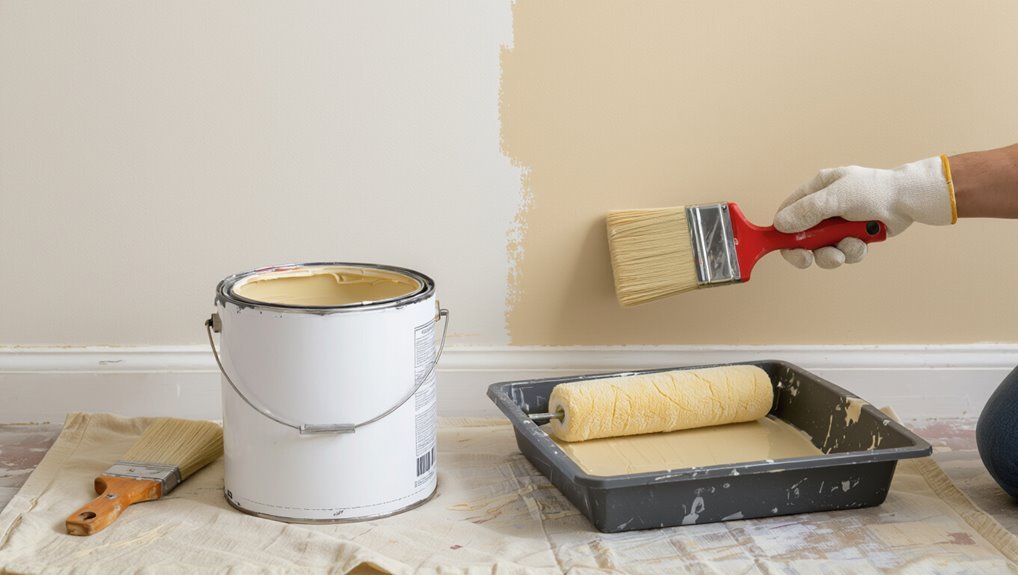
One gallon of paint typically covers about 350 to 400 square feet of smooth, primed wall with a single coat, though that number can change based on paint type, surface texture, and how you apply it.
You’ll find glossy or thicker paints cover differently, and rough wall texture demands more.
Adjust expectations for coats, finish, and application method to avoid running short.
Measure Walls Fast to Calculate Paint Coverage
Start by measuring each wall’s width and height so you can quickly calculate square footage.
Subtract the area of doors and windows to avoid overestimating how much paint you need.
With those numbers, you can divide total wall area by a gallon’s coverage to figure how many gallons to buy.
Measure Wall Dimensions
Measure each wall’s height and length with a tape measure, jotting down the numbers as you go so you don’t have to recalculate later. Use simple wall measurement techniques to get accurate dimensions quickly, noting units and rounding consistently. Record totals in a small table to visualize totals.
| Wall | Dimension |
|---|---|
| A | 10×8 ft |
| B | 12×8 ft |
Account For Openings
Before you calculate paint needs, subtract openings like doors and windows from each wall’s area so your totals reflect only paintable surface.
When measuring, note openings impact by recording each door and window height and width, then multiply and total their areas.
Subtracting areas from wall measurements gives you accurate square footage, prevents overbuying paint, and guarantees estimates match actual coverage.
Simple Formula: Convert Square Footage to Gallons Needed
Start by measuring your wall surface area in square feet so you know the exact coverage you need.
Divide that number by the paint’s coverage rate (usually listed as square feet per gallon), then multiply by the number of coats you plan to apply.
Add a small percentage for waste and touch-ups to round up to the nearest gallon.
Measure Your Surface Area
To figure out how much paint you’ll need, calculate the total square footage of the area you’re covering and divide that by the paint’s coverage rate (usually listed on the can).
Measure each wall’s height and width, subtract windows and doors, and add ceilings if needed. Use measurement tools like a tape measure or laser for accurate surface area, then round up slightly for waste.
Use Paint Coverage Rates
Now that you’ve measured your surfaces, convert that square footage into gallons by using the paint’s stated coverage rate (usually in square feet per gallon).
Divide total square feet by that number to get gallons.
Check different paint types for varying coverage factors—primer, latex, and oil have different yields.
Round up to the nearest fraction a retailer sells and note can sizes before purchasing.
Account For Coats And Waste
Because most projects need more than a single coat, you should multiply your initial gallon estimate by the number of coats you plan to apply and add a small percentage for waste (brush drips, roller overspill, and touch-ups).
Do your coat calculation, factor in waste management, and round up so you don’t run short.
- Measure square footage accurately
- Know coverage per gallon
- Include primer needs
- Add 5–10% for waste
- Round up to nearest gallon
How Many Coats Will One Gallon Usually Cover?
Most gallons of interior paint will cover about 350–400 square feet with a single coat, but how many coats you’ll need depends on the color change, surface texture, and paint quality.
You’ll typically need one to three coats: one for similar colors, two for standard coverage, three for deep color shifts or rough surfaces.
Consider paint layering and finish considerations when planning.
How Paint Quality and Type Change Coverage Per Gallon
When you pick a paint, its quality and type directly affect how much area a gallon will cover, so choosing wisely can save time and money.
You’ll notice higher-quality paints often have better pigment concentration and optimized paint viscosity, so they spread further and need fewer coats.
- Premium vs. budget
- Latex vs. oil
- Pigment concentration importance
- Viscosity control
- Additives and binders
How Surface Texture and Porosity Affect Coverage
Along with paint quality and type, the surface you’re covering has a big say in how far a gallon will go.
Rough surface texture and high porosity increase absorption rates, so you’ll use more paint. Smooth, low-porosity walls need less.
Consider finish types—gloss covers differently than matte—and test a small area to gauge porosity effects before committing to full coverage.
How Priming or Painting Over Dark Colors Affects Paint Needs
Because dark colors soak up light and can show through lighter coats, you’ll often need extra steps and more paint when covering them.
Dark hues absorb light and can bleed through, so expect extra prep and additional paint to fully cover them.
You’ll face dark color challenges, so factor in priming benefits to reduce coats and improve opacity.
Consider these steps to plan paint need:
- Test a primer first
- Choose high-hide primer
- Apply thin, even coats
- Count primer as coverage
- Allow full drying
Adjusting Estimates for Doors, Windows, and Trim
When estimating paint, subtract the area of windows and doors from your total wall square footage so you don’t buy more than you need.
Remember to account for trim and molding separately, since they often require a different finish and more precise cutting-in.
Also factor in ceilings and door frames if you plan to paint them, because they can add significant surface area.
Subtract Openings Area
Before you calculate paint needs, subtract the area taken up by doors, windows, and large trim so you don’t overbuy.
Account for openings impact by measuring each opening and subtracting from total wall area; that way you calculate adjustments precisely.
- Measure door height × width
- Measure each window
- Note built-in shelves
- Subtract closets
- Tally vents and outlets
Trim And Molding
After you’ve subtracted doors, windows, and large openings from your wall area, account for trim and molding since they change paint quantities and finish decisions.
Measure baseboards, casings, and chair rails separately; different trim styles and molding types need varying coats and primer.
If you’re painting trim a contrasting color or high-gloss finish, add extra square footage to your paint estimate for accurate coverage.
Ceiling And Door Frames
1 key adjustment you shouldn’t skip is accounting for ceilings and door frames, since they affect both paint quantity and the type of finish you’ll choose.
You’ll factor ceiling height and frame material when estimating coverage and sheen—taller rooms need more paint; wood frames may need primer.
- Measure ceiling height
- Count doors and windows
- Note frame material
- Choose appropriate finish
- Add primer allowance
When to Count Ceiling and Trim Paint Separately
You should treat ceiling and trim paint as separate calculations when their finishes, sheens, or colors differ from the walls, because those factors change coverage, application method, and the amount of paint you’ll need.
Count ceiling paint and trim paint separately during project estimation if you’re switching pigments, using different tools, or need more coats for durability or clean lines.
Do Finish Types (Matte, Eggshell, Satin, Gloss) Change Coverage?
Although finish type can affect how paint behaves on a surface, it rarely changes coverage enough to require a different gallons-per-square-foot calculation; matte, eggshell, satin, and gloss all have similar theoretical spread rates.
Finish type alters sheen and feel, but rarely changes coverage—matte to gloss share similar spread rates.
So you should base your basic estimate on the manufacturer’s stated coverage and adjust only for practical factors like surface texture, number of coats, and opacity.
- finish types affect paint sheen and visual impact
- coverage differences are usually minor
- application techniques influence practical yield
- finish durability may alter long-term wear
- test a sample to confirm opacity and coat count
How Seasonal Conditions and Application Method Affect Yield
When you paint in very cold, hot, or humid conditions, the paint’s drying time and flow change and that directly affects how much surface a gallon will cover; faster drying can cause poor leveling and more touch-ups, while slow drying from humidity can make the paint absorb into the substrate and require extra coats.
You should adjust for seasonal humidity and choose an application technique—roller, brush, or sprayer—accordingly.
How to Test Real-World Coverage With a Patch Test
Pick a small, representative test area on the wall where lighting and surface texture match the rest of the room.
Apply one coat of your paint exactly as you plan to for the full job, then let it dry completely.
Measure the painted square footage and calculate the coverage rate to estimate how much a gallon will actually cover.
Choose Test Area
Before you open the can, pick a small, representative spot on the wall—ideally near a corner, next to trim, or on an area that gets the same light and wear as the rest of the room—so your patch test reflects real-world conditions.
Choose your test area and plan paint placement carefully.
- Match lighting
- Check surface texture
- Note previous paint color
- Avoid focal spots
- Measure test size
Apply One Coat
Start by rolling or brushing a single, even coat over your test patch, covering about a 2×2-foot area so you can judge true coverage without wasting paint.
Watch how the pigment hides the old color, note drying uniformity, and check for streaks.
Record paint application method and observe coverage factors like surface texture and porosity to inform your next steps.
Measure Coverage Rate
Now that you’ve applied a single coat, measure the real-world coverage by calculating how much paint it took to cover that 2×2-foot test patch and extrapolating to a per-gallon rate.
You’ll account for coverage factors and paint types to estimate gallons needed accurately.
- Record patch area and paint used
- Weigh or measure remaining paint
- Convert to square feet per gallon
- Note surface texture
- Adjust for finish and primer use
Common Paint-Coverage Mistakes and How to Avoid Them
Anyone can miscalculate paint needs, but the most common coverage mistakes come from assuming full gallon coverage, ignoring surface texture, or skipping proper prep.
You’ll overbuy if you ignore real coverage estimation; underbuy if your paint application is heavy or uneven.
Check label spread rate, test a small area, sand and prime rough spots, and use consistent stroke technique to get accurate results.
Plan for Touch-Ups, Mistakes, and Future Maintenance
After accounting for real paint coverage and prepping properly, you should plan for touch-ups, mistakes, and future maintenance so paint runs don’t become a bigger job later.
You’ll want clear touch up techniques, swift mistake management, and simple maintenance planning for longevity. Keep supplies handy and note problem spots for future preparation.
- Keep leftover paint labeled
- Store touch-up brushes
- Note repairs needed
- Photograph trouble areas
- Schedule inspections
Buy the Right Amount: Save Money and Avoid Waste
Buying the right amount of paint saves you money and prevents waste, so calculate coverage based on your room’s square footage, the paint’s real-world spread rate, and how many coats you’ll need.
You’ll factor in wall preparation losses, primer needs, and uneven surfaces.
Use paint budgeting: measure, add 10–15% for touch-ups and errors, and buy accordingly to avoid leftovers or last-minute runs.
Frequently Asked Questions
Can Paint Coverage Vary Between Indoor and Outdoor Walls?
Yes — you’ll see differences: coincidence makes your indoor texture absorb like a sponge while outdoor conditions deflect or erode, so you’ll need more primer or coats outside, adjust sheen, and expect varying coverage per gallon.
How Does Color Change Impact Perceived Coverage After Drying?
Darker color depth often looks richer and may seem to cover better, but lighter hues can reveal flaws; you’ll notice surface texture shows more after drying, so perception of coverage shifts with both depth and texture.
Are VOC Levels or Eco-Friendly Paints Less Efficient?
Yes — low‑VOC or eco‑friendly paints can be slightly less efficient, but with good application methods, proper paint thickness, and compliance with VOC regulations you’ll maintain eco friendly durability; thinner coats or poor technique reduce coverage.
Does Contractor Application Versus DIY Alter Real Coverage?
Like a surgeon’s hand, you’ll get better coverage with contractor application because their application techniques and primer usage are precise; you’ll use less paint, avoid streaks, and achieve uniform coats compared to typical DIY results.
How Long Should Leftover Paint Be Stored for Touch-Ups?
You should store leftover paint for at least one to five years for touch-ups; you’ll improve paint longevity by sealing cans tightly, keeping them cool and dark, and using touch up techniques like stirring and testing on inconspicuous areas.
Conclusion
So you’ve measured, calculated, and even debated sheen like it’s a life choice — congratulations, you’re almost done. One gallon covering roughly 350–400 sq ft sounds tidy until you remember ceilings, coats, and that stubborn accent wall. Buy a little extra, or prepare to enjoy late-night trips to the paint store. Ironically, the safest DIY move is admitting you’ll need more paint than you confidently estimated.
