
Should You Paint Ceiling? Pros, Cons, and Design Tips
You should paint your ceiling when stains, outdated color, or a remodel make the room feel dull or mismatched, and you want a cleaner, brighter, or more intentional atmosphere. Choose flat or matte low‑VOC latex for hiding flaws, use quality rollers and an angled brush, and prep by cleaning, patching, and priming. Light colors lift low ceilings; dark tones add warmth in tall rooms. Keep samples handy — more tips and design ideas follow if you want them.
Should You Paint Your Ceiling? Quick Checklist
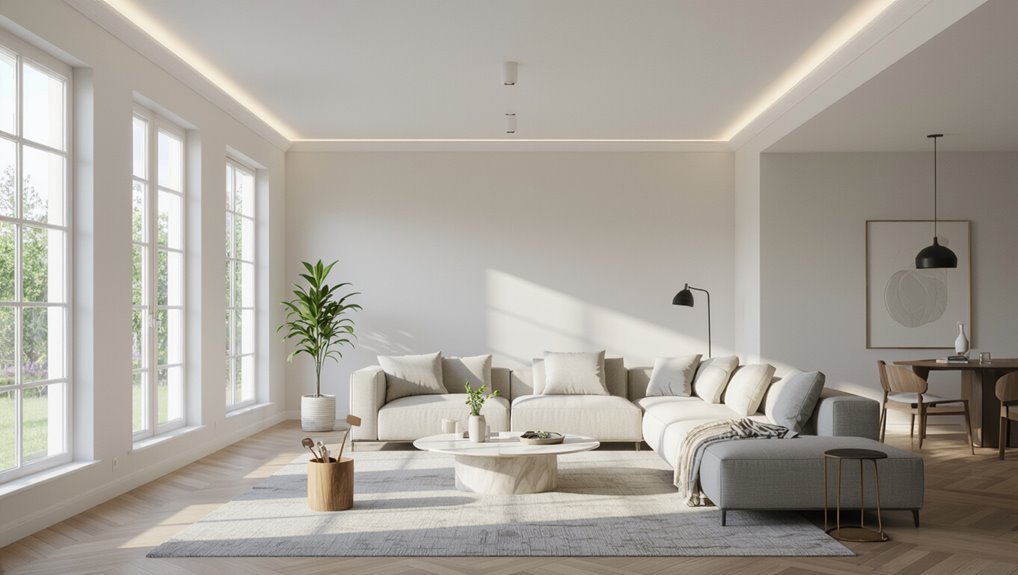
Wondering whether you should tackle your ceiling next? Use this quick checklist: assess light, height, and existing finish; decide if ceiling color psychology suits mood goals; check for stains or damage;
pick appropriate ceiling painting techniques—roller nap, brush cutting, or spray—for texture and edges; estimate time, ventilation, and drying; gather drop cloths, ladder, and proper paint;
test a small patch before committing.
Fast Answer: When Ceiling Paint Helps
If your checklist points toward painting, here’s a quick guide to when a new ceiling coat really helps: you should paint if stains, water marks, or uneven texture draw the eye; if the room feels low and you want to lift it with a bright or glossy white; or if you’ve remodeled and need the ceiling to match updated walls or trim.
Also consider ceiling color psychology and current ceiling design trends to influence mood, perceived height, or cohesion—paint when appearance or atmosphere needs fixing.
Tools You Need for a Smooth Ceiling Paint Job
Before you start, gather the essential painting tools—roller with extension pole, angled brush, paint tray, and a quality ceiling paint—to make the job faster and neater.
Don’t skip safety and prep gear like goggles, a dust mask, drop cloths, and a sturdy ladder or platform.
Having the right equipment upfront saves time and prevents mistakes.
Essential Painting Tools
Tools make the job faster and cleaner, and having the right ones will keep you from wasting time and ruining a fresh coat.
You’ll need a quality roller with extension, angled brush for edges, tray, sturdy ladder, drop cloths, and tack cloths.
Choose tools that suit ceiling painting techniques and support your essential color choices so application is even and touch-ups stay invisible.
Safety And Prep Equipment
A few key safety and prep items will keep you steady, comfortable, and ready for a clean ceiling paint job.
You’ll follow safety measures: wear protective gear and dust masks, set up ceiling ladders with ladder stability and proper height adjustment, arrange ventilation systems to control paint fumes, spread drop cloths, and maintain workspace organization so you work efficiently and avoid accidents.
Prep & Repairs: Clean, Patch, and Prime First
Although painting seems straightforward, you’ll get the best results by cleaning, patching, and priming your ceiling first.
For effective ceiling prep, use proper cleaning techniques to remove dust and stains, then follow patching tips for cracks and dents to restore ceiling texture.
Prioritize surface repair and primer importance to boost paint durability and support long-term ceiling maintenance.
Best Paint Types for Ceilings: Latex, Low‑VOC, Primers
When choosing ceiling paint, pick a formula that hides imperfections, resists splatter, and lasts — most pros recommend a flat or matte acrylic latex for its easy application and good coverage.
You’ll want low‑VOC options for indoor air quality and primers for stains or new drywall.
Consider ceiling paint finishes and subtle color psychology to influence perceived height and mood without overwhelming the room.
Choosing the Right Sheen: Flat to Satin
Picking the right sheen affects both appearance and practicality, so after choosing your paint type you’ll want to evaluate finish carefully.
Your sheen selection balances glare, durability, and hiding flaws. Use a finish comparison: flat hides imperfections, eggshell adds warmth, satin cleans easily.
Choose based on room use and emotion you want to evoke.
- Flat — cozy reassurance
- Eggshell — soft comfort
- Satin — confident cleanliness
How Ceiling Paint Changes Room Height and Feel
If your ceiling is low, a darker or warmer paint can make the room feel cozier and more intimate.
If you want a sense of airiness, lighter or cooler tones visually lift high ceilings.
Choose color and sheen to reinforce the height effect you want.
Lower Ceilings Feel Cozier
Though low ceilings can feel cramped, a thoughtful paint choice can turn that intimacy into cozy charm rather than oppression.
You can create a cozy ambiance and visual comfort by picking warmer tones, lower-contrast trims, and soft finishes that draw you inward.
- Warm, muted colors
- Matte or eggshell finishes
- Soft lighting and coordinated walls
High Ceilings Seem Airier
Anything from crisp whites to pale pastels can amplify a high ceiling’s airy feel by reflecting light and drawing the eye upward.
You’ll want paint that emphasizes vertical space rather than competing with it. You’ll create an open space and boost visual height, fostering an airy atmosphere.
Choose hues for color harmony and design versatility to maintain room balance while highlighting architectural scale.
When Paint Boosts Natural Light
When you choose the right ceiling paint, it can actually amplify the daylight entering a room, making spaces feel brighter and larger without altering the windows.
You’ll use ceiling color strategically to reflect natural light, open sightlines, and calm moods.
Pick finishes and tones that bounce light instead of absorbing it.
- Uplift
- Expand
- Soothe
How Lighting Affects Ceiling Color
Natural light and artificial fixtures change how a ceiling color reads, so you’ll want to take into account both before picking paint.
Consider lighting intensity and ambient light from all light sources to influence color psychology and mood setting.
Match paint finishes to ceiling height and room purpose, aiming for color harmony and design cohesion so your ceiling supports the overall scheme without overpowering it.
Ceiling Color Basics: White, Off‑White, and Alternatives
When you pick a ceiling color, think about how brightness and perception change the feel of a room—pure white reflects the most light, while off‑whites soften it.
Pay attention to warm versus cool whites, since undertones can make a space feel cozier or crisper.
If pure white feels too stark, consider alternatives like very pale grays, creams, or muted pastels to add subtle character without closing the room in.
Brightness And Perception
Although ceilings are often overlooked, the color you pick has a big effect on how bright and spacious a room feels; you’ll shape room ambiance and tap into color psychology to influence mood.
Choose white for lift, off‑white for softness, or a subtle tone for depth.
- Relief: airy, calming light
- Comfort: gentle warmth
- Drama: cozy intimacy
Warm Versus Cool Whites
Curious which white will make your ceiling feel inviting or crisp?
You’ll pick warm whites to cozy a room—they add softness and complement wood tones.
Choose cool whites to brighten and sharpen spaces, pairing well with modern decor and blue accents.
Test samples under your room’s light; the same white can read warm or cool depending on natural and artificial lighting.
Alternatives To Pure White
You’ve seen how warm and cool whites change a room’s mood, but you don’t have to stop at pure white for ceilings.
Try muted hues or soft pastels to add warmth, depth, or serenity. Consider how color psychology and ceiling textures interact to shape feeling—subtle tones feel cozy; light tints lift the space.
- Pale blue — calming
- Soft gray — elegant
- Warm beige — inviting
How Dark Ceilings Change Mood and Scale
When you paint a ceiling a deep hue, it immediately shifts how a room feels and how big it seems: darker ceilings draw the eye upward and make spaces feel cozier and more intimate, while also visually lowering the perceived height.
You’ll notice dark ceiling effects tied to color psychology—cool tones calm, warm tones envelop—so choose contrasts and lighting to control mood and scale.
When a Bold Ceiling Adds Drama Without Overwhelming
You can make a bold ceiling feel intentional by balancing its color with your walls so the room reads as a cohesive whole.
Pay attention to scale and proportion—darker or stronger hues work best on higher ceilings or in rooms with enough visual weight to carry them.
Also consider how lighting (both natural and fixtures) will highlight texture and change the perceived intensity of the color.
Color Balance With Walls
A bold ceiling can transform a room without overpowering it if you balance the hue with the walls—choose complementary tones, adjust saturation, and use trim or furniture to bridge contrasts.
You’ll play with color harmony and wall contrast so the ceiling feels intentional, not accidental.
Consider mood, light, and materials to keep drama elegant.
- Surprise
- Warmth
- Calm
Scale And Proportion
Because scale anchors how a bold ceiling reads in the room, think about ceiling height, room size, and sight lines before picking an intense color.
You’ll assess color impact relative to furnishings and wall tones so the ceiling doesn’t dominate.
Match scale with furniture proportions, trim, and openings to maintain visual balance and guarantee design harmony across the space.
Lighting Effects On Ceiling
Good lighting can make a bold ceiling feel intentional rather than overpowering, so think about how natural light, layered fixtures, and directional sources will interact with your chosen hue.
You’ll use lighting styles to sculpt mood and apply color psychology to balance drama. Consider how each choice uplifts or calms the room:
- Warm accent lights for intimacy.
- Cool washes to enlarge.
- Spotlights to highlight architectural detail.
Using Tonal Ceilings to Unify a Room Palette
When you paint the ceiling in a shade that echoes walls, trim, or furnishings, the room reads as a single, intentional composition rather than a collection of separate parts.
You’ll create tonal harmony and clear color flow, boosting mood enhancement and atmosphere enhancement.
This visual continuity fosters design cohesion, guiding sightlines and making spaces feel calm, connected, and thoughtfully curated without extra ornamentation.
Trim and Crown Molding: Paint the Ceiling or Leave It?
Echoing the room’s palette on the ceiling can make your space feel unified, but trim and crown molding introduce edges that complicate the effect.
You’ll weigh trim styles and crown options: paint them to extend color combinations, or contrast for texture contrasts and lighting effects that boost visual interest and design harmony, preserving room cohesion.
- Painted trim: bold warmth
- Contrasting molding: crisp drama
- Neutral band: calm balance
How Ceiling Height Affects Color Choice
If your ceiling is low, you’ll usually want a lighter shade to make the room feel taller and airier.
For tall ceilings, a darker color can add warmth and bring the space down to a more intimate scale.
Consider how light and the room’s proportions interact before you pick the final tone.
Low Ceilings: Lighter Ceilings
Because low ceilings can make a room feel cramped, choosing a lighter ceiling color helps lift the space visually and create a sense of height.
You’ll tap into light color psychology and current ceiling color trends to brighten, soften, and unify the room.
Choose tones that reflect light and coordinate with walls to avoid visual clutter.
- Brighten
- Soften
- Unite
High Ceilings: Darker Ceilings
While lighter ceilings lift low rooms, high ceilings invite a different approach: darker tones can make a tall space feel cozier and more grounded.
You can use dark color psychology to create intimacy, emphasize architectural details, and draw the eye downward.
Try accent walls, deep matte finishes, or bold ceiling trends to balance scale—just test samples to confirm light and mood suit the room.
Painting Small Rooms vs. Large Rooms
Wondering whether your room size should change how you paint the ceiling? You’ll choose small room strategies to reflect light and feel taller, while large room techniques can add drama or coziness without overwhelming space.
Pick finishes and colors to balance scale, then test swatches.
- Embrace brightness.
- Add depth.
- Keep proportionate contrasts.
Bedroom Ceiling Ideas for Calm and Intimacy
For a soothing bedroom, you can choose soft neutral ceilings that reflect light and keep the space calm.
If you want cozy intimacy, consider moody dark accents to lower the visual ceiling and add warmth.
Textured ceiling treatments—like subtle plaster or wood slats—can bring depth and tactile comfort without overwhelming the room.
Soft Neutral Ceilings
Soft neutral ceilings—think warm whites, pale greiges, and soft taupes—help you create a calm, intimate bedroom without competing with your walls or décor.
You’ll use soft tones and color psychology to foster calming effects, visual warmth, airy ambiance, subtle contrasts, design harmony, and improved light diffusion.
- Embrace texture for cozy depth.
- Layer muted linens.
- Keep clutter minimal.
Moody Dark Accents
When you paint the ceiling a deep, moody shade—think charcoal, inky navy, or forest green—you create a cocooned, intimate bedroom that pulls the eye upward and calms the senses.
You’ll use moody atmospheres to foster restfulness; color psychology guides pairing with warm wood, soft linens, and low lighting.
Keep trim crisp and balance with lighter walls to avoid visual heaviness.
Textured Ceiling Treatments
If you want a bedroom that feels tactile and tucked-in, textured ceiling treatments add quiet depth without overwhelming the space.
You’ll choose textured finishes or subtle ceiling patterns to create intimacy.
Consider acoustic treatments for calm and faux textures to mimic plaster or wood.
Pick a soft color and low sheen to keep it cozy.
- Cozy
- Serene
- Wrapped
Living/Dining Ceiling Paint Ideas That Impress
Because the ceiling takes up so much visual real estate, a bold or unexpected paint choice can lift your living or dining space instantly and with minimal effort. You’ll try textured finishes, dramatic colors, bold patterns or soft hues to match modern designs or vintage styles, add contrasting trims and accent lighting for depth and focal drama.
| Idea | Effect | Tip |
|---|---|---|
| Dark ceiling | Cozy | Use uplighting |
| Patterned | Playful | Match rug |
| Soft hue | Airy | Pair with trims |
| Textured | Rich | Highlight with lights |
Kitchen & Bathroom Ceilings: Moisture and Ventilation Tips
Although kitchen and bathroom ceilings rarely get the spotlight, they face the most moisture and need the best ventilation to prevent peeling paint, mold, and structural damage.
Kitchen and bathroom ceilings may be overlooked, but constant moisture demands top ventilation to prevent mold and damage.
You’ll want proactive moisture control and clear ventilation strategies to protect finishes and health.
- Install effective exhaust fans to remove steam fast.
- Use mold‑resistant paint and primers.
- Maintain regular inspections and quick repairs.
Basement and Attic Ceilings: Low‑Clearance Paint Tips
In low-clearance basements and attics, you’ll get the most spacious feel by picking light-reflective colors that bounce what little light you have.
Use low-sheen paints to minimize glare and hide surface imperfections without making the ceiling look glossy.
Paint strategic visual lines—like a slightly darker trim or a soft longitudinal stripe—to guide the eye and make the space feel longer.
Use Light Reflective Colors
When you’re dealing with low ceilings in a basement or attic, choosing light-reflective colors can instantly make the space feel higher and brighter. These paints bounce light around instead of absorbing it, which is especially helpful where natural light is limited.
Use light color psychology and follow ceiling color trends to pick soft whites, pale grays, or warm creams.
- Hope
- Calm
- Spacious
Choose Low‑Sheen Finishes
Choose a low‑sheen finish like matte or eggshell for basement and attic ceilings because it hides imperfections and reduces glare in tight, low‑clearance spaces. You’ll use ceiling color psychology and texture selection tips to create calm, cozy ceilings. Match finish to foot traffic and lighting to minimize scuffs and reflections.
| Feature | Benefit |
|---|---|
| Matte | Hides flaws |
| Eggshell | Slight sheen |
| Texture | Masks joints |
| Light | Softens color |
Paint Strategic Visual Lines
After picking a low‑sheen finish, use paint to guide the eye and make low ceilings feel taller and less cramped.
Create paint illusions with contrasting trim, slim vertical stripes, or a lighter central panel to add visual height. You’ll control focus and mood while avoiding busy patterns.
- Contrast trim for depth
- Vertical stripes to lift
- Lighter center for airy space
When to Skip Paint: Wood, Wallpaper, and Plank Alternatives
1 practical rule: don’t paint a ceiling just because you can—leave it alone when the material already adds character or performs better unpainted. You’ll weigh ceiling materials, wallpaper options, wood finishes, decorative textures, and paint durability. Sometimes natural planks, textured wallpaper, or sealed wood give warmth without paint.
| Material | Benefit | When to skip |
|---|---|---|
| Wood | Warmth | Sealed finish |
| Wallpaper | Pattern | Durable vinyl |
| Plank | Texture | Expert install |
Pros of DIY Ceiling Painting: Cost & Control
If you tackle the ceiling yourself, you’ll cut costs by buying only the paint and tools you need rather than paying labor.
You also keep complete control over timing, color choices, and the pace of work. That means fewer surprises and the freedom to fix small issues as you go.
Lower Material Expenses
Because you’re handling the job yourself, you’ll cut material costs considerably—no contractor markup for paint, roller covers, drop cloths, or tape.
You can choose cost effective materials and budget friendly options for ceiling paint savings.
Use economical choices, affordable ceiling solutions, frugal painting strategies and low cost alternatives to follow budget ceiling ideas.
- Pride
- Relief
- Confidence
Full Project Control
While taking on a ceiling paint job yourself, you keep complete control over every decision—from the shade and sheen to the timing and sequence of work—so you can adjust plans instantly, fix small mistakes on the spot, and prioritize areas that matter most to you.
You choose ceiling patterns, experiment with color psychology, sequence tasks to minimize disruption, and direct every detail to match your vision.
Cons of DIY: Fatigue, Mess, and Streaks
Although tackling a ceiling paint job yourself can feel satisfying, you’ll quickly run into physical fatigue, a big mess, and the risk of visible streaks that undo your effort.
Tackling a ceiling yourself can be rewarding — but expect aches, a big mess, and visible streaks.
You’ll face DIY challenges requiring careful ceiling prep, fatigue management, mess reduction, and streak prevention.
- Exhaustion: aching necks, shaky hands.
- Cleanup dread: drips, dust, smeared trim.
- Flaws: lap marks and uneven sheen.
When to Hire a Pro for Ceiling Painting
If your ceiling needs major surface prep—like repairing water damage, sanding popcorn, or fixing cracks—you’ll want a pro who knows those techniques.
Steep or very high ceilings that require scaffolding are safer and faster for experienced crews.
And for ornate plasterwork or decorative finishes, a specialist will give you the clean, consistent results you’re aiming for.
Complex Surface Preparation
When ceilings have multiple layers, water damage, heavy texture, or structural cracks, you’ll want a pro who can assess and prep the surface correctly before painting.
You need expert surface damage assessment and guidance on ceiling texture options to avoid failures and wasted time.
Pros handle stripping, patching, and sealing so your finish lasts.
- Fear
- Relief
- Confidence
High Ceiling Or Scaffolding
Once you’ve confirmed the surface is sound, decide whether your ceiling height or the need for scaffolding puts this job out of your DIY range.
If high ceiling aesthetics matter but access is risky, hire a pro. They’ll balance design goals with scaffolding safety, save time, and guarantee even coverage.
Don’t risk falls or uneven paint for a DIY that exceeds your comfort or equipment limits.
Intricate Decorative Finishes
Ornamentation like stenciling, metallic glazes, trompe-l’œil, or detailed mural work demands steady hands and specialized techniques.
So you should hire a pro unless you already have advanced decorative-paint experience and the right tools.
Pros handle ornate plaster, metallic finishes, textured paints, color gradients, geometric patterns, stenciled designs, mural ceilings, and vintage motifs.
- Awe
- Relief
- Pride
Efficient Rolling & Cutting Techniques That Save Time
Start by planning your path across the room so you can roll long, uninterrupted strokes and minimize cutting; that way you’ll cover more surface with fewer reloads and fewer edges to touch up.
Use efficient techniques: load a high-capacity roller, cut with a sharp angled brush, work from light to dark zones, and keep a wet edge.
These time-saving strategies reduce trips and cleanup.
How to Avoid Lap Marks and Uneven Coverage
After planning your path and keeping a wet edge, focus on consistent pressure and overlapping strokes to prevent lap marks and patchy coverage.
Use proper roller load and maintain a damp roller to guarantee even sheen.
For lap mark prevention and reliable coverage techniques, try these emotional motivators:
- Relief — smooth, professional results calm you.
- Pride — flawless ceiling boosts confidence.
- Joy — a room that feels finished delights you.
How Many Coats Will Your Ceiling Need?
Wondering how many coats your ceiling will need? Usually two coats give even coverage, but one can suffice with high-quality ceiling paint and proper ceiling paint techniques.
Darker colors or stains may need three. Allow recommended paint drying times between coats to avoid lifting or lap marks.
Test a small area first, then judge coverage before committing to extra coats.
Estimating Paint Quantity and Time
Once you’ve decided how many coats you’ll need, it’s time to figure how much paint and how long the job will take.
Use a paint calculator to estimate gallons; include primer, waste, and touch-ups. A simple time estimator helps plan sessions and breaks.
Use a paint calculator to estimate gallons—factor in primer, waste, and touch-ups. Add time estimates for sessions and breaks.
Follow your room’s size and ceiling height to avoid surprises.
- Anticipation
- Relief
- Confidence
Safety: Ladders, Ventilation, and Dust Control
While you’re prepping to paint, prioritize safety: set up a stable ladder, guarantee good ventilation, and control dust so you don’t create new hazards.
Use proper ladder safety—inspect feet, lock spreaders, keep hips between rails. Open windows and run fans to reduce fumes; that ventilation importance prevents dizziness.
Seal work zones, use drop cloths, and vacuum wet/dry for effective dust control.
Maintenance and Touch‑Up Tips
Because small chips and scuffs will show over time, keep a tiny kit handy so you can touch up your ceiling quickly: store a bit of your original paint in a labeled, airtight container, along with a small brush or foam roller, a sanding sponge, and some mild cleaner.
Use simple ceiling maintenance and quick touch up techniques to preserve calm, pride, and comfort.
- Reassure
- Restore
- Reward
Common Ceiling Painting Mistakes and Fixes
If you rush or skip a few prep steps, you’ll likely see drips, uneven coverage, and visible seams that turn a fresh ceiling into a chore. Address ceiling paint blunders with common fix ups: fix improper prep, correct color mismatch, adjust sheen selection, refine brush technique and roller application, consider lighting considerations for texture issues and uneven coverage.
| Problem | Cause | Fix |
|---|---|---|
| Drips | improper prep | sand, prime |
| Patchy | roller application | overlap, proper nap |
| Shine | sheen selection | choose matte |
| Texture | texture issues | match compound, skim coat |
Budget‑Friendly Ceiling Updates With Big Impact
Want a big ceiling refresh without blowing your budget? Use budget friendly techniques to transform the room with minimal cost and maximum feeling.
Pick impactful color choices to brighten, cozy-up, or dramatize. Try these quick wins:
- Paint an accent band near crown molding for drama.
- Roll on a light-reflective white to open space.
- Stencil a subtle pattern for personality.
How to Test Ceiling Paint Before Committing
After you’ve narrowed color and technique options, test paint samples on your ceiling before committing to a full coat.
Apply small color swatches and trial patch sections in multiple test areas to see paint finishes against ceiling texture.
Evaluate under different lighting options and at various times.
Compare paint samples’ aesthetic impact, note sheen differences, and pick the finish that complements room light and texture.
Trending Ceiling Looks in 2026 and When to Try Them
While trends shift, 2026 brings ceilings into the spotlight with bold color ceilings, textured finishes, and integrated lighting that turn overhead surfaces into design features you’ll actually plan around.
You’ll try trendy textures, bold colors, geometric patterns, ceiling murals, natural finishes, artistic accents, vintage styles, or minimalist designs depending on mood and room.
- Dramatic — emotional impact
- Cozy — warmth, nostalgia
- Calm — subtle, refined
Quick Checklist: Final Walkthrough Before You Roll
Before you lift the roller, do a final walkthrough to catch missed prep and confirm everything’s ready: check that the ceiling is clean and patched, trim and fixtures are masked, drop cloths and ladders are secure, paint is mixed and accessible, and lighting is off so you can see true coverage.
Then confirm ventilation, test a corner for texture match, tidy tools, and note final touches that guarantee ideal ceiling aesthetics.
Frequently Asked Questions
Will Ceiling Paint Interfere With Recessed Speaker Acoustics?
No — painting the ceiling typically won’t harm recessed speaker acoustic performance, though heavy paint buildup or thick paint texture can slightly affect high-frequency dispersion; you should avoid excessive coats and use light, thin textures for minimal impact.
Can I Paint Over Nicotine-Stained Ceilings Without a Stain-Blocking Primer?
Brightly banish blemishes: you shouldn’t skip a stain-blocker. For ceiling maintenance tips, use a dedicated primer to stop seepage, then repaint—nicotine stain removal without primer risks bleed-through, uneven coverage, and recurring yellowing.
How Does Ceiling Paint React to Radiant Floor Heating Systems?
Ceiling paint performs fine with radiant floor heating; you’re unlikely to see issues if you’ve got proper ceiling insulation and temperature regulation. Choose heat-tolerant, low-VOC paints and avoid extreme temperature swings to prevent cracking or discoloration.
Are There Fire-Retardant Ceiling Paint Options for Attics or Garages?
Yes — you can buy fire-retardant ceiling paints for attics or garages; they improve fire safety and often boost paint durability. You’ll want certified intumescent or fire-resistant coatings and professional application for best performance.
Can Painting Ceilings Affect Outgoing Home Inspection Results?
Yes — painting ceilings can influence inspection outcomes; you’ll want neutral finishes to avoid masking defects, document repairs, and follow the inspection checklist. Ceiling color psychology won’t matter to inspectors, but coverage and condition will.
Conclusion
You’ve weighed the pros and cons, held a brush like a magician’s wand, and pictured the room with a refreshed, bright ceiling or a moody, vaulted sky. Now, trust what fits your light, budget, and mood—patch, prime, and pick a finish that reads right from the couch. Take one confident roll and watch the space breathe: a painted ceiling can lift a room the way sunlight lifts a morning.
