
What Causes Paint to Crack? Main Issues Explained
You’re seeing cracked paint because the finish lost adhesion or flexibility—usually from poor surface prep, moisture, structural movement, incompatible products, or overly thick or uncured coats. Dirt, grease, or old brittle layers stop new paint from bonding, while leaks, rising damp, or seasonal wood movement stress the film. Temperature extremes and wrong primers make things worse. Start with cleaning, proper sanding, and correct primer, and keep going to learn specific fixes and when to call a pro.
Quick Answer: What to Do When Paint Cracks (First 3 Steps)
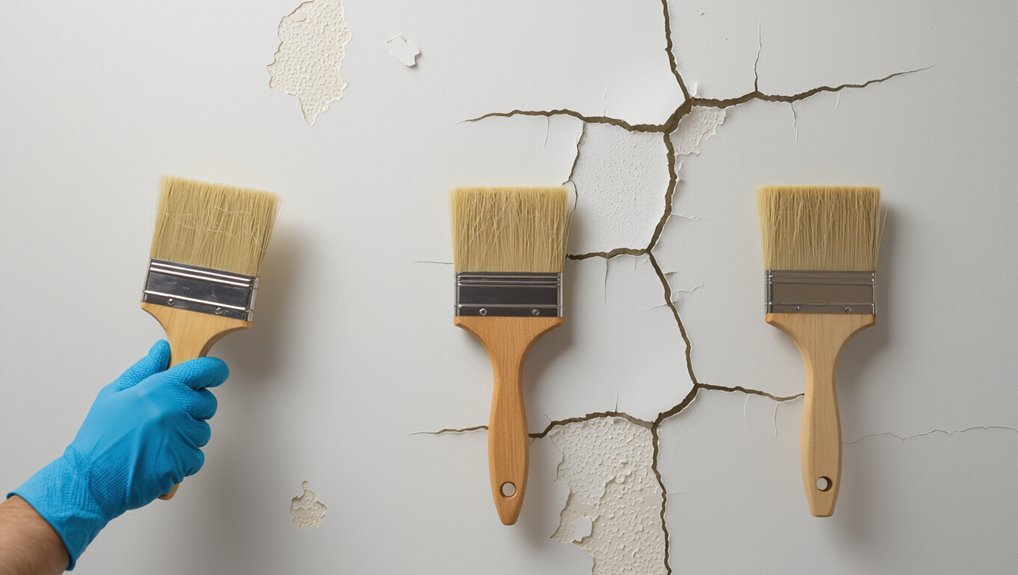
- You first assess damaged areas, removing loose paint and cleaning surfaces to stop spread and facilitate crack prevention.
- You dry and sand smooth, then apply suitable primer to guarantee adhesion.
- You use proper repair techniques—fillers or flexible compounds—then repaint with compatible products.
Follow manufacturer guidelines and address underlying moisture or movement sources to prevent recurrence.
Types of Paint Cracking (Hairline, Crazing, Alligatoring, Flaking)
After you’ve stabilized and prepped a cracked surface, you’ll want to identify what kind of cracking you’re dealing with—because repair methods and causes differ. You’ll see hairline cracks, crazing, alligatoring, or flaking; each reflects paint elasticity loss and environmental factors. Use this quick reference:
| Type | Quick clue |
|---|---|
| Hairline | Thin, surface lines |
| Crazing | Fine network |
| Alligatoring | Scale-like |
| Flaking | Paint peels away |
How to Diagnose Crack Patterns : Match Pattern to Cause
Look at the pattern to identify the problem: hairline vertical cracks usually mean structural movement or drying shrinkage, while a checkerboard pattern points to old, brittle paint losing flexibility.
If the paint is flaking and peeling off in patches, you’ve likely got adhesion failure from poor surface prep or moisture.
Match what you see to these causes before choosing a repair method.
Hairline Vertical Cracks
Thin, straight hairline vertical cracks often point to substrate movement or slow drying of the paint film.
You’ll see hairline cracks running down walls or trim when the substrate shifts, studs settle, or moisture changes cause vertical movement.
Check for localized structural shifts, fasteners working loose, or high humidity during application.
Repair involves stabilizing movement, priming, and recoating with flexible paint.
Checkerboard Patterning
When paint splits into a regular checkerboard of small, square-ish sections, you’re usually looking at issues with the substrate or an underlying brittle coating that’s lost adhesion and flexibility.
This pattern tells you the film is failing in a systematic way rather than from a single stress point. You’ll notice altered paint texture and diminished checkerboard aesthetics.
Consider causes and fixes:
- Moisture undercoat
- Rigid primer layer
- Thermal cycling stresses
- Poor surface prep
Flaky Surface Peeling
Flaking happens when paint loses adhesion in small, irregular patches and peels away in thin, brittle layers. You’ll see flaky surfaces where peeling paint curls and chips, often from poor prep, moisture, or incompatible coats. Diagnose by tapping and scraping to confirm brittleness and underlying adhesion failure.
| Visual cue | Likely cause |
|---|---|
| Curling flakes | Moisture |
| Powdery chips | Poor adhesion |
Common Surface-Prep Mistakes That Cause Paint Cracks
If you don’t thoroughly clean the surface, dirt and oils keep paint from adhering and lead to cracking.
Skipping or using the wrong primer can also prevent a proper bond between substrate and topcoat, causing the finish to fail.
Let’s look at how poor cleaning and insufficient priming create those weak spots.
Poor Surface Cleaning
Although you might be enthusiastic to start painting, skipping thorough surface cleaning sets the stage for cracks later on.
You need proper surface preparation techniques and effective cleaning products to remove dirt, grease, and loose material. Do these steps before painting:
- Degrease surfaces
- Sand and wipe dust
- Use appropriate cleaning products
- Rinse and let dry completely
Insufficient Primer Bond
After you’ve cleaned and prepped the surface, don’t skip proper priming—weak or improperly applied primer won’t bond paint to the substrate, and the finish will crack as it flexes or peels.
You should choose primer types suited to substrate and conditions, follow manufacturer instructions, and guarantee good primer adhesion by applying correct coats, drying times, and surface profile so paint remains flexible and bonded.
Moisture-Related Causes: Damp Substrates, Leaks, Rising Damp
When moisture gets into a wall—whether from leaks, rising damp, or persistently damp substrates—it undermines the paint’s adhesion and causes cracking, bubbling, or flaking as the water swells and weakens the underlying material.
You should identify moisture sources and assess substrate types to fix problems quickly:
- leaking pipes behind walls
- rising damp from foundations
- poor external render
- damp brick or plaster surfaces
Temperature and Humidity Mistakes When Painting
If you paint in temperatures that are too hot or too cold, the finish can cure unevenly and later crack.
You’ll also run into problems if humidity’s high during application, because trapped moisture prevents proper adhesion.
Check the product’s recommended temperature and humidity range before you start to avoid these mistakes.
Painting In Wrong Temperatures
Because paint cures through a chemical and physical process that’s sensitive to the air, painting in the wrong temperature or humidity can ruin adhesion, drying time, and the finish you expect.
You should avoid temperature extremes and plan application timing carefully.
Consider these steps:
- Check recommended temperature range
- Avoid rapid temperature swings
- Adjust drying intervals
- Use climate-controlled conditions
High Humidity During Application
High humidity during application can trap moisture in wet paint, slowing drying and weakening adhesion. This makes your finish more likely to blister, sag, or crack later.
You should monitor humidity effects and adjust application timing: paint when relative humidity is lower, allow extended dry times between coats, use dehumidifiers or fans, and avoid painting before rain or overnight humidity spikes to prevent future failure.
Wrong Products: Incompatible Systems and Low‑Quality Paint
When you mix paint products that weren’t designed to work together—like applying a water‑based coat over a solvent‑based primer—you’ll often see cracking, peeling, or poor adhesion because the films cure differently and can’t form a stable bond.
Mixing incompatible paint types—such as water‑based over solvent primer—often causes cracking, peeling, and adhesion failure.
You should use compatible systems and quality paint.
Consider causes and fixes:
- incompatible products used
- cheap binders break down
- improper primer choice
- replace with tested system
Overly Thick Coats and Insufficient Drying Time
If you apply paint too thickly or rush coats before they’re dry, the surface can skin over while solvents remain trapped underneath, causing the top layer to crack as it contracts. You should avoid thick application, respect recommended drying duration, and apply thin, even coats so solvent escape and film flexibility match.
| Tip | Action |
|---|---|
| Thickness | Thin coats |
| Time | Wait full drying duration |
Substrate Movement (Wood, Drywall, Stucco): Homeowner Checks
Check seasonal wood expansion around windows and doors, since shrinking and swelling can crack paint.
Inspect drywall for signs of moisture swelling or soft spots that signal movement beneath the finish.
Look for stucco cracks or foundation shifts that transfer stress to the painted surface.
Seasonal Wood Expansion
Because wood swells and shrinks with moisture and temperature changes, you’ll often see paint cracking along joints, corners, and narrow boards where movement concentrates.
You should monitor wood movement tied to seasonal changes and address gaping or tight seams before repainting.
- Check joints each season
- Allow expansion gaps
- Use flexible caulk
- Sand and prime moved areas
Drywall Moisture Swelling
Seasonal wood movement can also spotlight similar problems in nearby drywall, where repeated moisture exposure makes gypsum boards swell and joint compounds crack.
You should do a drywall inspection to spot swelling effects and assess humidity impact.
Use moisture control and prompt drying techniques, then follow proper repair methods to replace or patch damaged areas so paint adhesion is restored and future cracking is minimized.
Stucco Foundation Shifts
When your foundation settles or shifts, stucco can crack or separate where it meets trim, windows, and control joints, letting moisture and pests into wall cavities.
You should inspect for gaps, hairline cracks, and misaligned trim; addressing stucco stability early prevents paint failure and rot.
Check for:
- stair-step cracks
- separation at windows
- bulging or delamination
- uneven siding lines
Old Paint Buildup and When Layers Cause Failure
If you’ve painted over the same surface several times, the accumulated layers can spell trouble: old, brittle coats lose flexibility and adhesion, so new paint can’t bond properly and stresses concentrate at weak interfaces.
You’ll see peeling and cracking where layer adhesion fails, signaling compromised surface integrity.
Strip or sand back excessive build-up to prevent paint failure and restore a sound substrate before recoating.
Primer Mistakes: Skipping or Using the Wrong Primer
Old paint buildup can leave a surface uneven and weak, so the next common pitfall is skipping primer or picking the wrong one.
You’ll cause adhesion and cracking issues without correct primer types and consistent primer application.
Consider these points:
- Match primer types to substrate
- Clean and sand before priming
- Apply even primer coats
- Follow drying times and instructions
UV and Environmental Degradation That Weakens Paint
Because sunlight, moisture, and temperature swings constantly attack paint films, they break down binders and pigments over time and make the coating brittle and prone to cracking.
You’ll see UV exposure and sunlight degradation reduce paint durability; environmental factors and climate impact accelerate fading and embrittlement.
Choose protective coatings with strong weather resistance to mitigate long term effects and extend service life.
Why Paint Won’t Stick : Causes and a Simple Adhesion Test
Why won’t paint stick to a surface even when you follow the directions? You’ll encounter adhesion issues from contamination, wrong primer, incompatible paint, or flexible substrates.
Before repainting, perform simple test methods to confirm bonding. Try these quick checks:
- Tape peel test
- Cross-hatch cut test
- Solvent rub test
- Small sample patch test
Paint Cracks Prevention Checklist Before You Start
Before you open a can, take a quick checklist to prevent cracking: inspect and repair the substrate, remove contaminants, choose compatible primer and paint, confirm proper drying and temperature conditions, and gather the right tools so you can apply even, correct-thickness coats.
Check moisture, sand glossy surfaces, and use recommended primers to guarantee paint adhesion.
Follow thinning and recoat intervals for reliable crack prevention.
Repair Methods by Crack Type (Hairline → Flaking Step-by-Step)
Start by identifying the crack type—hairline, spidering, alligatoring, or flaking—because each needs a different repair approach.
Once you know what you’re dealing with, you can follow step-by-step fixes that range from simple cleaning and recoat to full removal of loose paint and substrate repair.
Use crack assessment to pick repair techniques:
- Clean and recoat for hairline
- Fill and sand spidering
- Prime and patch alligatoring
- Strip and repair flaking
When to Call a Pro vs. DIY Fixes (Cost and Scope Guide)
Once you’ve matched the crack type to the right repair steps, decide whether you should do the job yourself or hire a pro.
Weigh DIY Techniques against Professional Services with a clear Cost Comparison, noting Tools Needed, Time Investment, and complexity.
Choose DIY for simple Repair Strategies and small areas; hire pros for structural issues, large-scale prep, or warranty-backed results.
Frequently Asked Questions
Can Paint Cracking Be Caused by Pests or Insects Under the Surface?
About 30% of structural failures involve hidden pests, and yes — you’ll see paint cracking from pest damage when moisture builds beneath paint. You’ll notice blistering, flaking, and softened substrate as surface moisture and insects undermine coatings.
Can Certain Detergents or Cleaners Make Paint Crack Faster?
Yes—you’ll find harsh cleaning products can speed cracking by stripping binders or swelling old paint, especially if surface preparation was poor; use gentle cleaners and test a small area to avoid worsening adhesion or finish.
Do Additives or Fillers in Paint Affect Long-Term Cracking?
Yes—you’ll find additive effects and filler quality subtly steer paint’s longevity; low-grade fillers and mismatched additives can encourage premature crazing, while high-quality components help maintain flexibility and resist long-term cracking.
Can Paint Crack Due to Nearby Chemical Fumes or Solvents?
Yes — chemical exposure and solvent interaction can make paint crack; you’ll see softening, blistering, or crazing as solvents swell binders and weaken adhesion, so avoid fumes, ventilate, and use compatible, resistant coatings.
Will Cracks in Paint Affect Wall Insulation or Energy Efficiency?
No, small paint cracks won’t greatly affect insulation impact or energy efficiency, but they can indicate moisture or structural issues. You should address crack prevention to avoid bigger problems that might eventually compromise insulation performance.
Conclusion
When paint cracks, don’t panic—start simple: dry the area, scrape loose bits, and test adhesion. Match the crack pattern to likely causes so you’ll know whether you’re treating a hairline, crazing, alligatoring, or full flaking issue. Fix underlying moisture or prep problems first, then choose the right repair method or call a pro for large jobs. With a little patience and the right steps, you’ll have surfaces that look new again—like turning a tired page into a fresh chapter.
