
What Finish Paint for Exterior Door? Best Durable Options
You’ll want a weather‑resistant, durable finish matched to your door material and climate—oil‑based enamel or exterior acrylic with UV inhibitors is a safe choice. For wood, use spar urethane, marine varnish or oil‑based stain plus a clear UV topcoat; for metal, prime with a rust inhibitor then use polyurethane or acrylic enamel; for fiberglass, choose paints formulated for adhesion like satin or semi‑gloss exterior acrylic. Follow prep and maintenance tips to extend life, and keep going to learn specifics.
Quick Guide: Best Exterior Door Finishes by Material & Climate
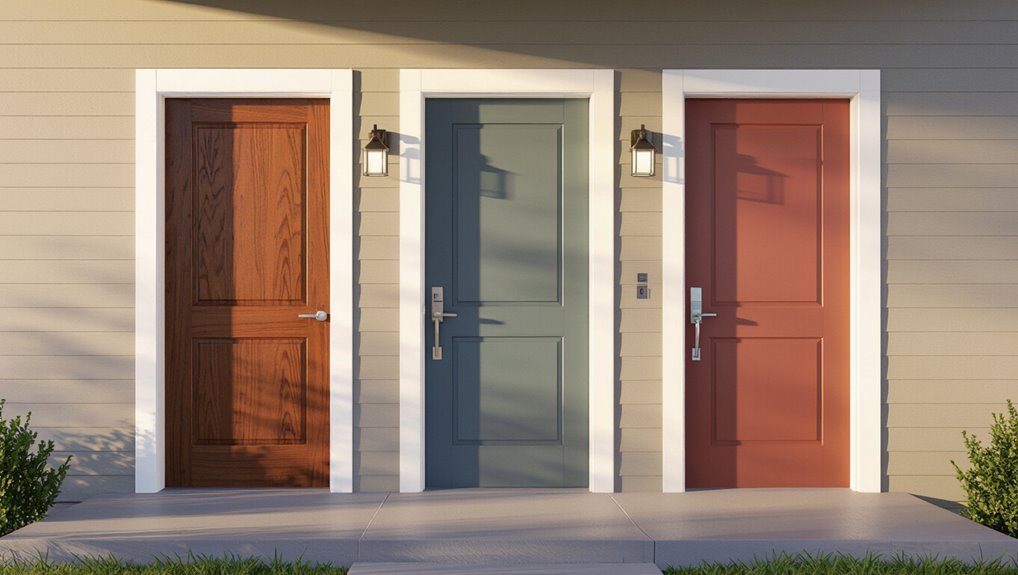
Pick the finish that matches your door’s material and the local climate to protect appearance and performance. You’ll choose oil-based, latex, or marine-grade finishes based on wood, metal, or fiberglass.
Consider UV exposure, humidity, and temperature swings for climate considerations.
Follow door maintenance tips: clean gently, touch up chips promptly, and recoat on a schedule to preserve protection and look.
What Finish Options Work Best for Exterior Doors
Now that you’ve matched finishes to door materials and climate, let’s look at specific finish types and when to use them.
Use oil-based or exterior acrylic enamel for strong weather resistance and durable coverage.
For wood doors, spar urethane or marine varnish boosts water protection and color retention.
Consider a high-quality exterior latex for easy application and mildew resistance on painted surfaces.
How to Choose an Exterior Door Finish (Step-by-Step)
How do you choose the right finish for your exterior door? Follow steps: test color selection with samples, prep and sand for adhesion, then practice finish application on scrap. Seal edges to prevent moisture and cure fully before installation.
| Step | Action | Result |
|---|---|---|
| 1 | Sample colors | Confidence |
| 2 | Prep surface | Adhesion |
| 3 | Apply finish | Durability |
How Door Material Dictates Your Finish Choice
Your door’s material determines the prep and products you’ll use: wood needs grain treatment and sealers to prevent moisture damage, metal requires rust prep and a proper primer, and fiberglass calls for paints formulated to flex with the substrate.
You’ll choose different primers, sealers, and topcoats based on those needs.
Start by identifying the material so you can match the right prep and paint.
Wood Grain And Sealers
Because wood doors show their grain and absorb coatings differently than metal or fiberglass, the material you pick will dictate whether you stain, paint, or seal—and which products will last. You’ll preserve wood grain with clear coats or stain plus UV-blocking varnish; natural sealers suit historic or eco-focused choices.
| Finish | Protection | Best Use |
|---|---|---|
| Stain+Varnish | High UV | Show grain |
| Paint | High wear | Color change |
| Natural sealers | Moderate | Eco/heritage |
| Oil | Penetrating | Refinishable |
Metal Prep And Primer
Metal doors demand different prep than wood, so start by evaluating surface condition: remove loose paint, sand glossy finishes to etch, and strip rust down to bare metal.
You’ll follow metal surface preparation steps—clean, degrease, and neutralize corrosion—then choose compatible primers.
Use proper primer application techniques: thin, even coats, flash times between layers, and tack-free finish before topcoat for long-lasting adhesion.
Fiberglass Paint Compatibility
If you’re working with a fiberglass door, know that it needs paints and primers formulated for non-porous, flexible surfaces to guarantee adhesion and resist cracking. You should follow fiberglass surface preparation steps—clean, sand lightly, use a bonding primer—to promote fiberglass paint adhesion and durability.
| Step | Tip |
|---|---|
| Clean | Degrease |
| Sand | Light grit |
| Prime | Bonding primer |
| Paint | Flexible acrylic |
| Cure | Follow temps |
Best Finishes for Wooden Exterior Doors
When you pick a finish for a wooden exterior door, think about protection, appearance, and maintenance together.
Choose a finish for an exterior wood door that balances protection, looks, and ongoing maintenance.
You’ll match wood selection to exposure, then plan your finish application for durability.
Consider oil-based stains, spar urethanes, exterior varnishes, waterborne polyurethanes, and marine-grade spar for high UV/moisture areas.
- warm grain
- satin sheen
- deep stain
- clear protection
- weathered patina
Best Finishes for Metal Exterior Doors
When you’re finishing a metal exterior door, rust prevention coatings should be your first priority to stop corrosion at the source.
After priming with a rust-inhibiting product, choose durable paint types like polyurethane or high-quality acrylic enamel for long-lasting protection and color retention.
Those combos give you both barrier protection and a finish that stands up to weather and wear.
Rust Prevention Coatings
Rust is the main enemy of metal exterior doors, so you’ll want a finish that blocks moisture, salts, and scratches while allowing for easy touch-ups. High-quality rust-inhibiting primers paired with a durable topcoat—like oil-based enamel, polyurethane, or modified acrylic—give the best protection and longevity.
Use rust protection, corrosion resistance, weatherproof coatings, surface treatment, maintenance strategies, application techniques, longevity factors, product comparisons.
- Scrub, prime, seal
- Smooth brush strokes
- Overlap for coverage
- Patch chips promptly
- Inspect yearly
Durable Paint Types
Choose a finish that resists chips, moisture, and UV so your metal door stays protective and attractive for years.
You’ll prefer enamel or acrylic-urethane coatings for toughness, excellent color retention, and easy cleaning.
Powder coating offers durable, uniform coverage and eco friendly options with low VOCs.
For high-traffic doors, pick a satin or semi-gloss sheen to hide wear while shedding water.
Best Finishes for Fiberglass Exterior Doors
Fiberglass doors give you the best of both worlds—durability and style—so picking the right finish matters more than you might think.
Fiberglass doors blend lasting durability with stylish finishes—choose wisely to protect performance and enhance appearance.
You want finishes that protect fiberglass durability and guarantee reliable paint adhesion.
Consider these looks and benefits:
- Smooth satin for subtle sheen
- High-gloss for easy cleaning
- Textured finish to hide flaws
- Semi-gloss for trim contrast
- Matte for modern, low-reflective appeal
Oil- vs. Water-Based Paint for Exterior Doors: Longevity Comparison
When choosing between oil- and water-based paint for your exterior door, consider that oil formulas usually offer tougher, longer-lasting wear.
Water-based paints, however, flex better with temperature and humidity changes, reducing cracking and peeling over time.
We’ll compare those durability and flexibility trade-offs so you can pick the best option for your door.
Oil-Based Durability
Longevity matters most for an exterior door, and oil-based paints have long been touted for their toughness and resistance to wear.
You’ll appreciate oil based longevity and straightforward oil based maintenance when you want lasting protection.
Picture the finish resisting weather and scuffs:
- glossy barrier against rain
- dense film sealing wood
- fewer chips over years
- easy spot-sanding
- strong adhesion to trim
Water-Based Flexibility
Oil-based paints do offer durable protection, but water-based formulas bring a different kind of advantage you’ll notice over time: flexibility.
You’ll find water resistance benefits plus elasticity that lets coatings expand and contract with temperature and humidity shifts.
That flexibility advantages reduces cracking and peeling on exterior doors, lowers maintenance frequency, and preserves finish integrity so your door stays sealed and attractive longer.
When to Choose Exterior-Grade Enamel Paint
If you want a durable, high-gloss finish that holds up to weather and frequent use, choose exterior-grade enamel paint for doors that see heavy traffic or harsh conditions.
You’ll get exterior durability and strong weather resistance, easy cleaning, and lasting color.
Expect lasting color, easy cleaning, and rugged weather resistance for high-traffic exterior doors.
Picture situations like:
- Busy entryways
- Rainy coastal homes
- Muddy boots
- Sun-exposed porches
- Rental property turnovers
When to Use Polyurethane or Spar Varnish
While exterior-grade enamel handles high-traffic, weather-beaten doors well, you’ll reach for polyurethane or spar varnish when you want a topcoat that emphasizes wood protection and flexible weather resistance. You’ll choose based on Polyurethane benefits for abrasion resistance and clear finish, or Spar varnish applications for UV and moisture-flexing protection.
| Feature | Polyurethane | Spar Varnish |
|---|---|---|
| Best for | Abrasion | UV/moisture |
| Finish | Clear/hard | Flexible/gloss |
| Recoat | Easy | Requires time |
When to Use Marine-Grade Coatings for Extreme Climates
When your door faces relentless sun, salt spray, or freezing cycles, opt for marine-grade coatings because they’re formulated to withstand extreme UV, salt corrosion, and constant moisture without cracking or chalking.
For doors facing brutal sun, salt spray, or freeze—choose marine-grade coatings to prevent cracking, chalking, and corrosion.
You’ll get marine grade benefits for extreme climate applications that protect finish and substrate.
- Salt-laden breeze
- Blazing sun exposure
- Driving rain
- Freezing thaw cycles
- Humid coastal fog
Primer Choices to Stop Peeling and Rust on Doors
Because a proper primer bonds to both metal and paint, you’ll prevent peeling and halt rust before it starts.
You should choose primer types based on substrate: zinc-rich or etch primers for bare metal, and high-adhesion acrylic or epoxy primers for painted or composite doors.
Prioritize thorough surface preparation—cleaning, de-rusting, and sanding—so the primer adheres and long-term finish durability improves.
How to Choose Sheen: Flat, Satin, Semi-Gloss, or Gloss
When you pick a sheen for your exterior door, you’re balancing durability versus appearance: higher sheens resist scuffs and clean easier, while lower sheens hide flaws.
Satin and semi-gloss are common compromises, offering good toughness with moderate reflection.
If your door has dents, brush marks, or uneven wood grain, choose a flatter finish to make those imperfections less noticeable.
Durability Vs. Appearance
Although the right sheen won’t change your door’s color, it will shape how durable and attractive that color stays over time.
You balance durability concerns with aesthetic preferences when picking flat, satin, semi-gloss, or gloss.
Consider looks and life span:
- muted, modern flat
- soft, forgiving satin
- balanced semi-gloss
- high-shine gloss
- easy-clean protection for high-traffic doors
Surface Imperfections Visibility
If you want a finished door that hides dings and brush marks, pick a lower sheen—flat or matte softens flaws and makes surfaces look smoother from a distance; you’ll sacrifice some washability.
Consider your door’s surface texture: rough grain calls for flatter sheens, while smooth doors can handle satin or semi-gloss.
Match sheen to finish application method and maintenance needs for best results.
Matching Finish to Climate: Sun, Rain, and Humidity
Because exterior finishes face very different stresses, you should pick paint and sheens that match your local sun, rain, and humidity levels.
Consider climate considerations and finish longevity when choosing UV-resistant, mildew-resistant, or flexible coatings.
Visualize exposure:
- blazing sun fading color
- driving rain eroding edges
- humid air encouraging mold
- salty breeze corroding metal
- shaded porches staying cooler
Prep Steps That Determine Finish Performance
When you take the time to clean, sand, and prime properly, the paint will stick better and last longer.
You should remove dirt, grease, and loose old finish to guarantee surface cleanliness, then sand to key the wood or metal.
Use appropriate prep techniques—deglossing, filler for defects, and a quality primer—so your chosen finish performs well against weather and wear.
Application Methods: Brush, Roller, or Spray
Now that your door’s clean, sanded, and primed, choose the application method that matches the finish you want and the time you have.
Use proper brush techniques for detail, weigh roller pros for smooth panels, or follow spray tips for speed. Consider application challenges and finish durability.
Use the right tool—brush for detail, foam roller for panels, or spray for speed—mind drips and durability.
- Cut in with an angled sash brush
- Smooth panels with a foam roller
- Spray in thin passes
- Watch drips
- Sand between coats
Drying, Curing, and Recoat Timing Guidelines
Know the difference between dry time (when paint feels dry) and cure time (when it reaches full hardness), because that affects durability and when you can handle the door.
Check the label for recoat windows, but remember temperature, humidity, and airflow can speed up or slow those times.
If it’s cool or humid, wait longer before recoating or rehanging hardware to avoid tackiness or adhesion problems.
Dry Time vs. Cure Time
Although paint may feel dry to the touch within hours, it often hasn’t fully cured—so you should plan recoats and handling based on cure time, not just surface dryness.
You’ll consider dry time factors and cure time importance when scheduling.
Visualize stages:
- Skin forms
- Tackiness fades
- Firm set develops
- Full hardness builds
- Maximum durability achieved
Wait for cure before heavy use.
Weather And Recoat Timing
When you’re planning exterior-door painting, factor weather first: temperature, humidity, and wind directly affect both drying and curing, and they’ll determine how long you should wait between coats and before using the door.
Check product recoat intervals; cooler, humid, or windy conditions extend cure time. Allow full cure for weather resistance before heavy use, and always follow manufacturer timing for each coat.
How to Maintain and Touch Up High-Traffic Doors
High-traffic exterior doors take constant punishment, so you’ll want a simple, regular routine to keep them looking sharp and functioning well: clean monthly, inspect for wear, and touch up chips and scuffs as soon as you spot them.
Use touch up techniques and a clear maintenance schedule.
Visualize tasks:
- Wipe grime
- Sand rough spots
- Prime exposed wood
- Apply matching paint
- Seal edges and hardware
Common Finish Failures and How to Fix Them
Keeping up with monthly cleaning and quick touch-ups will cut down on many problems, but even well-maintained doors can show finish failures over time.
Monthly cleaning and quick touch-ups help, but even well-maintained doors can eventually show finish failures.
You’ll encounter common issues like peeling, cracking, and blistering.
Troubleshooting tips: clean, sand smooth, prime bare spots, and use compatible exterior-grade paint or sealer.
For small chips, feather edges and apply thin coats; for widespread damage, refinish fully.
Color Fastness: Preventing UV Fade on Exterior Doors
Although exposure to sun and weather will gradually wash out even the best paints, you can considerably slow UV fade by choosing UV-stable formulas and applying proper surface prep and topcoats.
Use UV protection strategies and color retention techniques to protect your door.
- deep primer
- UV-blocking topcoat
- light-reflective color
- regular cleaning
- shaded overhang
Budget vs. Longevity: Smart Cost Trade-Offs
When you’re balancing upfront cost against how long a finish will last, think in terms of lifecycle value rather than sticker price: cheaper paints save money today but often require more frequent repainting, while higher-grade formulas and better prep raise initial costs but cut maintenance and replacement headaches down the road.
You should do a quality comparison, weigh cost effectiveness, and choose durable finishes that match your schedule and budget.
Eco-Friendly and Low‑VOC Finish Options for Doors
If you want a healthier home and a smaller environmental footprint, choose low‑VOC or zero‑VOC paints and stains for your exterior doors; they give durable protection without the strong fumes and toxins of conventional coatings.
You’ll pick options with sustainable materials and green certifications. Picture finishes that resist weather while staying eco-friendly:
- Matte, natural wood stain
- Low‑VOC latex paint
- Plant‑based oil finish
- Waterborne acrylic
- Recycled‑content primer
Choosing a Finish for Decorative Door Details
When finishing decorative door details, you’ll want to match the paint sheen to the rest of the door so the trim and panels read as one cohesive surface.
Pick a slightly higher-sheen option for carved areas to make details pop, but avoid glossy sheens that highlight imperfections.
Also choose a durable topcoat that protects recesses and edges from weather and wear.
Match Paint Sheen
Because sheen affects how light plays across raised panels and moldings, you’ll want to match finishes so decorative details read consistently rather than look patchy.
Consider sheen selection for uniform reflection and finish durability when picking gloss levels. Visualize the result:
- Satin highlighting curves subtly
- Semi-gloss bouncing light on edges
- Gloss emphasizing trim
- Eggshell softening shadows
- Matte absorbing glare
Protect Carved Surfaces
Detailing matters: you’ll want a finish that shields carved surfaces without filling in or blurring the depth of the work.
Choose clear, thin protective coatings—gel stains, spar varnish, or a satin polyurethane—that penetrate and harden without obscuring carved details.
Test on a scrap or inconspicuous area, apply multiple light coats, and sand lightly between coats to preserve definition while ensuring weather resistance.
Professional vs. DIY: When to Hire a Pro
If you’re handy and the job is mostly repainting a sound door, you can probably tackle it yourself; hire a pro when the work involves structural repairs, complex finishes, or tight timelines you can’t meet.
Consider cost considerations and project timelines before deciding.
Visualize the difference:
- Peeling paint
- Rot repair
- Fine trim
- Spray finishing
- Fast turnaround
Quick 5-Step Checklist to Pick the Right Exterior Door Finish
Once you’ve decided whether to tackle the job yourself or call in a pro, pick the right finish by checking five straightforward factors: surface condition, climate exposure, desired sheen, color stability, and maintenance effort. Use this checklist to guide color selection and application techniques.
| Factor | Action |
|---|---|
| Surface | Prep, sand, prime |
| Climate | Choose UV/moisture resistant |
| Sheen | Match durability needs |
| Maintenance | Plan touch-up schedule |
Frequently Asked Questions
Can I Paint Over an Existing Glossy Finish Without Sanding?
You can, but you shouldn’t; paint adhesion suffers if you skip surface preparation. Light sanding or using a deglosser improves adhesion, cleans the surface, and prevents peeling, so you’ll get a durable, professional-looking finish.
Will My Door Finish Affect Home Insurance or Warranties?
Like a tightrope, your door’s finish can sway claims; you’ll want durable paint to guarantee paint durability and avoid voiding warranties. Check your insurance implications and manufacturer terms—insurers or makers may deny coverage for improper finishes.
Can I Use the Same Finish for Matching Interior and Exterior Sides?
You can, but you shouldn’t always—interior exterior surfaces differ, and paint compatibility matters: use a finish rated for exterior exposure on the exterior side and a suitable interior finish inside, ensuring adhesion, durability, and matching appearance.
Are Touch-Up Kits Available for Specific Commercial Door Paints?
Yes — you can get commercial touch-up kits for many door brands; they’ll include touch up techniques and guidance on paint compatibility, so you’ll match sheen and formulation, avoiding adhesion issues and preserving the factory finish.
How Long Should I Wait Before Washing a Newly Finished Door?
Like a sunrise drying paint, you should wait about 7–30 days before washing a newly finished door; curing time varies by finish, and gentle cleaning methods—mild soap, soft cloth—avoid abrasives to protect the film.
Conclusion
You’ve got the facts—now pick the finish that matches your door, climate, and schedule so it protects and wows for years. Think of your door as a suit of armor: in wet or sunny places, choose high-UVA, water-resistant coats; for wood, favor penetrating stains or sparing varnishes; for metal or fiberglass, use durable exterior paint or polyurethane. If unsure, test a small area or hire a pro to avoid costly mistakes.
