
Will Paint Cover Hairline Cracks in Plaster? What Really Works
You can hide some hairline plaster cracks with paint, but it won’t fix recurring or structural issues and is mostly cosmetic. Thin paint may reduce contrast, and high‑opacity or elastomeric finishes can mask and flex over tiny fissures, yet they won’t stop movement or moisture‑related cracking. For lasting results you should inspect, clean, fill with flexible filler or tape, prime, then topcoat. Keep an eye on humidity and patterns — the next sections explain what to check and how to proceed.
Quick Answer: Will Paint Hide Hairline Plaster Cracks?
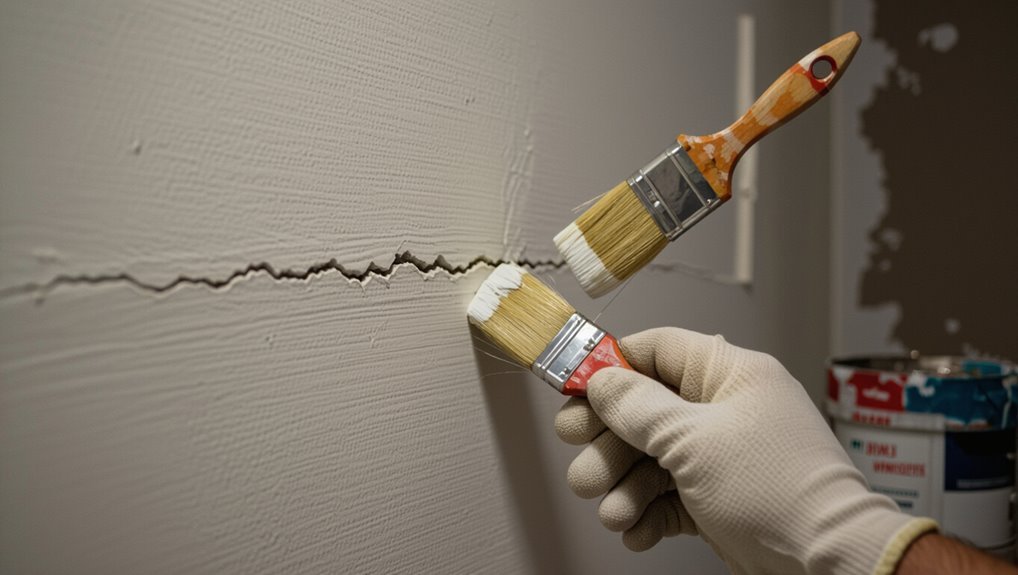
Wondering if paint will hide those hairline plaster cracks? You’ll find paint effectiveness is limited: thin paint can reduce contrast but won’t fill gaps, so crack visibility often remains.
If cracks are hairline and stable, careful priming and a quality topcoat can minimize appearance temporarily.
Don’t expect paint alone to be a permanent fix for even subtle, recurring fissures.
Should You Paint or Repair First?
You should usually repair hairline cracks before painting to guarantee a long-lasting finish and prevent the cracks from reappearing through the new coat.
In a pinch, painting can mask minor cracks temporarily, but that’s only a short-term fix.
Plan to patch and sand properly, then paint for the best results.
Paint After Repair
Decide whether to repair cracks before painting—don’t assume paint will hide structural or poorly prepared flaws.
You should complete proper repair methods first: clean, fill, sand, and prime repaired areas. Choose compatible paint types after repairs so finish bonds and matches texture.
Skipping repair risks visible seams, peeling, or reappearance. Let repairs cure fully before applying finish coats for lasting results.
Temporary Paint Fix
After repairing hairline cracks properly, you might still be tempted to slap on paint as a quick cosmetic fix instead of doing a full repair everywhere.
You can use a temporary fix, but know it’s cosmetic only. Consider:
- Clean and prime the area.
- Use flexible filler or caulk over crack.
- Paint with quality, elastic paint as a quick solution.
Inspecting and Documenting Cracks
Start by closely examining each hairline crack to determine its length, direction, and whether it’s a surface-only fissure or linked to deeper movement.
Begin by inspecting each hairline crack—note its length, direction, and if it’s surface-only or indicates deeper movement
You should photograph and note location, pattern, and any nearby stress signs.
Classify crack types and record what repair techniques might suit each.
Keep a dated log to track changes before you decide on permanent fixes.
Measuring Crack Width, Length and Depth
With your inspection notes and photos in hand, measure each crack’s width, length, and depth so you can pick the right repair method.
Use simple crack assessment and measurement techniques to decide if filler, tape, or replastering’s needed.
Follow these steps:
- Width: use calipers or feeler gauges.
- Length: measure with a tape.
- Depth: probe with a thin screwdriver.
Testing Walls for Moisture Problems
Before you paint, check for visible damp like discoloration, peeling, or a musty smell that can mean ongoing moisture.
If you spot signs, don’t repaint yet — fix the source first.
Use a moisture meter to confirm damp levels and guide repairs before touching up hairline cracks.
Check For Visible Damp
If you suspect moisture, look closely for visible damp before you paint: Check walls for staining, bubbling paint, or dark patches.
Use simple damp detection by touch and sight as part of your moisture assessment.
- Inspect skirting and corners.
- Smell for mustiness.
- Note recurring wet spots and take photos for reference before decorating.
Use A Moisture Meter
When you suspect damp but can’t be sure by sight or smell alone, grab a moisture meter to get quick, objective readings from your walls.
You’ll pinpoint hidden wet spots, gauge moisture impact on plaster, and decide if repair or drying’s needed.
Check meter accuracy with a control spot or calibration, and retest after fixes to confirm moisture levels drop.
Spotting Delamination and Loose Plaster
Although hairline cracks can just be cosmetic, you’ll want to check for areas where paint or plaster is separating from the substrate, because delamination and loose plaster signal deeper problems that simple repainting won’t fix.
Hairline cracks may be cosmetic, but check for delamination or loose plaster — deeper issues that repainting won’t fix.
Tap surfaces, look for:
- Hollow sounds — delamination signs.
- Visible gaps or bulging.
- Powdery or crumbling edges indicating loose plaster.
Signs a Crack Is From Structural Movement
Because structural movement puts stress through walls and foundations, you’ll see telltale signs that go beyond simple hairline cracks.
You’ll notice varied crack types, diagonal or stair-step patterns, widening gaps and shifting door frames as movement indicators. These affect structural integrity and suggest foundation issues and compromised wall stability.
Consider prompt repair methods, preventative measures and clear maintenance tips to limit further damage.
When to Call a Structural Engineer?
How do you know it’s time to call a structural engineer? You should act when cracks threaten structural integrity or you spot worsening patterns.
Get a professional engineering assessment if:
- Cracks widen quickly or appear after a seismic event.
- Doors/windows jam or floors slope noticeably.
- Visible gaps at joints or masonry displacement.
Don’t delay—an engineer gives clear next steps.
Common Causes: Moisture, Age, and Movement
Once you’ve ruled out structural failure with an engineer, look at the everyday causes behind hairline cracks: moisture, age, and normal building movement.
You should inspect moisture sources like leaks or high humidity, assess structural integrity changes, and consider plaster aging effects.
Choose targeted repair techniques—seal leaks, control humidity, and use appropriate fillers—so fixes last and prevent recurrence.
How Plaster Age Affects Crack Recurrence
As plaster ages, it becomes drier and more brittle, so small movements and humidity swings that once only flexed the surface now open hairline cracks more readily.
You’ll need to understand plaster aging to plan crack prevention. Consider these steps:
- Inspect for recurring lines.
- Address underlying movement.
- Stabilize humidity and substrate to limit relapse.
Tools and Materials You Need First
You’ll want a few reliable tools and materials before you start: a good-quality putty knife or joint knife, flexible filler or lightweight spackling compound formulated for hairline cracks, a fine-grit sanding block, a breathable primer, and paint that matches the wall’s sheen. This tools overview lists essential materials visually:
| Item | Purpose |
|---|---|
| Putty knife | Apply filler |
| Filler | Fill cracks |
| Sanding block | Smooth repair |
| Primer | Seal patch |
| Paint | Finish color |
Safety and Prep Checklist
Before you start fixing hairline cracks, put on proper PPE like gloves, goggles, and a dust mask so you don’t inhale particles or get chemicals on your skin.
Clean the surface thoroughly—remove dust, grease, and loose paint—so fillers and paint will adhere.
Make sure the room’s well ventilated and use a fan or open windows to keep fresh air moving while you work.
Personal Protective Equipment
When you’re prepping to paint over hairline cracks, equip yourself with basic personal protective equipment to keep dust, fumes, and splatter from becoming hazards.
Use proper safety gear: protective eyewear, dust mask or respirator mask, work gloves, knee pads, hearing protection, and consider hard hats or a safety harness if working high.
Keep first aid handy.
- Gloves, eye protection
- Respirator, mask
- Knee pads, first aid
Surface Cleaning Steps
Start by clearing loose debris and dust from the cracked area so paint and patching compounds can bond properly; wipe surfaces with a damp cloth or use a soft-bristled brush to remove chalking, then vacuum or tack-rag any remaining dust. Use proper cleaning tools for surface preparation and let it dry before patching.
| Task | Tool |
|---|---|
| Dust removal | Brush |
| Wipe | Damp cloth |
| Final pass | Vacuum |
| Inspect | Good light |
Ventilation And Airflow
After cleaning and drying the surface, check the room’s ventilation and airflow so fumes from paint, primers, and patching compounds don’t build up; open windows, run a box or ceiling fan toward an open window to pull air through, and use a portable exhaust or window fan if natural airflow is limited.
You’ll manage air quality, airflow patterns, ventilation systems, indoor humidity, moisture control, air circulation, draft management, and environmental factors.
- Test airflow
- Control humidity
- Use exhaust fans
How to Clean Plaster Cracks for Best Adhesion
Before you patch or paint, clean the crack thoroughly so the filler will bond properly.
Use a stiff brush or vacuum to remove dust, loose plaster, and debris. Wipe with a damp cloth and mild detergent for grease or grime. Let dry fully.
Pick cleaning methods that suit the surface, then apply recommended adhesion techniques like primer or bonding agent before you fill and finish.
When to Widen or V‑Groove a Crack
Once the crack is cleaned and primed, decide whether you should widen or V-groove it to help filler stick and prevent future hairline reopening.
You’ll widen for unstable, deep cracks; use v groove for thin but persistent splits.
Consider:
- Structural movement present
- Crack depth and width
- Surface adhesion issues
Choose appropriate widening techniques or v groove methods accordingly.
How to V‑Groove Safely and Quickly
Before you start V-grooving, make sure you wear eye protection, a dust mask, and gloves, and clear the area of flammable materials.
Use a sharp carbide blade or angle grinder with a guide to make a shallow, consistent V-shaped channel along the crack.
Work steadily with light passes to keep control and finish by vacuuming dust before patching.
Safety First Steps
When you V-groove to widen hairline cracks, prioritize personal protection and worksite control:
- Wear goggles, mask, gloves; follow safety precautions for dust and debris.
- Secure ladders, cordon area, use ventilation to limit exposure.
- Keep a first-aid kit and clear emergency procedures posted; have a phone ready.
Work deliberately, stop if conditions feel unsafe.
Quick V‑Groove Technique
Start by marking the crack and clearing loose debris so you can see its full length and decide how deep to go. Use a utility knife or V‑groove tool, work slowly, and wear eye protection. These v groove tips speed repair and improve filler grip — key v groove benefits.
| Tool | Purpose |
|---|---|
| Knife | Cut groove |
| Chisel | Clean debris |
| Brush | Remove dust |
| Mask | Protect eyes |
| Filler | Seal groove |
Choosing Filler for Hairline Plaster Cracks
Although hairline plaster cracks might look minor, choosing the right filler matters for a lasting repair; you’ll want a product that matches the crack width, substrate, and paint type.
Consider filler types that suit crack treatments and repair methods. Do surface preparation, then pick between:
- Flexible fillers
- Cementitious fillers
- Lightweight spackles
Balance DIY solutions, professional advice, and long term durability for plaster maintenance.
Using Acrylic Patching Compounds Correctly
Before you apply acrylic patching compound, make sure the crack is clean, dry, and free of loose plaster or dust—sand lightly and vacuum or wipe the area.
Use a putty knife to press the compound into the crack, smooth it flush with the surface, and feather the edges for a seamless finish.
Let it fully cure, sand as needed, and prime before painting.
Surface Preparation Steps
Good surface preparation makes the difference between a patch that lasts and one that reopens.
You’ll start with crack assessment and identify surface imperfections, wall textures, and weather effects. Use repair tools and suitable repair techniques.
Consider plaster longevity, aesthetic considerations, paint selection, and finish options.
Follow these steps to prepare:
- Clean and widen.
- Prime.
- Level and sand.
Proper Application Technique
Start by mixing the acrylic patch to the manufacturer’s recommended consistency—usually a spreadable, paste-like texture—so you can apply it smoothly without sagging or excessive shrinkage.
You’ll press compound into the crack, overfill slightly, then skim flush with a damp knife.
Sand lightly after curing, dust off, and prime.
These application techniques are effective methods for durable, invisible repairs.
Using Spackling for Very Fine Hairlines
If you want to fix very fine hairline cracks, spackling can work well when applied correctly; it’s thin, easy to sand, and designed for small surface blemishes.
Use spackling techniques after a careful crack assessment.
Steps:
- Clean and widen minimally.
- Apply thin spackle, smooth with a putty knife.
- Sand feathered edges, prime, and paint for a seamless finish.
Gypsum‑Based Fillers: When and How to Use Them
Gypsum-based fillers are a heavier-duty option when hairline cracks go beyond what spackle can handle: they cure harder, resist shrinkage, and work well for wider cracks or areas needing thicker fills.
You’ll appreciate gypsum advantages like quick set and sanding ease; choose appropriate filler types (pre-mixed or powder) based on crack depth.
Apply in thin layers, sand, then prime before painting.
Joint Compound for Broader Plaster Repairs
When cracks or damaged plaster demand a smoother, broader repair than gypsum filler provides, switch to joint compound for its spreadability and feathering ability.
You’ll appreciate joint compound advantages and simple repair techniques. Use these steps:
- Clean and widen cracks slightly.
- Apply compound in thin layers.
- Let dry between coats, then prime before painting.
Feathering and Sanding Patched Cracks Smoothly
Once the compound’s dry, you’ll feather the patch edges so they blend into the surrounding wall.
Use light, even sanding to remove ridges and create invisible joints.
Take your time and check frequently under angled light to catch any high spots.
Feathering Edges Seamlessly
Before you paint, feathering the filler into the surrounding surface creates an invisible changeover that keeps the repair from telegraphing through the finish.
You’ll use feathering techniques and mindful blending colors to match texture and tone.
Steps:
- Thin edges with a wide knife.
- Build shallow layers, letting each dry.
- Lightly scuff before priming for even adhesion.
Sanding For Invisible Joints
After feathering the filler into the surrounding surface, sanding polishes that blended edge into a seamless joint so it won’t show through paint.
Use fine-grit progressions, light pressure, and a sanding block to keep planes flat.
Check joint visibility from different angles and under raking light.
Finish with a dust-free wipe, inspect, and repeat targeted sanding techniques until the repair disappears beneath primer and topcoat.
How to Prime Patched Areas to Stop Telegraphing
Prime patched areas with a thin, even coat of high-quality primer designed for drywall or masonry so the repair blends with the surrounding surface and doesn’t telegraph through the finish paint.
Use proper priming techniques after your chosen patching methods. Then:
- Sand lightly for feathered edges.
- Apply primer thinly, two coats if needed.
- Inspect under daylight before painting.
Best Paint Types for Masking Fine Cracks
When you’re choosing paint to hide hairline cracks, go for high-opacity formulas that block the wall color beneath and reduce telegraphing.
For areas with slight movement or temperature shifts, elastomeric coatings offer flexible coverage that helps prevent cracks from reopening.
You’ll want to match the coating to the substrate and finish for the best long-term result.
High-Opacity Paints
Although high-opacity paints won’t make structural cracks disappear, they’re designed to obscure fine hairline fractures by providing dense, light-blocking pigments that reduce shadowing and visual contrast.
You’ll notice high opacity benefits immediately and improved paint durability over time.
Consider these practical points:
- Better coverage hides thin lines.
- Fewer coats needed.
- Works best over sound, prepared plaster.
Elastomeric Coatings
If high-opacity paints hide fine lines by blocking light, elastomeric coatings go further by actually bridging and flexing with hairline cracks so they stay unseen longer.
You’ll value elastomeric benefits for long term performance; follow surface preparation and application techniques.
Consider durability factors, environmental impact, cost comparison and compatibility issues.
Check product recommendations and heed maintenance tips to maximize lifespan and effectiveness.
Why Elastomeric Paint Isn’t a Cure‑All
Because elastomeric paint stretches and fills small gaps, you might expect it to solve every hairline crack problem — but it won’t.
You’ll need to know elastomeric limitations and ignore paint myths.
Consider steps you should take:
- Assess structural cause.
- Repair or fill cracks properly.
- Prime and use appropriate products.
Relying solely on elastomeric coatings can mask issues without fixing them.
How Sheen Affects Visible Cracks
Sheen plays a big role in how noticeable hairline cracks are: higher-sheen paints reflect more light and can highlight surface imperfections, while flatter finishes scatter light and help hide them. You’ll choose sheen types based on room lighting and desired look; understanding light reflection helps you minimize visible cracks.
| Sheen | Light Reflection | Visibility |
|---|---|---|
| Gloss | High | High |
| Eggshell | Moderate | Medium |
| Matte | Low | Low |
How Many Paint Coats Are Needed to Hide Hairlines?
Wondering how many coats it’ll take to obscure hairline cracks? You’ll typically need multiple thin coats, not heavy ones. Consider:
- One coat over perfect color matching and smooth prep might barely help.
- Two coats usually improve coverage and seam blending.
- Three coats give best concealment across varied finish types and light angles.
Prep, primer, and thin layers matter more than a single thick coat.
Using Flat, Light‑Scattering Paints Effectively
If you want to minimize the look of hairline cracks, choose a flat, light‑scattering paint and apply it with care; its low gloss and microtexture reduce contrast so tiny imperfections become less visible.
You’ll appreciate flat paint benefits when you prep, feather edges, and use consistent brush or roller strokes.
Pair those light scattering techniques with thin, even coats for subtle, durable concealment.
Color Choices That Minimize Crack Visibility
Choose lighter tones to soften shadows around hairline cracks so they blend with the wall.
Pair those tones with matte finishes to cut glare that would otherwise highlight imperfections.
For best results, stick to tone-on-tone contrasts instead of sharp color shifts so cracks stay visually camouflaged.
Lighter Tones Hide Shadows
Because light colors reflect more light and reduce contrast, they make hairline cracks much less noticeable than darker paints.
You’ll use light color for shadow concealment and improved crack perception through subtle color blending and paint texture choices that create visual trickery in interior design, boosting aesthetic appeal.
- Choose pale neutrals.
- Match undertones.
- Smooth texture.
Matte Finishes Reduce Shine
Light-reflecting lighter tones work well, but pairing them with a matte finish cuts glare and makes hairline cracks far less obvious.
You’ll want a low-reflective matte sheen to reduce surface highlights that emphasise imperfections. Choose paints with consistent pigment and flat binders so light scatters evenly.
That approach minimizes crack visibility without masking texture or requiring heavy fillers.
Tone-on-Tone Camouflage
One simple strategy is to use tone-on-tone color schemes that let cracks disappear into the overall finish: by picking a main color and layering slightly lighter or darker shades of the same hue for trim, accents, and touch-ups, you break up contrast that would otherwise draw the eye to hairline imperfections.
Use textured finishes and subtle color gradients to mask seams.
- Match base tone
- Vary sheen
- Feather touch-ups
Texture and Faux Finishes to Hide Imperfections
When you want to mask hairline cracks without invasive repairs, textured paints and faux finishes give you fast, effective options that disguise flaws by breaking up light and surface continuity. You’ll use faux textures and decorative painting as artistic camouflage, blending repair techniques into plaster finishes for subtle visual deception.
| Method | Effect |
|---|---|
| Sponge | Soft depth |
| Venetian | Polished marble |
| Rag | Irregular hide |
Using Crack‑Bridging Tapes and Mesh for Hairlines
If you want a durable, low-profile fix for hairline cracks, crack‑bridging tapes and mesh give you a hidden reinforcement that moves with the substrate and stops cracks from reappearing after paint or skim coat.
You’ll use proven crack prevention techniques and plaster repair methods to stabilize joints, then finish smooth.
- Clean and prime
- Apply tape/mesh
- Feather with compound
How to Install Fiberglass Mesh Over Hairlines
Before you apply mesh, make sure the crack and surrounding surface are clean, dry, and free of loose paint or dust.
Cut a strip of fiberglass mesh to span the hairline with at least an inch overlap each side, press it into a thin coat of joint compound, then embed it smoothly.
Finish by feathering a second coat over the mesh and sanding lightly once dry for a flat, paint-ready surface.
Prepare Surface Properly
Although hairline cracks look minor, you’ll need to prep the surface carefully to guarantee the fiberglass mesh adheres and hides the flaw long-term.
Assess surface texture and plaster types, note crack patterns, and choose repair techniques that improve paint adhesion and repair longevity. Clean, remove loose material, and control humidity.
- Surface cleaning
- Feather edges
- Check drying times and primer importance
Apply And Tape Mesh
Start by cutting a strip of self-adhesive fiberglass mesh slightly wider than the crack so you get good overlap on both sides.
Then center the strip over the hairline and press it firmly into place.
Smooth bubbles, trim excess, and tape ends with paper or mesh tape.
Apply thin joint compound to embed the mesh, ensuring proper mesh installation and strong plaster adhesion before sanding and repainting.
Reinforcing Repairs With Paper Tape
Reinforce hairline crack repairs with paper tape to prevent reopening and create a stronger, longer-lasting finish.
Reinforce hairline cracks with paper tape for a stronger, longer-lasting repair that resists reopening.
You’ll use proper tape application and joint compound to achieve crack reinforcement before sanding and painting.
Follow these steps:
- Clean and fill the crack.
- Embed paper tape smoothly.
- Apply two thin coats of compound, sand, prime, then paint.
Repairing Cracks That Reappear After Painting
If the crack reappears after painting, don’t assume the initial repair failed — investigate the cause so you can fix it correctly.
Check for movement, moisture, or substrate issues, then choose appropriate repair techniques like deeper fill, bonding primer, or reinforcement.
Balance crack prevention and aesthetic considerations while addressing underlying causes to guarantee long term solutions that stop recurrence and preserve finish.
Fixing Cracks From Thermal Expansion and Contraction
When cracks keep returning because the wall is expanding and contracting with temperature shifts, you’ll need a repair approach that accepts movement instead of fighting it.
Use flexible solutions that address thermal movement and offer long-term crack prevention:
Choose flexible repairs that move with temperature changes to prevent recurring cracks long-term
- Clean, widen, and fill with a flexible acrylic or silicone filler.
- Embed fiberglass tape over the joint.
- Finish with elastomeric paint or sealant to accommodate cycles.
Addressing Cracks From Foundation Movement (Scope & Steps)
Because foundation movement can indicate serious structural issues, you should first assess the crack pattern and severity before any cosmetic fixes.
Inspect for diagonal, stair-step, or widening gaps suggesting foundation settling.
Start crack monitoring with measurements or telltale gauges, photograph regularly, and log changes.
If cracks progress, consult a structural engineer, then follow recommended stabilization, repair, and proper plaster reinstatement steps.
How to Stop Moisture‑Driven Cracks at the Source
First, you’ll want to find where water’s coming from—check plumbing, roof leaks, and ground water near the foundation.
Then improve ventilation inside (add vents, use dehumidifiers) so trapped moisture can escape.
Finally, fix exterior drainage and slope the soil away from the house to keep water from pooling against the walls.
Identify Moisture Sources
If you want paint to hide hairline cracks for good, you need to stop the moisture that’s causing them in the first place.
Inspect walls, ceilings, and exterior for water stains and musty smells. Focus on identifying leaks and other moisture sources quickly.
- Check plumbing lines
- Examine roof and flashing
- Look for rising damp at skirting
Improve Ventilation And Drainage
While fixing leaks matters, you also need to control humidity and surface runoff to stop hairline cracks from coming back.
Use ventilation techniques and airflow enhancement—exhaust fans, trickle vents, and cross-ventilation—for better air circulation and wall breathing.
Combine drainage solutions like gutters, graded soil, and French drains for moisture management.
These steps support humidity control and mold prevention so plaster stays stable.
Repairing Plaster Lath Separations and Keying Failures
Repairing plaster lath separations and keying failures starts with identifying where the plaster has lost its mechanical bond to the lath or failed to key into the wood slats, because you’ll only fix the problem permanently when you restore or recreate that support.
Assess separation issues, moisture control, and crack visibility, then use proper repair techniques to regain structural integrity.
Assess separation, control moisture, and address visible cracks to restore plaster’s structural integrity.
Maintenance tips:
- Re-key loose plaster.
- Stitch or screw lath.
- Seal and monitor humidity.
When to Spot‑Repair vs Re‑Plaster a Wall
After you’ve re‑keyed loose plaster, stitched lath, and controlled moisture, decide whether to spot‑repair or replaster by evaluating the extent, pattern, and cause of damage.
You’ll choose spot repairs for isolated cracks or small delamination using targeted repair techniques.
Replaster when widespread cracking, recurring movement, or substrate failure appears.
Your plaster assessment should guide scope, materials, and timing for durable results.
Budgeting for Professional Plaster Repairs
When you call in a pro, factor in an inspection fee since identifying underlying issues can change the scope.
Compare labor versus materials so you know whether skilled patchwork or full replastering is driving the quote.
Also set aside a contingency for hidden damage you mightn’t see until they open up the wall.
Cost Of Inspection
A basic inspection typically runs between $100 and $300, though more thorough assessments for older homes or complicated plaster systems can cost $400–$700 or more.
You’ll want clear cost factors and inspection methods explained so you can budget. Consider:
- Visual inspection and moisture meter
- Minor testing or small repairs during visit
- Detailed report with recommendations and estimates
Labor Vs Materials
Inspection costs give you a baseline, but you’ll need to separate labor from materials to build an accurate budget for professional plaster repairs.
You should compare labor costs across contractors, weigh material types and repair techniques, factor project duration and time investment, and consider contractor selection versus DIY options.
Account for budget constraints, varying skill levels and quality differences to pick the best balance for your needs.
Hidden Damage Contingency
Because plaster can hide rot, rusted lath, or structural cracks behind a thin surface layer, you should budget extra for unseen repairs before a contractor peels back the finish.
You’ll want a contingency line for hidden damage and to discuss repair strategies up front.
Consider these steps:
- Inspection allowance
- Stabilization fund
- Finish and matching labor
How to Choose a Plasterer or Contractor
Wondering how to pick a plasterer or contractor who’ll actually fix hairline cracks and not just cover them up?
Check plaster contractor qualifications, licenses, insurance, and written estimates.
Verify the plaster contractor’s qualifications, licensing, insurance, and always get a detailed written estimate before hiring.
Focus on evaluating plaster experience: ask for portfolios, references, and specifics about techniques and materials used.
Get a clear repair plan, timeline, and warranty.
If something feels vague, keep looking until you find confidence.
Quick Homeowner Fixes vs Long‑Term Solutions
When you spot hairline cracks, you can try quick homeowner fixes like fillers and paint to tidy things up, but those cosmetic fixes won’t stop underlying movement or moisture issues; for lasting results you’ll need proper prep, compatible materials, and sometimes structural repair from a pro.
- Assess cause.
- Use compatible filler.
- Hire pro for structural fixes.
You want quick fixes for appearance, but lasting solutions prevent recurrence.
Common Repair Mistakes That Make Cracks Worse
If you rush repairs or pick the wrong materials, you can actually make hairline cracks worse instead of fixing them. You’ll learn which repair techniques to avoid, how improper prep or heavy fillers cause re-cracking, and why skipping primer undermines crack prevention. Choose compatible products, use proper joint treatment, and don’t overfill gaps to keep repairs stable.
| Mistake | Consequence |
|---|---|
| Wrong filler | Re-crack |
| No prep | Poor adhesion |
| Overfilling | Stress |
| Skipping primer | Paint failure |
How Long Patched Hairline Repairs Typically Last
A typical patch on a hairline crack can last anywhere from a few years to a decade depending on materials and conditions.
You’ll see shorter lifespans when there’s movement, moisture, poor prep, or low-quality fillers.
Recaulk or repatch when the repair reopens, the finish looks uneven, or you start seeing stains or moisture again.
Expected Patch Lifespan
Because the longevity of a patched hairline depends on materials, prep, and movement, you can usually expect a well-done repair to last anywhere from several months to many years.
You’ll gauge patch durability and repair longevity by:
- Material quality
- Prep thoroughness
- Structural movement
With proper technique and matching compound, you’ll often see years of stable results before reinspection is needed.
Factors Shortening Durability
When conditions aren’t ideal, patched hairline cracks will fail sooner than you’d expect; moisture, vibration, and improper surface prep are the usual culprits that shorten a repair’s lifespan.
You should note durability factors like temperature swings, structural movement, and poor adhesion. If you skip proper priming or use the wrong filler, plaster longevity drops dramatically, and you’ll face more frequent touch-ups.
When Recaulk Or Repatch
If you’ve repaired a hairline crack properly—clean substrate, correct filler, and a compatible primer—you can expect the patch to last anywhere from a few months to several years depending on conditions; more often, routine checks every 6–12 months catch failures early.
Do crack evaluation, damage assessment, then choose caulk types and patch materials.
- Inspect
- Recaulk
- Repatch
Use repair methods, renovation tips, wall treatments, surface finishes, maintenance techniques, and restoration strategies.
How to Maintain Repaired Plaster to Prevent Recurrence
To keep repaired plaster from cracking again, you’ll want a simple routine that addresses moisture, movement, and surface wear right away. Use plaster maintenance tips: control humidity, inspect for shifts, and touch up paint. Regular checks prevent small issues becoming cracks, preventing crack recurrence.
| Task | Frequency |
|---|---|
| Humidity check | Monthly |
| Inspection & touch-up | Every 6 months |
| Sealant review | Annually |
Documenting Repairs for Future Owners
Keeping a clear record of plaster repairs helps future owners understand what was fixed and why. It reduces guesswork when they inspect or plan further work.
You should create concise property documentation that lists repair history, dates, materials, photos, and warranties to guarantee buyer transparency and guide future maintenance.
- Photos with timestamps
- Materials and methods
- Warranty and contact info
How Lighting and Windows Affect Crack Appearance
Because light hits cracks at different angles, you’ll often see hairline fissures one moment and barely notice them the next.
You should consider lighting effects and window placement: natural illumination and reflective surfaces change shadow play, affecting crack visibility and color perception.
Adjusting lamps or drapes lets you control room ambiance, minimizing how prominent cracks look without altering the wall itself.
Photo Tips: Document Cracks for Monitoring
Want clearer records of hairline cracks? Use consistent framing, lighting, and a reference scale so each image matches previous shots.
- Photograph from the same distance and angle with a ruler for crack documentation.
- Note date, time, and room conditions in the filename or log.
- Set a sensible photo frequency to catch changes without excess photos; store images in one folder for easy comparison.
Monitoring Interval: How Often to Re‑Check Repairs
Check the patched area after 24 hours to make sure the filler has cured and there’s no immediate shrinkage.
Then check it once a week for two weeks to catch any settling or re‑opening.
Finally, review the repair each season to spot long‑term movement from temperature or humidity changes.
Inspect After 24 Hours
After 24 hours, look closely at the repaired area to see if the paint and filler have settled and bonded properly; small shrinkage, hairline gaps, or surface irregularities often show up once the material has cured.
- Check adhesion and texture for crack assessment.
- Note any shrinkage needing touch‑up.
- Evaluate whether repair techniques held and mark spots for follow‑up.
Check Weekly For Two
Frequently inspect the repair once a week for two weeks to catch any slow-moving shrinkage, re-cracking, or adhesion failures before they worsen. You’ll track hairline crack assessment and evaluate repair techniques, noting any changes. Use this quick log:
| Week | Condition | Action |
|---|---|---|
| 1 | Stable | No action |
| 2 | Minor shift | Touch-up |
| 2 | Major change | Reevaluate method |
Seasonal Long‑Term Check
Once you’ve completed the two-week weekly checks, shift to a seasonal long‑term schedule to catch slow-developing issues like thermal movement, settling, or weather-driven deterioration.
You’ll perform seasonal inspections and a focused crack assessment each visit. Do this:
- Inspect interior and exterior joints.
- Note any widening, length changes, or new cracks.
- Record photos and schedule repairs if changes appear.
Emergency Signs That Need Immediate Attention
If you spot new, widening, or zigzag hairline cracks—especially ones that appear suddenly or near doors, windows, or load-bearing walls—you need to act quickly because they can signal structural movement. You should call for urgent inspections and arrange emergency repairs if cracks widen, tilt appears, or you notice moisture, bulging, or sticking doors.
| Sign | Risk | Action |
|---|---|---|
| Widening | High | Inspect |
| Zigzag | High | Repair |
| Near openings | High | Assess |
| Moisture | Medium | Dry |
| Bulging | High | Evacuate |
Step‑By‑Step Checklist to Hide Hairline Cracks
Before you start, gather the right tools—putty knife, fine sandpaper, joint compound or spackling, primer, and matching paint—so you won’t interrupt the repair process.
Follow this checklist for effective hairline crack treatments and plaster repair methods:
- Clean crack, widen slightly, remove dust.
- Apply spackle/joint compound, smooth with putty knife.
- Sand, prime, and paint to match surrounding plaster.
Frequently Asked Questions
Can Hairline Cracks in Plaster Pose Health Risks (Mold, Allergens)?
Yes — you can get mold growth and allergens from hairline plaster cracks if moisture enters; you should address crack prevention, fix leaks, dry areas, and clean promptly to avoid health risks and worsening contamination.
Will Paint Hide Cracks on Textured or Popcorn Ceilings?
Metaphorically speaking, paint’s a bandage: you won’t hide deep cracks, but you can mask minor flaws on textured ceilings and popcorn ceilings. You’ll need repair for fissures; paint alone won’t convincingly conceal serious damage.
Can Seasonal Humidity Cycles Make Repaired Cracks Reappear?
Yes — seasonal changes can make repaired cracks reappear. You’ll see humidity effects cause plaster and joint compound to expand and contract, so without proper prep and flexible repairs, hairline cracks often return over time.
Are Hairline Plaster Cracks Covered by Homeowner Insurance Policies?
Usually you won’t get insurance coverage for hairline plaster cracks unless they result from a covered event; you’ll need to choose repair options like filler and repainting or hire a contractor for structural fixes and document damage for claims.
How Do Nails/Screws Popping Affect Nearby Hairline Cracks?
Yes — when nails or screws pop they can widen nearby hairline cracks, because nail movement and screw tension transfer stress into plaster. You’ll see cracks spider outward as fasteners shift and pressure repeatedly disturbs the surface.
Conclusion
Paint can gently veil hairline plaster cracks, but it won’t mend their quiet complaints. You’ll want to inspect, measure, and test for moisture first, then monitor repairs like a careful gardener watching new shoots. If cracks whisper of trouble—widening, dampness, or sudden shifts—address them immediately. For minor lines, follow the step‑by‑step checklist, touch up with primer and paint, and enjoy the refreshed surface that only hints at its past flaws.
