
Can Enamel Paint Be Used on Walls? Pros and Cons
Yes — you can use enamel paint on walls, and it’s great where durability and easy cleaning matter. It gives a hard, stain‑resistant finish that stands up to scuffs, moisture, and frequent washing, so it’s ideal for hallways, kitchens, and bathrooms. It’s less flexible, can show imperfections, and needs careful prep, priming, and ventilation. Oil or water‑based options affect drying and cleanup. Keep going and you’ll find when it’s worth the extra effort and cost.
Can Enamel Paint Be Used on Walls?
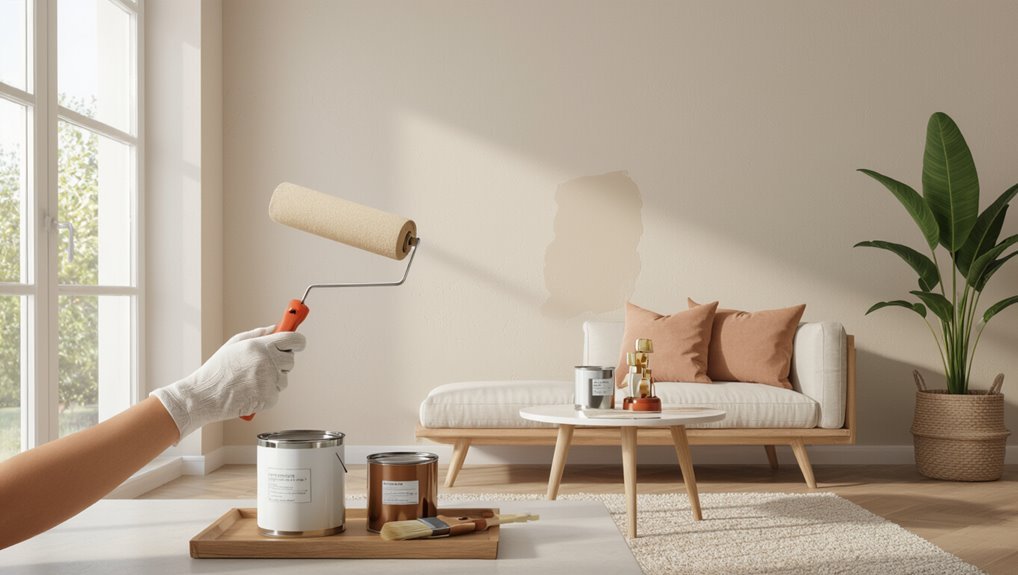
While enamel paint is more commonly associated with trim and cabinetry, you can definitely use it on walls—especially in high-traffic or moisture-prone areas.
You’ll benefit from enamel paint characteristics like durability, stain resistance, and easy cleaning.
Check wall surface compatibility first: smooth, well-primed drywall, plaster, or concrete accept enamel best.
Test a small patch to confirm adhesion and finish before committing.
Quick Decision: Should You Use Enamel on Your Walls?
Decide based on whether you want long-lasting, hard-wearing surfaces or paint that can flex with walls — enamel trades flexibility for durability.
Consider that enamel can be harder to apply and touch up, so factor in your skill level or willingness to hire help.
Finally, match the room: bathrooms and kitchens often benefit from enamel, while living rooms and bedrooms may do better with softer, more forgiving finishes.
Durability Versus Flexibility
Because enamel paint forms a hard, protective film, you’ll get excellent resistance to scuffs, stains, and heavy cleaning—but that same rigidity can make it less forgiving on walls that expand, contract, or have hairline imperfections.
Consider these durability factors and flexibility concerns:
- Best for trim and high-traffic areas
- Can crack on flexible surfaces
- Prep and substrate choice matter
Application Ease Tradeoffs
If you want a hard, washable finish and don’t mind a bit more prep and patience, enamel can be a smart choice for walls—just know it demands careful surface cleaning, possible sanding or primer, and longer drying times than many latex paints.
You’ll need precise application techniques, patience during curing, and thorough surface preparation; mistakes are harder to fix, but results last.
Room Suitability Guide
While enamel gives you a tough, washable surface that stands up to scuffs and moisture, it’s best for high-traffic or wet rooms like kitchens, bathrooms, hallways, and kids’ play areas—and less ideal for ceilings or large living rooms where a softer, more forgiving finish is preferable.
- Use enamel for durability and paint longevity in busy spaces.
- Avoid it if room aesthetics need a matte, cozy look.
- Consider semi-gloss for a balance between sheen and warmth.
When Enamel Makes Sense for Interior Walls
If your walls get constant use—hallways, kids’ rooms, or mudrooms—you’ll appreciate enamel’s durability and easy cleaning.
You’ll also want enamel in moisture-prone spots like bathrooms or laundry rooms to resist staining and mildew.
For a sharp contrast, use it on trim or an accent wall where its smooth, hard finish stands out.
High-Traffic Durability
When you need walls that stand up to constant use, enamel paint is often the practical choice because it resists scuffs, stains, and frequent cleaning better than most flat or eggshell finishes.
You’ll choose enamel for high traffic areas after durability tests show superior abrasion and washability.
- Hallways and stairwells
- Kid and play rooms
- Entryways and mudrooms
Moisture-Prone Areas
Because enamel stands up to moisture and repeated cleaning, it’s a strong option for interior walls in damp spots like bathrooms, laundry rooms, and basements.
You get durable moisture resistance that limits mold and staining.
Use proper application techniques: clean and prime, apply thin even coats, and allow full cure between layers.
That guarantees long-lasting protection and easier maintenance in humid areas.
Trim And Accent Walls
Although bold color and crisp lines make trim and accent walls stand out, enamel’s hard, washable finish is often the practical choice you won’t regret.
You get stronger finish types for high-traffic edges, better maintenance tips for cleaning, and lasting visual impact that supports design cohesion.
Consider:
- Pick trim styles that suit accent colors.
- Test sheen and durability.
- Plan coordinating palettes.
When Enamel Is a Poor Choice for Walls
If you’re repainting a high-moisture room or a surface that needs frequent refinishing, enamel may not be your best bet; its hard, glossy finish can trap moisture and crack on flexible substrates.
You’ll notice enamel drawbacks on textured drywall, exterior siding that expands, and surfaces needing easy touch-ups.
Consider alternative finishes like satin or acrylic designed for flexibility, breathability, and simpler maintenance.
Enamel vs Standard Wall Paint: Quick Comparison
When you’re choosing between enamel and standard wall paint, focus on finish, durability, and maintenance: enamel gives a hard, glossy surface that resists stains and scrubbing, while standard wall paints (like eggshell or satin acrylics) prioritize breathability, flexibility, and easier touch-ups.
- Enamel finish advantages: stain resistance and longevity.
- Wall paint versatility: texture and repaint ease.
- Choose based on room use and cleaning needs.
Oil‑Based vs Water‑Based Enamel for Walls
When choosing between oil‑based and water‑based enamel, you’ll want to weigh durability, how they’re applied and how long they take to dry.
Oil formulas usually give tougher, glossier finishes but take longer to dry and need solvents for cleanup, while water‑based enamels dry faster, have lower odor, and clean up with soap and water.
Consider room use, ventilation, and how quickly you need the space back in service when making your choice.
Oil vs Water Durability
Although both oil‑based and water‑based enamels aim to protect walls, they differ markedly in how they hold up over time and under stress.
You’ll weigh durability factors: oil longevity versus water resistance, scratch and stain tolerance, and maintenance needs.
- Oil: superior hardness, resists wear.
- Water: better water resistance, resists yellowing.
Choose by traffic and environment.
Application And Dry Time
Because oil‑based and water‑based enamels behave differently as you apply them, you’ll want to plan for distinct techniques and drying schedules to get a smooth, durable finish.
Use slower, even strokes and longer open time with oil-based, and thinner coats with quicker recoat for water-based.
Adjust application techniques to substrate and watch manufacturer dry time before sanding or recoating to avoid failures.
Cleanup And Odor Differences
If you’re using oil‑based enamel, expect stronger solvents, longer lingering odors, and solvent cleanup with mineral spirits or paint thinner; water‑based enamels, by contrast, clean up with soap and water and give off much milder, shorter‑lived smells.
- Choose appropriate cleanup methods for brushes and spills.
- Ventilate and use charcoal or baking soda for odor mitigation.
- Dispose of solvent waste safely and follow label instructions.
How Enamel’s Hard, Glossy Finish Changes Room Look
When you paint a room with enamel, its hard, glossy finish doesn’t just protect surfaces—it actively reshapes how the space feels by reflecting light, sharpening colors, and emphasizing textures.
You’ll notice glossy aesthetics boost room brightness, making colors pop and edges crisper.
That sheen can make small rooms feel more lively and modern, while also highlighting architectural details and furniture lines.
How Sheen Reveals Imperfections and Affects Touch‑Ups
That same glossy sheen that brightens a room also makes flaws more obvious: high-reflective enamel highlights brush marks, roller stipple, drips, and minor surface irregularities by casting tiny shadows and bright streaks.
That glossy sheen that lifts a room also exposes every brushstroke, drip, and tiny surface flaw.
You’ll notice sheen impact immediately, and touch up challenges arise because repaired spots reflect differently.
Tips:
- Sand and feather edges before repainting
- Match application method
- Use thin, blended coats
Best Rooms for Enamel on Walls
You’ll find enamel works well where moisture’s a problem, like bathrooms and laundry rooms, because it resists water and mildew.
It’s also smart for high‑traffic areas—hallways and kitchens—since it stands up to scuffs and frequent cleaning.
Use it on accent walls and trim when you want durable, crisp edges and a wipeable finish.
High-Moisture Areas
Because enamel resists moisture and wipes clean easily, it’s a strong choice for rooms where humidity and splashes are common.
You should consider humidity resistance and mold prevention, plus proper surface preparation. Mind drying time and ventilation needs to guarantee finish longevity and color retention.
- Follow application techniques for smooth coverage.
- Use maintenance tips to prevent mildew.
- Weigh environmental impact of product choice.
High-Traffic Spaces
After considering moisture-prone rooms, think about where walls take the most daily abuse: hallways, kitchens, bathrooms, mudrooms, and kids’ rooms all benefit from enamel’s tough, washable surface.
You’ll appreciate enamel in high traffic areas for wear resistance against scuff marks, easy maintenance, and strong color retention. Its finish durability boosts paint longevity while preserving aesthetic appeal with minimal upkeep.
Accent And Trim
When you want crisp, durable edges and a pop of contrast, enamel is ideal for accent walls and trim because it resists chips, cleans easily, and lays down a smooth, polished finish that makes architectural details stand out.
You’ll use enamel to define trim styles, enhance accent colors, and maintain design balance while playing with texture contrast, color schemes, and finish types.
- Living rooms
- Kitchens
- Hallways
Rooms to Avoid Using Enamel on Walls
While enamel paints give a tough, glossy finish, you’ll want to skip them in spaces where moisture, frequent cleaning with harsh chemicals, or a need for breathable walls matter most.
Avoid enamel paint types in bathrooms, laundry rooms, basements, and mudrooms where trapped moisture or mold risk rises.
Consider breathable alternatives, since enamel finish effects can seal in dampness and hinder wall drying.
Enamel Durability: Scuffs, Stains, and Cleaning
Because enamel forms a hard, slick surface, it stands up to scuffs and stains better than most wall paints, so you’ll spend less time spot-cleaning and more time enjoying intact walls.
Enamel’s hard, slick surface resists scuffs and stains, meaning less spot-cleaning and longer-lasting walls.
You’ll notice improved enamel finish longevity and a clear scuff resistance comparison with latex.
Quick tips:
- Use mild soap and soft cloths.
- Test cleaners first.
- Buff lightly for shine.
Breathability and Moisture Risks on Plaster or Drywall
If you coat plaster or drywall with high-gloss enamel, you’ll create a tough, nonporous layer that can trap moisture beneath the surface. That trapped moisture raises the risk of bubbling, peeling, and even mold growth in damp areas.
You should weigh moisture retention versus breathability benefits: limited surface permeability reduces air circulation, prolongs drying time, and stresses wall health.
Consider paint flexibility and mold prevention strategies.
Will Enamel Stick to Your Existing Wall Finish?
You’ll need to assess and prepare the surface before applying enamel, since oils, gloss, or dirt can stop it from adhering.
Check whether your current finish is oil-based, high-gloss, or previously primed—some coatings bond poorly with water-based enamel without sanding and a suitable primer.
Proper sanding, cleaning, and the right primer will make the enamel stick and last.
Surface Preparation Needs
When evaluating whether enamel will stick to your existing wall finish, start by identifying the surface type—latex paint, oil-based paint, glossy enamel, primer, or wallpaper—as each needs different prep for good adhesion.
You’ll assess surface types, clean, sand glossy areas, and decide on primer selection.
Quick checklist:
- Clean and degloss
- Repair and sand
- Apply suitable primer
Compatibility With Existing Finish
After preparing the surface, check which existing finish you’ve got, because enamel behaves differently over latex, oil-based paints, glossy enamels, primers, and wallpaper. You’ll assess compatibility factors like adhesion, sheen, and porosity. Sanding or priming may be needed. Match primer to existing finish to guarantee bond. Consider testing a small patch before full application.
| Existing finish | Recommended action |
|---|---|
| Latex | Sand/prime |
| Oil-based | Degloss/prime |
| Wallpaper | Remove/repair |
| Glossy enamel | Sand/etch |
Cleaning and Degreasing Before Enamel
Because enamel sticks to clean, grease-free surfaces, take time to remove dirt, oils, and residues before you paint.
You’ll improve adhesion and finish by focusing on surface preparation and proper cleaning techniques. Use mild detergent, degreaser, and rinsing.
Recommended steps:
- Wash with detergent solution and sponge
- Apply a low-odor degreaser for oily areas
- Rinse thoroughly and let fully dry
Sanding & Deglossing for Enamel Adhesion
To get enamel to stick, you’ll need to abrade glossy surfaces and choose the right sanding grit for the job.
You can use solvent deglossers for a quick chemical scuff or light sanding with 220–320 grit for most finish work.
Follow with a tack cloth to remove dust before priming or painting.
Surface Abrasion Prep
Sanding and deglossing are the simplest, most effective steps you can take to help enamel stick and resist chips: they roughen shiny surfaces and remove contaminants so primer and paint bond mechanically and chemically.
You’ll control surface texture and use basic adhesion techniques to prep properly.
- Sand with 120–220 grit
- Clean dust fully
- Feather edges before priming
Solvent Deglossing Methods
When a surface is too smooth or glossy for sanding alone, solvent deglossing lets you quickly dull the sheen and remove greasy residues so enamel primer and paint can bond properly.
You’ll choose solvent types (like mineral spirits or commercial deglossers), follow safety and ventilation rules, test a small area, and combine solvent deglossing with proper surface preparation before priming and painting.
Sanding Grit Choices
Although you might be tempted to grab the coarsest sandpaper and get it over with, choosing the right grit is key to enamel adhesion and a smooth finish.
You’ll use sanding techniques and grit selection for surface preparation, finish improvement, and adhesion enhancement.
Consider sanding tools and application methods for paint compatibility, gloss levels, and texture effects:
- 120–150 for deglossing and scuffing
- 180–220 for prep before primer
- 320+ for final smoothing
Fixing Cracks and Joint Compound Before Painting
Before you start painting with enamel, repair all cracks and deal with joint compound so the finish will bond evenly and look professional.
You should inspect surfaces, do crack repair with suitable filler, sand smooth, and remove dust.
For joint preparation, verify compound is dry, feather edges, and sand to a uniform plane.
Clean the area before applying paint for best adhesion and appearance.
Which Primer to Use Under Enamel
Now that cracks are filled and the joint compound is smooth, pick a primer that’ll bond well with enamel and suit your substrate.
Consider primer types and verify surface compatibility before you apply. Choose based on porosity, adhesion needs, and moisture exposure:
- Oil-based for strong adhesion on glossy surfaces
- Acrylic for general use and drywall
- Bonding primers for slick or challenging substrates
Tinting Primers and Undercoats for Enamel Projects
When you tint a primer, make sure it’s compatible with your enamel so the color and adhesion stay true.
You’ll want to choose undercoats formulated for enamel finishes—waterborne primers for water-based enamels and solvent-based primers for oil-based enamels.
Picking the right match reduces sanding, improves coverage, and prevents finish problems down the line.
Tinting Compatibility With Primers
If you plan to tint primers or undercoats for an enamel project, know that pigment compatibility and base chemistry matter — not all tinting systems work with all primers.
You’ll need to match tinting methods to primer selection and test small patches.
Consider:
- Waterborne vs. solvent-based tint limits
- Manufacturer-recommended tint systems
- Tint strength affecting adhesion and sheen
Best Undercoats For Enamel
Having matched your tinting method to the primer, pick undercoats that support enamel’s hardness and sheen without causing adhesion problems. Choose best undercoats based on primer types, enamel compatibility, surface preparation, color choices, application techniques, sheen variations, finish durability, moisture resistance, and environmental impact.
| Undercoat | Benefit |
|---|---|
| Acrylic primer | Fast-dry, low-VOC |
| Oil-based primer | Adhesion, durability |
| Shellac | Stain blocking, quick seal |
| Bonding primer | Tough grip on slick surfaces |
When (and When Not) to Thin Enamel Paint
Although enamel brushes and rollers can handle thicker formulas, you’ll want to thin paint when it’s too viscous to level out, lays down unevenly, or clogs your equipment.
Use proper thinning techniques to adjust enamel viscosity; add solvent sparingly and stir.
Consider:
- Thin slightly for smoother flow
- Don’t over-thin—loss of coverage
- Skip thinning for touch-ups or high-build coats
Brush, Roller, or Spray: Best Methods for Enamel Walls
For tight corners and trim, you’ll want a good brush to get crisp edges and control.
Use a roller to cover large wall areas faster and with a more even finish.
You can combine both for the cleanest, most efficient result.
Brush For Detail Work
When you need crisp edges, trim work, or small repairs on enamel-painted walls, a quality brush gives you the most control. Rollers and sprayers are faster for large areas but can’t match a brush for detail.
You’ll choose brush types for finish and durability, and learn detail techniques like feathering and short strokes.
- Angled sash for edges
- Nylon for water-based enamel
- Natural for oil-based enamels
Roller For Large Areas
After you finish the edging and detail work with a brush, a roller will cover large wall areas far faster while keeping an even enamel finish.
Choose roller types with appropriate nap for surface texture—short nap for smooth, medium for lightly textured. Use a high-quality frame and extension pole.
Master application techniques: load evenly, apply in W patterns, avoid overworking, and maintain a wet edge for uniform sheen.
Best Brushes and Rollers for Enamel Finishes
Choosing the right brushes and rollers makes a big difference with enamel finishes, because their dense, smooth formulas demand tools that lay the paint down evenly and resist shedding.
You’ll want tools that support best application techniques and ideal drying conditions. Pick high-density nylon brushes and short-nap rollers for smooth walls; clean thoroughly after use.
- High-density nylon brush
- Short-nap roller
- Foam brush for trim
Spraying Enamel: Equipment and Setup Tips
Spraying enamel requires the right gear and a careful setup to get an even, durable coat without runs or overspray.
You’ll choose HVLP or airless sprayers, thin paint per manufacturer specs, and mask areas.
Test spray pattern, adjust pressure and tip size for your spray technique, and secure ventilation.
Regular equipment maintenance—cleaning filters, tips, and hoses—prevents clogs and guarantees consistent results.
Application Technique to Avoid Brush Marks and Lap Lines
Before you start, make sure the surface is clean, dry, and sanded so the enamel can lay down smoothly.
Choose the right brush or roller nap for your paint and finish to minimize visible strokes.
Work with a wet edge and overlap each pass lightly to prevent lap lines as the paint dries.
Proper Surface Preparation
If you want a smooth, professional-looking enamel finish, prepare the surface thoroughly and plan your strokes so wet edges meet consistently.
You’ll improve surface texture and paint adhesion by cleaning, sanding, and priming. Follow these steps:
- Clean walls: remove grease, dust, and loose paint.
- Sand evenly: consistent tooth prevents lap marks.
- Prime: seal porous areas for uniform adhesion.
Brush And Roller Selection
Now that your walls are clean, sanded, and primed, pick tools that help you lay enamel smoothly—proper brushes and rollers cut down on brush marks and lap lines.
Use high-quality synthetic brushes for enamel; test brush types for flexibility and tip.
Match roller textures to finish: short nap for smooth walls, medium nap for slight texture.
Keep strokes even and avoid overworking the paint.
Wet Edge And Overlap
When you work with enamel, keep a wet edge so each stroke blends into the next—this prevents lap marks and visible brush lines by ensuring the new paint overlaps into still-wet areas rather than drying seams.
Use the wet edge technique to avoid overlap issues and finish smoothly.
- Maintain consistent speed
- Blend into still-wet paint
- Work in manageable sections
Drying vs Curing: What to Expect With Enamel
Although enamel feels dry to the touch within a few hours, it isn’t fully cured for days or even weeks, and you should treat it gently until the finish reaches full hardness.
You’ll notice drying times vary by formula and conditions; the curing process continues as solvents evaporate and resins crosslink.
Avoid heavy use or cleaning until the surface is fully hardened to prevent marks.
Ventilation and Safety for Oil‑Based Enamel
When you use oil‑based enamel, set up continuous airflow by opening windows and using a fan to push fumes outside.
Wear proper PPE—respirator with organic vapor cartridges, gloves, and eye protection—to limit inhalation and skin contact.
Keep combustibles away and follow label instructions for safe storage and disposal.
Proper Ventilation Setup
Because oil‑based enamel releases strong solvents, you’ll need a clear ventilation plan before you open the can: You should follow ventilation requirements to protect air quality and occupants.
Set windows and doors for cross‑flow, use exhaust fans, and run ventilation during and after painting until fumes fade.
- Open opposing windows and doors
- Use window or inline exhaust fans
- Keep ventilation running several hours
Personal Protective Equipment
Good ventilation will reduce fume levels, but you still need proper personal protective equipment to keep yourself safe while handling oil‑based enamel.
Follow safety precautions: set up workspace setup with cross‑ventilation, wear protective gear including eye protection, gloves and coveralls for skin protection, and use respirators for respiratory safety.
Wash hands, avoid eating, and maintain personal hygiene throughout the job.
Odor Control and Low‑VOC Enamel Options
If you’re sensitive to strong smells or painting indoors, choose enamel formulas labeled low‑VOC or zero‑VOC to minimize odor without sacrificing durability.
You’ll improve indoor air quality and reduce VOC emissions while considering eco friendly options and paint alternatives that aid odor absorption and scent control.
- Open windows and use fans.
- Pick certified low‑VOC brands.
- Use activated charcoal or plants for extra odor absorption.
Choosing Colors That Flatter With Enamel
When you pick enamel, pay attention to undertones and the paint’s sheen because they change how colors read in different lights.
Also think about room size—glossy finishes and darker hues can make small rooms feel tighter, while lighter, satin sheens open them up.
Finally, choose complementary accent colors that work with the enamel finish to balance contrast and highlight architectural details.
Undertone And Finish
Because enamel reflects light differently than matte finishes, you’ll want to pay close attention to both undertone and sheen when choosing colors that flatter a room.
Consider color psychology and undertone effects alongside finish variations and sheen levels to balance light reflection, aesthetic appeal, texture contrast, and maintenance considerations.
- Test swatches in different light
- Match sheen to furniture textures
- Expect easier cleaning, more shine
Room Size Impact
Although enamel’s shine can make small rooms feel tighter, you can use color and sheen to actually open up a space: choose lighter, low-to-mid sheen enamel to reflect light evenly without creating exaggerated glare, and reserve higher gloss on trims or focal walls to add depth without overwhelming the room.
For larger spaces, you can handle richer hues with a satin or semi-gloss paint finish to keep proportions balanced.
Complementary Accent Choices
If you want enamel to pop without overpowering a room, pair its sheen and color with accents that balance reflectivity and tone.
You’ll choose color combinations and accent styles to create design harmonies. Use contrasting shades sparingly, add texture contrasts like matte textiles, and employ simple decorative techniques to guide the eye.
- bold trim
- muted textiles
- metallic accessories
How Sheen Changes Color Perception
When you change a paint’s sheen, you change how light interacts with its surface, and that shift can make the same color read noticeably different in a room.
You’ll notice sheen impact most where light hits directly; gloss boosts vibrancy and hides flaws, while matte softens hues and masks texture.
Consider finish when judging color perception before committing.
Cost Comparison: Enamel vs Other Wall Paints
You’ll notice enamel usually costs more per gallon than basic latex, so factor upfront material costs into your budget.
But because enamel resists stains and lasts longer, you may spend less over time on touch-ups and recoats.
Let’s compare those short-term prices with the long-term value to see which option saves you money.
Upfront Material Costs
One clear factor to weigh is the sticker price: enamel paints typically cost more per gallon than standard latex or acrylic wall paints.
You’ll want to factor upfront pricing into your budget considerations before buying.
Consider these immediate cost points:
- Material unit price: enamel vs latex
- Primer or prep needs
- Coverage per gallon and quantity required
Long-Term Value
Durability matters more than the upfront price: enamel’s harder, more chip-resistant finish can mean fewer repainting cycles than cheaper latex options, so you’ll likely spend less over several years even if you pay more per gallon today.
Treat enamel as a long term investment — you’ll save on maintenance and enhance resale value, especially in high-traffic rooms where longevity and easy cleaning matter.
Cleaning Enamel Walls Without Damaging Finish
Keep dirt and marks from dulling your enamel finish by cleaning carefully and using the right supplies. You’ll extend sheen with gentle cleaning techniques and simple protective measures.
Use mild solutions, test discreetly, and avoid abrasives.
- Soft sponge and pH-neutral cleaner
- Microfiber cloth for drying and buffing
- Gentle circular motions, low pressure only
Touch‑Ups and Spot Repairs on Enamel Walls
Small chips and scuffs on enamel walls are fixable with a few straightforward steps, and doing them promptly prevents larger repairs later.
You’ll clean the area, sand lightly, apply primer if bare, then use matched enamel for spot painting.
Use fine brushes or a cotton swab for precise touch up techniques.
Follow repair strategies like feathering edges and curing time to blend finishes.
Repainting Over Enamel: Prep for New Color
Once you’ve handled chips and scuffs, repainting an enamel surface for a new color requires careful prep to guarantee adhesion and an even finish.
You’ll assess surface compatibility, clean and sand glossy areas, then choose proper primer selection. Follow these steps:
- Clean with degreaser and sand to dull sheen
- Use a bonding primer suited to enamel
- Tack cloth and allow full cure before repainting
Top Enamel Problems on Walls and Fixes
Although enamel’s hard, glossy finish looks great, it can show a handful of common problems you’ll want to spot and fix early—peeling, yellowing, cracking, blistering, and adhesion failures are the usual suspects, and each has a specific cause and repair approach.
| Problem | Cause | Fix |
|---|---|---|
| Peeling | Poor prep/enamel adhesion challenges | Sand, prime |
| Yellowing | Aging/heat | Clean, repaint |
| Blistering | Moisture | Dry, seal |
Matching Enamel Trim to Enamel Wall Paint
After you’ve fixed common enamel issues like peeling or yellowing, matching trim to wall enamel becomes the next step in a polished room finish.
Once peeling or yellowing is addressed, coordinating trim with wall enamel completes a clean, polished room finish.
You’ll focus on color coordination and finish compatibility so edges look intentional.
Consider these quick tips:
- Test swatches together under room lighting.
- Match sheen levels or contrast deliberately.
- Use quality brushes for crisp lines and durable results.
DIY or Hire a Pro for Enamel Wall Work?
Considering the scope and skill involved, should you tackle enamel wall work yourself or call in a pro? You weigh DIY Enamel against Professional Application: assess Skill Level, Finish Preferences, Cost Considerations, Project Timeline, and Safety Protocols. If confident, DIY saves money; if not, hire pros for flawless results and compliance.
| Skill | Cost | Time |
|---|---|---|
| Low | High | Short |
| High | Low | Long |
Time and Labor: Average Room Estimate
A typical 12×12 room requires about 6–10 hours of labor for a single coat of enamel (not including drying time).
So you can plan a full two-coat job plus prep and cleanup to take roughly 12–16 hours of hands-on work.
You’ll estimate time investment and labor costs, factoring skill level and room condition.
- Prep and patching
- Painting coats
- Cleanup and touchups
Disposing Leftover Enamel: Eco and Safety Tips
Leftover enamel needs careful handling because it’s both combustible and harmful to the environment; you’ll want to minimize waste, store usable paint properly, and dispose of unusable remnants through approved channels.
Follow safety precautions: seal cans, label contents, and keep away from heat.
For eco friendly disposal, take dried residues or unwanted cans to hazardous-waste collection points rather than tossing them in regular trash.
Health Considerations for Children and Sensitive Occupants
How will enamel paint affect kids, elderly family members, or anyone with asthma or chemical sensitivities?
You should weigh paint toxicity and child safety: solvent-based enamels emit VOCs that can trigger reactions.
Choose low-VOC or water-based formulas, ventilate, and limit exposure during and after application.
Opt for low‑VOC or water‑based enamels, ensure good ventilation, and keep sensitive people away until fully dry
- Use low-VOC or water-based enamels
- Guarantee strong ventilation and drying time
- Keep children and sensitive occupants away during painting
Short Case Studies: Successful Enamel Wall Projects
Now that you know how to minimize health risks when using enamel, let’s look at real-world examples that show what works in practice.
You’ll read brief case studies where thoughtful enamel color selection transformed kitchens, and where disciplined application techniques solved durability issues in high-traffic hallways.
Each example highlights prep, ventilation, and finish choices so you can replicate success without compromising safety or appearance.
Alternatives That Mimic Enamel’s Durability and Sheen
While true enamel has unique toughness and gloss, you can achieve similar results with several safer, easier-to-apply options—high-quality acrylic latex with a satin or semi-gloss finish, water-based alkyds, and catalyzed waterborne coatings all approximate enamel’s durability and sheen without the same VOC burden.
True enamel’s unmatched gloss aside, high-quality acrylics, water-based alkyds, and catalyzed waterborne coats deliver similar durability with less VOCs.
You’ll want enamel paint alternatives that serve as durable wall options:
- Acrylic latex (satin/semi-gloss)
- Water-based alkyds
- Catalyzed waterborne coatings
When to Choose Semi‑Gloss or Satin Instead of Enamel
Because you’ll balance durability with appearance and ease of maintenance, choose semi‑gloss or satin when you want a tough, low‑maintenance finish without the full hardness or high shine of true enamel.
Pick semi‑gloss benefits for trim, kitchens, and bathrooms where scrubbability matters.
Use a satin finish in living areas to hide imperfections while still resisting stains and cleaning, offering a softer, versatile look.
How to Test an Enamel Patch Before Committing
If you’re unsure how enamel will look and perform on your wall, do a small patch test before you commit to rolling the whole room—apply the enamel to an inconspicuous area or a spare piece of drywall, let it cure fully, then inspect for adhesion, sheen, color shift, and ease of cleaning.
Use these test methods for patch evaluation:
- Wait full cure, then scrub gently.
- Check adhesion with a fingernail or tape.
- Compare sheen and color in different light.
Decision Checklist: Is Enamel Right for Your Room?
Ready to choose enamel for your room? Ask about traffic, moisture, and desired finish.
Note enamel paint advantages: durability, stain resistance, easy cleaning.
Weigh enamel paint disadvantages: yellows in low light, longer cure, tricky touch-ups.
Consider substrate, ventilation, and maintenance commitment.
If you value longevity and gloss and can manage ventilation, enamel may suit your space.
Step‑by‑Step Mini Plan for an Enamel Wall Project
Now that you’ve weighed enamel’s pros and cons and confirmed it’s a fit for your room, here’s a compact, actionable plan to get your enamel wall finished right.
Now that enamel’s right for your room, follow a simple prep-and-paint plan for a durable, smooth finish.
You’ll focus on wall surface preparation, priming, and controlled enamel paint application.
- Clean, sand, repair, and prime the wall.
- Cut edges, roll in even coats.
- Sand between coats; finish with a protective topcoat.
Costs and ROI: Will Enamel Add Home Value?
One of the first things you’ll want to weigh is cost versus return: enamel paint typically costs more than standard interior latex, but its durability and easy maintenance can make it a smart investment in high-traffic areas where buyers notice quality finishes. Do a value assessment, track market trends, and compare lifecycle costs to potential resale premiums.
| Factor | Impact |
|---|---|
| Upfront cost | Medium |
| Maintenance savings | High |
| Buyer appeal | Medium |
| Longevity | High |
| Resale premium | Variable |
Quick Troubleshooting: Glossy Wall Finish Problems
If your glossy enamel finish shows streaks, orange peel, or runs, start by identifying the cause—poor surface prep, wrong brush or roller, or applying paint too thickly are the usual suspects.
You can fix glossy texture issues and manage wall scuff repairs by addressing prep, tools, and technique:
- Sand and clean problem areas gently
- Use a high-density roller or proper brush
- Thin coats, allow full drying between coats
Final Verdict: Who Should Use Enamel on Walls and Why
Considering your needs and the room’s use, enamel paint suits you when durability, washability, and a smooth, long-lasting finish matter most.
Choose enamel if high traffic, moisture, or frequent cleaning demand enamel longevity and stain resistance.
Avoid it in textured or casual spaces where touch-ups and breathability matter more.
You’ll get strong aesthetic appeal and practical resilience when you prioritize longevity over easy repainting.
Frequently Asked Questions
Can Enamel Paint Yellow or Discolor Over Time Indoors?
Yes — enamel paint can yellow or discolor indoors over time; you’ll notice changes from enamel durability aging, exposure to heat, smoke, or UV, and indoor lighting effects, so you should monitor and choose quality formulations.
Will Enamel Interfere With Wallpaper Adhesion Later?
Yes — but like Perseus clearing fog, you’ll need proper wall preparation and adhesion techniques; scuff, clean, and prime glossy enamel, use a suitable primer or sizing, and wallpaper will stick reliably later.
How Long Until Furniture Can Be Leaned Against Freshly Cured Enamel?
You should wait about 24–48 hours for initial drying, but full cure can take 7–14 days; plan furniture placement after at least 48 hours to avoid sticking or marks, and longer for heavy or glued pieces.
Can Pets’ Claws Permanently Mar Enamel Finishes?
Yes — your pets’ claws can permanently mar enamel finishes. You’ll notice pet damage and claw marks, especially on softer or thinly applied enamel; you should use tougher coatings, protective barriers, or regular touch-ups to prevent deterioration.
Are There Eco-Friendly Disposal Options for Enamel‑Soaked Rags?
Yes — you can use eco-friendly disposal options: follow local disposal guidelines, take solvent‑soaked rags to hazardous waste or paint recycling centers, or use approved recycling options like oil/paint collection programs to prevent fires and pollution.
Conclusion
You can use enamel on walls, but you’ll want to pick your spots. If you crave a durable, washable finish—think kitchen or mudroom—you’ll appreciate enamel’s armor-like sheen; in a cozy parlor it can feel like a Victorian parlor lit by gaslight, too formal. Remember the downsides: sticky feel, visible imperfections, and trickier repairs. Weigh durability versus warmth, test a patch, and choose satin or eggshell enamel if you want less glare.
