
Can Lowe’s Match Paint From a Chip? Color Matching Explained
Yes — you can get a very close match at Lowe’s by bringing a clean, flat chip (about 1″ square or larger) so their spectrophotometer can scan it and staff can fine‑tune the formula. Chips should be undamaged and tested on your actual surface since sheen and substrate change appearance. Metallics or heavily faded samples may not match perfectly, and technicians may remix tints for better results; keep going to see tips, costs, and alternatives.
What Searchers Want From This Guide (Intent & Structure)
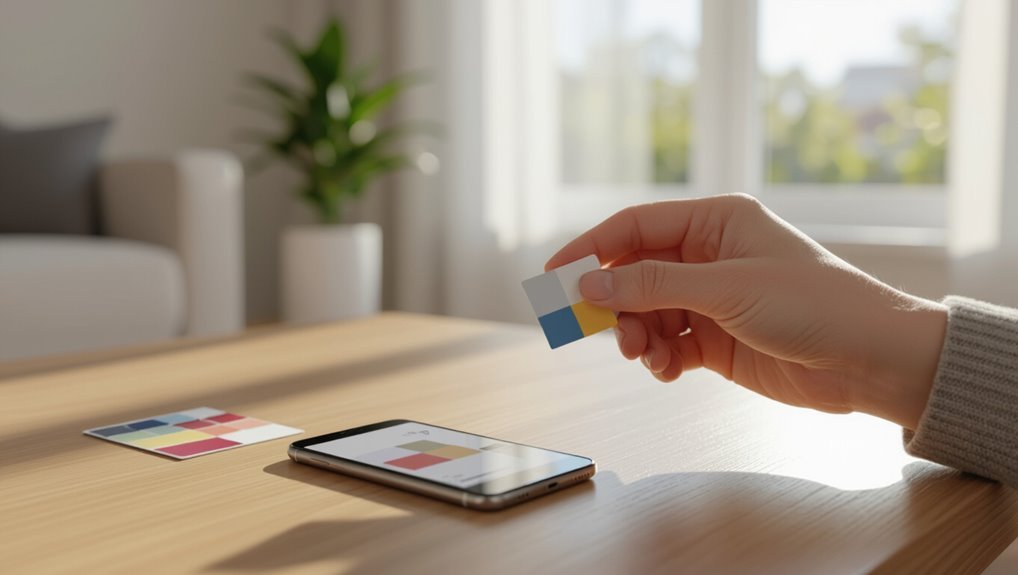
Why are you here? You want clear steps: what this guide covers, how color psychology influences choices, and practical tips on matching shades without wasting time.
You’ll get concise sections on tools, terminology, costs, and paint durability considerations so your decisions balance appearance and longevity.
Follow the order—overview, testing, in-store options, finishing tips—to reach a confident, efficient result.
Can Lowe’s Match Paint From a Chip? Quick Answer
Yes — Lowe’s can usually match paint from a chip by scanning it with an in-store spectrophotometer, but results depend on the chip’s size and condition.
Bring a clean, flat piece at least about 1″ square so the scanner gets an accurate read.
Be aware there are limits: metallics, heavily faded samples, and complex finishes may not match perfectly.
In-Store Spectrophotometer Scan
If you bring a paint chip to Lowe’s, their in-store spectrophotometer can usually scan it and create a close color match on the spot, though results depend on chip quality and lighting.
You’ll see technicians use color matching techniques and software adjustments to improve spectrophotometer accuracy.
Ask for a test sample and view it under your home lighting before buying larger quantities.
Chip Size And Quality
When you bring a paint chip to Lowe’s, technicians can usually create a match from a fairly small sample, but the chip’s size and condition directly affect accuracy; larger, clean chips give the spectrophotometer more color data and reduce edge effects that skew readings.
You should provide an intact piece, avoid faded or dirty areas, and prioritize chip quality over minimal chip size for best results.
Matching Limitations Explained
Though Lowe’s can often match paint from a chip, the result isn’t guaranteed—success depends on factors like the chip’s size and condition, the paint’s finish, and whether the original color has faded or been altered.
You should know lab spectrometers, human color perception limits, and practical color theory mean subtle shifts or metamerism can occur, so test samples before committing.
How Lowe’s Matches Color in Store (Equipment + Staff)
At Lowe’s, you’ll find a mix of handheld spectrophotometers, benchtop colorimeters and trained paint associates working together to recreate or match any sample you bring in.
At Lowe’s, handheld spectrophotometers, benchtop colorimeters and trained associates work together to flawlessly match your paint samples.
You’ll get equipment readings plus human judgment to account for finish and substrate across paint types, ensuring practical color matching before custom mixing.
- Scan sample
- Adjust formula
- Mix & test
How Spectrophotometers and Colorimeters Work at Lowe’s
When you hand a paint sample to a spectrophotometer at Lowe’s, it measures light reflectance across many wavelengths to capture the paint’s true spectral signature.
A colorimeter, by contrast, mimics human vision with broader color channel readings and can be faster for basic matches but less precise for complex or metameric colors.
Knowing the strengths of each tool helps you understand why staff may use one or both to get an accurate match.
How Spectrophotometers Read
Spectrophotometers and colorimeters measure the light reflected from a paint sample to tell you its exact color profile, and Lowe’s uses them to match or reproduce that color with high accuracy.
You’ll see spectrophotometer technology capture spectral data, ensuring color measurement accuracy so staff can recreate tints.
How they help you:
- Scan spectrum peaks
- Calculate formulas
- Verify matches
Colorimeters Vs Spectrophotometers
You’ve just seen how spectrophotometers capture detailed spectral data to reproduce paint tints, but paint-matching tools vary in approach and cost.
At Lowe’s, colorimeters give quick, affordable readings using RGB-based measurement techniques, while spectrophotometers deliver higher color accuracy by measuring full spectra.
You’ll choose speed and price or precision depending on your project’s tolerance for variation.
How Store Staff Use Visual Matching to Improve Results
Store staff rely on a mix of tools and trained judgment to make visual matches that the spectrophotometer alone can’t guarantee.
You’ll see them use visual techniques and adjust for your room’s color perception, lighting, and sample condition before finalizing a formula.
- Compare chips under store lights.
- Test swatches on your surface.
- Adjust mixes by eye for subtle shifts.
Why Sheen and Finish Matter for Matching
You’ll notice sheen changes how a color looks on your wall because different sheens shift perceived color.
The finish also alters how much light is reflected, making the same paint look different under the same hue.
For a true match, you’ll want the same sheen and finish as the original.
Sheen Affects Perceived Color
Although the pigment and formula determine a paint’s base color, the sheen you choose can change how that color looks on your wall. Glossier finishes reflect more light and can make hues appear brighter and more saturated, while flatter sheens absorb light and can mute or deepen the same tint.
You’ll notice sheen impact on color perception when you:
- Compare swatches in room light.
- Test small painted patches.
- View at different angles.
Finish Alters Light Reflection
When light hits a painted surface, the finish determines how much of that light is reflected back to your eye, so matching color means matching sheen as well as tint.
You’ll notice how light reflection changes depth and contrast; a flat surface scatters light, satin directs more, and glossy throws highlights.
That finish importance affects perceived hue, so account for finish when matching.
Match Requires Same Sheen
Sheen matters because two paints with identical tint can look different if their finishes reflect light differently.
So you have to match the sheen as well as the color. You’ll check sheen types and understand sheen impact to keep repairs invisible.
Match gloss level, base, and application method so texture and reflectivity align.
- Gloss level
- Base type
- Application method
How Substrate (Wall, Wood, Metal, Fabric) Affects Color Perception
1 key thing to remember is that the surface you’re painting changes how a color looks: walls, wood, metal, and fabric all absorb, reflect, and scatter light differently, so the same paint formula can read warmer, cooler, darker, or lighter depending on the substrate.
You’ll notice substrate influence on color perception: porous or glossy surfaces shift hue and value, so test samples on the actual material.
Exact Match vs. Close Match: When Each Is Realistic
Although you can sometimes get a perfect color match, it’s important to know that exact matches are realistic only under certain conditions—same substrate, identical sheen, and consistent lighting—otherwise a close match is usually the practical choice.
- When you can expect an exact match: identical surface and sheen.
- When close match suffices: large repairs or slight sheen differences.
- When to consult pros: complex substrates or critical color needs.
Prepare Your Chip for the Best Match Results
Now that you know when an exact or close match is realistic, get your paint chip ready so the scanner has the best chance to read it accurately.
Clean the chip gently, remove loose paint, and present a flat, unmended sample.
Gently clean the chip, remove loose paint, and provide a flat, unmended sample for accurate scanning.
Use ideal lighting—natural daylight or consistent store lighting—and avoid shadows or reflections.
Proper chip preparation improves scanner accuracy and speeds the process.
What Lowe’s Can Do When a Match Fails (Tint Tweaks, Remixes)
When a scanner can’t produce a perfect match, Lowe’s technicians can tweak the tint or remix the formula to get you closer to the original color.
You’ll get hands-on tint adjustments and targeted color remixes, plus expert eyes checking samples under different lights.
- Small tint adjustments
- Trial remixes on sample cards
- Final visual approval before mixing
Costs, Turnaround Time, and What to Expect at Pickup
How long will it take and what’ll it cost? You’ll usually wait an hour or a day depending on store busyness and paint type; cost considerations include gallon versus sample sizes, custom tint fees, and tax.
At pickup, inspect the color under good light and ask staff about adjustments. Customer experiences vary, so keep receipts and note any follow‑up policy.
DIY Test & Blend: How to Try Touch‑Ups at Home
If you’re doing touch-ups at home, start by testing the tint on a scrap piece of cardboard or an inconspicuous area of the wall so you can see the dry color and sheen under your room’s light.
Use color theory and simple blending techniques to match tones.
Use basic color theory and gentle blending to harmonize new paint with existing tones.
Try these steps:
- Feather edges with thin layers.
- Blend new paint into old with a damp brush.
- Compare samples in different light.
If Lowe’s Can’t Match: Brand Matches, Custom Mixing, and Pro Options
Although Lowe’s color match often gets you close, you may need other routes if the tint isn’t exact; consider brand alternatives that may have closer formulas, or ask for custom solutions from an independent mixer.
You can bring a chip to specialty stores, order small sample tins, or hire a pro colorist for spectrophotometer matching and on-site adjustments to guarantee seamless touch-ups and larger repaints.
Frequently Asked Questions
Can Lowe’s Match Paint Colors From Photos Instead of Chips?
They generally won’t match paint solely from photos; you’ll get inconsistent color accuracy due to photo limitations like lighting, screen calibration, and compression. You’ll need a physical sample or chip for reliable matching at the store.
Can Paint Fading Over Time Be Reversed When Matching?
You usually can’t fully reverse fading when matching, but you can use color restoration techniques and fading prevention methods to restore appearance; you’ll need expert tinting, surface prep, and UV-protective coatings to closely replicate original hues.
Do Matched Paints Have the Same VOC and Safety Properties?
Generally, no — matched paints may not mirror VOC comparison or safety standards exactly. You’ll want to check labels, compare VOC comparison data, and confirm safety standards with the manufacturer before you buy or apply the matched mix.
Will Matched Paint Resist Mildew or Outdoor Weathering Similarly?
Yes — if the matched paint uses the same formulation, you’ll get similar mildew resistance and outdoor durability; but if tinting changes additives or sheen, you might need a specific mildew-resistant or exterior-grade variant for best results.
Can Lowe’s Match Historic or Discontinued Paint Formulations?
Yes and no — you’ll often get a close visual match, but not the exact chemistry; Lowe’s can reproduce historic color accuracy from chips, yet matching discontinued brands’ original formulations isn’t guaranteed, especially for sheen and binders.
Conclusion
In short, Lowe’s can usually match paint from a chip, but expect tweaks. Think of a spectrophotometer like a camera photographing a spoon: one small glare can change the whole picture. I once brought a sun-faded porch sample and the machine read it wrong—staff hand‑adjusted the tint and nailed it. Bring a clean, full‑thickness chip, plan for a quick remix, and you’ll likely leave with a usable touch‑up.
