
How to Paint Cinder Block Walls Outside Step by Step
You can paint exterior cinder block by first choosing paint or sealer based on look and moisture needs, then timing the job for 50–85°F with low humidity. Inspect for cracks, efflorescence, and spalling, clean thoroughly with a masonry detergent and power washer, and let the wall dry. Repair defects with mortar or patch compound, prime porous areas, then brush cut-ins and roll or spray two coats of masonry paint. Keep maintenance tips and troubleshooting ahead.
Quick Answer: Paint or Seal Exterior Cinder Block?
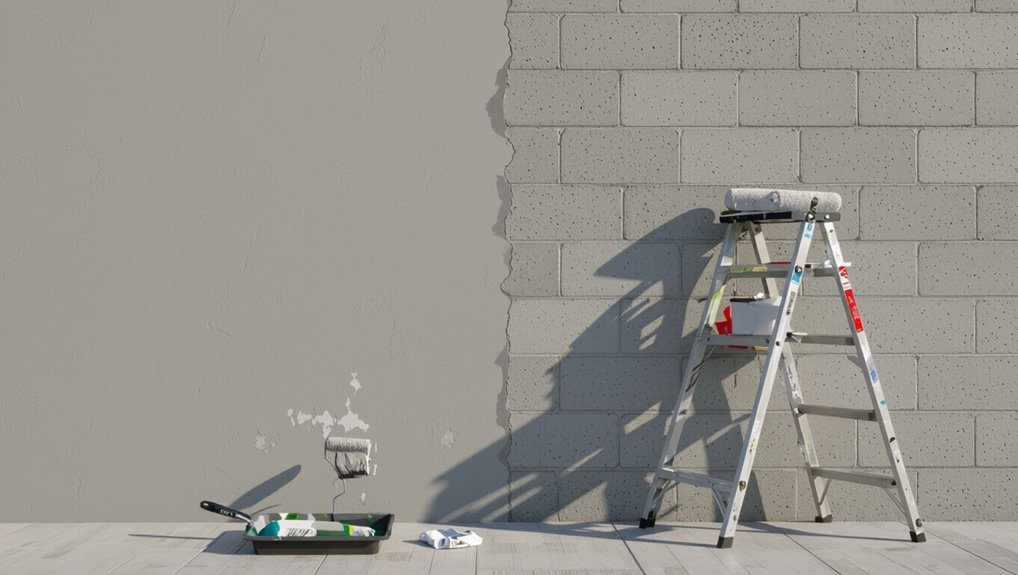
Wondering whether to paint or seal exterior cinder block? You’ll choose based on goals:
Paint benefits include color, UV protection, and easier cleaning, while sealing options preserve natural look and block moisture without changing appearance.
Add color, UV defense, and easier cleaning with paint — or keep the natural look and block moisture with a breathable sealer.
If you want aesthetics and surface durability, paint’s best.
If you prefer low-maintenance protection and vapor permeability, pick a breathable sealer instead.
When to Paint: Weather and Timing for Cinder Block
If you want a durable, attractive finish on cinder block, pick a window of warm, dry weather and give the wall plenty of time to dry before and after painting.
Consider weather conditions and timing considerations to avoid poor adhesion or trapped moisture.
- Paint when temps stay 50–85°F and humidity is low.
- Avoid rain forecasts for 48 hours.
- Morning starts drying faster.
Inspect Cinder Block for Cracks, Spalling, and Efflorescence
Before you paint, carefully inspect the cinder block for cracks, spalling, and efflorescence so you can address problems that will ruin a finish.
Walk the wall, perform a crack assessment to note width, length, and movement.
Walk the wall and assess cracks—record width, length, and any movement before planning repairs.
Do a spalling inspection to identify loose faces or powdering.
Mark defects, photograph them, and plan repairs or moisture investigation before priming and painting.
Clean Cinder Block Wall: Power Washing and Detergent
Before you start painting, prepare the surface by removing loose mortar, sealing nearby plants, and masking fixtures.
Pick a detergent formulated for masonry or efflorescence so it cleans without damaging the blocks.
Use a power washer on a low-to-medium setting and keep the nozzle moving to strip dirt without blasting the mortar.
Prepare Surface First
Start by removing dirt, mildew, and loose mortar so paint will stick and look even. You’ll focus on surface cleaning as part of surface preparation: scrub, rinse, and inspect for damage.
Fix cracks and allow the wall to fully dry before priming. Follow these steps to make painting easier and longer-lasting:
- Scrub with a stiff brush
- Rinse thoroughly with a hose
- Check for remaining debris
Choose Right Detergent
Choose a detergent that matches the soil and surface—mild household cleaners work for light dirt and mildew, while a masonry-specific or bleach-based solution is better for heavy staining and biological growth.
You’ll pick among detergent types based on stain severity, porosity, and safety.
Read labels, test a small area, dilute per instructions, and use appropriate protective gear when handling concentrated cleaning solutions.
Power Wash Technique
Grab the power washer and set it to a moderate pressure (1,200–2,000 psi) with a 25–40° nozzle so you blast away dirt and mildew without damaging the mortar or block faces.
You’ll combine power washing and a mild detergent for effective surface preparation; rinse thoroughly and let dry before priming.
- Work top to bottom.
- Test a small area.
- Wear eye and skin protection.
Remove Efflorescence and Salt Stains Safely
Before treating white, powdery deposits you’ll want to identify where the moisture and salts are coming from so you can fix the source.
Use a stiff brush and mild acid rinse or a commercial efflorescence remover to lift salts safely, testing a small area first.
After removal, let the wall dry fully and address any leaks or drainage issues to prevent recurrence.
Identify Efflorescence Sources
Efflorescence shows up as chalky white or grayish deposits on cinder block surfaces, and you should identify where moisture’s entering so you can stop new salts from forming.
Know efflorescence causes and prevention methods: inspect foundation cracks, check downspouts and gutters, and look for poor grading.
- Cracks or mortar gaps
- Faulty drainage
- Rising groundwater
Safe Salt Removal Methods
Salt deposits and chalky stains come off with the right approach and a little elbow grease, and you’ll want to use gentle, safe methods so you don’t damage the cinder block.
Start by dry-brushing, then rinse with water. For stubborn efflorescence, apply a diluted vinegar or masonry cleaner, scrub, and rinse thoroughly.
Address underlying moisture to prevent recurring salt damage.
Repair Cracks, Holes, and Spalled Cinder Block
Start by evaluating the damage: walk along the wall, tap suspect areas, and mark cracks, holes, or spalled faces so you know what needs patching.
Walk the wall, tap suspect spots, and mark cracks, holes, or spalled faces for patching.
Use crack assessment and spalling techniques: remove loose material, widen tiny cracks slightly, and vacuum debris. Then apply mortar or patching compound and smooth.
- Clean and prep each defect
- Fill and tool seams
- Cure per product directions
Prepare Porous or Painted Block: Etch, Sand, and Dust
If the block is porous or already painted, you’ll need to etch it so primer and paint will stick.
Then sand any rough spots and remove all dust with a brush or vacuum.
A clean, abraded surface makes your finish last and look uniform.
Etch For Better Adhesion
Porous or previously painted cinder block needs etching to make certain new paint sticks, so you’ll remove surface contaminants and slightly roughen the masonry for better adhesion.
Use proper etching techniques and follow adhesion tips to make sure primer bonds.
- Wear gloves and eye protection
- Apply muriatic or concrete cleaner per instructions
- Rinse thoroughly and let surface dry before priming
Sand And Remove Dust
Once the etching’s cured and you’ve rinsed away residue, sand the block to knock down high spots and loosen any remaining loose paint or efflorescence so the primer can bite. Use appropriate sanding techniques, then remove dust thoroughly with a brush and vacuum. Verify surfaces are dry before priming.
| Tool | Purpose |
|---|---|
| Sandpaper | Smooth surface |
| Wire brush | Remove scale |
| Vacuum | Dust removal |
| Tack cloth | Final wipe |
Mask, Protect Plants, and Cover Nearby Surfaces
Start by taping crisp lines along trim, windows, and any fixtures you don’t want painted; good masking keeps paint where it belongs and saves cleanup time.
Use proper masking techniques and plant protection: cover shrubs with breathable cloth, lay drop cloths over paths, and secure plastic on nearby furniture.
- Protect plants from spray
- Mask edges tightly
- Cover walkways and fixtures
Gather Tools and Safety Gear for Painting Cinder Block
With your surfaces masked and plants protected, you’ll want to assemble the right tools and safety gear before you lift a brush or point the sprayer.
Gather essential tools: roller with extension, masonry brush, sprayer (optional), drop cloths, painter’s tape, and masonry cleaner.
Follow safety precautions: goggles, respirator, gloves, knee pads, sturdy shoes, and a stable ladder for safe, efficient work.
Pick the Right Primer for Porous Block
Because cinder block soaks up paint like a sponge, you’ll need a high-quality masonry primer that seals pores and evens out absorption.
Choose based on block porosity and weather exposure, and consider primer types that bond to concrete and resist moisture.
- Acrylic masonry primer for moderate porosity
- Oil-based primer for very porous, weathered block
- Bonding primer for smooth or sealed surfaces
Prime Cinder Block: Roll, Brush, or Sprayer?
You’ll choose your tool based on the job: a thick-nap roller covers textured block quickly and helps the primer fill pores.
Use a brush for cut-in work and tight spots where the roller can’t reach.
If you’re priming a large area fast, a sprayer speeds the job but needs masking and practice.
Roller For Texture Coverage
A nap roller is often the best tool for covering the rough, pitted surface of cinder block when priming, since it holds more paint and pushes primer into crevices better than a smooth roller.
You’ll use a thick nap for roller texture and efficient paint application, rolling in overlapping passes and checking for missed pits.
- Work top to bottom
- Reload frequently
- Press into hollows
Brush For Cut-In Detail
When you need clean edges around windows, doors, or where the wall meets trim, reach for a quality angled sash brush to cut in on cinder block; its stiff bristles give you control to push primer into mortar joints and irregular pits without slobbering onto adjacent surfaces. Use steady brush techniques and follow cut in tips for crisp lines and full penetration.
| Tool | Purpose |
|---|---|
| Angled sash | Edge control |
| Stiff bristle | Joint push |
| Small brush | Detail |
| Tapered tip | Precision |
| Short handle | Manoeuvre |
Sprayer For Speed
Reach for a sprayer when speed and even coverage matter on large cinder block surfaces; it lets you coat mortar joints and textured pits quickly without the streaks or lap marks a roller can leave.
You’ll choose between sprayer types and adjust paint techniques for viscosity, nozzle size, and overlap to avoid runs and guarantee uniform primer and topcoat.
- Use HVLP for fine control
- Airless for fast coverage
- Practice consistent passes
Choose Masonry Paint and Finish for Outdoor Block
Pick a paint formulated for masonry so it can handle the porosity, moisture, and temperature swings that outdoor cinder block faces.
Choose between acrylic, elastomeric, or breathable mineral masonry paint types based on durability and crack-bridging needs.
Pick acrylic, elastomeric, or mineral masonry paints—match durability and crack-bridging to your needs.
Pick a finish—flat hides imperfections, satin eases cleaning, semi-gloss boosts weather resistance.
Test a small patch for adhesion and appearance before committing.
Calculate Paint Quantity and Project Budget
First measure the total wall surface area so you know how many square feet you’ll cover.
Then use the paint’s coverage rate to calculate how many gallons you’ll need, accounting for block texture and number of coats.
Finally, add paint, primer, tools, and labor to estimate your total project cost.
Measure Wall Surface Area
Before you buy paint or set a budget, measure the wall surface area so you know how much paint you’ll need and how much the project will cost.
You’ll record surface dimensions, note openings, and run basic wall calculations to estimate total square footage. Then use that number to forecast paint cans, primer, and labor costs.
- Measure height and length
- Subtract doors/windows
- Double-check totals
Calculate Paint Coverage
Once you know the total square footage, calculate paint coverage by checking the can’s stated coverage (usually in square feet per gallon) and factoring in the roughness of cinder block, which typically reduces coverage by 20–50%.
Use coverage formulas: divide adjusted square footage by per-gallon coverage.
Account for paint types (masonry, elastomeric, acrylic) since thickness and absorption vary, and round up for extra coats.
Estimate Total Project Cost
To estimate your total project cost, convert the adjusted square footage into gallons of paint by dividing by the can’s coverage (reduced for cinder block texture) and then multiply those gallons by the paint price, adding supplies and labor.
Don’t forget extra for primer, a second coat, waste, and unexpected repairs. Use a clear cost breakdown and basic budget planning.
- Paint, primer, rollers
- Sealant, patching supplies
- Labor estimate, contingency
Paint Cinder Block: Step-by-Step With Roller and Brush
If you want a durable, even finish on your cinder block walls, start by cutting in edges with a brush and then rolling the larger surfaces — that combo gives you control in corners and speed on flat areas. Choose color selection and finish options before priming. Work top-down, maintain wet edges, apply two coats, and check for missed pores.
| Step | Tool | Tip |
|---|---|---|
| Cut-in | Brush | Corners first |
| Roll | 9″ Roller | Stipple pores |
| Coat 2 | Brush/Roller | Even coverage |
Airless Sprayer Settings and Technique for Block
After you’ve cut in and rolled a sample area to gauge coverage, switch to an airless sprayer for faster, more consistent results on large cinder block surfaces.
Adjust sprayer pressure low to moderate to avoid overspray, and test nozzle selection for a wide fan. Keep tip 12–18 inches from the block, maintain steady passes, and overlap slightly.
- Start with lighter passes
- Watch texture buildup
- Clean tip often
Apply a Second Coat and Ensure Uniform Coverage
After the first coat dries, walk the wall and check for uneven coverage or missed spots so you catch thin areas early.
When you apply the second coat, keep your brushstrokes consistent in direction and pressure to blend overlaps and avoid lap marks.
Take your time on textured cinder block faces so the paint fills pores evenly for a uniform finish.
Check For Uneven Coverage
Once the first coat dries, walk the length of the wall and scan for thin spots, roller marks, or patchy areas that show the original block or mortar through the paint.
Note color variation and adjust your application technique before recoating.
Then target missed areas with a light second coat.
- Re-roll thin patches
- Feather edges to blend
- Inspect in different light
Maintain Consistent Brushstrokes
Now that you’ve evened out thin spots, apply a second coat using consistent brushstrokes to keep the finish uniform.
Work wet edges, use a steady brush technique, and follow the same direction across blocks to hide seams.
Check for runs and back-brush immediately.
Maintain stroke consistency—short, controlled passes on rough mortar and longer, even strokes on flat faces—for a seamless, durable result.
Add Trim, Accents, or Block-Face Patterns for Detail
Adding trim, accents, or block-face patterns gives cinder block walls character and breaks up large, flat surfaces so your space feels finished and intentional.
You can mix trim styles with bold accent colors, stencil block faces, or add simple wood trim to highlight edges. Choose contrasts that suit your exterior and test samples first.
- Stenciled patterns
- Painted trim
- Color-block accents
Seal or Waterproof Painted Cinder Block for Durability
Those trim details and accents will look better longer if you seal the paint against moisture and wear.
You should clean and dry surfaces, then apply a breathable waterproof sealants product designed for masonry.
Use a roller or sprayer, follow manufacturer cure times, and recoat if recommended.
This gives long lasting protection against water intrusion, stains, and surface deterioration while preserving paint appearance.
Common Paint Problems: Peeling, Chalking, Blistering
Expect a few typical failures when painting cinder block—peeling, chalking, and blistering are the ones you’ll see most often.
You’ll prevent them with good surface preparation and moisture control, choosing proper paint types, and considering weather effects to improve paint adhesion.
- Peeling paint often signals poor adhesion or damp walls.
- Chalking issues come from UV breakdown or wrong paint.
- Blistering problems follow trapped moisture.
How to Touch Up and Repair Painted Cinder Block
Start by evaluating the damage so you know whether a simple touch-up or a more involved repair is needed.
If paint chips or small cracks appear, clean, sand, prime, and apply matching paint using precise touch up techniques.
For larger cracks or spalling, remove loose material, fill with mortar or patch compound, cure, prime, then paint—these repair methods restore integrity and appearance efficiently.
Maintenance Schedule to Keep Painted Block Looking Good
Set a simple, regular schedule and you’ll keep painted cinder block looking its best: inspect every 3–6 months, clean annually (or more often in high-traffic or damp areas), and address chips, stains, or moisture issues as soon as you spot them.
Inspect painted cinder block every 3–6 months, clean annually, and promptly fix chips, stains, or moisture for lasting finish
Use these Maintenance tips to guarantee Surface protection, Color longevity, and seasonal checks:
- Wash stains and mold promptly.
- Touch up chips with matching paint.
- Re-seal or repaint every 5–7 years.
When to Call a Pro: Complex Repairs or Large Jobs
Regular upkeep will solve most issues, but you should call a pro when repairs exceed simple cleaning or touch-ups.
If cracks, structural shifts, persistent moisture, or large-scale prep overwhelm you, get a professional assessment to define scope and safety.
A pro will provide a realistic project timeline, proper materials, and techniques, saving time and preventing recurring problems on your painted cinder block walls.
Frequently Asked Questions
Can I Paint Cinder Block in Cold Climates and Expect Longevity?
Yes — you can, but you’ll need proper surface preparation and timing; cold weather and moisture concerns reduce paint durability, so wait for dry, milder conditions, use masonry primer and flexible exterior paint, and seal to extend longevity.
Will Painting Change the Wall’s Breathability and Cause Mold Inside?
Like a slow rain, painting can reduce breathability and increase moisture retention if you use impermeable coatings. You’ll prevent problems by choosing breathable masonry paint and doing thorough wall preparation to let vapor escape and avoid mold.
Are There Eco-Friendly or Low-Voc Masonry Paint Options?
Yes — you can choose eco friendly options and low VOC paints for masonry; they’re breathable, durable, and formulated for exterior blocks. You’ll reduce fumes, environmental impact, and health risks while still getting good adhesion and protection.
How Long After Sealing Can I Reapply a Second Coat or Tape Lines?
Like a garden drying after rain, you can recoat or tape lines once the sealer feels tack-free—typically 2–4 hours; full drying for ideal paint adhesion is 24 hours, but follow manufacturer drying time recommendations.
Can I Install Fixtures or Hang Items on Painted Cinder Block Safely?
Yes—you can install fixtures and hang items on painted cinder block, but you’ll need proper anchors and check weight capacity; pick masonry anchors, avoid just tapping into paint, and confirm load ratings for safe fixture installation.
Conclusion
Think of your painted cinder block wall like a well-tended garden: with the right soil prep, regular watering, and quick weeding, it stays vibrant season after season. You’ll inspect for cracks, wash away salts, patch problems, and repaint spot by spot—small acts that keep the whole plot thriving. When repairs outgrow your tools, call a pro. Tend it steadily, and your wall will reward you with long-lasting color and protection.
