
Can You Chalk Paint Over Stain? Everything You Need to Know
Yes — you can chalk paint over stained wood in many cases, and it’s a quick way to refresh furniture without full stripping. First clean thoroughly, scuff glossy finishes, and test a hidden spot for adhesion and stain bleed-through. If tannins or dyes bleed, seal with a stain‑blocking primer or shellac. Apply thin chalk paint coats, finish with wax or polyurethane for durability, and expect a matte, rustic look unless you topcoat for sheen. Keep going to learn detailed prep and fixes.
Quick Decision: When Chalk Paint Over Stain Works
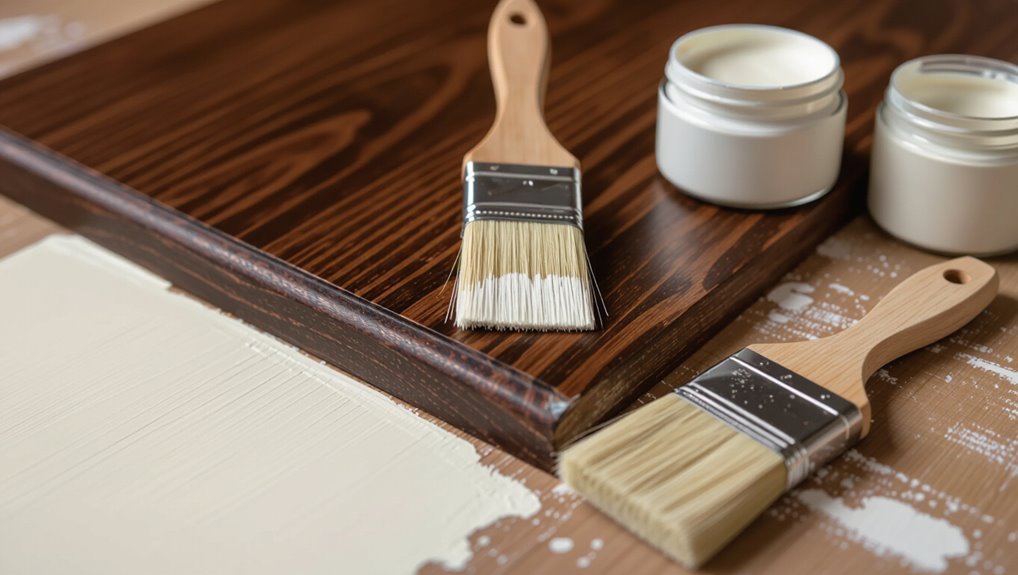
If you’re short on time and the piece is in decent condition, chalk paint over stain can be a smart, fast fix—no stripping or sanding required.
You’ll choose appropriate color combinations to complement existing tones and pick finish types that suit use and durability.
Test a small area first, verify adhesion, and expect a matte, rustic look unless you seal for sheen and protection.
Can You Chalk Paint Directly Over Stained Wood?
You can often paint chalk paint directly over stained wood, but you’ll want to check a few things first.
Assess stain types and whether sealer or topcoat remains; glossy finishes hinder paint adhesion.
Lightly scuff or sand, clean dust, and spot-prime tannin-heavy areas.
Test a small section to confirm adhesion and appearance before committing to the full piece.
Which Stains Are Most Likely to Bleed Through Chalk Paint
Because some stains contain strong dyes and tannins, they’ll be much more likely to bleed through chalk paint than others.
Some stains—especially those rich in dyes and tannins—are far more likely to bleed through chalk paint.
You should identify stain types and plan bleed through prevention via proper wood preparation and primer selection.
Consider color considerations, application techniques, finish compatibility, and maintenance tips.
- Oil-based or dye stains
- Dark gel stains
- Water-reactive tannin-rich stains
- DIY mixed or unknown stains
Wood Species & Finishes That Affect Chalk Paint Adhesion
When you paint over stained wood, the species and existing finish matter because porous woods like pine absorb paint differently than dense woods like maple.
You’ll also want to take into account what finish is already on the piece—shellac, lacquer, or oil can change adhesion and may need deglossing or sanding.
Finally, high-tannin woods such as oak or cedar can cause bleeding, so plan for a stain-blocking primer if you see tannin-rich grain.
Porous vs Dense Woods
Wood species and surface density play a big role in how well chalk paint adheres: porous woods like pine, oak, or poplar soak up paint and allow it to grip, while dense, oily species such as teak, mahogany, or some finished plywood resist penetration and can cause flaking or poor bonding unless you prep them.
- Assess wood characteristics and stain types
- Adjust surface preparation and application techniques
- Evaluate paint compatibility and adhesion factors
- Consider color variation and finish durability
Existing Finish Type
Now that you’ve considered how porous and dense species affect paint grip, look at the finish already on the piece—it’s a major determinant of whether chalk paint will stick or peel. Check finish compatibility for lacquer, shellac, or polyurethane; they change paint adhesion and prep needs.
| Finish | Adhesion | Prep |
|---|---|---|
| Lacquer | Poor | Scuff |
| Poly | Variable | Degloss |
Tannins And Bleeding
Because tannins can bleed through paint and stain its surface, you’ll want to identify high-tannin species (like oak, mahogany, and cedar) and sealed finishes that don’t block them.
You’ll manage tannin reactions with proper prep and products:
- Clean and sand thoroughly
- Use a tannin-blocking primer
- Test a small area first
- Allow full cure for bleed prevention
When You Can Skip Sanding Before Chalk Painting
If the piece has a glossy finish, you can often skip heavy sanding because the smooth topcoat is still intact.
You’ll still want to check that the existing topcoat isn’t peeling and only shows light surface wear. In those cases, a thorough cleaning and light scuffing are usually enough to get good chalk paint adhesion.
When Finish Is Glossy
Wondering whether you can skip sanding before chalk painting? If the finish is glossy, you’ll usually need to prep for better paint adhesion.
Assess surface slickness, clean thoroughly, and consider light deglossing. Options include:
- Scuff with fine-grit sandpaper
- Use liquid sandpaper
- Clean with degreaser
- Test adhesion with a small patch
Skip heavy stripping unless damage demands it.
Existing Topcoat Is Intact
You can skip sanding when the existing topcoat is intact and firmly adhered—this saves time and preserves detail. Check topcoat compatibility and guarantee paint adhesion by cleaning and scuffing only if needed. If solid, prime spot-test and proceed. Visualize condition:
| Smooth | Firm | Clean |
|---|---|---|
| No chips | Bonded | Dust-free |
| Ready | Stable | Paint-ready |
Light Surface Degradation
When the finish shows only light surface wear—minor haze, faint scratches, or slight chalking—you can often skip full sanding and still get excellent chalk paint adhesion; just clean thoroughly and scuff the area with a fine abrasive or chemical deglosser to remove contaminants and restore tooth.
You should:
- Wipe grease and dust clean
- Use 400–600 grit or deglosser
- Test a small area first
- Apply primer if needed
How to Test for Stain Bleed-Through in Minutes
Curious how quickly stain can ruin fresh paint? You can do simple stain testing for quick results: wipe a cotton pad soaked in denatured alcohol or mineral spirits over a small, inconspicuous area.
Let it dry five minutes, then paint a tiny patch of chalk paint. Wait thirty minutes; if color seeps, the stain bleeds and needs sealing before full painting.
If the Test Shows Bleed-Through: Immediate Fixes
If the quick test shows bleed-through, don’t panic—seal it right away to prevent stains from ruining your chalk paint finish.
Act fast with immediate solutions to stop spread and avoid common mistakes like skipping primer.
- Apply a shellac-based sealer
- Let it cure fully before painting
- Spot-sand glossy areas gently
- Re-test after sealing to confirm containment
Cleaning & Deglossing Stained Furniture Before Painting
Start by giving the piece a thorough cleaning to remove grease, dirt, and old polish that’ll prevent paint from adhering properly. Use gentle cleaning techniques, rinse, dry, then test deglossing methods like liquid sandpaper or light sanding. You’ll prep surfaces for chalk paint without stripping stain.
| Step | Tool | Time |
|---|---|---|
| Clean | Microfiber | 10m |
| Rinse | Water | 5m |
| Degloss | Liquid sandpaper | 15m |
| Dry | Cloth | 10m |
Primers That Block Stain and Seal Tannins : How to Use Them
Before you chalk paint, pick a stain-blocking primer—oil-based, shellac, or a modern waterborne stain blocker—so tannins won’t bleed through.
Apply thin, even coats with a brush or roller, sanding lightly between coats if the primer’s surface feels rough.
Let each coat dry fully according to the manufacturer’s instructions before painting to guarantee a sealed, stain-free finish.
Stain-Blocking Primer Options
While tannin bleed-through can ruin a fresh coat of chalk paint, choosing the right stain-blocking primer stops those stains and seals the wood so your finish stays clean and matte.
Pick based on stain types and primer brands, considering surface preparation and color compatibility.
- Product recommendations for tough tannins
- Application methods overview
- Drying times to expect
- Finish durability notes
Application And Drying
Although you’ve already prepped the surface, getting a stain-blocking primer to do its job depends on how you apply it and let it cure; follow the manufacturer’s spread-rate, brush or roller recommendations, and drying times to guarantee a full tannin seal.
Use proper brush techniques—smooth, even strokes, tip-off edges—and respect recommended drying times between coats so tannins stay sealed and adhesion stays strong.
Best Chalk Paint Techniques for Stained Wood
Working on stained wood, you’ll get the best results when you choose the right prep, paint, and sealing methods for the piece.
Focus on proper chalk paint application and targeted stain removal before painting.
Steps to follow:
- Clean and sand lightly for adhesion
- Spot-treat stubborn stain areas
- Apply thin, even coats of chalk paint
- Seal with a durable topcoat for protection
Preventing and Fixing Bleed-Through After Painting
After sealing and painting stained wood, you might still see tannin or old stain bleeding through the chalk paint; catching it early saves time and prevents ugly discoloration.
For bleed through prevention, sand the affected spot, clean, and reapply a quality stain-blocking primer.
If issues remain, spot-sand and repaint, addressing fixing mistakes quickly so stains don’t set and spread under new paint.
Sealers & Topcoats That Protect Chalk-Painted Stain
Now you’ll look at which sealers actually work over stained surfaces and why they’re compatible with chalk paint.
I’ll cover clear topcoat options—wax, poly, and water-based finishes—and when to pick each.
You’ll also get straightforward tips on application and maintenance to keep the finish looking good and prevent bleed-through.
Compatible Sealers Explained
When you’ve sealed chalk paint over stained wood, the right topcoat keeps that finish looking good and protects the underlying stain from bleed-through and wear.
You’ll choose compatible sealer types and master application techniques to avoid problems. Consider:
- Wax for low-sheen, easy repairs
- Polyurethane for heavy use
- Water-based poly for clarity
- Shellac for quick sealing and stain block
Clear Topcoat Options
Because a clear topcoat does more than just shine, you’ll want to pick one that balances protection, appearance, and compatibility with both chalk paint and the underlying stain.
Choose from polycrylic, water-based polyurethane, or wax depending on sheen and durability. Consider topcoat types, drying time, and recoat windows.
Follow simple application tips: thin coats, light sanding between layers, and adequate cure time.
Application And Maintenance
Seal your chalk-painted, stained piece with the right topcoat to lock in color and resist wear.
You’ll improve chalk paint durability and guarantee stain compatibility by choosing sealers that match use and finish.
Consider:
- Wax for soft sheen and easy touch-ups
- Polyurethane for heavy-duty protection
- Water-based poly for low yellowing
- Spar varnish for outdoor resistance
Distressing and Aging Techniques With Chalk Paint Over Stain
Get comfortable with controlled wear: distressing chalk paint over stain is about selectively revealing the wood or stained finish beneath to create authentic-looking age.
You’ll use distressing techniques and color layering for aging effects, add texture variation and wax finishes to seal, and focus on surface contrast.
These methods enable furniture transformation, yield rustic charm and vintage appeal, and fit many DIY projects.
Troubleshooting Common Problems and Quick Fixes
When your chalk paint over stain doesn’t behave as expected, quick troubleshooting will save the project—start by identifying whether the issue is adhesion, finish texture, or color mismatch.
Pinpoint adhesive issues or color compatibility problems, then apply targeted fixes:
- Sand glossy spots, clean dust
- Use bonding primer for adhesion
- Thin coats to fix texture
- Test color mixes on hidden area
Materials Checklist and Step-by-Step Workflow for Success
Start with a compact materials checklist so you won’t be hunting for supplies mid-project:
you’ll need sandpaper (80–220 grit), tack cloth, a quality bonding primer, your chosen chalk paint, foam or high-density brushes, a small roller for large flat areas, drop cloths, painter’s tape, a respirator or mask, disposable gloves, and a clear protective topcoat (wax or water-based polyurethane) plus mixing cups and stir sticks for small batches or tints.
Then: sand, clean, prime compatible Stain types, apply Chalk paint benefits with thin coats, sand between layers, finish with topcoat.
Frequently Asked Questions
How Long Before Sealing Chalk Paint Over Stain Can I Use the Piece?
You can usually use the piece after 24–72 hours; drying time varies by paint, humidity, and stain. For regular furniture usage wait at least 7 days if you need full cure and maximum durability.
Will Chalk Paint Alter the Color of Transparent Wood Grain?
Like a fog over a sunrise, yes—chalk paint will mute transparent wood grain and change its color impact; you’ll still see texture, but hues soften, contrasts lower, and the wood’s natural glow becomes more subdued under paint.
Can I Apply Chalk Paint Outdoors on Stained Furniture?
Yes — you can apply chalk paint outdoors on stained furniture, but you’ll need proper surface preparation and a durable exterior topcoat to boost outdoor durability; otherwise weather will rapidly degrade adhesion and finish.
Are There Eco-Friendly Primers Compatible With Chalk Paint and Stain?
Coincidentally, you can choose eco friendly options like shellac- or waterbased primers; you’ll find natural alternatives such as plant-based, low-VOC primers and stain-blocking shellac blends that bond well with chalk paint and stained surfaces.
How Does Humidity Affect Chalk Paint Adhesion to Stained Wood?
High humidity weakens chalk paint adhesion to stained wood, so you’ll guarantee proper surface preparation and wait for lower humidity levels before painting; excessive moisture causes poor bonding, longer drying, and higher risk of peeling or blistering.
Conclusion
You can usually chalk paint over stain, but test first and prep when needed. For example, I refinished a pine buffet stained with oil-based dye: I cleaned, scuffed with 220-grit, sealed with shellac, then applied two chalk paint coats and wax—no bleed-through, durable finish. If stains are fresh, tannin-rich, or glossy, use a good primer or shellac first. When you take those steps, chalk paint sticks and ages beautifully without nasty surprises.
