
How to Paint Garage Ceiling Easily and Professionally
You can paint your garage ceiling like a pro by prepping, repairing, and choosing the right tools: inspect for stains, mold, and loose seams, sand and patch drywall, prime bare wood or metal, and mask fixtures. Use a quality roller or sprayer, apply paint in overlapping “W” or straight passes, and do two coats with proper drying times. Wear goggles, ventilate, and stabilize ladders. Keep tools clean and store paint properly—scroll on to learn detailed steps and tips.
Quick Answer: Best Approach for Drywall, Joists, and Finished Ceilings
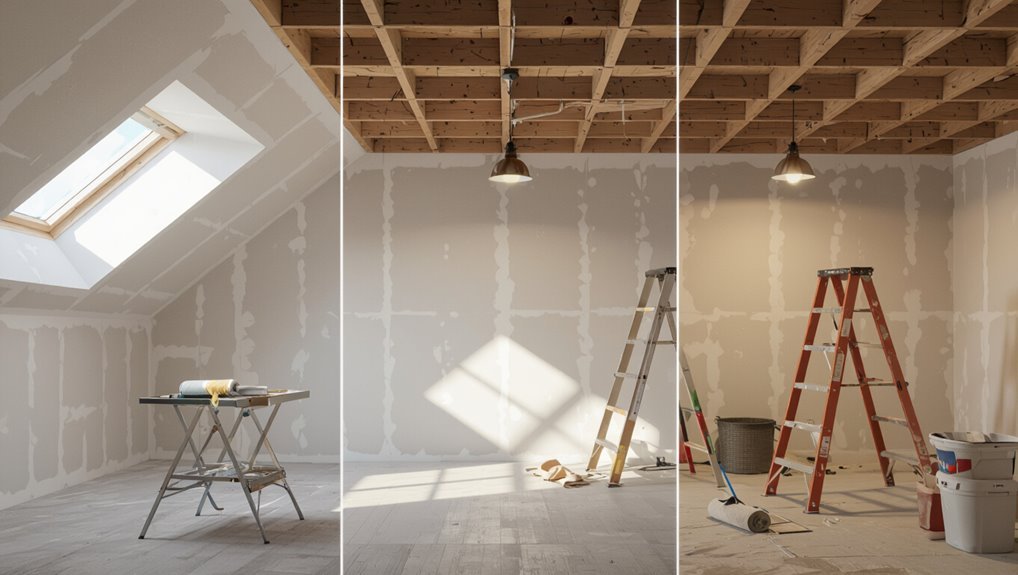
Whether you’ve got drywall, exposed joists, or a finished ceiling, the best approach starts with matching your prep and products to the surface: assess drywall textures, sand or skim as needed, clean and prime raw wood or metal, then pick paint finishes suited to light reflection and durability.
Use quality rollers for flats, sprayers for joists, and tape edges for clean lines.
Who Should Paint a Garage Ceiling: And When to Hire a Pro
Deciding if you should paint your garage ceiling yourself comes down to your comfort with ladders, surface prep, and working overhead—if you can handle sanding, priming, and steady rolling or spraying without risking injury, it’s a reasonable DIY.
- DIY enthusiasts: simple drywall, basic painting techniques, tight budget considerations.
- Hire painting professionals for complex ceiling textures or large jobs.
- Consider garage aesthetics and project planning.
- Mind seasonal timing for best results.
Safety Essentials: PPE, Ventilation, and Ladder Setup
If you’ve decided to tackle your garage ceiling yourself, don’t skip the safety basics before you open a paint can.
Wear safety goggles and protective gloves, guarantee proper ventilation with fans or open doors, and confirm ladder stability on level ground.
Keep workspace organization tidy to avoid trips, and follow electrical precautions by shutting power or covering fixtures.
Stay cautious and efficient.
How to Inspect a Garage Ceiling for Damage, Stains, and Moisture
Start by doing a thorough visual sweep from the floor with a bright flashlight, looking for cracks, sagging, water stains, mold, or peeling paint that signal underlying problems; then move closer and inspect around seams, joints, and any penetrations for hairline fractures or gaps that could let moisture in.
- Note stain identification and water leaks.
- Check for mold growth.
- Perform moisture detection.
- Evaluate structural integrity and surface evaluation for damage assessment.
Repair vs Replace Garage Ceiling Panels: A Quick Decision Guide
After you inspect the ceiling, decide whether the damage is localized or widespread so you can assess repair vs replacement.
Compare the cost of patching, materials, and labor against the price and time for new panels.
If repairs approach half the cost or won’t restore structural integrity, you’ll usually be better off replacing.
Assess Damage Extent
When you inspect your garage ceiling, focus on the type and scope of damage so you can decide whether to repair panels or replace them outright.
Check damage indicators, moisture sources, ceiling materials, structural integrity, surface preparation, aesthetic considerations, lighting effects, and ventilation issues.
- Spot stains and rot
- Trace leaks
- Test panel strength
- Note prep needs
Compare Cost Benefits
Although repairing panels can save money up front, you should weigh labor, materials, lifespan, and hidden damage to decide whether replacing is smarter long-term.
Do a clear cost analysis: compare repair estimates, replacement price, and expected years of service.
Factor in mold, insulation, and safety risks.
Use budget considerations to choose the option that minimizes lifetime cost and future interruptions.
Prep Drywall: Sanding, Taping, and Patching
Start by inspecting the ceiling for seams, nail pops, and damaged drywall so you know exactly where to sand, tape, and patch; tackling these issues now prevents visible flaws after painting.
Follow these steps:
- Use proper sanding techniques and dust control.
- Apply recommended taping methods and moisture barriers.
- Select patching materials for holes.
- Match drywall finishes, texture options, and primer types.
Prep Exposed Joists and Open Ceilings
Inspect the exposed joists and open ceiling carefully so you can identify loose fasteners, rotted wood, and areas that need cleaning, sealing, or fireproofing before you paint.
For joist preparation, tighten or replace fasteners, remove debris, and perform ceiling cleaning.
Choose paint selection suited for exposed wood and moisture.
Keep tool organization simple—hang tools, label materials, and clear walkways for safe, efficient work.
Priming Garage Ceilings for Adhesion and Stain Blocking
Before you paint, prime the ceiling to guarantee proper adhesion and to block stains from oil, rust, or water that would otherwise bleed through finish coats.
Before painting, prime the ceiling to ensure adhesion and prevent oil, rust, or water stains from bleeding through.
Use stain-blocking primer and follow adhesion techniques for porous or glossy surfaces.
Do these steps:
- Clean and dry thoroughly.
- Sand glossy spots.
- Spot-prime stains.
- Apply even full-coat primer for stain prevention and grip.
Choosing Paint for Garage Ceilings: Sheen, Formula, and Tint
When you pick paint for a garage ceiling, focus on three decisions—sheen, formula, and tint—that affect durability, coverage, and how light reflects in the space.
Choose a flat or low‑sheen for flaws, satin if you need slight washability.
Pick an acrylic latex formula for paint durability and easy cleanup.
Test color options in small patches under garage lighting before committing.
Essential Tools and Supplies for Painting Garage Ceilings
Now that you’ve picked the right sheen and formula, you’ll need the proper paint and primer formulated for ceilings and any stains you’ll cover.
Gather the required tools and accessories—roller with extension pole, angled brush, drop cloths, painter’s tape, ladder, and safety gear—before you start.
Having everything on hand will keep your work steady and efficient.
Essential Paint And Primer
Choosing the right paint and primer will make the biggest difference in how your garage ceiling looks and holds up.
You’ll pick based on surface and moisture. Consider paint types and primer benefits before starting.
- Latex flat for hiding imperfections
- Acrylic for durability
- Stain-blocking primer for knots and stains
- Mold-resistant primer for humid garages
Required Tools And Accessories
Because a smooth, efficient paint job depends as much on your tools as your technique, gather the right supplies before you climb a ladder: choose paint types for ceiling materials, test color selection, and plan painting techniques and application methods.
Prioritize paint tools—rollers, extension poles, brushes, drop cloths—consider surface preparation, drying times, environmental factors, and safe gear for varied ceiling heights.
How to Clear, Cover, and Mask the Space Quickly
Start by removing everything from the garage floor and hanging items off walls so you can move freely and avoid accidental splatters.
Use space organization for an efficient workflow:
- Sweep and vacuum debris.
- Cover floors with plastic sheeting, tape edges.
- Mask lights, vents, and trim with painter’s tape.
- Create a staging area for tools and paint cans.
Best Priming Technique for Even Coverage and Stain Control
Now that the space is cleared and masked, prime the ceiling to lock in stains and create a uniform base for paint. Choose stain-blocking primer types (oil-based or shellac for tough stains, latex for general use). Apply thin, even coats and spot-prime visible blemishes. Maintain ventilation and dry times.
| Step | Product | Tip |
|---|---|---|
| 1 | Clean | Wipe dust |
| 2 | Prime | Thin coats |
| 3 | Dry | Follow label |
Rolling Garage Ceilings for Smooth, Uniform Coverage
Grab a high-quality roller with a 3/8″–1/2″ nap and work in manageable sections so you can maintain a wet edge; load the roller evenly, apply paint in a “W” or “M” pattern, then fill in with straight strokes to blend and avoid lap marks for a smooth, uniform finish.
- Keep consistent pressure
- Re-roll light overlaps
- Watch for drips
- Blend seams
Use roller techniques for even paint application.
Painting Edges and Hard-to-Reach Spots Without Drips
Start by taping off trim and fixtures so you’ve got clean edges to work toward.
Use a 2–3 inch angled brush for corners and tight spots, holding it like a pencil to keep control.
Thin your paint slightly if it’s too thick and load the brush sparingly to avoid drips.
Prep Edges With Tape
Before you roll the main ceiling, take time to tape the edges so you don’t battle drips or uneven lines later.
You’ll improve tape application and edge sealing by prepping surfaces, pressing tape firmly, overlapping at corners, and removing tape while paint’s tacky.
Follow these steps:
- Clean surface
- Apply tape
- Press edges
- Remove gently
Use Angled Brushes
Once the tape’s set and edges are clean, reach for an angled sash brush to cut in along corners, trim, and around fixtures without leaving drips.
You’ll hold it at a slight angle, use short controlled strokes, and feather edges toward the ceiling.
These angled brush techniques help you work steadily, avoid blobs, and guarantee achieving precision on tight spots for a professional finish.
Control Paint Consistency
1 key to avoiding drips when painting edges and tight spots is getting your paint consistency right: thin it just enough so it flows smoothly from the brush or roller without sagging, but not so much that it runs.
You’ll control paint viscosity and refine application techniques. Follow steps:
- Test on scrap.
- Adjust thinner.
- Use angled brush.
- Light, even strokes.
Should You Rent a Paint Sprayer: And How to Avoid Errors?
Thinking about renting a paint sprayer can save you time, but only if you know when it’s the right tool for a garage ceiling and how to avoid common mistakes; sprayers excel on large, textured surfaces and cut labor dramatically, yet they demand careful masking, proper tip selection, and thinned paint to prevent runs and overspray.
| Sprayer benefits | Avoid errors |
|---|---|
| Speed | Mask thoroughly |
| Even coverage | Test tip and viscosity |
How Many Coats You Need and Drying Times Between Them
Most garage ceilings need two coats of paint for full, even coverage, though highly porous or previously stained surfaces may require a third coat.
You’ll plan coatings and drying times to avoid rework. Follow this quick guide:
- Apply first coat thinly and evenly.
- Wait manufacturer’s recommended drying times (usually 1–4 hours).
- Inspect for coverage; add second coat.
- Allow full cure before heavy use.
Fixes for Drips, Lap Marks, and Uneven Texture
If you spot a drip while the paint’s still wet, wipe or roll it out immediately to prevent a raised bead.
For lap marks, feather the edges with a lightly loaded brush or roller and recoat while the paint is tacky to blend seams.
If texture looks uneven after drying, sand the rough spots, remove dust, and apply a thin touch-up coat for a uniform finish.
Fixing Drips Quickly
Even the steadiest hand can leave a drip, lap mark, or rough patch on a garage ceiling, but you can correct these flaws quickly before they ruin the finish.
Use drip prevention and proper drying techniques, then:
- Scrape excess gently.
- Sand smooth when dry.
- Spot-prime patched areas.
- Feather new paint into surrounding texture.
Work fast; inspect under good light.
Blending Lap Marks
Blend lap marks by matching texture and paint flow so the repair disappears into the surrounding ceiling. You’ll feather edges, keep a wet edge, and use light stippling to hide seams. Try different blending techniques and lap mark solutions: small roller, brush tip, or light spray. Practice on scrap, adjust pressure, and recoat subtly until the finish is uniform.
| Tool | Use |
|---|---|
| Roller | Broad blending |
| Brush | Edge detail |
| Spray | Smooth finish |
Clean-Up Checklist and How to Store Leftover Paint Safely
Once you finish painting, don’t rush away—cleaning up now prevents dried roller nap, clogged brushes, and accidental spills later.
Finish strong—clean up immediately to avoid dried rollers, clogged brushes, and messy spills later.
You’ll handle paint storage and leftover management like a pro:
- Seal cans tightly, tape lid.
- Label with color, date, mix ratio.
- Store upright in cool, dry place.
- Clean tools, dispose rags safely.
Maintenance Tips to Keep a Painted Garage Ceiling Looking New
Keep your painted garage ceiling looking fresh by dusting cobwebs and wiping away dirt every few months so grime doesn’t build up.
Inspect the surface periodically for chips or stains, and keep a small amount of leftover paint on hand for quick touch-ups.
With a little routine care, you’ll avoid larger repairs and extend the life of your finish.
Regular Dusting And Cleaning
A few minutes of regular dusting and occasional spot-cleaning will keep your painted garage ceiling looking fresh and prevent buildup that can dull the finish.
You’ll use simple dust accumulation techniques and follow cleaning frequency tips to stay on schedule.
- Vacuum with brush attachment.
- Use extendable microfiber mop.
- Spot-clean stains with mild detergent.
- Inspect quarterly for buildup.
Periodic Touch-Up Painting
Periodic touch-ups every 1–3 years will prevent small chips and stains from spreading and keep your garage ceiling looking freshly painted.
Inspect for faded areas, peeling, or nail pops, then address them promptly with matching paint and minimal prep.
Create a maintenance schedule considering environmental factors and humidity control.
Choose color selection and paint textures suited to ceiling finishes, and perform careful surface preparation for lasting light reflection.
Typical Cost and Time Estimates for DIY Garage Ceiling Projects
When planning a DIY garage ceiling paint job, you’ll usually spend between $50 and $400 on materials depending on ceiling size and paint quality.
Expect to invest 3–12 hours across a weekend for prep, painting, and drying.
Use a clear cost breakdown and solid time management:
- Primer and paint
- Tools and safety
- Labor hours
- Drying and touch-ups
Frequently Asked Questions
Will Painting a Garage Ceiling Improve Home Resale Value?
Yes — it can. You’ll boost ceiling aesthetics and clean perceptions, which raises resale appeal for buyers valuing finished spaces. You’ll get better showings and potentially higher offers by making the garage look cared for and brighter.
Can I Paint Over Acoustic Popcorn Ceiling Texture?
Yes—you can, but cautiously: if the acoustic ceiling contains asbestos, don’t disturb it; otherwise, you can encapsulate or skimcoat the texture. For texture painting, prep thoroughly, prime, and use proper rollers and ventilation.
How to Paint a Garage Ceiling With Active Rodents or Pests?
You shouldn’t paint until you address active rodents or pests; you’ll arrange professional pest control, seal entry points, set traps for rodent prevention, clean droppings safely with PPE, then proceed with priming and painting.
Are There Fire-Retardant Paints Suitable for Garage Ceilings?
Yes — you can use fire-retardant paints for garage ceilings; you’ll choose from intumescent coatings, fire-resistant latexs, or specialty primers. Prioritize fire safety, verify paint types’ ratings, and follow manufacturer application instructions carefully.
Can I Use Exterior Paint for a Humid, Unheated Garage Ceiling?
Yes — you can use exterior paint for a humid, unheated garage ceiling, but you’ll want a formulation with strong humidity resistance and paint durability; prep, primer, and proper ventilation will help the coating last longer.
Conclusion
Now that you’ve got the steps, go paint that ceiling like it’s saving humanity—because a crisp, clean garage ceiling does feel that dramatic. You’ll work smarter (not harder), follow safety basics, patch what’s needed, and pick the right finish. If you hit surprises, call a pro instead of improvising calamity. Keep leftovers sealed, ventilate, and maintain the surface; your future self will thank you for sparing both time and grief.
