
How to Paint a Picture on a Wall: Creative Diy Mural Guide
You can turn any wall into a striking mural by planning purpose and location, prepping the surface, and gathering brushes, primers, rollers, paints, drop cloths and sealant. Measure the wall, calculate paint needs, and sketch a composition using grids or a projector. Block in large shapes first, layer glazes for depth, and seal the finished piece. Wear protective gear and use low‑VOC paints for indoor work — keep going for practical timelines, budgets and step‑by‑step tips.
Quick Mural Plan and Materials Checklist
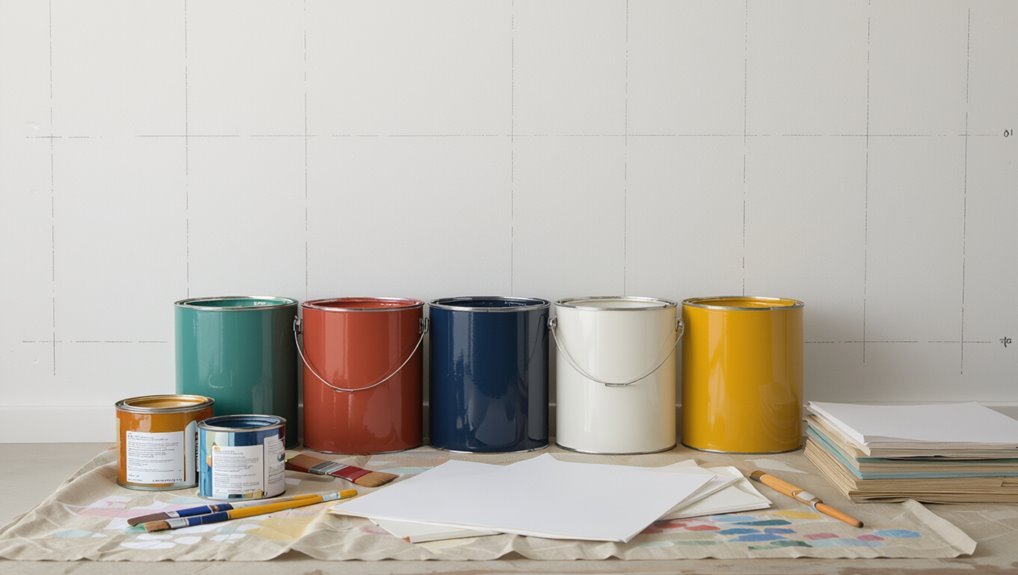
Start by sketching a simple layout and listing the supplies you’ll need so you don’t get halfway through and realize something’s missing.
You gather brushes, rollers, primer, paints, drop cloths, tape, and sealant.
Check mural inspiration sources for composition ideas and note color selection tips to create harmony.
Look for inspiring compositions and choose colors that harmonize to strengthen your mural’s overall balance and mood.
Create a concise checklist with quantities and backup supplies so you stay efficient and avoid delays.
Decide Mural Purpose and Ideal Location
Why are you painting this mural — to inspire, to brand a space, or to cover blemishes?
Decide purpose, pick mural themes, and choose a visible, accessible wall.
Consider traffic, light, and surface condition for wall preparation.
Match scale to sightlines and neighborhood context.
Think durability and permissions before you start.
- Visibility
- Audience
- Surface texture
- Lighting
- Maintenance
Measure Your Wall and Calculate Paint Needed
Measure the height and width of your wall so you know the exact square footage to cover.
Use that area to calculate how much paint you’ll need based on the coverage listed on your paint cans.
Remember to increase your estimate for rough or textured surfaces, since they absorb more paint.
Measure Wall Dimensions
Before you buy paint or sketch your design, take accurate wall measurements so you’ll know exactly how much surface you’ll cover and how much paint you’ll need.
Use clear measuring techniques and simple wall size estimation to plan scale, placement, and proportions. Record dimensions, mark obstacles, and note texture.
- Height and width
- Windows and doors
- Baseboards and trim
- Irregular shapes
- Notes for scale
Calculate Paint Coverage
Now you’ll convert those wall measurements into paint quantities so you buy the right amount.
Measure square footage, subtract windows/doors, then use coverage calculation per paint types to estimate gallons.
Factor primer after wall preparation and note color mixing losses.
Match mural tools to areas and painting techniques for edges and fills.
Keep design inspiration handy; plan for texture effects later to adjust totals.
Account For Surface Texture
You’ve already worked out flat square footage and primer needs, so next account for how your wall’s texture will change paint quantities.
Check texture impact and use surface preparation tips to adjust estimates. Rougher textures absorb more paint; smooth walls need less. Measure, test, and factor in coats before buying.
- Inspect texture depth
- Do a small test patch
- Note primer absorption
- Calculate extra gallons
- Adjust for detail work
Set a Realistic Mural Timeline
Because murals depend on people, weather, and materials, you should map out a realistic timeline that balances ambition with constraints.
Use mural timeline tips: break work into phases, assign roles, and factor drying and touchup days.
Break your mural into phases, assign clear roles, and schedule drying and touchup days for smooth progress
Prioritize effective scheduling by adding buffer days for delays, checking forecasts, and coordinating helpers.
Review progress daily and adjust the plan to stay on track.
Create a Mural Budget: Paint, Tools, Extras
Start by listing every material and service you’ll need so you can turn creative plans into concrete costs.
You’ll track Budget considerations and Mural pricing, prioritize Paint quality, and note Extra materials.
Use Tool selection wisely, apply DIY techniques to save, and include Planning essentials.
Balance cost and quality with Cost saving tips to finalize a clear, realistic budget.
- Paint
- Brushes/rollers
- Ladders/scaffolding
- Sealant/primer
- Misc supplies
Choose a Mural Style That Fits Your Space
Now that you’ve mapped out costs and prioritized materials, pick a mural style that matches the room’s function, scale, and your budget constraints.
Consider mural themes—abstract, botanical, geometric—based on traffic, lighting, and furniture.
Use color psychology to set mood: calming blues for bedrooms, energetic yellows for play areas.
Balance complexity with upkeep and available time.
Simple Beginner Motifs You Can Finish in a Day
Pick motifs that suit your skill level and the time you’ve set aside—simple shapes, repeating patterns, and single-color silhouettes are all doable in a day.
Choose motifs you can finish quickly—simple shapes, repeats, and single-color silhouettes work great.
You’ll finish quick projects using stencils, tape, and minimal color blending. Start small, plan layers, and keep tools handy.
- Geometric tiles
- Striped accent band
- Single-flower silhouette
- Polka dot field
- Simple landscape panel
Bold Statement Mural Ideas for Advanced Painters
Scale and contrast will be your allies when you tackle a bold statement mural; use sweeping forms, rich color contrasts, and dramatic negative space to command a room and showcase advanced techniques like glazing, wet-on-wet blending, and complex perspective.
You’ll plan compositions that balance mural symbolism with viewer impact, apply color psychology deliberately, and execute confident, large-scale gestures that read from across the space.
Find Mural Inspiration: Photos, Prints, Street Art
Looking for fresh mural ideas? You’ll scout photos, prints, and street art as art inspiration sources to spark mural theme ideas and mural style options.
Use mural design principles and mural composition tips to frame storytelling techniques and mural emotion expression.
Respect cultural mural influences and plan for mural community engagement.
- Urban street murals
- Vintage prints
- Travel photography
- Local artists’ work
- Cultural motifs
Gather Reference Images and Color Palettes
Before you start sketching on the wall, gather a focused set of reference images and a few cohesive color palettes to guide your mural’s composition and mood.
Collect image sourcing from photos, sketches, and textures that match your concept. Create limited palettes for contrast and harmony, test swatches on paper, and note lighting conditions.
Use strong color inspiration to unify scale and atmosphere.
Choose Paints for Interior Murals
When you’re choosing paints for an interior mural, prioritize durability, coverage, and finish so your work looks great and lasts. Use acrylic latex for most walls, artist acrylics for fine detail, and satin or eggshell finishes to balance washability with low sheen.
Consider color theory and test samples.
- Match pigments to mood
- Use primed surfaces
- Layer for opacity
- Choose low-VOC options
- Test paint finishes
Choose Paints for Exterior Murals
For exterior murals you’ll want weather-resistant paints like acrylic latex or masonry-specific formulas that hold up to sun, rain, and temperature swings.
Start with a high-quality primer suited to your surface, and plan to finish with a UV-resistant sealer to protect color and adhesion.
I’ll explain how to pick the right products and prep for long-lasting results.
Weather-Resistant Paint Types
Because exterior murals face sun, rain, and temperature swings, you’ll want paints designed to withstand those conditions without fading, chalking, or peeling.
Choose weather resistant options and match them to surface and application techniques for best results.
Consider durability, UV stability, flexibility, and cleanup.
- 100% acrylic latex
- Elastomeric coatings
- Exterior alkyds
- Masonry paint
- Fade-resistant pigments
Primer And Sealers
You’ve picked weather-resistant paints, now pair them with the right primer and sealer to make that protection last.
Choose primer types based on surface: masonry primers for stucco, acrylic for painted wood, and bonding primers for slick surfaces.
Apply a compatible sealer; sealer benefits include UV resistance, moisture blocking, and easier cleaning.
Follow product instructions for curing and recoat windows.
Pick Primers and Sealers for Mural Longevity
Choosing the right primer and sealer sets the foundation for a mural that resists weather, UV, and wear; pick products based on your surface, location, and paint type to guarantee adhesion and durability.
Choosing the right primer and sealer ensures your mural resists weather, UV, and wear—match products to surface and paint.
You’ll enjoy primer benefits and follow mural maintenance tips to extend life. Choose compatible acrylic or masonry primers and clear UV sealer suited to exposure.
- Test adhesion first
- Match solvent types
- Use breathable primers
- Apply even coats
- Recoat schedule
Pick Mural Brushes, Rollers, and Specialty Tools
One good brush, a few rollers, and the right specialty tools will make painting faster, cleaner, and more precise, so match tool size and type to your mural’s scale, surface texture, and paint.
Choose mural brush types for edges and detail, compare specialty roller options for texture, use a painting tools comparison to decide, and explore creative tool uses like sponges, combs, and stipplers.
Essential Safety Gear and Ladder Tips for Murals
Before you climb or mix any paint, gear up properly so you stay safe and focused while working at height.
Use appropriate safety equipment, practice ladder stability, and control paint toxicity with ventilation considerations.
Keep painter’s tape handy and prioritize fall protection and workspace organization.
- Helmet and gloves
- Secure ladder feet
- Respirator for paint safety
- Clear work zone
- Tape and cleanup kit
Prep the Wall: Cleaning and Patching Cracks
Before you start painting, you’ll want to clean the surface thoroughly to remove dirt, grease, and loose paint so your mural will stick.
Next, inspect and widen hairline cracks, then fill them with an appropriate patching compound and sand smooth once dry.
Taking these steps now prevents bubbling and guarantees a smooth, long-lasting finish.
Surface Cleaning Steps
If cracks, dirt, or peeling paint are left on the wall, your mural won’t adhere properly or look smooth.
So start by removing loose material with a scraper and stiff brush.
Use surface preparation techniques and effective cleaning methods:
- Vacuum dust and debris
- Wash with mild detergent
- Rinse and let dry thoroughly
- Degrease oily spots
- Sand glossy areas lightly
Crack Filling Techniques
Now that the wall’s clean and dry, patching cracks comes next to guarantee your paint and primer go on smooth and last. Identify crack types, choose repair materials, and follow surface preparation. Use proper filling techniques and application methods; respect drying times for paint compatibility and long term durability.
| Crack types | Repair materials | Drying times |
|---|---|---|
| Hairline | Spackle | Fast |
| Structural | Epoxy | Longer |
Fix Uneven Textures and Sand for Smoothness
Tackle uneven textures by identifying high and low spots, then filling, feathering, and sanding until the wall reads smooth to the eye and touch.
You’ll perform texture repair with careful texture assessment and smoothing methods, using sanding techniques for consistent results and surface preparation that supports paint adhesion without overworking the wall.
Focus on wall maintenance and finishing touches.
Focus on precise wall maintenance and finishing touches to ensure seamless texture, smoothness, and lasting paint adhesion.
- Use fine-grit sandpaper
- Blend patch edges
- Clean dust thoroughly
- Check with raking light
- Feather skim coats
Prime the Wall for Better Paint Adhesion
Before you paint, make sure you clean the surface thoroughly to remove dust, grease, and loose particles so the primer can bond.
Choose a primer suited to your wall type and the paint you’ll use—latex for drywall, stain-blocking for marks, or a bonding primer for slick surfaces.
Proper cleaning and the right primer will keep your mural looking crisp and long-lasting.
Surface Cleaning
1 simple cleanup can make the difference between a mural that lasts and one that flakes off—so start by removing dirt, grease, and loose paint from the wall.
Use surface preparation techniques and cleaning solutions recommendations to guide you; you’ll prep evenly, avoid contaminants, and improve adhesion.
- Degrease with mild detergent
- Scrub loose paint with a brush
- Rinse thoroughly
- Dry fully
- Sand glossy spots
Primer Selection
Because a proper primer locks paint to the wall and evens out surface porosity, you’ll want to choose one that matches your wall material and the paint type you’ll use.
Consider primer types—latex for drywall, oil for stained surfaces, bonding primers for slick substrates.
Follow manufacturer instructions for primer application: stir well, apply thin even coats, sand between coats if needed, and let it cure before painting.
Transfer Your Sketch With the Grid Method
Once you’ve finalized your sketch, use a simple grid to scale and transfer it accurately onto the wall.
You’ll draw matching grids on paper and wall, then reproduce each square’s content, ensuring precise sketch scaling and consistent grid application.
Work square by square, keep lines light, and step back often to check proportions.
- Measure and mark margins
- Choose square size
- Label rows and columns
- Copy reference details
- Erase guide lines
Use a Projector for Accurate Sketch Transfer
A projector makes transferring your sketch fast and precise: set up the image, focus and align it on the wall, then trace the projected lines directly or lightly mark key points to guide painting.
Adjust projector settings for brightness and keystone correction, lock contrast, and check sketch scaling so proportions match your wall.
Work in sections, reprojecting as needed for accuracy.
Freehand Drawing Tips and Guideline Tricks
When you can’t or don’t want to project, trust steady, simple guidelines to keep proportions true and confidence high: you’ll rely on measured grids, reference points, and scaled sketches to build form.
Use freehand techniques to stay flexible and boost drawing confidence while marking key lines before painting.
- Draw a light grid
- Plot focal points
- Use sighting sticks
- Measure relative angles
- Erase as you refine
Block In Large Shapes and Background Colors
Start by choosing a base color that sets the mood and covers large areas quickly.
Then map out the major shapes on your wall so you know where each color will sit.
Use broad brushstrokes to fill those shapes efficiently and keep edges clean for later refinement.
Choose Base Color
Choosing a base color sets the tone for your mural, so pick a hue that complements your design and covers large areas efficiently.
Consider color psychology and color harmony to guide mood influence while testing color combinations. Match paint finishes to wall textures and assess color saturation under natural and artificial light to judge light reflection.
- Test swatches
- Note finish vs texture
- Compare saturations
- Check harmony
- Observe reflections
Map Major Shapes
With your base color settled, sketch the mural’s major shapes so you can block in large areas and establish the background hierarchy.
Use simple outlines to map composition, test shapes inspiration and adjust scale. Mark focal zones, negative space, and shape proportions to keep balance.
Reserve finer details for later; this stage sets overall rhythm, color placement, and visual weight across the wall.
Use Broad Brushstrokes
Now grab your widest brush and lay down confident, sweeping strokes to block in the mural’s large shapes and background colors.
You’ll establish the scene’s overall rhythm and value relationships quickly, which makes later detail work much easier.
Use broad brushstrokes techniques and simple color blending tips to unify fields and shifts.
- Work wet-on-wet
- Vary pressure
- Simplify shapes
- Use long strokes
- Step back often
Layering and Glazing for Mural Depth
Anyone can create depth in a mural by layering paints and using glazes to modulate color and value; you’ll build richness without overworking details.
Start with transparent glazes to shift tone, then add opaque layers for highlights.
Use color blending sparingly and employ texture techniques—drybrush, stippling, scumbling—to suggest form and surface.
Step back, adjust contrasts, and preserve luminosity.
Blend Mural Colors on the Wall Like a Pro
When you want smooth shifts, start by working a wet edge so paint blends seamlessly before it skins over.
Use layered color washes to build depth gradually, letting each translucent layer dry enough to control the next.
With those two techniques combined, you’ll get professional-looking gradients without overworking the wall.
Wet Edge Blending
Although blending wet edges takes practice, you can learn a few reliable techniques to make color shifts seamless on the wall.
Use the wet edge technique and proven blending techniques:
- Work with small sections
- Keep paint edges wet
- Use soft, clean brushes
- Feather with glazing medium
- Blend in one continuous motion
Layered Color Washes
Start by thinning your paint to a translucent consistency so each wash builds on the last without hiding earlier layers.
Work in horizontal strokes, letting edges overlap slightly, and dry between passes to control depth.
Use sponges, large brushes, or rags for varied texture.
Practice color blending techniques and wash application methods to layer tones smoothly, adjusting dilution and pressure for subtle shifts.
Create Clean Edges and Crisp Mural Lines
If you want razor-sharp edges and crisp lines on your mural, plan your masking and brushwork before you touch paint.
Use color contrast and design symmetry to guide composition, choose edge tools and masking options, practice line techniques, control brushes for steady strokes, select paint types for clean coverage, and use artistic layering to refine shifts.
Plan composition with contrast and symmetry, pick crisp edge tools, steady brushwork, consistent paint, and layered refinement.
- Sharp masking tape
- Small angled brushes
- Pulling strokes
- Paint consistency
- Check symmetry
Mix Paint On-Site: Ratios and Color Testing
When you mix paint on-site, keep ratios simple and test small swatches so you can match colors precisely and reproduce them later.
You’ll note exact proportions, jot them down, and use consistent bases.
Employ basic color mixing techniques and controlled additions—tint, tone, shade—and use systematic paint testing methods on primed boards.
Repeat tests under the mural’s light before committing to large batches.
Use Stencils and Masking for Repeat Patterns
When you need consistent repeat patterns, pick stencils made from durable, easy-to-cut materials like mylar or cardstock so they hold edges and clean up well.
Use painter’s tape, low-tack adhesive, or spray adhesive to mask precisely and prevent bleed under the stencil.
Test your mask and stencil on scrap material first so you can adjust pressure and placement for crisp repeats.
Choosing Stencil Materials
Although precision matters most for repeat patterns, choosing the right stencil material comes down to balancing durability, flexibility, and ease of cutting.
You’ll match stencil types to stencil applications, consider stencil durability, and plan stencil placement for clean repeats. Use proper stencil techniques, maintenance, and layering to boost stencil creativity.
- Mylar for longevity
- Cardstock for quick cuts
- Vinyl for curves
- Adhesive sheets for sharp edges
- Reusable plastic for complex repeats
Masking Techniques For Precision
If you want crisp, repeatable patterns, combine stencils with masking to control paint edges and registration precisely. You’ll use masking tape and painter’s tape for precision application, clean edges, and color separation. Layer stencils for overlapping layers, watch edge details, and plan tape removal timing to avoid smudges. Reposition carefully for repeat patterns and consistent registration.
| Tool | Purpose | Tip |
|---|---|---|
| Masking tape | Edge control | Press firmly |
| Stencil | Repeat pattern | Align marks |
| Painter’s tape | Clean removal | Remove angled |
Add Texture With Sponges, Rags, Palette Knives
Because texture brings a mural to life, you’ll want to layer tools like sponges, rags, and palette knives to create varied surfaces that catch light and invite touch.
Use Texture techniques and Layering methods for Surface effects, Palette knife strokes for Texture contrast, Sponge application for subtle Color mixing, and Rag blending for Pattern variation to build Mural depth.
- Sponge application for mottled bases
- Rag blending for soft shifts
- Palette knife for raised ridges
- Layering methods to control opacity
- Texture techniques to unify effects
Paint Durable Outdoor Murals in Changing Weather
When you plan an outdoor mural, factor in sun, rain, temperature swings, and pollution so your work stays vivid and intact for years. Choose weatherproof paints, robust primers, and sealants, and prep the surface to prevent peeling and moisture damage.
You’ll use mural weathering techniques like UV-resistant topcoats, flexible primers, and proper drainage. Prioritize outdoor paint selection for longevity and colorfastness.
Protect Baseboards, Trim, and Surrounding Areas
Outdoor mural work can easily spill onto baseboards, trim, and nearby surfaces, so you’ll want to protect them before you start painting.
Use baseboard protection and trim masking to keep edges clean. Cover adjacent floors, plants, and fixtures. Remove hardware if needed, then tape precisely. Inspect after painting to remove tape gently.
- Painter’s tape for trim masking
- Drop cloths for floors
- Cardboard for baseboard protection
- Plastic sheeting for plants
- Screwdriver to remove hardware
Prevent and Fix Drips, Runs, and Pooling
A few simple habits will keep drips, runs, and pooling from wrecking your mural: load your brush or roller sparingly, work in thin layers, and check vertical sections immediately after painting so gravity doesn’t pull paint down. Keep paint consistency right for drip control and use quick wiping for run prevention and pooling solutions.
| Calm | Relief |
|---|---|
| Fix | Save |
| Hope | Pride |
Fix Mistakes Without Repainting the Whole Mural
If you catch a smudge, stray stroke, or color mismatch early, you can often correct it without repainting the whole mural.
Use careful fixing smudges, precise color touch ups, and subtle blending techniques to match tones. Make small texture adjustments and pattern corrections near the error, then finish with edge refinement so fixes disappear into the surrounding paint.
Fix smudges with precise color touch-ups and subtle blending so repairs vanish into the surrounding paint.
- Feather edges
- Thin glazes
- Match pigments
- Light stippling
- Clean tools
When and How to Step Back for Checks
Catching and fixing small errors up close is great, but you also need to step back regularly to see how the mural reads from a distance and in its full context.
Every 15–30 minutes, pause and view from varying visual distance points—across the room, down the hall, and at eye level.
This keeps your mural perspective balanced, proportionate, and true to your design.
Lighting Choices While Painting and Photographing Murals
Pay attention to natural light timing so your colors stay consistent as the sun moves.
If you’re working after dark or need steady illumination, set up adjustable artificial lights to mimic daylight and reduce shadows.
When photographing your finished mural, combine the best natural window light or golden-hour timing with controlled artificial fills for accurate color and detail.
Natural Light Timing
Because natural light shifts so much through the day, you’ll want to plan painting and photographing around predictable windows of quality light rather than working whenever it’s convenient.
You’ll learn natural light effects and choose ideal painting hours to preserve color accuracy, reduce glare, and schedule sessions for consistent shadows.
- Observe morning warmth
- Note midday harshness
- Use golden hour
- Track seasonal angle
- Record cloud patterns
Artificial Light Setup
Natural light sets the baseline for color and mood, but you’ll often need artificial lighting to paint or photograph when daylight isn’t available or consistent.
Choose adjustable LED panels or clamp lights, position key and fill sources to reduce shadows, and use diffusers.
Match color temperature to natural light or decide warm/cool for effect.
Test shots and lighting techniques guarantee accurate color and contrast.
Work in Sections to Avoid Overlap Issues
Divide the wall into manageable sections before you paint so you can focus on one area at a time and prevent wet edges from overlapping.
Work systematically, letting each section dry slightly before adjoining it. Use color blending and mural techniques to match tones at seams.
Work section by section, allowing slight drying; blend colors and feather seams for seamless tone matching.
Plan drying order and keep edges clean.
- mark panels
- wet-edge timing
- feather connections
- matching tones
- touch-up spots
Manage Assistants and Community Paint Days
When you’re ready to bring on helpers or host a community paint day, set clear roles, schedules, and safety rules up front so everyone knows what to do and when.
You’ll outline assistant roles, paint day logistics, volunteer coordination and mural teamwork, use outreach strategies and event promotion, run skill sharing workshops, offer participant incentives, and collect feedback mechanisms to sustain community engagement.
Scale a Small Design to a Large Wall Accurately
If you want your small sketch to look the same on a large wall, start by choosing a scaling method—grid, projection, or registration points—that matches your site’s size, detail level, and available tools.
Use scale techniques for proportion accuracy, measure reference points, and mark axes before painting.
- Establish a grid
- Number rows/columns
- Transfer key landmarks
- Check angles with plumb
- Step back often
Adapt Mural Designs for Irregular Surfaces
When you’re preparing to paint on a rough or uneven wall, first assess the surface texture so you know what challenges to expect.
Use design adjustment techniques like simplifying details, enlarging key shapes, or painting in layers to keep the image readable over bumps and cracks.
These practical steps help your mural look intentional rather than fighting the wall.
Surface Texture Assessment
Texture matters: before you sketch, walk the wall, feeling for bumps, cracks, and peeling paint so you can adapt your design and materials to real conditions.
You’ll note texture types and plan surface preparation accordingly, choosing primers, fillers, and brushes that match the wall’s character.
- Assess roughness and porosity
- Mark cracks and loose paint
- Test adhesion spots
- Choose compatible primers
- Estimate sanding needs
Design Adjustment Techniques
Because uneven walls change how paint behaves, you’ll tweak your design to work with bumps, cracks, and seams rather than against them.
You’ll adapt design elements and motif selection to embrace texture variation, use composition techniques that preserve visual balance, and apply color harmony to mask flaws.
Blend artistic themes and style fusion so the mural reads cohesively across irregular surfaces.
Time-Saving Shortcuts for Big Murals
Although big murals can feel overwhelming, you can cut hours off the schedule by planning smartly and using a few practical shortcuts.
Use mural planning tips and efficient painting techniques to speed setup, block shapes, and avoid rework. Prioritize staging, tools, and timing.
Plan efficiently: streamline setup, block shapes fast, and prioritize staging, tools, and timing to avoid rework.
- Project mockup and grid
- Pre-mixed color batches
- Roller base coats
- Stencils for repeats
- Work in zones
Eco-Friendly Paints and Safe Disposal Options
Choose low-VOC or natural paints and you’ll cut fumes without sacrificing color or coverage.
Plan for safe disposal and recycling so leftover cans and rinse water don’t harm the environment.
Finish with non-toxic primers and sealers to protect your mural and keep indoor air safe.
Low-VOC And Natural Paints
When you’re ready to paint, picking low-VOC or natural paints cuts indoor air pollution and makes cleanup safer for you and the planet. These products use fewer toxic solvents, often smell milder, and meet stricter emissions standards so occupants can return to the space sooner.
- low voc benefits: improved air quality, fewer health considerations
- natural pigments, eco friendly options
- sustainable sourcing matters
- color durability varies
- reduced environmental impact
Safe Disposal And Recycling
Because leftover paint and empty cans can still harm waterways and wildlife, you should handle disposal and recycling deliberately: dry small amounts for trash, recycle metal cans, and take usable leftovers to hazardous-waste centers or paint-exchange programs.
Choose eco-friendly options to reduce impact, read labels for disposal guidance, and join community initiatives for bulk collection or swaps so materials get reused, not dumped.
Non-Toxic Sealers And Primers
After handling leftover paint responsibly, think about the products you use next: non-toxic primers and sealers cut down fumes, reduce VOCs that harm air and water, and make cleanup simpler.
Choose eco friendly options, test adhesion, and follow safe sealant application steps. You’ll protect your mural and indoor air.
- Water-based primer
- Low-VOC sealer
- Plant-derived pigments
- Recyclable packaging
- Proper disposal guidance
Seal and Protect Your Mural for Long Life
A clear, durable sealer is the last essential step to keep your mural vibrant and protected from sun, moisture, and abrasion.
You’ll choose protective coatings suited to indoor or outdoor surfaces, apply thin even layers, and allow full cure between coats.
Follow simple mural maintenance tips: clean gently, avoid harsh chemicals, and inspect annually so you can address wear before it worsens.
Touch-Up Strategies for High-Traffic Areas
Even with a good sealer, high-traffic zones will show wear sooner and will need timely touch-ups to keep your mural looking cohesive.
Even sealed, high-traffic spots wear faster—inspect weekly, blot scuffs, and touch up with thin layers to blend seamlessly
You’ll inspect weekly, blot scuffs, and match pigments for subtle repairs. Use small brushes, thin layers, and re-seal repaired spots.
- Clean area first
- Test color match
- Feather edges
- Use minimal varnish
- Schedule regular checks
Keywords: high traffic touch ups, mural maintenance tips
Photograph and Document Your Finished Mural
When you finish sealing the mural, photograph it systematically so you have a clear record for condition checks, future touch-ups, and your portfolio.
Use mural photography tips: shoot at golden hour, bracket exposures, capture close details and wide context, and note lighting.
Organize files with dates, locations, and notes to simplify documenting process, maintenance scheduling, and sharing your work professionally.
Get Permits and Permissions for Outdoor Murals
Before you paint a single stroke, get the proper permits and permissions so your mural avoids fines, removal, or legal headaches.
You’ll research outdoor regulations, secure mural permissions, and seek community approvals while following artistic guidelines. Plan timelines, document approvals, and confirm insurance.
- Check city zoning rules
- Contact property owner
- Apply for permits early
- Present design to community
- Verify insurance and codes
Maintain and Clean Painted Mural Surfaces
Now that you’ve secured permits and approvals, keep your mural looking its best with routine maintenance and careful cleaning.
Inspect surfaces monthly for chips, mold, or graffiti; document damage.
Use gentle cleaning techniques—soft brush, mild detergent, low-pressure rinse—and test solvents on a small patch first.
Clean murals gently—soft brush, mild soap, low-pressure rinse; always patch-test solvents first.
Reapply UV-protective varnish annually and touch up faded areas promptly using matching paints and proper primers.
Sell or License Your Mural Designs
You can earn from your murals by licensing rights for reproduction or commercial use, and it’s smart to understand basic contract terms before you sign.
Set prices strategically by factoring time, materials, exclusivity, and market rates so you don’t undercut yourself.
Start finding buyers online through portfolio sites, social media, and art marketplaces to reach clients beyond your local area.
Licensing Your Artwork
If you want to turn your mural designs into ongoing income, licensing gives you control over how others use your work without losing ownership. You’ll negotiate licensing agreements, protect artwork ownership, and set usage restrictions for mural reproduction and digital licensing while preserving artist rights amid mural commissions and copyright considerations.
- Define scope clearly
- Specify duration
- Limit territories
- Control formats
- Retain moral rights
Setting Prices Strategically
When deciding whether to sell originals or license reproductions, start by calculating the true value of your mural designs—factor in your time, materials, overhead, reputation, and the exclusive rights you’re granting—so you can set prices that reflect both your costs and the market.
Use pricing strategies that match project scope, offer tiered licensing, and perform competitive analysis to justify rates and negotiate confidently.
Finding Buyers Online
Start by mapping where your ideal buyers spend time online—collectors, interior designers, business owners, and art directors each have different platforms and search habits—so you can target listings, portfolios, and pitches where they’ll actually see them.
Use online marketplaces, social media, and digital portfolios for mural commissions, art collaborations, and brand partnerships. Focus on target demographics, pricing strategies, marketing techniques, and client outreach.
- Curate platform-specific portfolios
- Pitch mural commissions to businesses
- Leverage social media ads
- Propose art collaborations and partnerships
- Track inquiries and refine pricing strategies
Common Beginner Mural Mistakes to Avoid
Although you’re excited to plunge into it, skipping planning or rushing materials will cost you time and compromise the final mural. You’ll avoid common pitfalls by using color selection tips, testing palettes, prepping surfaces, measuring, and practicing techniques. Stay patient and tidy to prevent drips, scale errors, and fading.
| Mistake | Cause | Fix |
|---|---|---|
| Wrong scale | No sketch | Grid/preview |
| Poor prep | Skipped cleaning | Prime/sand |
| Bad colors | No test | Swatches |
| Drips | Heavy paint | Thin/layer |
| Fading | Low-quality paint | UV-rated paint |
Budget Upgrades That Boost Visual Impact
A few inexpensive upgrades can make your mural look professionally finished without blowing your budget: You’ll use artistic techniques and color psychology to refine mural themes and boost wall aesthetics, while visual storytelling and DIY inspiration keep work cohesive.
Consider community murals and simple mural maintenance for lasting impact.
- Accent lighting
- Textured primers
- Metallic or matte highlights
- Simple framing trim
- Protective clear coat
Quick Mural Ideas by Room: Nursery, Living Room, Patio
For a nursery, pick soft nature themes like clouds, gentle hills, or leafy branches to keep the room calming and child-friendly.
In the living room, go for a bold accent scene—think a dramatic skyline or oversized botanicals—to anchor the space and spark conversation.
On the patio, choose weatherproof, low-maintenance motifs that complement your indoor palette and withstand the elements.
Nursery: Soft Nature Themes
If you want a calming nursery, soft nature themes bring soothing colors and gentle shapes that help babies relax and grow curious.
You’ll choose muted nursery colors, simple motifs, and safe paints to create a peaceful space. Keep compositions low and balanced so eyes wander slowly.
- Pale greens and blush pinks
- Cloud and moon motifs
- Gentle hills and trees
- Animal silhouettes
- Textured washes for depth
Living Room: Bold Accent Scenes
Try one bold focal wall to give your living room instant personality without overworking the space.
Pick a scene—geometric skyline, oversized botanicals, or abstract waves—that matches your living room themes and mood.
Use mural color psychology to balance energy: warm tones boost vibrancy, cool hues calm.
Frame the mural with simple furniture and lighting so the artwork anchors the room without clutter.
Turn Murals Into Prints, Products, and Merch
When you translate a mural into prints, products, or merch, you open new revenue streams and let your artwork reach people who can’t visit the wall in person.
You’ll prepare high-res scans for mural prints, explore product licensing, and craft merchandise ideas from wall art. Use digital adaptations and clear selling strategies to scale.
- Limited-edition posters
- Apparel and tote bags
- Phone and laptop skins
- Home decor items
- Licensing for branded goods
Frequently Asked Questions
Can I Paint a Mural Over Wallpaper Safely?
Yes — you can, but you’ll need careful mural preparation. You’ll check wallpaper types, remove loose or peelable paper, prime glossy surfaces, repair seams, and use appropriate primer and paints so your mural adheres and lasts.
How Do I Remove Graffiti From an Outdoor Mural?
By coincidence, you’ll find graffiti removal techniques that work: gently test solvent, use pressure washing or chemical removers, and touch up with matching paint; you’ll keep outdoor mural maintenance regular to prevent recurring vandalism.
Can Murals Be Removed Without Damaging Wall Surface?
Yes — you can often remove murals without harming the wall if you use appropriate mural removal techniques, test small areas, employ gentle solvents or low-pressure blasting, and prioritize wall surface protection with sealing and professional consultation.
Do Murals Increase Home Resale Value?
Bold brushstrokes boost. You can increase curb appeal if your mural matches market tastes; you’ll attract buyers whose buyer perception values style and story, but niche or noisy designs might narrow interest and reduce resale prospects.
How Do I Copyright My Mural Artwork?
You register your mural with the copyright office, document creation dates and ownership, and keep signed agreements to assert mural ownership; these steps give you legal protections, and you’ll enforce rights through notices or litigation if necessary.
Conclusion
You’ve mapped, measured, and picked colors—now paint. Treat the wall like a blank diary page: every brushstroke tells a story, so work steady, trust your plan, and don’t fear small fixes. Celebrate imperfect charm, learn from mistakes, and upgrade where it counts. With time and a little patience, your mural will turn a plain room into something that feels uniquely yours—ready to inspire or even become prints and merch down the line.
