
Can You Mix Food Coloring With Wall Paint? What Happens
You can mix food coloring into wall paint, but you shouldn’t expect reliable results: dyes dissolve differently than paint pigments, often causing streaks, poor hide, uneven sheen and faster fading, and they can affect adhesion and smell. Water-based paints take dyes better than oil-based, yet porous surfaces and UV light make colors shift. Test tiny samples, use primer, and be ready to repaint if it fails—keep going below to learn practical fixes, safety tips, and smarter tinting options.
Short Answer: Should You Mix Food Coloring With Wall Paint?
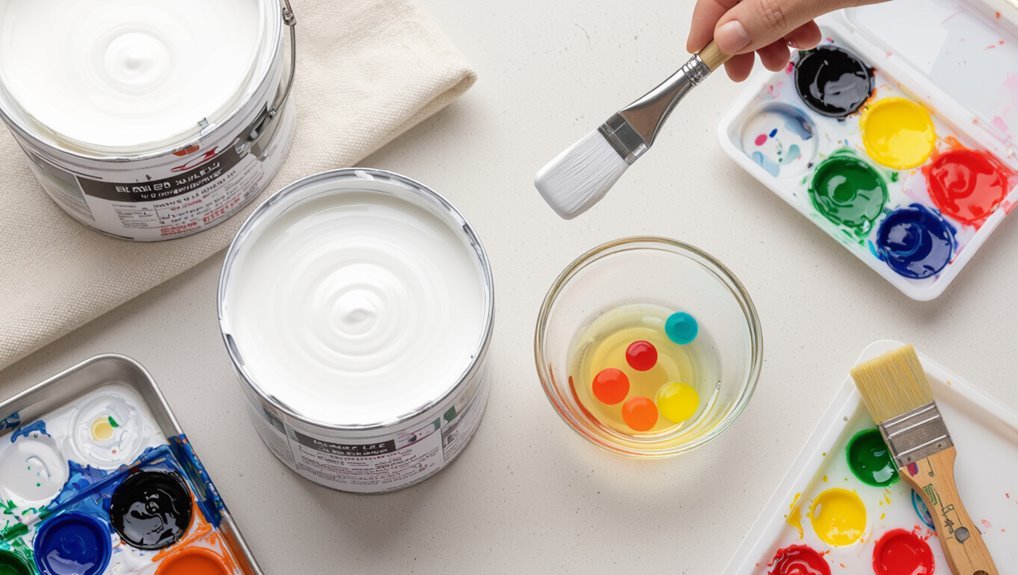
Short answer: no — you shouldn’t mix food coloring with wall paint.
You’ll likely face unpredictable food dye interactions that alter hue, adhesion, and drying. You can damage finish, weaken binders, or create blotchy results that ruin paint aesthetics.
If you want custom tints, use pigment designed for paint; it’ll blend predictably and preserve durability and colorfastness.
Quick Takeaways: Risks, Benefits, and When to Stop
When you’re tempted to tint paint with food coloring, weigh the trade-offs: it might seem convenient and cheap, but dyes can unpredictably shift shade, interfere with paint binders, and compromise adhesion and fade resistance.
So stop and choose proper pigments or tints if you need reliable color and finish.
Know the risks involved versus the benefits analyzed: DIY experiments for small crafts may work, but avoid walls.
What Food Coloring Is Made Of (Dyes, Carriers, pH)
Food coloring typically contains concentrated water-soluble dyes (either synthetic azo or natural plant-derived pigments), a liquid carrier—usually water with alcohol or glycerin to stabilize and disperse the dye—and additives like citric acid or sodium benzoate to adjust pH and preserve shelf life.
- You’ll notice dye composition affects tint strength.
- Carrier agents control flow and mixing.
- pH influences color stability, so test before you mix.
What Wall Paint Contains (Binders, Pigments, Solvents)
If dyes and carriers determine how a coloring behaves, paint brings a different set of ingredients that control film formation, opacity, and drying.
You’ll encounter binders types (acrylic, alkyd) that form the film, pigment functions that provide color and hiding, and solvent roles (water or mineral spirits) that adjust flow and drying.
Understanding paint composition helps you predict mixing outcomes.
How Dyes Differ From Paint Pigments (Dispersion vs. Opacity)
Because dyes dissolve and pigments disperse as tiny solid particles, they behave very differently in paint systems: dyes penetrate and tint substrates, offering transparent, vivid color, while pigments sit suspended in the binder and provide opacity and hiding power.
Dyes dissolve and tint substrates with vivid transparency; pigments remain suspended, giving opacity and hiding power.
You’ll notice dye characteristics vs. pigment properties in appearance, durability, and application:
- Transparency and staining
- Lightfastness and durability
- Coverage and tinting strength
How Food Dye Behaves in Water‑Based Paint
When you stir food dye into water‑based paint, the dye dissolves into the liquid phase and spreads quickly, tinting the binder rather than forming opaque particles; this makes the color appear more transparent and more likely to stain porous surfaces.
You’ll notice food dye behavior causes uneven tinting, reduced hiding power, and potential bleeding; your paint interaction is governed by dilution, binder affinity, and surface absorption.
How Food Dye Behaves in Oil‑Based Paint
Although food dyes readily dissolve in water‑based systems, they don’t behave the same way in oil‑based paint: most commercial food colorants are water‑soluble and won’t mix into the oil/binder phase.
As a result, they’ll either sit as separate droplets, form cloudy emulsions, or sink to the surface depending on their carrier and the paint’s solvents.
You’ll notice changes in food dye compatibility and paint texture:
- Visible droplets or streaks
- Thinner coverage, uneven sheen
- Risk of phase separation over time
Color Stability: Why Dye‑Tinted Paint May Fade
If you tint paint with food dye, expect the color to shift faster than with pigments—the soluble molecules in dyes are prone to chemical breakdown, migration, and light‑induced fading, especially in solvent‑rich or alkaline paint films.
You’ll see faster color fade from UV, moisture, and chemical interactions. To improve dye longevity you’d need filters, stabilizers, or sealing topcoats, though results remain limited.
Coverage and Hiding Power With Added Dye
When you mix food coloring into wall paint, expect the dye to thin the film and reduce hiding power, so you may need extra coats.
You’ll also risk increased sheen where the dye pools or alters the binder.
Pay attention to streaks and uneven coverage during application to guarantee a uniform finish.
Reduced Hiding Power
Because adding food coloring introduces transparent dye particles into your paint, its ability to hide the substrate drops noticeably.
You’ll notice thinner coverage and must apply more coats, which affects color mixing and overall paint quality.
- Expect more coats to achieve opacity
- Stains or old colors can show through
- Tinting small batches increases inconsistency and touch-up difficulty
Increased Sheen Risk
Although adding food dye seems harmless, it can raise the paint’s sheen in spots, especially where the pigment concentration varies.
You’ll get unexpected gloss differences across the surface. You’ll notice sheen variation where dye pools or mixes unevenly, altering gloss levels and reflecting light inconsistently.
That creates visual hotspots and may betray touch-ups, so avoid dye if consistent finish matters.
Coverage Uniformity Issues
If you mix food dye into paint, expect the pigment to change how well the paint covers and hides the surface. You’ll face coverage challenges and uneven hiding power, so test first.
Consider these practical points:
- Stir thoroughly to improve color consistency but don’t expect perfect opacity.
- Apply thin, even coats; thicker coats may still patch.
- Use primer to reduce translucency and spotting.
Does Food Dye Change Paint Drying and Curing?
You might notice the paint feels tacky longer after mixing in food dye, so watch for any change in drying time.
Small amounts usually won’t stop proper curing, but pigments and additives in some dyes can alter how the binder sets.
Test a sample on scrap drywall and let it fully cure before committing to a whole wall.
Effect On Drying Time
When you add food dye to wall paint, it usually doesn’t speed up or slow down drying in any meaningful way because food coloring is mostly water and dissolved pigments at very low concentrations.
You’ll notice minor drying effects from dilution or extra solvent, not the dye itself.
Consider paint interactions and practical tips:
- Test a small patch first.
- Use proper ventilation.
- Avoid overloading dye.
Impact On Paint Curing
Although food dye can tint paint, it rarely changes the chemical curing process of most interior wall paints because dyes are water-based and used at very low concentrations.
You’ll find paint curing proceeds normally, though heavy dye loads or oil-based additives might alter film formation.
Test small samples to check dye interaction, adhesion, and final hardness before committing to a full wall application.
Adhesion Risks: Flaking, Peeling, and Bond Failure
If you mix food coloring into wall paint without accounting for differences in formulation and compatibility, the dye can interfere with the paint’s ability to form a strong film, leading to flaking, peeling, or outright bond failure.
You’ll face adhesion challenges that reduce paint durability. Consider these risks:
- Poor substrate bonding
- Localized delamination
- Accelerated wear and chip formation
Finish Problems: Streaks, Mottling, and Uneven Sheen
1 common and immediate issue you’ll notice after adding food coloring to paint is an inconsistent finish: streaks, mottling, and patches of uneven sheen that draw the eye and reveal the dye’s poor dispersion.
You’ll need rigorous stirring, small test patches, and possible straining for streak prevention, plus consistent application technique and compatible topcoats to regain sheen control and a uniform appearance.
UV and Light Sensitivity of Food‑Dye‑Tinted Paint
When you tint paint with food dye, remember those dyes weren’t made to withstand sunlight, so their colors can fade, shift, or yellow quickly under UV exposure; expect accelerated fading in sunlit rooms and on exterior surfaces unless you take protective measures.
- Consider UV effects: apply UV‑blocking clear coat for protection.
- Minimize light fading by using low‑UV lighting and shades.
- Know dye interaction with binders affects paint longevity; test small areas first.
Porous Surfaces: Staining and Bleed‑Through Risks
Porous surfaces soak up liquid dyes at different rates, so you’ll see uneven color or darker spots if you don’t test first.
Pigment migration can cause bleed-through from stains or underlying materials, especially on raw drywall or wood.
Always seal or prime porous areas before painting to block absorption and lock in the tint.
Surface Absorption Rates
Because porous materials soak up liquids at different speeds, you’ll want to test how a paint-and-food-color mix behaves before committing to a full coat.
Focus on surface preparation and paint absorption to predict color intensity and drying time.
- Test on a hidden patch.
- Note soak-in versus surface film.
- Adjust mix or primer based on results.
Pigment Migration Risk
If you mix food coloring into paint and apply it to unsealed masonry, wood, or drywall, pigments and dyes can wick into the substrate and leave visible stains that bleed back through lighter topcoats.
You’ll risk pigment migration that disrupts color consistency, creating uneven patches and shadowing.
Test small areas first and avoid porous surfaces if you need reliable, uniform finishes.
Sealing And Priming
When you’re working on raw masonry, wood, or drywall, seal and prime those surfaces before adding any colored paint so dyes won’t soak in and later bleed through; a good sealer blocks staining and gives primers something uniform to adhere to, reducing the risk of shadowing or color migration.
- Pick sealing techniques that match substrate porosity.
- Choose priming methods for stain blocking.
- Test a small patch first.
Health & VOC Concerns From Adding Food Dye to Paint
Although adding food coloring to wall paint might seem harmless, you should be aware that it can change more than just the hue: dyes and their carriers can interact with paint chemistry and potentially affect indoor air quality.
You should consider health risks, dye safety and VOC emissions—mixing can reduce paint quality, release smells, or trigger allergic reactions in sensitive people, so test and ventilate.
When (If Ever) Does DIY Food‑Dye Tinting Work?
You can sometimes get usable tints, but they depend on the paint base—water‑based paints accept liquid food dyes better than oil‑based ones.
Keep dye amounts low because food coloring reaches a saturation point and can weaken paint performance or change drying behavior.
Also be prepared for poor long‑term color stability, as dyes may fade or shift faster than pigment‑based tints.
Paint Base Compatibility
If you want to tint wall paint with food dye, start by checking the paint base—water‑based latex accepts liquid food coloring far better than oil‑based or alkyd paints.
Consider paint properties and simple color mixing before you begin.
Try small tests and note stability.
- Test a small sample first
- Expect fading with incompatible bases
- Stir thoroughly and observe hue changes
Dye Concentration Limits
When you’re considering how much food dye to add, remember that small, concentrated additions can shift a paint’s hue without ruining its texture.
But there’s a hard ceiling where dye starts to compromise drying, adhesion, or colorfastness. You should test dye concentration limits on sample pots, use ideal ratios like a few drops per cup, and never exceed levels that thin binder performance.
Long‑Term Color Stability
After testing concentration limits on sample pots, you’ll want to contemplate how that color holds up over months and years.
DIY food dyes often suffer color fade; you’ll weigh short-term vibrancy against dye longevity.
Consider these practical points:
- Sunlight speeds fade, so test in real lighting.
- Cleaning and abrasion strip tint faster.
- Oil- or acrylic-based paints resist dye breakdown better.
How to Test Food Dye in Paint Safely on a Small Scale
Start by mixing a teaspoon of paint with a drop or two of food dye in a disposable cup so you can observe color, consistency, and any separation without wasting material.
Stir, note dye absorption and paint texture, then let it sit for an hour.
Apply a tiny swatch to a cardboard scrap, label ingredients and time, and wait 24–48 hours to check adhesion and color change.
Step‑By‑Step Spot Test Protocol for Color and Finish
Start by cleaning and lightly sanding a small, inconspicuous patch so the dye-paint mix bonds to the same surface you’ll be finishing.
Apply your colored sample in thin, consistent strokes and let it fully cure between coats to judge the true hue and sheen.
Finally, rub a damp cloth and a bit of mild detergent over the spot to assess color fastness and note any fading or bleeding.
Surface Preparation Steps
Before you mix food coloring into wall paint, you’ll want to run a quick spot test so you can see the true color and finish on the actual surface.
Prepare by cleaning and sanding, matching preparation techniques to surface types, then test in a hidden area.
Try these steps:
- Clean, sand, and wipe dry.
- Tape a small swatch area.
- Apply mixed paint, let fully dry and inspect.
Assessing Color Fastness
When you’re ready to evaluate how the food coloring holds up in your paint, perform a small, controlled spot test on a concealed area to judge the true color, adhesion, and finish under your room’s lighting.
Apply the mixed paint in a thin coat, let it fully cure, then inspect for streaking, bleeding, fading, or changes in sheen.
Record results, note color durability and dye longevity, test wet and dry rub resistance.
How to Evaluate Short‑ and Long‑Term Test Results
Although short-term tests reveal immediate color, adhesion, and drying behavior, you’ll need to weigh those results against long-term changes like fading, yellowing, or pigment migration to judge whether food coloring is a viable additive for wall paint.
Short-term tests show immediate effects, but long-term fading, yellowing, and migration determine suitability for paint use.
Track experiment outcomes and color mixing consistency, then compare accelerated and real-time samples:
- Note visual shifts and scent changes.
- Record surface integrity.
- Decide acceptability for proposed use.
Tools to Measure and Compare Tint Results (Spectrometer, Cards)
If you want repeatable, objective tint comparisons instead of relying on gut feel, use both a handheld spectrometer for quantitative data and color cards or chips for quick visual matches.
You’ll perform spectrometer calibration before readings, log ΔE values, and test at consistent dry times and lighting.
Use color card comparison to confirm perceived match, documenting sample location and mixing ratios for repeatability.
Safer DIY Tints: Universal Liquid Tints and Artist Acrylics
Now that you’ve got reliable ways to measure and record tints, pick pigments that won’t compromise results or safety.
Use universal tints made for paint bases and stable artist acrylics for small experiments. They mix predictably and resist fading.
- Universal tints: formulated for paint systems
- Artist acrylics: concentrated, lightfast
- Test samples: confirm hue and adhesion
How to Use Paint Colorants Correctly (Liquid vs. Paste Tints)
You’ll want to know the difference between liquid and paste tints because they behave and measure differently.
Follow recommended mixing ratios and add color slowly so you can match shades without overdoing it.
Also check compatibility with your paint base—some tints affect finish, drying, or durability.
Liquid Vs. Paste Explained
When choosing between liquid and paste colorants, think about control and coverage: liquid tints blend quickly and suit small adjustments, while paste tints pack more pigment for stronger, more stable colors in larger batches.
You’ll choose based on job size and permanence.
- Liquid types: fast, low pigment, easy dosing
- Paste advantages: concentrated, less fading
- Mix small test batches first
Tint Mixing Ratios
1 clear rule governs tint mixing ratios: match the colorant type to the paint base and measure by volume or weight so your mixes stay consistent.
You’ll add liquid tints dropwise or paste tints with a calibrated scoop, tracking additions to control tint intensity.
Test small batches to judge color saturation, record ratios, and replicate results—don’t guess or eyeball when precision matters.
Compatibility And Performance
Because liquid and paste colorants interact differently with paint bases, you need to match the tint type to the formulation for reliable results.
If you use wrong tints, you risk poor paint adhesion and uneven color blending.
Follow these quick tips:
- Use manufacturer-recommended liquid tints for waterborne paints.
- Limit paste tints to compatible bases.
- Test small batches before full application.
When to Buy Pre‑Tinted Paint vs. Tinting at the Store
Deciding whether to buy pre‑tinted paint or have cans custom‑tinted at the store comes down to your color needs, timeline, and tolerance for slight shade variation.
If you want a quick, consistent match for common colors, choose pre tinted paint.
If you need a unique shade, precise matching, or larger batches, opt for store tinting—just test samples first to confirm appearance under your lighting.
Cost Comparison: Professional Tinting vs. DIY Risks
You’ll pay more up front for professional tinting, but you’re buying precise color and fewer mistakes.
If you try mixing food coloring yourself, you may save money initially yet risk uneven shades, staining, or needing to repaint.
Consider the potential costs of repairs and wasted materials before choosing DIY.
Professional Tinting Costs
Hiring a pro to tint your paint usually costs more upfront than DIY, but it buys you accurate color matching, consistent batches, and fewer mistakes that can drive up total expenses.
You get professional tinting with clear cost benefits and peace of mind. Consider:
- Precise color matches
- Consistent batch quality
- Time saved and fewer touch-ups
DIY Risk Expenses
While DIY tinting can save you money upfront, it often introduces hidden risks that raise overall costs—mismatched batches, wasted paint, and extra labor for corrections.
You’ll weigh DIY safety measures, replacement paint, and time against professional accuracy.
A strict cost analysis shows pros may cost more initially but often reduce rework, liability, and tool purchases, making them cheaper long-term.
Low‑Cost Ways to Get a Custom Color Without Dyeing Paint
If you want a custom wall color without buying specialty tints or dyeing paint, there are several low-cost tricks you can try that still give good results.
You’ll find budget friendly alternatives and creative color solutions like:
- Mixing small amounts of artist acrylics into leftover paint.
- Using washable pigment powders for accents.
- Layering translucent glazes for depth and variation.
Fixes If Food‑Dye‑Tinted Paint Went Wrong
If the tint didn’t turn out, you can often correct it by adding small amounts of the opposite color or by blending in uncolored paint to mute intensity.
For larger mistakes, you might need to remove dyed paint from the can with a strainer or strip the wall and start fresh.
I’ll walk you through simple color-correction tips and safe methods for removing dye so you can fix the problem without wasting paint.
Color Correction Techniques
When a food‑dye tint doesn’t turn out how you wanted, you can correct it without stripping the wall: use simple color correction techniques rooted in color theory to restore aesthetic appeal.
Try these quick fixes:
- Add small amounts of complementary paint to neutralize an unwanted cast.
- Layer translucent glazes to adjust tone gradually.
- Rebalance with accent walls or trim for visual harmony.
Removing Dye From Paint
Although dye can stain paint deeply, you can often remove or mask it without stripping the wall: start with gentle dye removal techniques like blotting with diluted dish soap or isopropyl alcohol, testing hidden areas first.
For persistent stains, sand lightly, use stain-blocking primer, then repaint.
These paint restoration methods preserve finish and color consistency while minimizing surface damage and rework.
How to Repaint or Remove Stains After Failed Tinting
Start by evaluating the damage so you know whether you can cover the tint or need to strip it outright.
Begin by assessing the damage to determine if the tint can be covered or must be stripped away.
If stains penetrate, prioritize stain removal; for surface tints try color correction with primer. Then repaint or strip as needed.
- Test a small patch first
- Use a stain-blocking primer
- Sand and clean before repainting
Real Examples: Hobbyists Who Tried Food Dye (Lessons)
If you try mixing food dye into wall paint, expect surprises: hobbyists who’ve experimented report vivid color shifts, uneven tinting, and bubbling in some mixtures.
You’ll read hobbyist experiences showing streaks, fading after drying, and unexpected chemical reactions.
When you attempt DIY color mixing, document ratios, test small patches, and learn from others’ lessons to avoid wasted paint and patchy results.
Quick Safety & Testing Checklist Before You Experiment
Those hobbyist stories show why you should pause before mixing food coloring into paint: unpredictable reactions and patchy results can waste paint and create safety hazards.
You’ll want quick safety precautions and testing methods before you start. Try these checks:
- Wear gloves, ventilation, and eye protection.
- Test small mixes on scrap board for color, drying, odor.
- Note compatibility with finish and cleanup steps.
Practical Rules and Final Recommendations for Safe Color Tweaks
When you’re ready to tweak paint color with food coloring, follow a few practical rules to keep results predictable and safe:
When tweaking paint with food coloring, test small batches, use water-based dyes, and label mixes for predictable results.
Test small batches for pigment interaction and adhesion.
Note dye longevity on samples.
Use water-based dyes with water-based paint.
Measure precisely, stir thoroughly, and label mixes.
If in doubt, consult paint manufacturer recommendations or choose professional tints to avoid surprises.
Frequently Asked Questions
Will Food Coloring Change Paint VOC Levels or Indoor Air Odor Long-Term?
No, food coloring won’t meaningfully change VOC levels or long-term indoor air quality; it’ll mainly risk poor color stability and could weaken paint adhesion, so you shouldn’t expect durable, safe results when mixing them into paint.
Can Food Dye Cause Mold Growth Inside Paint Film or on Walls?
Unlikely — food dye alone won’t promote mold growth inside paint film, but it can trap moisture or add organic residues that encourage mold on walls. You should focus on mold prevention and paint longevity by keeping surfaces dry.
Will Adding Food Coloring Affect Paint Fire Resistance or Flammability?
No, adding food coloring won’t noticeably change paint flammability; you’re keeping base solvents and resins the same. It may alter color intensity and reduce color stability, but it won’t meaningfully affect fire resistance.
Can Food-Colored Paint React With Metal Fixtures or Cause Corrosion?
You won’t typically see food-colored paint corrode metal; imagine gentle dye pooling, then settling—color stability usually holds and paint adhesion remains primary, but acidic or impure additives could promote corrosion if they alter coating integrity.
Are There Disposal or Cleanup Hazards for Waste Paint Mixed With Food Dye?
Yes — you should treat dyed waste paint like regular paint: follow local waste management rules, avoid pouring down drains, use sealed containers for paint disposal, and wear gloves and cleanup materials to prevent staining and contamination.
Conclusion
Think of your wall as a canvas, not a chemistry set — mixing food coloring into paint might seem like a quick shortcut, but it often leaves you with streaks, poor coverage, or unpredictable hues. If you’re itching to tweak color, test a small sample, use proper pigments or tinting kits, and keep cleanup plans ready. When in doubt, stop, repaint, or call a pro — better a small redo than a room that sings the wrong note.
