
What Color to Paint Crown Molding for Elegant Interiors
Choose a soft white or warm neutral that matches your trim for a cohesive, elegant look, or pick a slightly lighter or darker tint to gently frame the ceiling without stealing focus. Consider room scale, furniture style, and natural light—balanced undertones keep everything harmonious. Use subtle contrast to highlight architectural details or match molding to cabinets and baseboards for flow. Test samples in different light and finishes; continue for practical tips and room-specific pairings.
Quick Answer: The Simplest Way To Choose A Molding Color
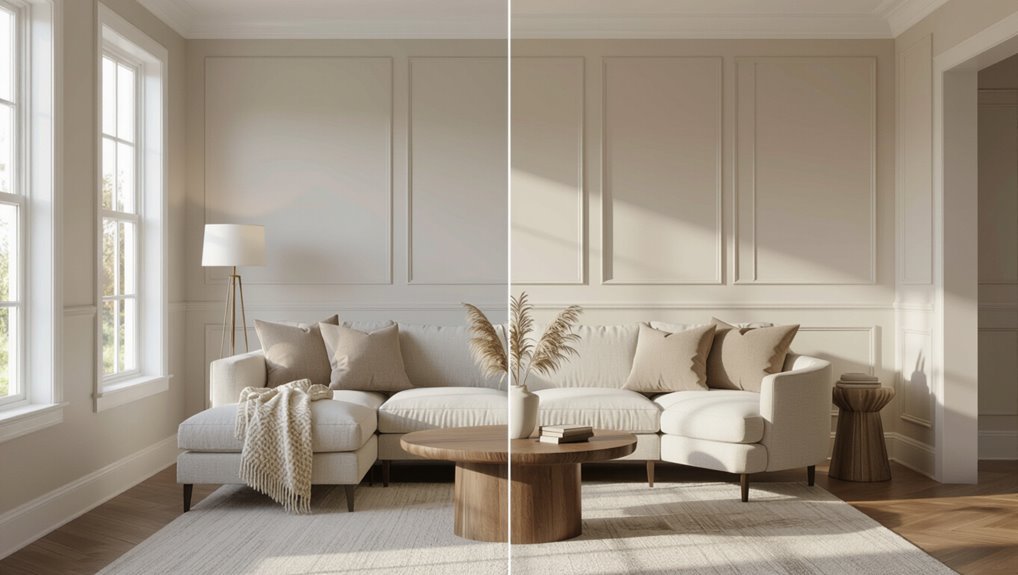
If you want the simplest rule, paint your crown molding the same color as your trim—usually the ceiling white or the baseboard shade—so the room reads cohesive and clean without much thought.
You’ll create subtle continuity, emphasize architectural lines, and let furnishings stand out.
Use elegance tips and basic color psychology: lighter trims expand space, while matched tones keep focus calm and refined.
How To Use This Guide
Use the checklist to walk through color choices step by step so you won’t miss any important factors.
You can jump to the navigation links for quick tips on matching trim, walls, and ceilings.
Follow the order suggested to make decisions faster and with more confidence.
How To Navigate
Wondering where to start? Use this guide to scan sections quickly: consider color psychology to match mood, assess molding materials for paint adhesion, then review style examples.
You’ll find step-by-step prep, painting techniques, and troubleshooting. Skip ahead to the checklist when ready to act.
Follow the suggested samples to visualize results and choose confidently without wasting time.
Using This Checklist
Before you start painting, read this checklist front to back so you know each step and why it matters.
Use it to weigh Color Psychology, Molding Trends, Texture Considerations and Historical Context against your Personal Style.
Consider Space Functionality and Cultural Influences for Mood Enhancement.
Aim for Visual Balance and Design Consistency, and follow the sequence to simplify decisions and avoid costly mistakes.
When A Step-By-Step Tutorial Helps
When you’re tackling crown molding, a step-by-step tutorial helps you measure and mark precisely so cuts and seams line up.
It also guides you in choosing the right paint finish for durability and the look you want.
Finally, following consistent strokes while painting keeps the surface smooth and streak-free.
Measure And Mark Precisely
Start by measuring each wall and corner you’ll be working on, and mark exact cut points and miter locations on the molding and wall with a pencil; accurate measurements save time and prevent gaps or repeated trim cuts.
Use precise molding measurements and marking techniques so your cuts fit snugly.
- Measure twice
- Note wall irregularities
- Mark miter angles
- Label pieces
Choose Paint Finish
If you want a crisp, durable finish that complements your room, pick the paint sheen with purpose: satin and semi-gloss hide smudges and resist scuffs on crown molding, while flat or eggshell tones give a softer, more subtle look but show wear more quickly.
Consider paint finish types and gloss level options based on traffic, lighting, and desired contrast with walls.
Paint With Consistent Strokes
Work in steady, overlapping strokes so each pass blends into the last, and keep a wet edge to prevent lap marks on the molding.
You’ll use paint application techniques that favor stroke consistency; work top to bottom, maintain pressure, and reload before the roller drags.
Follow a concise sequence:
- Cut in edges first
- Roll evenly
- Blend seams immediately
- Inspect for drips
Identify Your Design Goal Before Choosing Molding Color
Before you pick a shade, decide what role you want the crown molding to play in the room: do you want it to disappear, frame the ceiling, or become a deliberate accent?
Clarify your design objectives and match molding color to your aesthetic preferences.
Consider room scale, furniture style, and whether molding should recede, define edges, or act as a focal trim that complements existing finishes.
How Natural Light Changes Crown Molding Appearance
Pay attention to how light angle affects the way crown molding reads against walls—side light can emphasize texture while overhead light can wash it out.
You’ll also notice the molding’s color shift through the day as morning, midday, and evening light change warmth and intensity.
Test paint samples at different times to see the full range before committing.
Light Angle Effects
When sunlight streams in at different times of day, it can drastically change how your crown molding reads—soft morning light will mute shadows and flatten details, while late-afternoon sun will deepen grooves and make profiles pop.
You’ll notice light reflection, shadow play, color temperature and mood enhancement altering visual depth, spatial perception, ambient influence and design cohesion:
- Highlight edges subtly.
- Reveal textures.
- Accent profiles.
- Balance contrasts.
Time-Of-Day Shifts
In different parts of the day, natural light can completely change how your crown molding reads: cool, diffuse morning light softens profiles and mutes paint tones.
Midday sun flattens contrasts and can wash out delicate details.
Warm late-afternoon rays deepen shadows and enrich color saturation, making trim look more sculpted and dimensional.
You’ll notice time of day shifts alter hue perception and shadow play, so test samples at multiple hours.
How Artificial Light And Fixtures Alter Molding Color Perception
Because artificial lighting shifts both hue and contrast, the same crown molding can read dramatically different under various fixtures and bulbs.
You should test paint swatches under artificial light effects and note fixture color influence.
Check these factors in situ:
- Bulb temperature (warm vs cool)
- Fixture finish reflecting tint
- Shade diffusion and glare
- Layered lighting balance for true perception
Should Molding Recede Or Pop In The Room?
Want your crown molding to vanish into the walls or make a bold statement? You’ll decide by weighing contrast vs. harmony: match tones for subtlety, or choose a sharper hue to make trim pop and boost visual impact.
Consider room scale, ceiling height, and focal points. Low ceilings often benefit from receding trim; grand spaces can handle dramatic, attention-grabbing molding.
Molding Color Choices For Classic Interiors
When you aim for a timeless, classic interior, choose molding colors that echo traditional palettes—soft whites, warm creams, and muted ivories—and let them anchor the room without stealing focus.
You’ll balance elegance using classic color palettes and molding texture variations to add subtle depth.
- Soft white trim
- Cream with warm walls
- Muted ivory contrast
- Subtle textured finishes
Molding Color Strategies For Modern And Minimalist Rooms
Classical trim tones like soft whites and creams offer a quiet foundation, but modern and minimalist rooms call for sharper, more intentional choices that echo clean lines and open space.
You’ll use minimalist contrasts—black or deep charcoal against bright walls, or tone-on-tone crisp neutrals—to define edges.
Choose modern palettes with muted greys, warm beiges, or bold monochrome for streamlined, architectural impact.
Warm And Cozy Rooms: Best Molding Color Strategies
For warm, cozy rooms you’ll want molding colors that echo the room’s warm neutrals—think cream, taupe, or soft caramel—to keep the palette cohesive.
You can create subtle definition by choosing trim a shade or two lighter or darker than the walls for soft contrast without starkness.
That small contrast will frame the room and enhance its inviting feel without stealing attention.
Complementary Warm Neutrals
Pick two to three warm neutrals that share undertones—think honey beige, muted terracotta, and creamy taupe—and use them to create a layered, cozy look where the molding ties the palette together.
You’ll achieve elegant contrasts within timeless palettes by varying sheen and depth. Consider these tactics:
- Match undertones across wall, trim, and furniture.
- Use slightly darker molding for definition.
- Select matte walls, satin trim.
- Add textured fabrics.
Soft Contrast With Trim
When you want a cozy, lived-in feel without heavy contrast, paint the crown molding just a shade or two darker than the walls so it gently frames the room without shouting for attention.
You’ll rely on soft color palettes to keep warmth, letting subtle trim depth define proportions.
Add occasional contrasting accents—like darker door casings or picture frames—to create interest without breaking the calm.
Formal Elegance: Painting Molding To Emphasize Architecture
A well-chosen paint treatment turns crown molding into a defining architectural statement, and you can use contrast or matching tones to sharpen lines and highlight profile details.
A thoughtful paint treatment makes crown molding a striking architectural feature, sharpening lines and revealing profile details
You’ll create elegant contrasts and clear architectural highlights by choosing hue placement and sheen thoughtfully.
- Accent profiles with a slightly deeper tone
- Use high-contrast sparingly for formality
- Select satin or eggshell sheen
- Keep lines crisp with precise edging
Should You Paint Molding The Same Color As The Ceiling?
If you want a seamless, airy look, painting molding the same color as the ceiling makes the join feel continuous and visually lifts the room; matching tones blur the edges so the eye sees volume rather than trim.
You’ll use molding color psychology to soften visual breaks, and ceiling color influence to expand perceived height.
Choose subtle contrasts when you need definition without interrupting flow.
Should You Paint Molding The Same Color As The Walls?
Curious whether matching your molding to the wall color will make the space feel unified or flat? You’ll create wall molding harmony that subtly enlarges rooms and supports molding color psychology by minimizing visual breaks.
Matching trim to walls creates seamless harmony, subtly enlarging rooms while minimizing visual breaks—use texture or sheen to keep definition.
Consider these practical points:
- Seamless backdrop for art and furniture.
- Simpler maintenance and repainting.
- Enhances minimalist, calm interiors.
- Risk of losing architectural definition—use texture or sheen.
When To Paint Molding A Contrasting Color For Emphasis?
You can use a contrasting color on crown molding to create a clear visual focal point in a room.
Doing so draws the eye and emphasizes architectural details like cornices, built-ins, or doorway shifts.
Choose contrast when you want those features to stand out rather than blend into the walls.
Create Visual Focal Points
A contrasting crown molding can instantly draw the eye and define a room’s architectural rhythm, so choose a bold or darker shade to highlight features like high ceilings, arched doorways, or a focal wall.
Use focal point techniques and maintain visual balance so the molding emphasizes without overpowering.
- Frame seating areas
- Accent entryways
- Anchor a gallery wall
- Tie ceiling treatments together
Highlight Architectural Details
After using contrasting molding to create focal points, think about when that same approach should call attention to specific architectural details. You’ll use contrast for architectural emphasis on cornices, doorways, built-ins, and mantels. It enhances design aesthetics and guides the eye. Pick tones that complement room palette, keep proportions balanced, and guarantee trim finish ties elements together.
| Element | Purpose |
|---|---|
| Cornices | Frame ceiling |
| Doorways | Define flow |
| Built-ins | Accentuate storage |
| Mantels | Highlight focal point |
Use Trim As A Frame: Molding Color For Visual Cohesion
When you treat trim as a frame, it defines and sharpens the room’s composition, guiding the eye to architectural features and focal points.
You’ll use molding aesthetics and color psychology to tie elements together, balance contrast, and set mood. Choose intentional hues that echo furniture or art for cohesion.
- Anchor focal points
- Echo dominant tones
- Control visual flow
- Enhance texture
How To Pick Molding Color Based On Wall Undertones
Because undertones quietly shift how colors read in different light, pick molding hues that respond to your wall’s subtle base rather than its surface color alone. You’ll use undertone matching to calm contrasts, boost color psychology, and choose warmth or coolness. Test swatches near trim at different times before committing.
| Wall Undertone | Molding Move |
|---|---|
| Warm beige | Soft cream |
| Cool gray | Crisp taupe |
| Greenish | Muted ivory |
| Blue | Warm white |
| Yellow | Cool off-white |
Choosing White: Which Whites Work For Crown Molding
Anyone can get tripped up by the many whites on the market, so pick one that complements your walls and the room’s light rather than assuming “white” is neutral.
You’ll want whites that highlight luxury textures and nod to historical influences without overpowering trim profiles.
- Cool crisp white for bright, modern rooms
- Warm ivory for softened contrast
- Creamy eggshell for subtle depth
- High-gloss white for formal detailing
When Off-White And Cream Outperform Bright White
If your room has warm undertones, low natural light, or a lot of texture, off-white and cream often make crown molding feel intentional rather than stark.
You’ll choose off white warmth to soften shifts, reduce contrast, and highlight detailing without glare.
Use cream elegance to create a cozy, cohesive look that complements wood tones, fabrics, and gentle lighting for refined, livable spaces.
When Black Or Deep Hues Work Best For Molding
When does dark molding make a room sing instead of swallow it? You’ll use black elegance and deep contrasts to anchor high ceilings, frame dramatic art, or balance bold wall color without overwhelming the space.
When does dark molding sing instead of swallowing a room? Use black elegance to anchor height, frame art, and balance bold color.
- Pair with ample natural light.
- Use simple, crisp profiles.
- Limit to focal rooms.
- Coordinate with matching trims and fixtures.
Soft Neutrals For Molding That Never Go Out Of Style
When you want a look that lasts, off-white crown molding is a safe, timeless choice that brightens any room without stealing the show.
You’ll also like warm greige for adding subtle depth while keeping things neutral.
Taupe offers a bit more richness if you want warmth without overpowering your palette.
Timeless Off-White Choices
Because off-white tones read as quietly elegant, they’re the go-to choice for crown molding that should last through changing trends.
You’ll achieve timeless elegance and classic appeal with subtle creams or antique whites that reflect light without stark contrast. Choose finishes that suit room scale and trim detail.
- Soft cream
- Antique white
- Bone
- Ivory
Warm Greige And Taupe
If you like the quiet elegance of off-whites but want a bit more warmth and depth, greige and taupe are smart next steps.
You’ll pair warm greige combinations with soft walls to create subtle contrast, while paying attention to taupe undertones that read cool or warm depending on light.
Choose trim with a slightly lighter hue to define profiles without harshness.
Using Color To Create Perceived Ceiling Height
Although you mightn’t be able to raise your ceiling, you can make it look higher by using color strategically on crown molding, walls, and trim.
You’ll use ceiling colors and contrast to craft a convincing height illusion. Try these tactics:
- Paint ceiling a lighter tone than walls.
- Use high-contrast narrow molding.
- Extend wall color onto molding.
- Add vertical stripe accents.
Coordinating Molding Color With Baseboards And Window Trim
Decide whether you want your crown molding to match the baseboards and window trim for a seamless, cohesive look or to contrast for crisp definition.
Matching creates visual flow that makes rooms feel unified, while contrasting draws attention to architectural details.
Think about the overall style and choose the approach that supports it.
Match Trim For Flow
Think of your trim as a running thread through the room — matching crown molding with baseboards and window casings keeps sightlines calm and cohesive.
You’ll achieve elegance integration and cohesive aesthetics by using consistent finish and subtle tonal shifts.
Consider these steps:
- Match sheen across trims.
- Use identical paint for continuity.
- Slightly vary tint for depth.
- Test samples in light.
Contrast For Definition
When you want your crown molding to stand out, contrast gives each trim element clear definition and visual interest. You’ll pair crown, baseboards, and window trim to guide sightlines, using molding texture options and color psychology effects to set mood. Choose lighter moldings for airy rooms, darker for drama, and vary sheen to separate planes.
| Trim Element | Suggested Contrast |
|---|---|
| Crown | Lighter than wall |
| Baseboard | Slightly darker |
| Window Trim | Match crown |
| Door Trim | Accent tone |
| Shiplap/Paneling | Neutral contrast |
Pairing Molding Color With Wood Floors And Finishes
Pairing crown molding with wood floors and finishes starts by considering undertones and contrast: match warm floors with warm trim or choose a cooler white to create crisp separation.
Use molding color psychology and texture contrast to guide choices.
- Sample near natural light
- Harmonize undertones
- Consider sheen vs. matte
- Balance visual weight with baseboards
Matching Molding Color To Cabinetry And Built-Ins
When your cabinets and built-ins are a focal point, you can match the crown molding to them for a cohesive look.
Or choose a slightly contrasting shade to add visual interest without overpowering the cabinetry.
Also think about finish and sheen—glossy trim reads cleaner, while matte or satin blends more subtly with wood tones.
Match Trim To Cabinets
If your cabinets and built-ins are a dominant visual element in the room, match the crown molding to them to create a cohesive, intentional look—especially in open-plan spaces where separate finishes can clash.
You’ll emphasize unity while controlling cabinets contrast and reinforcing trim texture.
Consider these steps:
- Use the same paint color.
- Match sheen levels.
- Coordinate wood stains.
- Blend hardware finishes.
Contrast For Visual Interest
Matching trim to cabinets is great for cohesion, but you can also make crown molding pop by choosing a contrasting color that highlights built-ins and draws the eye. Use contrast techniques to emphasize architecture while maintaining visual balance; pick one bold hue or a softer complementary tone depending on room scale and lighting.
| Strategy | Effect |
|---|---|
| Bold contrast | Focal point |
| Soft contrast | Subtle depth |
| Neutral contrast | Timeless balance |
| Accent match | Cohesive highlight |
Consider Finish And Sheen
Although color sets the mood, finish and sheen shape how that color reads against your cabinets and built-ins, so pick them deliberately.
You’ll use molding color psychology and sheen impact analysis to align trims with cabinetry. Consider practical effects and light.
- Match gloss for modern cohesion
- Matte hides flaws for traditional warmth
- Satin balances depth and durability
- High gloss highlights architectural detail
How To Integrate Metallic Accents With Painted Molding
When you add metallic accents to painted crown molding, you create a focused, luxurious highlight that lifts the whole room. Small touches—gilded corners, brushed-brass caps, or silver-leaf slices—draw the eye without overpowering the trim.
You’ll balance metallic finishes with paint color and molding textures, apply sparingly at focal points, and test samples under room light so the sheen complements—not competes with—walls and furnishings.
Layering Colors: Molding, Picture Rail, And Chair Rail Strategies
After you’ve added metallic highlights to crown molding, think about how the rest of your horizontal trim—picture rails and chair rails—can work together to define the room’s layers.
Use Layering Techniques and Color Harmony to guide choices. Consider:
- Match baseboards subtly.
- Contrast chair rail with wall.
- Use picture rail as accent.
- Repeat metallic tone sparingly.
Bold Molding Choices For Dining Rooms And Entryways
If you want to make a strong first impression, paint crown molding in dining rooms and entryways with bold, confident hues that anchor the space and draw the eye upward.
Choose deep navy, charcoal, or forest green to frame artwork and fixtures. Contrast glossy molding against matte walls for drama.
Pay attention to lighting to enhance entryway aesthetics, scale, and cohesive dining room color storytelling.
Molding Color Tips For Bedrooms And Nurseries
How do you pick molding colors that make bedrooms and nurseries feel cozy and calm without overpowering the room? You’ll favor soft neutrals or gentle pastels to enhance bedroom serenity and subtle contrasts to frame nursery whimsy.
Consider these approaches:
Consider these approaches for calming, cozy bedrooms and nurseries: soft neutrals, muted pastels, and subtle contrasts.
- Match molding to trim for seamless calm.
- Use muted pastels for a playful touch.
- Choose warm neutrals for restful tone.
- Add a slightly lighter hue for depth.
Molding Color And Durable Paint Choices For Kitchens And Baths
When you’re choosing molding colors for kitchens and baths, prioritize finishes and pigments that stand up to humidity, grease, and frequent cleaning while still coordinating with cabinetry and tile.
Choose semi-gloss or satin enamel for durability, pick neutral or contrasting kitchen colors to highlight trim, and select moisture-resistant paints that support your bath aesthetics.
Cleanable, stain-resistant coatings keep molding looking fresh.
Linking Zones In Open-Plan Spaces With Consistent Molding Color
Because open plans rely on visual flow, keeping your molding color consistent ties separate zones together and makes the whole space feel intentional rather than fragmented.
You’ll use molding color psychology and visual flow techniques to guide sightlines and unify materials.
Consider these strategies:
- Match trim hue across rooms.
- Vary sheen, not color.
- Use subtle contrast for anchors.
- Coordinate with lighting.
Paint Choices That Respect Period Details In Historic Homes
While keeping molding color consistent helps tie open-plan spaces together, historic homes call for a more nuanced approach that honors original details and period aesthetics.
You’ll research finishes and consult archives or paint analysis to match period colors and guarantee historical accuracy.
Choose paints and sheens that respect original profiles, contrast appropriately with walls, and preserve character without creating a pastiche.
Using Molding Color To Modernize Contemporary Renovations
If you want to give a contemporary renovation a fresh, cohesive look, use molding color as a deliberate design tool rather than an afterthought.
You’ll balance modern aesthetics, minimalist designs, and texture contrasts to boost design cohesion and architectural harmony.
Consider color psychology for mood enhancement and spatial perception, guided by renovation inspiration and trend forecasts.
Use color psychology to shape mood and perceived space, inspired by renovation trends and fresh design ideas.
- Accent trims
- Tonal palettes
- Contrast edges
- Integrated finishes
Small Rooms: Molding Color Tricks To Avoid Visual Clutter
When you’re working with a compact room, the right molding color can prevent visual clutter and make the space feel intentionally designed rather than cramped.
Choose muted, tonal trims to extend walls and create visual harmony; use subtle contrast sparingly to define corners.
Rely on color psychology—soft neutrals calm, light cools—so molding supports openness without drawing attention or adding clutter.
Large Rooms: Using Molding Color To Add Intimacy Or Drama
In a large room, you can use dark crown molding to create instant drama and make the space feel cozier.
Choosing light trim keeps the room airy and softens the scale without shrinking it.
For added depth, try an accent ceiling color to draw the eye up and define the volume.
Dark Trim For Drama
Although lighter trim makes rooms feel airy, painting crown molding a deep hue can instantly pull a large space together and create a cozy, dramatic feel.
You’ll use dark color psychology and dramatic contrast to define scale, highlight ceilings, and invite intimacy.
Consider these approaches:
- Anchor high ceilings with charcoal or navy.
- Frame art and windows.
- Layer with warm lighting.
- Keep walls neutral for balance.
Light Trim To Soften
If deep trim can make a room feel cozy and defined, light trim will do the opposite: it softens edges and opens the space without losing refinement. You’ll favor soft hues to brighten walls while using subtle trim contrasts to define moldings. Use this quick guide:
| Benefit | Tip |
|---|---|
| Openness | Choose pale neutrals |
| Warmth | Layer textures |
| Definition | Slight contrast |
Accent Ceilings For Depth
Want to make a large room feel cozier or more dramatic? Use accent ceilings and contrasting crown molding to create elevated ambiance and deliberate ceiling contrasts that reshape scale.
Choose deeper ceiling hues with lighter molding or vice versa; bold trim frames the space, drawing eyes inward and down for intimacy or up for grandeur.
- Deep ceiling, light molding
- Light ceiling, dark molding
- Matte finishes
- Satin highlights
How To Test Molding Paint With Samples And Swatches
Before you commit to a color, grab several paint samples and swatches and test them on your molding in the actual room lighting; colors shift dramatically between natural and artificial light, and what looks right in a store can read completely different at home.
Apply molding paint samples to small sections, observe at different times, and use color swatch testing to compare undertones and finishes before deciding.
Temporary Mockups: Peel-And-Stick Trim And Taped Stripes
Try temporary mockups like peel-and-stick trim or taped stripes to preview a molding color and profile without committing to paint.
You can test scale, contrast, and how light plays on edges. Use peel and stick options and other temporary designs to experiment quickly.
- Apply samples along cornice
- Test color against wall
- Check from different angles
- Remove cleanly afterward
Choosing Sheen: Eggshell, Satin, Or Semi-Gloss For Molding
Think about how sheen changes what you notice: higher sheens pick up more light and highlight imperfections, while flatter sheens hide flaws.
You’ll also want a finish that stands up to scuffs and wipes—semi-gloss cleans best, satin balances durability and subtlety, and eggshell is softer but less forgiving.
Finally, consider whether you want the trim to match the wall for a seamless look or contrast it with a glossier finish to make the molding pop.
Sheen Impact On Visibility
Because light catches sheen differently, the finish you pick can make molding pop or fade into the wall.
You’ll use sheen effects to control visibility contrast, highlighting profiles or softening edges. Choose based on room light and desired emphasis:
- Eggshell — subtle, low reflection.
- Satin — moderate sheen, gentle highlight.
- Semi-gloss — crisp edge definition.
- Match trim or contrast intentionally.
Durability And Cleanability
While sheen affects appearance, it also determines how well crown molding holds up to everyday wear and cleaning; you’ll want a finish that resists scuffs and wipes clean without ghosting.
Consider durability factors like surface hardness and stain resistance when choosing eggshell, satin, or semi-gloss.
For cleanability tips, test a small area, use mild detergent, and avoid abrasive scrubbers to preserve the finish.
Matching Trim To Walls
After you’ve picked a sheen for durability and cleanability, you’ll want to contemplate how that sheen reads against your walls.
You’ll balance trim textures with wall patterns, deciding whether contrast or harmony suits the room.
Consider these practical tips:
- Eggshell for subtlety with textured trim.
- Satin to bridge matte walls and sheen trim.
- Semi-gloss for high-traffic accents.
- Test samples in varied light.
Best Paint Types For Long-Lasting Molding Color
Choosing the right paint type will determine how well your crown molding resists scuffs, holds color, and stands up to cleaning over time.
You’ll prefer durable acrylic latex for flexibility and easy cleanup, or oil-based for a hard, glossy finish in high-traffic areas.
Consider durability factors like adhesion and stain resistance, and pick paint finishes—eggshell, satin, or semi-gloss—based on desired sheen and wipeability.
Prep And Priming Tips That Affect Final Molding Color
Because prep and priming set the stage for the final hue, you’ll want to sand, fill gaps, and clean the molding thoroughly before any paint goes on; a smooth, dust-free surface lets primer adhere evenly and prevents blotchy color or visible seams.
Use prep techniques and priming essentials to guarantee uniform tone:
- Sand smooth with fine grit.
- Caulk joints neatly.
- Wipe with tack cloth.
- Apply high-quality primer.
Touch-Up And Maintenance: Keeping Molding Color Crisp Over Time
You’ll keep your crown molding looking sharp by sticking to a simple cleaning routine—dust weekly and wipe with a mild cleaner as needed.
For scuffs or chips, keep a small amount of the original paint handy for quick touch-ups so repairs blend seamlessly.
Regular light maintenance prevents bigger repaint jobs and preserves the color you chose.
Regular Cleaning Routine
When you keep a simple weekly cleaning routine, crown molding stays crisp and needs fewer touch-ups.
You’ll extend paint life by controlling dust and stains; note cleaning frequency and follow maintenance tips to avoid buildup.
Do a quick inspection each week and address scuffs promptly.
- Dust with a microfiber cloth.
- Vacuum crevices gently.
- Spot-clean with mild soap.
- Inspect for damage.
Quick Paint Touch-Ups
Keep a small kit on hand so you can tackle nicks and scuffs on crown molding as soon as they appear. You’ll want matching paint, small brushes, and cleaner for quick touch ups. Regular paint maintenance prevents visible wear. Below is a simple checklist:
| Item | Purpose |
|---|---|
| Matching paint | Color repair |
| Small brush | Precise application |
| Cleaner | Prep surface |
| Sandpaper | Smooth edges |
| Cloth | Wipe residue |
Common Mistakes When Choosing Molding Color And How To Avoid Them
Ever wonder why painted molding sometimes makes a room look off, even when everything else seems right?
Ever notice painted molding throwing off a room’s balance, even when everything else feels right?
You’ll avoid mistakes by understanding molding color psychology and common color pitfalls. Pick contrast, sheen, and undertone deliberately. Consider lighting and room scale. Test samples.
- Ignore undertones
- Overmatch trim to walls
- Choose wrong sheen
- Skip samples
Budget-Friendly Ways To Update Molding Color Without A Full Repaint
You don’t always need a full repaint to freshen crown molding—quick paint-ready touch-ups can hide scuffs and brighten trim where it matters most.
For a bolder change, try temporary accent strips you can stick on and swap out with seasonal colors or trends.
Both options save time and money while letting you experiment without commitment.
Paint-Ready Touch-Ups
Ready-made touch-ups let you freshen crown molding without the time and cost of a full repaint. You’ll preserve molding maintenance routines and boost color longevity with targeted fixes.
Use these budget-friendly options to tidy chips and scuffs quickly:
- Touch-up pens for matching semi-gloss finishes.
- Small sample pots and fine brushes.
- Pre-cut adhesive corner patches.
- Light sanding and spot-priming.
Temporary Accent Strips
If touch-ups keep your crown molding looking sharp but you want a bolder, temporary change, accent strips offer an easy, low-cost option.
You can stick on painted wood or adhesive trim to test temporary color trends without commitment. Place strips along the top, bottom, or center for creative accent placements that highlight profiles, then remove or replace them when you want a new look.
How To Brief Paint Professionals On Your Molding Color Intent
Anyone you’re hiring to paint your crown molding should get a clear, concise brief that covers color, sheen, and edge details so they can deliver exactly what you want.
Use molding color psychology and note outcomes from any professional paint consultation.
Include written specs, samples, timeline, and touch-up expectations.
- Color code/sample
- Sheen level
- Edge/profile notes
- Walk-through plan
Using Color Theory: Complementary And Analogous Pairings For Molding
Curious how color theory can make your crown molding pop or subtly blend? You’ll use complementary colors for striking contrast and analogous colors for gentle shifts, balancing color saturation to maintain visual balance.
Consider color harmony, color psychology, and mood influence to shape room atmosphere and aesthetic appeal. Follow design trends but trust your eye for cohesive, timeless accents.
Regional And Seasonal Color Trends To Consider For Molding Choices
Beyond color theory, regional and seasonal trends shape how molding reads in a space—what feels fresh in a coastal cottage may look out of place in a mountain cabin.
You should weigh regional influences and seasonal palettes to keep molding cohesive.
Consider:
- Coastal: sun-bleached whites and pale blues.
- Mountain: deep greens, warm neutrals.
- Urban: cool greys, sharp contrasts.
- Rural: muted earth tones.
Room-By-Room Examples: Molding Color Pairings That Work
In each room, molding can either blend into the background or become a deliberate design element, so pick colors that suit the space’s function and scale.
In living rooms, use elegant contrasts—deep trim against pale walls.
Bedrooms benefit from subtle harmonies—soft trim slightly richer than wall color.
Bedrooms shine with understated harmony—choose trim a shade deeper than walls for a calm, layered feel.
Kitchens and baths call for crisp white or matching tones to keep spaces bright and cohesive.
Decision Checklist: Final Steps To Choose The Perfect Crown Molding Color
Once you’ve narrowed your options, run through a quick checklist to lock in the best crown molding color:
- Test swatches under actual light and observe molding textures closely.
- Consider color psychology for the room’s mood and function.
- Match trim sheen to furniture and fixtures for cohesion.
- View samples from different angles before committing to paint or stain.
Frequently Asked Questions
Will Painting Molding Affect My Home’s Resale Value?
Yes — painting molding can boost resale value if you follow resale trends and buyer preferences; you’ll prefer neutral, high-quality finishes, avoid bold contrasts, and guarantee consistent trim treatment throughout to appeal to the widest market.
Can I Spray-Paint Crown Molding Safely Indoors?
Yes—you can spray-paint crown molding safely indoors; think of fresh air as a guiding lighthouse. Use proper spray paint safety: mask, goggles, drop cloths, and strong indoor ventilation, and ventilate continuously until fumes dissipate.
How Long Should I Wait Between Coats on Molding?
You should wait according to the paint’s drying time: typically 2–4 hours for water-based and 6–24 hours for oil-based paints. Check the paint types’ label and touch-test lightly before applying the next coat.
Should Textured or Ornate Molding Use Different Paint Techniques?
Yes — you should treat textured finishes and ornate styles differently: use thin glazes, careful brushing into crevices, and lighter sand-and-prime prep; you’ll highlight details with contrast or metallics while avoiding heavy roller application.
Can I Use the Same Paint for Molding and Trim Around Doors?
Yes—you can usually use the same paint for molding and door trim, but prioritize color matching and choose a durable paint finish like semi-gloss for easy cleaning; adjust sheen only if you want subtle contrast or texture emphasis.
Conclusion
You’ll make a stronger design choice when you trust your eye and the room’s light. Remember: 60% of homeowners say trim color changed how they feel about a room — that’s how powerful molding is. Use the checklist, test swatches at different times, and pick a finish that matches your style. You’ll create an elegant, cohesive space that feels intentional every time you walk in.
