
Are Textured Walls Outdated? What Interior Designers Are Saying Now
Textured walls aren’t automatically outdated—you’ll want to weigh style, function, and resale plans. Smooth finishes dominate modern, minimalist, and resale-minded spaces, while subtle textures like knockdown or Venetian plaster add warmth and hide flaws in rustic or Mediterranean looks. Heavy popcorn or overused texture can date a home and complicate lighting, cleaning, and repairs. If you’re unsure, think about your room’s purpose and local market, and keep going to learn practical next steps and trade-offs.
Are Textured Walls Outdated? Quick Answer and Summary
Short answer: textured walls aren’t completely outdated, but their appeal depends on style, maintenance, and resale goals.
For homeowners, textured finishes can add character or hide flaws; renters should check lease rules and prefer removable solutions; designers will weigh texture against current clean, minimal trends.
Think practical first—pick texture only if it matches your aesthetic and long-term plans.
Direct answer in one paragraph
Although trends have shifted toward smoother, cleaner finishes, textured walls aren’t entirely outdated—you’ll still see them in homes where they hide imperfections, add character, or suit a particular style like rustic or Mediterranean.
However, for modern, minimalist, or resale-focused spaces, smooth walls are generally preferred and often perceived as more up-to-date.
If you’re asking “is textured walls outdated,” choose based on style, function.
Key takeaways for homeowners, renters, and designers
If you want clear, practical guidance, here are the essentials: homeowners should weigh resale and style—smooth walls generally appeal to buyers and suit modern updates, but textured finishes can hide flaws and fit rustic or Mediterranean looks;
renters usually can’t change walls, so embrace or cover textures with furniture and art, or ask landlords about patching for a smoother finish;
designers should match finish to concept—use texture deliberately for warmth or character, but favor smooth surfaces for minimalist, contemporary schemes and projects aimed at broad market appeal.
- Prioritize resale vs. personal taste
- Temporary solutions for renters
- Texture for focal points only
- Smooth for broad-market projects
- Test finishes in real light
What Are Textured Walls? Basic Understanding
You’re looking at a range of textured finishes—from knockdown and orange peel to popcorn and Venetian plaster—that each give walls a distinct look and feel.
These effects are created using joint compound, plaster, or spray-on materials applied and shaped with trowels, sprayers, or hand tools.
Knowing the basic materials and methods helps you decide whether a textured finish fits your space and maintenance needs.
Common types of textured finishes (knockdown, orange peel, popcorn, Venetian plaster)
Texture gives walls character and hides imperfections, and there are a few go-to finishes you’ll see most often: knockdown, orange peel, popcorn, and Venetian plaster.
You’ll pick based on style, maintenance, and room use. Consider these traits:
- Knockdown: subtle, modern farmhouse-friendly
- Orange peel: light, versatile
- Popcorn: acoustic, dated in many homes
- Venetian plaster: polished, high-end
Texture affects repainting and mood.
How textured walls are created (materials and application methods)
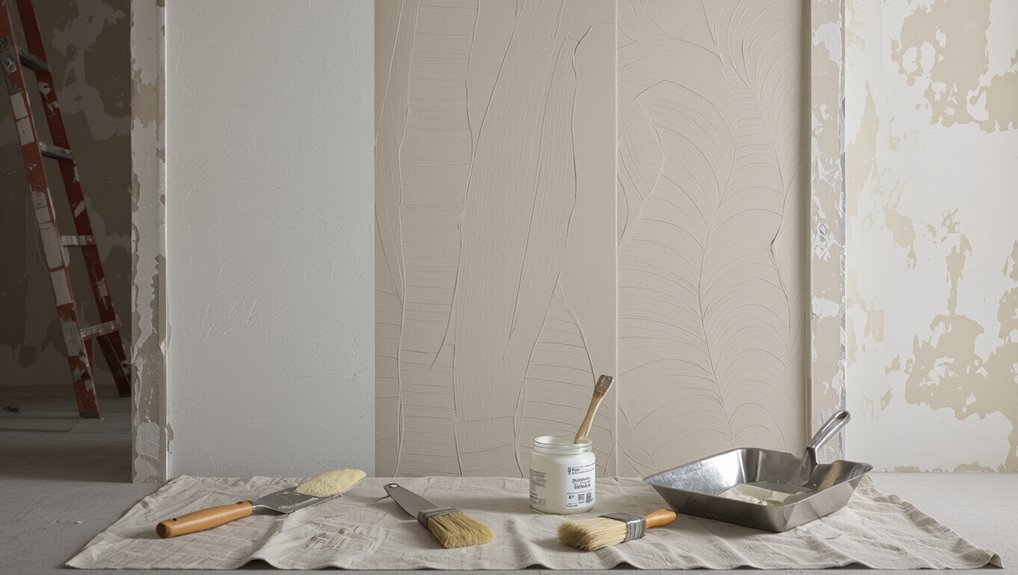
Those popular finishes come from a few straightforward materials and techniques, and knowing how they’re made helps you choose and maintain them.
You’ll use joint compound, plaster, or sprayed gypsum, applied with trowels, brushes, rollers, or hopper guns.
Techniques like knockdown, orange peel, or Venetian plaster rely on timing and tool pressure.
Sealants and primers finish the job and improve durability.
Why Texture Became Popular Historical and Practical Context
You’ve probably noticed textured walls everywhere from mid-century homes to the 1970s and 1980s, when rough finishes and popcorn ceilings were in vogue.
Beyond style, texture became popular because it hid construction flaws, improved room acoustics, and added a tougher surface that stood up to wear.
Understanding those historical peaks and practical benefits helps explain why texture was so widespread—and why opinions have shifted.
Historical trends and eras when texture peaked
Because builders and homeowners wanted quick, affordable ways to hide flaws and add visual interest, textured wall finishes surged from the 1930s through the 1980s:
You’ll see plaster swirls in Art Deco and midcentury revival, popcorn ceilings in postwar homes, and bold stucco in Mediterranean-inspired 1970s designs.
Functional reasons for texture (hide imperfections, acoustics, durability)
When builders and DIYers wanted practical solutions, textured finishes became a go-to because they hide minor wall flaws, improve sound control, and stand up better to wear than flat paint.
You’ll find texture masks uneven plaster, conceals repairs, softens echoes in busy rooms, and tolerates knocks and scrubbing.
For rental or high-traffic spaces, texture offers low-maintenance resilience and quieter interiors.
Current Designer Opinions: Are Textured Walls Outdated? (Main Analysis)
You’ll find designers split on textured walls: some call them dated for creating busy surfaces that clash with clean, modern layouts.
Others still recommend texture to add warmth, hide imperfections, or suit traditional and regional styles.
Your best choice depends on the home’s style, local market trends, and the specific room function.
Overview of contemporary interior design sentiment
Although tastes keep shifting, many contemporary designers now view heavy textured walls as a dated choice, favoring cleaner surfaces, subtle finishes, and materials that read as intentional rather than decorative residue.
You’ll notice a preference for neutral backdrops, tactile accents in furnishings, and finishes that emphasize light and form.
Designers encourage restraint, coherence, and longevity over ornate wall treatments.
Arguments for ‘œoutdated’ what designers criticize
If you’re looking through recent portfolios, designers argue that heavy wall texture reads as a remnant of past trends rather than a purposeful choice: it can make rooms feel visually noisy, complicate lighting effects, and limit flexible styling.
You’ll hear critiques about upkeep, resale impact, and how texture distracts from measured minimalism.
- Harder to repaint evenly
- Collects dust and grime
- Harsh shadows from directional lighting
- Limits furniture placement and art choices
- Dates a space quickly
Arguments for ‘still relevant’ when designers recommend texture
When used deliberately, texture can add depth and warmth that flat paint just can’t match, and designers still reach for it to solve real spatial problems.
You’ll find advocates who argue it enhances acoustics, hides imperfections, creates focal points, ties layered materials together, and lends tactile interest that photography and flat finishes lack.
- improves sound absorption
- conceals minor flaws
- defines a focal wall
- links fabrics and finishes
- invites touch
Contextual factors that influence designer recommendations (home style, region, market)
Because tastes and practical needs shift with setting, designers tailor advice about textured walls to the home’s style, regional climate, and local market dynamics.
You’ll hear texture recommended for historic or rustic homes where character matters, in humid areas where durable finishes hide imperfections, or in competitive resale markets where subtle texture adds perceived value.
Conversely, sleek modern homes or hot urban markets favor smooth, minimal surfaces.
When to Avoid Textured Walls (Mistakes & Problems)
Don’t slap texture everywhere—overuse or choosing a heavy texture in a small room will make the space feel cramped and off-scale.
Remember that textured walls can be a headache to repair, paint, or refinish, and they can hurt resale if buyers prefer smooth walls.
I’ll show specific cases where the texture choice ruined a room so you can avoid the same mistakes.
Common mistakes in using textured walls (overuse, inappropriate texture for scale)
One big mistake people make with textured walls is overdoing it—crowding a room with heavy texture can overwhelm furnishings and make the space feel smaller.
You should match texture to room scale and style, use accents sparingly, and consider sightlines so texture enhances, not fights, the design.
- Too much texture in small rooms
- Heavy patterns against delicate furniture
- Ignoring ceiling height
- Competing focal points
- Uniform texture throughout
Practical problems (repairs, painting, resale impact)
Consider how textured walls will affect everyday upkeep before you commit—repairs, repainting and resale can become more difficult and costly than you expect.
You’ll struggle to blend patches seamlessly, need specialized paint techniques or thicker coatings, and face higher contractor fees.
Buyers may regard heavy texture as dated, reducing appeal or forcing you to smooth walls before selling, which adds time and expense.
Case examples of poor texture choices
When texture misses the mark, it shows fast—think a busy popcorn finish in a small, low-ceilinged room or a heavy orange-peel pattern that highlights every imperfect corner.
These choices can make spaces feel dated, cramped, or oddly busy. You should avoid textures that:
- Amplify flaws in old plaster
- Clash with minimalist decor
- Overwhelm small rooms
- Complicate repainting
- Hurt resale appeal
When and How to Use Textured Walls Today (Best Practices & Tips)
Think about using texture selectively—on an accent wall, entryway, or ceiling—to add depth without overwhelming the room.
Match the texture to your style (sleek, subtle finishes for modern; rougher, warmer textures for farmhouse or industrial; geometric patterns for mid-century) and consider how color and lighting will change the look.
For a contemporary feel, keep textures subtle, apply them partially, and finish cleanly for crisp lines.
Design scenarios where texture enhances a space (accent walls, entryways, ceilings)
While smooth, painted walls suit many rooms, textured surfaces can bring instant depth and personality when used selectively; you’ll get the most impact by reserving texture for focal points like an accent wall, a welcoming entryway, or a ceiling that needs visual interest.
Use texture to highlight, guide, or soften shifts. Consider:
- Accent wall behind seating
- Textured entryway for warmth
- Ceiling for drama
- Hallway to add rhythm
- Nooks to define function
Choosing the right texture for different styles (modern, farmhouse, mid-century, industrial)
Using texture on a focal surface sets the tone, but the pattern and finish you pick should echo the room’s overall style to feel intentional.
For modern, choose smooth, subtle plaster or microtrowel.
Farmhouse welcomes shiplap, limewash, or rustic plaster.
Mid-century favors gentle geometric reliefs or wood veneer grain.
Industrial calls for raw concrete, exposed brick, or metal panels with minimal glaze.
Color, lighting, and texture interaction
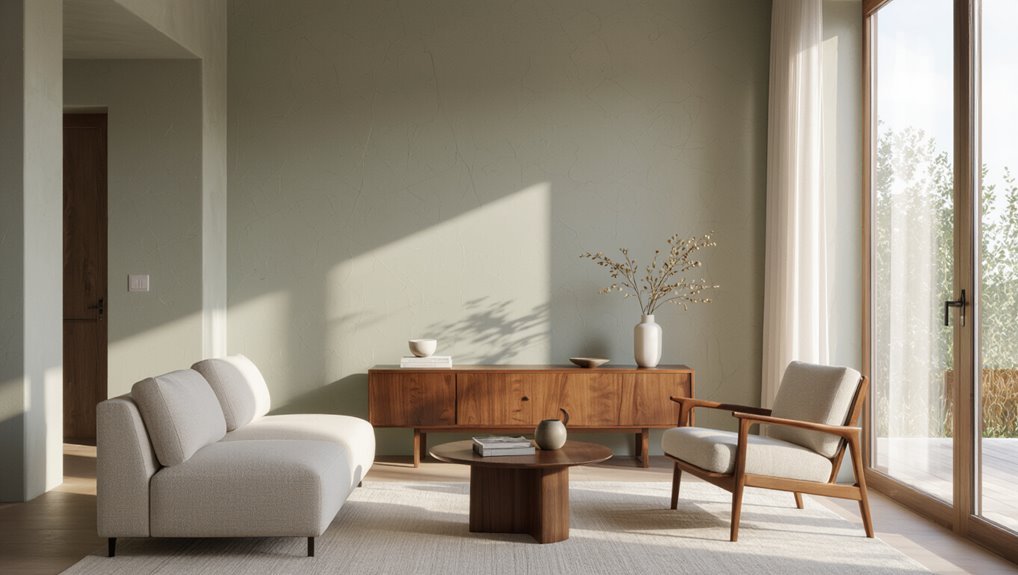
Because texture changes how light behaves, you should consider color and lighting together to make textured walls work — not fight — with your space.
Choose lighter hues where texture creates shadow to keep rooms airy; deeper tones can enrich textured panels without feeling heavy.
Position lighting to highlight texture subtly—angled fixtures reveal depth, diffuse sources soften shadows—so finishes read intentional, not accidental.
Application and finishing tips for a modern look (subtle textures, partial application)
If you want a contemporary look, keep texture restrained and strategic: think partial application—an accent wall, a recessed niche, or a low chair rail—rather than wall-to-wall treatment.
Choose subtle finishes—micro-skim, soft Venetian, or brushed plaster—then sand light, seal with a matte varnish, and blend edges.
Test samples under your lighting, match trim tones, and avoid heavy patterns for a modern, refined result.
Alternatives to Traditional Textured Walls
If you’re ready to move past traditional knockdown or popcorn finishes, there are plenty of stylish alternatives to evaluate.
You can create subtle texture with painted finishes and faux techniques, or choose patterned wallpapers, grasscloth, and decorative panels for more impact.
For a cleaner, architectural look, try trim, shiplap, or wainscoting to add depth without heavy texture.
Painted finishes and faux techniques
When you want the depth and interest of textured walls without the maintenance, painted finishes and faux techniques give you realistic, low-profile alternatives that are easy to update.
You can mimic plaster, concrete, or wood grain with glazes, sponging, ragging, or metallic washes. These methods add subtle dimension, suit modern tastes, refresh quickly, and avoid permanent surface alteration.
Wall coverings: wallpaper, grasscloth, panels
Painted faux techniques give you subtle texture without changing the wall, but wall coverings let you introduce bolder look, pattern, and real material feel without heavy labor.
You can swap styles fast, layer tactile grasscloth, or install decorative panels for drama. Choose durable vinyl for high-traffic rooms or removable papers for rentals.
- Bold patterned wallpaper
- Natural grasscloth
- Textured vinyl
- Peel-and-stick options
- Decorative wall panels
Architectural alternatives: trim, shiplap, wainscoting
Although textured walls have fallen out of favor, you can add depth and character with architectural details that read as intentional design instead of accidental texture. You can use trim to frame, shiplap to layer, or wainscoting to protect and polish spaces. Pick scale and finish to suit mood and light.
| Detail | Effect |
|---|---|
| Trim | Definition |
| Shiplap | Rhythm |
| Wainscoting | Warmth |
Cost, Maintenance, and Resale Considerations
You’ll want to compare upfront and long-term costs for textured, smooth, and alternative finishes to see which fits your budget.
Think about maintenance—how repairs, cleaning, and repainting differ by surface—and grab practical tips to keep walls looking good.
Finally, consider how texture can sway appraisals and buyer preferences when you sell.
Comparative cost overview: textured vs smooth vs alternatives
When weighing textured walls against smooth finishes and other options, focus on three practical factors: upfront cost, ongoing maintenance, and how each choice affects resale value. You’ll find textured often costs more to apply but can hide flaws; smooth is cheaper and broadly appealing; alternatives vary.
| Option | Typical Cost | Resale Impact |
|---|---|---|
| Textured | Medium–High | Neutral–Negative |
| Smooth | Low–Medium | Positive |
| Alternatives | Variable | Variable |
Maintenance, repair, and repainting tips
Now that you’ve weighed upfront costs and resale impact, look at how maintenance, repairs, and repainting change the long-term picture.
Textured walls hide minor dings but trap dust; you’ll vacuum or dust more often.
Small repairs may need patching plus texture matching.
Repainting takes extra time — you’ll need thicker coats and possibly specialty rollers.
Budget for occasional touch-ups and professional texture blending.
How texture affects home resale and appraisal
Although textured walls can mask small flaws and cut short-term wall prep, they often complicate resale and appraisal because buyers and appraisers prefer clean, smooth surfaces that read as modern and well-maintained.
You’ll likely pay more to skim, sand, or retexture before listing; appraisers may downgrade condition or adjust value.
Opt for smooth finishes to maximize appeal, quicker sales, and stronger offers.
How to Update or Remove Existing Textured Walls
Before you start, assess the texture and the underlying wall condition so you know whether patching, skim-coating, or full replacement is needed.
Gather the right prep, safety gear, and tools, then weigh methods like sanding, skim-coating, retexturing, or covering with new drywall—each has clear pros and cons.
Finally, use a simple DIY vs professional checklist to decide if you’ll tackle it yourself or hire an expert.
Assessing the texture and underlying wall condition
If you’re planning to update or remove textured walls, start by closely inspecting both the texture type and the wall beneath it so you know what you’re up against; determine whether texture is skim coat, popcorn, knockdown, or paint-on stipple, and check for cracks, moisture damage, or multiple paint layers.
That assessment tells you if repairs, stripping, or simple smoothing will be needed.
Preparation steps and tools needed
Start by clearing the room and gathering the right tools so you won’t stop halfway through the job: drop cloths and plastic sheeting, safety gear (respirator, goggles, gloves), a ladder, putty knives and taping knives, sanding blocks or a pole sander with 120–220 grit, a drywall sander or oscillating tool for heavy texture, a good shop vac, joint compound, primer, and paint.
You’ll prep surfaces, protect floors, and plan safety.
- Mask vents and cover furniture
- Turn off power at outlets
- Score and test adhesion
- Remove loose texture first
- Keep ventilation and lighting strong
Methods: skim-coating, sanding, retexturing, covering with drywall pros and cons
Now that you’ve prepped the room and gathered tools, decide how you want the walls to look and how much effort you’ll put in—skim-coating, sanding, retexturing, or covering with new drywall each has different time, cost, and skill trade-offs. Choose skim-coating for smoothness, sanding for minor texture, retexturing to refresh, or new drywall to fully reset.
| Method | Pros/Cons |
|---|---|
| Skim-coat | Smooth finish; labor-intensive |
| Sanding | Cheap; dusty, limited fixes |
| Retexture | Fast; hides flaws, less modern |
| New drywall | Cleanest; costly, invasive |
Hiring a professional vs DIY checklist
When deciding whether to hire a pro or tackle textured walls yourself, weigh your skill level, time, and tolerance for dust against the project’s complexity and desired finish.
DIY saves money but demands prep, tools, and patience; expect mess and possible imperfections.
Hire a pro for guaranteed smooth results, faster completion, and proper patching.
Get quotes, check reviews, and confirm warranties before deciding.
Quick Decision Guide: Should You Keep, Modify, or Remove Textured Walls?
You’ll get a quick flowchart-style checklist to weigh style, budget, resale value, and time so you can choose keep, modify, or remove textured walls.
Then you’ll see concise sample scenarios—renter, homeowner flipping, and luxury renovation—with recommended actions for each.
Use these to make a clear, practical decision fast.
Quick flowchart-style decision criteria (style, budget, resale, time)
If you’re weighing whether to keep, tweak, or strip textured walls, a quick flowchart focused on style, budget, resale, and time will help you decide fast; follow the path that matches your priorities and constraints to reach a practical choice.
Use these checkpoints to navigate options quickly:
- Prioritize style: modern vs. traditional.
- Budget: DIY patching or pro skim coat.
- Resale: smooth favored by buyers?
- Time: weekend project or multi-day.
- Damage level: superficial or structural?
Sample scenarios with recommended actions (renter, homeowner flipping, luxury renovation)
Because different living situations demand different trade-offs, we’ll walk through three quick scenarios—renter, homeowner flipping, and luxury renovation—and give clear recommended actions based on style goals, budget, resale impact, and time available.
If you’re renting, keep texture or cover with peel-and-stick panels.
If flipping, smooth key rooms for broader appeal.
If doing luxury renovation, remove texture and refinish for a high-end, timeless look.
FAQs About Textured Walls
You probably have practical questions about textured walls—costs, painting, resale impact, lifespan, and whether the texture can be removed without harming drywall.
We’ll answer whether textured finishes are cheaper than smooth, how easy they’re to repaint, and how they affect home value.
You’ll also get clear guidance on durability and safe removal options.
Are textured walls cheaper than smooth walls?
Wondering whether textured walls save you money? You might—texturing can hide imperfections, reducing prep and skim-coat costs, and DIY texture is often cheaper than achieving flawless smooth finishes.
However, texture can raise material and labor for certain styles and make repairs or future refinishing pricier.
Compare quotes for both approaches in your area and factor long-term maintenance before deciding.
Can textured walls be painted different colors easily?
How easily can you paint textured walls different colors? You can, but texture affects coverage and finish.
Thicker textures need more paint and multiple coats; rough patterns create shadows that alter perceived color.
Use a primer, high-quality roller or sprayer, and allow extra drying time.
Test samples under varied light before committing to a full-room color change.
Will textured walls reduce my home’s resale value?
If you’re thinking about repainting textured walls to refresh color, you’ll also want to contemplate how that texture might affect resale value.
Buyers often prefer smooth, neutral finishes, so heavy or dated textures can narrow appeal and lower offers.
Light, modern texture can be fine, but consider smoothing or minimally updating surfaces before listing to broaden buyer interest and justify asking price.
How long do textured finishes last?
Curious how long textured finishes hold up? They’re durable—often lasting decades if applied and maintained properly.
Texture resists minor scuffs and hides imperfections, so you won’t need frequent touch-ups. Factors like paint quality, humidity, and traffic affect longevity.
With proper cleaning, occasional repainting, and moisture control, textured walls can remain attractive and functional for 15–30 years or more.
Is it possible to remove texture without damaging drywall?
Want to take texture off your walls without wrecking the drywall beneath? Yes — but you’ll need patience and the right technique.
Wet-scraping small areas, using a drywall knife at a shallow angle, or applying a skim coat after aggressive removal helps.
For delicate drywall, consider hiring a pro; they’ll minimize damage, feather seams, and prep surfaces for repainting or a smooth finish.
Conclusion and Practical Next Steps
You’ll want to favor smooth, updated finishes unless your textured walls serve a clear stylistic or practical purpose.
Start with a simple checklist: assess condition, consider resale and style, estimate cost and effort, and decide whether to skim-coat, sand, or repaint.
Use that list to make a plan and schedule the work or hire a pro.
Summary recommendation for homeowners and designers
While trends shift, textured walls no longer offer the design or resale benefits they once did.
So prioritize smooth finishes, paint quality, and subtle architectural details when updating interiors.
You should assess condition, budget, and timeline, then choose refinishing or removal to match your home’s style.
- Inspect surfaces for damage
- Consider paint sheen and color
- Evaluate labor vs. DIY
- Keep key architectural accents
- Plan for resale-friendly neutral tones
Call to action: checklist for deciding what to do with your textured walls
Now that you’ve weighed condition, budget, and resale, it’s time to decide what to do with your textured walls—use this checklist to make a clear plan and act on it.
Decide whether to repair, paint, smooth, or preserve texture based on use and style. Schedule timeline, get quotes, test finishes, and commit to execution.
- Inspect damage and adhesion
- Prioritize rooms by use
- Get contractor estimates
- Test paint and skim samples
- Set budget and timeline
