
How to Lighten Paint on a Wall Without Repainting the Whole Thing
You can lighten a painted wall without a full repaint by using translucent glazes, diluted paint washes, or a semi-transparent white coat to lift tone while keeping texture. Clean and degloss first, test a small area, then apply thin, even coats with a brush or roller, blending edges and letting layers dry before evaluating. Boosting lighting and adding reflective trim also helps. Keep touch-up paint handy, and if you want step‑by‑step methods and product picks, keep going.
How to Lighten Paint on a Wall Without Repainting the Whole Thing
If you want a quick fix, start with the fastest methods that need no full repaint.
You’ll see the best options at a glance—lightening with glaze, using paint primers or reflective finishes, and strategic trim or accent color changes.
Pick the approach that fits your time, budget, and how dramatic a change you need.
Quick Direct Answer Best Options at a Glance
When you want to lighten a painted wall without repainting the whole thing, a few fast, low-effort options work well:
- use washable light-reflective paint glaze to subtly shift tone,
- apply a semi-transparent white glaze or tinted varnish,
- add brighter trim or accent stripes,
- swap heavy curtains for sheer ones,
- and increase room lighting.
These practical steps show how to lighten paint on wall quickly.
##
Now that you know shortcut methods to lighten paint, you’ll want to decide when they’re worth using versus just repainting.
Consider factors like how large the area is, the current paint condition, your budget, and the finish you want. Use the list below to quickly weigh your options.
- Small touch-ups, scuffs, or faded areas are ideal for shortcuts.
- If the surface has peeling, stains, or heavy damage, repainting is usually better.
- Tight budget or limited time can make quick methods more attractive.
- For color-change or flawless uniformity, plan on a full repaint.
When to Choose These Methods vs. Repainting
Because some projects only need a subtle change while others demand a full overhaul, you’ll want to weigh factors like paint condition, color shift needed, time, and budget before deciding whether to lighten paint or repaint.
If finish and adhesion are sound and you need only a modest brightening, try glazing, tinting, or buffing.
Repaint when coverage, major hue change, or damage requires it.
##
Choosing the right primer sets the stage for a successful paint-lightening project: it creates a uniform base that helps the lighter color cover evenly and reduces the number of coats you’ll need.
You’ll pick primer based on sheen, stain-blocking, and adhesion, then spot-prime problem areas before glazing or tinting.
- Use a bonding primer for glossy surfaces
- Choose stain-blocking for marks
- Match primer base to paint type
- Let primer cure fully before topcoat
Basic Understanding How Paint Lightening Works
When you talk about lightening a painted wall, you mean reducing the pigment or adding a lighter layer so the room reads brighter.
What you can achieve depends on the paint type and sheen, the existing color, and the wall’s condition, so you’ll choose methods accordingly.
Before you start, factor in ventilation, protective gear, and surface prep to get safe, predictable results.
What “lightening” a painted wall actually means
If you want a room to feel brighter or more spacious, lightening paint means increasing the wall’s perceived reflectance by using a lighter pigment or a higher-reflectance sheen so the surface bounces more light into the space.
You change how much light the wall returns, altering contrast and color saturation so surfaces read lighter without altering room layout or adding new light sources.
Factors that affect results (paint type, sheen, existing color, wall condition)
Beyond changing pigment or sheen, several practical factors will shape how much lighter your walls actually look.
Your paint base (oil versus latex) accepts glazes differently, and higher sheens reflect more light.
Dark existing colors need stronger contrast to seem lighter.
Surface flaws, stains, or uneven texture will show through treatments, so prepare expectations based on condition and material.
Safety and prep considerations
1 clear rule before you begin: know what you’re removing or covering and how it’ll affect health and surfaces.
Wear gloves, goggles, and a respirator for old paint or stripper fumes. Ventilate and seal floors, trim, and furniture with drop cloths and tape.
Test a small area first. Keep pets and kids away, and dispose of waste per local hazardous-material guidelines.
Main Methods to Lighten Paint Without Repainting
You don’t always have to strip and repaint to lighten a wall—there are several surface treatments and tricks that change how color reads.
You can apply glazes or tinted glaze coats, semi-transparent white washes, or lay chalk or mineral paint over the existing finish to soften the hue.
You can also alter sheen with varnishes or matte converters and use brighter lighting and reflective surfaces to make walls appear lighter.
Method 1 Use Lightening Glazes and Tinted Glaze Coats
While you could repaint, using a lightening glaze or a tinted glaze coat lets you subtly brighten a wall without stripping the existing finish.
You’ll mix a clear glaze with a small amount of lighter paint, test on a hidden patch, then apply thin, even coats with a brush or roller.
Build translucency until the shade suits the room.
Method 2 Apply a Semi-Transparent White or Light-Colored Wash
A semi-transparent white or pale-colored wash lets you gently lighten a wall without covering its texture or pattern, and it’s easy to apply with basic tools.
Mix diluted latex or acrylic paint with water (test ratio 1:1 to 4:1), brush or roller in thin, even coats, and lightly feather edges.
Build layers until color looks balanced and let each coat dry fully.
Method 3 Use Chalk Paint or Mineral Paint Over Existing Paint
Consider chalk or mineral paint when you want to lighten a wall without stripping or full repainting; these paints adhere well to many existing finishes and give a matte, muted look that softens color while preserving surface detail.
You prep by cleaning and scuffing, then apply one to two thin coats. Sand lightly between coats for smoothness and seal with a compatible clear wax or topcoat.
Method 4 Add Sheen/Finish Treatments to Soften Color (varnish, matte converts)
Brighten a room without repainting by changing the paint’s sheen: applying a matte-converting varnish or low-gloss topcoat reduces reflectivity and visually softens color, making walls read lighter and more muted.
You can roll a thin, even coat over clean, cured paint to dull harsh tones.
Test a small area first, follow product directions, and guarantee proper ventilation for a smooth, lasting finish.
Method 5 Strategic Use of Lighting and Reflective Surfaces to Perceive Lighter Walls
Many simple changes in lighting and reflective surfaces can make walls read noticeably lighter without touching the paint. You can reposition lamps, switch to higher-lumen bulbs with a cooler color temperature, and add directional lighting to wash walls.
Introduce mirrors, glossy furniture, or metallic accents to bounce light. Even sheer curtains and light-colored rugs will amplify daylight and reduce perceived darkness.
##
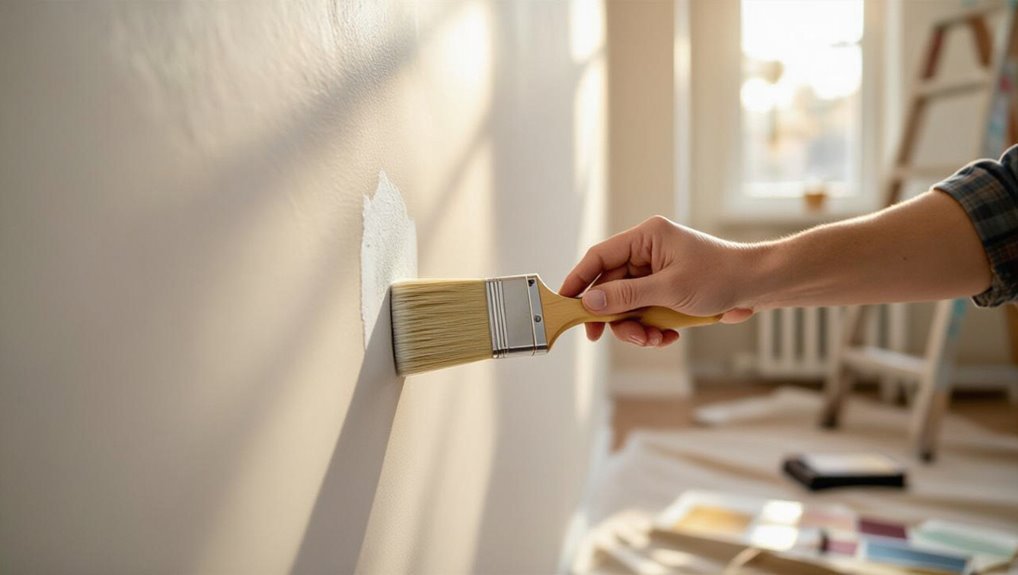
You’ll start by evaluating the existing paint: note its color, finish, and any stains or damage that could affect adhesion or coverage.
Consider targeted adjustments like adding lighter trim, installing chair rails, or using painted panels to break up dark expanses.
These interventions change perceived brightness without full repainting, focus effort where it matters, and preserve most of the original wall surface.
Step-by-Step: How to Apply Each Main Method
Now you’ll walk through clear, practical steps for each main method so you can choose and apply the one that fits your wall.
You’ll learn how to mix and apply a glaze or tint, do a white or light-colored wash, add a chalk or mineral overcoat, adjust the finish (matte or satin), and optimize lighting and décor to make the room feel brighter.
Follow each step in order and test small areas as you go.
Step-by-step for Glaze/Tint Application
Start by mixing a glaze or tint to the right strength — you’ll want a translucent finish that lifts the wall color without hiding texture or details.
Work in small sections: apply with a brush or roller, blend edges, and wipe or mist for uniformity.
Let each coat dry, evaluate lightening, and repeat sparingly until you reach the desired tone.
Step-by-step for White or Light-Colored Wash
If the glaze method didn’t give you the lift you wanted, a white or light-colored wash will.
Mix diluted paint (about 4 parts water to 1 part latex), test on scrap, then work in 3×3-foot sections.
Apply with a large brush or roller, drag lightly for streaks, then soften with a dry brush or towel.
Let dry and assess before adding layers.
Step-by-step for Chalk/Mineral Paint Overcoat
Because chalk and mineral paints adhere differently than standard latex, you’ll prep the wall carefully before applying an overcoat to guarantee good coverage and durability.
Clean, degloss, and sand any shiny spots. Patch imperfections and prime with a bonding primer if needed.
Stir the paint, apply thin even coats with a brush or roller, allow full drying between coats, and sand lightly between layers.
Step-by-step for Finish Treatment (matteing, satin conversion)
Choose the finish you want—matte for a flat, low-reflective look or satin for a subtle sheen—and gather the right materials before you begin.
Clean and degloss the surface, sand lightly, then dust off. Apply a bonding primer if needed.
Roll or spray thin, even coats of matte or satin finish, allow proper dry between coats, and inspect under varied light for uniformity.
Step-by-step for Optimizing Lighting and Décor to Brighten Perception
When you want a room to read lighter without repainting, focus first on the three main levers—light sources, reflective surfaces, and décor placement—and tackle them one at a time so each change has a clear effect.
Start by boosting layered lighting (ambient, task, accent). Swap bulbs to higher CRI/warmer tones.
Add mirrors and glossy accents. Rearrange furniture to open sightlines and maximize natural light.
Comparison of Methods: Cost, Time, Durability, Effectiveness
Although each lightening method can work, they differ a lot in cost, time, durability, and overall effectiveness. This section breaks those differences down so you can pick the best approach for your budget, schedule, and desired lifespan.
Cheap options like lighting and décor are fast but temporary.
Glazing or tinted topcoats cost more, take longer, and last longer.
Professional treatments offer best durability and consistent results.
##
Preparing the wall properly makes every lightening method work better and last longer. You’ll clean, sand, and repair imperfections so finishes adhere and look even. Prime glossy areas to reduce shine and blotchy results. Test a small patch to confirm the effect before treating larger areas.
| Step | Purpose |
|---|---|
| Clean | Remove dirt |
| Sand | Smooth surface |
| Prime | Improve adhesion |
Materials, Tools, and Products Checklist
You’ll want the right paints, glazes, and lightening additives on hand before you start.
Gather brushes, rollers, or a sprayer and the specific application tools each method requires.
Don’t forget prep and safety supplies like tape, drop cloths, and a respirator to protect your work and health.
Paints, Glazes, and Additives
Before you mix or apply anything, gather paints, glazes, and additives that match your lightening goals so you can work efficiently and avoid mid-project surprises.
Choose a tintable, compatible base paint, a translucent glaze for subtle lightening, and a color reducer or extender to thin without losing adhesion.
Include sample pots, touch-up brushes, and manufacturer’s tech sheets for reference.
Brushes, Rollers, Sprayers, and Application Tools
Gather a handful of reliable tools—quality brushes, the right rollers, a sprayer if you’re covering large areas, plus trays and extension poles—so you can apply lightening mixes evenly and quickly.
Choose synthetic brushes for water-based glazes, medium-nap rollers for smooth-to-semi-rough walls, and a HVLP or airless sprayer for speed.
Keep spare rollers and foam brushes for touchups.
Prep and Safety Supplies (tape, drop cloths, respirator)
After you’ve picked your brushes, rollers, and sprayer, make sure you have the prep and safety supplies that protect both your work and your lungs: painter’s tape, drop cloths or plastic sheeting, a good respirator with the right cartridges for paint fumes, disposable gloves, safety goggles, and a mask-rated ventilation plan.
Secure edges, cover floors and furniture, label mixed solutions, and replace filters as needed.
##
Carefully remove or mask nearby trim, fixtures, and furniture so you can work cleanly and avoid accidental paint overlaps.
You’ll prep the surface, test small areas, and choose a lightening method that fits your wall and time. Work in sections, keep tools ready, and clean as you go to prevent streaks or dust settling.
- Test a small, hidden patch
- Scuff for adhesion
- Use tinted glaze or wash
- Blend with feathering
Common Mistakes and How to Avoid Them
Don’t skip prepping the surface—you’ll get poor adhesion and uneven color if you do.
Don’t over-thin or over-glaze, or you’ll leave streaks and translucent patches.
Make sure you match products to the existing paint and consider room lighting before you start, or the result won’t look right.
Mistake 1 Skipping Proper Surface Preparation
If you skip prepping the wall, the new, lighter paint won’t stick or look even, and you’ll end up repainting sooner than you expect.
Clean dirt, grease, and dust; sand glossy spots; repair cracks and flaking; prime bare or patched areas.
Proper prep guarantees adhesion, consistent sheen, and true color shift, so your lightening technique lasts without premature touch-ups.
Mistake 2 Over-thinning or Over-glazing causing streaks
While thinning or glazing can help a lighter color go on smoothly, overdoing either will leave visible streaks and an uneven finish you’ll notice as the paint dries.
You should add thinner or glaze sparingly, test small areas, and blend quickly with consistent brush or roller strokes.
If streaks appear, stop, let it level, then lightly rework with minimal product to avoid worsening lines.
Mistake 3 Choosing the wrong product for existing paint type
Streaks and uneven drying are often a sign you’ve also picked the wrong product for the paint already on the wall.
Check whether your wall is latex, oil, or enamel before applying lightening kits, glazes, or solvents. Using incompatible formulas causes poor adhesion, streaks, and discoloration.
Test a small, hidden area and match product chemistry to avoid costly fixes.
Mistake 4 Ignoring lighting and room factors
Because lighting and room conditions change how a lightened wall actually looks, you need to evaluate them before you start — natural light, artificial bulbs, furniture placement, and even flooring can make a pale paint appear warmer, cooler, brighter, or duller than expected.
Test samples at different times, adjust bulb temperature, rearrange furnishings, and view from typical angles to guarantee the chosen technique achieves the desired effect.
##
It’s time to choose the right method for lightening your wall paint, since the success of the project depends on matching technique to the paint type and surface condition.
Decide between washing, diluted paint glaze, strategic sanding, or lightening with paint additive based on finish and wear.
Consider testing first on a hidden patch.
- Test area first
- Match finish (matte vs. gloss)
- Use gentle cleaners
- Protect trim and floors
Tips and Best Practices for Long-Lasting, Even Results
Choose products that match your wall’s material and existing sheen, and always test a small, inconspicuous area first to confirm adhesion and color.
Work in thin, even layers and respect recommended drying times between coats for a consistent finish.
Finish with a maintenance plan and spot-touch procedures so your lighter paint stays uniform and easy to refresh.
Matching product to surface and sheen
When you match paint to the surface and desired sheen, you’ll get durable, even coverage that highlights — not hides — the substrate’s qualities.
Choose products formulated for drywall, plaster, wood, or previously painted surfaces. Match sheen (matte, eggshell, satin) to existing finish to avoid patchy contrasts.
Use compatible primers and bonding agents so touch-ups blend and resist peeling, moisture, and abrasion.
Testing in a small inconspicuous area first
Before you roll across the whole wall, try the paint in a small, inconspicuous spot so you can confirm color, sheen, and adhesion on your specific surface.
Let it dry fully, then check in different light and at different times of day. If it blends and holds, proceed.
If it flakes, changes shade, or looks uneven, choose a different product or prep method.
Layering strategy and drying times
Although you’ll work in stages, plan each layer so it builds evenly: apply thin, consistent coats, let each dry fully to the manufacturer’s recommended time, and sand lightly between coats if needed to remove imperfections.
Space coats to avoid trapping moisture, monitor temperature and humidity, and use appropriate drying additions like fans if recommended.
Test opacity before adding more layers to prevent overbuilding.
Maintenance and touch-up recommendations
If you want your lightened wall to stay consistent over time, keep a small stash of the exact paint and note the sheen, batch number, and any tint added so you can match it later; touch up chips and scuffs promptly with thin, feathered applications and blend edges while the paint’s still wet to avoid visible seams.
Store paint cool, stir before use, clean tools, and test touch-ups in inconspicuous spots.
Scenario-Based Recommendations (Which Method to Use When)
If you’re just fixing a scuff or small faded patch, touch-up paint or a targeted glaze is usually quickest and least disruptive.
For whole-room lightening you’ll want to contemplate a full repaint or tinting techniques, while renters should pick temporary, removable options like peel-and-stick panels or washable lightening glazes.
In high-traffic or moisture-prone rooms, choose durable, washable, and mildew-resistant finishes to keep your lighter color looking fresh.
Small area touch-up vs. whole room lightening
When deciding whether to spot-touch or lighten an entire room, think about scale, visibility, and paint matching: small chips or sun-faded patches usually call for a targeted touch-up, while widespread fading, mismatched batches, or a desire for a noticeably lighter tone means you should repaint larger areas or the whole room.
Match finish and sheen, blend edges, test a small area, and assess lighting before committing.
Rental-friendly, temporary solutions
Because you’re likely limited by lease rules and want reversible fixes, pick methods that leave the wall intact and remove cleanly: think removable wallpaper or decals, temporary paint-changing products like wash-off tinted primers for trials, peel-and-stick paint film, or strategically placed furnishings and textiles to mask uneven color.
Test small areas, follow manufacturer instructions, use low-tack adhesives, and document condition for your deposit.
Best options for high-traffic or moisture-prone rooms
Since high-traffic and moisture-prone rooms demand durable, cleanable finishes, prioritize washable, mold-resistant options and application methods that tolerate frequent scrubbing and humidity.
Choose semi-gloss or satin touch-up paints, water-resistant primer, and mildew-resistant additives.
Use thin, even glazes or lightened tints applied with a roller for durability.
Patch with waterproof caulk and allow full cure before use to prevent peeling.
FAQ Common Questions About Lightening Painted Walls
You’ll want clear answers to common questions before you try lightening a wall, like whether you can considerably lighten a dark color without a full repaint and if a glaze or wash will hide stains.
You’ll also need to know how many coats are safe, whether these techniques change durability or cleanability, and if the job’s DIY-friendly or needs a pro.
Let’s address each point so you can pick the right method.
Can I make a dark wall significantly lighter without painting over it?
Wondering if you can make a dark wall considerably lighter without repainting? You can improve brightness but not fully transform deep color.
Try lighter furnishings, reflective accents, stronger lighting, or thin translucent glazes to soften tone.
Be realistic: glazes shift perception; they won’t remove pigment.
For a major change, partial repainting or a professional lightening glaze blend is usually necessary.
Will a glaze or wash cover stains and marks?
Can a glaze or wash hide stains and marks? Yes—light, translucent glazes or color washes can soften and veil minor discoloration, water rings, or scuffs.
They won’t erase heavy stains or tannin bleed-through; those need cleaning, sealing, or spot-priming first.
Test a small area to gauge coverage and appearance before treating larger sections to avoid uneven or patchy results.
How many coats of glaze or wash are safe to apply?
One to three thin coats of glaze or color wash are usually safe and effective for lightening a wall without causing drip marks or tackiness.
Apply thin, even layers with a brush or roller, letting each coat dry fully before the next.
Test a small area first; if the tint’s still too strong, add another thin coat rather than a heavy one.
Will these methods affect the durability or cleanability of the wall?
Although lightening techniques like glazing, washes, or diluted paint change the surface appearance, they generally don’t reduce durability if you use compatible products and proper prep.
You should seal high-traffic areas with a clear topcoat or satin finish to preserve cleanability. Avoid overly thin mixes that won’t adhere well.
Test a small area, maintain gently with mild cleaners, and touch up as needed.
Can I do these techniques myself or should I hire a professional?
If you’ve tested a small area and used compatible products as recommended above, you can handle many lightening techniques yourself—glazes, washes, and carefully diluted paint are within reach for most DIYers with basic tools and patience.
Hire a pro for large areas, textured surfaces, color-matching, or sealed/trim-sensitive finishes.
Professionals guarantee uniform results, faster completion, and proper cleanup when risks or scale exceed your comfort level.
