
The Best Paint That Covers Cracks Without Endless Prep Work
Use a flexible acrylic-latex or elastomeric paint so you can hide hairline and minor surface cracks without endless prep. You’ll clean loose debris, spot-fill deeper gaps with a flexible filler or caulk, prime porous areas if needed, then apply a high-solids, elastic topcoat that stretches with movement. These paints bond well, build thicker films, and resist UV. They’re not a fix for structural damage, and if you keep going you’ll find product picks, steps, and tips.
Quick Answer Best Paint That Covers Cracks Without Endless Prep Work
If you want a fast, reliable fix, use a flexible acrylic-latex exterior/interior paint with built-in elastomeric properties.
It’ll bridge hairline and small surface cracks without extensive scraping or patching, so you can skip full prep on sound substrates.
Use it when cracks are shallow and the underlying surface is stable—repair larger gaps first.
Short recommendation and when to use it
When you need a fast, durable fix, choose a high-build acrylic latex paint labeled for masonry or flexible surfaces; it fills minor hairline cracks and bridges small gaps without heavy prep.
Ask “is there a paint that covers cracks?” Yes—use it on interior drywall, stucco, or exterior trim with non-structural fissures.
Prime stained areas first and avoid wide structural cracks needing repair.
How These Paints Work Basic Understanding
You’ll learn how formulation matters—flexible binders, thicker solids, and pigments all help paint bridge and mask hairline cracks.
You’ll also see when you need a primer or filler versus just a paint, since primers bond and fillers rebuild missing material.
Finally, you’ll understand that shrinkage cracks, settlement cracks, and surface craze each demand different prep to get a lasting finish.
What makes a paint able to hide cracks (formulation features)
Although paint can’t magically erase structural damage, the right formulation can mask surface cracks by combining flexibility, film-build, and fill properties.
You want polymers that stretch with movement, high-solids binders that create thicker films, and fine thickeners or fillers that bridge hairline gaps.
Additives improve adhesion and UV resistance so coatings stay intact, preventing re-opening and keeping finishes smooth and less noticeable.
Difference between paint, primer, and fillers for crack coverage
Because paints, primers, and fillers each serve a distinct job, you should pick the right one (or combination) to hide cracks effectively.
Fillers physically bridge gaps and bond to substrate, primers seal and improve adhesion while reducing suction, and paint provides color plus some flexibility.
Use filler for deep gaps, primer for porous or patched areas, then a flexible topcoat to finish.
Types of cracks and why some need more prep than others
After you’ve chosen the right filler, primer, and topcoat, assess the crack itself—its size, direction, and movement—to decide how much prep is needed.
You’ll treat cracks differently based on cause and stability:
- Hairline: paint may hide it.
- Shrinkage: needs flexible filler.
- Settlement: requires structural repair.
- Thermal: expect movement.
- Corner joints: use caulk and tape.
Best Paint Types and Products for Covering Cracks
When you’re repairing cracks, choosing the right product matters: elastomeric exteriors stretch over gaps and resist water but aren’t ideal for hairline interior cracks.
For indoor masonry and flexible wall paints you’ll get good movement and paintability, while paint-plus-filler hybrids offer one-step convenience at the cost of limited longevity on larger gaps.
Reserve high-build primers with acrylic-latex topcoats for deep repairs or when you need extra film thickness and adhesion.
Elastomeric exterior paints pros, ideal uses, limitations
Elastomeric exterior paints act like a flexible skin that bridges and seals hairline and wider cracks on masonry and stucco, so you can stop moisture intrusion and reduce further deterioration. You’ll get long-lasting waterproofing, UV resistance, and crack-bridging elasticity, but expect thicker coats, longer cure times, and limited breathability on certain substrates.
| Benefit | Ideal Use | Limitation |
|---|---|---|
| Waterproofing | Exterior masonry | Thick coats |
| UV stable | Stucco | Slow cure |
| Elasticity | Foundation walls | Reduced breathability |
Flexible interior masonry and wall paints pros and ideal uses
Exterior-grade elastomeric coatings work wonders outside, but interior masonry and wall finishes call for a different set of properties—flexibility without trapping moisture, low VOCs for indoor air quality, and a smoother application suited to living spaces.
You’ll want flexible acrylic or polymer-modified interior paints that bridge hairline cracks, resist peeling on plaster or block, and sand/paint smoothly for a clean, durable finish.
Paint + filler hybrid products (one-step solutions) pros and cons
If you’d rather skip a separate patching step, paint + filler hybrids let you apply a single product that fills hairline and small cracks while laying down color, saving time and reducing tools.
You’ll get faster results and less sanding, but expect limited depth filling, variable flexibility, and fewer color/finish options.
Use them for minor cracks; avoid structural gaps or heavily moving joints.
High-build primers and acrylic latex topcoats when to choose them
Paint + filler hybrids can save you time on small, stable cracks, but when you need thicker coverage or longer-term protection reach for high-build primers topped with acrylic-latex paint.
Use primers to level gaps, bridge hairline fissures, and improve adhesion on porous or patched surfaces.
Top with a flexible acrylic-latex for durability, UV resistance, and easy cleaning.
Choose this combo for high-traffic areas.
Quick One-Step Application Guide (Minimal Prep) Step-by-Step
Start by checking the crack size and the substrate so you know whether a quick fix will work.
Clean out loose debris with a brush or vacuum, then apply a one-step filler/paint or flexible primer according to package drying times and finish with a matching topcoat for durability.
Stop and do full prep if the crack is widening, shows moisture damage, or spans more than a hairline—those signs need proper repair before painting.
Step 1: Assess the crack size and substrate
Before you grab any supplies, inspect the crack closely to determine its width, depth, and what material it sits in—drywall, plaster, wood, concrete, or masonry—because that dictates the prep and product you’ll need.
Then note:
- Hairline vs. wider than 1/8″
- Surface material type
- Structural movement signs
- Moisture or staining
- Nearby paint condition
Use that to choose filler and paint.
Step 2: Clean and remove loose debris quickly (tools and tips)
Clear away loose material so filler and paint will bond well: use a stiff brush, utility knife, or small putty scraper to remove flaking paint, dust, and crumbly edges from the crack.
Then wipe the area with a damp cloth or tack cloth to pick up remaining grit.
Let the surface dry briefly, vacuum any residual dust, and wear gloves and eye protection while you work.
Step 3: Apply one-step filler/paint or flexible primer technique and drying times
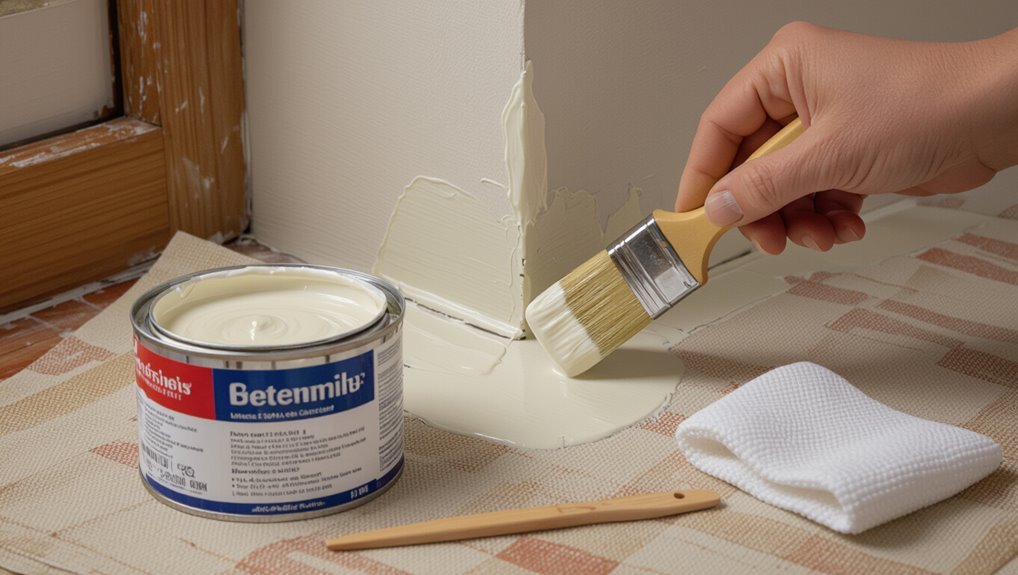
Choose between a one-step filler/paint product or a flexible primer-and-paint approach based on crack width and substrate movement: one-step fillers work well for hairline to 1/8″ cracks and save time, while a flexible primer (elastomeric or vinyl-based) plus topcoat is better for wider or moving cracks.
Apply thin, full-coverage passes, smooth with a putty knife, follow manufacturer drying times, and allow recoat only after recommended cure.
Step 4: Topcoat for color match and durability
Step 4 pulls everything together: after your filler or primer has fully cured, apply a matching topcoat to blend the repair with the surrounding surface and lock in durability.
Use thin, even coats—feather edges into surrounding paint. Allow recommended dry times between coats, inspect under good light, and add a second coat only if needed.
Clean tools and touch up edges for a seamless finish.
When you must stop and do full prep instead (signs and thresholds)
If the crack is wide, deep, on a high-traffic surface, or the surrounding paint is peeling, stop and do full prep before you proceed with a one-step application.
You’ll need to remove loose material, patch or fill properly, sand feathered edges, prime bare substrate, and guarantee structural soundness.
Do full prep whenever cracks exceed hairline size, recur, or substrate feels unstable.
Comparison: Minimal-Prep Solutions vs Traditional Prep + Paint
You’ll want to weigh performance—coverage and longevity—against the time and money each approach requires.
Minimal-prep products can save hours and cash on small hairline cracks, while traditional prep plus paint usually gives better results for wide gaps and exterior jobs.
Think about the crack size and location to pick the best option for your situation.
Performance (coverage, longevity)
When coverage and longevity matter, minimal-prep crack-filling systems promise speed by combining primer, filler, and paint in one product, but they usually give you thinner film build and shorter wear than a properly prepped surface coated with dedicated primer and paint. You’ll get faster fixes with modest durability, while traditional prep plus proper products delivers thicker coverage and longer-lasting protection.
| Option | Coverage | Longevity |
|---|---|---|
| Minimal-prep | Moderate | Short–medium |
| Traditional | High | Long |
| Hybrid | Variable | Medium–long |
Cost and time comparison
Although minimal-prep products cut upfront labor and let you finish cracks in a single afternoon, they’ll often cost more per unit of usable coverage and need touch-ups sooner than a fully prepped job. You’ll save time now but may spend more over years. Compare effort, price, and lifespan below.
| Metric | Minimal-Prep |
|---|---|
| Time | Fast |
| Cost | Higher |
| Durability | Lower |
| Touch-ups | Frequent |
Best choices by scenario (small hairline cracks, wide cracks, exterior vs interior)
Because crack size and location change what works best, pick products and prep that match the problem: you’ll choose fast fixes for hairlines, fillers for wide gaps, and weatherproofing outside.
Compare minimal-prep options versus full repair depending on longevity needs.
- Hairline: flexible paint with primer
- Wide: patching compound then paint
- Interior: acrylic latex
- Exterior: elastomeric or masonry paint
- Quick fix: crack-filling paint
Common Mistakes That Make Cracks Reappear
Don’t skip evaluating the substrate or grab the wrong product, because paint won’t fix poor surfaces.
If you paint over wet or dirty areas, or rush application and drying, the coating won’t bond and cracks will reappear.
And don’t treat structural cracks with paint alone—you’ll need proper repair, not just a topcoat.
Skipping substrate assessment or using wrong product
If you skip evaluating the substrate or pick the wrong product, the crack will almost certainly come back.
You must check for movement, moisture, and underlying damage before painting.
Use flexible fillers and elastomeric paints for shifting surfaces; choose rigid compounds for stable substrates.
Matching product properties to substrate conditions prevents adhesion failures and recurring splits, saving time and avoiding repeated repairs.
Applying paint over wet or dirty surfaces
When you paint over a wet or dirty surface, the coating won’t bond properly and cracks are likely to reappear; moisture and contaminants prevent adhesion, trap solvents, and weaken fillers.
You should always dry, clean, and degrease the area before applying primer or patching compound.
Otherwise paint will peel or delaminate, undermining repair longevity and forcing repeat work.
Overrelying on paint for structural cracks
Because paint’s job is cosmetic, relying on it to fix structural cracks will only mask the problem and let movement continue beneath the surface.
You should diagnose and address underlying causes—settlement, framing shifts, or foundation issues—before painting.
Otherwise cracks will reappear despite fresh coatings.
Use proper repairs like epoxy, reinforcement, or professional structural fixes, then paint as a final cosmetic step.
Poor application technique and insufficient drying time
Although you might follow the right repair steps, sloppy application and rushing through drying times will undo your work; paint and fillers need correct layering, tool use, and adequate cure time to bond and flex properly.
You should spread primers and fillers evenly, sand between coats, use appropriate brushes or rollers, and wait manufacturer-recommended cure times.
Patience prevents reappearance and saves rework.
Tips and Best Practices for Long-Lasting Crack Coverage
Don’t skip prep: you’ll get better results when you clean, remove loose material, and prime where needed before filling cracks.
Pick a product made for your climate and substrate so it expands, contracts, and bonds correctly.
Use the right tools, apply thin even coats with proper drying time, and do simple maintenance checks to catch new gaps early.
Surface prep shortcuts that matter (cleaning, priming points)
When you skip careful cleaning and targeted priming, even the best crack-filling materials won’t bond properly, so focus on a few high-impact shortcuts:
Remove loose debris with a stiff brush or vacuum, degrease stubborn spots with a mild cleaner, and apply primer only to areas where bare substrate or patch material will be exposed.
Let patched spots dry, sand lightly for feathered edges, then paint.
Choosing the right product for climate and substrate
Because temperature swings, humidity, and the material under your paint all affect adhesion and flexibility, pick a crack-filling system formulated for your climate and substrate—use flexible acrylic-latex for exterior masonry in freeze-thaw zones, elastomeric coatings for stucco and concrete that move, and specialty epoxy or polyurethane products for metal and high-moisture areas.
Match product flexibility, UV resistance, and vapor permeability to avoid premature failure.
Application tips for seamless finish (tools, coats, timing)
With the right product selected for your climate and substrate, you’ll focus on technique—cleaning and preparing the crack, using proper tools, and timing coats to get a seamless, long-lasting repair.
- Clean and remove loose debris
- Use a flexible filler or caulk
- Smooth with a putty knife or damp sponge
- Apply thin, even coats; let each dry fully
- Sand lightly between coats for feathered edges
Maintenance tips to extend repair life
If you want your crack repair to last, stick to a simple maintenance routine that keeps the area clean, flexible, and well-protected.
Wipe dirt gently, avoid harsh cleaners, and inspect seasonally for new movement.
Reseat caulk or touch up paint at first signs of wear.
Control moisture and temperature swings, and avoid impact or heavy scraping to preserve elasticity and adhesion.
Cost, Tools, and Materials Checklist
You’ll want a quick estimate of costs—typically a few dozen dollars for a one-room touch-up and a few hundred for extensive exterior repairs.
Gather essential tools and materials like patching compound, caulk, primer, appropriate paint, sandpaper, a putty knife, and brushes or a roller for minimal-prep jobs.
With those prices and items in mind, you can plan the scope and budget before you start.
Estimated costs for one-room and exterior wall fixes
Tackling cracks in a single room typically runs $50–$300 depending on size and materials, while exterior wall repairs usually cost $200–$1,500 or more when you factor in weatherproofing and larger patching; these ranges assume you’re doing most of the work yourself and buying basic tools and supplies.
| Scope | Typical cost |
|---|---|
| Small interior | $50–$150 |
| Large interior | $150–$300 |
| Small exterior | $200–$600 |
| Large exterior | $600–$1,500+ |
Essential tools and materials for minimal-prep crack painting
Those cost estimates give you a sense of what to expect, but before you start patching you’ll want a compact kit that keeps prep light and results durable.
You’ll need reliable, low-prep products and a few basic tools to work quickly and cleanly.
- Acrylic patch compound
- Flexible filler or caulk
- Lightweight scraper
- Satin or eggshell paint
- High-quality angled brush
Real-World Examples and Short Case Scenarios
You’ll see a simple interior hairline crack repair using a flexible acrylic caulk and light-touch sanding before repainting.
For an exterior stucco crack, you’ll follow a different route—cleaning, applying a cementitious patch, and using elastomeric paint to bridge movement.
I’ll also show a common failed DIY attempt and the corrective steps to stop the crack from coming back.
Interior hairline crack product chosen and steps taken
If you’re repairing interior hairline cracks, pick a high-quality acrylic-latex caulk or a lightweight spackling compound designed for fine fissures and test it on an inconspicuous area first.
Clean dust, widen the crack slightly with a putty knife, apply thin compound or caulk, smooth with a wet finger or tool, let cure, sand lightly, then prime and paint with flexible interior paint.
Exterior stucco crack product chosen and steps taken
Moving from small interior hairline fixes to exterior stucco cracks means choosing products that flex with temperature changes and bond to rough, porous surfaces; for most jobs I recommend elastomeric stucco caulk or a polymer-modified cement-based patching compound rated for exterior use.
You clean loose material, widen narrow cracks slightly, apply the chosen filler in layers, tool smooth, let cure fully, then prime and paint.
Failed DIY attempt and how to fix it
When a DIY repair fails, it’s usually obvious within a few seasons—cracks reopen, patch material flakes, or paint blisters—and you’ll need to diagnose what went wrong before rehabbing the area.
Inspect for movement, moisture, or poor adhesion. Remove loose material, dry thoroughly, use flexible patch compound, prime with a bonding primer, then repaint with a high-elastomeric exterior paint designed for cracks.
Frequently Asked Questions
You’ll have practical questions about whether paint alone can truly fix cracks, which hairlines you can just paint over, and how long a quick, minimal-prep repair will hold up.
You’ll also want to know if elastomeric paints are safe on every surface and whether the same product works indoors and out.
I’ll answer each so you can pick the right approach for your walls.
Can paint alone permanently fix wall cracks?
Can paint alone permanently fix wall cracks? No—you can’t rely on paint by itself to mend structural or active movement cracks.
Paint can hide hairline, stable cracks temporarily and improve appearance, but it won’t restore integrity.
For lasting repair, you should clean, fill with proper filler or joint compound, prime, then paint.
Otherwise cracks will reappear over time.
Which cracks can be safely ignored and only painted over?
Wondering which cracks you can ignore and just paint over? You can usually skip filling very fine hairline surface cracks in settled drywall, minor paint crazing, or tiny plaster shrinkage lines under 1/16 inch.
Avoid painting over cracks that widen, run through trim, show moisture stains, or indicate structural movement. When in doubt, monitor for change before minimal cosmetic touch-ups.
How long will a minimal-prep paint repair last?
If you’re painting over very fine, stable cracks without doing much prep, expect the repair to last from several months to a few years depending on conditions.
Exposure to sun, moisture, temperature swings, and surface movement shortens life.
Interior, low-traffic areas hold up longer.
Use quality primer and paint, control humidity during application, and monitor for reappearing hairline splits so you can touch up promptly.
Are elastomeric paints safe for all surfaces?
Which surfaces work well with elastomeric paints depends on the material and the problem you’re trying to solve.
You can use them on exterior masonry, stucco, concrete, and some wood if surfaces are clean and structurally sound.
Avoid loose paint, glossy finishes, and untested plastics or metals.
Always follow manufacturer guidelines and test a small area to confirm adhesion and flexibility before full application.
Can I use the same product indoors and outdoors?
Can you use the same crack-filling paint indoors and outdoors? You can sometimes, but check labels.
Exterior elastomeric paints resist moisture, UV and temperature swings but may off-gas or have different sheen and flexibility than indoor formulations.
For interior walls, choose low-VOC, low-odor products rated for indoor use.
When in doubt, buy separate indoor and outdoor versions for safety and performance.
