
What Paint Goes on Ceilings? Choosing the Right Formula Every Time
Use a flat, low‑VOC acrylic‑latex paint for most ceilings because it hides texture and imperfections, cuts glare, and cleans up easily. For bathrooms, kitchens, or damp spaces choose a mildew‑resistant satin or semi‑gloss to handle moisture. Match the formula to your surface—drywall, plaster, popcorn or wood—and prime stained or patched areas for best coverage. Pick light whites or soft tints to keep rooms airy, and keep going to find prep, tools, and pro tips.
Quick Answer Which Paint to Use on Ceilings
For most ceilings you’ll want a flat or matte interior paint to hide imperfections and cut glare.
For bathrooms and kitchens pick a mildew-resistant satin or semi-gloss.
For living rooms and bedrooms stick with flat or matte, and for high-traffic halls or kids’ rooms consider scrubbable eggshell.
Use a light-reflecting white or a soft tint to keep rooms feeling open unless you’re going for a dramatic look.
One-sentence direct recommendation
If you want a simple, reliable choice, go with a flat or matte ceiling paint in an interior acrylic latex formula—it’s designed to hide imperfections, reduce glare, and clean up easily with soap and water.
For most rooms, pick a low-VOC acrylic latex labeled for ceilings; that answers what paint goes on ceilings and gives you durable, easy-to-apply coverage.
Short list of top choices by room type
Below is a quick, room-by-room shortlist so you can pick the right ceiling paint fast:
- Living room: low-sheen latex for warm, forgiving light — cozy and calm.
- Kitchen/bath: mildew-resistant satin or semigloss — bright, practical, reassuring.
- Bedroom/office: flat or eggshell latex — restful, unobtrusive, quietly elegant.
Choose based on humidity, light, and desired mood to get reliable, beautiful results.
Ceiling Paint Basics What Ceiling Paint Is and Why It Differs from Wall Paint
Ceiling paint is formulated a bit differently than wall paint—sheen, pigment load, and binder choice are tuned to hide imperfections and resist spatter.
You’ll usually pick a flat or matte ceiling finish because it masks flaws and reduces glare.
That said, some wall-and-ceiling formulations let you use the same product for both when sheen and durability needs match.
Composition differences: sheen, pigments, binders
Think of paint as a recipe: sheen, pigments, and binders each play a specific role in how a ceiling looks and performs.
You’ll pick pigments for opacity and true color, binders for adhesion and durability, and sheen for light reflection and hide.
Ceiling formulas often balance higher pigment load with stronger binders to improve coverage, uniformity, and resistance to sagging during application.
Why ceilings usually use flat/matte sheens
Because ceilings sit above eye level and get lit differently than walls, you’ll usually choose a flat or matte sheen to hide imperfections and reduce glare.
Flat finishes absorb light, masking texture irregularities and patchwork. They minimize reflections from fixtures and windows, making ceilings appear uniform.
You’ll also find touch-ups blend more seamlessly, so upkeep stays simple while maintaining a calm, unobtrusive overhead surface.
When ceiling paint and wall paint can be the same product
If your room has minimal surface flaws and you’re aiming for a consistent look, you can often use the same flat or matte paint on both walls and ceilings.
Choose a high-quality formula labeled for ceilings and walls, guarantee proper primer on patched areas, and use correct roller naps for even coverage.
Save time and money without sacrificing appearance when conditions allow.
Types of Ceiling Paint and When to Use Them
When choosing ceiling paint, you’ll usually start with flat/matte for its flawless, low-reflective finish—perfect for living rooms and bedrooms.
Consider eggshell or satin if you want a bit more durability and washability, and reserve semi-gloss or gloss for trim or high‑moisture spots like bathrooms.
Also look for stain‑blocking or mildew‑resistant formulas and low‑ or zero‑VOC options to protect finish and indoor air quality.
Flat/Matte Ceiling Paint benefits and ideal rooms
Although it lacks sheen, flat (or matte) ceiling paint hides imperfections and reduces glare, making it a strong choice for many rooms.
You’ll find it ideal in bedrooms, living rooms, and dining areas where a soft, uniform look is desirable. It minimizes texture visibility and creates a calm backdrop.
Use it on ceilings with minor flaws and where low reflectivity matters.
Eggshell and Satin when to consider them
Flat ceilings often call for matte, but there are times you’ll want a bit more durability and subtle sheen—this is where eggshell and satin come in.
Choose eggshell where walls see light wear—living rooms, dining areas—since it hides imperfections yet cleans better than flat.
Pick satin for slightly higher traffic or humidity rooms where moisture resistance and easier wiping matter without obvious shine.
Semi-gloss and Gloss specialty uses (trim, high-moisture areas)
If you need extra durability and moisture resistance, go with semi-gloss or gloss for trims and high-humidity ceilings.
You’ll get a hard, washable surface that stands up to cleaning and frequent contact.
Use gloss for crisp trim accents and semi-gloss for ceilings in bathrooms, kitchens, or laundry rooms where splashes and condensation occur.
Expect more sheen and easier maintenance.
Stain-blocking and mildew-resistant formulas
When stains, odors, or mold are a concern, choose stain-blocking and mildew-resistant ceiling paints to stop problems before they show. These formulations contain binders and additives that seal tannins, nicotine, and water marks while inhibiting mold growth, so you won’t need to prime or worry about rapid discoloration in humid rooms.
Use them in bathrooms, basements, and kitchens; follow manufacturer prep and recoat times.
Low-VOC and zero-VOC options for indoor air quality
Because you and your family spend so much time indoors, choosing low-VOC or zero-VOC ceiling paints can cut down on odors and harmful emissions during and after painting.
You’ll get adequate coverage and durability from many modern low-VOC formulas.
Pick zero-VOC for bedrooms and nurseries when possible, and ventilate while painting.
Check labels for certified low-VOC claims and performance specs.
How to Choose the Right Formula Decision Checklist
Before you pick a ceiling paint, consider the room type and moisture level, the surface material (drywall, plaster, popcorn, or wood), and how light and color will interact.
Check coverage and hide to see if tinting or a primer is needed, and weigh budget against long-term performance.
Use this checklist to match a formula that fits the space and your priorities.
Room type and moisture level considerations
If your ceiling sits in a high-moisture room like a bathroom or laundry area, pick a paint that resists mildew and holds up to humidity; for dry spaces such as living rooms or bedrooms, you can favor paints optimized for appearance and easy touch-ups.
Choose finishes and formulations based on usage and cleaning needs.
- Protect comfort and health
- Preserve finish and color
- Reduce maintenance hassles
Surface material: drywall, plaster, textured popcorn, wood
When you pick paint for ceilings, match the formula to the surface—drywall, plaster, textured popcorn, and wood each demand different prep and sheens—so your finish lasts and looks right.
For drywall use flat or low‑sheen for flaws; plaster needs breathability and primer; popcorn accepts thicker flat paint but avoid overloading; stained or raw wood requires primer and semi‑gloss for durability and washability.
Ceiling color and light conditions
Because ceilings play a big role in how light reads a room, choose a paint formula that responds to your lighting conditions and the color you want to achieve.
In north-facing or dim rooms, pick brighter, warmer whites to reflect light. In sunny spaces, cooler or muted tones prevent glare.
For bold ceiling colors, use a durable, low-sheen formula to keep tones true under varied lighting.
Coverage and hide: tinting and primer needs
Although ceiling paint choices may look simple, coverage and hide are what keep you from doing extra coats and touch-ups.
You’ll pick higher-hide formulas for darker tints or patched surfaces and use primer on stains or drastic color changes. Satin or flat ceiling paints vary in pigment load; check manufacturer hide ratings and apply primer where specified to guarantee even, single-pass coverage and fewer touch-ups.
Budget vs. performance trade-offs
Coverage and hide help you avoid extra coats, but budget and performance will determine which ceiling paint you actually buy.
Decide priorities: stain resistance, scrubbability, VOC levels, and sheen. Higher-performance paints cost more but cut labor and touch-ups.
If you rent or paint once, choose midrange; for high-traffic or humid rooms, invest in premium formulas to save long-term maintenance.
Step-by-Step: Preparing and Painting a Ceiling
Before you start, inspect the ceiling for cracks, stains, or loose texture and make any necessary repairs.
Choose the right primer for the surface, gather your rollers, brushes, drop cloths, and optional sprayer, then decide whether to roll, cut in, or spray based on the ceiling type.
Finish by following proper drying times, applying a second coat if needed, and cleaning your tools and workspace.
Step 1 Evaluate surface condition and repair common issues
Start by giving your ceiling a close inspection so you can spot cracks, stains, peeling paint, sagging sections, and textured areas that need different prep.
You’ll patch hairline cracks, sand flaking paint, and address water stains or soft spots before painting. Feel confident tackling issues methodically:
- Relief: remove damaged material carefully
- Assurance: reinforce sagging sections
- Pride: smooth, clean surface ready for finish
Step 2 Select primer: when and which type to use
2 key questions will guide your primer choice: what’s the ceiling made of and what problem are you solving.
If bare drywall, use a drywall primer-sealer; for stains, choose a stain-blocking primer; for glossy surfaces, use an adhesion primer.
Oil-based or shellac primers handle severe stains and mold.
Match primer type to substrate and issue so paint adheres and finishes evenly.
Step 3 Tools and supplies checklist
Now that you’ve picked the right primer for your ceiling material and issues, gather the tools and supplies that’ll make the job efficient and safe.
You’ll need basics plus safety gear to protect lungs and posture. Keep everything organized and reachable.
- Mask and goggles to feel secure
- Telescoping pole and sturdy ladder for confidence
- Drop cloths and painter’s tape to relieve stress
Step 4 Painting technique: rolling, cutting in, spraying
Choose the right technique—rolling, cutting in, or spraying—based on your ceiling type, paint, and room layout, because each method affects coverage, speed, and finish.
Roll with a thick-nap roller for textured ceilings, use a pole for even strokes, cut in edges with a brush or edger, and spray for large, smooth ceilings.
Work systematically in manageable sections.
Step 5 Drying, second coats, and clean-up
After the paint feels dry to the touch—usually within a few hours depending on temperature and humidity—inspect the ceiling for thin spots and brush marks so you can decide whether a second coat is necessary; if it is, wait the manufacturer’s recommended recoat time before applying it to guarantee proper adhesion and finish.
Clean rollers and brushes with warm soapy water for latex or mineral spirits for oil, and remove drop cloths carefully.
Comparison Table Popular Ceiling Paints and Key Specs
Now that you’ve prepped the ceiling, let’s look at a simple table that shows sheen, coverage, best use, and quick pros/cons so you can pick with confidence. Use the rows to compare finish, performance, and where each paint shines or struggles. Below is an emotional snapshot to make the choice feel reassuring and clear:
| Paint Type | Key Spec | Quick Feel |
|---|---|---|
| Flat Ceiling Paint | Low sheen, high coverage | Calm, hides flaws — may stain easier |
| Eggshell/Satin | Medium sheen, good durability | Warm, forgiving — slightly reflective |
| Ceiling-Specific Formula | Matte finish, superior splatter resistance | Clean, professional — comfortingly reliable |
How to read the table: sheen, coverage, best use, pros/cons
Think of the table as a quick-reference cheat sheet: it lists each paint’s sheen, typical coverage per gallon, best use cases, and key pros and cons so you can compare options at a glance.
Scan sheen for reflectivity and stain-hiding, check coverage for how much you’ll buy, match best use to room conditions, and weigh pros/cons to balance durability, touch-up ease, and cost.
Common Problems and Mistakes to Avoid
You’ll often run into visible roller marks or lap lines if you rush or use the wrong roller, but you can fix them by adjusting technique or re-rolling while the paint’s wet.
Stains from water or smoke can bleed through unless you spot-prime with a stain-blocking primer first.
Also avoid choosing the wrong sheen for the room or skimping on prep and priming, since those choices cause most ceiling paint failures.
Visible roller marks and lap lines causes and fixes
If your ceiling shows streaks or faint ridges after painting, those visible roller marks and lap lines usually come from inconsistent pressure, overworking the paint, or using the wrong roller nap for the surface.
To fix them, roll with even pressure, maintain a wet edge, use the correct nap length, and avoid re-rolling partially dried areas.
Sand lightly and touch up if needed.
Staining and bleed-through from water or smoke
When water leaks or years of cigarette smoke get into your ceiling, they often leave yellowish stains or dark bleed-through that show through new paint.
Treating them the same as a fresh surface will only make the problem worse.
Don’t just paint over stains: clean, dry, and seal with a stain-blocking primer designed for nicotine or water damage, then repaint for lasting coverage.
Using the wrong sheen or paint for the room
Although paint color grabs attention, choosing the wrong sheen or formulation can undo your best plans: a high-gloss finish will highlight every imperfection, while flat paint in a high-traffic room will mark and scuff quickly.
Pick sheens based on function—eggshell or satin for durability and easy cleaning, flat for hiding flaws in low-traffic spaces, and mildew-resistant formulas for humid rooms.
Poor prep and inadequate priming
Picking the right sheen won’t save you from sticky drips, peeling edges, or stubborn stains if you skip proper prep and priming.
You must clean, repair cracks, sand glossy surfaces, and apply a suitable primer to seal stains and improve adhesion.
Skipping these steps causes uneven coverage, visible flaws, and early failure.
Prep and primer guarantee a durable, uniform ceiling finish.
Best Practices and Expert Tips
To make a ceiling feel higher, pick a light, cool hue; for a cozier vibe, go warmer and darker.
Match ceiling paint to trim or walls carefully to keep the room cohesive, and choose finishes that suit textured surfaces or a popcorn ceiling you plan to remove safely.
Finally, follow simple maintenance tips—like spot-cleaning with mild detergent and touching up with stored paint—to keep the finish looking fresh.
Color choices to make ceilings feel higher or cozier
When you paint ceilings in lighter shades than the walls, they visually recede and make the room feel taller; conversely, darker or warmer ceiling colors draw the eye downward and create a cozier, more intimate atmosphere.
Choose cool, pale tones to expand low rooms and reflect light. Use muted warm or deep hues to lower perceived height and add warmth, keeping finishes matte for subtlety.
Matching ceilings to trim and walls for cohesive design
Although ceilings often go unnoticed, coordinating them with your trim and walls ties a room together and makes the whole scheme read as intentional; aim for subtle contrasts or seamless matches depending on the look you want.
Choose one dominant color family, use a slightly lighter or glossier finish on trim for definition, and test swatches under real light to guarantee harmony before committing.
Working with textured ceilings and removing popcorn safely
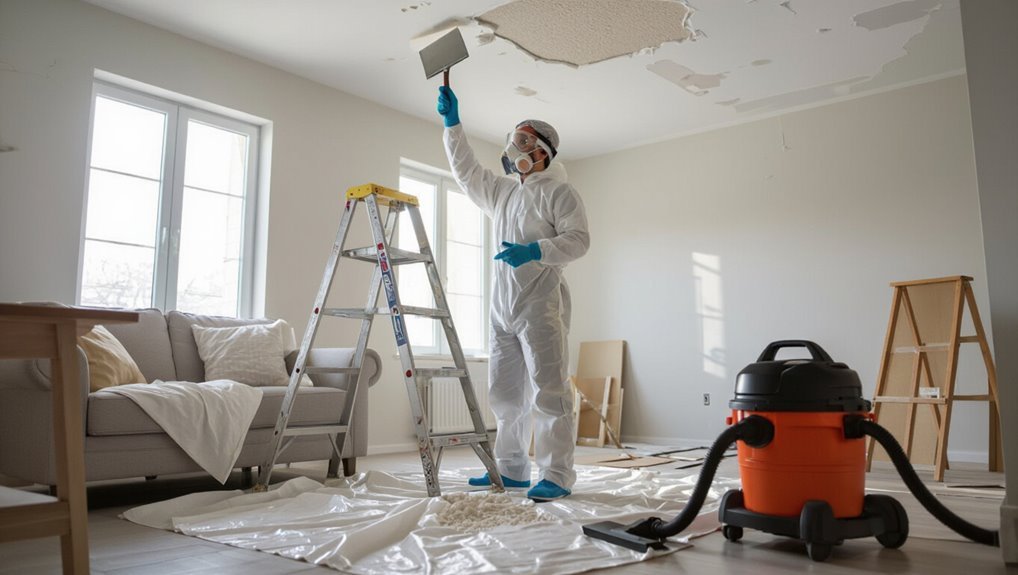
If your ceiling has texture—especially older popcorn—start by testing for asbestos and planning containment before you touch anything. Contractors can do the test, but you can also buy an EPA-approved kit and follow its instructions exactly.
If asbestos-free, wet the texture, contain dust, use a wide scraper and pole, and repair skim coats.
Prime textured surfaces and choose a paint that hides imperfections.
Maintenance tips for painted ceilings
Because dust, cooking grease, and humidity silently degrade ceiling paint, you’ll keep your ceilings looking fresh by scheduling simple, regular care: dust or vacuum every few months, spot-clean stains promptly with a mild detergent, and inspect for cracks or water damage after storms.
Use gentle scrubbing pads, touch up with matching paint, control indoor humidity, and repaint high-traffic areas every 7–10 years.
Cost and Time Estimates
You’ll want a quick breakdown of typical material costs by room size so you can budget accurately.
Factor in time estimates for prep, painting, and drying to schedule the job and set expectations.
With those numbers in hand, you can decide whether to DIY or hire a pro.
Typical material costs by room size
For a quick budget estimate, expect material costs to scale with room size—small rooms (up to 100 sq ft) usually need one gallon of ceiling paint and basic supplies, while medium (100–200 sq ft) and large rooms (200+ sq ft) require two to three gallons plus extra primer and rollers. You’ll pay roughly $30–$60 for small, $60–$150 for medium, $120–$250 for large.
| Room | Gallons | Estimated Cost |
|---|---|---|
| Small | 1 | $30–$60 |
| Medium | 2 | $60–$150 |
| Large | 2–3 | $120–$250 |
Time estimates for prep, painting, and drying
When planning a ceiling paint job, factor in time for prep, painting, and drying so you can schedule breaks and avoid rushed work.
Prep (covering furniture, patching, priming) usually takes 1–3 hours for a small room and up to half a day for larger spaces.
Painting itself runs about 1–3 hours per coat depending on room size and technique.
Drying between coats typically needs 2–4 hours for quick-dry formulations or 24 hours for standard paints.
After counting coats and ventilation needs, expect a one-day minimum for one coat or two to three days for multiple coats and full reoccupation.
FAQs Ceiling Paint Questions Answered
You probably have a handful of quick questions about ceiling paint—like whether wall paint will work, which sheen suits bathrooms or kitchens, and if new drywall needs primer.
You’ll also want to know how to minimize visible flaws with paint and whether to hire a pro or tackle it yourself.
Let’s answer those points so you can choose the right approach.
Can I use wall paint on my ceiling?
Wondering if wall paint will work on your ceiling? You can use wall paint in many rooms, but choose flat or matte formulas to hide imperfections and reduce glare.
Avoid high-sheen wall paints up on ceilings since they highlight flaws. Guarantee proper primer for stains or new drywall, apply even coats, and use an extension pole for smooth, consistent coverage.
What sheen is best for ceilings in bathrooms or kitchens?
Which sheen works best in moisture-prone rooms like bathrooms and kitchens?
You’ll usually choose satin or semi-gloss because they resist moisture, wipe clean easily, and stand up to steam and splashes.
Satin hides imperfections better than gloss, while semi-gloss offers superior durability and stain resistance.
Avoid flat finishes on trim or high-moisture areas; they trap moisture and stain more readily.
Do I need a primer for new drywall ceilings?
After choosing the right sheen for moisture-prone rooms, you’ll want to know whether new drywall ceilings need a primer.
Yes — you should prime new drywall. Primer seals porous paper and joint compound, promotes even topcoat coverage, improves adhesion, and prevents flashing or uneven sheen.
Use a drywall primer or PVA for bare drywall; it saves paint and yields a durable, consistent finish.
How do I hide ceiling imperfections with paint?
Anyone can minimize ceiling flaws with the right paint choices and simple prep: pick a flat or matte ceiling paint to reduce glare and mask minor bumps, spot-prime stains and repaired areas, and use a light, uniform color.
Sand and skim any pronounced defects, feather joint compound smoothly, then apply two thin, even coats for consistent coverage that conceals imperfections.
Is it better to hire a pro or do it myself?
Wondering whether to tackle your ceiling paint yourself or call in a pro?
Consider skill, time, and surface condition. You can save money doing it yourself if ceilings are smooth and you’re comfortable with ladders and prep.
Hire a pro for textured, high, or damaged ceilings, or if you want flawless results quickly.
Get quotes and check reviews before deciding.
Final Checklist Before You Start Painting
Before you roll, walk the room with a quick pre-paint inspection list to spot cracks, stains, or loose texture that need fixing.
Make sure you’ve got all materials—paint, primer, rollers, drop cloths—and that your ladder, ventilation, and PPE are ready.
Tackling these checks now will save time and keep the job safe and smooth.
Quick pre-paint inspection list
1 quick, focused walk-through will save you time and headaches once painting starts.
Check the ceiling surface, lighting, and edges so you won’t interrupt progress. Confirm repairs are dry and smooth.
Note any stains or odors that need treating first. Trust your eyes — catch issues early.
- Uneven texture?
- Water stains?
- Cracks or loose plaster?
Materials and safety checklist
Gather the right materials and gear so you can work efficiently and stay safe from the first brushstroke.
Check ventilation, lighting, ladder stability, and personal protection. Keep tools organized and accessible.
Pack essentials:
- Mask, goggles, gloves — protect your breath and eyes.
- Sturdy ladder and harness — prevent shaky nerves.
- Quality roller, brush, drop cloth — guarantee smooth, confident results.
