
The Right Paint Finish for a Garage Door That Lasts
Choose a durable exterior acrylic or urethane-based paint in semi-gloss or satin for the best balance of longevity and appearance. Match primer and prep to your door material—rust treatment for metal, breathable UV-resistant coatings for wood—and use at least two coats with proper drying times. Consider local sun, humidity, and salt air when picking sheen and maintenance frequency. Follow application and care tips to extend life, and keep going to learn practical prep and upkeep steps.
Quick Answer Best Paint Finishes for Garage Doors
For a quick recommendation: choose semi-gloss for durability, gloss for curb appeal, and satin for low-maintenance balance.
Below you’ll find a compact table matching common finishes to their best use-case. Use that to pick the finish that fits your priorities.
One-sentence recommendation for common needs (durability, curb appeal, maintenance)
When you need durability, go with a high-quality exterior acrylic or latex semi-gloss; for curb appeal, choose a satin or gloss in a color that complements your home, and for low maintenance pick semi-gloss or gloss for easier cleaning.
Decide based on climate and appearance: durability and maintenance favor semi-gloss, while maximum pop and easy wipe-down point to gloss when asking what paint finish for garage door.
Short table of finishes vs. use-case
Here’s a quick, scannable rundown you can use to match paint finishes to garage-door needs:
| Finish | Best for | Why |
|---|---|---|
| Satin | Durability + easy clean | Hides flaws, resists dirt |
| Semi-gloss | Curb appeal | Bright, washable, weatherproof |
| Flat | Textured, low-reflect | Masks imperfections, less upkeep |
Why Paint Finish Matters for Garage Doors
The paint finish you choose directly affects your garage door’s durability, weather resistance, and overall appearance, so pick one that matches how you use and expose the door.
You’ll want a tougher, more protective finish in harsh climates or on metal doors, while milder environments and wood may allow softer sheens.
Consider local conditions like sun, salt air, humidity, and the door material when deciding which finish will last and look best.
How finish affects durability, weather resistance, and appearance
Because your garage door faces sun, rain, wind, and daily wear, the paint finish you choose directly determines how long the door will look good and hold up.
You’ll pick gloss for easy cleaning and scuff resistance, satin for balanced protection and subtle sheen, or matte for hiding imperfections but accepting lower washability—each finish alters durability, weather resilience, and aesthetic impact.
Common environmental and material factors that influence finish choice
When you pick a finish, think about the sun, moisture, and the material of your door—these factors change how paint wears, fades, and protects.
If you have metal, choose rust-resistant primers and satin or semi-gloss for easy cleaning.
Wood needs breathable, flexible finishes to prevent cracking.
In humid or coastal areas, pick mildew- and salt-resistant coatings for longer life.
Basic Types of Paint Finishes and Their Characteristics
You’ll weigh trade-offs between looks and durability when choosing a finish for your garage door.
Flat/matte and eggshell/satin offer subtler looks but vary in washability, while semi-gloss and high-gloss give better moisture resistance and easier cleaning at the cost of highlighting imperfections.
Specialty coatings like urethane, enamel, and powder coating boost toughness and weather resistance for metal or heavily used doors.
Flat/Matte pros and cons
Although flat (or matte) finishes don’t reflect much light, they give your garage door a smooth, understated look that hides surface imperfections.
You’ll appreciate the low sheen for muted curb appeal and touch-up ease.
Downsides: flat paints resist washing poorly, scuff more easily, and weather faster on exterior doors.
Choose matte if appearance trumps durability and maintenance demands are low.
Eggshell/Satin pros and cons
If you want a balance between subtlety and durability, eggshell or satin finishes are a smart choice for garage doors.
You’ll get mild sheen that hides minor imperfections better than gloss while resisting dirt and scuffs more than flat. They clean with gentle scrubbing, lay evenly, and suit wood or metal.
Note they won’t reflect as boldly as higher-sheen options.
Semi-gloss pros and cons
Moving up from the subtle sheen of eggshell or satin, semi-gloss gives your garage door a noticeably brighter finish and tougher surface.
You’ll appreciate easier cleaning, better moisture resistance, and enhanced durability against scuffs. It can highlight imperfections and shows brush marks more than lower sheens, so prep thoroughly and use smooth application techniques to get an even, long-lasting coat.
High-gloss pros and cons
Because it reflects light intensely, high‑gloss paint gives your garage door a mirror‑like sheen that looks modern and makes colors pop.
You’ll love its durability and easy cleaning, but it highlights surface flaws and requires careful prep.
It can chip on impact and shows fingerprints, so use it where you want striking appearance and can maintain a smooth, protected surface.
Specialty coatings (urethane, enamel, powder coating)
High‑gloss finishes give a striking look, but when you need extra durability or specific performance you’ll turn to specialty coatings like urethane, enamel, and powder coating.
They resist abrasion, chemicals, and UV better than standard paints. Choose based on substrate and exposure:
- Urethane — flexible, UV-stable, great for metal.
- Enamel — hard, glossy, budget-friendly.
- Powder — toughest, factory-grade finish.
How to Choose the Right Finish Step-by-Step Guide
Start by identifying your garage door material—steel, aluminum, wood, fiberglass, or composite—so you know what the surface needs.
Then assess exposure (sun, humidity, salt air) and decide how often you’re willing to maintain the finish versus how durable it must be.
Finally, match the finish to your material and conditions and choose a compatible paint and primer.
Step 1: Identify your garage door material (steel, aluminum, wood, fiberglass, composite)
Before you pick a finish, figure out what your garage door is made of—steel, aluminum, wood, fiberglass, or composite—since each material needs different preparation, primers, and paint types.
Check for rust, dents, grain, or faded gelcoat. Identify whether the surface is porous or smooth.
That determines primer choice (rust-inhibitor, adhesion primer, or wood primer) and compatible paint: oil-based, acrylic, or epoxy.
Step 2: Assess exposure and climate factors (sun, humidity, salt air)
Because where your garage sits affects how paint wears, you’ll want to assess sun exposure, humidity, and salt air before choosing a finish.
Note intense sun fades colors and breaks down binders faster. High humidity promotes blistering and mildew on porous surfaces. Coastal salt air corrodes metal and strips coatings.
Match finish and protective primers to those specific risks for longer life.
Step 3: Determine desired maintenance frequency and durability
If you want a finish that lasts with minimal upkeep, think about how often you’re willing to clean, touch up, or repaint your garage door and choose accordingly; higher-gloss, oil-based or specially formulated exterior coatings usually resist dirt, fading, and wear better than flat latex, so they save you time but may cost more upfront and show imperfections more readily.
Decide realistic intervals, budget for touchups, and prioritize durability.
Step 4: Match finish to material and conditions
When matching a finish to your garage door, consider the door’s material and the local climate first so the coating can protect and perform properly; metal needs rust-resistant, flexible finishes for temperature swings.
Wood benefits from breathable, UV-resistant sheens, and vinyl or fiberglass requires low-build, non-yellowing coatings.
Also factor in sun exposure, humidity, and abrasion to choose a finish that lasts with minimal upkeep.
Step 5: Select compatible paint type and primer
Now that you’ve matched finish characteristics to the door material and climate, pick paint and primer that work together and suit that surface.
Choose formulations designed for metal, wood, or composite, and match solvent systems (water- or oil-based) to avoid adhesion problems.
- Use primer recommended by paint manufacturer.
- Pick exterior-grade, mildew-resistant paint.
- Match sheen to durability needs.
Step 6: Test a sample area and evaluate appearance and adhesion
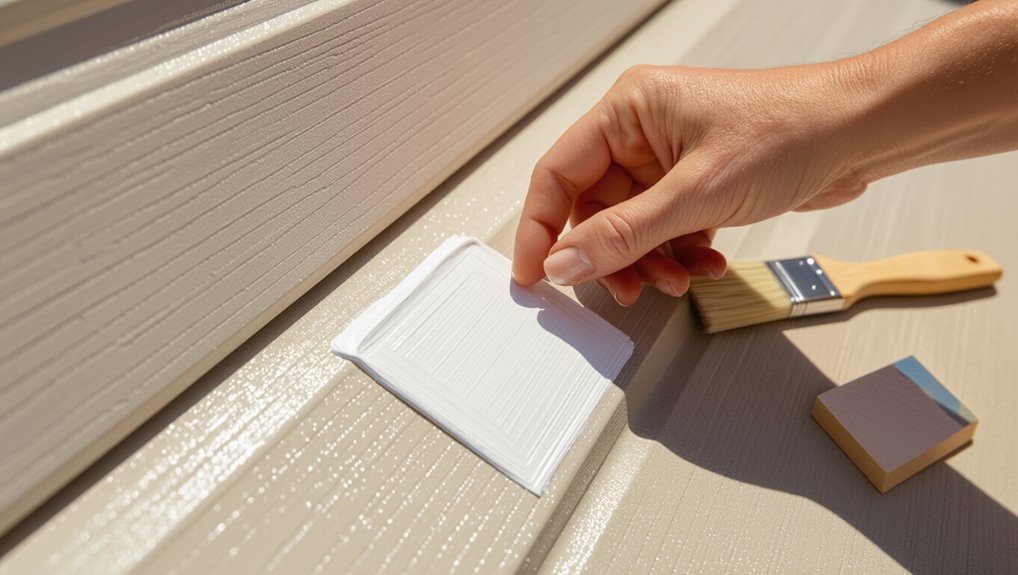
Before you roll or spray across the whole door, try a small test patch so you can judge color, sheen, and adhesion under real conditions.
Pick a discreet spot, apply primer and finish as planned, let it cure fully, then inspect for leveling, drips, and bonding.
Adjust sanding, primer choice, or finish if needed before committing to the entire door.
Application and Preparation Best Practices
Before you paint, you’ll want to prep the door by material—clean, sand, treat rust, and fill gaps—to guarantee adhesion.
Pick a compatible primer (it matters for metal vs. wood) and choose the best application method—brush, roller, or spray—based on texture and drying time.
Finish with the recommended number of coats and allow proper curing between them for a durable result.
Surface preparation by material (cleaning, sanding, rust treatment, filler)
Because different garage-door materials react differently to cleaners, abrasives, and rust treatment, you’ll prepare each surface with specific steps to guarantee paint adhesion and a smooth finish.
For steel, degrease, remove rust with wire brush, and fill pits with metal filler.
For aluminum, clean and scuff-sand.
For wood, clean, sand, and repair cracks with exterior filler.
Rinse and dry thoroughly.
Primer selection and why it matters
When you pick the right primer for your garage door’s material and condition, you set the stage for durable adhesion, uniform coverage, and a professional-looking finish.
Choose primers formulated for metal, wood, or composite surfaces; use rust-inhibiting primers on bare steel and stain-blocking primers for knots or tannins.
Match primer type to topcoat (oil or water-based) to guarantee proper bonding.
Recommended application methods (brush, roller, spray) and drying times
You’ve got three practical ways to apply paint to a garage door—brush, roller, or spray—and choosing the right method depends on the door’s material, panel detail, and your desired finish; brushes give control in grooves, rollers cover flat sections quickly, and sprayers deliver the smoothest, fastest coat for large or textured surfaces.
Allow manufacturer’s recommended flash and recoat times, work in mild temperatures, and keep even wet film thickness.
Number of coats and proper curing for long-lasting finish
Once your chosen application method has given the door an even first coat, plan for at least two coats to achieve durable coverage and color depth—often three for high-traffic doors or when switching to a lighter or darker shade.
Wait recommended recoat times, sand lightly between coats for adhesion, and allow full cure per manufacturer (usually days to weeks) before regular use to prevent scuffs and peeling.
Common Mistakes to Avoid
Don’t pick a finish just because it looks good—think about durability and weather resistance first.
Don’t skip primer or skimp on surface prep, and don’t use indoor paints or incompatible products that won’t bond or hold up.
Also avoid poor application techniques and rushing between coats, since that causes peeling and uneven coverage.
Choosing finish based only on look, not durability
While a glossy color might catch your eye, picking a garage door finish solely for looks can leave you dealing with peeling, fading, and costly repainting sooner than you’d expect.
You should prioritize weather resistance, UV protection, and suitable sheen for maintenance. Consult product specs and choose finishes engineered for exterior metal or wood so your door maintains appearance and withstands elements over time.
Skipping primer or improper surface preparation
If you skip primer or rush surface prep, you’re virtually inviting peeling, rust, and uneven coverage that shortens the life of your paint job.
You should strip loose paint, sand glossy finishes, degrease, and treat rust before priming.
Primer bonds to metal or wood, seals stains, and creates a uniform base so your chosen finish adheres properly and endures weather and wear.
Using indoor paints or incompatible products
After prepping and priming properly, pick products rated for exterior use—especially for garage doors exposed to sun, rain, and temperature swings.
Don’t use indoor paints or mismatched primers; they lack UV resistance, flexible binders, and corrosion inhibitors. Using incompatible products leads to peeling, chalking, and premature failure.
Match paint type to door material and follow manufacturer compatibility charts for lasting protection.
Poor application techniques and inadequate drying between coats
Start with steady, correct strokes and give each coat the time it needs to cure; rushing through application or slopping on paint causes drips, uneven coverage, and poor adhesion.
You should sand between coats when recommended, remove dust, and follow manufacturer drying times.
Use proper tools, thin even layers, and resist recoating too soon—patience prevents peeling, brush marks, and premature failure.
Maintenance and Repair Tips to Prolong Finish Life
Keep your garage door looking good longer with simple routine cleaning and quick stain removal—use mild detergent, a soft brush, and spot-treat oil or mold promptly.
When you spot chips, scratches, or rust, sand the area, apply rust inhibitor if needed, and touch up with matching primer and paint to prevent spreading.
If damage is widespread or the finish is failing across panels, consider a full repaint or professional refinishing rather than repeated patches, and replace the door only when structural issues compromise safety.
Routine cleaning and stain removal tips
When you clean your garage door regularly, you’ll prevent dirt, pollen and road grime from etching the finish and make stain removal much easier when spills do happen.
Use a soft brush, mild detergent and warm water; rinse thoroughly.
For oil or bird droppings, blot immediately, then clean with a degreasing solution.
Dry with a microfiber cloth to avoid water spots.
Touch-up procedures for chips, scratches, and rust spots
After regular cleaning removes surface grime, you’ll spot the small chips, scratches, and rust that need attention before they spread.
Sand bare metal, remove rust with a wire brush or rust converter, then clean and dry the area.
Prime exposed metal, feather edges with fine sandpaper, and apply matching touch-up paint in thin coats.
Finish with clear coat for protection.
When to repaint vs. when to refinish or replace
Decide whether to repaint, refinish, or replace based on the extent of damage, the door’s age, and your budget:
You’ll choose repaint for minor peeling or color fade; refinish if the substrate needs sealing or you want a new sheen; replace when structural damage, warped panels, or repeated repairs make replacement economical and safer.
- Repaint: quick, cheap
- Refinish: thorough, protective
- Replace: costly, permanent
Comparison: Best Finishes by Scenario
When choosing a finish, you’ll want options that match your setting and budget—from durable, low-gloss acrylics for high-traffic suburban garages to corrosion-resistant marine-grade coatings for coastal homes.
For historic or wood doors you’ll prefer breathable, oil-based or specialty wood finishes that preserve grain and detail, while budget-conscious projects can use quality acrylics as a short-term fix versus premium polyurethane or ceramic-modified paints for long-term protection.
Below I’ll compare recommended finishes and example products for each scenario so you can pick the right balance of cost and longevity.
High-traffic suburban garage recommended finish and products
Because your suburban garage sees frequent use and varied weather, you’ll want a finish that balances durability, ease of maintenance, and curb appeal. Choose semi-gloss or satin acrylic-latex with a quality primer and mildew-resistant topcoat. Consider commercial exterior enamel for extra toughness.
| Finish | Benefit | Product example |
|---|---|---|
| Semi-gloss | Durable/easy-clean | Acrylic-latex |
| Satin | Subtle sheen | Exterior enamel |
| High-build primer | Smooth base | Bonding primer |
Coastal properties with salt air recommended finish and products
If your garage sits by the shore, pick finishes that resist salt, moisture, and fading while staying easy to maintain. Use marine-grade epoxy primer, 100% acrylic latex with UV inhibitors, or urethane topcoat for extra durability. Inspect yearly and rinse salt away.
| Finish | Benefit | Maintenance |
|---|---|---|
| Epoxy primer | Rust barrier | Annual rinse |
| Acrylic latex | UV resistant | Touch-up yearly |
| Urethane topcoat | Tough gloss | Recoat 3–5 yrs |
Historic or wood doors requiring preservation recommended finish and products
Although historic and wooden garage doors need gentle treatment to preserve original character, you can still protect them effectively with the right finishes and products. Choose breathable oil-based stains, sparing clear coats, and UV-resistant varnishes to maintain grain and patina while preventing moisture damage.
| Finish | Feeling |
|---|---|
| Linseed oil | Warmth |
| Tung oil | Intimacy |
| Shellac | Nostalgia |
| Spar varnish | Trust |
| Waterborne stain | Relief |
Budget-conscious options vs. premium long-term solutions
Having covered gentle finishes for historic and wooden doors, let’s compare budget-conscious options with premium, long-term solutions so you can pick what fits your priorities. You’ll choose latex for low cost and easy touch-ups, or acrylic-urethane for durability. Consider maintenance frequency, climate, and resale value when deciding.
| Option | Cost | Longevity |
|---|---|---|
| Latex | Low | 3–5 yrs |
| Enamel | Mid | 5–8 yrs |
| Urethane | High | 10+ yrs |
Cost and ROI Considerations
Expect to pay anywhere from a budget-friendly roller job with latex to higher-priced professional spray and specialty coatings, and those choices drive your upfront cost.
Consider longevity—durable finishes and proper application can last far longer, so spending more now often lowers long-term repainting costs.
Also weigh energy savings from reflective or insulating finishes and the bump in curb appeal and resale value a well-finished door can bring.
Typical cost ranges for finishes and application methods
You’ll usually see garage door finish costs fall into three bands—budget, midrange, and premium—depending on the finish type and application method:
Basic latex or acrylic paints applied with a roller or spray run cheapest.
Specialty coatings like elastomeric or oil-based paints sit in the midrange.
Powder coating or multi-step factory finishes command the highest prices.
Expect DIY materials to cost tens to low hundreds; pro labor adds considerably.
Longevity estimates and when higher upfront cost pays off
Although initial costs vary, your choice of finish is one of the biggest determinants of how long the door will stay protected and attractive.
Harder-wearing finishes like polyurethane or industrial-grade acrylics can last 8–15 years with proper prep, while basic latex may need repainting every 3–7 years.
Invest more upfront if you want longer intervals between maintenance and lower lifetime repainting costs.
Energy and resale value impacts of finish choice
When you pick a finish for your garage door, think beyond looks: color, gloss, and material all affect heat absorption and thermal performance, which can raise or lower your energy bills.
Choose light, low-gloss coatings to reduce cooling loads; insulated doors with durable finishes improve efficiency.
Buyers notice energy-efficient features, so a thoughtful finish can lower operating costs and boost resale appeal.
FAQs
You’ve got practical questions about finishes, maintenance, and prep that affect long-term look and upkeep.
I’ll cover which finishes are easiest on metal doors, whether one finish works for both garage and front doors, repaint intervals by climate, pros and cons of spraying versus brushing, and what’s involved in switching gloss levels.
Read on for clear, actionable answers.
What finish is easiest to maintain on a metal garage door?
If you want the lowest-effort option for a metal garage door, go with a factory-applied baked-on enamel or powder-coat finish, since those resist chipping, fading, and corrosion better than basic paints and need only occasional washing and touch-ups.
You’ll just rinse and spot-clean annually, inspect seals and hardware, and address scratches with matching touch-up kits to keep protection intact.
Can I use the same finish for garage and front doors?
Wondering whether you can use the same finish on both your garage and front doors? You can, but consider exposure and aesthetics: garage doors face more wear, moisture, and abrasion, so pick a durable, weather-resistant finish.
Match sheen for a cohesive look, but choose a tougher product for the garage if needed. Test adhesion on both surfaces and prioritize maintenance and corrosion resistance.
How often should I repaint a garage door in different climates?
Matching finishes between your garage and front doors is fine, but the climate will dictate how often you’ll need to repaint the garage.
In mild, dry areas, repaint every 7–10 years.
Humid or coastal climates with salt and sun need refreshes every 3–5 years.
Harsh, sunny deserts or freeze-thaw regions often require repainting every 2–4 years to prevent peeling and fading.
Is spraying better than brushing for garage doors?
Which method’s better depends on your priorities: speed and smoothness or control and touch-ups.
Spraying gives a fast, even coat that hides brush marks and suits textured or panelled doors, but needs masking and protection.
Brushing or rolling offers better edge control, less overspray, and easier small repairs.
Choose spraying for speed and finish, brushing for precision and simple touch-ups.
Can I change from a glossy to a matte finish without major prep?
If you preferred brushing for touch-ups over spraying, you’ll like that switching a glossy garage door to a matte finish is usually straightforward — but it depends on the current paint condition.
Clean thoroughly, sand glossy sheen lightly to promote adhesion, remove dust, then apply a quality bonding primer if needed.
Use two thin coats of matte paint for even coverage and durability.
