
Should You Paint Your Basement Ceiling Black or White? Pros and Cons
Pick black if you want a cozy, modern look that hides stains and hides rough joists; pick white if you need maximum brightness and a more open, forgiving feel. Consider how much natural light you have, the ceiling condition, and the room’s use—home theaters favor black, living areas favor white. Black absorbs light and can feel smaller; white shows dirt and needs upkeep. Keep scrolling to learn practical tips, comparisons, and testing ideas.
Quick Answer Should You Paint Your Basement Ceiling Black or White?
If you want the room to feel larger and brighter, paint the ceiling white; if you need to hide pipes or build a home theater vibe, go black.
White tends to be easier and cheaper to maintain, while black masks imperfections but can make the space feel smaller.
Consider your priorities—brightness and openness versus concealment and mood—then pick the color that supports them.
Direct recommendation summary for common goals (make space feel larger, hide pipes, create theater, cost/maintenance)
When you want a quick answer: paint the ceiling white to make the basement feel larger and brighter,
paint it black to hide pipes and create a theater vibe,
and choose white or light neutrals for lower maintenance and easier touch-ups while black can mask imperfections but may show dust and require more careful lighting.
Ask: should I paint my basement ceiling black or white?
Choose based on goal.
Basic Understanding Why Ceiling Color Matters in Basements
Your ceiling color changes how tall and bright your basement feels—white will open the space while black can make it seem cozier and lower.
The effect also depends on the surface: a smooth drywall ceiling reflects light differently than exposed joists or a drop ceiling, so color choice plays off texture.
Finally, think about lighting—natural light and warm or cool artificial bulbs will interact with paint color and change the mood.
How ceiling color affects perceived height, brightness, and mood
Because ceilings frame how we perceive a room, their color directly shapes how tall, bright, and welcoming a basement feels.
Lighter colors reflect light, making low ceilings seem higher and spaces brighter, so you’ll feel more open and alert.
Darker hues absorb light, visually lowering height and creating cozy, intimate moods—but they can make areas feel smaller and dimmer without ample lighting.
How surface types (drop ceiling, exposed joists, drywall) interact with paint color
Although the same paint color can change a basement’s feel, the ceiling type—drop tiles, exposed joists, or smooth drywall—dictates how that color behaves and how much effort you’ll need to get the look you want.
Drop tiles reflect evenly and hide pipes, joists soak up paint and create texture, and drywall gives a smooth, uniform finish; choose color based on texture and maintenance.
Lighting and color interaction (natural vs. artificial)
When natural light’s scarce in basements, the ceiling color and your artificial lighting work together to set the room’s mood and perceived height.
You’ll find white ceilings reflect LED and warm bulbs, brightening and enlarging space.
Black ceilings absorb light, creating intimacy but requiring stronger, directional fixtures to avoid gloom.
Balance fixture placement, bulb temperature, and paint sheen for desired effect.
Pros and Cons Painting Basement Ceiling White
Painting your basement ceiling white will brighten the room and make it feel taller, which is great if you want more light or a cleaner look.
You should also weigh downsides like showing dirt, highlighting imperfect surfaces, and needing more touch-ups than darker colors.
Consider white for low-ceiling, low-light basements or finished spaces where you want an airy, open feel.
Pros of white ceilings
Because white reflects light so well, it’ll make your basement feel brighter and more open, which is especially helpful if you have limited natural light or low ceilings.
You’ll also get a clean, neutral backdrop that complements decor.
Benefits include:
- Enhances perceived space
- Improves task lighting efficiency
- Conceals minor imperfections without drawing attention
- Matches any color scheme
- Boosts resale appeal
Cons of white ceilings
1 downside of white basement ceilings is that they can show dirt, stains, and discoloration very easily, so you’ll need more frequent cleaning or touch-ups to keep them looking fresh.
You might also find they highlight imperfections and require higher maintenance.
- Shows dirt quickly
- Reveals water stains
- Emphasizes surface flaws
- Needs regular repainting
- Reflects unwanted light
Best situations for choosing white ceilings (use cases)
When you want to brighten a low-ceilinged or windowless basement, white is often the smartest choice because it maximizes light and creates a sense of openness.
It works especially well in laundry rooms, playrooms, and finished living areas where you want a clean, airy look.
Choose white for small rooms, basements with limited natural light, rental units, and multipurpose spaces to keep them feeling larger and more neutral.
Pros and Cons Painting Basement Ceiling Black
If you’re weighing black for your basement ceiling, you’ll find it hides ducts and makes a room feel cozier while masking imperfections.
But it can also absorb light and make small spaces feel darker, so it’s not ideal if you need maximum brightness.
Black works best in media rooms, industrial-style spaces, or areas where you want to emphasize walls and fixtures rather than the ceiling.
Pros of black ceilings
Because dark ceilings absorb light and hide imperfections, painting your basement ceiling black can instantly make the space feel sleeker and less cluttered.
You’ll gain depth, conceal ductwork, and focus attention downward. Consider these benefits:
- Creates cozy, intimate atmosphere
- Masks stains and uneven textures
- Simplifies industrial or modern aesthetics
- Enhances contrast with lighter walls
- Reduces visual clutter and distraction
Cons of black ceilings
Black ceilings offer a sleek, hiding-effect, but they also come with noticeable drawbacks you should weigh before committing.
You should consider these cons before painting:
- They absorb light, making spaces feel smaller.
- Imperfections and dust are more obvious.
- Future lighting upgrades become costlier.
- They can reduce resale appeal for some buyers.
- Maintenance (touch-ups) shows quickly.
Best situations for choosing black ceilings (use cases)
When you want a dramatic, modern look that hides ductwork and wiring, a dark ceiling can be the right choice.
Choose black for home theaters, rec rooms, or bars where you want to minimize reflections and focus attention.
It works in low-ceiling spaces to visually push the ceiling away, or above zones with directional lighting and bold decor, masking imperfections and utilities.
Side-by-Side Comparison Black vs White Ceilings
You’ll want a quick side-by-side to weigh how black and white ceilings affect visual impact, perceived height, maintenance, cost, installation complexity, and acoustics. Below is a concise comparison to help you spot the trade-offs at a glance. Use this to decide which trade-offs matter most for your space.
| Feature | Black Ceiling | White Ceiling |
|---|---|---|
| Visual Impact | Dramatic, hides ducts | Bright, clean-looking |
| Perceived Height | Lowers perceived height | Makes space feel taller |
| Maintenance | Hides stains, shows dust | Shows stains, easier touch-ups |
| Cost | Similar paint cost, may need extra prep | Similar paint cost, simpler prep |
| Acoustic Effects | Can feel cozier, masks wiring | Feels more open, may reflect sound |
Visual impact, perceived height, maintenance, cost, installation complexity, acoustic effects
If you want a quick, side-by-side way to weigh pros and cons, consider how color changes visual impact, perceived height, upkeep, cost, installation difficulty, and acoustics—all in one glance.
Black hides pipes, lowers perceived height, masks stains, can be pricier if specialty paint, and eases installation visual tricks;
white brightens, makes ceilings feel higher, shows dirt, needs more maintenance, and reflects sound.
Decision Guide How to Choose for Your Specific Basement
Start by listing what the room will be used for—storage, living space, home theater, or a workshop—because function guides many choices.
Check your ceiling type and condition, lighting levels, and wall/floor colors, then set your aesthetic goals and budget.
Finally, try test swatches or temporary covers to see how black or white actually reads in the space before committing.
Step 1: Identify room function (storage, living, home theater, workshop)
Because the purpose of the space determines your priorities, identify whether the basement will be storage, living space, a home theater, or a workshop before picking a ceiling color.
For storage, prioritize practicality and concealment.
For living areas, favor brightness and openness.
For a theater, choose darkness to improve contrast.
For a workshop, pick a finish that supports good visibility and hides wear.
Step 2: Evaluate ceiling type and condition
Materials matter: before picking black or white, take a close look at what your basement ceiling actually is—exposed joists, finished drywall, drop ceiling tiles, or painted concrete—because each surface reflects light and hides flaws differently, and that should guide your color choice.
Inspect for stains, texture, damage, and access needs; rough or uneven surfaces suit dark colors, smooth, flawless ones favor white.
Step 3: Assess lighting and color of walls/floor
Now that you’ve checked what your ceiling is made of and its condition, look at how much light the space gets and what colors dominate the walls and floor—these factors will make a white ceiling feel bright and open or a black ceiling read dramatic and cozy.
If walls and floor are light and natural, white boosts openness; dark surfaces pair well with black for intimacy without feeling cave-like.
Step 4: Determine aesthetic goals and budget
How do you want the room to feel—and how much are you willing to spend to get that look?
Decide mood (cozy, airy, modern) and pick black for intimacy or white for brightness accordingly.
Factor in costs: paint type, labor, prep, and touch-ups.
Prioritize must-haves—durability, ease of maintenance, or style—so your ceiling choice fits both aesthetic goals and budget limits.
Step 5: Use test swatches and temporary solutions
Wondering which ceiling color will actually look best in your basement? Try taped paint swatches in different lighting and view them at day and night.
Use temporary fabric or peel-and-stick tiles to simulate texture and contrast. Live with each option for a week to notice glare, depth, and maintenance needs.
Base your final choice on real observation, not guesswork.
How-To: Painting Process and Best Practices
Before you pick a color, gather the right materials—paint, primer, rollers or sprayer, drop cloths, masks, and ladders—and choose tools suited to your ceiling type.
Prep each surface properly, whether it’s drop tiles, exposed joists, or drywall. Then use primers and the right application (roller for texture, sprayer for open joists) to get even coverage.
Protect yourself and the space with ventilation, masking, and safe overhead techniques to avoid mess and injury.
Materials and tools needed
1 essential step is gathering the right materials and tools so you can work efficiently and get professional-looking results.
You’ll need items that suit ceiling height, texture, and paint choice. Bring safety gear and quality applicators to speed work and improve finish.
- Paint (matte or flat)
- Primer
- Roller with extension
- Angled brush
- Respirator and goggles
Surface preparation for different ceiling types (drop, exposed, drywall)
With your tools and safety gear ready, start by evaluating the ceiling type so you can prep the surface correctly for paint adhesion and a smooth finish.
For drop ceilings, remove or mask tiles and clean grid; for exposed joists, dust, degrease, and repair rust or wood defects; for drywall, patch seams, sand, and prime.
Guarantee ventilation and tack cloth before painting.
Painting techniques for even coverage (rollers, spray, primer)
Once you’ve prepped and primed the ceiling, choose the right application method—roller, sprayer, or brush—based on surface type and desired finish to guarantee even coverage and fewer touch-ups.
Use a nap appropriate for texture, keep roller strokes consistent, overlap passes, and maintain a wet edge.
For sprayers, thin paint per instructions and test spray. Apply two thin coats for uniformity.
Safety considerations (masking, ventilation, working overhead)
Although the job is mostly above your head, you can make it safe and manageable by masking carefully, ensuring good ventilation, and using proper overhead techniques and PPE.
Cover fixtures and walls with drop cloths and painter’s tape. Open windows, run fans, or use a respirator for solvent fumes.
Use a stable ladder, paint pole, eye protection, and gloves to reduce strain and spills.
Acoustic and Thermal Considerations
Think about how color and sheen influence sound: matte black can help mask and slightly absorb echoes, while glossy white may reflect more noise.
Also consider thermal effects—darker ceilings absorb and radiate a bit more heat, which can affect comfort and HVAC load in a basement.
Finally, darker paint can hide ducts and vents better, but lighter finishes keep HVAC visibility high for inspection and maintenance.
How paint color and finish affect sound absorption
Because paint color and finish change how surfaces reflect and absorb energy, they can influence both sound and heat behavior in your basement.
Matte, textured paints absorb more mid- to high-frequency sound by reducing reflections, so rooms feel quieter. Glossy finishes reflect sound, increasing reverberation.
Dark or light color doesn’t change acoustics much; focus on finish and surface texture to manage sound effectively.
Impact on heat retention and HVAC visibility
When you paint your basement ceiling black or white, the color and finish subtly affect how heat behaves and how obvious HVAC ducts and pipes look.
Darker finishes absorb and re-radiate a bit more radiant heat while white reflects it. Glossy surfaces can speed heat transfer slightly compared with matte ones.
Choose black to hide ducts but accept minor warmth; pick white to brighten, show HVAC, and keep cooler.
Common Mistakes and How to Avoid Them
Don’t skip lighting adjustments when changing ceiling color—you’ll want to test fixtures and bulb temperatures first.
Make sure you pick the right paint type and finish for moisture and acoustics, and prep the surface thoroughly to avoid peeling or uneven coverage.
Plan for future maintenance and touch-ups so small issues don’t become costly repairs.
Mistake: Ignoring lighting adjustments
If you paint your basement ceiling without updating the lighting, you’ll be surprised how much the color choice can change the room’s feel—black absorbs light and can make the space seem smaller, while white reflects it and brightens shadows.
Test with temporary bulbs before painting, add layered lighting (ambient, task, accent), and adjust bulb temperature and lumens to match your color choice so the room reads as planned.
Mistake: Choosing wrong finish or paint type
Because ceiling paint affects both appearance and maintenance, choosing the wrong finish or type can undo the look you want and cause headaches down the road.
Pick flat if you need to hide imperfections, satin or eggshell for durability and wipeability, and mold-resistant formulations for damp basements.
Avoid interior wall enamel on textured ceilings; it may highlight flaws and peel sooner.
Mistake: Poor surface prep and coverage
When you skip proper prep or skimp on coverage, paint won’t stick evenly and flaws will shout instead of blend—leading to drips, patchy spots, and faster wear.
Clean, sand, and prime surfaces first; fill gaps and tight seams.
Use proper rollers or sprayers, apply even coats, and allow full drying between layers. That prevents peeling and uneven color down the line.
Mistake: Overlooking maintenance and touch-up needs
Neglecting regular maintenance and quick touch-ups will make even a well-painted basement ceiling look tired fast, so plan for small fixes before they become big jobs.
Check periodically for chips, stains, and peeling around fixtures. Keep matching paint on hand, clean surfaces before touching up, and address moisture or mold sources promptly.
That routine preserves appearance and avoids costly repainting.
Cost, Time, and Maintenance Comparison
You’ll want to compare the typical cost breakdown for painting black versus white ceilings, including paint, primer, and any extra materials.
Consider estimated time and labor differences since black may need more coats or touch-ups to look even.
Also weigh long-term maintenance and repainting frequency so you know which option fits your budget and schedule.
Typical cost breakdown for painting black vs white ceilings
Curious which color will hit your wallet and schedule harder? You’ll usually pay similar paint costs, but black may need more coats and primer. White hides touch-ups less. Maintenance and touch-up frequency affect total cost.
| Item | Typical impact |
|---|---|
| Paint & primer | Black: extra coats |
| Touch-ups | White: more visible |
Estimated time and labor differences
Although both black and white ceilings take about the same clock time to roll on, black usually demands more prep and coats.
So you’ll spend extra hours on priming, drying, and additional painting passes.
White often needs fewer layers but shows imperfections more, which can add touch-up time later.
Expect black to require more meticulous masking, ladder work, and occasional second crews for textured or exposed-joist ceilings.
Long-term maintenance and repainting frequency
1 key factor in choosing black or white for your basement ceiling is how often you’ll need to repaint or touch up it over the years, since color, finish, and surface type all affect wear, staining, and visible damage.
Black hides stains and needs fewer touch-ups but shows scratches; white shows dirt sooner and demands more frequent cleaning or repainting, especially in high-moisture areas.
Alternatives and Hybrid Approaches
You can mix finishes to get the best of both worlds, like two-tone ceilings or painted accent beams to add depth without closing the space.
Consider partial black—such as a theater wall—or keep the ceiling white while exposing dark joists for contrast.
Or choose tiles, acoustic panels, or a fabric ceiling if you want cleaner lines, better sound control, or an easier install.
Two-tone ceilings and accent beams
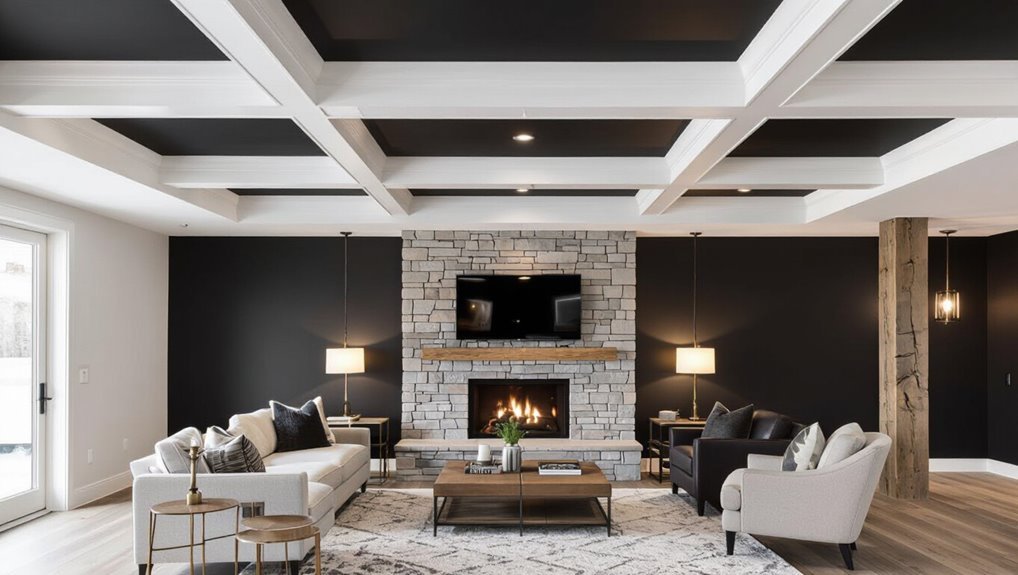
Mixing black and white on a basement ceiling can give you the best of both worlds: contrast and cohesion.
You can paint joists or beams black to frame white panels, highlight architecture, and hide utilities while keeping brightness. Use clean lines or a simple grid for modern appeal.
Balance scale and lighting so the two-tone scheme feels intentional, not busy.
Partial black (theater wall) or white with dark joists exposed
If you want theater-style darkness without committing the whole ceiling, paint a single wall and the adjoining ceiling area black to absorb light where it matters while keeping the rest of the room light and open.
Expose and paint joists dark on the opposite side for contrast, hiding ductwork and creating depth.
This hybrid balances ambience, maintenance, and perceived height.
Using tiles, acoustic panels, or fabric ceilings as alternatives
Having a single black theater wall or darkened joists can set the mood, but tiles, acoustic panels, or fabric ceilings offer different ways to control light, sound, and style without committing to paint alone.
You can add acoustic tiles for noise reduction, drop-in panels for access and brightness, or stretched fabric for a seamless, customizable finish—each balances aesthetics, maintenance, and budget differently.
Case Studies and Real Examples
You’ll see how a cramped basement became noticeably brighter after painting the ceiling white, with before-and-after observations on light and perceived space.
You’ll also get a before-and-after look at a home theater where a black ceiling improved screen contrast and hid ductwork.
Finally, you’ll review a mixed-use solution that zones the basement with different ceiling treatments to balance openness and function.
Small basement made brighter with white ceiling before/after
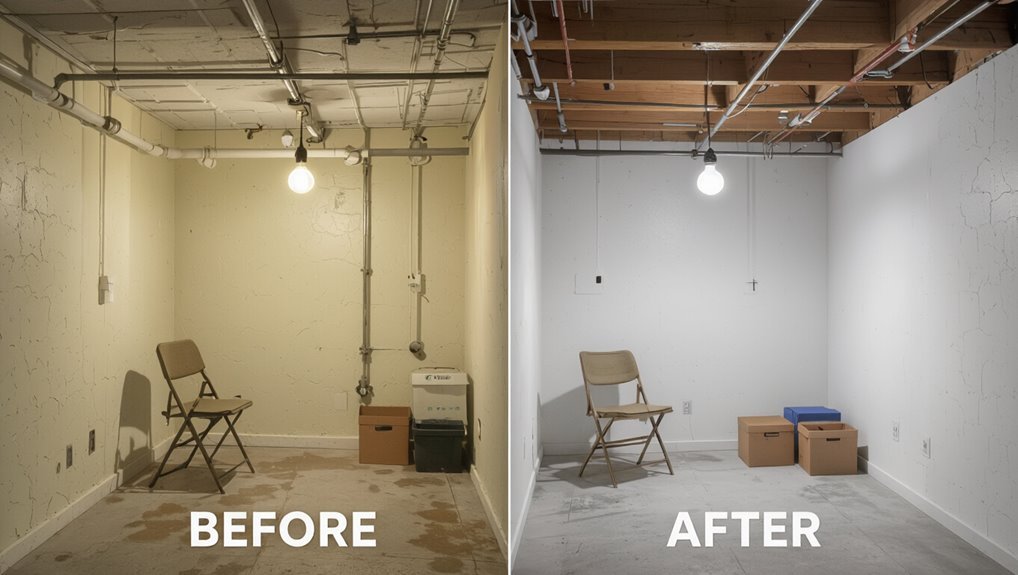
One small basement transformed dramatically when the owner painted the ceiling bright white, instantly reflecting more light from existing fixtures and making the space feel larger and airier.
You’ll notice improved brightness, clearer sightlines, and a fresher vibe without major renovations.
White ceilings boosted perceived height, hid minor flaws with light wash, and made decor colors pop, proving a low-cost, high-impact update.
Home theater converted with black ceiling before/after
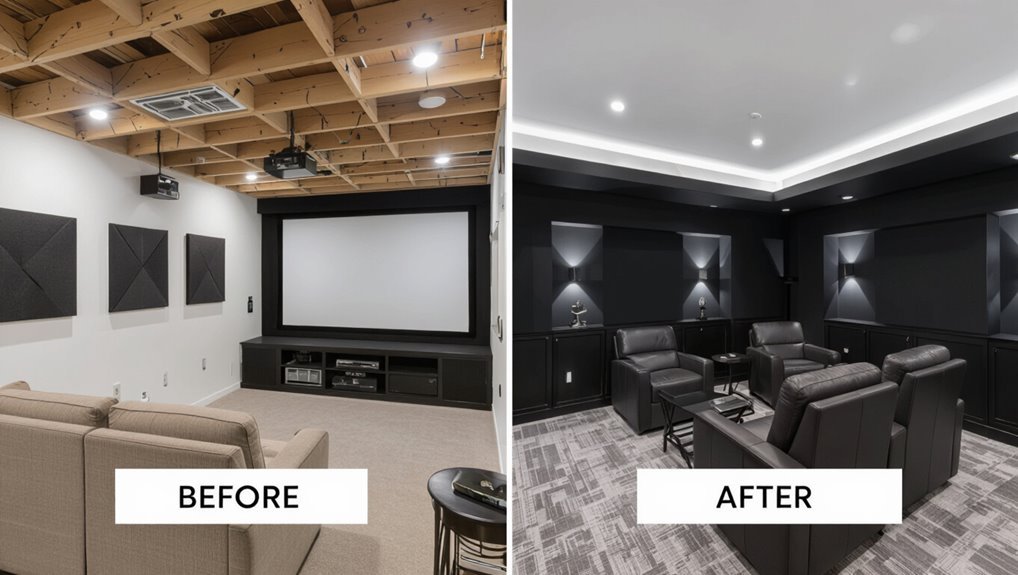
If painting a small basement ceiling white can open up a space, painting it black can do the opposite on purpose—helping you craft a dedicated home-theater feel by absorbing stray light and sharpening contrast.
You’ll notice improved perceived screen blacks, fewer glare issues, and a cozier atmosphere.
Consider matte finishes, concealed lighting, and acoustic panels; these enhance immersion without making the room feel cave-like.
Mixed-use basement solution (zones with different treatments)
When you need a basement that does double (or triple) duty, zoning different ceiling treatments lets each area perform and feel right:
Use a matte black ceiling over the home theater to hide fixtures and boost contrast, paint the family zone white to brighten and enlarge, and choose a mid-tone or exposed finish for the workshop to balance glare and maintenance.
Shift deliberately between zones.
Tips and Best Practices Checklist
You’ll want a quick checklist to pick the right color and finish, prep properly, and avoid common mistakes.
Prioritize lighting, headroom, and the look you want before you buy paint and tools.
Follow simple safety and prep steps so the job goes smoothly and lasts.
Quick checklist for choosing and executing the project
1 clear checklist will keep the project on track: decide your goal (brighten, hide ductwork, or create a theater vibe), choose the right paint type and finish, gather tools and safety gear, and schedule work in manageable stages so you won’t rush or miss prep.
- Inspect ceiling and lighting
- Test paint samples
- Mask and cover surfaces
- Use proper ventilation and respirator
- Paint in sections for consistent coverage
FAQ
Got questions? You’ll want answers on whether black makes the space feel smaller, if white is harder to keep clean, and whether you can paint pipes a different color than the ceiling.
Also ask about the best paint finish and how to test colors before committing.
Will a black ceiling make my basement feel smaller?
Wondering if a black ceiling will make your basement feel smaller? It can, since dark colors absorb light and reduce perceived height, especially in low-ceilinged or poorly lit spaces.
But you can counteract that with strong overhead lighting, reflective fixtures, lighter walls, and strategic furniture placement.
In many cases, a painted black ceiling creates cozy depth without making the room feel cramped.
Is white paint harder to keep clean in a basement?
Is white paint harder to keep clean in a basement? Not necessarily, but it shows dust, cobwebs, and stains more than darker finishes.
You can minimize upkeep by choosing washable, mildew-resistant satin or semi-gloss paint, ensuring good ventilation, and dusting or gently wiping every few months.
Spot-prime and repaint high-traffic areas to keep the ceiling looking fresh.
Can I paint exposed pipes and ductwork a different color than the ceiling?
Absolutely — you can paint exposed pipes and ductwork a different color than the ceiling to create contrast, hide them, or make them stand out as a design feature.
Choose colors to unify the room or emphasize industrial flair. Use paint formulated for metal, prep surfaces by cleaning and priming, and consider matching trim or fixtures so the overall look feels intentional and cohesive.
What paint finish is best for basement ceilings?
Choosing the right finish for your basement ceiling depends on how much light you want reflected, how durable you need the surface to be, and whether you want to hide imperfections.
For most basements, flat or matte hides flaws and reduces glare, while eggshell adds slight washability. Semi-gloss is easy to clean but highlights texture.
Pick matte for concealment, eggshell for balance.
How do I test a color before committing?
Before you commit, try small, practical tests so you can see how the color behaves in your actual space.
Buy sample cans and paint 2×2-foot panels on ceiling drywall or large foam boards.
Hang boards in different areas, view them at various times and light levels, and take photos.
Live with samples for a few days before deciding.
