
Is It Better to Stain or Paint Brick? What Lasts Longer
You’ll usually want to stain brick if longevity and low maintenance matter most, because stains penetrate, stay breathable, and wear gradually without peeling. Paint gives bolder, more uniform color and hides flaws, but it can trap moisture, blister, and need more frequent recoats. Stain typically lasts longer with fewer touch-ups, while paint offers broader color choices and easier full-color changes. Keep going and you’ll get practical tips, costs, and when to pick each option.
Quick Answer Should You Stain or Paint Brick?
If you want a natural look and easier maintenance, stain’s usually the better choice; if you want a bold, uniform color it’s paint.
Stain soaks in and tends to last longer without peeling, while paint gives a more dramatic finish but will need repainting and occasional stripping over time.
Consider how long you want the finish to last and how much upkeep you’ll tolerate.
One-sentence verdict
While both protect and refresh brick, stain keeps the natural texture and requires less maintenance.
So choose paint only if you want an opaque, long-lasting color change that covers imperfections.
If you’re asking is it better to stain or paint brick, pick stain for subtle, breathable enhancement and lower upkeep.
Or paint when you need complete coverage and a dramatic, uniform finish that hides flaws.
Short summary of longevity trade-offs
Because you want a finish that lasts with the least headaches, weigh paint’s longer visible lifespan against stain’s breathable, lower-maintenance performance.
You’ll pick paint when color retention and surface uniformity matter; choose stain for moisture management, easier touch-ups, and preserving texture.
Consider exposure, maintenance willingness, and resale impact before deciding.
- Paint: longer visible life, higher upkeep
- Stain: breathable, easier upkeep
- Choose by exposure and goals
Understanding Brick Surfaces: Basics You Need to Know
You’ll notice brick and mortar absorb and wear differently because mortar is usually more porous and rougher, which affects how coatings penetrate and stick.
If the brick’s original or already coated, you’ll need different prep—uncoated brick often takes stain better, while painted or sealed surfaces may require stripping or sanding for proper adhesion.
Also watch for common coating failures from trapped moisture, efflorescence, and thermal movement, since those issues can cause peeling, blisters, or flaking.
How brick and mortar differ in porosity and texture
If you’ve ever touched both brick and mortar, you’ve probably noticed they don’t feel the same—brick is denser and smoother, while mortar’s rougher and more porous, so they absorb liquids differently.
You’ll find brick soaks slower, staining or painting more predictably, while mortar drinks faster and unevenly, requiring different sealers or primers to avoid blotches and guarantee a consistent finish across the wall.
Original vs previously coated brick: adhesion and prep implications
Knowing how brick and mortar absorb tells you part of the story, but the surface history—whether the brick is original bare clay or already painted or stained—changes how coatings will stick and how you should prep.
If original, you’ll clean and maybe etch for penetration; if previously coated, you’ll test adhesion, remove loose material, and feather edges.
Priming needs vary accordingly.
Common causes of coating failure on brick (moisture, efflorescence, thermal movement)
Because brick breathes and shifts, coatings often fail for predictable reasons: trapped or migrating moisture, salt deposits (efflorescence), and thermal movement that stresses paint or stain.
You’ll need to diagnose issues before coating, address leaks, and choose flexible, vapor-permeable products to reduce failure risk.
- Moisture intrusion: causes peeling and blistering
- Efflorescence: lifts coatings as salts migrate
- Thermal movement: cracks and splits finish
How Paint Works on Brick
When you paint brick you’ll choose from options like acrylic-latex, masonry paint, or elastomeric coatings, each bonding and flexing differently with the surface.
Expect paint to last anywhere from 5 to 20 years depending on prep, climate, and coating quality.
We’ll weigh the benefits—uniform color and protection—against downsides like maintenance, trapped moisture risk, and loss of natural texture.
Types of paint for brick (acrylic latex, masonry paint, elastomeric)
Choosing the right paint for brick comes down to matching the product to the surface’s porosity and movement: acrylic-latex offers breathability and flexibility for most brick, masonry paint provides heavy-duty coverage for rougher, more absorbent surfaces, and elastomeric coatings bridge cracks and span slight gaps with superior waterproofing.
Pick based on texture, climate, and desired finish:
- Acrylic-latex: breathable, easy to apply
- Masonry paint: thicker, fills uneven pores
- Elastomeric: waterproof, bridges minor cracks
Typical lifespan of paint on brick and factors that shorten or extend it
Paint on brick typically lasts anywhere from 5 to 20 years, depending on product quality, surface prep, and exposure conditions. You can extend life by cleaning, sealing, using high-quality masonry paint, and ensuring good drainage. Harsh sun, moisture, and poor prep shorten it. Maintain and touch up to maximize longevity.
| Factor | Effect | Action |
|---|---|---|
| Sun | Fades | Shade/UV paint |
| Moisture | Peels | Improve drainage |
| Prep | Adhesion | Clean/prime |
| Paint quality | Durability | Choose masonry-grade |
Pros and cons of painting brick
Although brick’s porous surface soaks up coatings differently than wood or metal, you can alter its look and performance considerably by painting it.
You’ll gain color uniformity, moisture resistance when sealed, and easier cleaning. Downsides include trapped moisture, peeling if prep’s poor, and reduced natural texture.
Painting’s reversible with effort, but requires regular inspection and occasional repainting to maintain protection and appearance.
How Stain Works on Brick
When you’re considering stain for brick, you’ll want to know the main types—penetrating, color-enhancing, and mineral stains—and how each soaks into or bonds with the masonry.
Expect stains to last anywhere from a few years to a couple of decades depending on product type, exposure, and preparation.
We’ll also cover the pros and cons so you can weigh durability, appearance, and maintenance.
Types of brick stain (penetrating, color-enhancing, mineral stains)
Because brick soaks up finishes differently than wood or metal, choosing the right type of stain matters—you’ll mainly see three kinds: penetrating (or translucent) stains that soak into the pores, color-enhancing stains that deepen and enrich the existing hue, and mineral stains that chemically bond to the brick for long-lasting color.
- Penetrating: subtle, natural look
- Color-enhancing: richer tone without masking texture
- Mineral: durable, permanent alteration
Typical lifespan of stain on brick and influencing factors
If you choose a penetrating or color-enhancing stain, expect the look to last anywhere from 5 to 15 years; mineral stains that chemically bond to the brick can persist for decades. You’ll get longevity depending on exposure, application quality, and maintenance. Choose appropriate stain and prep.
| Factor | Effect | Typical Range |
|---|---|---|
| Exposure | Fades faster | 5–15 yrs |
| Application | Durability up | +yrs |
Pros and cons of staining brick
Although staining brick doesn’t hide its texture the way paint does, it changes color while letting the masonry’s natural character show through.
You’ll get breathable, low-build color that resists peeling and preserves mortar.
Downsides: color options and coverage are subtler than paint, and porous or damaged brick may take stain unevenly.
Prep matters—cleaning and sealing improve durability.
Direct Comparison Stain vs Paint
You’ll want to weigh durability and how long each finish actually lasts against the look you want and the color choices available.
Consider breathability and moisture management, plus how often you’ll need touch-ups or repairs and what those will cost in materials and labor over the life of the finish.
That comparison will make it easier to pick the option that fits your budget, maintenance tolerance, and aesthetic goals.
Durability and longevity comparison
When comparing stain and paint for brick, think regarding expected lifespan and maintenance: stain soaks into the masonry and typically lasts 5–15 years with minimal peeling, while paint sits on the surface and can last 7–20 years but often needs more frequent touch-ups or full recoats as it flakes or chalks. You’ll choose based on upkeep tolerance and exposure.
| Feature | Stain | Paint |
|---|---|---|
| Lifespan | 5–15 yrs | 7–20 yrs |
| Maintenance | Low | Higher |
Aesthetic outcomes and color options
Because stain soaks into brick while paint sits on top, you’ll see very different aesthetic results and color behavior over time.
Stain preserves texture and subtle variations, offering translucent, natural tones.
Paint provides uniform, opaque coverage and bolder color choices but can mask character.
You’ll choose stain for depth and authenticity, paint for dramatic, precise color control and easier full-color changes later.
Breathability and moisture management
If moisture has to move through brick, stain lets it—penetrating and remaining vapor-permeable—while paint tends to block that movement by forming a film on the surface.
You’ll reduce trapped moisture risks with stain, lowering efflorescence and freeze-thaw damage potential.
Paint can seal pores, forcing moisture into mortar or behind the coating, increasing blistering and peeling unless substrate is perfectly dry and prepared.
Maintenance frequency and repairability
Stain generally needs less frequent upkeep than paint because it soaks into the brick and wears gradually. You’ll typically plan touch-ups or reapplication every 7–15 years depending on exposure.
Painted brick, by contrast, shows surface wear, chalking, and peeling sooner and often requires repainting every 5–10 years or more frequently in harsh climates.
You’ll find stains spot-repairable and less likely to need full stripping; paint often demands scraping, priming, and full recoats to fix failures.
Cost comparison (materials, labor, lifecycle)
Knowing how often each finish needs attention helps when you compare their costs over time. You’ll pay less upfront for stain materials and less labor if you DIY; paint costs more and needs repainting more often, raising lifecycle expense. Choose stain for lower recurring costs; pick paint for cosmetic change despite higher total spend.
| Option | Upfront | Lifecycle |
|---|---|---|
| Stain | Low | Lower |
| Paint | Medium-High | Higher |
| Repair | Spot | Full-area |
Deciding Factors Which Is Better for Your Project
You’ll want to run through a quick surface-condition checklist to see if the brick needs sealing, repair, or heavy prep before deciding on paint or stain.
Consider your home’s architectural style and the exact look you want, then weigh how local climate and exposure will affect longevity.
Finally, compare upfront costs and long-term value so you pick the option that meets both your budget and maintenance expectations.
Surface condition checklist: when to choose paint vs stain
Before you decide, take a close look at the brick’s surface—its porosity, existing coatings, damage, and cleanliness will steer the choice between paint and stain.
You’ll pick stain for porous, clean, undamaged brick; paint if you need full coverage over previous coatings or severe discoloration.
Consider preparation time, repair needs, and moisture issues.
- Porosity and absorbency
- Existing paint or sealers
- Cracks, mortar damage, mold
Architectural style and desired look considerations
Because the look of your brick alters the whole building, match the finish to the architecture: historic homes often suit a breathable stain that preserves texture and color variation, while contemporary designs can handle a smooth, opaque paint for a crisp, uniform finish.
Think about period-appropriate colors, mortar contrast, and whether you want to highlight or mute masonry details; choose stain for subtlety, paint for bold uniformity.
Climate and exposure considerations
Having settled on a finish that complements your home’s style, consider how climate and exposure will affect its longevity and appearance.
If you face heavy rain, freeze-thaw cycles, or intense sun, choose breathable, UV-resistant stain or high-quality paint with masonry primer.
South- and west-facing walls need tougher protection; sheltered or shaded areas tolerate softer finishes.
Match product specs to local conditions.
Budget and long-term value analysis
When you weigh upfront costs against maintenance and resale value, paint usually costs more to apply but can offer a stronger short-term color change.
On the other hand, stain tends to be cheaper initially and often costs less over time thanks to lower maintenance needs.
Consider lifespan, frequency of recoats, and potential moisture repairs.
Choose stain for long-term savings and authenticity, paint for dramatic, short-term transformation.
Step-by-Step: How to Prepare and Apply Paint to Brick
Before you paint, you’ll inspect the brick for moisture and efflorescence and test small areas so you don’t trap problems under paint.
Next you’ll clean, remove loose material, repair mortar and patch bricks, then prime with the right product for masonry.
Finally, you’ll apply paint with proper techniques and allow adequate curing time for a durable finish.
Step 1 Inspect and test for moisture and efflorescence
Kick things off by thoroughly inspecting the brick for dampness and efflorescence—salt deposits that look like white powder and signal moisture issues.
Probe mortar joints, look for staining, and press a plastic sheet against the wall for 24 hours to check vapor buildup. Use a moisture meter if available.
Address any rising damp or leaks before painting to guarantee adhesion and longevity.
Step 2 Cleaning and removing loose material
Now that you’ve confirmed the wall is dry and free of efflorescence, move on to cleaning and removing loose material so paint will grip properly.
Scrub with a stiff brush and mild detergent, rinse thoroughly, and let dry. Remove loose paint with a scraper or wire brush, and vacuum debris before painting.
- Stiff-bristle brush
- Pressure rinse (low setting)
- Scraper and vacuum
Step 3 Repairing mortar and patching brick
Step 3 covers repairing mortar joints and patching damaged brick so your paint adheres evenly and lasts — you’ll want to fix cracks, missing mortar, and crumbling edges before applying any primer or paint.
Remove loose mortar, rake joints, and dampen the wall. Use matching mortar or patching compound, compact it tightly, tool the joints smooth, and replace broken bricks to create a sound, even surface.
Step 4 Priming and selecting the right paint
1. You’ll prime cleaned, repaired brick with a masonry or bonding primer to guarantee adhesion and seal porous surfaces.
Choose breathable, exterior-grade acrylic latex paint formulated for masonry to prevent moisture trapping.
Match sheen to exposure—flat hides imperfections, satin offers washability.
Pick high-quality, fade-resistant pigments and test a small area first to confirm coverage and color before full application.
Step 5 Application techniques and curing time
Gather your tools and work systematically: start at the top of the wall and paint in consistent sections, using a brush to cut in around edges and a roller or sprayer to cover larger areas, keeping a wet edge to avoid lap marks.
Apply thin, even coats; allow recommended cure times between coats; protect from rain and frost until fully cured.
- Use thin coats
- Monitor humidity
- Wait full cure time
Step 6 Post-application maintenance tips
Once the paint’s cured, do a regular inspection every few months to catch chips, efflorescence, or moisture stains early and address them before they spread.
Clean gently with a soft brush and mild detergent, rinse thoroughly, and avoid pressure washing.
Touch up chips promptly with matching paint, reseal mortar joints if needed, and monitor for bubbling or peeling so you can fix problems before they worsen.
Step-by-Step: How to Prepare and Apply Stain to Brick
Before you stain brick, you’ll inspect porosity and test a small area so the product soaks in properly.
Clean off dirt and efflorescence, make repairs and mask nearby surfaces, then decide between penetrating and surface stains.
Finally, pick an application method, follow the manufacturer’s drying times, and work methodically for even coverage.
Step 1 Inspect and test porosity
If the brick’s porosity is wrong for the stain, the finish won’t stick or will look uneven, so you need to inspect and test it first.
Check several areas—old mortar, fired brick, and softer spots—by pouring a teaspoon of water on each.
If water beads, it’s too dense; if it soaks in immediately, it’s highly porous.
Record results to choose the right stain and primer.
Step 2 Cleaning and removing efflorescence
Start by blasting away loose dirt, dust, and plant growth so you can see the brick’s true surface.
Scrub with a stiff brush and a trisodium phosphate (TSP) solution or mild detergent to remove grime.
For white powdery efflorescence, use a diluted muriatic acid rinse or commercial efflorescence remover, then rinse thoroughly and let the masonry dry completely before staining.
Step 3 Repair prep and masking
With the brick clean and fully dry, you’re ready to prep repairs and mask off surrounding areas.
Inspect mortar and chipped bricks, tuckpointing or replacing damaged units as needed. Rake out loose mortar, apply patching compound, and let it cure.
Use painter’s tape and plastic sheeting to protect windows, trim, and landscaping. Keep edges tight for clean stain lines.
Step 4 Choosing penetrating vs surface stain
Because the type of stain you choose determines both appearance and durability, you’ll need to decide between penetrating and surface stains before applying anything.
You’ll pick penetrating stain for natural look, breathability, and deeper protection that won’t peel.
Choose surface stain if you want stronger color, easier covering of imperfections, and a more uniform finish—knowing it may require more maintenance over time.
Step 5 Application methods and drying times
After you’ve picked penetrating or surface stain, it’s time to apply it—and the method you choose will affect both coverage and drying time.
Use a brush for control, a roller for speed on flat areas, or a sprayer for uniform coverage.
Monitor temperature and humidity; drying ranges from 1–24 hours.
Don’t overwork the stain or apply in direct sun.
- Brush: precision
- Roller: efficiency
- Sprayer: uniformity
Step 6 Recoating and touch-up guidance
Once the first coat’s dry, walk the wall and inspect for thin spots, drips, or color inconsistencies so you can plan where to recoat or touch up.
Recoat only after recommended dry time, thin coats for even coverage, and feather edges to blend. Use a small brush for mortar lines and crevices.
Cure fully before light traffic; document areas for future maintenance.
Common Mistakes and How to Avoid Them
Don’t start until the brick is clean and dry, because moisture or dirt will make paint or stain fail quickly.
Make sure you’re using products formulated for exterior or interior use, address mortar cracks and movement before coating, and don’t skip primer or sealer when the product requires one.
If you spot peeling, efflorescence, or hairline cracks later, diagnose the cause (moisture, wrong product, or substrate movement) and correct it before recoating.
Mistake: Painting/staining over damp or unclean brick
If you paint or stain brick that’s damp or hasn’t been cleaned, the finish won’t stick and problems like peeling, bubbling, and mildew follow quickly.
You should wait for full dryness, wash with a masonry cleaner or trisodium phosphate, and scrub stubborn grime or efflorescence.
Test moisture with a tape or moisture meter, and only proceed when the surface is completely clean and dry.
Mistake: Using wrong product type for exterior vs interior
After you’ve cleaned and confirmed the brick is completely dry, the next big mistake is choosing the wrong product for where the brick lives.
Exterior stains and paints resist UV, moisture, and temperature swings; interior products don’t. If you use indoor formulas outside, coating will fail quickly.
Always pick materials labeled for exterior use on outside brick and interior-specific products inside.
Mistake: Ignoring mortar movement and cracking
Because mortar expands, contracts, and settles differently than brick, you can’t treat the wall like a single, stable surface when staining or painting.
You’ll see hairline cracks or joint separation over time; rigid coatings will crack or flake at those junctions.
Inspect joints, repair or repoint damaged mortar, and use flexible coatings or elastomeric caulk where movement’s likely to prevent failure and uneven appearance.
Mistake: Skipping primer or sealer when needed
Mortar movement and small cracks aren’t the only things that can ruin a finish—skipping a primer or sealer often does the same by letting the substrate dictate adhesion and color.
You’ll get uneven absorption, blotchy tone, and poor durability if you skip barrier coats. Use a breathable masonry primer or clear sealer when recommended, matching product type to whether you’re staining or painting.
How to diagnose and fix common failures
When a finish fails—flaking paint, uneven stain, efflorescence, or blisters—you can usually trace it to a specific cause and a predictable fix.
Start by closely inspecting the surface and conditions that preceded the problem. Diagnose moisture, adhesion, or application errors; then correct substrate issues, choose compatible products, and prep properly before reapplying.
- Check for moisture sources
- Test adhesion and porosity
- Remove salts, clean, and prime
Maintenance, Repair, and Reapplication Guidelines
You should start with a simple inspection checklist to catch mortar cracks, efflorescence, and coating failures early.
Compare cleaning methods for painted versus stained brick, learn when a spot touch-up will do and when you’ll need to strip and redo, and choose patching products rated for masonry.
With regular checks and the right sealers or patch kits, you’ll extend the life of either finish and avoid costly repairs.
Routine inspection checklist
1 simple inspection every season keeps brick finishes lasting longer and prevents small issues from turning costly.
Check mortar joints for cracks, probe for loose or spalling bricks, and spot-check coated areas for peeling or discoloration. Note moisture sources and drainage problems so you can fix them quickly.
- Inspect mortar and joints
- Test for loose or damaged brick
- Look for coating failures and moisture signs
Cleaning painted vs stained brick
Because painted and stained brick respond differently to cleaners and pressure washing, you’ll want to tailor your cleaning approach to the finish to avoid damage.
For painted brick, use mild detergent, soft brush, low-pressure rinse, and avoid solvents that strip paint.
For stained brick, use gentler pH-neutral cleaners, avoid abrasive scrubbing, and test a small area first.
Rinse thoroughly and let dry before inspecting.
When to touch up vs when to strip and redo
When should you touch up stained or painted brick, and when does the surface need a full strip and reapplication?
You should spot-touch where small chips, isolated fading, or mortar-edge wear appear.
Strip and redo when coatings peel broadly, substrate salts bleed through, or multiple previous layers fail to bond.
Also redo when color mismatch or texture loss affects large areas, not just isolated spots.
Best products for patching and extending life
If you want patched repairs to last and coatings to hold, choose products formulated for masonry—salvage compromised mortar with a polymer-modified mortar repair, fill chips and holes with a cementitious or epoxy-based patch designed for brick, and use breathable, masonry-specific stains or paints and a silane/siloxane water repellent to extend life.
Then clean with mild detergent, spot-prime porous areas, and recoat as recommended.
Cost and ROI Long-Term Financial Considerations
You’ll want to weigh initial installation costs against lifecycle expenses like maintenance, reapplication, and potential repairs.
Consider how stain versus paint affects curb appeal and resale value, since buyers may prefer the look and durability of one finish over the other.
In some cases a higher upfront cost for a longer-lasting, low-maintenance option will pay off over time.
Initial costs vs lifecycle costs comparison
Although stains usually cost less up front than paint, thinking only about the sticker price can mislead you about long-term value. You should weigh reapplication frequency, maintenance, and substrate prep. Stain may need touch-ups; paint often requires full recoat later. Compare estimates and lifecycle years to calculate true cost per year.
| Item | Consideration |
|---|---|
| Up front | Materials/labor |
| Long term | Recoats/maintenance |
Impact on property value and curb appeal
Because first impressions shape buyers’ perceptions, the choice between staining and painting brick directly affects curb appeal and resale value.
You’ll boost marketability with a consistent, well-maintained look that matches neighborhood expectations.
Stain preserves texture and signals low maintenance; paint offers bold updates but may suggest future upkeep.
Choose the option that aligns with buyer preferences to maximize appeal and return.
When higher upfront cost makes sense
When you’re weighing higher upfront costs for staining or painting brick, think about the payback over time: if a premium finish reduces maintenance, lasts longer, or raises resale value in your market, that initial spend can be a smart investment.
You should calculate lifecycle costs, factor durability, maintenance frequency, and local buyer preferences.
Choose quality when reduced upkeep and stronger curb appeal offset higher initial expense.
Visual Examples and Use Cases
You’ll see clear examples that show when paint is the smarter choice—like hiding heavy stains or changing color completely—and when stain is better for preserving texture and letting natural brick show through.
We’ll run through quick before-and-after case summaries so you can compare results and maintenance needs.
Use these visuals to match the look you want with the right method for your project.
Best scenarios for choosing paint
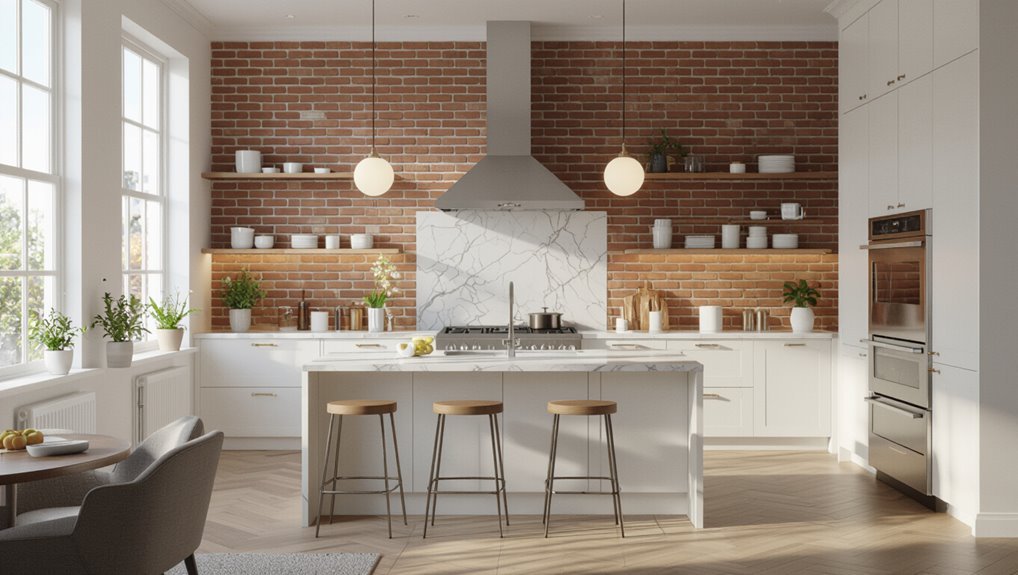
Wondering if paint is the right choice for your brick? You should pick paint when you want bold, uniform color, hide stains or mismatched bricks, or match trim and siding.
Choose paint for exterior accent walls, interior fireplaces, or modern facades where color consistency matters. It’s ideal when you’re prepared for periodic maintenance and want a dramatic, customizable finish.
Best scenarios for choosing stain

If you want to enhance brick’s natural texture and let mortar lines show through, choose stain—it soaks in, evens out color variations, and preserves the masonry’s character.
Use stain when you want subtle color correction, maintain historic authenticity, reduce maintenance, or refresh exterior brick without hiding details.
It’s ideal for porous surfaces, chimneys, patios, and when you plan long-term breathability.
Before-and-after case summaries (short examples)
When you compare quick before-and-after snapshots, the impact of choosing stain over paint becomes obvious: stain brings out the brick’s natural texture and mortar lines while evening tone inconsistencies, whereas paint hides details and creates a uniform, higher-maintenance surface.
You’ll see how each choice affects curb appeal, upkeep, and longevity.
- Stain: subtle depth, low upkeep
- Paint: bold change, more maintenance
- Hybrid: stained walls with painted trim
Best Practices and Professional Tips
When choosing between stain and paint, you’ll want to vet contractors carefully and check past workmanship with photos and references.
Use a product checklist that includes porosity compatibility, UV and moisture resistance, and manufacturer warranty to guarantee durability.
Also plan work for stable, mild weather windows so adhesion and drying won’t be compromised.
Selecting contractors and verifying workmanship
Looking for the right contractor? You should check licenses, insurance, and local references, then review recent brick staining or painting photos.
Ask about surface prep, moisture testing, and warranties. Get a written scope, timeline, and payment schedule.
Inspect work during and after completion; note uniform coverage, clean joints, and proper flashing.
Don’t pay final until satisfied.
Product selection checklist for durability
Want your brick finish to last? Choose breathable, masonry-specific stains or paints with UV inhibitors and flexible binders.
Pick products labeled vapor-permeable, mildew-resistant, and alkali-tolerant. Match primer to substrate and confirm colorfast pigments.
Favor proven brands with technical data sheets and long warranties.
Test a small area for adhesion and appearance before committing to full coverage.
Seasonal timing and weather windows for application
You’ve picked durable, breathable products—now plan the timing to make them perform.
Pick a stretch of dry days with temperatures within the manufacturer’s recommended range, avoid high humidity and freezing nights, and allow full curing before rain.
Apply during spring or fall when conditions are stable, and monitor forecasts to prevent premature washout.
- Dry window: consecutive rain-free days
- Ideal temps: manufacturer range
- Avoid high humidity
Frequently Asked Questions
You probably have questions about longevity, reversibility, breathability, sealing, and mixing finishes.
I’ll explain how long paint and stain typically last, whether painted brick can be returned to its natural look, and if stains let the wall breathe or trap moisture.
I’ll also cover sealing needs and whether you can paint over stain or stain over paint.
How long will paint/stain last on exterior brick?
Although exact timing varies with materials and maintenance, paint on exterior brick typically lasts 5–15 years while stain can last 7–20 years.
Your climate, sunlight, and moisture exposure affect longevity.
Prep, application quality, and product type matter: high-quality masonry paints or penetrating stains last longer.
Regular inspections, touch-ups, and resealing extend life.
Expect sooner refresh on north- or rain-exposed walls.
Can you revert painted brick back to natural brick?
If paint or stain on your exterior brick has reached the end of its life or you simply prefer the original look, you can often return it to natural brick—but the process varies in effort and outcomes.
You’ll remove coatings with chemical strippers, pressure washing, or gentle abrasion, then clean mortar joints and repoint if needed.
Some pigments penetrate; full restoration may require professional help.
Is stained brick breathable and will it trap moisture?
Wondering whether a stain will seal in moisture?
Stains penetrate brick pores, so they generally stay breathable and won’t trap moisture like thick paint films.
You can still get moisture issues if substrate is already damp or vapor drive forces water through.
Choose a breathable, masonry-specific stain and address leaks or poor drainage first to avoid trapped moisture and efflorescence.
Do you need to seal stained brick?
Do you need to seal stained brick? You don’t always have to, but sealing can protect color and repel dirt and water on exterior or high-traffic surfaces.
Choose a breathable, masonry-rated sealer to avoid trapping moisture. Test a small area first and follow manufacturer cure times.
Interiors often don’t require sealing unless you want added stain protection or sheen.
Can you paint over stain or stain over paint?
Sealing stained brick raises a related question many homeowners ask: can you paint over stain or stain over paint?
You can paint over cured stain if you clean and prime the surface, but porous stains may need sanding or etching.
Staining over existing paint usually fails unless you strip or abrade the paint first; stain needs porous substrate to penetrate and bond.
