
How to Remove Tea Stains From a Painted Wall Without Damage
You can remove tea stains from painted walls without damage by acting gently and testing first: blot excess with a soft cloth, wipe with a mild soap solution, rinse, and pat dry. For tougher tannins try a baking soda paste or diluted vinegar; use 3% hydrogen peroxide cautiously on light paints. Always spot-test and avoid scrubbing to prevent paint loss. If the stain won’t lift, escalation steps and prevention tips can help you decide the next move.
Quick Answer How to Remove Tea Stains from a Painted Wall Without Damage
Wipe the stain gently with a soft cloth and a mild mix of dish soap and water, blotting rather than scrubbing to avoid removing paint.
If the stain won’t budge after two gentle attempts or the paint starts to lift, stop and consult a professional to prevent further damage.
A pro can assess whether deeper cleaning or repainting is needed.
One-sentence solution
Dab the stain gently with a soft cloth dipped in a mild solution of dish soap and warm water, then rinse with a clean damp cloth and pat dry to avoid damaging the paint.
For a one-sentence solution on how to remove tea stains from painted wall, repeat gently until the mark lifts, avoiding scrubbing; dry promptly to prevent water spots and paint softening.
When to stop and call a professional
If gentle soap-and-water cleaning doesn’t lift the tea stain after a few light attempts, stop and consider calling a professional.
Persistent discoloration, paint bubbling or softening, or damage near textured or specialty finishes means further DIY efforts could make things worse.
Call a pro when stains return after drying, odor persists, or you’re unsure about paint type or underlying water damage; they’ll assess and repair safely.
Basic Understanding Why Tea Stains Happen and What Affects Removal
Tea stains are mainly pigments, tannins, and sticky residue that soak into or sit on your paint surface.
The type of paint—matte, eggshell, satin, semi-gloss, or oil-based—changes how easily those compounds lift and how aggressive your cleaner can be.
Be careful: scrubbing, strong solvents, and excess moisture can abrade or soften certain finishes, so match your method to the paint.
What tea stains are (pigments, tannins, residue)
Stains from brewed drinks come from tannins and other pigments that bind to paint and leave brownish films you’ll notice most on lighter walls.
You’ll also get residue from sugar, milk, or dust mixed with tea that can attract grime. These compounds penetrate porous finishes, darken over time, and sometimes oxidize, so timely, gentle cleaning prevents permanent discoloration and buildup.
How paint type affects cleaning success (matte, eggshell, satin, semi-gloss, oil-based)
Those tannins and pigments you just read about behave differently depending on the paint finish and binder, so knowing your wall’s paint will guide how well stains lift.
Matte soaks in more, making stains harder to extract. Eggshell and satin resist a bit better.
Semi-gloss and oil-based finishes sit on the surface, letting you remove tea with gentler cleaners and less effort.
Risk factors for paint damage (abrasion, solvents, moisture)
Because painted surfaces vary in how they react, you need to evaluate three main risks when removing tea marks: abrasion from scrubbing, solvent damage from cleaners, and moisture penetration into the binder or drywall.
Test a small, hidden spot first.
Use soft cloths and mild cleaners, blot rather than rub, control water, and dry promptly to prevent paint lift, streaking, or swelling.
Safety and Preparations Before Cleaning
Before you start, gather your tools and materials—mild detergent, soft cloths, a sponge, a bucket, and any stain remover you plan to use.
Put on gloves, guarantee good ventilation, and wear eye protection so you don’t expose yourself to splashes or fumes.
Test your chosen cleaner on a hidden spot and watch for paint discoloration or finish damage before treating the stain.
Tools and materials checklist
Gather a few key items before you start: mild dish soap, white vinegar, a soft sponge or microfiber cloth, a bucket, clean water, and optional stain-safe cleaner or magic eraser for tougher spots.
You’ll work confidently with simple gear that protects paint and restores appearance.
- A gentle cleaner that feels trustworthy
- Soft cloth that comforts the surface
- Clean bucket, steady and ready
- Mild soap, reliable and calm
- Optional eraser for stubborn spots
Personal safety: gloves, ventilation, eye protection
When you tackle tea stains, protect your skin and eyes by wearing disposable or nitrile gloves and safety glasses, and keep the room ventilated by opening windows or running a fan.
Use gloves to avoid irritation from cleaners, and wear eye protection to prevent splashes.
If you feel lightheaded, stop and get fresh air; replace gloves if they tear.
Test spot protocol: how to test and what to watch for
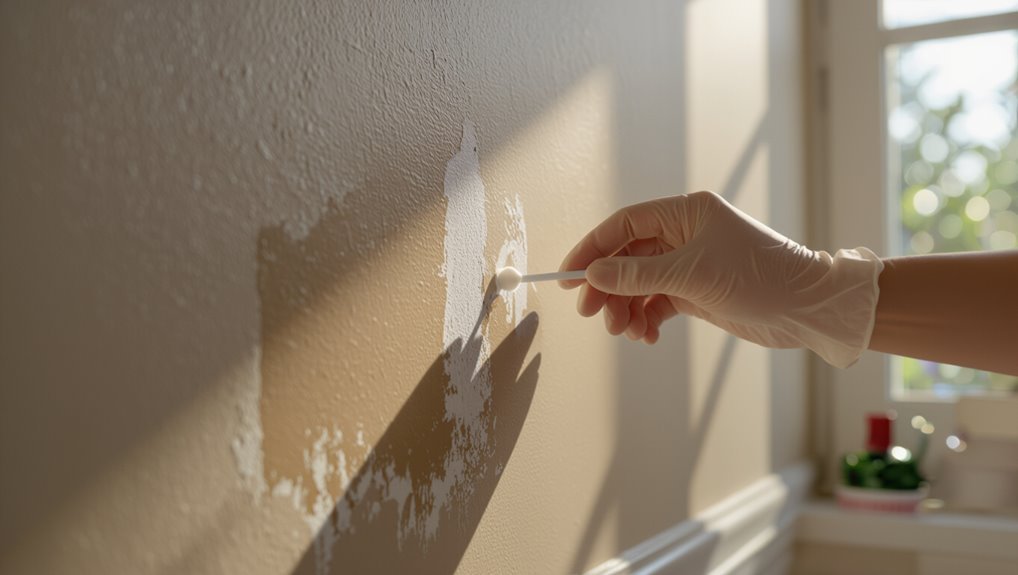
How will you know a cleaner is safe for your painted wall?
Pick a hidden spot, apply a tiny dab, wait 10–15 minutes, then blot gently.
Look for color loss, peeling, softening, or sheen change. If any occur, stop and try a milder solution.
If fine, proceed using the same dilution and test elsewhere as needed before full cleaning.
Step-by-Step Method: Gentle to Stronger Techniques
Start with the least abrasive methods and only move on if stains persist.
You’ll begin with dry blotting and a soft brush, then try a mild soap solution, a baking soda paste, and a diluted white vinegar rinse before using a hydrogen peroxide spot treatment for stubborn tannin marks.
Follow the specific recipes, dwell times, and safety precautions for each step.
Step 1 Start with the gentlest approach: dry blotting and soft brush
Begin by gently lifting the excess tea with a dry, white cloth or paper towel—don’t rub, just blot—to avoid spreading the stain or damaging the paint.
Next, use a soft-bristled brush or clean, dry toothbrush to loosen dried edges, working outward from the center.
Brush lightly to avoid abrasion, and periodically blot to lift loosened particles until the stain visibly lessens.
Step 2 Mild soap solution: recipe, application, dwell time
Once you’ve lifted as much loose tea as possible with blotting and gentle brushing, move on to a mild soap solution to break down the remaining stain without harming the paint.
Mix one teaspoon of liquid dish soap with a cup of warm water.
Lightly dampen a microfiber cloth, blot from outside in, let sit 2–3 minutes, then rinse and pat dry.
Step 3 Baking soda paste: how to make, apply, and rinse
3. Mix baking soda with water to a thick paste — about three parts powder to one part water.
Dab paste onto the tea stain with a soft cloth or sponge; don’t scrub hard.
Let sit 5–10 minutes, then gently wipe away in circular motions.
Rinse the area with a damp cloth, pat dry, and inspect.
Repeat once if stain persists.
Step 4 White vinegar solution: dilution, application precautions
After trying the baking soda paste, move to a white vinegar solution for a slightly stronger but still gentle treatment: mix one part distilled white vinegar with two parts water.
Dampen a soft cloth or sponge (don’t pour directly on the wall), dab the stain lightly, and let it sit no more than 5 minutes before blotting and rinsing—test a hidden spot first and avoid prolonged contact on delicate or glossy paint.
Use gentle pressure and repeat once if needed.
Step 5 Hydrogen peroxide spot treatment for stubborn tannin stains (concentration, application)
Reach for 3% hydrogen peroxide when vinegar doesn’t lift stubborn tannin stains; it’s a safe, stronger oxidizer that breaks down the brown compounds without bleaching most latex paints.
Test an inconspicuous spot first. Apply a small amount with a cotton swab, let sit 5–10 minutes, blot gently, then rinse with water.
Repeat once if needed; avoid prolonged saturation.
Step 6 Commercial stain removers safe for painted walls (types to choose, usage tips)
If DIY fixes don’t fully remove the stain, consider one of several commercial stain removers formulated to be safe on painted walls.
Choose pH-neutral cleaners, enzymatic stain removers, or mild oxi-based sprays labeled for painted surfaces.
Test a hidden spot first, follow dilution and dwell-time directions, rinse thoroughly with clean water, and blot dry to avoid softening paint or altering sheen.
Step 7 When to use a magic eraser: technique to minimize sheen loss
When gentler cleaners haven’t lifted the tea stain, you can turn to a magic eraser—but use it sparingly, because the melamine surface can dull or remove paint sheen.
Test an inconspicuous spot first. Lightly dampen the eraser, squeeze out excess water, and rub with gentle pressure in short strokes.
Stop as soon as the stain fades to avoid noticeable sheen loss.
Step 8 Final rinse, drying, and feathering edges to avoid water marks
Because any cleaner left on the paint can leave a ring, rinse the area thoroughly with a clean, damp microfiber cloth and blot away excess moisture rather than rubbing hard.
Then dry with a soft towel, working outward from the stain. Lightly feather the edges with tiny, damp strokes to blend sheen differences.
Let the wall air‑dry completely before inspecting for touchups.
Comparison of Cleaning Agents and Their Risks
You’ll compare mild detergents, vinegar, hydrogen peroxide, and solvents to see which lifts tea stains without harming paint.
Consider how each reacts with flat, eggshell, satin, and gloss finishes so you don’t strip or discolor your wall.
I’ll point out risks and safe choices for each finish so you can pick the gentlest effective option.
Mild detergents vs. vinegar vs. hydrogen peroxide vs. solvents
While all four cleaning options can lift tea stains, they differ in strength and risk: mild dish soap gently breaks up oils and color without damaging most paints, vinegar adds acid that helps dissolve tannins but can dull or etch some finishes, hydrogen peroxide oxidizes stains safely on many surfaces yet can bleach pigments, and stronger solvents remove stubborn residues but may strip paint or leave softening marks.
| Agent | Strength | Risk |
|---|---|---|
| Dish soap | Low | Minimal |
| Vinegar | Medium | Dulling/etching |
| H2O2 | Medium | Bleaching |
| Solvents | High | Paint stripping |
Which agents are safe for each paint finish
When deciding what to use on a stained wall, match the cleaner to the paint finish so you don’t trade the stain for damage.
You’ll protect sheen and color by choosing wisely: gentle soap for washable flat, diluted vinegar for semi-gloss, peroxide spot tests for satin, avoid solvents on latex, and degreasers only on gloss with caution.
- Relief
- Confidence
- Caution
- Satisfaction
- Calm
Troubleshooting Dealing with Common Problems
If a cleaning method leaves paint discoloration or dulls the sheen, you’ll learn how to identify the cause and restore the finish.
I’ll show quick fixes for residual halos or shadows and when blending won’t cut it so you should repaint.
For stubborn, old, or set-in stains, you’ll get a clear escalation plan from tougher cleaners to spot priming and repainting.
Paint discoloration or sheen loss after cleaning: causes and fixes
Although cleaning tea stains usually helps, you might notice spots where the paint looks faded, chalky, or has lost its original sheen.
That often happens when abrasive scrubbing, harsh cleaners, or too much water removes binder or finish.
Rinse gently, let dry, then test a mild cleaner on an inconspicuous area.
If sheen won’t return, consider a compatible touch-up or light recoating with the same finish.
Residual halo or shadow: techniques to blend or repaint
Since cleaning can leave a faint halo where the stain was, you’ll want to assess whether blending or repainting will give the most seamless result.
First, feather the cleaned area with fine sandpaper, then apply a matching matte touch-up paint in thin layers, blending outward.
If color or sheen still shows, prime the spot before repainting the whole panel to guarantee uniformity.
Stubborn, old, or set-in stains: escalation plan
When stains have penetrated paint or sat for months, you’ll need a stepped approach that moves from stronger cleaners to surface repair and, finally, repainting.
Start with a poultice of baking soda and water, then try diluted hydrogen peroxide or commercial stain remover.
If discoloration persists, sand lightly, prime with stain-blocking primer, and repaint with matched color and finish.
Mistakes to Avoid When Cleaning Painted Walls
Don’t scrub so hard or use abrasive pads—you can strip paint or leave scratches.
Never apply undiluted strong chemicals or bleach, since they can discolor or eat the finish.
Always test a hidden spot and let it dry fully before declaring the stain gone.
Over-scrubbing and abrasive tools
Although you want stains gone fast, over-scrubbing and using abrasive tools will do more harm than good; they can strip paint, leave visible scuffs, or roughen the finish so it shows dirt more quickly.
Instead, use soft cloths or sponges, gentle circular motions, and light pressure. Test a hidden spot first, and repeat gentle cleaning rather than increasing force.
Using undiluted strong chemicals or bleaches
Avoid pouring or scrubbing with undiluted strong chemicals or bleach; they can strip paint, cause discoloration, and leave a mottled finish that’s hard to fix.
Instead, dilute cleaners per label instructions and use mild, pH-neutral solutions. You’ll protect the finish, prevent bubbling or fading, and avoid toxic fumes.
Wear gloves, ventilate the room, and stop immediately if the paint softens.
Ignoring test spots and drying issues
If you skip doing a small test spot before cleaning the whole area, you risk peeling, discoloring, or leaving a visible ring where the cleaner interacted with the paint.
Always test first, let it fully dry, and inspect under good light. Don’t assume quick drying means safe results; uneven drying can reveal damage later.
Patch-test different cleaners and wait before proceeding.
Prevention and Best Practices to Avoid Future Tea Stains
After you finish a cup, wipe up spills immediately and keep a small cleaning kit (microfiber cloth, mild cleaner) within reach.
Use coasters, mats, and a few designated beverage zones to stop cups from wandering near painted walls.
Also schedule quick, gentle wipe-downs every few weeks to catch any residue before it sets.
Immediate cleanup habits and recommended tools
Keep a small cleanup kit handy so you can act the moment tea spills, because prompt action makes stains far easier to remove.
You’ll want simple, safe tools ready to soothe panic and protect paint.
- Soft microfiber cloths for gentle blotting
- Mild dish soap in a spray bottle
- Distilled water for dilution
- Cotton swabs for edges
- Small soft-bristle brush for texture
Protective measures: mats, coasters, designated beverage zones
When you set clear spots for drinks and use simple barriers like mats and coasters, you’ll stop most tea spills before they reach painted walls.
Place absorbent mats under kettles and mugs, use wide coasters for saucers, and create a dedicated beverage zone away from painted surfaces.
Train household members and guests to use these areas to minimize accidents and protect finishes.
Routine wall maintenance and periodic gentle cleaning
Although a quick wipe after accidents helps, regular wall maintenance and gentle periodic cleaning are what really prevent tea stains from setting in.
You should dust and spot-clean painted areas every few weeks, and do a light, whole-wall wash every 3–6 months using a mild detergent and a soft sponge.
Rinse with clean water, dry with a microfiber cloth, and address spills immediately to avoid buildup.
When to Repaint or Call a Professional
If stains have soaked in, bubbled the paint, or won’t budge after cleaning, you’ll need to contemplate repainting or pro help.
Decide whether a spot-repaint will blend or if the whole wall needs fresh paint based on color match and texture.
If you call a cleaner or painter, tell them what you’ve tried, how long the stain’s been there, and the paint type and finish.
Indicators that cleaning won’t restore the wall
Even after you scrub and blot, some tea stains leave lasting damage that cleaning won’t fix, so you’ll need to know the signs that it’s time to repaint or call a pro.
If the pigment soaks through primer, paint peels or bubbles, shadowing persists after drying, or odors and mold appear, don’t keep scrubbing. Those indicate structural or staining issues needing professional repair or repainting.
Spot-repainting vs. full-wall repaint: decision guide
Sometimes a small tea blotch is best handled with a touch-up, but other times the damage calls for repainting the whole wall or hiring a pro.
Decide by size, edge visibility, color match, paint finish, and wall texture. If unsure, call a pro.
- frustration at mismatch
- relief after a seamless fix
- pride in DIY success
- anxiety over cost
- satisfaction with restored space
What to tell a professional cleaner or painter
When you decide the stain needs more than a quick touch-up, knowing what to tell a professional will save time and money.
Describe the stain age, size, and how you cleaned it. Note paint type, finish, and any previous repairs.
Ask whether cleaning, spot primer, or full repaint is best. Request a written estimate, timeline, and warranty on color match and adhesion.
FAQ Common Questions About Removing Tea Stains from Painted Walls
You’ll want clear answers to common concerns like whether bleach will harm paint, if a magic eraser can strip finish, and how long to wait before touching a fresh stain.
You’ll also want to know if natural remedies are safer than store-bought cleaners and whether tea marks ever disappear on dark versus light paint.
Below are straightforward FAQs to help you choose the safest, most effective approach.
Can I use bleach on tea stains without damaging paint?
Can you use bleach on tea stains without ruining the paint? You can, but cautiously.
Test an inconspicuous spot first; diluted bleach (one part bleach to ten parts water) lightens stains but can remove pigment or finish on older or flat paints.
Apply briefly, rinse thoroughly, and air-dry. If you notice fading or softening, stop and use a milder cleaner or consult a pro.
Will a magic eraser remove paint along with the stain?
Curious if a Magic Eraser will take the stain—and the paint—with it? You should test an inconspicuous spot first: Magic Erasers are abrasive and can dull or remove flat and lower-quality finishes.
Use gentle pressure, avoid prolonged scrubbing, and stop if paint softens. For delicate or glossy paints, opt for milder cleaners or consult paint manufacturer guidance to prevent damage.
How long should I wait before touching a recently stained wall?
If the tea stain is fresh, dab it gently right away with a clean, dry cloth to lift surface liquid—don’t rub—and then wait about 10–15 minutes for the area to stop bleeding before attempting any cleaning solution so you don’t spread the stain.
After that, test your cleaner on a hidden spot; if paint doesn’t soften or discolor within a minute, proceed gently with a soft cloth.
Are natural remedies safer than commercial cleaners?
Wondering which is safer for your painted walls—natural remedies or commercial cleaners?
You’ll find natural options like mild soap, vinegar diluted with water, or baking soda paste are gentler and less likely to strip paint when used carefully.
Commercial cleaners can be effective but may contain solvents or bleach that damage finishes.
Always test any solution in an inconspicuous spot first.
Can tea stains be completely invisible on dark vs. light paint?
Natural remedies are usually gentler on paint, but whether a tea stain becomes invisible depends more on paint color and finish than on the cleaner you use.
On dark paint, stains often blend but can leave a lighter halo; on light paint, stains may be less noticeable if you fully lift pigments.
Satin or semi-gloss hides imperfections better than flat finishes, so test first.
