
Do You Have to Prime White Walls Before Painting Over Them?
You don’t always have to prime white walls before painting over them — if they’re clean, flat, and you’re repainting with a similar white or light shade, you can usually skip primer and save time. But prime any walls with stains, repairs, glossy finishes, major color changes, or new drywall to guarantee adhesion and block bleed-through. Use the right primer for the issue and let it dry fully; keep going below for practical steps and when to prime.
Quick Answer Do You Have to Prime White Walls Before Painting Over Them?
If your white walls are in good shape and you’re repainting with a similar light color, you usually don’t have to prime.
You’ll want to prime when covering stains, drastic color changes, or glossy finishes that paint won’t adhere to.
This quick guide will help you decide when priming is optional versus necessary.
Direct short answer for different scenarios
When you’re repainting white walls, you usually don’t need primer for a same-color repaint unless the surface is stained, glossy, or has uneven patches that will show through.
For clean, flat white walls: no primer.
If you’re changing to a darker or different sheen, or covering stains, you should prime.
Ask yourself: do you have to prime white walls before painting based on condition?
When priming is optional vs. necessary
Wondering whether you need primer for white walls? If the surface is clean, evenly painted, and you’re staying with a similar light shade, you can skip primer and save time.
Prime when switching to darker or saturated colors, covering stains, repairing patches, using glossy finishes, or painting porous/new drywall.
Primer guarantees adhesion, uniform coverage, and true color payoff.
Basic Understanding What Is Primer and Why It Matters
Primer is a preparatory coating that helps paint stick, seals porous surfaces, blocks stains, and creates a uniform base so your finish looks consistent.
You’ll choose from latex, oil-based, shellac, or specialty stain-blocking primers depending on the job and surface.
Unlike paint, primer’s main job isn’t color or sheen but adhesion and protection to guarantee the topcoat performs well.
What primer does (adhesion, sealing, stain blocking, uniform base)
A good primer helps your paint stick, seals porous surfaces, blocks stains, and creates a uniform base so topcoats look and perform their best; think of it as the preparatory layer that prevents problems like peeling, uneven color, and bleed-through.
You’ll get better adhesion, reduced absorbency on bare drywall or patchwork, and stain containment so fewer coats of finish paint will cover evenly and last longer.
Types of primers (latex, oil-based, shellac, stain-blocking)
Since different projects throw different challenges at you, choosing the right primer matters as much as doing the prep work.
Primers come in several formulations that handle adhesion, sealing, and stain blocking in different ways.
Use latex for general walls and easy cleanup, oil-based for tough adhesion, shellac for severe stains and mildew, and specialized stain-blocking primers for smoke, water, or ink.
How primer differs from paint
Even if you’ve never mixed paint, you’ve probably seen primer and paint sitting side by side—yet they serve very different jobs: primer prepares and seals the surface to guarantee paint adheres and covers evenly, while paint provides color and the final protective finish. You’ll use primer for adhesion, stain control, and uniformity; paint gives hue, sheen, and washability.
| Role | Primer | Paint |
|---|---|---|
| Purpose | Seal | Color |
| Adhesion | High | Medium |
| Coverage | Base | Finish |
| Protection | Minimal | Durable |
| Tinting | Limited | Wide |
Assessing Your White Walls When You Can Skip Primer
Before you skip primer, check that your walls are clean, undamaged, and already a fresh white with the same sheen throughout.
Make sure the paint types match—latex over latex is fine, but oil over latex can cause adhesion problems.
Also consider the color change: light-to-light usually skips primer, while dark-to-light often needs it.
Condition checklist: clean, undamaged, same sheens, fresh white
Check four quick things on your white walls before skipping primer: they should be clean, free of damage, painted with the same sheen throughout, and still a fresh white rather than yellowed or stained.
Wipe surfaces, repair holes or cracks, sand rough spots, and replace flaking paint.
If walls meet these criteria, you can often paint directly; otherwise prime first.
Paint type match: latex over latex vs. oil over latex
When you’re deciding whether to skip primer, match the paint types: apply latex over existing latex, but don’t put latex directly over oil-based paint without priming first.
If the current finish is latex, you can usually repaint without primer. If it’s oil-based, sand and use a bonding primer before applying latex.
Always test a small area to confirm adhesion and compatibility.
Color change considerations: light-to-light vs. dark-to-light
If your existing paint type is compatible, the next thing to weigh is how much you’re changing the color: you can usually go from one light white to another without primer, but moving from a dark or deeply pigmented white to a much lighter shade often calls for one.
Test a small area first; heavy pigments or stains may need primer or multiple coats to hide old color.
When You Must Prime Situations Requiring Primer
If your walls show stains, water marks, smoke or mold, you’ll need primer to block bleed-through and sanitize the surface.
You should also prime after repairs like patched drywall, skim coats, or fresh joint compound so the finish coats go on evenly.
And anytime you’re covering a deep color, a glossy surface, porous new drywall, or anything that soaks up paint differently, primer is required.
Stains, water marks, smoke, nicotine, and mold
Because stains from water, smoke, nicotine, or mold can bleed through new paint and ruin your finish, you’ll want to prime any affected areas before repainting.
Use a stain-blocking primer designed for tannin, smoke, or water stains.
Clean and dry surfaces, treat mold with an appropriate cleaner, then apply primer per instructions.
This prevents discoloration and guarantees an even topcoat.
Repairs: patched drywall, skim coats, and joint compound
After you’ve treated stains and sealed problem spots, take a close look at any repairs—patched drywall, skim-coated areas, and fresh joint compound won’t accept paint the same way as finished drywall.
You should prime those repairs to equalize porosity, prevent flashing, and guarantee uniform sheen. Use a quality drywall primer or sanding-sealant over joints and patches before applying your topcoat for best adhesion and appearance.
Significant color change or glossy surfaces
When you’re switching from a dark or bold color to white (or any much lighter shade), or painting over glossy surfaces, prime first to block old pigment and secure the new paint lays down evenly.
Without a primer you’ll likely need extra coats and may still see streaks or shine variations. Glossy finishes resist adhesion—use a bonding primer or sand and then prime to guarantee uniform coverage.
Porous surfaces and new drywall
Glossy or dark surfaces aren’t the only cases that demand primer; porous materials and fresh drywall also need it to stop uneven absorption and flashing.
If you skip priming, joint compound, new sheets, or textured plaster will soak paint unevenly, causing blotches and extra coats.
Primer seals the surface, evens porosity, improves adhesion, and saves time and paint in the long run.
How to Prime White Walls Step-by-Step Guide
Before you start painting, you’ll want to follow a clear step-by-step primer routine to get smooth, long-lasting results.
First, inspect and clean the walls, repair and sand any flaws, then pick a primer that matches the issue you’re solving.
Finally, apply the primer with the right tools and technique, allow proper drying time, and sand between coats as needed.
Step 1: Inspect and clean the walls
1. Inspect walls for dirt, stains, and loose paint. You’ll clean before priming so primer bonds properly and paint looks even.
- Wipe with mild detergent and water.
- Use TSP for greasy spots; rinse thoroughly.
- Remove dust with a microfiber cloth or vacuum.
Dry completely before moving to repairs or sanding.
Step 2: Repair and sand imperfections
Patch any holes, dents, or cracks so your primer and paint sit on a smooth, even surface.
Fill imperfections with spackling or joint compound, let dry, then sand flush with fine-grit paper. Remove dust with a vacuum or tack cloth.
For larger gaps, use caulk or patching plaster. Aim for seamless changes so primer adheres evenly and paint covers without texture showing.
Step 3: Choose the right primer (matching problem to primer type)
Once you’ve repaired and sanded the surface, pick a primer that solves the specific issues you’re facing rather than just grabbing the first can you see.
Use stain-blocking primer for water, smoke, or tannin stains; an adhesion primer for glossy or slick surfaces; a high-build or skim primer for uneven texture; and a mildew-resistant primer in damp areas to guarantee long-lasting results.
Step 4: Apply primer tools, technique, and coats
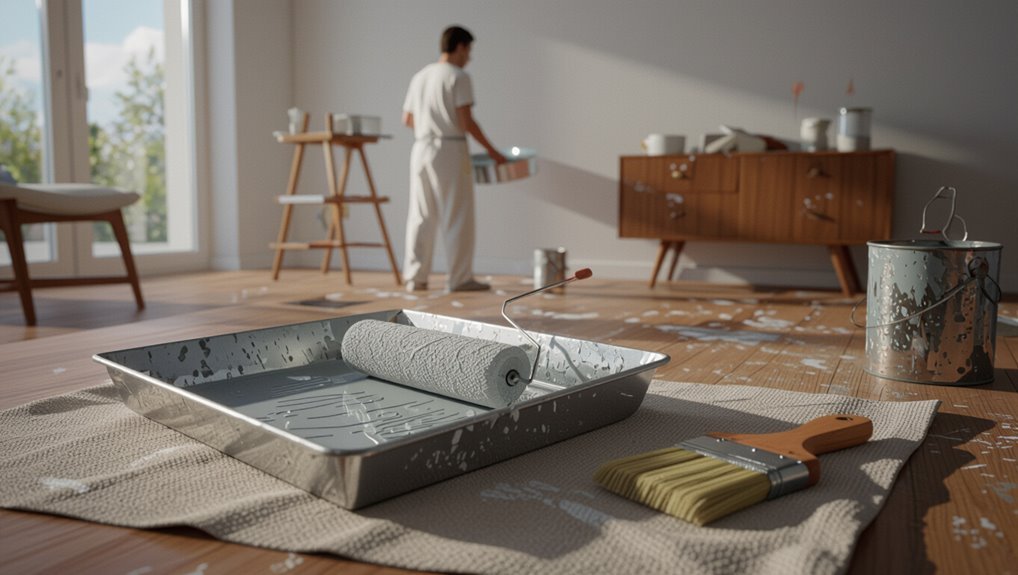
Gather the right tools and work in manageable sections so priming goes quickly and evenly: you’ll need a quality brush for cutting in, a 9– to 18-inch roller with a medium nap (3/8″–3/4″ depending on texture), a roller tray, extension pole, painter’s tape, drop cloths, and a stir stick.
Tape edges, cut in corners, roll in W-patterns, overlap wet edges, and apply even coats.
Step 5: Drying time and sanding between coats
After you’ve applied primer, let each coat dry fully before sanding or adding another—this prevents lifting and guarantees a smooth finish.
Check the manufacturer’s recommended dry time; usually 1–4 hours for latex, longer for oil-based.
Lightly sand with 220-grit between coats to knock down texture, wipe dust with a tack cloth, then apply the next coat when the surface feels dry and powder-free.
Painting Over White Without Primer Best Practices
If you’re skipping primer, consider paint-and-primer-in-one for light color changes or well-sealed surfaces.
Prep still matters: clean, sand glossy spots, and fix stains to help paint adhere.
Do a small test patch to see how many coats you’ll need and confirm coverage before tackling the whole wall.
When to use paint-and-primer-in-one products
When should you reach for a paint-and-primer-in-one when covering white walls?
Use it if the white is clean, uniform, and you’re switching to a similar or slightly darker shade—especially with mid- to high-quality products that promise better coverage.
It saves time on light changes or touch-ups, but don’t expect miracle coverage over stains, severe discoloration, or glossy finishes.
Preparation tips to improve adhesion without primer
1 smart step you can take before skipping primer is to thoroughly clean the walls—dirt, dust, and grease keep paint from sticking, so wipe surfaces with a mild detergent or TSP substitute, rinse, and let them dry completely.
Next, sand glossy areas lightly, fill holes and cracks, remove loose paint, and tape trim.
Use high-quality paint and apply even, consistent strokes for best adhesion.
How many paint coats are typically needed
After you’ve cleaned, sanded, and prepped the surface, figure out how many coats you’ll need to get full coverage over white without primer.
Usually two coats of quality paint suffice: a first coat to tint and a second to even out sheen and opacity.
Deep or bold colors may require a third coat.
Let each coat dry fully and assess coverage before proceeding.
When a test patch is useful
Wondering if you should try a test patch before painting over white without primer? You should when the existing finish, stain, or sheen might show through, or when switching from glossy to matte.
Pick an inconspicuous area, apply your chosen paint, let it fully dry, then inspect for adhesion, coverage, and color accuracy. Use results to decide on primer or extra coats.
Common Mistakes and How to Avoid Them
Don’t skip primer on stained or patched walls—you’ll risk bleed-through and uneven coverage.
Make sure you pick the right primer (oil-based for stubborn stains, latex for most interior jobs), prep surfaces thoroughly and let patches dry completely.
Also check sheens and adhesion: glossy areas need sanding or a bonding primer to avoid peeling.
Skipping primer on stained or patched walls
If your walls have stains or recent patches, skipping primer will often come back to haunt you—bleed-through, uneven texture, and visible repairs can ruin a fresh paint job.
You should always spot-prime patched areas and stain sources before topcoating.
Primer seals porous patches, blocks discoloration, and creates uniform adhesion, so your new paint covers cleanly and lasts longer without showing underlying blemishes.
Using wrong primer for the issue (e.g., latex vs. oil)
Choosing the wrong primer—like grabbing a latex primer for oil-based stains or an oil primer for moisture-prone drywall—can sabotage adhesion, drying time, and stain-blocking, leaving you with peeling paint, visible bleed-through, or a tacky finish.
Match primer type to the problem: use oil or shellac for stubborn stains, and high-quality latex or moisture-resistant primer for clean, porous surfaces to guarantee proper bonding.
Poor surface preparation and inadequate drying times
When you skip proper surface prep or rush the drying time, your paint job will show it—blistering, peeling, or uneven sheen are common results.
You should clean, sand, and repair cracks or grease before priming or painting.
Follow manufacturer drying times between coats and after priming.
Patience and thorough prep prevent adhesion failures and save you from redoing work.
Overlooking sheen differences and adhesion problems
Although subtle at first, sheen differences can ruin the look of freshly painted walls and cause adhesion problems where new paint meets old.
You should match sheen between old and new coatings or sand glossy areas to dull them.
Use a bonding primer on satin or semi-gloss surfaces to guarantee adhesion, and test a small patch so you catch issues before painting entire walls.
Cost, Time, and Environmental Considerations
You’ll want to weigh the upfront cost of a primer against the price and time of applying extra paint coats to reach full coverage.
Consider labor and schedule impacts—priming can save time overall on problematic surfaces but adds a step up front.
Also factor VOCs, choose low‑VOC products when possible, and ventilate well during and after painting.
Cost comparison: priming vs. extra paint coats
Sometimes a single gallon of primer can save you money and time compared with slapping on extra finish coats, because primer improves coverage, seals the surface, and reduces the number of expensive topcoat layers you’ll need. You’ll often spend less on primer plus one coat than on multiple finish gallons; primer also cuts waste and repainting frequency.
| Item | Visual |
|---|---|
| Primer | Solid base |
| Extra coats | Thick buildup |
| Cost | Dollars |
| Waste | Excess cans |
| Outcome | Lasting finish |
Time trade-offs and labor implications
When you factor in time and labor, priming usually speeds up the overall job even if it adds a short prep step up front; a sealed, uniform surface lets you apply fewer finish coats and reduces touch-ups.
VOCs, low-VOC options, and ventilation tips
Because primers and paints can emit volatile organic compounds (VOCs), you should weigh indoor air quality along with cost and time—low‑VOC and zero‑VOC products cut health risks and odors but often cost a bit more, while good ventilation can make standard products safer to use.
Choose low‑VOC primer/paint for occupied spaces, run fans, open windows, and air out rooms 24–72 hours after painting.
Quick Decision Flowchart Do You Need to Prime?
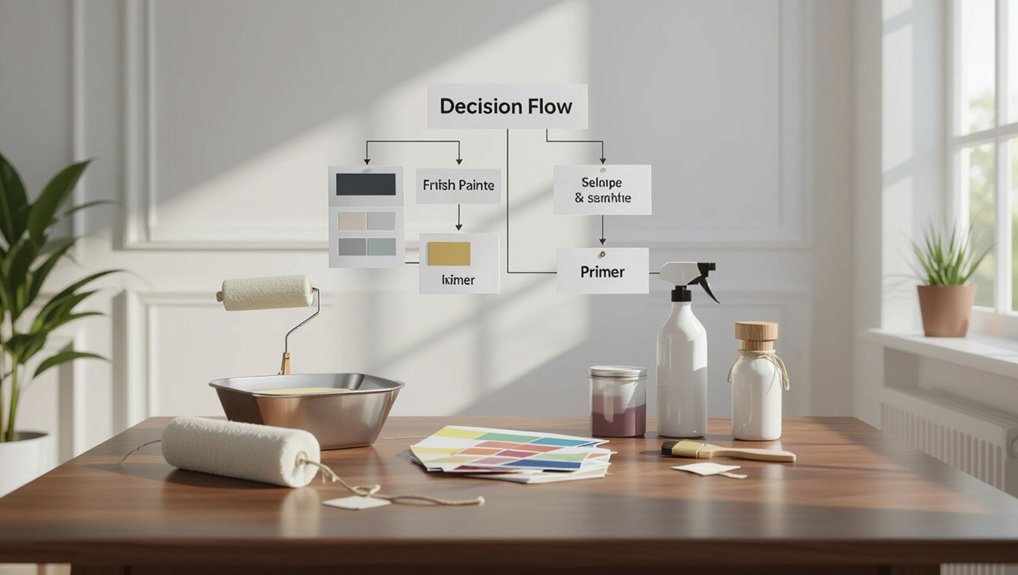
Wondering whether you need to prime your white walls? Follow a quick flow: are there stains, repairs, or drastic color changes? If yes, prime.
Wondering if white walls need priming? Ask: stains, repairs, or drastic color changes — if yes, prime.
If walls are clean, intact, and you’re painting white over white, you can usually skip primer.
For glossy or porous surfaces, sand or use a bonding primer.
When in doubt, primer improves adhesion and coverage.
Practical Examples and Case Scenarios
If you’re repainting a freshly painted white wall with a similar white, you can usually skip primer unless there are adhesion concerns.
When you’re covering patch repairs or moving from white to a medium color, you’ll want primer to even out absorption and hide patches.
For yellowed or stained whites—especially if you’re going to white or a dark color—use a stain-blocking primer to prevent bleed-through and guarantee uniform coverage.
Freshly painted white wall switching to a similar white
Thinking of touching up a freshly painted white wall with a slightly different white? You usually won’t need primer—clean the surface, scuff gloss, and test a small area.
Use the same sheen and high-quality paint for best blend. If the existing paint is fully cured and has no stains, a direct topcoat should match well; primer’s only necessary for adhesion problems or severe discoloration.
White wall with patch repairs moving to a medium color
Cutting in over patched white walls when you’re switching to a medium color requires a bit more prep than a same-tone touch-up.
You should sand and feather patch edges, clean dust, and apply a stain-blocking or tinted primer to equalize porosity.
Prime patched areas fully or spot-prime with overlap; this prevents flash and uneven sheen so your medium color lays down uniformly.
Yellowed or stained white walls repainted to white or dark color
When yellowed or stained white walls are getting repainted—whether you’re restoring them to crisp white or switching to a dark color—you’ll want to assess the type and severity of discoloration before you start.
For nicotine, smoke, or water stains, always use a stain-blocking primer; for mild, even yellowing, a high-hide primer may suffice.
Skipping primer risks bleed-through and poor coverage.
Tips and Best Practices Summary
If you want consistent, long-lasting results, follow a few core practices:
- Clean surfaces, repair flaws, and use a primer matched to stains and your new color to guarantee adhesion.
- Choose quality paint, apply thin even coats, and sand lightly between coats for smooth coverage.
- Use proper tools, maintain consistent drying times, and inspect under good light before final touch-ups.
FAQ
Got questions about painting white walls? You’ll find quick answers here on sanding, whether high-quality paint can skip primer, drying times, stain blocking, and using tinted primers instead of extra coats.
Read on to clear up what you should and shouldn’t skip.
Can I paint over white walls without sanding?
Wondering whether you can skip sanding and paint white walls directly? You can, if surfaces are clean, smooth, and free of peeling or glossy finishes.
Light scuffs wipe away; mild imperfections may be hidden by quality paint.
For glossy or damaged walls, sanding or deglossing guarantees adhesion and durability.
Test a small area first to confirm proper bonding before doing the whole room.
Is primer necessary if I’m using high-quality paint?
You can skip sanding for smooth, clean white walls, but deciding whether to skip primer when using high-quality paint is a separate question.
High-quality paint often contains better pigmentation and adhesion, so you might get adequate coverage on intact whites.
However, primer still helps seal stains, improve hold on patched areas, and guarantee uniform sheen and color—especially when shifting to a darker or different finish.
How long should primer dry before painting?
How long should primer dry before you paint?
Typically, latex primers dry to the touch in 30–60 minutes and are ready for topcoat after 1–2 hours; oil-based primers need 6–24 hours.
Always check the manufacturer’s instructions and verify the surface feels dry and not tacky.
In cool, humid conditions allow extra drying time to avoid adhesion and finish problems.
Will primer prevent stains from bleeding through?
Because some stains can seep through ordinary paint, a quality stain-blocking primer is essential to stop bleed-through and keep your finish clean.
You should choose a primer formulated for the specific stain—water, smoke, grease, or tannin—and apply per instructions.
One coat often works, but stubborn stains may need a second. Proper priming saves time and prevents costly touch-ups later.
Can I use tinted primer instead of multiple paint coats?
If you want to cut down on the number of paint coats, a tinted primer can often help by providing better initial coverage and reducing the contrast between the old color and your new shade.
You’ll save time when switching from dark to lighter tones or when changing hues. Choose a primer tinted close to the final color and apply one good coat before your finish paint.
