
Can You Paint Walls in the Winter? What Temperature Does to Your Finish
Yes—you can paint walls in winter if you control indoor climate. Keep temperatures around 50–70°F (10–21°C), with acceptable ranges up to 85°F for latex and 60–85°F for oil; humidity should stay moderate, ideally under 50–60%. Cold slows drying, weakens film strength, and can cause tackiness, blistering, or poor adhesion, so precondition paint, warm and ventilate the space, and use low‑temp formulations. Continue for practical prep, techniques, and troubleshooting tips.
Can You Paint Walls in the Winter? Quick Answer
Yes—you can paint interior walls in winter, but aim for temperatures between 50–70°F (10–21°C) and moderate humidity for best drying and adhesion.
If you can maintain those conditions with heating and ventilation, go ahead; if not, wait until temps and humidity are stable.
Exterior painting should be postponed unless temps stay consistently within the product’s recommended range.
Short direct answer (recommended temperature ranges and immediate recommendation)
Although winter adds challenges, you can paint interior walls if the room stays between about 50–85°F (10–29°C) and humidity is below roughly 50–60%; for latex paints aim for 50–85°F, and for oil-based stains or enamels keep it nearer the 60–85°F range.
When winter painting is acceptable vs. when to wait
If your home can hold a steady, moderate climate—roughly 50–85°F (10–29°C) with relative humidity under about 50–60%—you can paint interior walls in winter; proceed when surfaces are dry, ventilation is possible, and drying times meet product specs.
Wait if temperatures drop below recommended ranges, humidity rises, or cold drafts and condensation risk poor adhesion, extended tackiness, or finish defects.
How Temperature Affects Paint Performance Basic Understanding
You’ll notice paint chemistry shifts as temperatures drop, slowing the chemical reactions that let coatings form a solid film.
That changes drying time, curing and final film strength, and it’s compounded by humidity and condensation that can prevent proper adhesion.
Also know that latex (water-based) paints are more sensitive to cold and moisture than oil-based formulas, so choose products and timing accordingly.
How paint chemistry changes with temperature
When temperature shifts, the chemical behavior of paint changes in ways you’ll notice in drying, adhesion, and finish; solvents evaporate faster in heat and more slowly in cold, while binders and pigments respond to those evaporation rates and to molecular mobility.
You’ll see viscosity, pigment dispersion, and binder coalescence alter; stabilizers may break down, additives change effectiveness, and overall reactivity speeds or slows accordingly.
Effects on drying time, curing, and film formation
Because temperature controls how quickly solvents leave and binder molecules move, it directly shapes drying time, curing, and the way the paint film forms.
In cold conditions, solvents evaporate slowly and binders stay viscous, so tackiness and longer recoat intervals persist. You’ll see weaker coalescence, potential orange-peel texture, and reduced early hardness—so allow extended cure times before stressing or washing painted surfaces.
Humidity, condensation, and temperature interactions
Although temperature sets the stage for drying, humidity and condensation decide whether paint will finish properly or trap moisture in the film.
You’ll notice high humidity slows evaporation, prolonging tackiness and increasing blushing or bubbling risk.
Condensation on cold surfaces ruins adhesion and promotes mildewing.
Control indoor humidity, warm substrates, and allow extra drying time to guarantee a durable, even finish.
Differences between latex (water-based) and oil-based paints
If you’re painting in cold weather, know that latex (water-based) and oil-based paints cure by different chemistry and so respond differently to low temperatures.
You’ll find latex slows and may not film properly below about 50°F, risking poor adhesion and longer drying.
Oil-based paints tolerate cooler temps better, sealing and leveling more reliably, but they still thicken and cure slower as temperatures drop.
Recommended Temperature Ranges for Different Paint Types
When planning a winter paint job, you’ll want to check the minimum and ideal temperature ranges for each paint type so drying and adhesion aren’t compromised.
Interior latex typically needs temps above about 50°F (best at 60–75°F), while exterior latex and oil‑based/alkyd paints have their own minimums and preferred windows to cure properly.
Also note specialty low‑temp formulas, primers, and enamels are formulated to work at colder temps and can extend your workable season.
Interior latex paints minimum and optimal temps
Because temperature affects drying and film formation, you should know both the minimum and the ideal temps for interior latex paints before you start painting. Aim for 50–70°F as minimum safe range; ideal is 65–75°F. Humidity matters too. Use consistent heating and ventilation to guarantee proper curing.
| Condition | Minimum | Ideal |
|---|---|---|
| Temperature | 50°F | 70°F |
| Humidity | 30% | 40% |
| Ventilation | low | steady |
Exterior latex paints minimum and optimal temps
Moving from indoor work to the outside, exterior latex paints have different temperature needs because curing depends on both air and surface temps plus humidity and wind. You should wait for surface temps above 35°F (2°C); ideal range is 50–85°F (10–29°C). Protect from frost and wind; allow longer cure in cool, damp conditions.
| Condition | Minimum | Ideal |
|---|---|---|
| Surface temp | 35°F | 50–85°F |
| Air temp | 35°F | 50–85°F |
| Humidity | — | <85% |
Oil-based and alkyd paints temperature guidelines
Although oil-based and alkyd paints are more forgiving of cooler air than some waterborne formulas, they still need adequate warmth to flow, level, and cure properly. Aim for 50–80°F for best results; avoid painting below 40°F. Monitor surface temps and humidity.
| Paint Type | Min Temp | Ideal Temp |
|---|---|---|
| Oil-based | 40°F | 60–80°F |
| Alkyd | 40°F | 55–75°F |
Specialty paints (low-temp formulas, primers, enamels)
If you need to work in colder conditions than oil-based or alkyd paints allow, specialty low-temp formulas, primers, and enamels give you options designed to cure and perform at lower temperatures.
You can pick acrylic latex low-temp paints rated to about 35°F (2°C), primers to 32–35°F (0–2°C), and specific enamels down to 40°F (4°C).
Always follow manufacturer limits and extend drying time.
Preparing to Paint in Cold Conditions Step-by-Step
Before you start, check the weather and your indoor climate control so you’re not working against cold or damp conditions.
Measure the surface temperature and humidity, pick paints and additives rated for low temps, and make sure surfaces are clean, repaired, and primed for winter application.
Finally, set up safe ventilation and heating so the paint can cure properly without creating hazards.
Step 1: Check weather forecast and indoor climate control
When you’re getting ready to paint in winter, check the outdoor forecast and verify your indoor climate control will keep temperature and humidity in the paint manufacturer’s recommended range; inconsistent conditions are the most common cause of poor adhesion and slow curing.
Plan work on days with stable weather, guarantee heaters or humidifiers can maintain setpoints, and schedule ventilation to avoid drafts during application and drying.
Step 2: Measure surface temperature and humidity
Step 2: Measure surface temperature and humidity so you know the exact conditions the paint will face — use an infrared thermometer to read wall and trim temps and a hygrometer to check relative humidity at the surface level.
Take multiple readings across the room and near exterior walls, doors, and windows. Record values, ensuring surfaces and air meet your paint’s minimum temperature and humidity guidelines before you start.
Step 3: Choose the right paint and additives for cold temps
Because cold slows curing and can alter finish, pick paints and additives formulated for low temperatures so your work dries properly and looks right.
Use acrylic latex labeled for low-temp application or specialty cold-weather alkyds. Add approved cold-weather extenders or drying accelerators per instructions, avoiding untested combos.
Store materials near ambient temperature before use and follow manufacturer minimum temperature and recoat guidelines for reliable results.
Step 4: Prepare surfaces (cleaning, repairs, priming) for winter
Now that you’ve picked paints and additives suited for cold temps, get the surfaces ready so they’ll accept the coat and cure properly.
Clean with a mild detergent, remove dust, grease, and mildew, and let surfaces dry thoroughly.
Patch cracks and holes with low-temperature–rated filler, sand smooth, and apply a primer formulated for cool conditions to guarantee adhesion and even drying.
Step 5: Set up ventilation and heat sources safely
Before you start painting, plan how you’ll ventilate the space and provide safe, consistent heat so the paint can cure properly.
Open windows slightly and use window fans to exhaust fumes while bringing in fresh air.
Choose electric heaters with tip-over and thermostat protection; keep them away from paint, solvents, and combustibles.
Monitor humidity and maintain recommended temperature during application.
Step 6: Plan application timing and drying windows
When you plan application timing and drying windows, aim for the warmest, driest stretches of the day and allow extra curing time between coats; cold slows chemical reactions, so a longer open time and extended dry period are the norm.
Paint when temperatures peak, apply thinner coats, wait longer than label times, and test tackiness before recoating to prevent trapping moisture and causing poor adhesion or finish flaws.
Best Techniques for Painting in Winter
When painting in winter, you’ll want to choose the right application method—brush, roller, or spray—to maximize adhesion and achieve a smooth finish.
Adjust coat thickness and drying intervals, and consider accelerators, retarders, or anti-freeze additives to keep paint curing properly in cold air.
Also control dust, condensation, and cold drafts to prevent surface defects and guarantee consistent results.
Application methods to improve adhesion and finish (brush, roller, spray)
Pick the right application method and you’ll greatly improve adhesion and the final look of winter paint jobs.
Use a brush for edges and areas needing firm contact; it forces paint into crevices.
Choose a high-nap roller to maintain wet edge and reduce lap marks.
Consider airless spray for even coverage on large surfaces, but back-roll immediately so paint bonds to the substrate.
Adjusting coat thickness and drying intervals
After you’ve chosen the right application method, dial in coat thickness and drying intervals to prevent poor adhesion and surface problems in cold conditions.
Apply thinner coats so each cures fully; thick layers trap moisture and slow drying.
Increase drying time between coats—use gentle heat and airflow—and test tackiness before recoating.
Monitor temps; delay recoats if humidity or cold extends cure time.
Using accelerators, retarders, and anti-freeze additives
While cold slows chemical reactions in paints, you can use accelerators, retarders, and anti‑freeze additives to control drying and film formation so coatings cure properly in low temperatures.
Choose manufacturer‑approved products for your specific paint, follow dosing limits, and test small areas.
Accelerators speed cure, retarders extend open time, and anti‑freeze prevents freezing—use combinations carefully to avoid adhesion or gloss problems.
Controlling dust, condensation, and cold drafts during painting
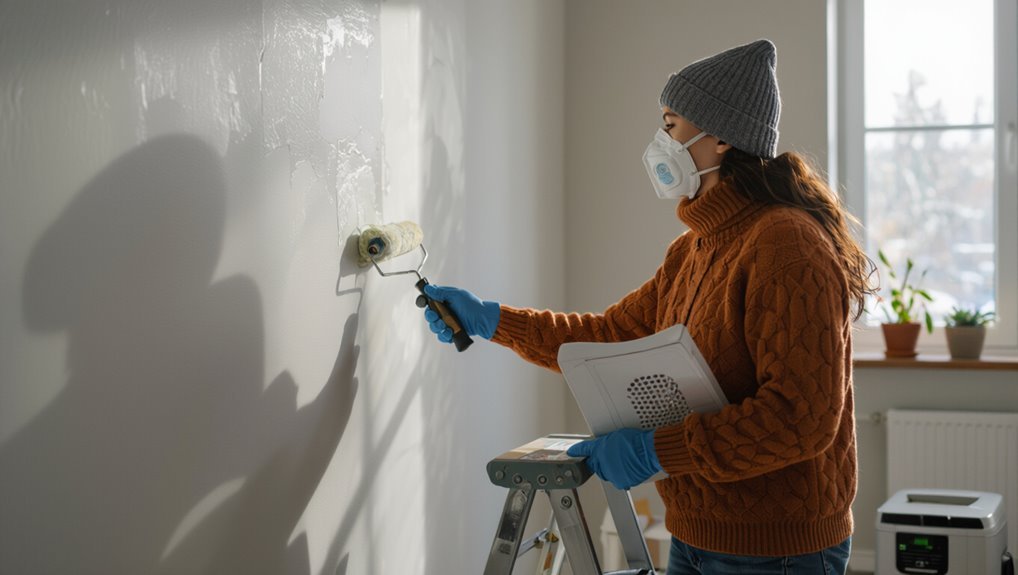
If you want a smooth, durable finish in winter, keep dust, condensation, and cold drafts out of the work area—each can ruin adhesion, texture, or drying time.
Seal gaps and vents, use temporary weatherstripping and plastic sheeting, run a low-humidity heater or dehumidifier, and allow gentle airflow with filtered intake.
Monitor surface temperature and wait for stable, above-minimum conditions before coating.
Common Problems When Painting in Cold Weather
When you paint in cold weather, you can run into blistering, cracking, and poor adhesion as the paint doesn’t form a proper film.
Freezing moisture can cause a milky or cloudy finish, while slow drying leads to tacky surfaces and dust sticking to the paint.
You may also see uneven sheen, color shifts, and further adhesion failures if conditions stay too cold or damp.
Blistering, cracking, and poor adhesion
Paints can blister, crack, or refuse to stick if you try to work in cold, damp conditions.
You’ll see bubbles where solvent can’t evaporate, and films may harden unevenly, leading to splits.
Poor adhesion lets paint peel away instead of bonding to the substrate.
Prevent problems by warming the room, using low-temperature formulas, and ensuring surfaces are dry and contaminant-free before you paint.
Milky or cloudy finish from freezing moisture
Although you’ve followed the steps for surface prep, a milky or cloudy finish can still appear if moisture in the paint freezes before it dries.
You’ll see translucent, whitish streaks or haze when frozen water disrupts the binder.
Prevent this by keeping temperature above the paint’s minimum, using warm, dry ventilation, and delaying application during cold, damp nights until conditions are stable.
Slow drying, tacky surfaces, and dust contamination
If temperatures dip and humidity rises, paint will take much longer to dry and can stay tacky for hours or days, attracting dust and debris that mar the finish.
You should control humidity, increase ventilation, and use heaters or dehumidifiers so coatings cure.
Keep rooms closed during drying, wipe settled particles gently, and wait longer before recoating or moving furniture to avoid trapping imperfections.
Uneven sheen, color shift, and adhesion failures
Beyond slow drying and dust issues, cold conditions also mess with how paint looks and sticks.
You’ll notice blotchy sheen where low temperatures prevent uniform film formation, and colors may appear duller or shift slightly as pigments respond to cold.
Poor adhesion becomes likely—paint can craze, flake, or peel later.
To avoid this, follow manufacturer temp guidelines and precondition surfaces and paint.
How to Fix Winter Painting Issues (Troubleshooting)
First, you’ll want to identify whether temperature, humidity, or poor prep caused the problem so you can target the fix.
For adhesion failures or peeling, I’ll outline surface repair and re-priming steps, and for cloudy or milky finishes I’ll explain how to determine if it’s moisture or contamination and how to correct it.
Finally, you’ll learn when a simple touch-up will suffice and when it’s better to strip and repaint.
Identifying the root cause (temperature vs. humidity vs. prep)
When paint behaves badly in winter—dries too slowly, bubbles, or flakes—you’ll need to isolate whether temperature, humidity, or surface prep caused it so you can apply the right fix.
Check thermometer and surface temps, measure relative humidity, and inspect for dust, oil, or old failing coatings.
Match symptoms: cold stalls drying, high humidity causes blushing/mildew, poor prep yields adhesion problems.
Repair steps for adhesion failures and peeling
Start by removing loose or flaking paint down to a firmly adhered edge—use a scraper, putty knife, or oscillating tool—and clean the surface of dust, chalk, oil, and salts so new coatings can bond.
Sand edges smooth, prime bare areas with a compatible primer, and fill gaps or cracks with patching compound.
Reprime repairs, let cure fully, then repaint under recommended temperature and humidity.
Correcting cloudy or milky finishes
If cold temperatures or high humidity leave your freshly painted walls with a cloudy, milky haze, you can usually fix it without stripping the paint.
Wait until the room warms and dries fully, then rub the surface gently with a soft cloth and mild detergent to remove residue.
If haze persists, lightly scuff with fine sandpaper and recoat using a compatible finish at proper temperature and humidity.
When to strip and repaint vs. touch-up
Sometimes a simple wipe, sanding and recoat will cure winter-related defects, but other times you’ll need to remove the paint and start over.
Inspect adhesion, bubbling, flaking, or widespread clouding. Touch up if damage is isolated and sound substrate remains.
Strip and repaint when defects cover large areas, adhesion fails, or moisture caused peeling.
Test a small patch before full removal to confirm the fix.
Safety and Practical Considerations
When you paint in winter, you’ll need to balance heat and ventilation so heaters don’t create fire risks while fresh air keeps VOCs from building up.
Keep solvents and open flames well apart, use low‑VOC paints when possible, and run fans or a HEPA air purifier to protect indoor air quality.
Also seal off furniture and cover vents to shield occupants and belongings from fumes and cold.
Safe use of heaters and ventilation during painting
Because paint fumes concentrate in closed spaces, you’ll need to manage heaters and airflow carefully to keep the room safe and the finish even.
Use indirect, thermostat-controlled heat to maintain recommended temperatures without blasting paint.
Position fans to exhaust toward windows or doors, creating cross-ventilation.
Keep vents away from wet walls to prevent uneven drying.
Monitor humidity and temperature throughout the job.
Fire hazards, VOCs, and indoor air quality in winter
As you paint indoors in winter, stay alert to fire risks and indoor-air hazards that rise when homes are sealed and heating runs more. Solvent-based paints and open cans can ignite near space heaters, pilot lights, or overloaded extension cords.
Volatile organic compounds (VOCs) will build up without proper ventilation, aggravating headaches, asthma, and long-term exposure concerns.
Limit solvent use, store cans closed, run ventilation, and use low-VOC or water-based paints to reduce risk.
Protecting furnishings and occupants from fumes and cold
Beyond fire and VOC concerns, you’ll also need to protect your furniture and household members from paint fumes and cold-related damage.
Seal off work areas with plastic sheeting, move or cover furnishings with drop cloths, and ventilate using window fans while maintaining heat.
Use low-VOC or water-based paints, run air purifiers, and keep occupants, pets, and plants away until fumes dissipate and walls reach room temperature.
Cost, Time, and Project Planning for Winter Painting
Winter conditions will stretch your timeline and may increase labor time as you account for slower drying and possible weather delays.
Expect higher material waste and occasional premium costs for cold-weather paints or additives, so factor those into your budget.
Plan flexible scheduling—build in buffer days, choose contractors experienced with winter jobs, and time tasks for the warmest parts of the day.
How winter affects project timelines and labor
Because cold slows every step of a paint job, you’ll need to adjust timelines, budgets, and crew schedules when planning winter work.
Expect longer prep, slower drying, and fewer productive hours per day. You should schedule buffer days, stagger shifts to take advantage of warmer periods, and plan contingency time for weather-related delays so crews aren’t rushed and quality doesn’t suffer.
Material costs and waste considerations
Cold weather raises material costs and waste in ways you should plan for: you’ll use more primer and higher-volume coatings to guarantee coverage when paint penetrates less effectively.
Buy cold-weather formulations and additives that cost more per gallon, and factor in extra masking, heaters, and insulation materials to protect work and speed curing.
Expect higher touch-up needs, leftover unusable product, and slightly larger order quantities to avoid delays.
Scheduling tips for contractors and DIYers
How soon should you schedule work when temperatures drop? You should plan earlier than usual: book contractors weeks ahead, or set DIY dates when forecasts show stable temps above manufacturer minimums.
Factor extra drying time, heater rental costs, and flexible windows for weather delays.
Prioritize critical areas, split jobs into smaller phases, and communicate contingencies to avoid rush fees and rework.
Comparison: Painting in Winter vs. Spring/Summer/Fall
You’ll weigh clear benefits of winter painting—like lower demand and faster scheduling—against drawbacks such as slower drying and stricter temperature limits.
In some cases, like unheated homes that need immediate repairs or when you can control indoor climate, winter actually outperforms spring, summer, or fall.
Consider your priorities—timing, cost, and climate control—to decide which season makes the most sense.
Benefits and drawbacks of winter painting
While winter can complicate some painting tasks, it also offers unique advantages compared with spring, summer, or fall. You’ll get less dust, faster indoor cure without humidity, and off-season contractor availability, but you’ll face temperature limits, longer dry times for cold paints, and ventilation challenges.
| Benefit | Drawback | Tip |
|---|---|---|
| Less dust | Temp limits | Check label |
| Lower humidity | Ventilation | Use fans |
| Contractor availability | Cold-sensitive paints | Choose winter formulas |
Situations where winter painting outperforms other seasons
Because cooler air holds less dust and contractors often have more open schedules, winter can be the best choice for projects that demand a clean, uninterrupted work window—like painting high-traffic common areas, detailed trim, or entire rooms that you want finished quickly.
You’ll also benefit when humidity’s low, touch-ups need minimal curing time, and indoor climate control keeps temperatures steady for consistent drying and fewer callbacks.
Preventive Checklist Before Painting in Cold Weather
Before you start, make a quick preventive checklist so cold won’t compromise your paint job.
You’ll verify indoor humidity and temperature controls for interiors, and check surface prep, caulking, and wind protection for exteriors.
Use the list below to guide a fast, effective pre-paint inspection.
- Interior: verify HVAC or space heaters, dry walls, and stable humidity/temperature.
- Exterior: inspect for frost, secure tarps, and confirm caulk and primers are rated for low temps.
- Tools & materials: choose cold-weather formulas, keep extras warm, and plan shorter work sessions.
Pre-paint checklist for interior projects
If you’re planning an interior paint job in cold weather, run a quick preventive checklist to avoid adhesion problems, moisture issues, and delayed drying times.
Seal drafts, maintain 50–70°F during and 24–48 hours after painting, use a ventilated space with low humidity, precondition paint to room temperature, clean and dry surfaces, repair cracks, and choose paints labeled for cooler temps to guarantee proper curing and finish.
Pre-paint checklist for exterior projects
1 smart pre-check can save days of rework when you’re painting exterior surfaces in cold weather: confirm forecasted temperatures will stay within the paint’s recommended range during application and curing, clear snow and ice from all work areas, dry substrates thoroughly, inspect and repair caulking and flashings, and have heaters, ventilation, and low-humidity measures ready to maintain consistent conditions through the full cure time.
You’ll also check tools, stock compatible primers and cold-weather paints, schedule during warmer daylight hours, protect nearby landscaping, and plan for extended drying.
FAQs
You’re probably wondering about practical cold-weather questions like whether you can paint below 50°F and how long to wait between coats.
You’ll also want to know if space heaters help, whether a surface above freezing but cold air will let paint dry, and how low‑VOC formulas hold up.
I’ll answer each so you can plan safe, effective winter painting.
Can I paint outside if it’s below 50°F?
Wondering whether you can paint outside when temperatures dip below 50°F? You can, but lower temps slow drying, impair adhesion, and increase brush marks or blistering.
Use paints labeled for low temperatures, warm the paint and substrate, and avoid moisture or freezing.
Work midday when it’s warmest, keep lids closed between sessions, and check manufacturer minimums to prevent poor finish or failure.
How long should I wait between coats in cold weather?
Because cold slows solvent evaporation and curing, wait longer between coats than you’d in warm weather—typically 24 to 48 hours for most water-based paints and 48 to 72 hours for oils or alkyds—while always checking the paint label for the manufacturer’s minimum recoat time and ensuring the surface feels dry and firm to the touch before applying the next coat.
If unsure, err on longer intervals to prevent tackiness.
Can I use a space heater to speed up drying?
Can you safely speed drying with a space heater? You can, but use caution.
Keep the heater at least three feet away, avoid direct hot airflow on wet paint, and maintain steady, moderate room temperature to prevent blistering or uneven curing.
Guarantee good ventilation and steady humidity.
Electric heaters are safer than fuel-burning units to avoid moisture or fumes that can spoil the finish.
Will paint dry if surface temperature is above freezing but air is below?
If the painted surface stays above freezing while the surrounding air is below, your paint can still dry, but drying will be slower and more unpredictable.
You’ll see extended tack time, longer curing, and greater risk of surface defects like blushing or uneven sheen.
Maintain steady surface warmth, control humidity, and allow extra drying time before recoating or handling to avoid compromised finish.
Are low-VOC paints less reliable in cold conditions?
You’ve already seen how surface temperature and humidity slow drying; that background matters when you’re choosing low-VOC paints for cold-weather work.
Low-VOC formulations often rely on slower-evaporating solvents and milder coalescents, so they can feel less forgiving in cold, damp conditions.
You should follow manufacturer minimum temperatures, allow extra cure time, and consider temporary heating or using a standard formula if conditions stay marginal.
