
Is It Better to Paint or Stain Cedar Shingles for Long-Term Protection?
You’ll usually get stronger long-term moisture and UV protection from a quality paint film, while stain preserves cedar’s natural grain and is simpler to refresh. Paint lasts longer between full recoats and hides imperfections, but it can trap moisture if not prepped properly and needs more intensive repairs. Stain breathes with the wood and is cheaper to maintain, though it fades sooner. Keep going to see which choice matches your climate, budget, and upkeep plans.
Quick Answer Paint or Stain for Cedar Shingles?
If you want a quick answer, stain is usually the better choice for cedar shingles, though paint can work if you need a uniform color or extra protection.
For homes and siding, stain preserves the wood’s natural look and breathability; for roofs or high-exposure areas, a high-quality paint can offer added durability.
Consider maintenance and aesthetic goals when you choose.
Direct recommendation summary
For most homeowners wanting long-lasting, low-maintenance cedar shingles, stain is the better choice: it soaks into the wood, preserves the natural grain, and requires less frequent upkeep than paint.
You’ll protect the wood, retain texture, and simplify maintenance. If durability and natural appearance matter more than opaque coverage, choose stain.
Ask about product UV blockers and recoat intervals.
One-sentence rationale for typical scenarios (homes, roofs, siding)
Because you want the best balance of protection and appearance, choose stain for most cedar siding and shingles—stain soaks in, shows the grain, and lasts longer between recoats—while paint can work on high-exposure roofs or when you need full, uniform coverage and color change.
For homes, stain preserves character and reduces maintenance; for roofs, paint offers stronger UV and water-barrier performance.
Basic Understanding of Cedar Shingles
Cedar shingles are thin, tapered wood pieces used for siding and roofing, prized for their natural look and weather protection.
You’ll notice cedar’s natural oils, tannins, and tight grain give it good decay resistance and some moisture repellency.
How you finish the wood—paint or stain—changes both its appearance and how well those natural properties hold up over time.
What cedar shingles are and common uses
Shingles cut from aromatic western red or eastern white cedar give you a lightweight, durable roofing and siding option that resists rot and insects naturally.
You’ll use cedar shingles for roofs, gables, dormers, and full or accent siding. They suit cottages, cabins, and modern homes seeking natural texture.
You can also use them for decorative trim, fences, and interior feature walls.
Natural properties of cedar (durability, tannins, moisture resistance)
Aromatic heartwood gives cedar its standout durability, combining natural oils and tannins that slow decay and deter insects so your roof or siding lasts longer with less maintenance.
You’ll find cedar’s cellular structure resists moisture uptake, reducing rot and warping. Its light weight and dimensional stability mean fewer stress cracks, while tannins provide mild antifungal action—helping cedar perform well in varied climates.
How finish affects cedar’s performance and appearance
Those natural oils and tannins give cedar a head start, but the finish you choose will largely determine how long that advantage lasts and how the wood looks over time.
You’ll pick paint for opaque protection and uniform color but risk trapped moisture and maintenance. Stain preserves grain, breathes, and needs reapplication sooner.
Your climate, exposure, and desired appearance guide the choice.
Paint vs Stain Core Differences
You’ll notice paint mostly sits on the surface while stain soaks into the cedar, and that difference shapes durability and maintenance.
Paint gives opaque, uniform color choices and hides grain, whereas stain offers varied transparency, more natural tones, and visible wood texture.
Also consider that stains are generally more breathable for moisture management while paints rely on film-forming barriers and different UV/weather additives for protection.
Composition and how each penetrates or coats wood
Think of paint as a skin and stain as a dye: paint sits on the surface in an opaque film that hides grain, while stain soaks into the fibers and keeps the wood’s texture visible.
Paint uses binders, pigments, and solvents to form a protective layer; stain blends pigments with penetrating oils or waterborne carriers, so it seals pores, repels moisture, and bonds within wood rather than merely coating it.
Aesthetic outcomes (opacity, color options, grain visibility)
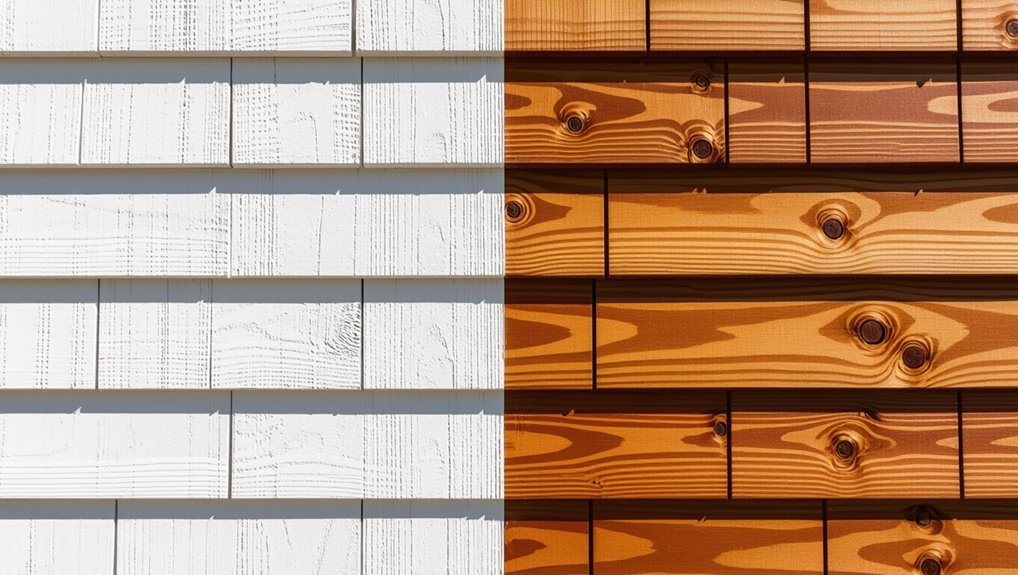
How do paint and stain change the look of cedar shingles?
You’ll get opaque, uniform color with paint—hiding grain and defects, offering bold palettes.
Stain lets natural cedar show through: transparent or semi-transparent tints enhance grain and warm tones while translucent options subtly shift color.
Choose paint for consistent finishes and stains for depth and visible wood character that ages more naturally.
Breathability and moisture management
Beyond appearance, how a finish handles moisture will determine long-term performance.
You’ll find stains let cedar breathe, penetrating fibers and allowing vapor to escape, which reduces trapped moisture and rot risk.
Paint forms a film barrier that blocks some vapor transmission; if it fails or traps water beneath, you’ll face peeling and decay.
Choose based on exposure and maintenance willingness.
UV and weather protection mechanisms
Because UV light and weather are the chief enemies of cedar, you need a finish that either shields the wood at the surface or soaks in and protects the fibers.
You’ll find paint forms a reflective, sacrificial film that blocks UV and rain but can crack.
Stain penetrates, stabilizes fibers, and lets moisture escape, though it offers less total UV blockage and needs more frequent reapplication.
Performance Comparison: Longevity, Maintenance, and Cost
You’ll want to compare how long paint and stain last, how often each needs upkeep, and what they’ll cost over time so you can pick the best option for your budget and schedule. Below is a quick comparison to frame that discussion before we get into specifics. Use it to guide your decision on recoat intervals, maintenance effort, and total cost.
| Factor | Paint | Stain |
|---|---|---|
| Expected lifespan before recoat/replacement | 7–15 years (depending on quality and exposure) | 5–10 years for semi-transparent, longer for solid |
| Maintenance frequency & effort | Less frequent but more intensive when needed (scraping, priming) | More frequent touch-ups, generally simpler reapplications |
| Relative cost (materials, labor, long-term) | Higher upfront and higher long-term if frequent replacements | Lower upfront, potentially lower long-term with regular maintenance |
Expected lifespan before recoat or replacement
Lifespan for cedar shingles before you need a recoat or replacement varies widely, but typical ranges help set realistic expectations:
Painted shingles usually last 10–15 years before full replacement is likely, with recoats at 7–10 years.
Stained shingles typically need recoating every 3–7 years and can last 15–25 years before replacement if you maintain moisture control and address damage promptly.
Typical maintenance frequency and effort
When comparing maintenance for painted versus stained cedar shingles, expect painted surfaces to demand fewer refreshes but more intensive jobs when they’re due.
You’ll repaint less often—typically every 8–15 years—but you’ll prep extensively: scraping, priming, and full coats.
Stain needs touch-ups every 3–7 years with lighter prep and resealing; you’ll spot-treat mildew and faded areas more frequently but with less labor per visit.
Relative cost: materials, labor, long-term total cost
Compare costs across three buckets—materials, labor, and long-term upkeep—to see which finish really saves you money over time.
Paint materials cost less upfront but need pricier prep and more frequent repainting, raising lifetime labor.
Stain costs more per coat, but requires simpler maintenance and less frequent recoating, lowering total labor.
Calculate expected lifespan, recoat intervals, and labor rates to pick the cheaper option.
When Painting Is the Better Choice
If you need consistent color or your home’s design calls for a smooth, painted look, painting cedar shingles can be the better choice.
It also gives you a stronger sealer against moisture and UV damage compared with many translucent stains.
Expect to prep thoroughly—clean, repair, prime—and apply paint in the right conditions to get lasting results.
Situations favoring paint (color uniformity, architectural style)
Although cedar’s natural grain is attractive, you’ll choose paint when you need consistent color across a roof or siding, when the design calls for a bold or historic palette, or when matching adjacent materials is critical to the overall look.
You’ll also favor paint for crisp trim contrast, unified neighborhood aesthetics, or to meet preservation guidelines that require specific, opaque finishes for architectural integrity.
Advantages of paint for protection and sealing
When you need maximum weather protection and a tight seal, paint outperforms stain by forming a durable film that shields cedar from UV rays, moisture, and surface wear.
You’ll benefit from longer-lasting color, reduced water intrusion, and a surface that resists abrasion and mildew.
Paint also fills minor defects, creating a uniform barrier that simplifies maintenance and extends the shingles’ service life.
Required surface preparation and application steps
Because paint relies on a tight bond and continuous film, you’ll need to prepare cedar shingles carefully before you start.
Clean, dry, and mildew‑free surfaces are essential. Sand rough or checked areas and replace damaged shingles.
Prime bare wood, then apply two coats of high‑quality exterior paint, following manufacturer drying times.
- Clean and dry
- Sand and repair
- Prime
- Two coats
When Staining Is the Better Choice
If you want to keep cedar’s natural grain and let the wood breathe, staining is often the smarter choice.
It protects the shingles, helps prevent moisture damage, and makes routine maintenance and re-coating easier.
You can pick transparent, semi‑transparent, or solid stains depending on how much color and UV protection you want.
Situations favoring stain (natural look, letting wood breathe)
Although a painted finish can hide flaws, you’ll prefer stain when you want a natural, wood-forward look and need the shingles to breathe; stain penetrates and highlights grain while still allowing moisture migration, reducing the risk of trapped dampness and rot.
Choose stain if you value subtle aging, want to preserve cedar’s texture, or need a finish that blends with surroundings while remaining breathable.
Advantages of stain for wood health and ease of maintenance
Health: stain preserves cedar’s natural defenses while making upkeep simpler—penetrating oils and pigments shield fibers from UV and moisture without sealing them off, so the wood can expand, contract, and dry rather than trap dampness.
You’ll benefit from easier spot repairs, less peeling or blistering, and quicker reapplication. Stain helps prevent rot and fading while letting you maintain appearance with minimal effort.
Types of stains (transparent, semi-transparent, solid) and their use cases
When choosing a stain for cedar shingles, you’ll pick from three main types—transparent, semi-transparent, and solid—each balancing protection and appearance differently.
You’ll choose based on desired look and weather resistance.
- Transparent: highlights grain, minimal UV protection.
- Semi-transparent: tints color, moderate protection.
- Solid: hides grain, strong protection.
- Hybrid: combines benefits for balanced performance.
Step-by-Step Guide to Prepare and Apply Paint or Stain
Before you pick a finish, you’ll inspect each shingle for damage, rot, and any old coatings so you know what fixes are needed.
Then you’ll clean, remove mildew, sand, and repair where necessary before selecting the right primer, stain or paint and tools.
Finally, follow application best practices specific to paint or stain to guarantee even coverage and long-lasting protection.
Step 1 Inspect and assess shingles (damage, rot, previous finish)
Start by doing a thorough walk‑around and close inspection of every cedar-shingled surface so you can spot damaged, rotted, loose, or previously finished areas that will affect adhesion and longevity.
Check for splits, cupping, nail pops, and soft spots; note areas with old paint or stain.
Mark shingles needing replacement and record moisture intrusion sources so your next prep steps target real issues.
Step 2 Surface preparation: cleaning, mildew removal, sanding, repairs
Now that you’ve identified damaged or previously finished areas, prepare the surface so paint or stain will adhere and last.
Clean with a mild detergent or house‑wash, remove mildew with a bleach solution, sand rough or peeling spots, and replace or fasten loose shingles.
Then let wood dry fully before finishing.
- Wash
- Treat mildew
- Sand
- Repair
Step 3 Choosing primers, stains, paints, and tools
With the surface prepped, pick products and tools that match cedar’s tannin-rich, soft-grain nature and your desired look — breathable oil- or alkyd-based primers for paint, acrylic primers for faster drying, semi-transparent stains to showcase grain, or solid stains for a paint-like finish.
Choose high-quality brushes, rollers, or sprayers sized for shingles to guarantee even coverage. Select UV-resistant, mildew-inhibiting formulations and compatible topcoats.
Step 4 Application best practices for paint
Before you paint, confirm the wood is dry, clean, and cool to the touch so coatings bond properly; work in mild, non-humid weather.
Prime any bare cedar, back-brush thin coats into grain, and maintain a wet edge to avoid lap marks.
Use quality brushes or a low-pressure sprayer, apply two even coats, and allow full drying between coats for durable protection.
Step 5 Application best practices for stain
Start by checking that the cedar is clean, dry, and cool—stain soaks and performs best on wood that’s free of dirt, mildew, and surface salts.
Work in manageable sections, apply with a brush or roller for even penetration, back-brush to eliminate pooling, and maintain a wet edge.
Use thin coats, follow manufacturer mixing, and protect nearby surfaces from drips.
Step 6 Drying, curing, and post-application care
After you’ve applied stain evenly and avoided pooling, you’ll need to let the finish dry and cure properly to reach full durability and color stability.
Keep temperatures within product recommendations, maintain humidity below highs, and protect from rain and dust for at least 24–72 hours.
Avoid heavy contact, recoat only after specified cure time, and inspect for missed spots or tackiness before declaring the job complete.
Common Problems and Mistakes to Avoid
Don’t slap new paint or stain over an old finish without proper prep — it’ll peel or trap moisture.
Pick a product and opacity suited to sun, rain, and your shingles’ condition, and don’t apply in high humidity or poor ventilation.
Also check for rot or botched repairs first, because coating damaged wood only masks bigger problems.
Overcoating old finishes without proper prep
When you slap a new coat over old paint or stain without stripping, sanding, or cleaning, adhesion problems and peeling usually follow—old finishes hide dirt, chalk, and solvent-soluble layers that prevent proper bonding.
You’ll trap moisture, accelerate failure, and mask substrate damage.
Test adhesion first, remove loose material, degrease, and feather edges.
Proper prep extends service life and saves repainting.
Choosing wrong opacity or product for exposure conditions
Getting the surface right doesn’t fix everything—choosing the wrong opacity or product for your roof or siding exposure will still shorten protection and waste effort.
You should match opacity to sun, moisture and desired grain show-through: solid hides and blocks UV but can trap moisture; semi-transparent lets wood breathe but offers less UV defense.
Pick products rated for your climate and expected wear.
Poor ventilation, humidity and wrong timing for application
If you apply paint or stain in high humidity, poor ventilation, or at the wrong time of year, you’ll almost guarantee adhesion failures, extended drying times, and uneven finish.
Check weather forecasts, avoid application before rain or freezing nights, and work when dew’s cleared.
Proper airflow and warmer, drier conditions let coatings cure, penetrate, and bond correctly, reducing peeling, blistering, and mildew risk.
Ignoring underlying wood damage or improper repairs
Although it might seem faster to paint or stain over soft, rotten, or previously patched cedar, doing so hides problems that will soon resurface and ruin your finish.
You should remove damaged shingles, replace rotten sections, and make proper repairs before finishing. Skipping this traps moisture, accelerates decay, and causes peeling or blistering.
Invest time in solid substrate for lasting protection.
Best Practices and Long-Term Protection Strategies
You should set a regular inspection and maintenance schedule so small issues don’t turn into big repairs.
Watch for signs it’s time to recoat—fading, loss of water beading, or flaking—and follow recommended recoating timelines for your chosen finish.
Don’t forget to protect trim, flashing, and vulnerable details, and consider combining a preservative treatment with your stain or paint for longer-lasting protection.
Regular inspection and maintenance schedule
Because cedar shingles face constant exposure to weather and pests, a regular inspection and maintenance schedule keeps small problems from becoming costly repairs.
Check shingles twice yearly and after major storms for loose, cracked, or warped pieces, mold, or insect activity.
Clean gutters, remove debris, trim nearby vegetation, and replace damaged shingles promptly to preserve finish and prevent moisture intrusion.
Recoating timelines and signs it’s time to redo finish
After you’ve finished inspections and kept debris and vegetation away, establish a recoating schedule so small wear doesn’t become major damage.
Check finish every 2–5 years: stains often need refresh sooner (2–4 years), high‑quality paints last longer (5–10 years).
Look for fading, flaking, raised grain, or water beading failure.
Recoat promptly when these signs appear to prevent moisture intrusion and wood decay.
Protecting trim, flashing, and vulnerable details
When protecting trim, flashing, and other vulnerable details, focus on sealing joints, directing water away, and using compatible materials so problems never start.
Inspect flashing, caulk gaps with paintable, flexible sealant, and slope trim to shed water. Use corrosion-resistant fasteners and back-primed or sealed trim edges.
Patch damage promptly and keep gutters clear so water never lingers against shingles or trim.
Combining treatments (e.g., preservative + stain/paint)
If you want long-lasting cedar shingles, combining a preservative treatment with a quality stain or paint gives you the best defense: the preservative addresses rot and insect risk deep in the wood while the finish protects against UV, moisture, and surface wear.
Apply preservative per manufacturer, let wood dry, then use a compatible stain or paint. Reapply preservative where needed during maintenance.
Cost-Benefit Checklist for Homeowners
Now that you know how to protect cedar shingles long-term, it’s time to weigh costs and benefits so you can pick the right finish for your home.
Consider climate, the look you want, your budget, and how much upkeep you’re willing to do to make a practical choice.
Use this quick checklist and flow to decide whether paint or stain fits your needs.
- Climate: harsh or wet climates often favor paint for barrier protection; dry climates can suit stain.
- Desired look: solid paint hides grain and gives uniform color; stain preserves or enhances wood character.
- Budget: stains are usually cheaper upfront; paint can cost more now but may extend service life in some conditions.
- Maintenance willingness: choose stain if you’ll reapply more often; choose paint if you prefer less frequent, more intensive upkeep.
Key decision factors (climate, desired look, budget, maintenance willingness)
How do you decide whether to paint or stain cedar shingles?
Consider climate—humid or rainy areas favor paint for barrier protection; dry climates suit stain.
Decide the look—opaque paint covers grain, stain shows wood.
Factor budget: paint costs more upfront and for repainting; stain is cheaper but needs reapplication sooner.
Finally, assess your willingness to maintain finishes over time.
Quick decision flow: when to choose paint vs stain
Want a fast way to decide between paint and stain?
If you want maximum color variety, uniform coverage, and can commit to repainting every 7–15 years, choose paint.
If you prefer natural grain, easier maintenance, and longer protection with periodic recoats (every 3–7 years), choose stain.
Consider budget, exposure, and willingness to maintain; pick the option matching those priorities.
FAQs
You probably have a few quick questions about paint vs stain on cedar shingles—like how long each lasts and whether you can switch between them.
You’ll also want to know if primer is always needed, whether staining stops cedar from graying, and what eco-friendly finish options exist.
I’ll answer each plainly so you can pick the right long-term approach for your home.
How long does paint vs stain last on cedar shingles?
Curious about longevity, paint and stain protect cedar shingles for different lengths: quality exterior paint typically lasts 8–15 years before needing a full repaint, while penetrating stains usually need reapplication every 3–7 years depending on product and exposure.
Your local climate, sun exposure, and prep determine lifespan; regular inspections and timely touch-ups will keep shingles protected and extend either finish’s effective life.
Can you switch from stain to paint or vice versa?
Wondering if you can switch finishes on cedar shingles? You can switch between stain and paint, but preparation matters.
When moving from stain to paint, strip or thoroughly clean and guarantee adhesion; from paint to stain, remove paint completely so stain can penetrate.
Always assess shingle condition, dry surface, and use compatible products.
Test a small area before committing to the whole job.
Is a primer always required for painting cedar shingles?
Do you always need a primer for cedar shingles? Not always, but primer’s usually smart.
If shingles are bare, weathered, or tannin-rich, a quality oil- or acrylic-based primer improves adhesion, blocks bleed, and evens porosity.
If you’re using a stain-blocking paint or painting recently primed or factory-treated shingles, you might skip priming.
Test adhesion on a small area first.
Will staining prevent cedar from graying?
If you want cedar to keep its warm, honey color instead of turning silvery gray, staining can help—but it won’t stop graying forever.
Stains with UV blockers slow photodegradation and washout, so you’ll retain color longer. Expect gradual silvering over years; maintenance recoats restore warmth.
Transparent stains need more frequent touch-ups than solid stains, which offer stronger pigment protection.
Are there eco-friendly options for finishing cedar shingles?
Where can you find eco-friendly finishes for cedar shingles, and which ones actually work?
You can buy low-VOC stains, water-based semi-transparent stains, and natural oil blends (linseed, tung) from reputable suppliers and green building stores.
They protect wood, allow breathability, and limit toxins.
Test for UV resistance and reapply per label; choose certified products (Greenguard, EPA Safer Choice) when possible.
