
Can You Use a Swiffer Wet on Painted Walls Without Damaging Them?
You can use a Swiffer Wet on most painted walls if you’re careful: test a hidden spot first, use light pressure, and avoid over-wetting fragile flat finishes. Stick to satin, eggshell, semi-gloss, and gloss paints for best results, rinse or swap pads often, and dry the area afterward to prevent streaks or softening. Don’t scrub chalking or peeling paint—dust instead. Keep going for step-by-step techniques, safety checks, and fixes if anything goes wrong.
Quick Answer Can You Use a Swiffer Wet on Painted Walls?
Yes—you can use a Swiffer Wet on most painted walls.
It can dull or strip delicate or flat finishes if you scrub or use it on newly painted or low-quality paint, so test a hidden spot and use gentle, light wiping.
If the paint is semi-gloss or satin and fully cured, you’re generally safe with minimal pressure.
Direct short verdict
You can usually use a Swiffer Wet on painted walls, but check the paint type first—flat or matte finishes are more sensitive to moisture and may dull or streak, while satin, eggshell, and semi-gloss handle light wet cleaning better.
If you’re wondering “can I use Swiffer Wet on painted walls,” test a hidden spot first, blot gently, and avoid heavy scrubbing.
One-sentence summary of risks and safe conditions
If your paint is satin, eggshell, or semi-gloss and you test a hidden spot first, a Swiffer Wet can safely remove light grime; avoid using it on flat or matte finishes.
Don’t over-wet or scrub, and stop if you notice dulling, streaking, or paint lift.
Use gentle passes, a lightly dampened pad, and mild cleaner to minimize risk and preserve finish.
How Swiffer Wet Works and Why It Matters for Painted Walls
A Swiffer Wet uses a damp microfiber pad plus a mild cleaning solution to lift dirt and grime without heavy scrubbing.
You’ll want to know what each part does before you wipe painted walls.
Paint finishes—from flat and eggshell to satin, semi-gloss, and gloss—vary in how smooth and durable their surfaces are, which changes how much moisture and cleaner they can tolerate.
Older paint or flatter finishes usually absorb more moisture and show damage sooner, so you’ll need to match your cleaning method to the finish and its condition.
What is a Swiffer Wet (components: cleaning solution + microfiber pad)
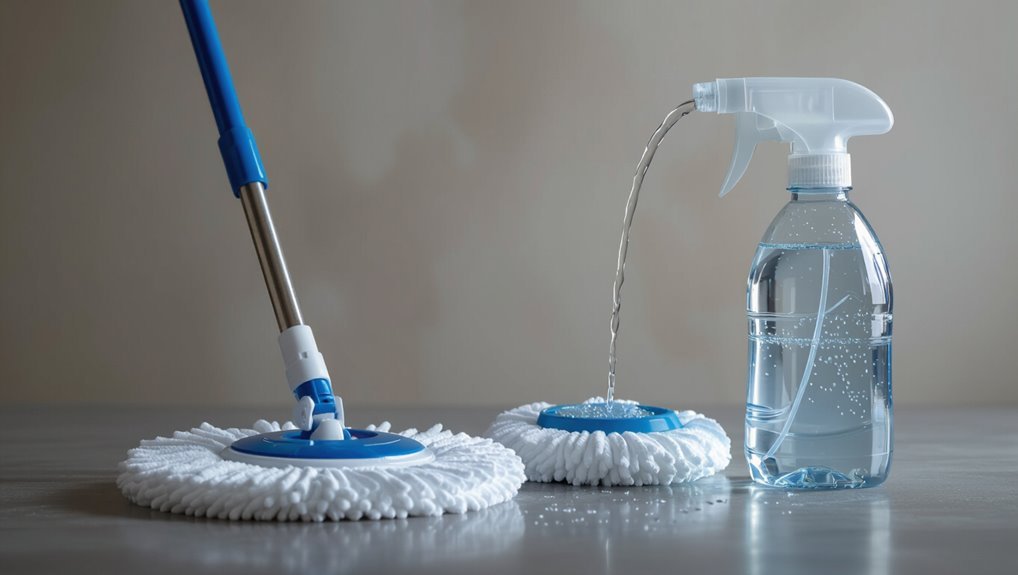
Think of a Swiffer Wet as two parts that work together: a small bottle of diluted cleaning solution and a replaceable microfiber pad that slips onto the mop head.
You spray a light mist, the pad traps dirt and lifts grime, and the solution dissolves residues.
You’ll control contact time and pressure to avoid softening paint or leaving streaks on walls.
Common types of painted wall finishes (matte/flat, eggshell, satin, semi-gloss, gloss)
Now that you know a Swiffer Wet pairs a mild solution with a microfiber pad to lift dirt, consider how different paint finishes respond to moisture, pressure, and mild cleaners.
Matte/flat hides imperfections but’s least durable. Eggshell and satin offer moderate sheen and scrubbability.
Semi-gloss and gloss resist moisture best and tolerate wiping. Match pressure and frequency to finish to avoid dulling or scuffing.
How paint finish and age affect resistance to moisture and cleaners
Because paint finish and age determine how well a wall tolerates moisture and mild cleaners, you should match your Swiffer Wet routine to both factors: younger, glossier paints resist moisture and wiping better, so you can use light Swiffer Wet passes;
older or flat finishes absorb liquids and soften, so test a hidden spot, use minimal moisture, gentle strokes, and air-dry quickly to avoid damage.
Safety Assessment When It’s Safe to Use a Swiffer Wet
You can safely use a Swiffer Wet on painted walls that have sealed, low-porosity finishes.
Check for signs the paint can’t handle moisture—chalking, peeling, or bubbling—and stop if you see them.
Before cleaning broadly, test a small hidden area and wait 24 hours to confirm no damage.
Conditions that make it generally safe (sealed paints, low-porosity finishes)
When the wall has a cured, sealed paint or a low-porosity finish, you can usually use a Swiffer Wet without worrying about staining or softening the surface; these finishes resist moisture and cleaners, so brief, light wiping won’t penetrate or lift the paint.
Test a hidden spot first, use minimal pressure, avoid soaking, and limit frequency to preserve the finish and color.
Signs your paint can’t handle a wet wipe (chalking, peeling, bubbling)
Even with sealed, low-porosity paint, some surfaces won’t tolerate a wet wipe—look for clear warning signs before you reach for a Swiffer Wet.
If paint powders under touch (chalking), softens, flakes or peels, or forms bubbles or blistered areas, it’s fragile.
Don’t wet those spots; moisture will worsen breakdown.
Choose dry dusting or consult a pro for repair.
Recommended test spot method (small hidden area, wait 24 hours)
Try a small hidden spot first: pick an inconspicuous area (behind furniture or inside a closet), apply the Swiffer Wet once, and let it dry for 24 hours to check for softening, color loss, or tackiness.
If nothing changes, repeat once more.
If still fine, you can cautiously clean visible walls.
If you notice damage, stop and use a drier method or consult the paint manufacturer.
Step-by-Step Guide How to Use a Swiffer Wet on Painted Walls Safely
Before you start, gather your Swiffer Wet cloths plus alternatives like a damp microfiber, mild cleaner, and materials to protect floors and trim.
You’ll prep the wall by dusting, removing loose dirt, and covering baseboards or floors, then test a hidden spot to check for finish reaction.
If the test’s fine, use a diluted solution or gentler wipe if needed and clean with light, consistent strokes—low pressure, follow the paint’s direction, and don’t scrub.
Supplies and alternatives to have on hand
You’ll want a short, focused kit before you start: a Swiffer Wet or equivalent disposable wet mop pad, a soft microfiber cloth for spot-checking, a mild, pH-neutral cleaner or diluted dish soap, a spray bottle with clean water for rinsing, and a ladder or step stool if you’ll reach high areas.
- Extra dry Swiffer pads
- Soft sponge
- White vinegar (diluted) for stubborn marks
- Painter’s tape for trim protection
Preparation steps (dust first, remove loose dirt, protect floors and trim)
Because dust and grit can scratch paint when wet, start by dry-dusting the wall with a microfiber cloth or a dry Swiffer pad to remove loose particles.
Then vacuum baseboards and corners if needed.
Lay down drop cloths or old towels to protect floors, and use painter’s tape or removable masking to shield trim and outlets.
Work top to bottom, keeping pads clean.
Step 1: Test a hidden area
Although it’s tempting to plunge in, always test the Swiffer wet pad on a hidden spot first to make sure the cleaning solution and dampness won’t dull or lift the paint.
Dab a corner or behind furniture, wait fully to inspect for color change, softening, or sheen loss. If the finish looks unchanged after an hour, you can proceed with confidence.
Step 2: Dilute or choose a gentler wipe if needed
If the test spot stayed intact, consider adjusting how you clean the rest of the wall: full-strength Swiffer Wet pads can be too damp or contain cleaners that affect some paints, so either lightly mist the pad with water instead of using a fresh pre-moistened sheet or choose a fragrance-free, gentler wipe designed for delicate surfaces.
Use minimal moisture, swap to a mild, pH-neutral wipe, and replace pads often.
Step 3: Light wiping technique (pressure, direction, avoid scrubbing)
3 simple rules will keep your painted walls safe: use light pressure, wipe in one direction, and never scrub.
Hold the Swiffer gently, glide it from top to bottom with steady, even strokes. Don’t press hard or backtrack over the same spot.
If a stain resists, repeat gentle passes rather than increasing force to protect paint finish and prevent streaks or abrasion.
Step 4: Rinse or dry the wall if residue remains
Check the wall after wiping and immediately rinse or dry any residue to prevent streaks or tacky patches.
If cleaning solution or lint remains, blot with a damp microfiber cloth, working top to bottom. Rinse the cloth frequently and finish by drying with a clean, dry microfiber or towel to restore an even finish and avoid water marks or sticky buildup.
Step 5: Post-clean inspection and follow-up touch-ups
Once the wall is dry and streak-free, do a careful walk-around to spot any missed smudges, drips, or areas where paint look uneven; mark small problem spots with painter’s tape so you can return to them without re-cleaning the whole surface.
Check edges and high-traffic zones, touch up tiny scuffs with matching paint using a fine brush, and remove tape after paint skins over.
Comparison Swiffer Wet vs. Other Wall-Cleaning Methods
You’ll want to weigh the Swiffer Wet’s convenience against alternatives like a microfiber cloth with mild detergent, a soft sponge with gentle cleaner, or tougher options such as magic erasers and solvent-based products. Consider which method matches your paint type and stain—steam cleaning and power washers can be overkill for delicate finishes. Use the quick comparison below to picture how each option stacks up.
| Method | Typical Use | Risk to Paint |
|---|---|---|
| Swiffer Wet | Light surface dust/grime | Low |
| Microfiber & Detergent | Regular cleaning | Low–Medium |
| Magic Eraser/Solvents | Stubborn marks | Medium–High |
Microfiber cloth + mild detergent
A microfiber cloth dampened with a mild detergent solution cleans painted walls more gently and precisely than a Swiffer Wet, so you’ll remove smudges and grime without risking streaks or paint damage.
You’ll control moisture, target spots, and rinse the cloth frequently to avoid residue. This method’s low abrasion and adjustable pressure protect finish and extend paint life compared to disposable wet pads.
Sponge and gentle cleaner
While a Swiffer Wet pad offers quick, disposable convenience, a soft sponge with a gentle cleaner gives you more control for painted walls, letting you tackle stains without over-wetting or abrading the finish.
You’ll dampen the sponge lightly, test a hidden spot, and use gentle circular motions. This method reduces streaks, preserves sheen, and lets you manage pressure and moisture precisely.
Magic eraser and solvent-based cleaners
Because melamine foam and solvent cleaners work very differently, you’ll want to match the method to the stain and paint:
Use a magic eraser sparingly on semi-gloss or satin to lift scuffs, testing an inconspicuous spot first.
Reserve solvent-based cleaners for greasy, stubborn marks, applying gently with a soft cloth and ventilating.
Avoid solvents on flat or delicate paints to prevent stripping.
Steam cleaning and power washers
When you need deep, fast cleaning for heavily soiled walls, steam cleaners and power washers deliver far more muscle than a Swiffer Wet. You can blast away grime, mildew, and stubborn stains, but you risk stripping paint, etching surfaces, or forcing moisture into drywall.
Use low pressure, test a hidden spot, and limit steam exposure to avoid bubbling, peeling, or structural damage.
Common Mistakes That Damage Painted Walls
Don’t press too hard or scrub aggressively, since that can wear away the finish or lift paint.
Don’t apply cleaners to untested or unsealed paint, and avoid soaking the wall or leaving moisture to penetrate.
Also skip abrasive pads and harsh chemicals that can scratch or strip the coating.
Using excessive pressure or scrubbing
If you press too hard or scrub with rough motions, you can strip paint, create shiny spots, or grind dirt deeper into the finish.
Instead, apply light, even pressure and let the Swiffer’s pad do the work. Move in gentle, overlapping strokes, check progress often, and stop at the first sign of gloss change or paint removal to prevent permanent damage.
Applying cleaners to untested or unsealed paint
After avoiding heavy scrubbing, the next mistake is treating untested or unsealed paint like any other surface and applying cleaners directly.
You should spot-test any cleaner in an inconspicuous area, wait for full drying, and inspect for softening, discoloration, or sheen loss.
If paint reacts, stop and use gentler methods or consult the manufacturer to avoid irreversible damage.
Over-wetting and leaving moisture to soak in
When you soak painted walls with too much water or cleaner, moisture can seep into the paint film and substrate, causing bubbling, peeling, or stains that are hard to reverse.
Don’t drench surfaces; wring pads so they’re damp, not wet. Work in small sections, blot excess liquid immediately, and allow thorough air drying to prevent long-term damage and mold growth.
Using abrasive pads or harsh chemicals
Although it might seem quicker to scrub with the roughest pad or reach for a heavy-duty solvent, abrasive pads and harsh chemicals will quickly dull or strip paint and can etch drywall or primer beneath.
You should choose soft microfiber, mild cleaners, or diluted dish soap, test a hidden spot first, and gently blot or wipe to preserve finish without sanding or chemical damage.
Best Practices and Preventive Tips for Keeping Painted Walls Safe
Keep a regular dusting and spot‑cleaning schedule so dirt never has a chance to build up and force harsher treatments.
Pick the right Swiffer product or a gentler alternative cleaner, and consider washable paint or protective trim in high‑traffic areas to reduce wear.
If stains won’t come out or paint is flaking, call a professional or plan to repaint before the damage spreads.
Regular dusting and spot-cleaning schedule
If you want painted walls to look their best and avoid damage, set a simple dusting and spot-cleaning routine you can stick to.
- Dust high and low weekly with a microfiber duster.
- Inspect for marks weekly; spot-clean immediately.
- Use gentle motions and minimal moisture.
- Deep-clean low-traffic areas monthly, high-traffic monthly or as needed to prevent buildup and staining.
Choosing the right Swiffer product or an alternative cleaner
After you’ve set a dusting and spot-cleaning routine, pick the right Swiffer pad or alternative cleaner to protect paint finishes.
Use dry or lightly damp cloths for flat or matte paints; choose gentle, pH-neutral cleaners for satin and semi-gloss.
Avoid abrasive pads and bleach.
Test any new product on an inconspicuous patch, wait for full drying, and inspect before wider use.
Protecting high-traffic areas with washable paint or trim
Several simple upgrades can make high-traffic walls far more durable: paint with washable finishes, add durable trim or chair rails, and use corner guards where bumps happen most.
You’ll choose semi-gloss or satin for scuff resistance, wipe marks with a damp cloth, and install PVC or metal trim at vulnerable spots.
These steps cut touch-ups and keep walls looking fresh longer.
When to call a professional or repaint
While regular touch-ups and washable finishes handle most wear, you’ll know it’s time to call a pro or repaint when stains, peeling, mold, or structural damage go beyond what a rag and mild cleaner can fix.
If cleaning doesn’t restore appearance, paint flakes or soft spots appear, or moisture persists after fixes, schedule a contractor to assess, treat underlying issues, and recommend repainting.
Troubleshooting What to Do If Damage Occurs
If you spot a problem, first figure out whether it’s a stain, finish removal, or actual peeling so you know how urgent it is.
For fresh marks you can blot gently and neutralize any residue before it sets.
If the surface is damaged you’ll likely need touch-up paint, light sanding and repainting, or sealing to restore the finish.
Identifying the type of damage (stain vs. finish removal vs. peeling)
Sometimes you’ll see a mark on the paint and not know whether it’s a surface stain, finish removal, or actual peeling—each looks different and needs a different fix.
You’ll check texture: a stain sits flat and may rub away; finish removal feels rougher, often with dulled sheen; peeling lifts or flakes, exposing substrate.
Identifying this guides repair choices.
Immediate corrective steps (gentle blotting, neutralizing residue)
Because quick, calm action limits damage, start by gently blotting any wet residue with a soft, lint-free cloth—don’t rub, which can spread stain or strip more finish.
Then dab a damp cloth with plain water to lift cleaner traces. If residue persists, neutralize mild cleaners with a diluted baking soda solution, test a hidden spot first, and pat dry immediately to prevent soaking.
Repair options (touch-up paint, sanding/repainting, sealing)
When damage shows—scuffed finish, softened paint, or visible staining—you’ve got three practical repair paths: spot touch-ups for small blemishes, sanding and repainting for larger or textured areas, and sealing to restore protection and gloss.
For touch-ups, match sheen and color, feather edges, and dry thoroughly.
For extensive damage, sand to smooth, prime, repaint, then seal with appropriate clear coat.
Frequently Asked Questions (FAQ)
You probably have quick questions about using a Swiffer Wet on painted walls, like whether it removes scuff marks without harming the paint.
You’ll want to know which finishes are safe, if repeated use or the cleaner itself can cause discoloration, and how often it’s okay to use.
I’ll also cover whether there’s a gentler homemade alternative for sensitive surfaces.
Can Swiffer Wet remove scuff marks without damaging paint?
Wondering if a Swiffer Wet will lift scuff marks without harming your paint? You can usually remove light scuffs safely by dabbing gently and testing an inconspicuous area first.
Avoid heavy scrubbing; let the pad and solution soften marks. If the scuff persists, switch to a melamine sponge or a dedicated cleaner designed for painted surfaces to prevent finish wear.
Are certain paint finishes completely safe with Swiffer Wet?
Which paint finishes are truly safe to use with a Swiffer Wet?
You’ll find that durable, high-sheen finishes like semi-gloss and gloss resist moisture and mild cleaners best, so Swiffer Wet is generally safe.
Satin offers moderate resistance but be cautious.
Flat and matte finishes are more delicate; avoid heavy rubbing and test first, since they can absorb cleaner and show wear more readily.
Will Swiffer Wet cause discoloration over time?
Since semi-gloss and gloss resist moisture and cleaners better than flat or matte, they’re less likely to show staining or color change from occasional Swiffer Wet use.
However, repeated applications can still affect more delicate finishes. You should test a hidden spot first, avoid abrasive scrubbing, and use the gentlest pad.
If you spot fading, stop and switch to a damp microfiber and mild soap.
How often can I safely use Swiffer Wet on interior walls?
How often you can use a Swiffer Wet on interior walls depends on your paint type, dirt level, and how gently you clean; in general, limit use to occasional spot-cleaning rather than frequent whole-wall treatments.
For semi-gloss or satin, you can clean spots every few weeks; for flat or matte, restrict to infrequent, gentle wipes.
Always test a hidden area first.
Is there a safer homemade solution for painted walls?
If you’re wary of commercial cleaners or want gentler options after spot-cleaning with a Swiffer Wet, homemade solutions can be safer for many painted surfaces.
Mix warm water with a few drops of mild dish soap for general grime.
For tougher marks, use a 50/50 white vinegar and water solution, testing first in an inconspicuous spot to guarantee paint won’t dull or lift.
